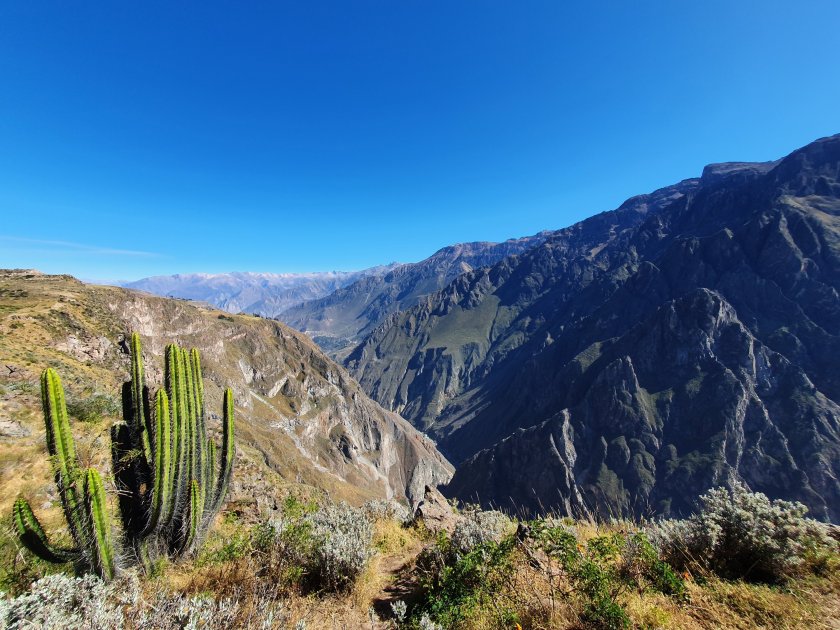
Where and when: Colca Valley, Peru, 3 June 2023
0600: After a restless night worrying about earthquakes, I am feeling rather rough. The night before, there was a 5.5 magnitude earthquake about 10km from our hotel. Although earthquake was not big enough to move furniture or topple anything, there were some hairline cracks on the walls and ceiling of our room, so the hotel moved us to a different room. Several smaller magnitude quakes ensued throughout the night, which didn’t help when trying to fall asleep.
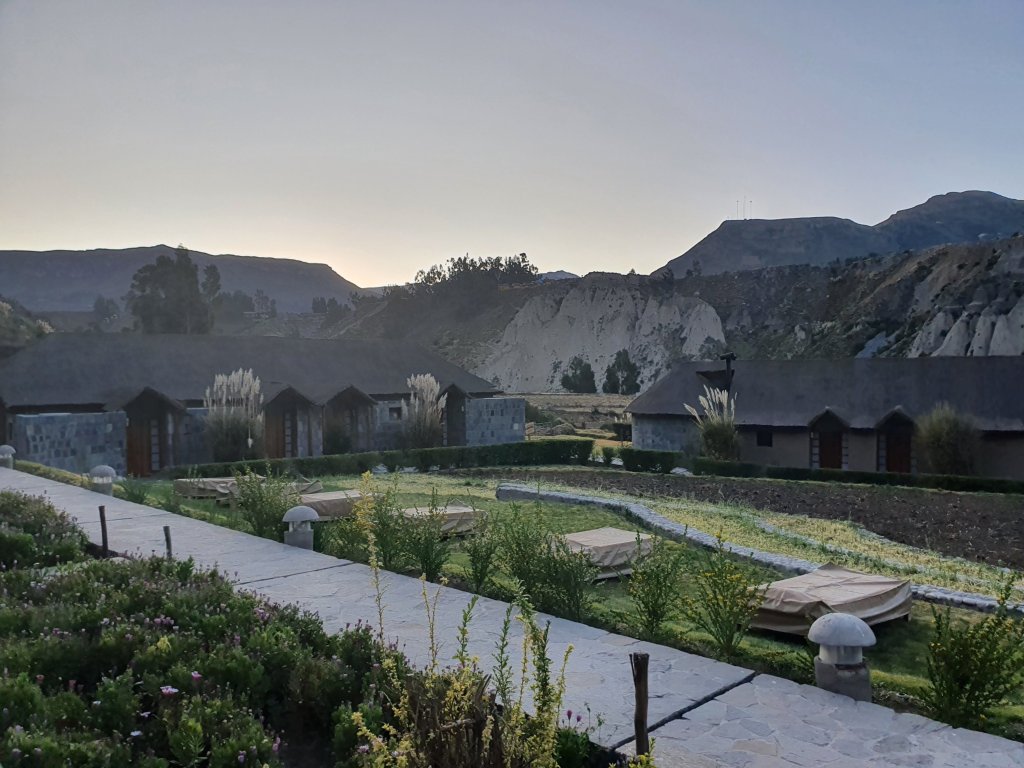
In the morning though, everything looked much better. Other than a few garden ornaments that had fallen over, there were no signs of an earthquake in the hotel.
0730: On our way to Condor Cross. We were not sure if the road would be open due to the earthquake last night, but our guide called to check and found that the road was open.
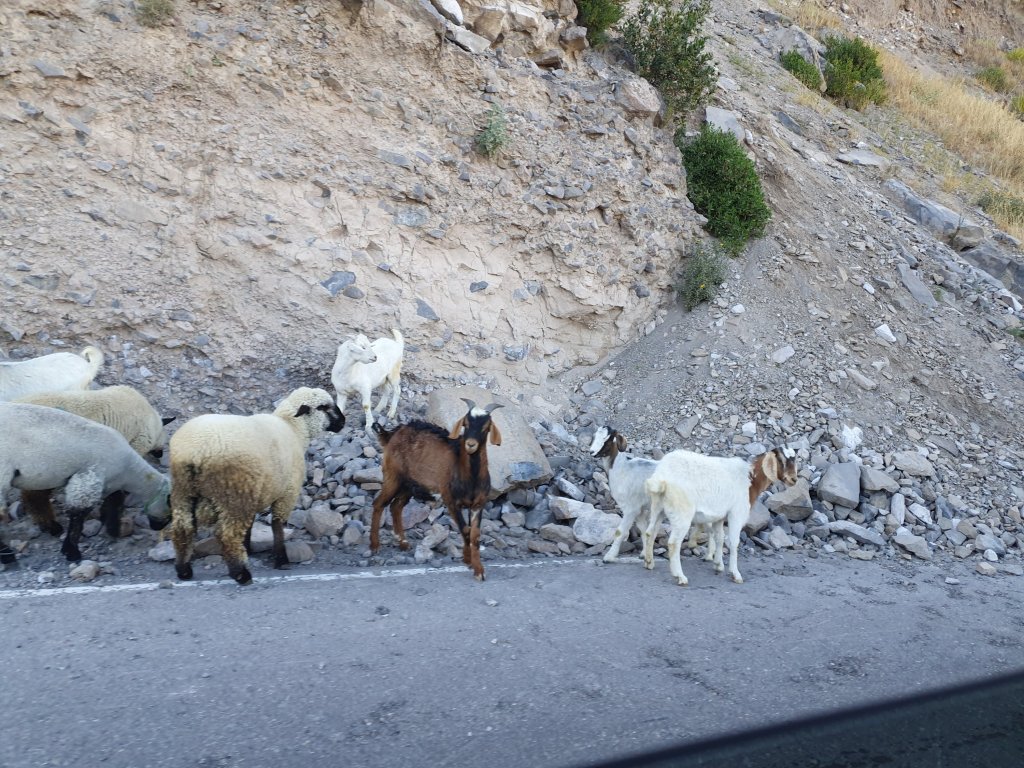
On the way, we could see numerous rock-slides on the mountainous road. Other than that, everybody seem to be going about their day as normal and the tourist traffic to Condor Cross was no different to any other day, according to our guide.
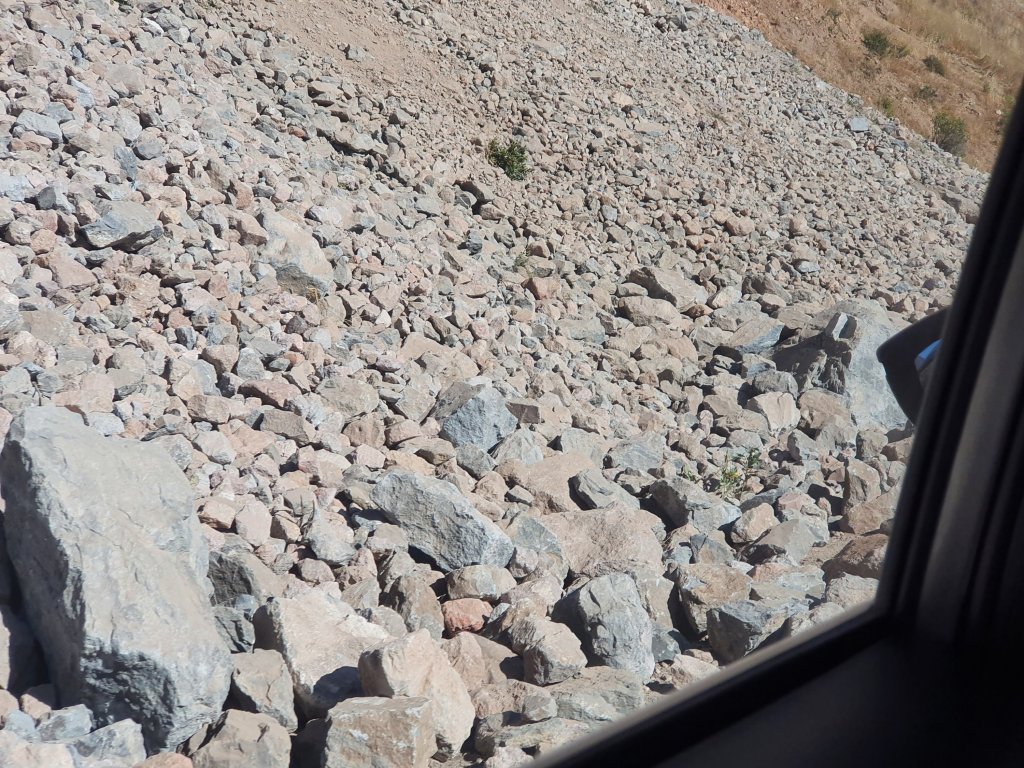
We also pass through an abandoned village that has sustained severe damage in previous earthquakes. The whole area is sinking into the ground as a result of the seismic activity.

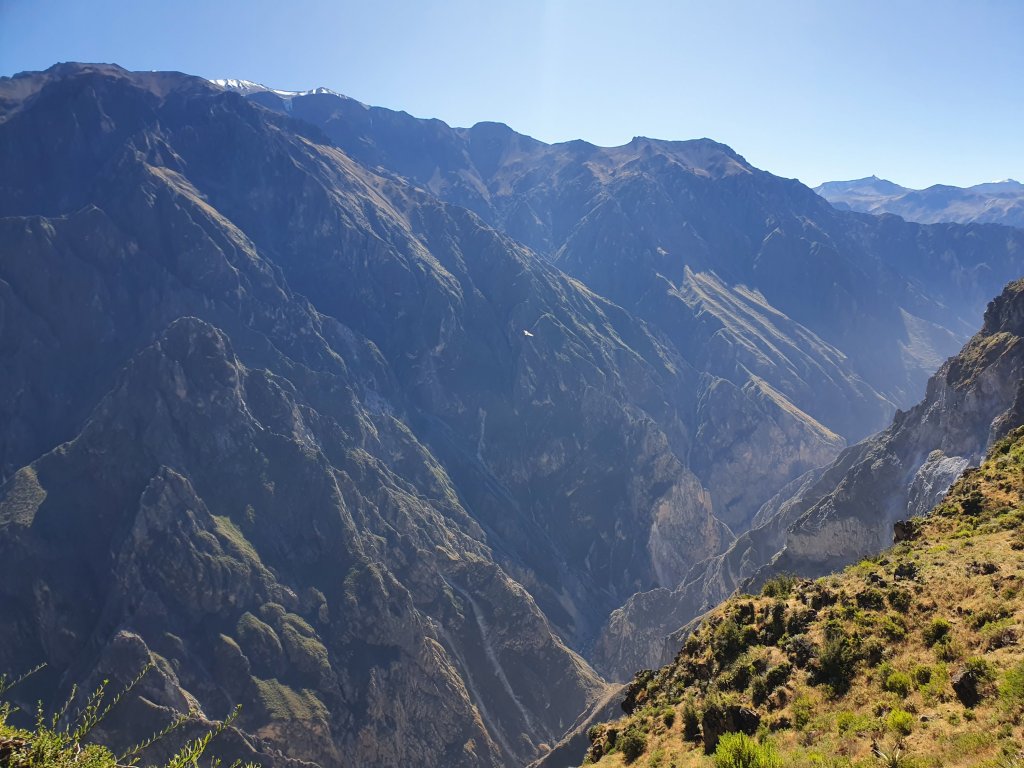
0845: At Condor Cross or “Mirador Cruz del Condor”. This view point is considered one of the best places in the Colca Canyon (and in South America) to see the Condor birds.

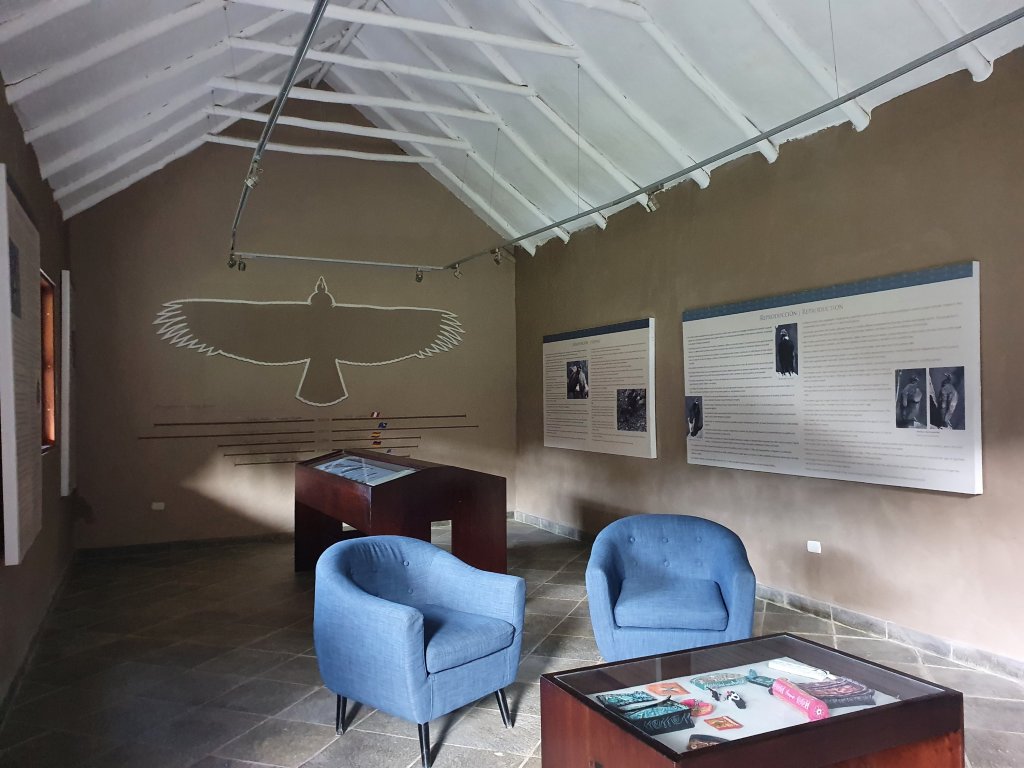
The Andean condor has the second largest wingspan (2.5m) of any flying bird in the World. In the wild, condors live for about 45 years. In captivity they can live as long as 100 years. Condors are vultures therefore only eat dead meat. It is a myth that they swoop down and take small children and livestock as prey. Andean Condors nest in the cliffs of the Colca Canyon. Each Condor pair only has one egg at a time. A young Condor lives in the nest and doesn’t fly till about 4 years old.
In Andean and Inca culture, the Condor is important animal, as it is considered to be a messenger to Wiracocha, the god who created the World. The Condor Temple at Machu Picchu is a testament to the importance of the Condor to the inca culture.
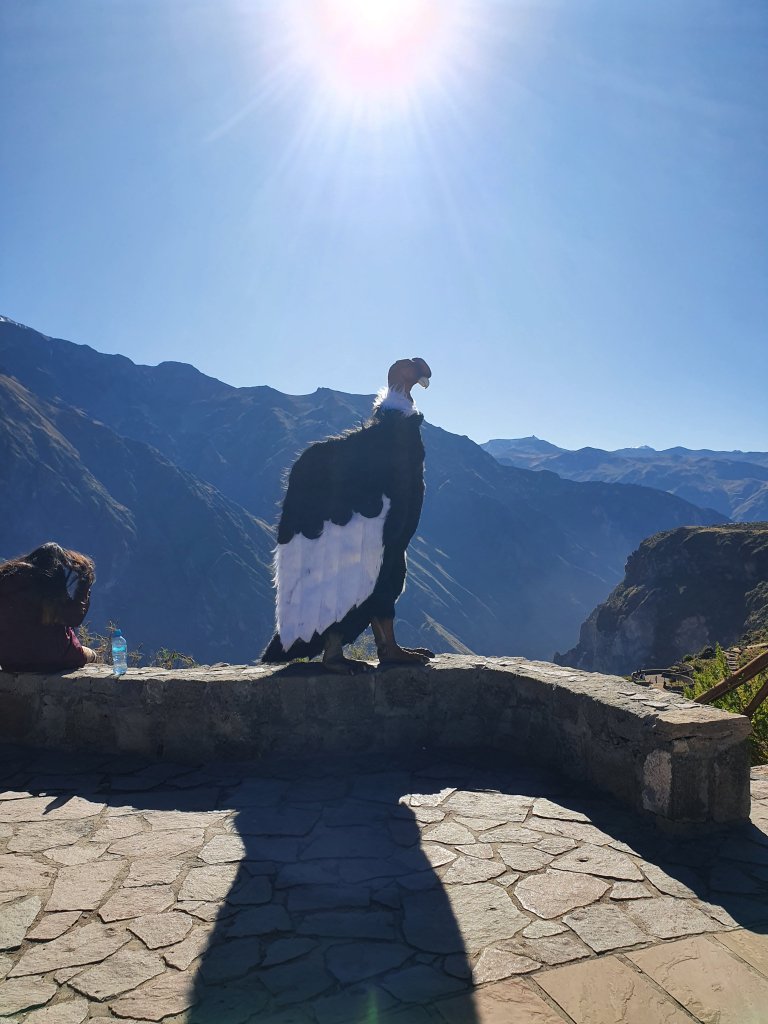

When we arrived, there were no Condors to be see (except for the guy in the Condor Costume) so we picked a spot at the Condor Cross and began our wait. We only had to wait for about 20 minutes, then the wind picked up and the Condors started circling. Condors don’t flap their wings to fly, but rather glide on thermal currents. Hence the reason they appear when the wind picks up. Because of this, the best time to see Condors is early in the day, during the autumn and winter months.
1000: After watching the Condors for about and hour, we walked down the road to a different canyon viewpoint.

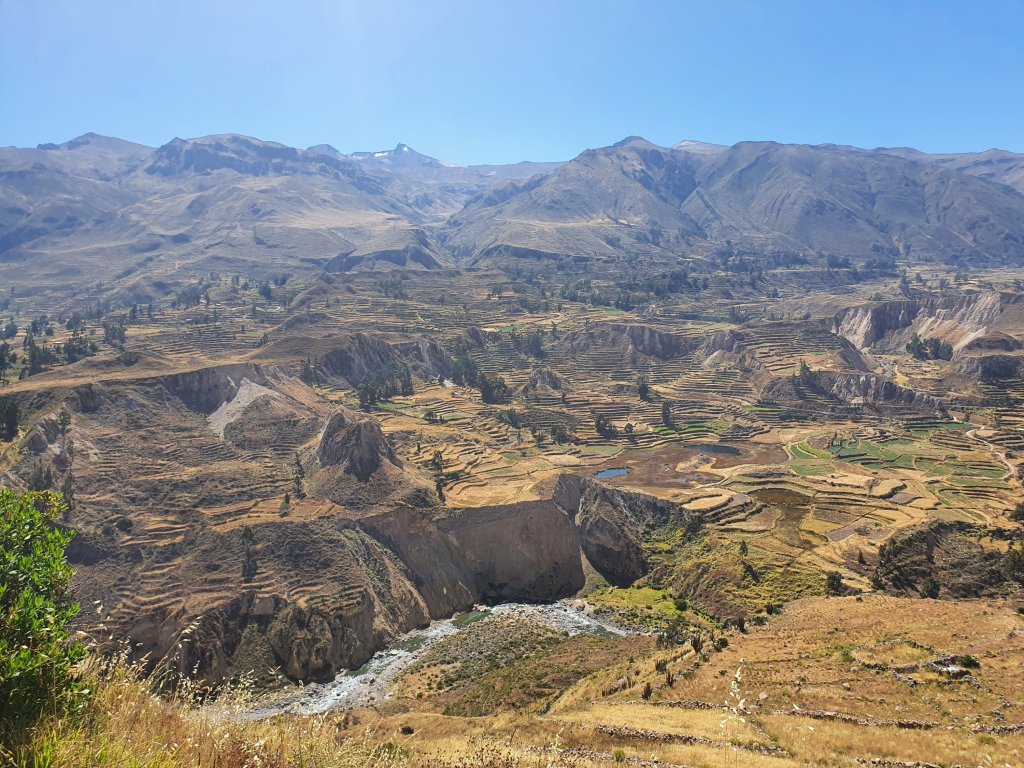
The Colca Canyon is the second deepest canyon in the world. The canyon is about 68 miles long, with the deepest point being about 4km. Where we were, the depth of the canyon was about 3 km. It my view, it is pretty, but not in the same league as the Grand Canyon in the USA.
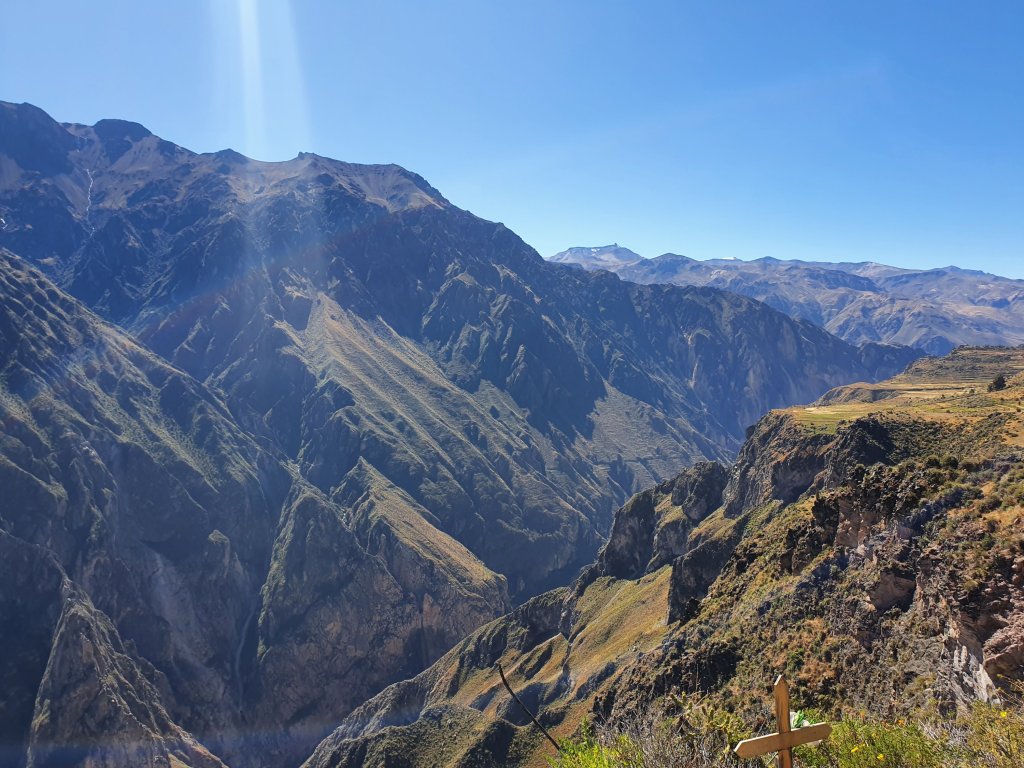
As a bonus, we got to see some more Condors during the walk, flying much closer to us than they had done before.
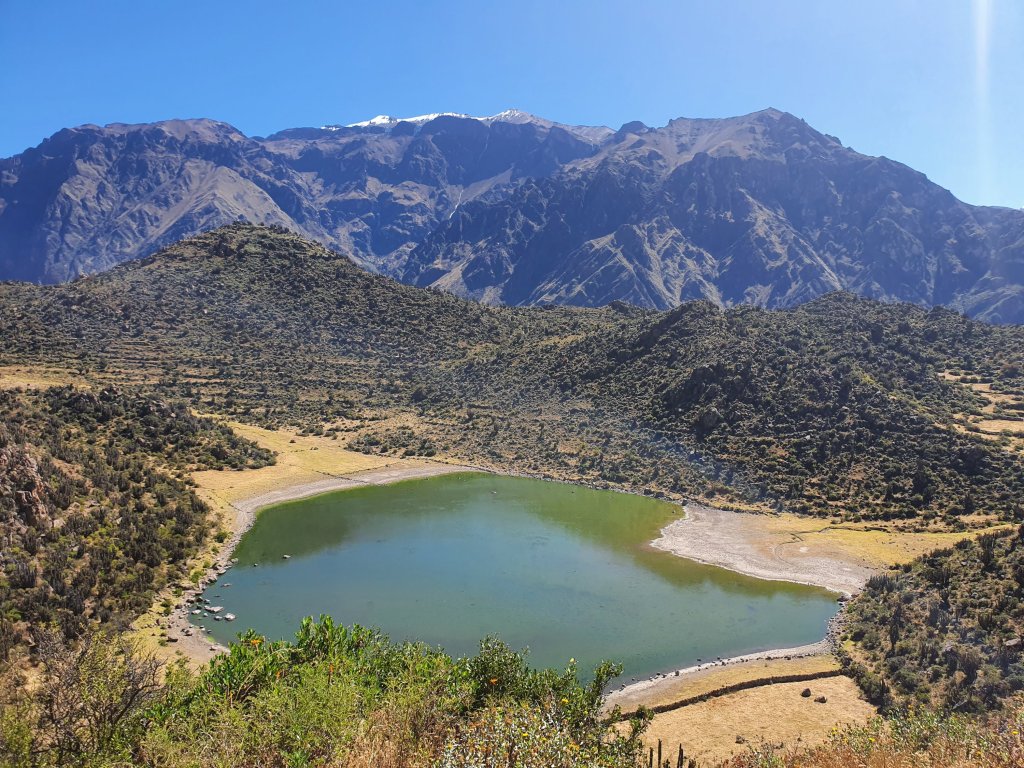
1100: We begin the return journey to the hotel. On the way, we stopped at several viewpoints to see the Colca Valley.

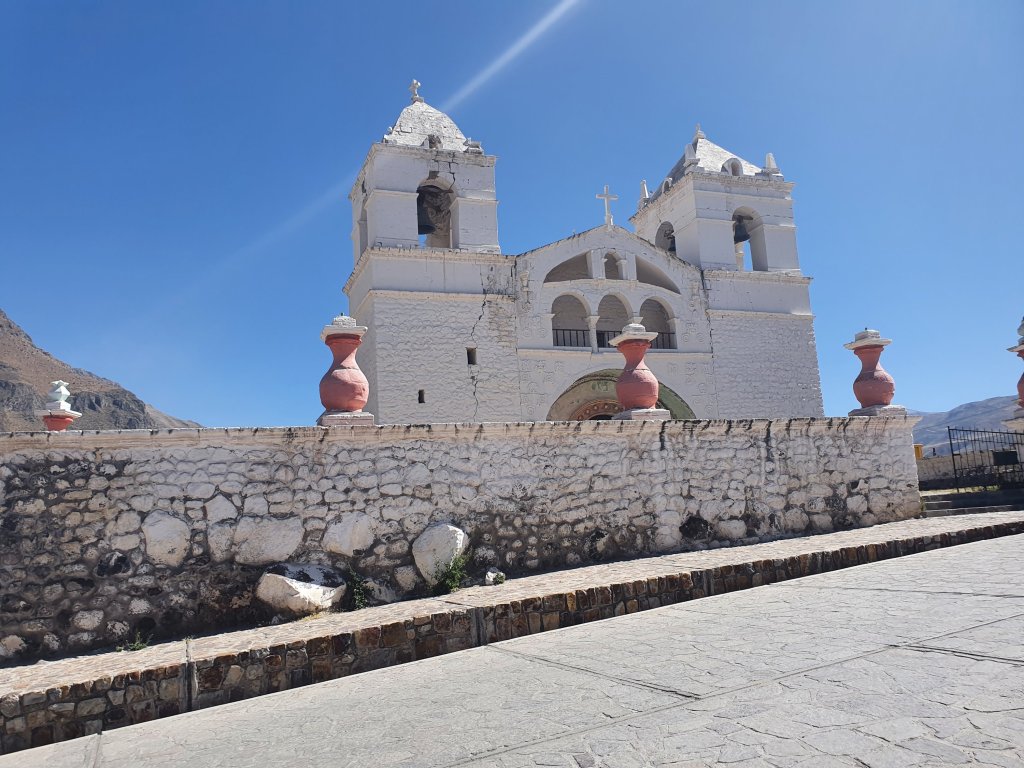
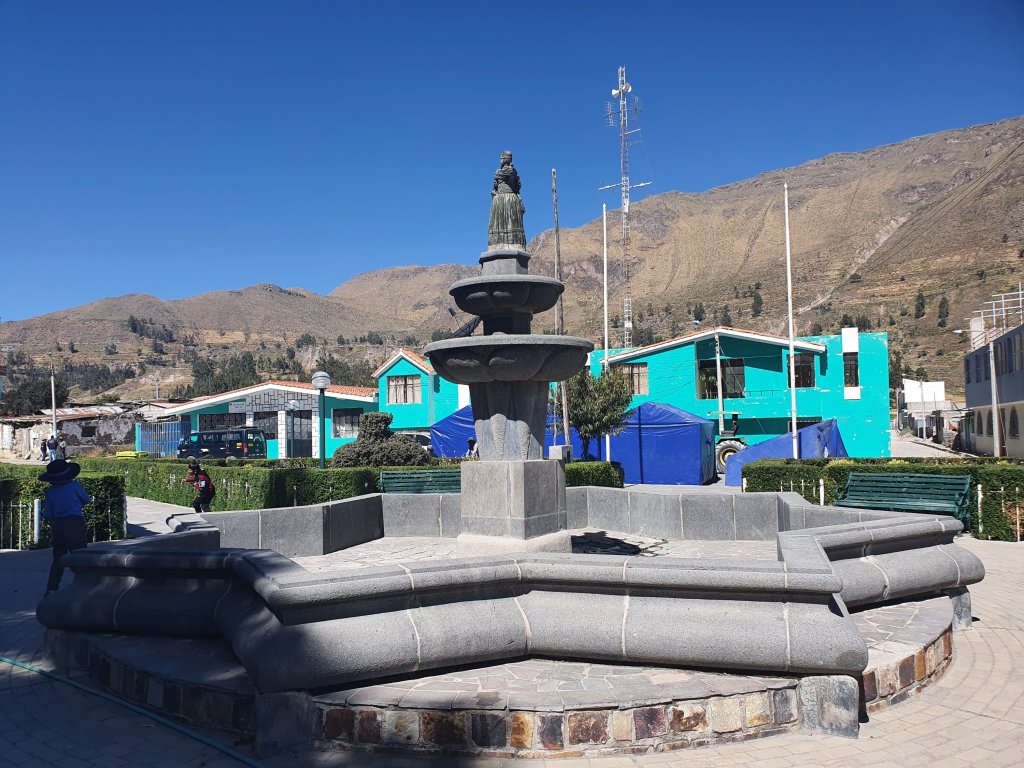
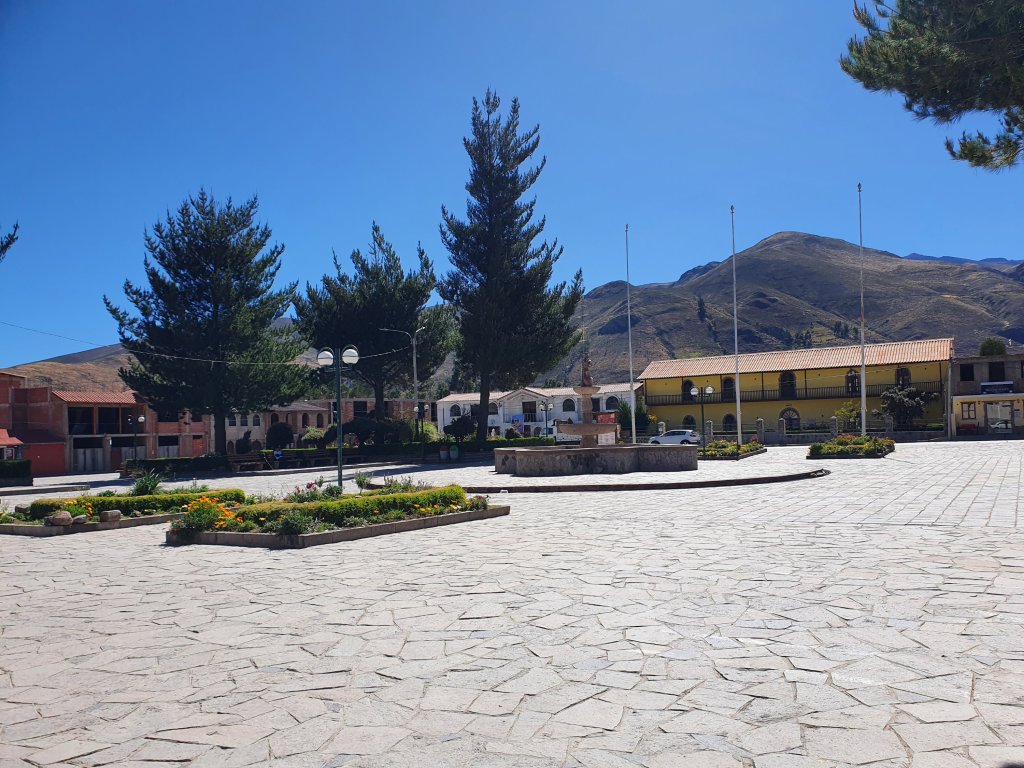
Brief stop at the village of Maca. Last night’s earthquake has damaged the Church tower, so we cannot go in. But in the rest of the village square, daily life is still going on.
1215: Lunch on the outskirts of Chivay.
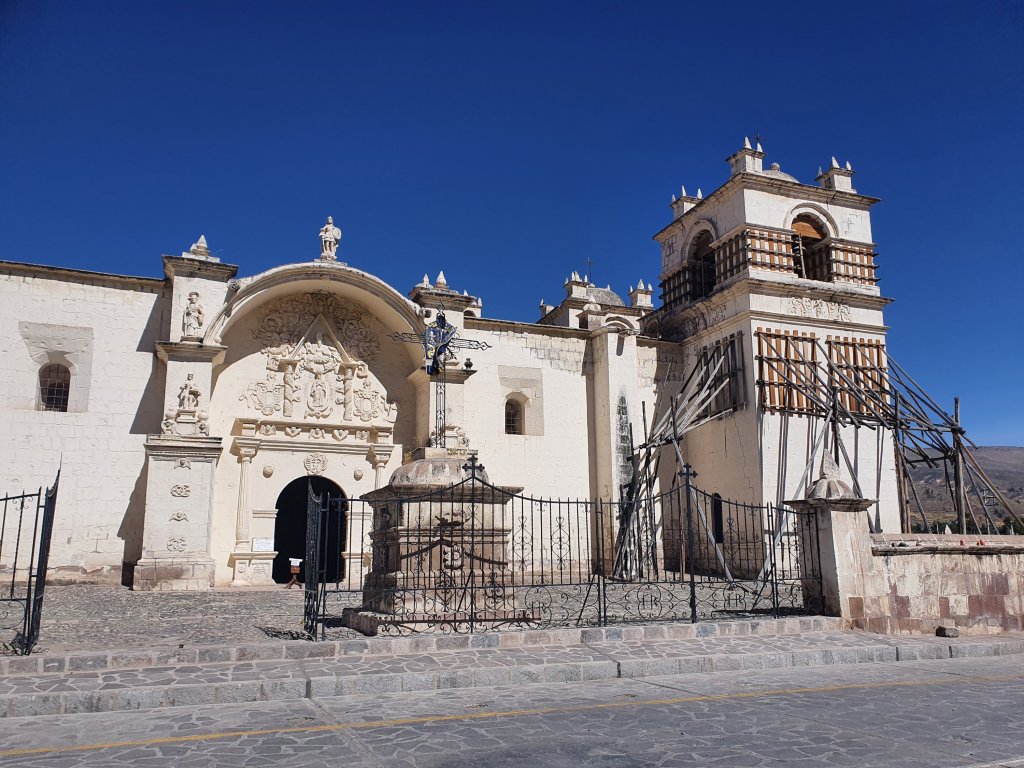
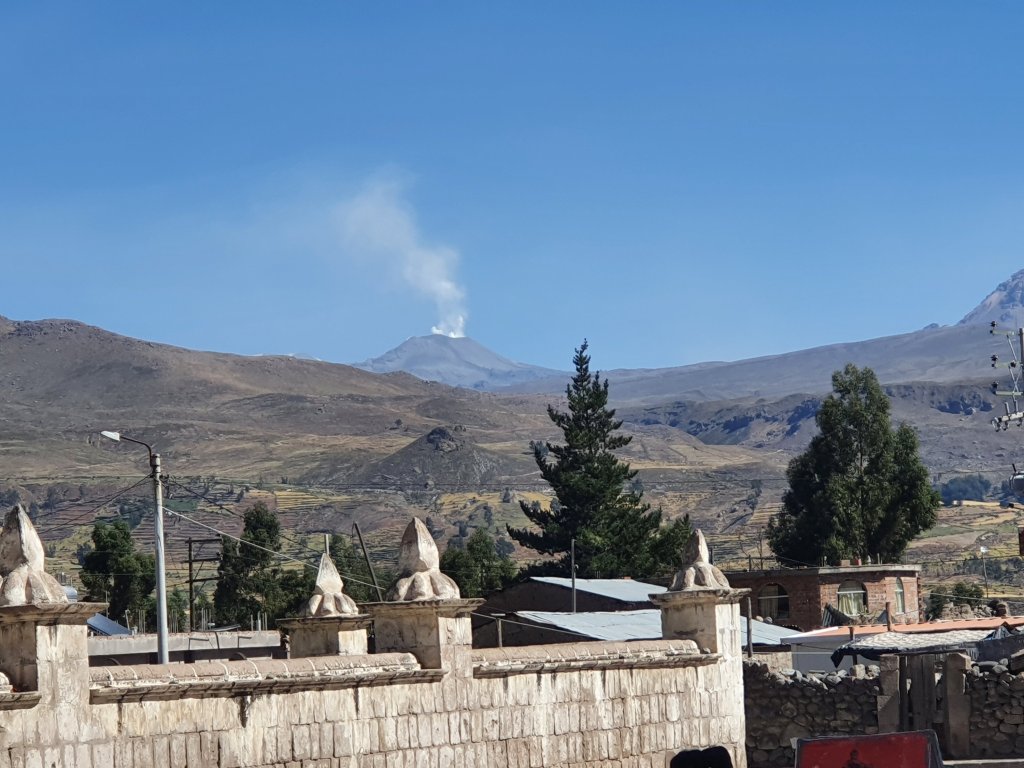
1300: Stop at the village of Yanque. Sabancaya volcano is still smoking but not as much as yesterday.
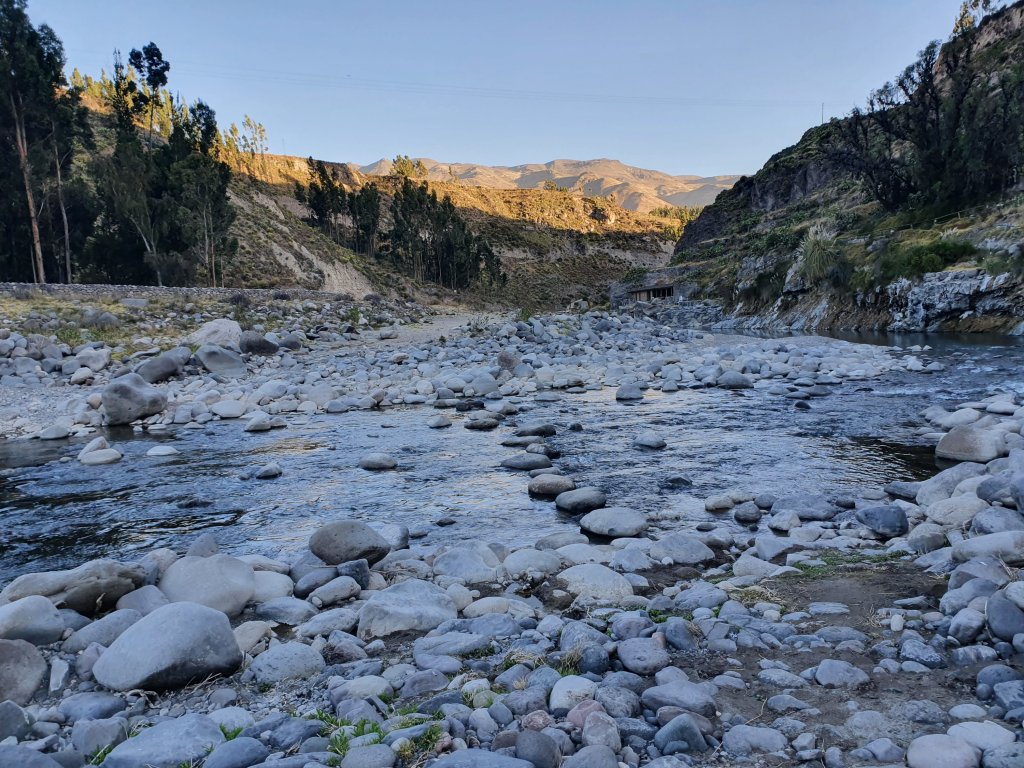
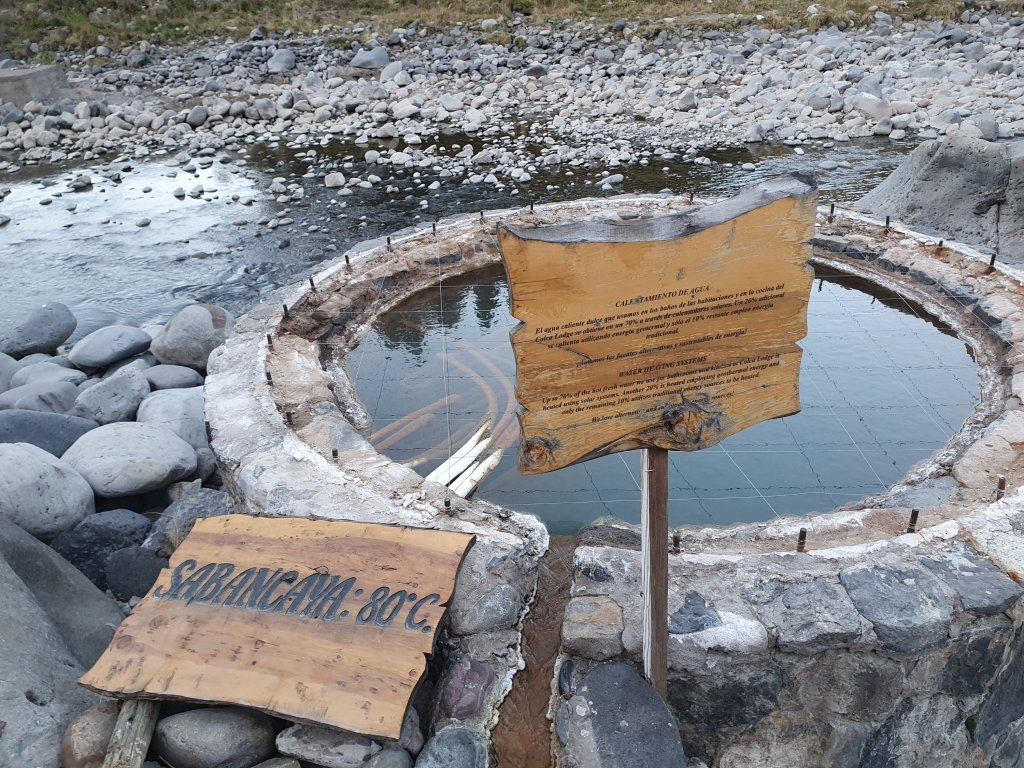
1330: Back at hotel, and we enjoy an afternoon off, exploring the river and the hot springs.
1900: Dinner at the hotel restaurant. There a good selection of local cuisine and the food is delicious.

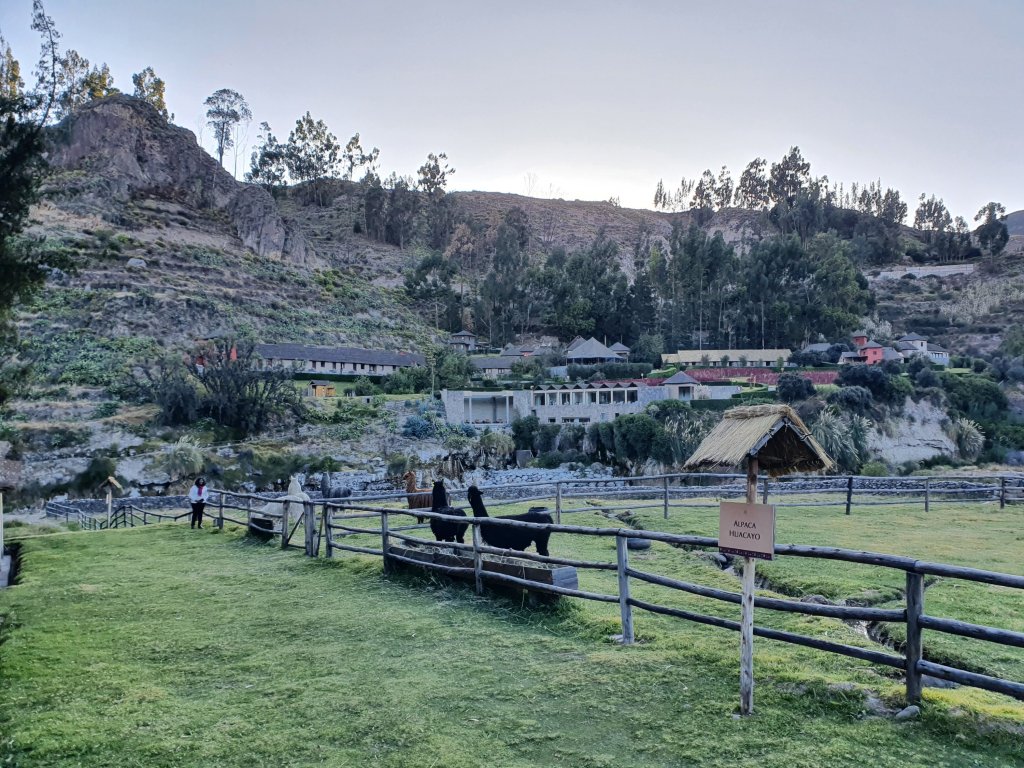
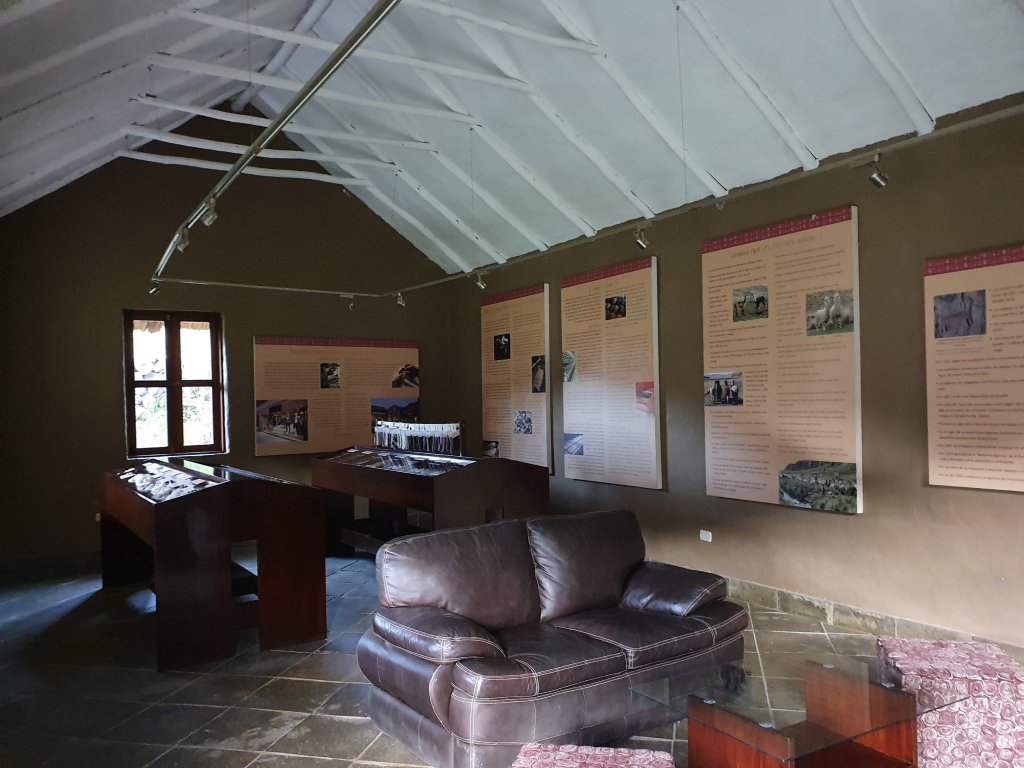
Hotel review: Colca Lodge is located about 10 km from the village of Chivay. It is one of the few hotels in the Colca Valley with Hot springs in the grounds. The hotel is set to the side of a mountain with beautiful views all around. The Colca river - with several hot springs bubbling through, runs across the hotel grounds. There is also a couple of enclosures with llamas and alpacas. There also a small education centre with information on llamas, alpacas and condors. There is an onsite and restaurant and a health spa. It is certainly the best hotel we've stayed at in Peru and I would highly recommend it, if you are in this part of the World.
 Diary of a Tourist
It’s amazing to see the video of the condors – what a treat!
LikeLiked by 1 person