Where and when: Luxor, Egypt, 2 December 2023
0440: I am awoken by a knock on our door. It took a few seconds to realise I am on the train heading from Cairo to Luxor, which we boarded last night. The knock is from the train conductor, with our tea and breakfast. We’ll be arriving in Luxor in an hour.
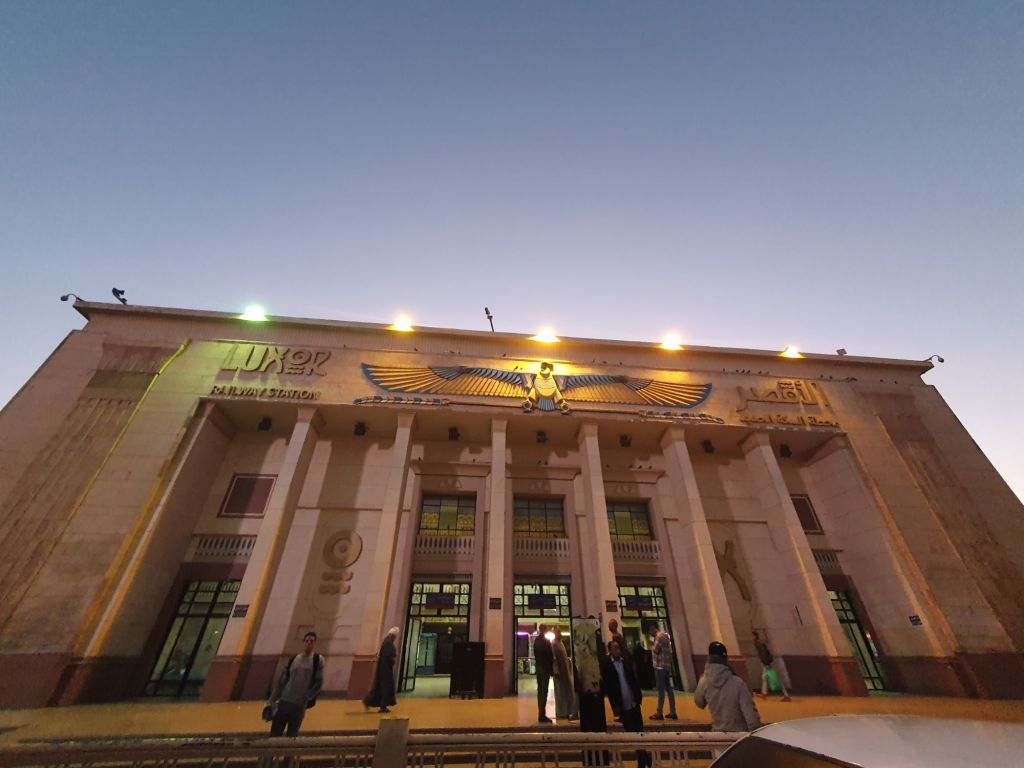
0540: Alight at Luxor. Luxor was known as Thebes in Ancient Egypt and was the political, military and religious capital for a period of over 1500 years. As a result, it is home to a huge number of architectural monuments.
0610: Our first stop of the day is the Karnak temple complex. Most tourists sites in Egypt open from dawn to dusk. So we take advantage of our early arrival in Luxor to visit the Karnak Temple before the crowds arrive.
Karnak Temple Complex
The temple is one of the oldest and largest in ancient Egypt. The work on it began in 20th century BC and continued for over 2000 years, with over 30 successive Pharaohs extending and adding to it.

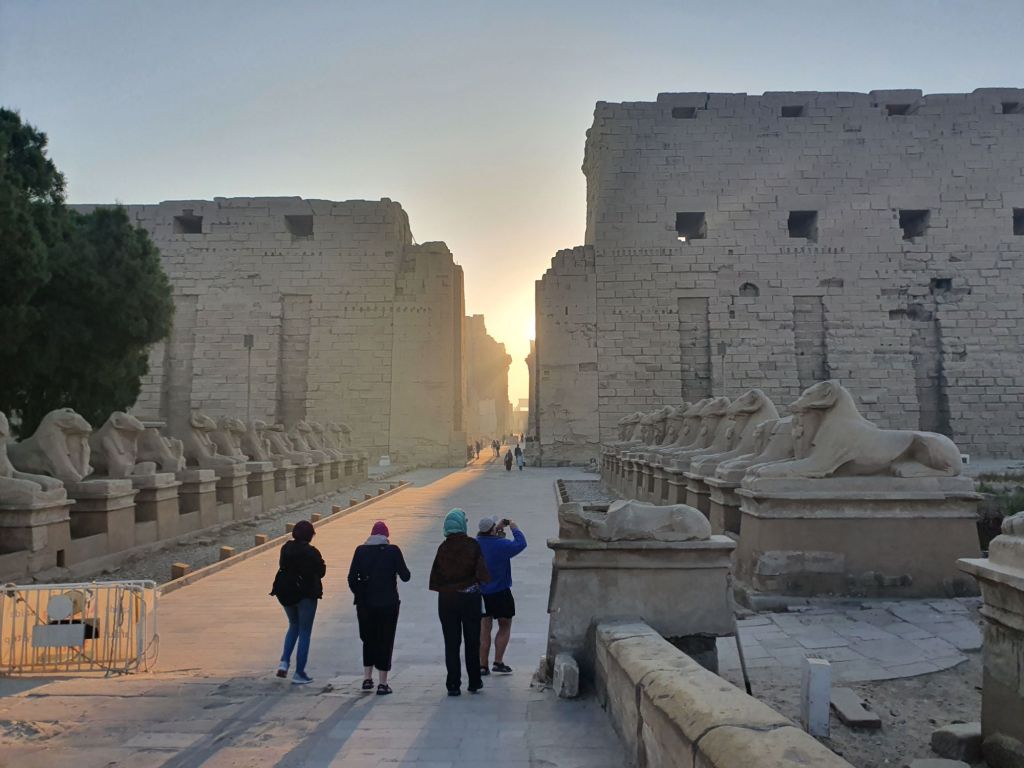
After a quick overview of the temple at the entrance we head to the temple via the avenue of Ram Statues on the West side. The early arrival is so worth it as we can see the sunrise over the temple and it is completely devoid of people – even the tourist officials dotted around the temple are only just starting to arrive.

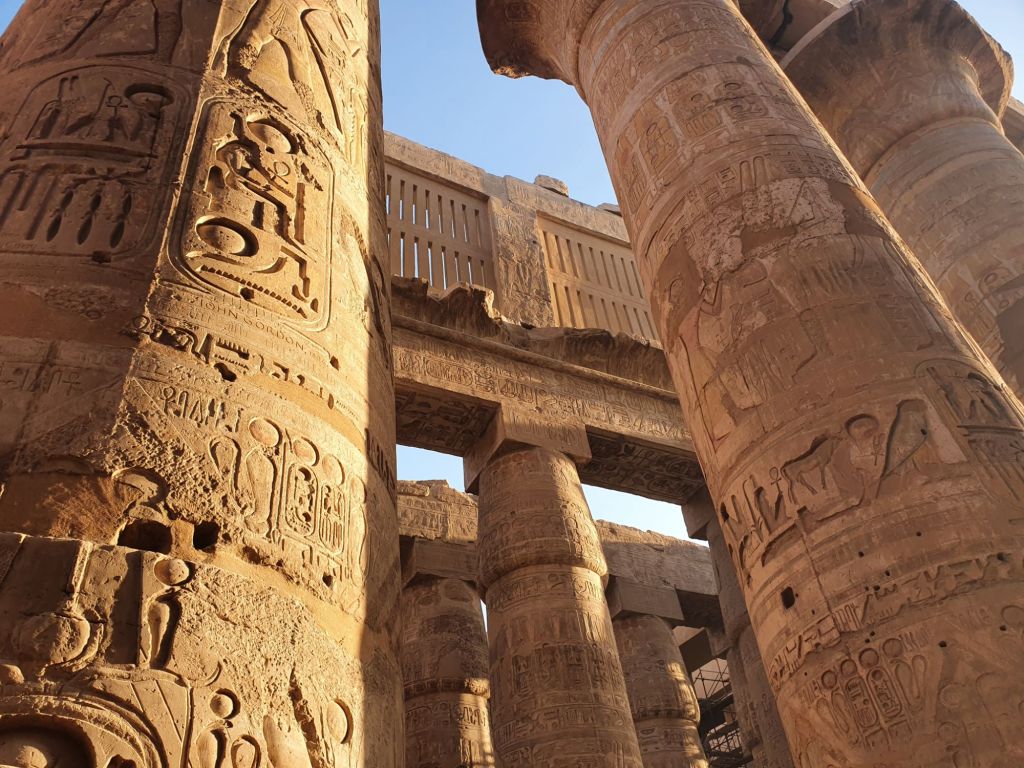
First, we go through the Great Hypostyle Hall. This was added to the temple by Queen Hatshepsut and extended by Seti I and other Pharaohs. Each Papyrus pillar is decorated in inscriptions and reliefs. The 134 pillars represents the Papyrus swamp from which the deity Atum arose at the beginning of creation.

The main temple at Karnak is dedicated to the Sun god Amun-Ra. There are smaller temples to the goddes Mut (wife of Ra) and Montu (son of Ra). These temples are the oldest parts of temple, and as the rest of the temple was extended around then these smaller shrines were drawfed by the later developments.
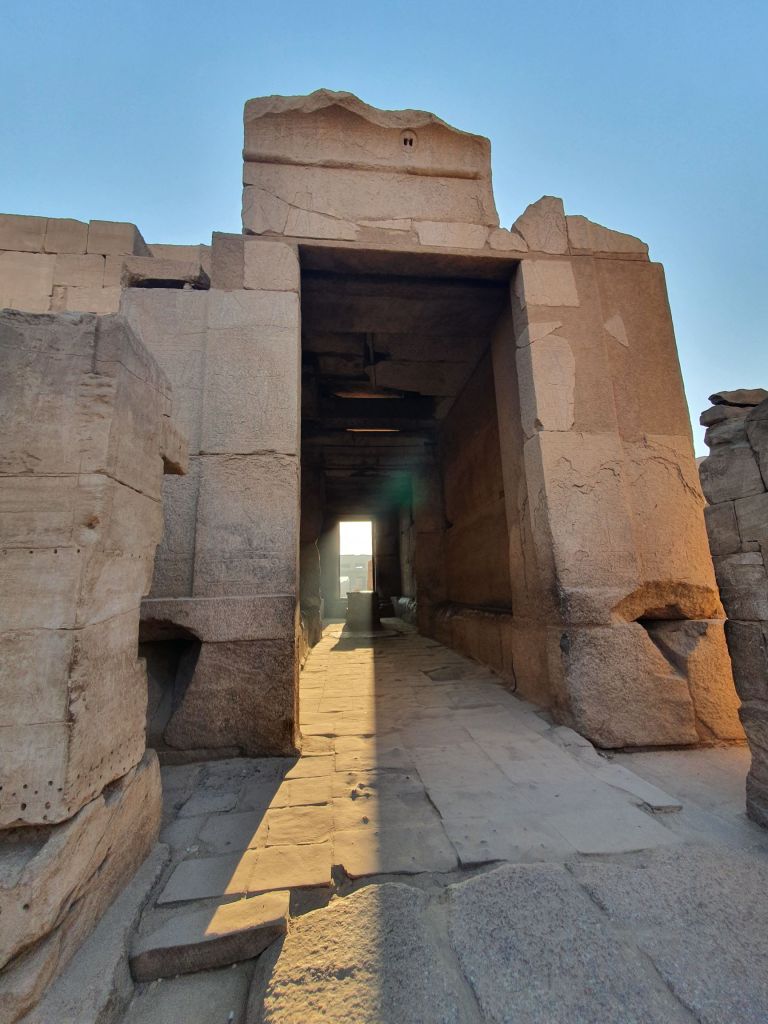
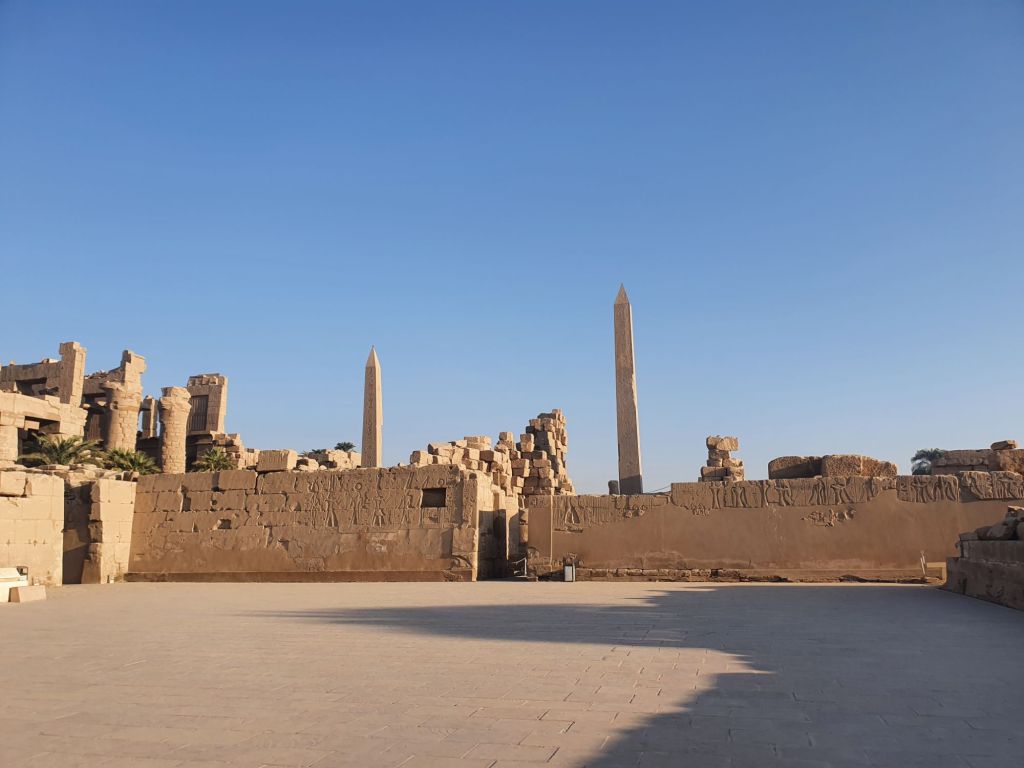
The temple complex is vast, and there are many points of interest. One on the most interesting is the Obelisk of Queen Hatshepsut, which her successor Thuthmoses III tried to destroy. Failing this, he decided to cover it up by building a wall around it.
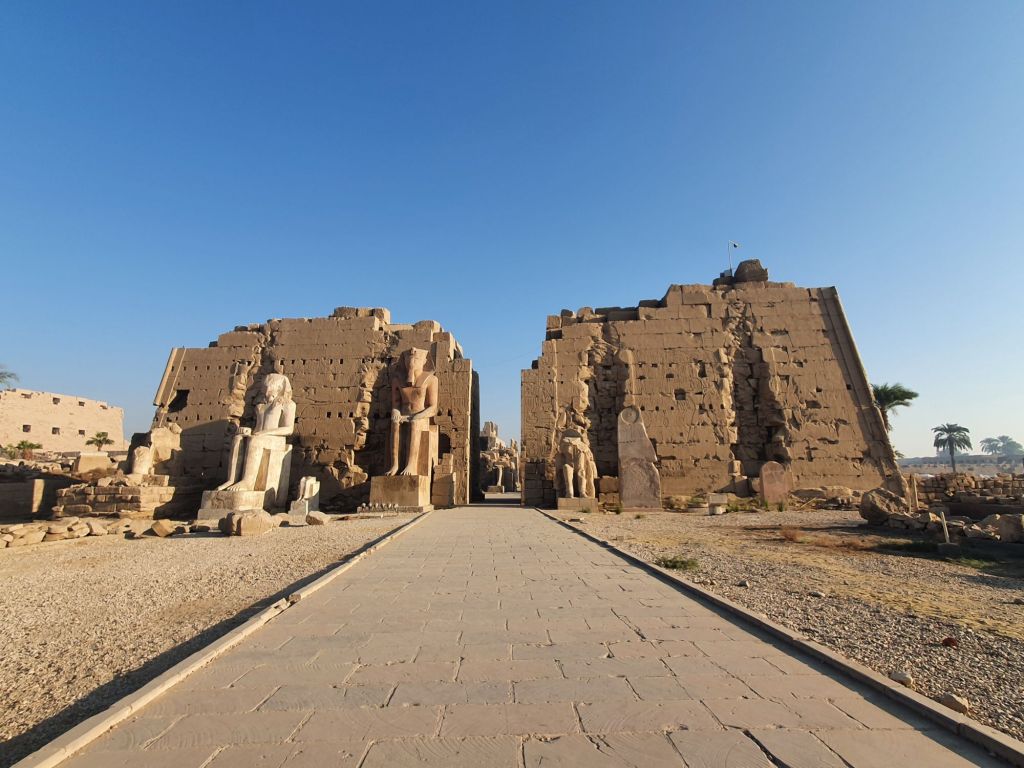
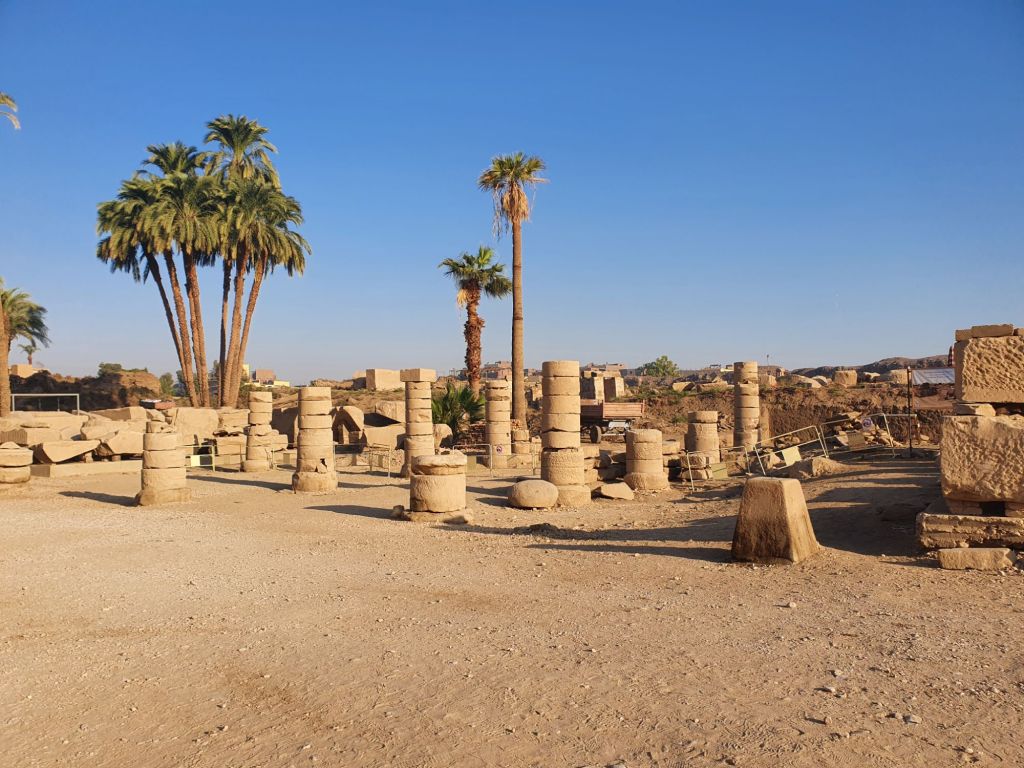
The temple fell into ruins over time, but it is mentioned in travel accounts from Greek, Roman and European travellers. The temple started to be restored in the late 19th century and this work is still ongoing.

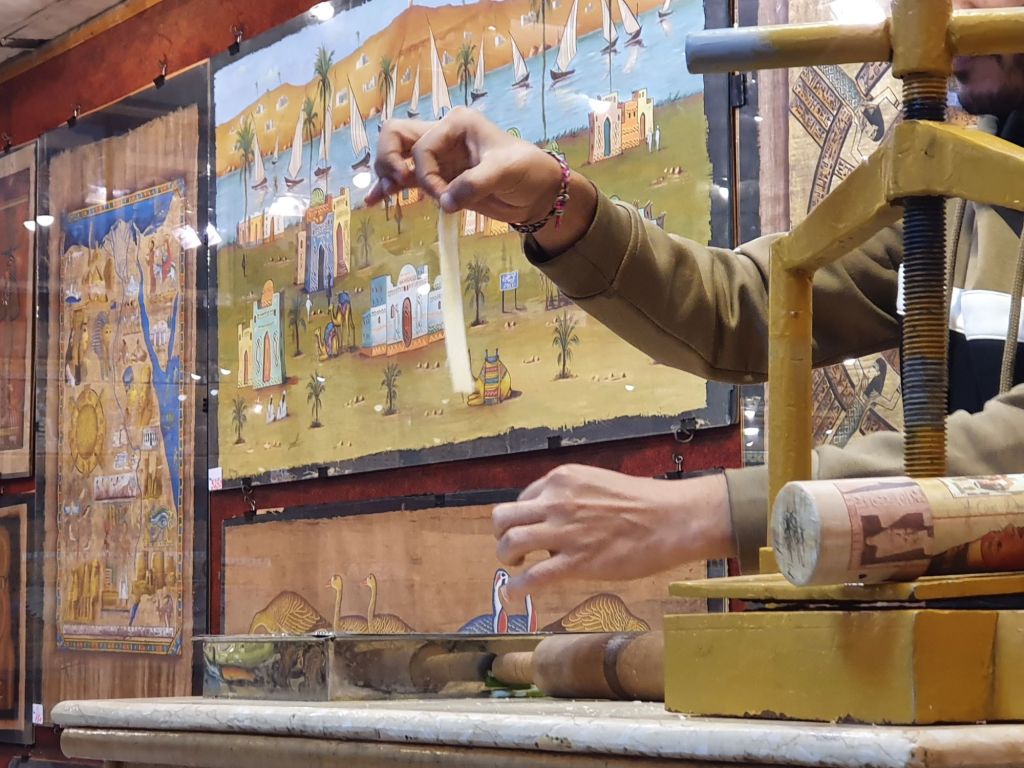
0830: After a much needed coffee break (4.30 a.m. wakeup after all!) we headed to a Papyrus workshop to see how this paper was made in ancient Egypt.


We also visited the animal charity “Animal Care In Egypt” supported by Intrepid travel. They provide free veterinary care and provide homes for stray cats, dogs, horses and donkeys, and also runs educational programmes about how to make sure animals are well treated.

1100: Arrive at Nile cruise boat, our home for the next 4 nights. There is time to settle into the boat and we have the afternoon off. We are on the cruise boat MS Tiyi. The common areas of the boat (entrance lobby, bar and dining area) are nice, but the rooms however are a different story. They look as if they have not been upgraded for a couple of decades and many fixtures and fittings are broken (our shower wasn’t working, which they did fix, after which it worked really well). The top deck has a small pool and plenty of lounge chairs. Food on the first day was was pretty appalling; the food was not hot and the fish was undercooked. Over the next couple of days, the food and service did improve, but they often ran out of cutlery and crockery at dinner service and out of tea and coffee during breakfast.


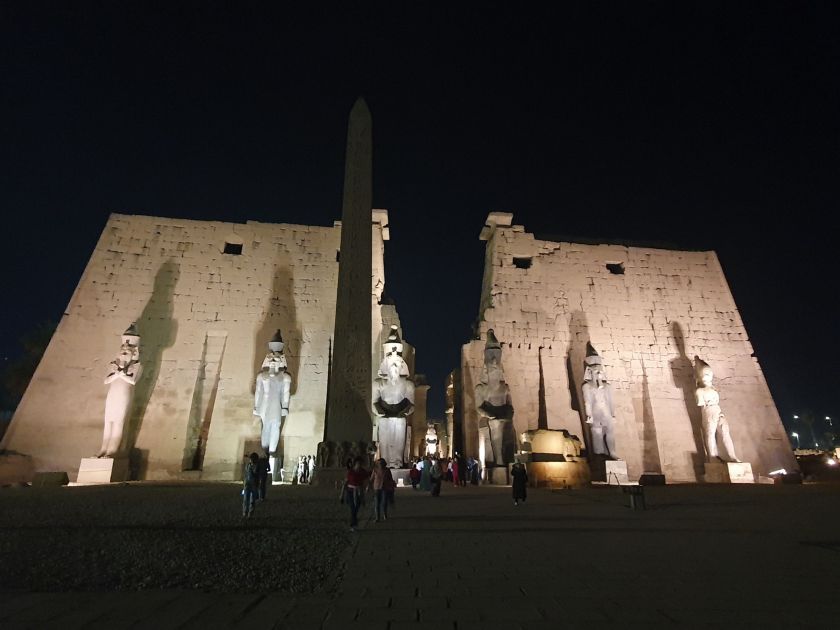
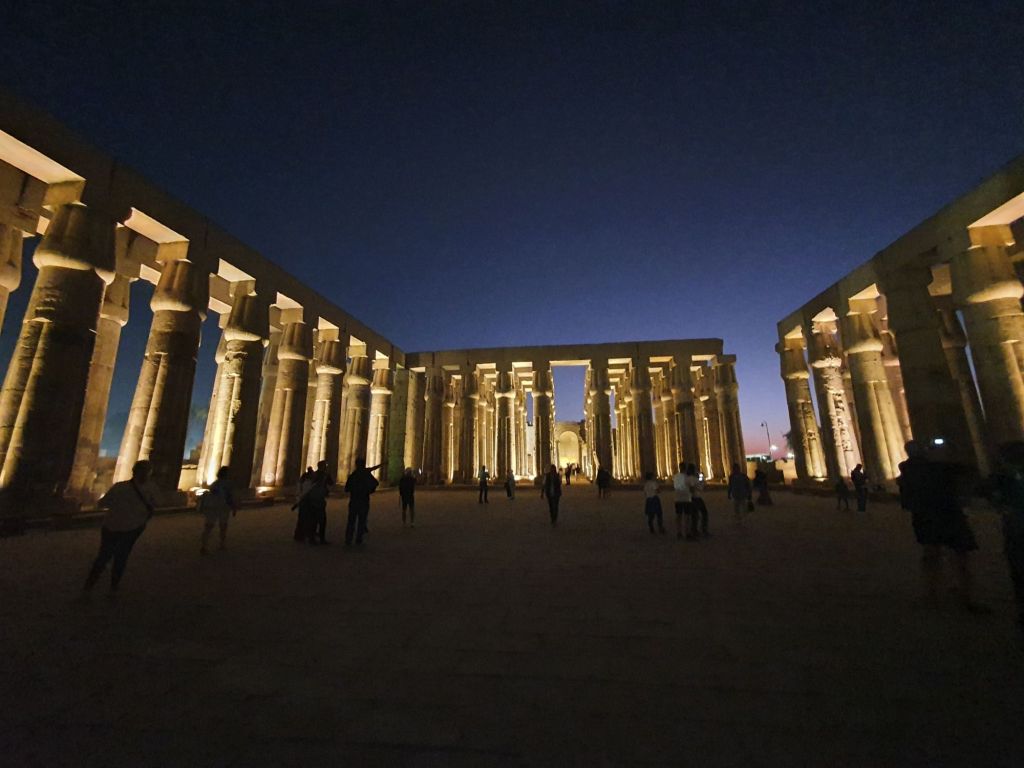
1700: In the evening, we visited the Luxor Temple and the Avenue of Sphinxes.
Luxor Temple
The temple of Luxor dates back to 1400 BC. This temple like many others, were buried under several meters of sand until it was uncovered in the 19th century.

The temple used to have two obelisks in front of it. Now there is only one, with the other one in Paris on Place de la Concorde.

There are hieroglyphs here referring to Alexander the Great as Pharaoh and the work done by Tutakhamun and Ramses II to extend the temple.
Avenue of Sphinxes
This is an ancient 2.7km road that runs parallel to the Nile and connects the Luxor Temple and the Karnak Temple.

Construction of the avenue began around 1600 BC and continued until 30 BC. There are over 1000 statues lining the route, and most of the statues (over 800) are Sphinxes, and the others are Rams and Ram headed lions. The discovery and restoration of the Avenue started in 1950s and took 7 decades. It was finally completed with a grand opening in November 2021.

Luxor Market
We also visited the Luxor market, selling everything from tourist memorabilia, clothes and spices. I didn’t enjoy the market visit to be honest. It had been a long day, and shopping in Egypt is not fun. The vendors are really quite pushy and would not hesistate to walk directly infront of you and shove something right under your nose. You only have to show the slightest interest in something and before you know it, you are surrounded by a group trying to sell you everything and it can be quite hard to extracate yourself from it.

Tip: If you are going on a Nile cruise, check where the boat is docking in Luxor. The best docks are near the temple of Luxor, where the Luxor and Karnak temples, Avenue of Sphinxes and the markets are all within walking distance. The Winter Palace Hotel in Luxor (where Death on the Nile 2004 TV movie was filmed) is also nearby. Most of the other docks are further away, and you have to rely on taxis to bring you to this part of town.
It’s going to be another very early start tomorrow, as we are going on a hot air balloon ride. So, after dinner on the boat, we decided to call it a day.
 Diary of a Tourist