Where and when: Kyoto, Japan. 10th October 2024
0900: We are taking the Shinkasen to Kyoto today. I love taking trains in Japan. The trains are clean, comfortable, fast and on time. Everything is clearly signposted and organised, so the language barrier isn’t a problem.

We are using the JR pass and reserved the seats a couple of days before. The seat reservation clearly indicates the carriage and the seat and on the platform it tells you exactly where to queue for your carriage and even tells you which end of the carriage to board from.

From Tokyo to Kyoto it takes 2 hours 40 minutes. There is enough time to drop our bags at the hotel before we head to the tea ceremony experience.
1330: We had a tea ceremony experience booked with Eclat Japon, via Get Your Guide.
It was at a traditional house in the Fushimi ward in Kyoto. We were warmly welcomed into the house by our hostess Hiromi-san and her team.
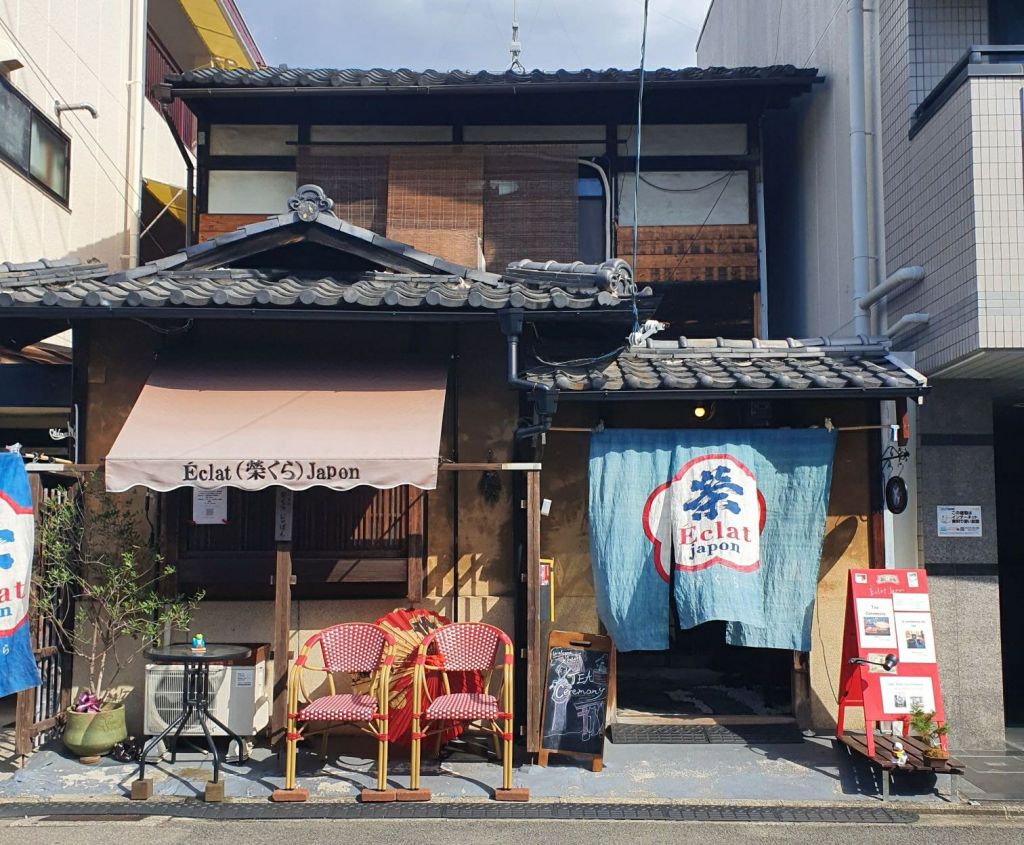
We booked the “tea ceremony with Kimono” experience. So the first thing to do was to be dressed in a kimono. We were led to a room upstairs and shown different types of kimonos we could wear. Whilst my mother and I chose the traditional ladies kimonos my dad chose the Kamishimo (Samurai kimono). Once we had picked the type of kimono, we were shown an array exquisite silk kimonos, in every colour imaginable and asked to pick one in our favourite colour.
Once we picked the individual kimonos to wear, our dressers got to work. The under-robe (also made of silk and very pretty) goes on, and then the outer robe. Then they tied the Obi around the waist. What I hadn’t appreciated was how the Obi provides great back and core support and helps you to maintain good posture.

The silk of the kimonos were so light, although we were wearing mutiple layers on a warm day we were perfectly comfortable. The ladies also did our hair up with lovely ornaments.

This was probably my favourite experience in Japan. I have always been intrigued about the Kimono and to be able to wear one was a dream come true.
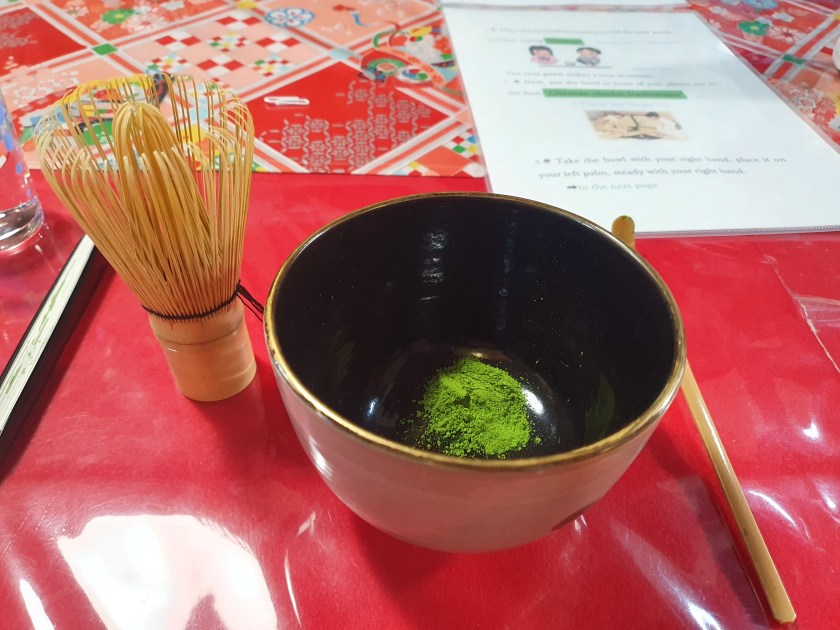
The tea ceremony itself was amazing – Hiromi-san demonstrated how to make the green matcha tea – matcha is ground green tea powder.

Every single step of the tea ceremony is precise and exact. Although the hardwork will be done by your host in preparing and serving the tea, you as the guest, have some very precise steps to take too. The tea is served from right to left so you get your tea before the person on to your left. It is polite to apologise to the person on your left for drinking your tea before they get their tea. (Apologising is an art form in Japan – one of the first phrases I learnt when working with Japanese companies was how to apologies for leaving the office before your collegues).
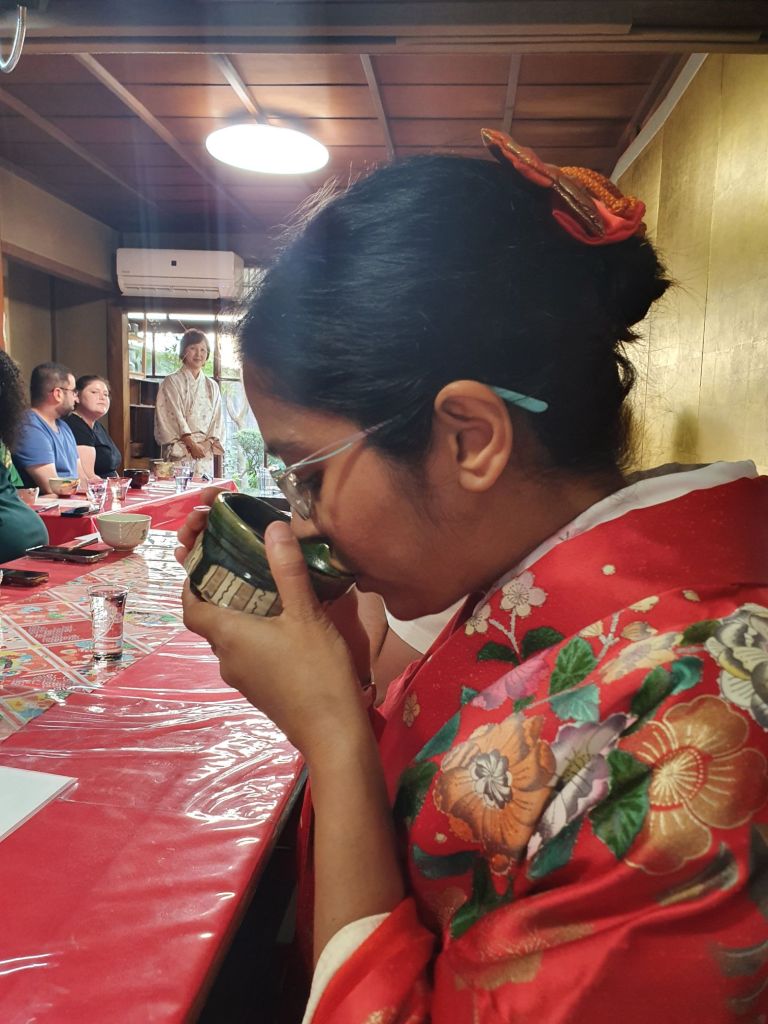
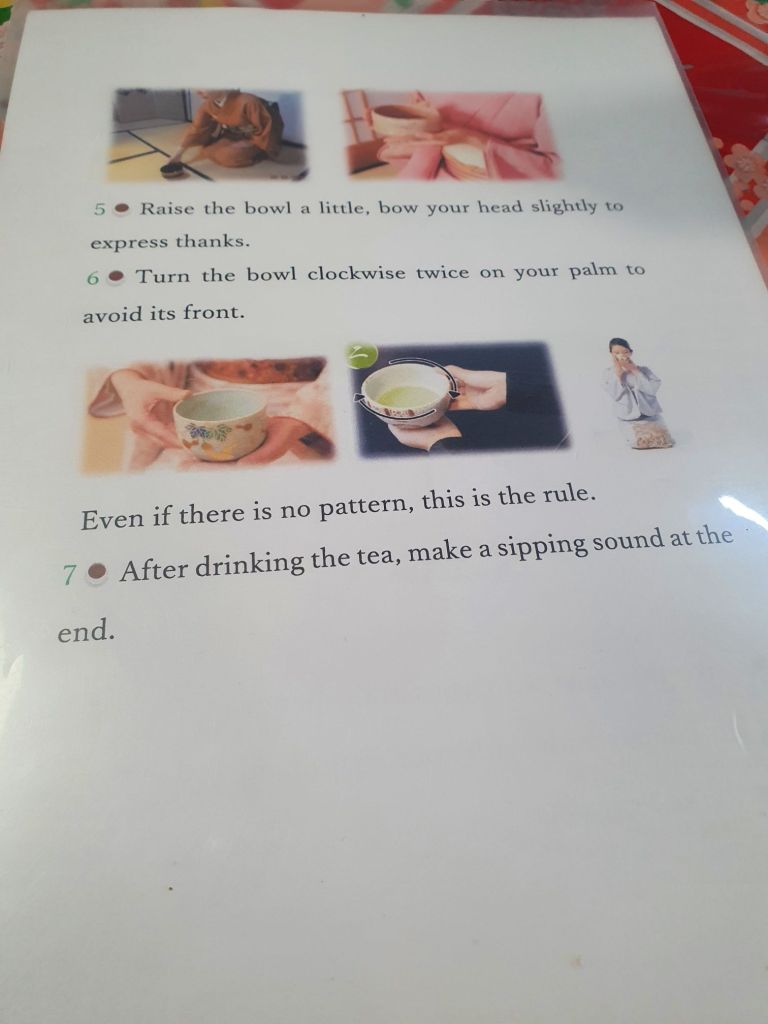
Then you thank you hostess for the tea, pick up the bowl with your right hand, place it on your left, hold it with your right hand, turn the bowl clockwise (so the pattern on the bowl faces the front) and drink it down in three sips (there isn’t a lot of liquid in the bowl, so it is easier than it sounds).
Sounds complicated? You bet it is. But thanks to the handy guide and really helpful (not to mention, patient) hosts, we muddled through and really enjoyed the experience.

Then we had chance to try making the matcha tea ourselves. As you may guess, each step in making the tea is as precise as drinking it. Everything from putting the matcha powder in your bowl to the wrist movement to mix the powder with hot water must be exact.
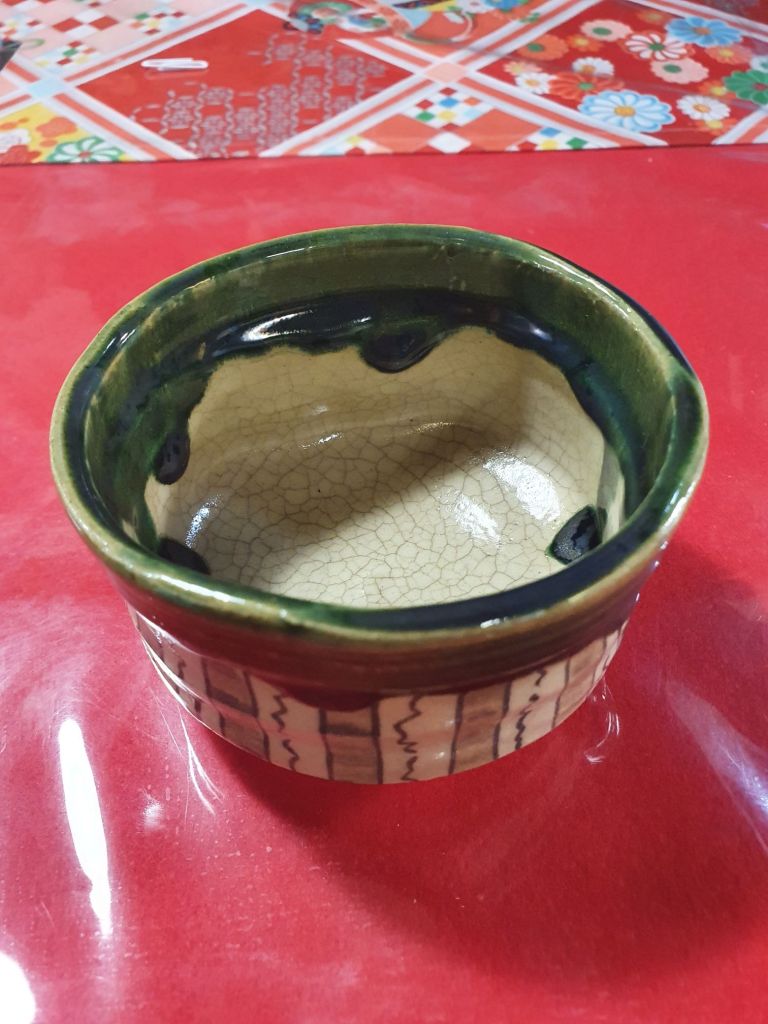


The tea ceremony is mostly associated with Kyoto but it was actually born in Osaka. Sen no Rikyu (1522-1591) of Sakai City introduced and documented the rituals of the tea ceremony. He also designed around 40 tearooms in the Kansai region. Toyotomi Hideyoshi, a great samurai leader (who also built Osaka castle) took the tea ceremony to heart and legend says that he had a tea ceremony room made out of pure gold. (But the story goes that he had disagreements with Sen no Rikyu and had Rikyu commit seppuku).
Learning the many rules of tea ceremony and the training usually takes years. There are different schools of tea ceremony where you can learn the craft and achieve different levels of qualifications.
Historically, the ceremony was reserved for men. Women were not allowed to participate in the tea ceremony until the Meji restoration in 1868.
Later in our trip I would find out that, as the tea ceremony came from the Samurai culture, to this day, the Japanese Imperial Family do not perform the tea ceremony (more on this in a later blog).
Tip: If you visit Kyoto, I would highly recommend the tea ceremony at Eclat Japon. It was hands down one of the best things we did during our two weeks in Japan. We enjoyed it so much and learnt a lot, in no small part thanks to the Hiromi-san and her team. They made us feel so welcome in their home. Also, definitely go for the option with the Kimono as this is well worth trying.
1630: After the tea ceremony, we returned to the hotel and checked in. Afterwards, we decided to take a trip down memory lane. We went to see the Kyoto Tokyu Hotel which was where my dad stayed during his many work trips to Kyoto.

He hasn’t been here for nearly 29 years, but according to him, the hotel has not changed one bit, including the carpets and decor. And what’s more impressive, nothing looked worn out – it all looked really clean and well kept. For me it was great to see the building on so many picture postcards I received when I was a kid; all sent by my dad when he was in Japan.

1900: For dinner, we decided to have Japanese curry rice. Another nostalgic favourite of my dad’s. We went to “Coco Ichibanya” – a Japanese chain restaurant exclusively serving curry rice. The restaurant was busy but we didn’t have to wait long for a table. You order and pay online (via the QR code on your table) and in no time at all, a steaming plate of curry rice is in front of you.


We also experienced the great Japanese service culture here. I had ordered the vegetarian curry rice, but didn’t realise the broth was meat based – the waiter came to the table to check if we really wanted that option, and when we realised our mistake, let us change the order even though the kitchen had started preparing the food.
Today had been a really enjoyable day. We loved the tea ceremony, wearing kimono and had a great trip down the memory lane. But tomorrow would arguably be the busiet day of the whole trip, so we decided to call it a night.
 Diary of a Tourist
Interesting that it takes years to master the tea ceremony. There must be many facets to it that the guest doesn’t see or know about. I will definitely do this when I (someday) get to Japan.
LikeLiked by 1 person
Yes, we were told about how what you see is tip of the iceberg- there are so many other things like the tatami mats on the floors, the scroll on the walls, the sounding on the gong at the start and so on, which I guess you only know when you learn about the tea ceremony.
LikeLiked by 1 person