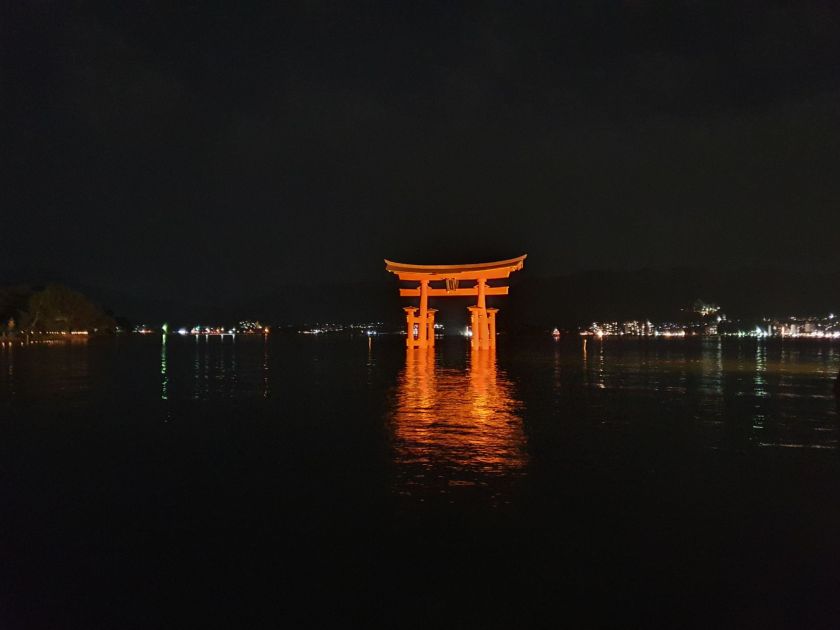
Where and when: Miyajima Island, 15 October 2024
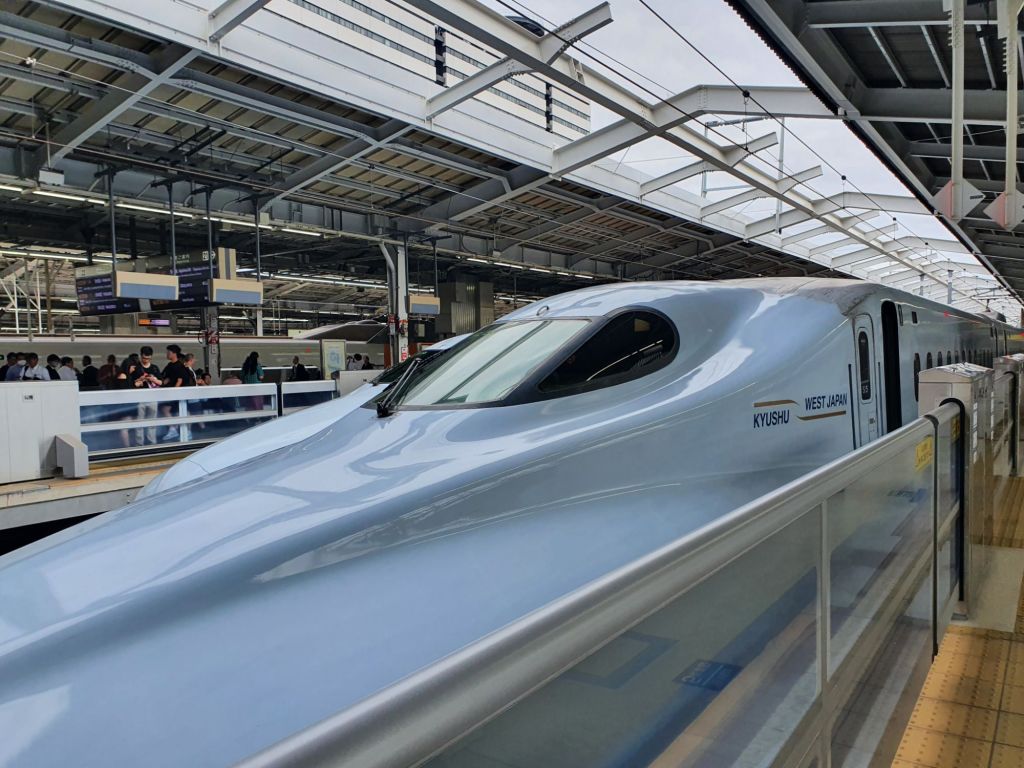
1020: Today we are heading South from Osaka in the Shinkasen. We weren’t able to get reserved seats on this train, so we had to board one of the unreserved carriages and hope that a seat would be available.
As on all stations, trains and their platforms are very well signposted. Once on the platforms, it tells you exactly where to stand to board the train.

The train arrives and there are plenty of seats available in the unreserved carriage, in part because the train starts in Osaka. It did get busy later on as we approached Hiroshima.
To get to Miyajima Island you have to alight at Hiroshima station, and get the JR Sanyo line to Miyamaguchi Station. From here, it is a short walk to the JR ferry terminal.
The ferry takes 15 minutes and there are frequent departures. Both the JR-Sanyo line and JR-ferry are covered by the JR pass (if you have one). So you don’t need to buy another ticket, but you do have to pay the tourist tax for Miyajima Island, (100 Yen) before boarding the ferry.
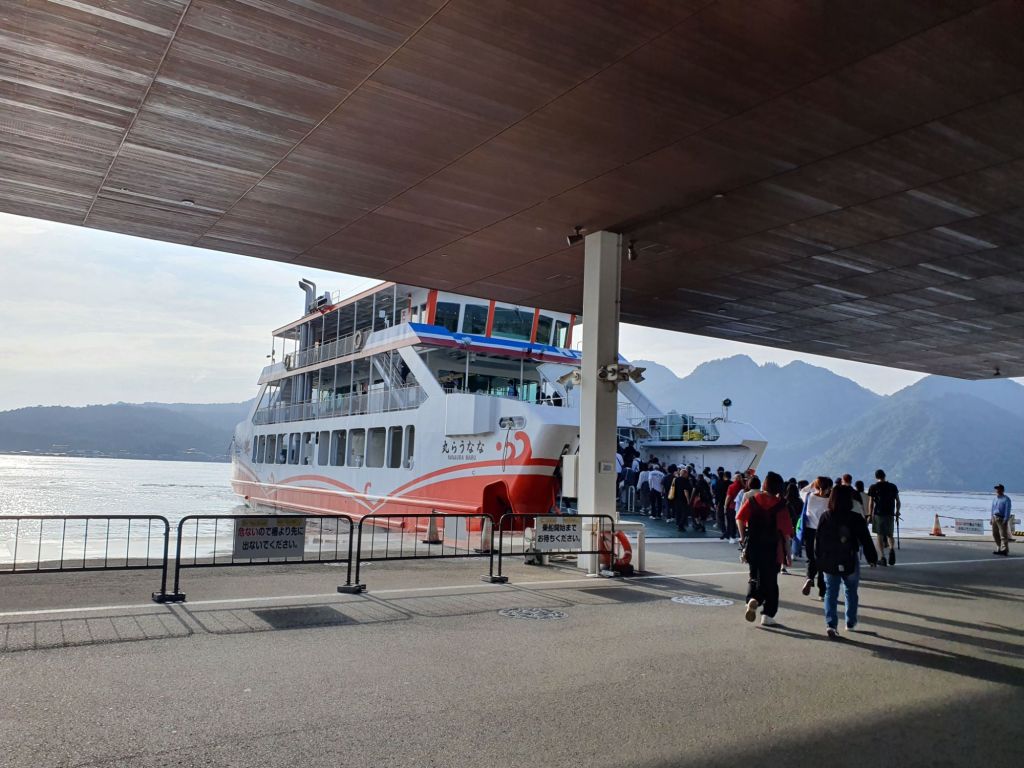
1300: On the way to the island, the ferry takes a slightly longer route to allow passengers to take a good look at Miyajima’s most famous sight, the large Torii Gate on the beach which, at high tide appears to float on water.

The island’s official name is Itsukushima, which is the same as the name of the key shrine on the island. But the island is more commonly referred to as “Miyajima”, Japanese for “shrine island”. The entire island is designated as UNESCO World Heritage site.

The island is known as a holy site of Shinto. The island’s highest peak, Mount Misen, has been worshipped since the 6th century. In 1168, Taira no Kiyomori, the most powerful man in Japan during the end of the Heian Period, built the Itsukushima Shrine on the island.
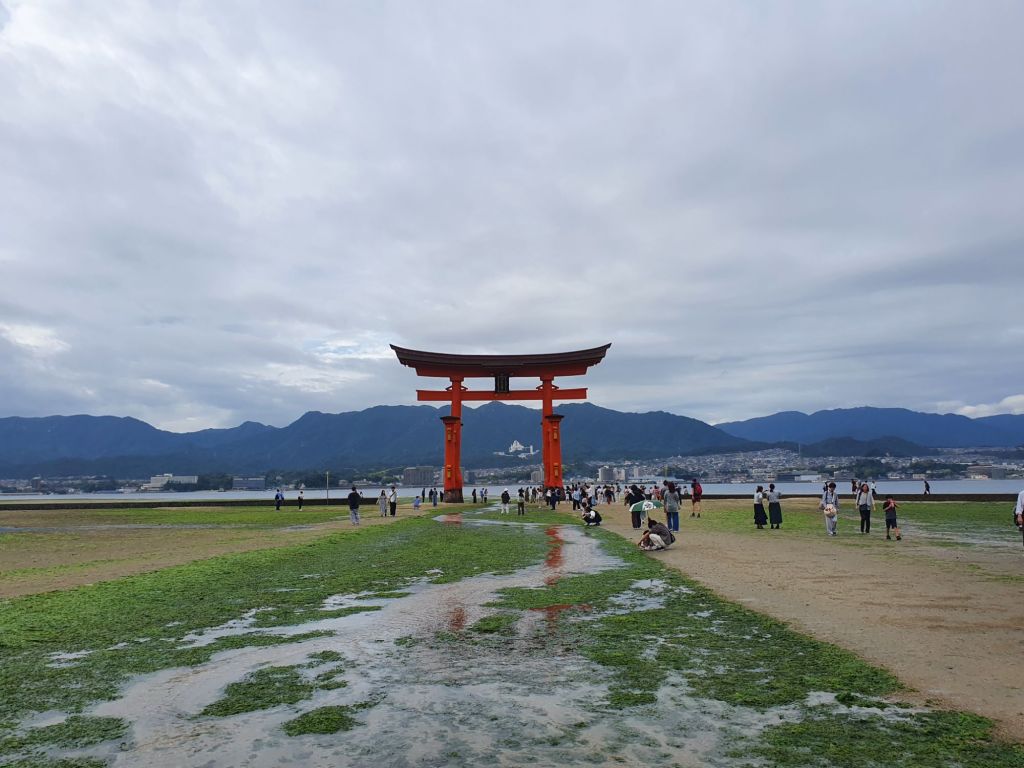
When we arrived at Miyajima, the tide was low, so we were able to walk right upto the Torii gate for a close look. At high tide, the lower 5 feet of the gate are submerge by the sea.
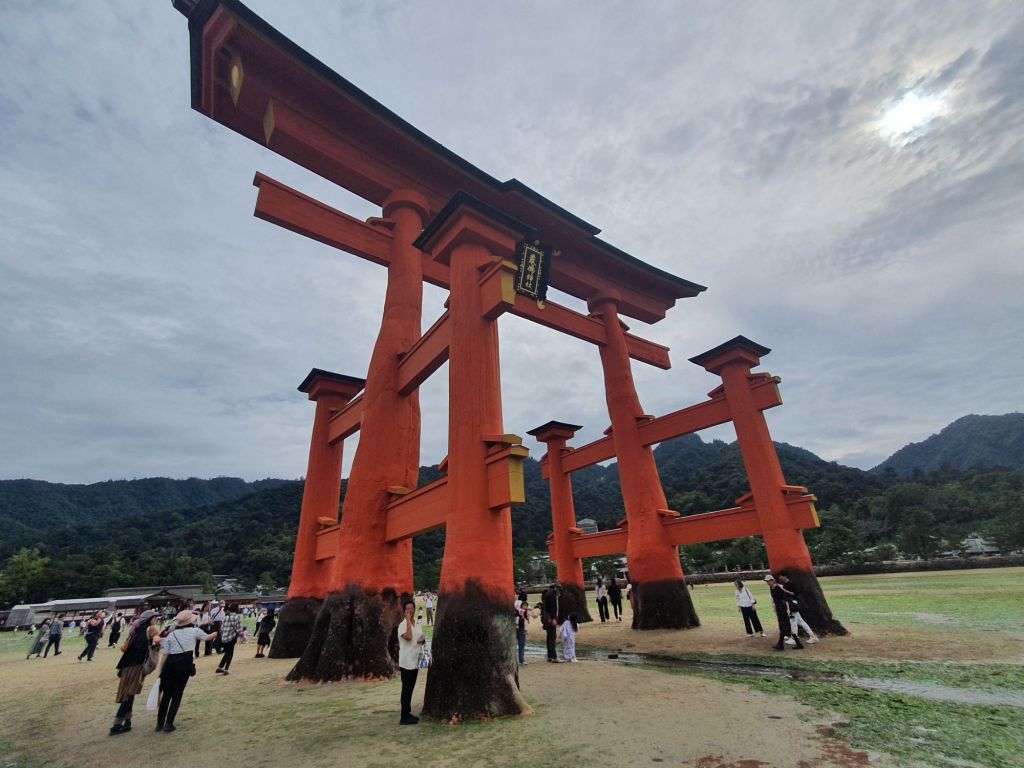
Like the Torii gate, the Itsukushima shrine’s main buildings are built over water. We went inside the shrine but during the day it was really crowded.
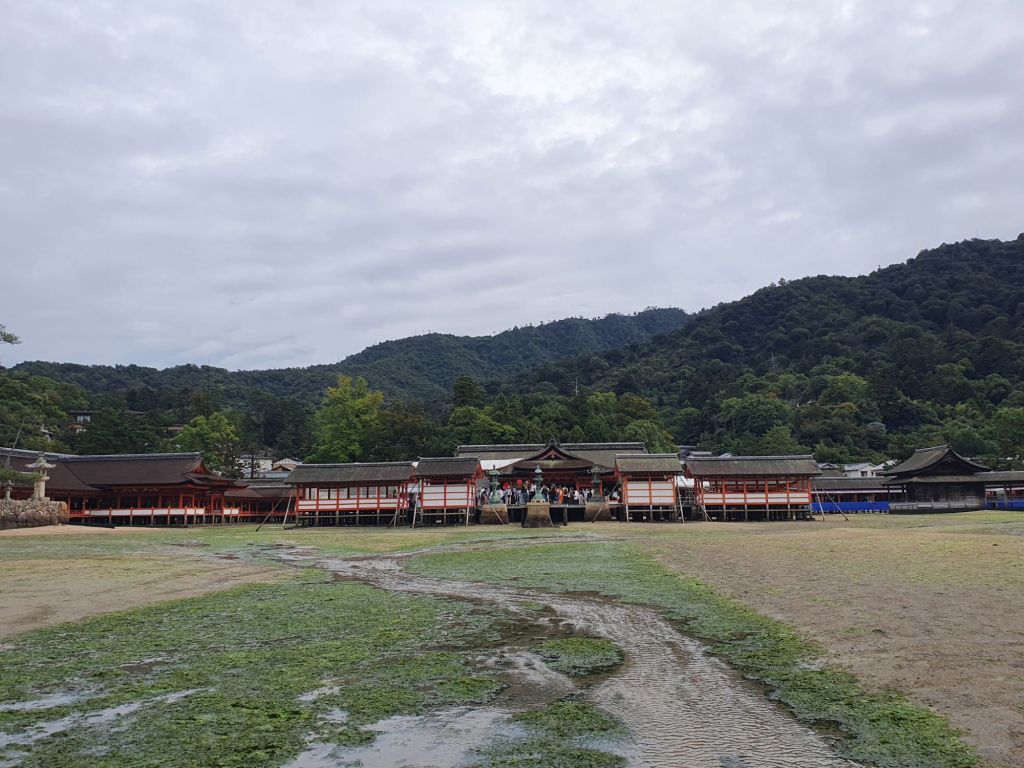
In addition to the foreign tourists, there are also many local tourists, especially school groups on field trips on tje island.
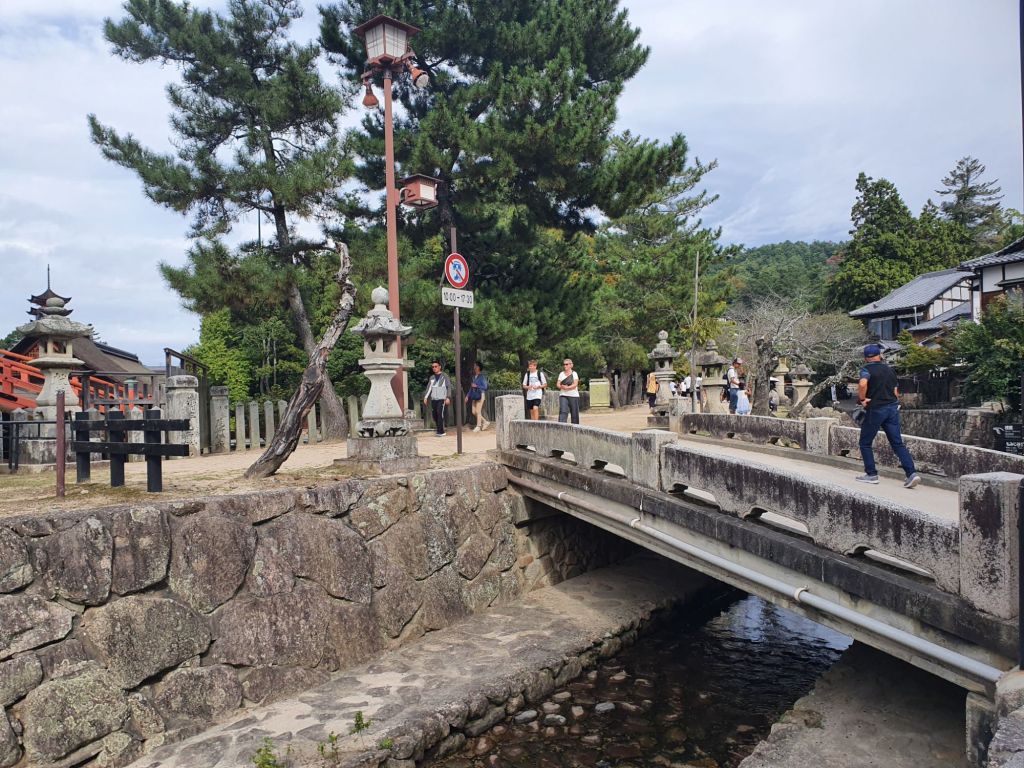
1430: We decided to spend the rest of the afternoon exploring mount Misen. There is a cable car that takes you to the top of the mountain, and the cable car station is about a 15 minute uphill walk from the shrine.


The ride up the mountain takes about 20 minutes and requires a transfer of ropeways along the way.
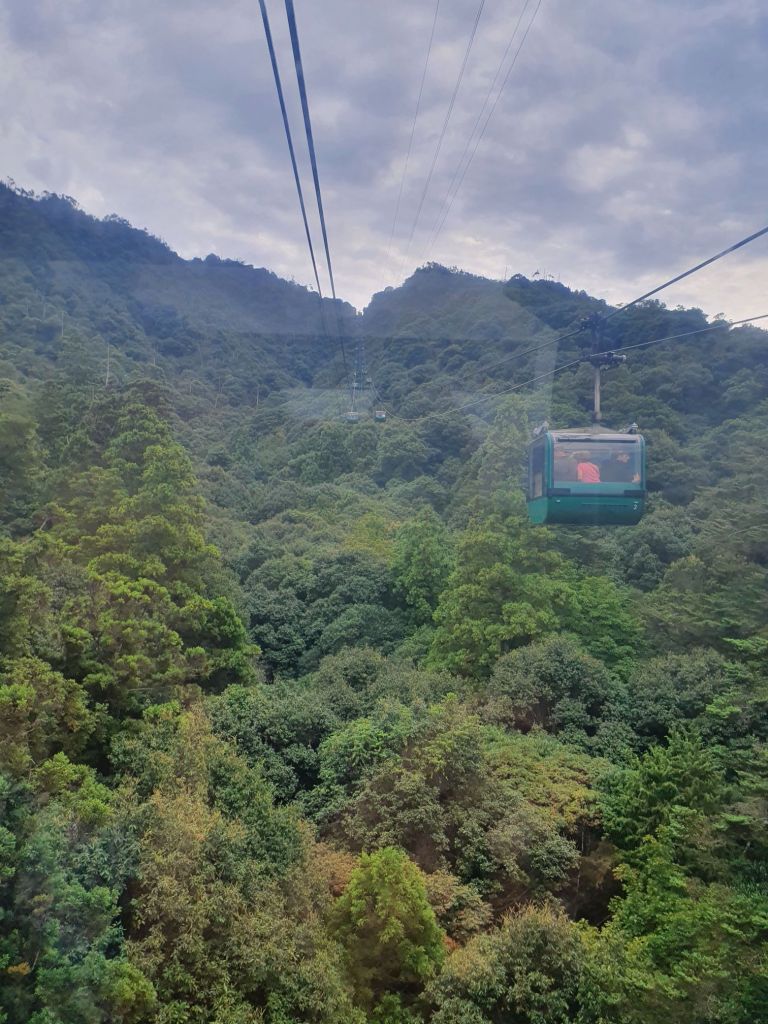
1500: Along the way, there are some spectacular views. Once you get to the top cable station, there is another 1km walk to Misen’s summit, uphill all the way. The last etirn cable car was st 1600, so we had to really push hard to get to Misen summit and back before closing time, but the trip was well worth it, for what you see at the summit.
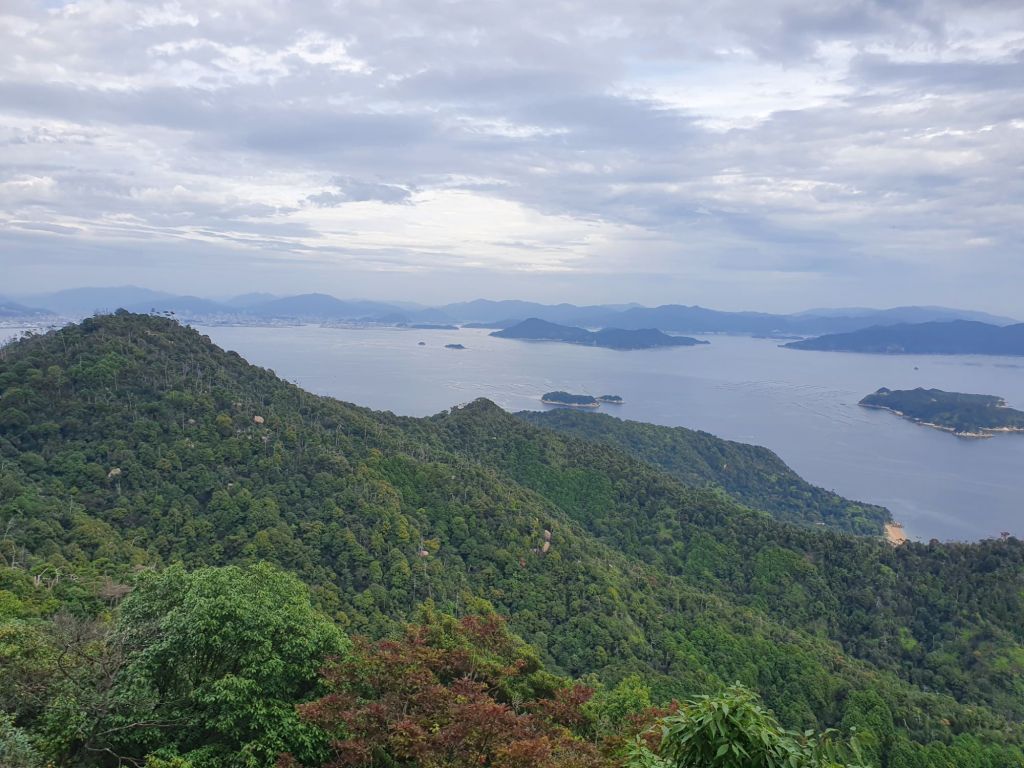
It is believed that Buddhism was first practiced on Mount Misen by Kobo Daishi, the founder of the Shingon sect and one of the most revered religious figures in Japan (see my trip to Koyasan the day before for more about Kobo Daishi).
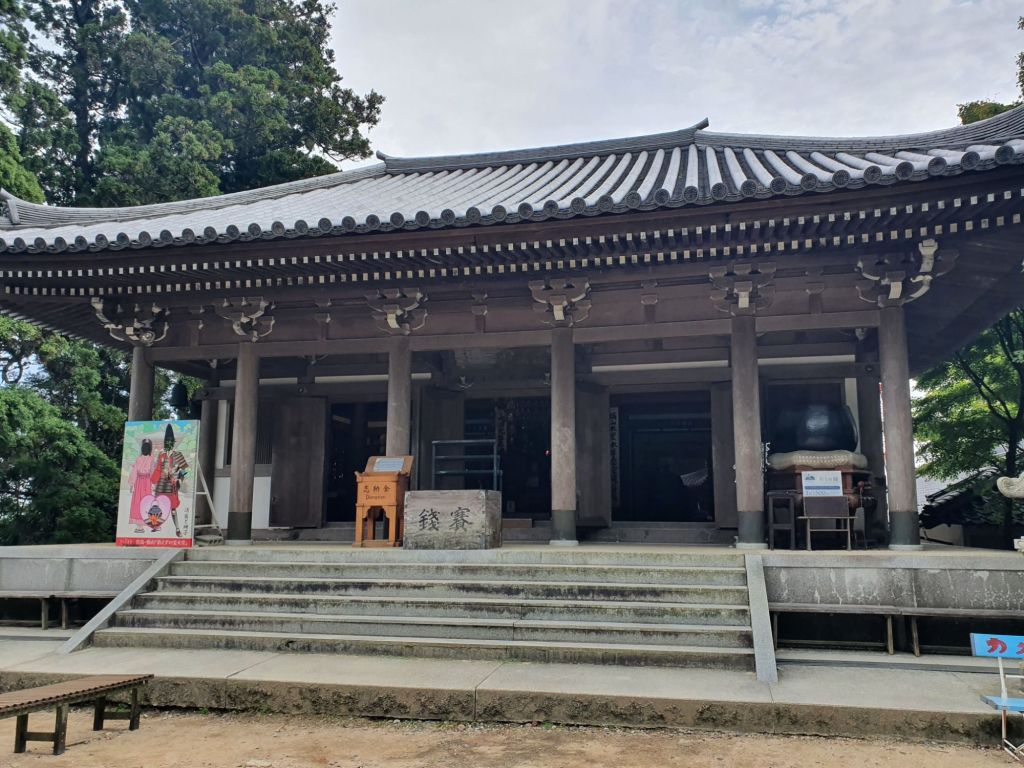
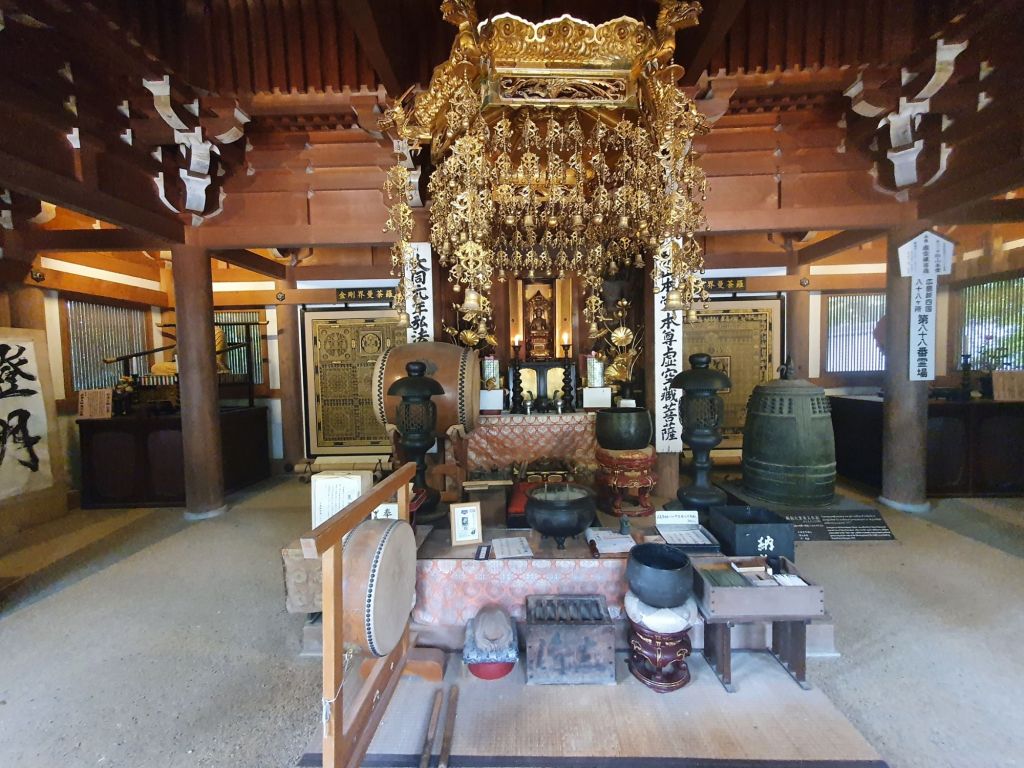
Just before the summit, you come across the the Misen Hondo (Misen Main Hall) and the Reikado Hall (Hall of the Spiritual Flame).
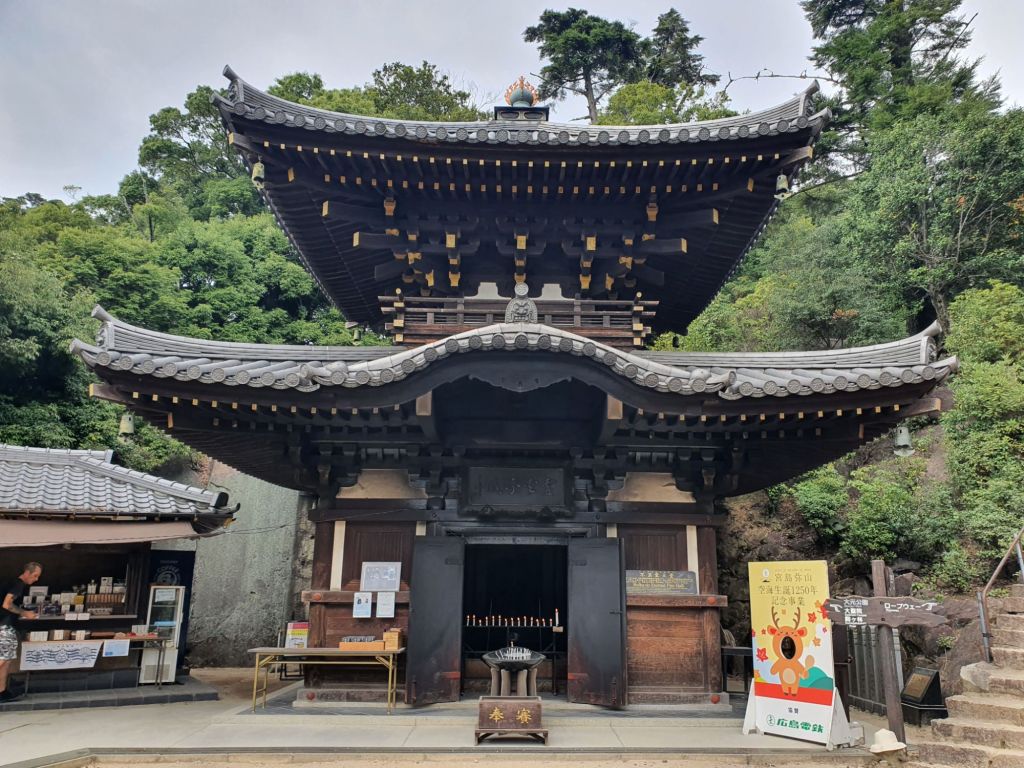
The Reikado Hall houses an everlasting flame, which is said to have been lit by Kobo Daishi when he began worshiping on the mountain in ~800 AD. It was also used to light the Flame of Peace in Hiroshima’s Peace Park.

1700: After mount Misen, we decided to settle into our home for the night, Hotel Miyajima Villa. I would highly recommend this hotel if you are considering staying in Miyajima overnight (and you really should).
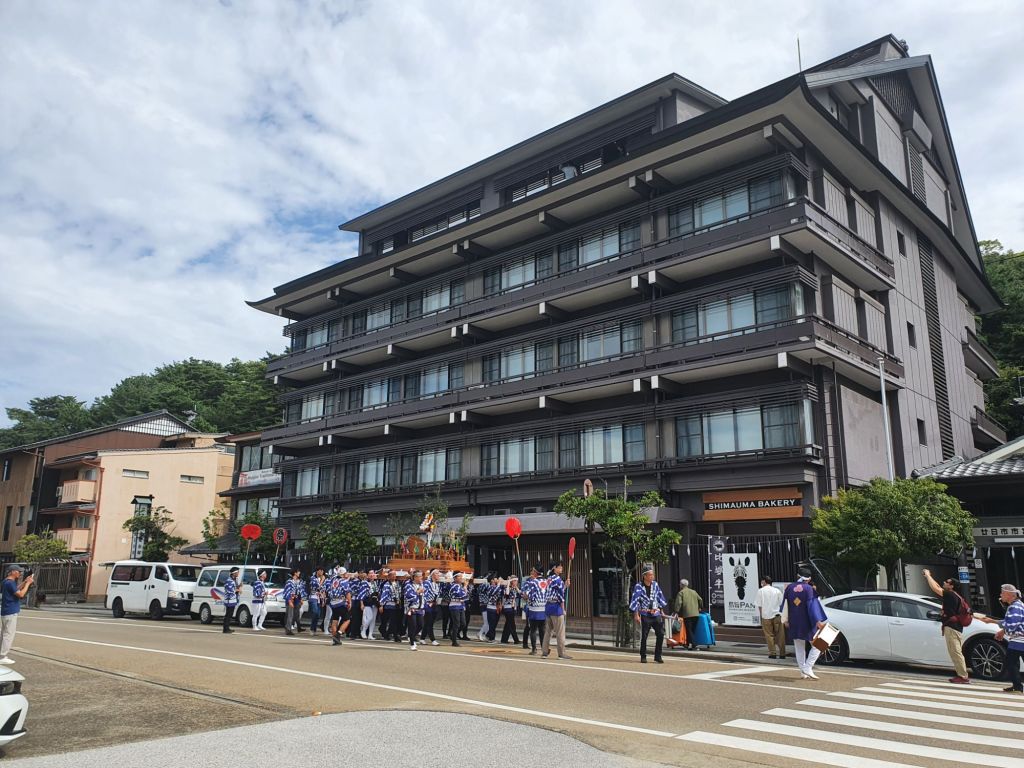
They have a lovely guest lounge (with free tea, coffee and ice cream), beautifully appointed rooms in the traditional ryokan style and an onsen.
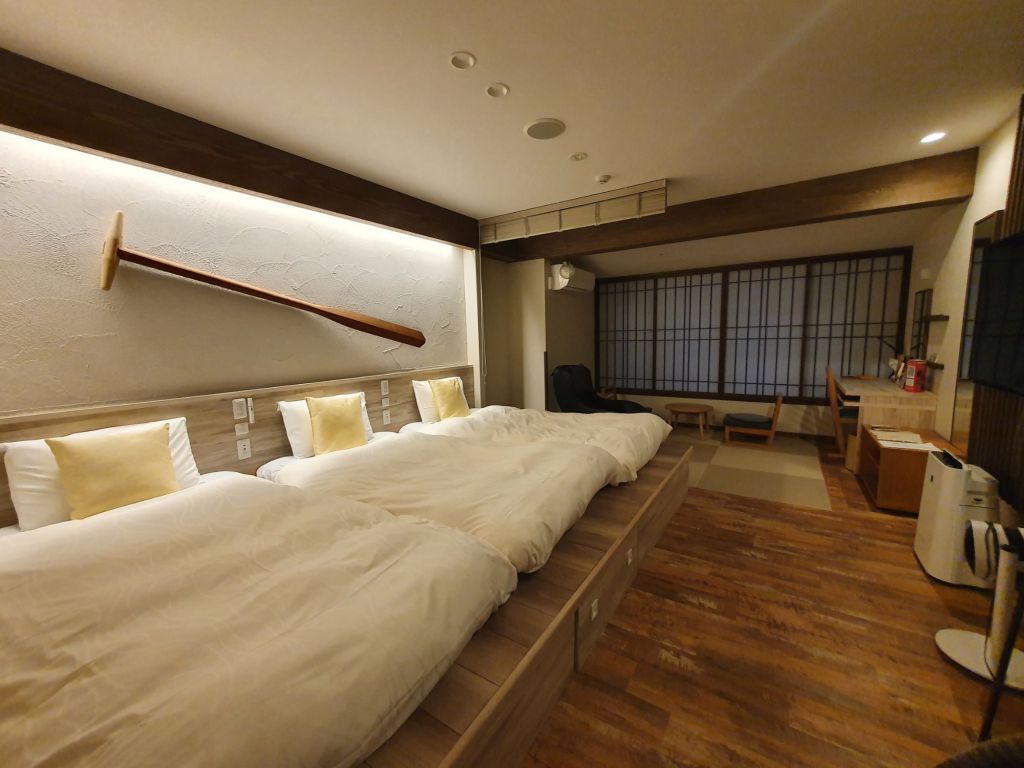
There is a whole host of etiquette for the onsen, and the hotel provides you with a leaflet in English explaining everything. There are seperate male and female onsens.
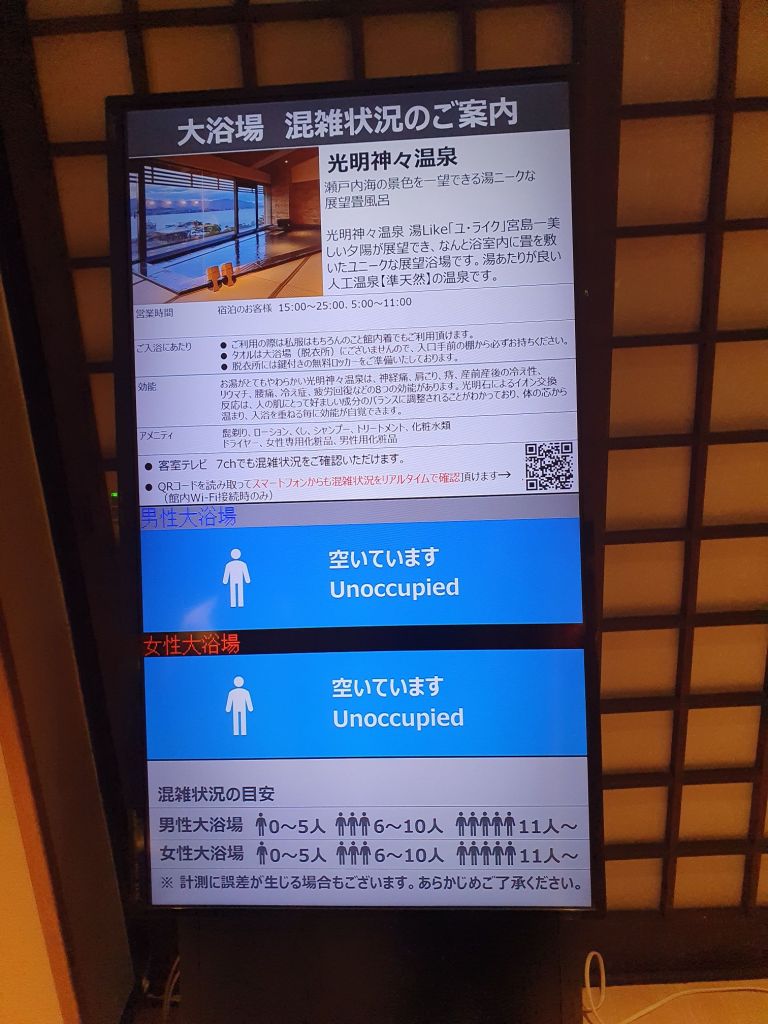
Water in onsens in Japan come directly from the hot springs. It is not mixed with any other water, in order not to dilute the mineral content. This does mean that onsen water is not cooled either. Larger onsen have several pools in varying temperature but I found the one in the hotel really quite hot (and I usually go for bathwater that is almost scalding at home!)
Tip: If you do go to Japan, do stay at least one night at a traditional ryokan with an onsen. They have a completely different feel to a normal hotel and is more relaxing. I hadn’t appreciated this until we got to Miyajima and if I had known this, I would have booked more stays at traditional ryokans hotels for our trip.
1900: In the evening, we decided to go for a wander around the island and I would say this was the best part of the day.
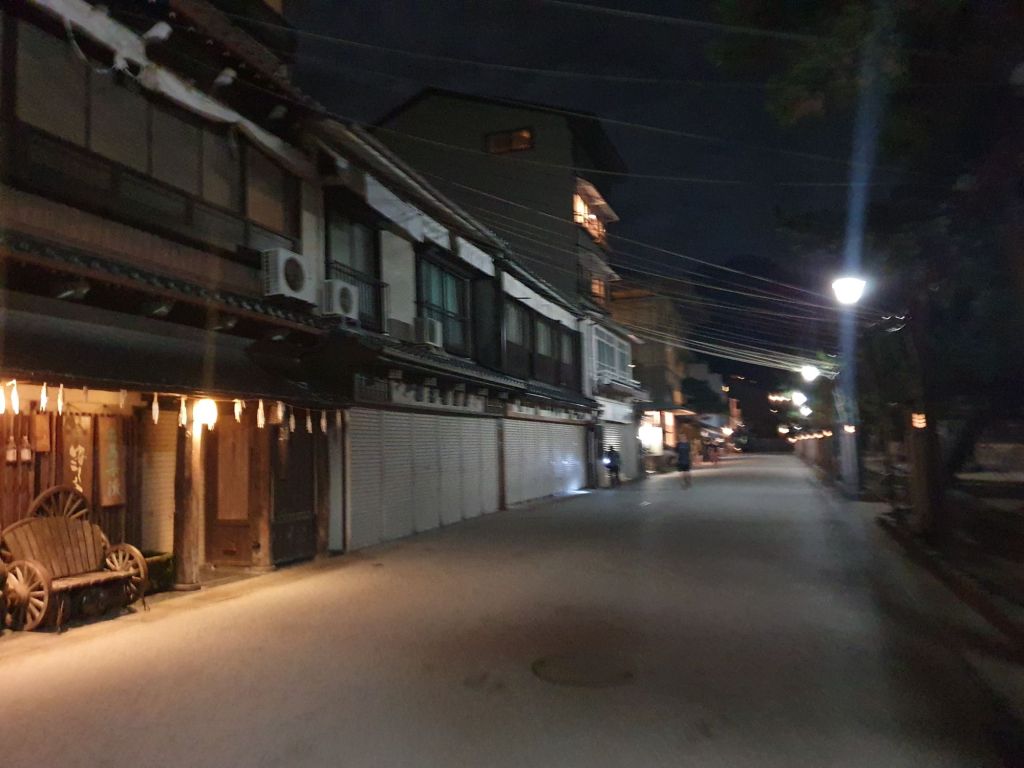
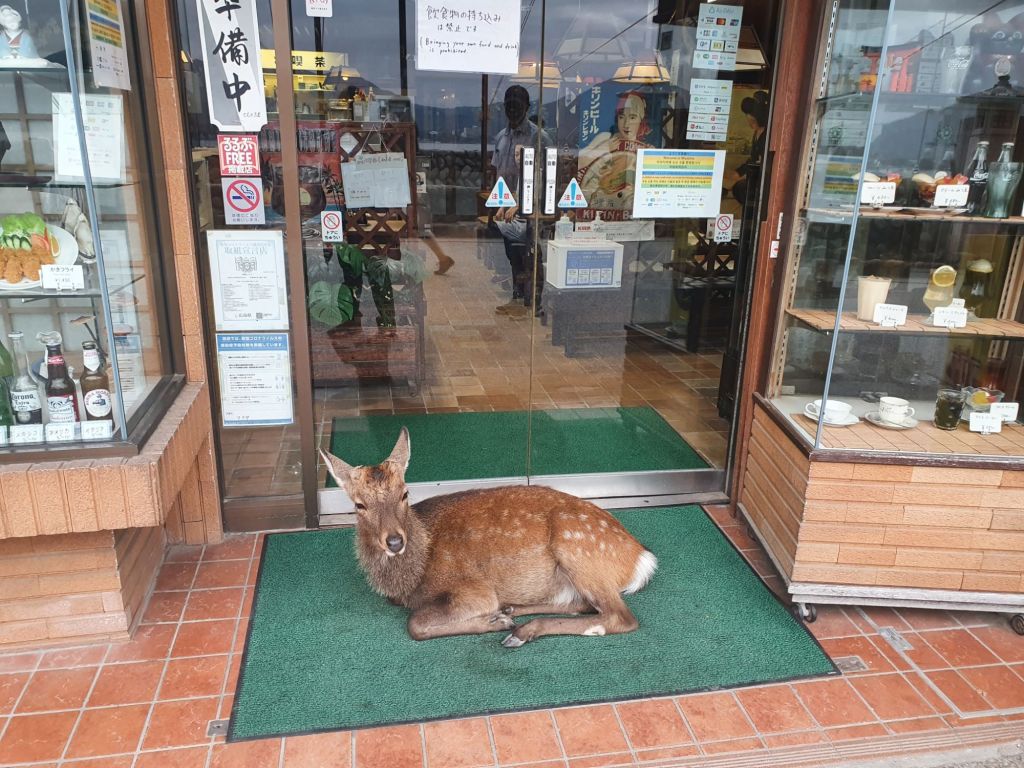
The crowds had gone, leaving only a few other overnight visitors and deer (Although as not as many as at Nara, Miyajima island have deer that freely roam around. But unlike at Nara, it is illegal to feed the deer on Miyajima Island).
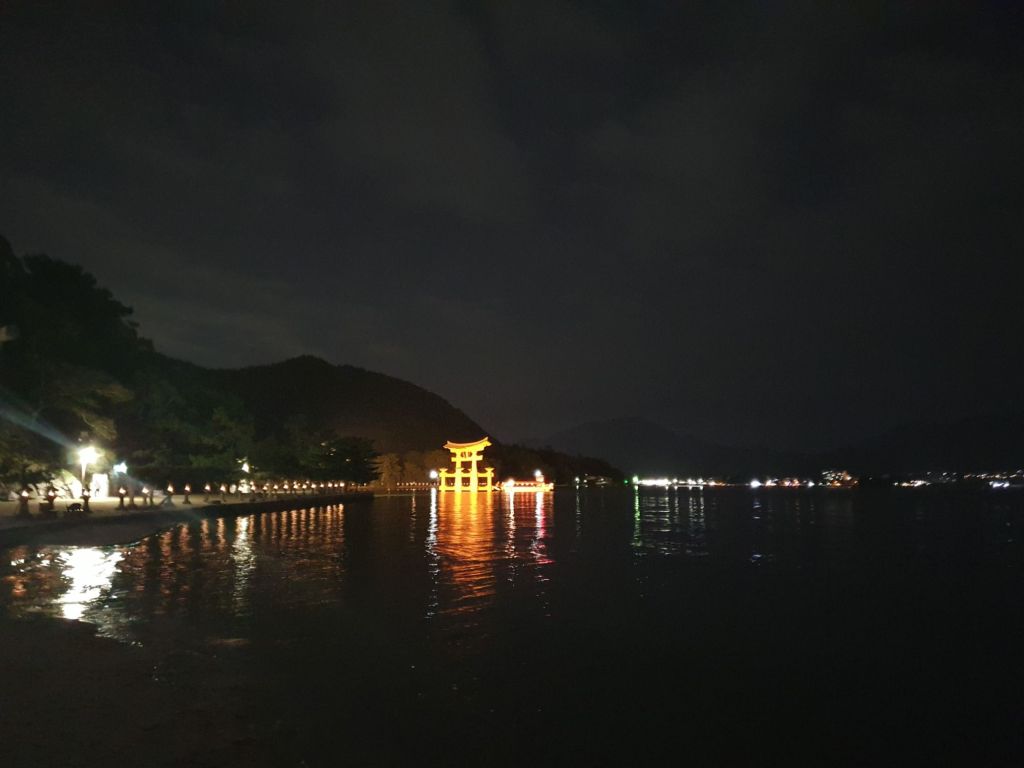
We walked back to the Itsukushima shrine and the Torii gate, now submerged in the full tide. It was fully lit up too and we could see why this is known as the three best views in Japan (the other two being the Matshushima Bay and Amanohashidate sand bar).

The Shrine usually closes at sunset, but we were here on one of the few days of the year where it is open after dark.
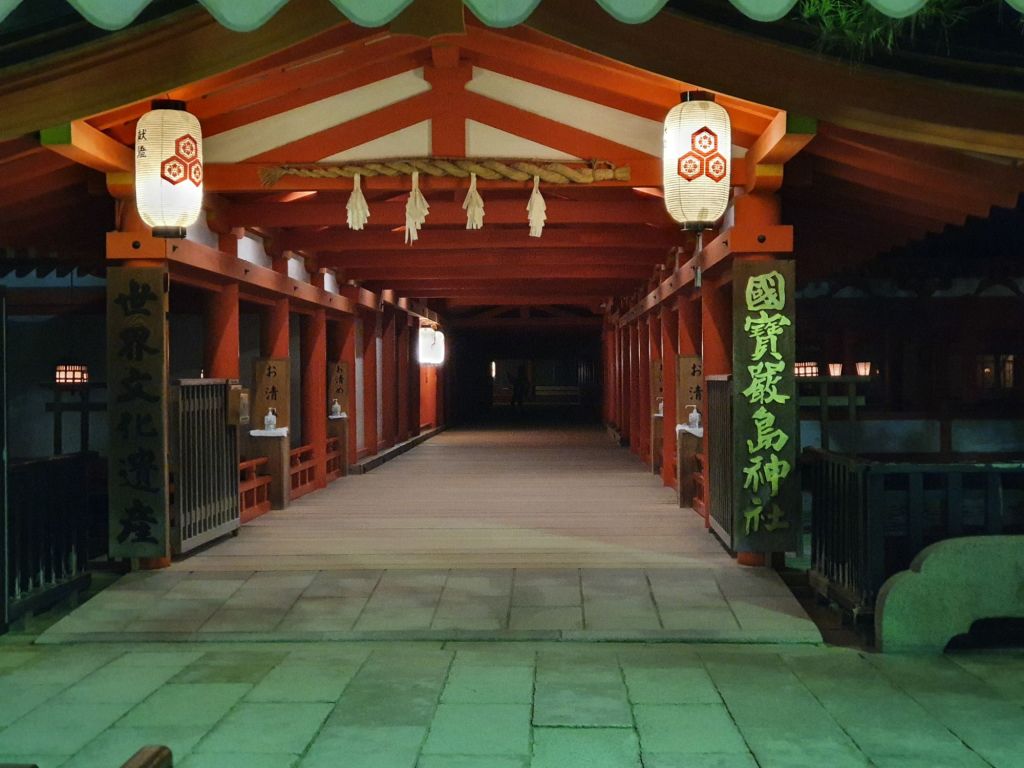
15th of October is the Chrysanthemum ceremony and “Bugaku” traditional court music and dance is performed on the lit-up stage at Itsukushima Shrine.
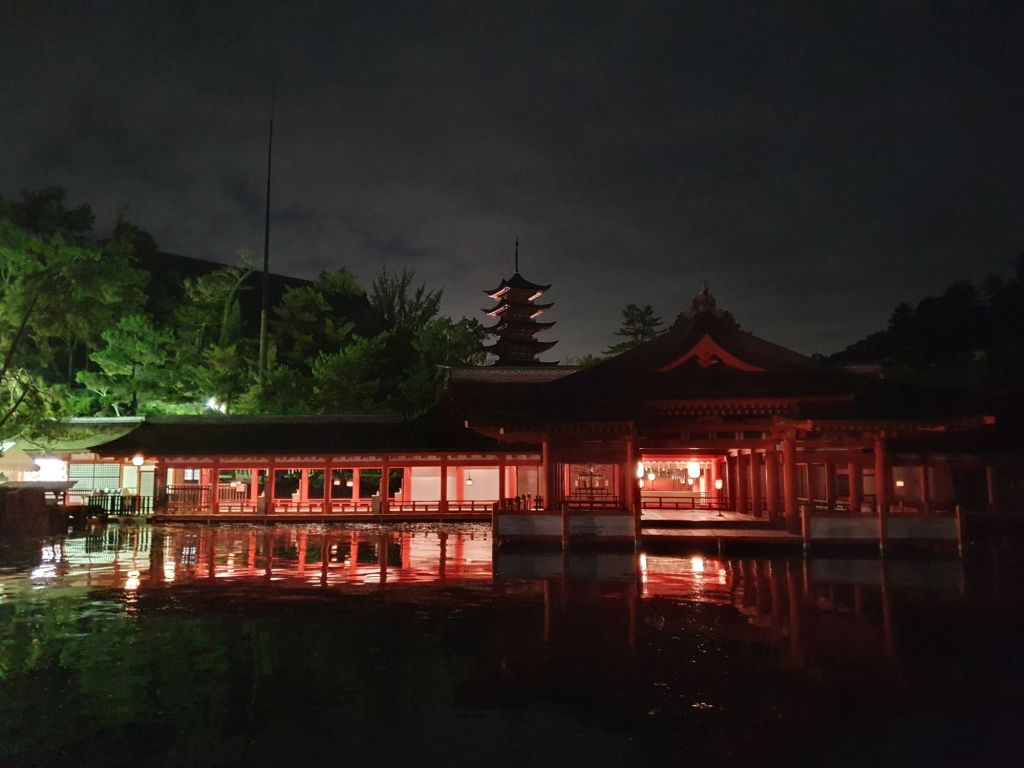
Tip: If you do visit Miyajima Island, plan to stay overnight. For me, it was the best day of our trip in Japan and it was largely due to staying overnight at the hotel. The best views of the island are at night when it is not busy and beautifully lit. Also, an overnight stay will allow you to visit the top of mount misen, and the hall of the spiritual flame which is historically and culturally significant.
 Diary of a Tourist
Love the deer in the storefront. How great that you were there when the shrine was open after dark – what luck! I would love to spend all my nights in Japan at a place with an onsen.
LikeLiked by 1 person
It was a great bit of luck, so nice when that happens 😃. Yes, definitely onsens all the way on a future Japan trip!
LikeLiked by 1 person