
Where and when: Kamakura and Tokyo, 17 October 2024
0900: On our way to Kamakura. It is about 1 hour on the train from Tokyo Shinagawa station.

Kamakura is one of Japan’s ancient capitals and was the seat of the Kamakura shogunate from 1185 to 1333, established by Minamoto no Yoritomo. After the downfall of the Kamakura shogunate, the city went into decline, but during the Tokugawa shoganate, it regained popularity as a tourist destination among those from Edo (today’s Tokyo). Kamakura is about 1 hour by train from Tokyo, so it is an easy day trip. We were going there specifically to see the Great Buddha of Kamakura.

The Great Buddha (Daibutsu) of Kamakura is a bronze statue of Amida Buddha, which is on the grounds of Kotokuin Temple. It is 11.4 m high, and is the second tallest bronze Buddha statue in Japan (tallest is the statue in Nara’s Todaiji Temple).

The statue was cast in 1252 and originally located inside a large temple hall. However, the temple buildings were destroyed many times by typhoons and a tsunami in the 14th and 15th centuries. So, since the late 15th century, the Buddha has been sitting in the open air. As a result, the statue weather exposed green colour to it.
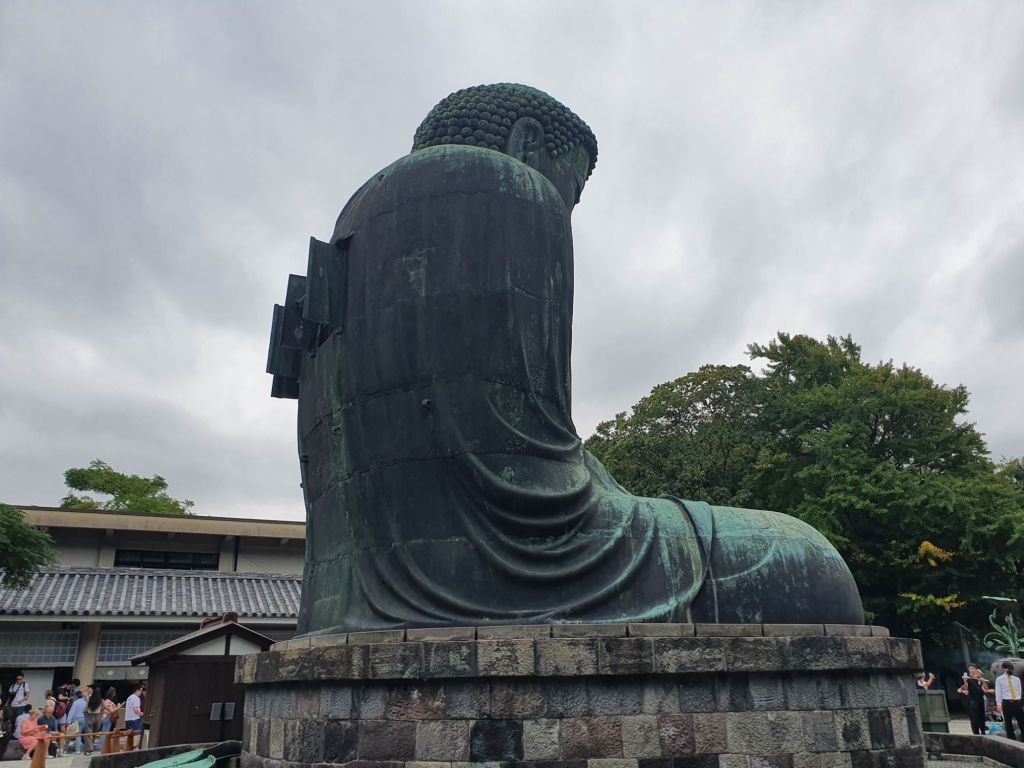
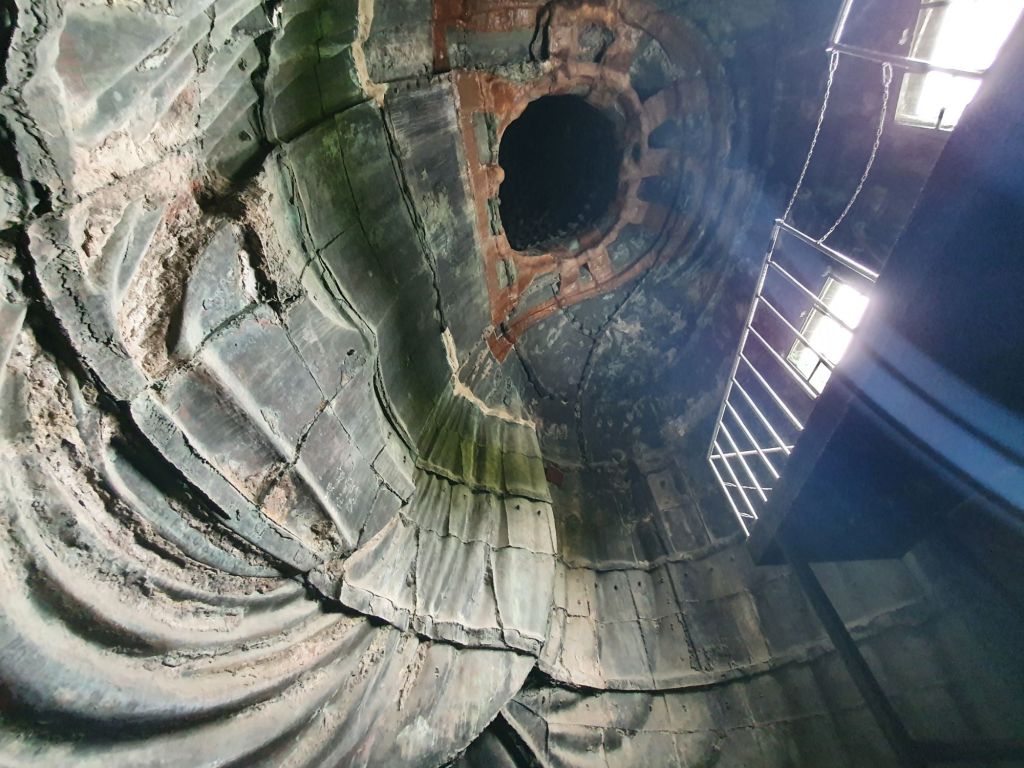
The statue is hollow, and you can explore inside it. This is quite interesting as you can see how the statue was put together by fitting bronze panels together. On summer days it can get very hot inside the statute, so it is recommended not to spend more that a minute or two inside.
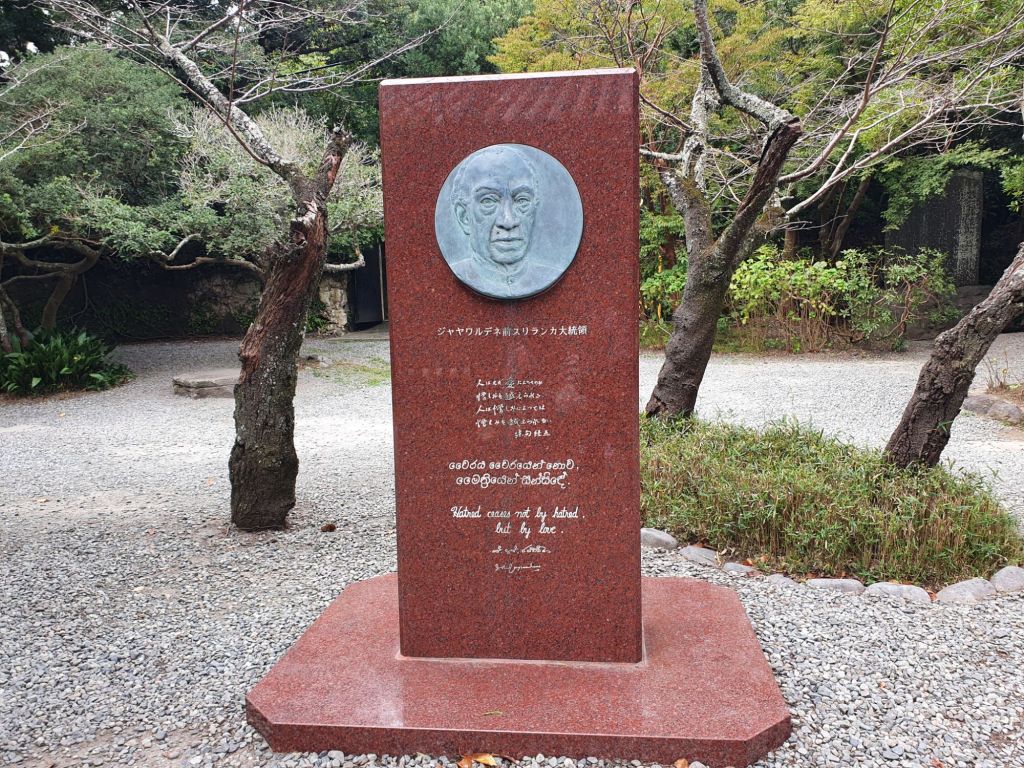
There was a another reason we wanted to visit Kotokuin temple – it has a memorial plaque to the first executive president of Sri Lanka, Mr. J R Jayawardena. He was highly respected in Japan for his call for peace and reconciliation with post-war Japan at the Peace Conference in San Francisco in 1951. In his speech to the conference he stated:
“We in Ceylon were fortunate that we were not invaded, but the damage caused by air raids, by the stationing of enormous armies under the South-East Asian command, and by the slaughter-tapping of one of our main commodities, rubber, when we were the only producer of natural rubber for the Allies, entitle us to ask that the damage so caused should be repaired.
We do not intend to do so, for we believe in the words of the great Teacher whose message has ennobled the lives of countless millions in Asia, that “hatred ceases not by hatred, but by love”. It is the message of the Buddha, the great Teacher, the founder of Buddhism, which spread a wave of humanism through South Asia, Burma, Laos, Cambodia, Siam, Indonesia and Ceylon, and also northwards through the Himalayas into Tibet, China, and finally, Japan, which bound us together for hundreds of years with a common culture and heritage.“
And Japan built a tribute to J R Jayawardena at the Kotokuin Temple. The words of the Buddha that he quoted, “hatred ceases not by hatred, but by love” are inscribed into the memorial. Growing up in Sri Lanka, every child knows this story. So to come and see the tribute in person, has been on my bucket list for a very long time.
In the afternoon we spent a bit of time in Akihabara, exploring the shops and some traditional food.


In the evening, we headed over to bustling Shibuya. Shibuya is most famous a for “the busiest crossing in the world” and when you are there, it is easy to see why. It is a junction with 5 pedestrian crossings in different directions. Every 2 minutes, the pedestrian crossing turns green and commotion begins, with people walking in 10 different directions. Because this is Japan, what should be utterly chaotic isn’t, with everyone managing to avoid bumping into each other with smooth agility.


You can also visit the nearby statue of Hachiko, a dog famous for his loyalty. As a puppy, Hachiko used to wait at Shibuya station daily for his owner to return from work, and he carried on waiting for 9 years after the owner had died.

 Diary of a Tourist