Where and when: Lille, France, December 2025
My first trip to Lille was long before I started this blog in 2015. To be honest, I don’t remember much about it, except that it was a pleasant and somewhat understated city. So when the opportunity came up for an overnight stay in Lille on the way to Strasbourg in December, I was more than happy to take it.
Lille is surprisingly easy to reach from the UK. It’s around 1 hour 25 minutes by Eurostar from London St Pancras, making it one of the most convenient French cities for a short break. We left Birmingham International at 0730, travelled via London, and arrived in Lille at 1330. In hindsight, we could easily have taken the 0830 train and still arrived in Lille at the same time.

A Brief History of Lille
Lille’s history stretches back over more than a thousand years. What began as a small settlement on the Deûle River grew into an important medieval trading town thanks to its strategic position between northern Europe’s major commercial routes.
During the Middle Ages, Lille became part of the County of Flanders and prospered through textile production and trade. In the 14th century it passed to the Duchy of Burgundy, and later, in the 16th century, to the Spanish Netherlands. After several conflicts and sieges, Lille was conquered by France under Louis XIV in 1667 and formally annexed by the Treaty of Aix-la-Chapelle in 1668.
The city flourished as an industrial centre in the 19th century, particularly for textiles, before reinventing itself in the late 20th century as a cultural, educational, and economic hub of northern France. Today, Lille blends its Flemish heritage seamlessly with its French identity.
With the introduction of the Eurostar, Lille became even more accessible, opening it up not just to tourists but also to business travellers from the UK.
A Self-Guided Walking Tour
I had booked a guided walking tour for 3pm, but frustratingly the tour company cancelled just as I was boarding the Eurostar. After a bit of research en route, I decided to try a self-guided walking tour using the City App Tour.
The app offers a roughly four-hour walking route, clearly marked on a map, with flags indicating points of interest. As you approach each site, the app notifies you and plays an audio explanation. It turned out to be an excellent way to explore the city at our own pace, and this is how we spent the next few hours (re)discovering Lille.
Lille-Europe and Lille-Flandres Stations
We began our tour at Lille-Europe station, where we arrived. When the high-speed rail network was being planned, then-mayor Pierre Mauroy played a crucial role in lobbying for the TGV and Eurostar lines to pass through Lille rather than bypassing it (as happened with Amiens). His efforts resulted in Lille becoming a major rail hub linking London, Paris, and Brussels, which played a key role in the city’s economic regeneration.
Close to Lille-Europe are two prominent towers; Tour de Lille, also known as the ski boot, standing at 116 metres, one of the tallest office buildings in France. The other is tour EuroLille, at 110 metres.

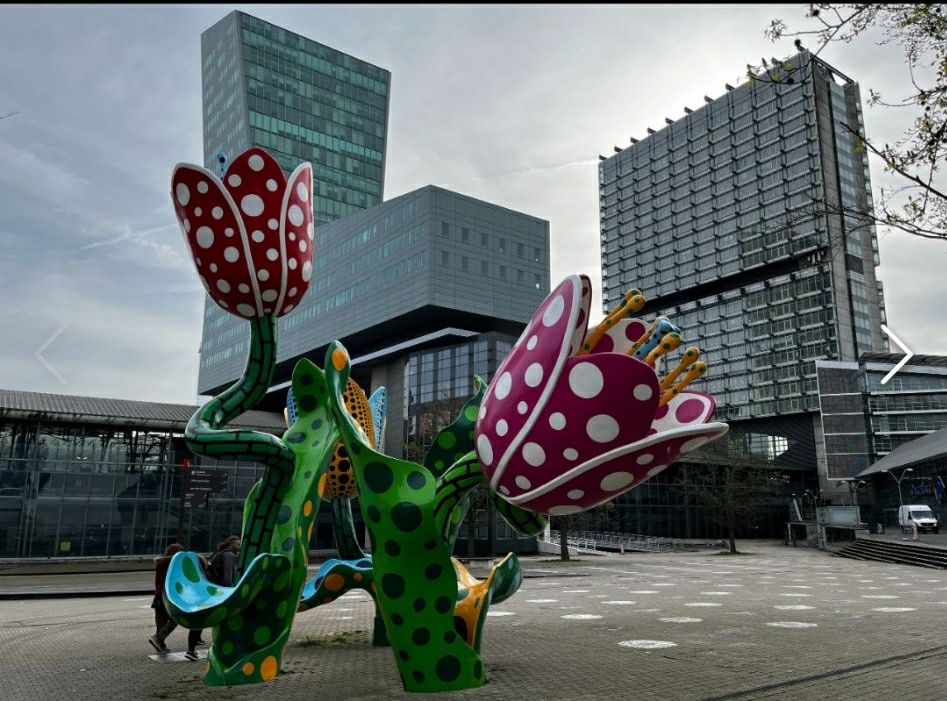
Between Lille-Europe and Lille-Flandres stations stands the colourful sculpture Tulips of Shangri-La, featuring eight large tulips rising from the central boulevard.
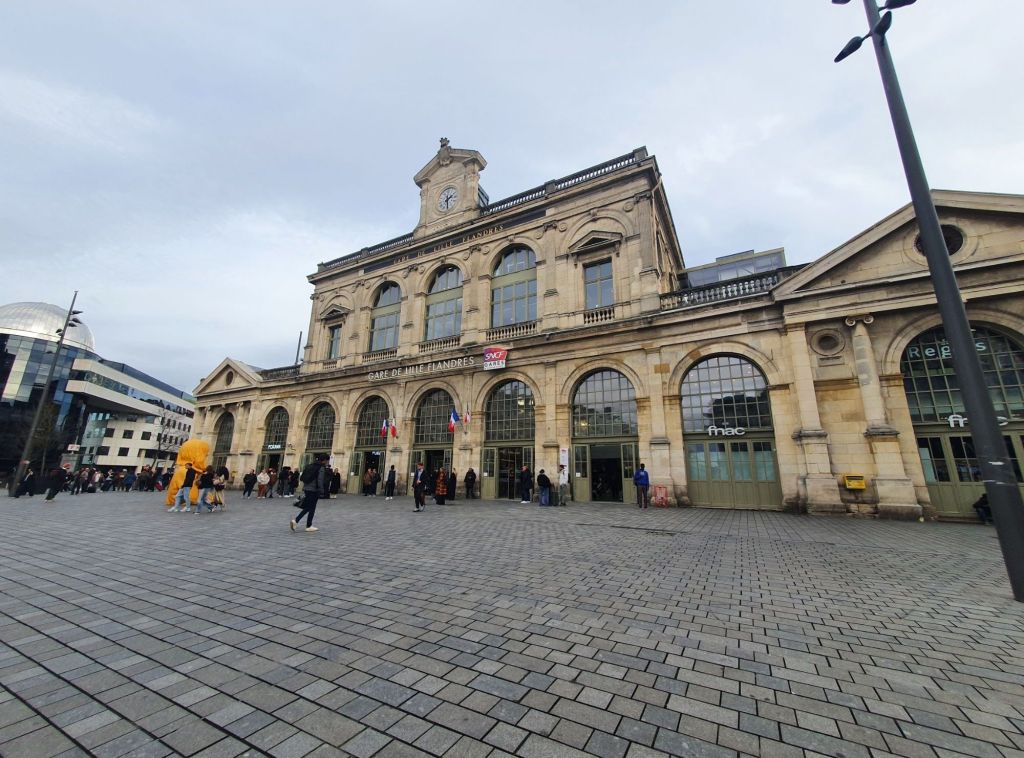
Lille-Flandres station is the city’s original railway station. Built in 1867, its façade has a fascinating history: it was originally the façade of the Gare du Nord in Paris. When the Paris station was rebuilt, the old façade was dismantled, transported to Lille, and reconstructed brick by brick. The station was renamed Lille-Flandres after the arrival of its modern neighbour, Lille-Europe.
Rue Faidherbe and Théâtre Square
From the station, we walked down Rue Faidherbe, one of the widest streets in Lille at 22 metres. It connects Lille-Flandres to Place du Théâtre. The street was created in 1929, replacing what had previously been a market area.
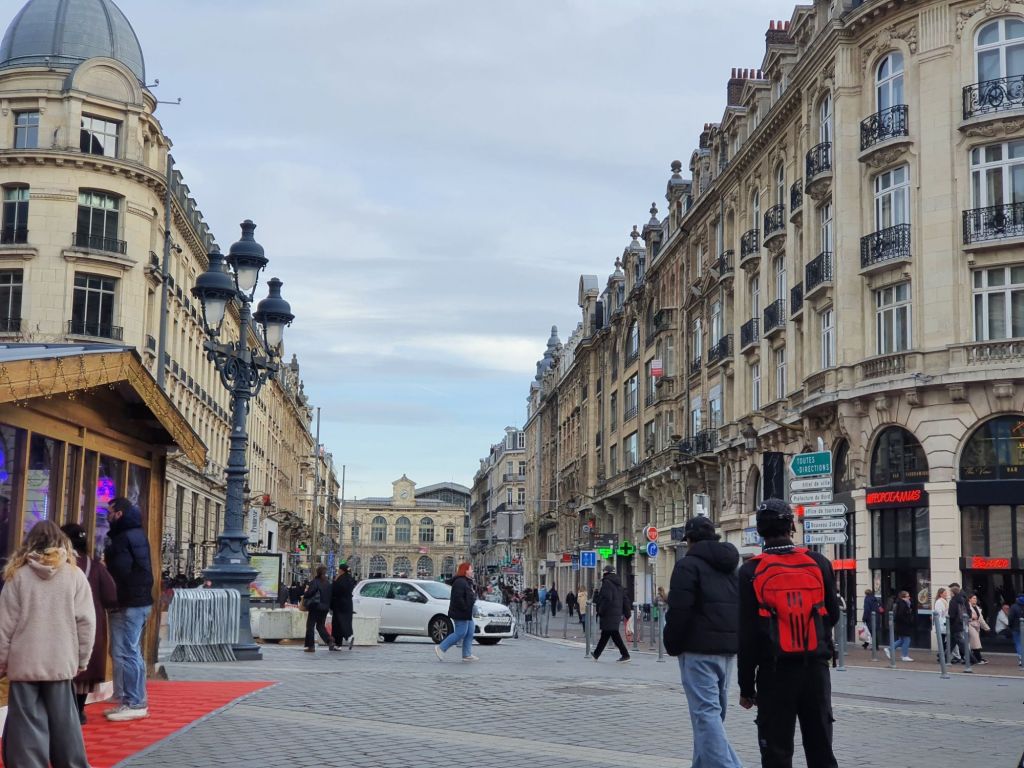
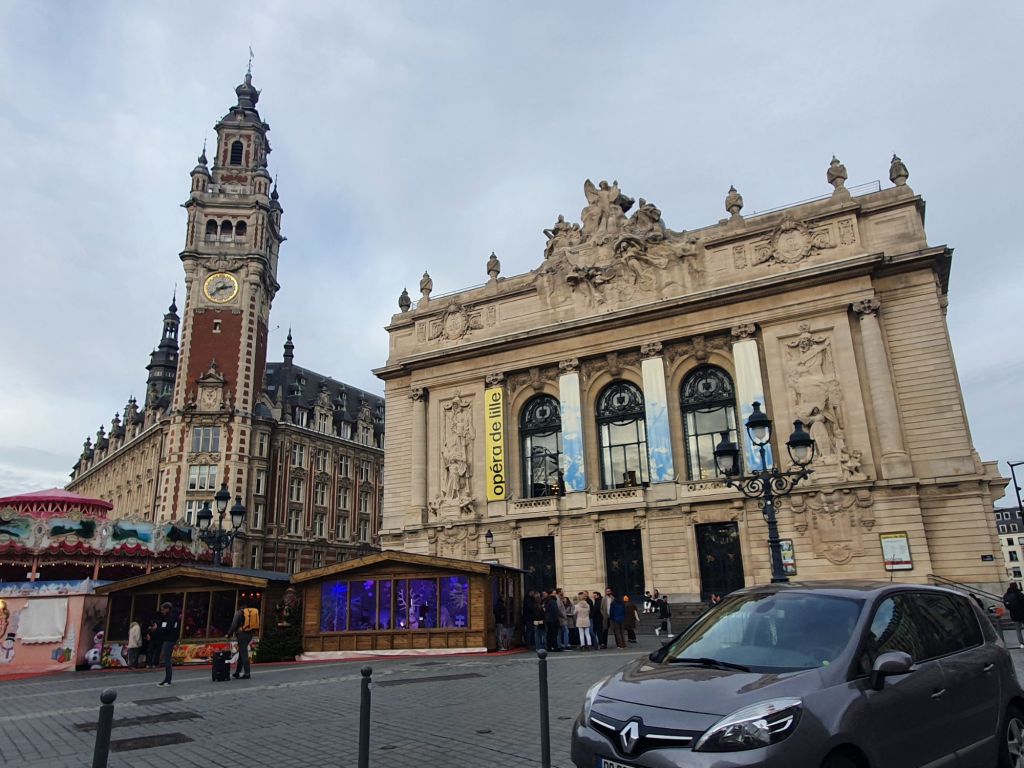
On Place du Théâtre stand three of Lille’s most important buildings:
Opéra de Lille
The opera house was inaugurated in 1923 and is 75 metres wide. Its façade features Apollo and the Muses. A fire destroyed the original building in 1903, and although it reopened in 1913, it was requisitioned by German forces during the First World War and hosted over 100 performances before 1918. After renovations, it reopened in 1923. Today it hosts operas, musicals, and concerts. Édith Piaf gave her final performance here in 1963.
The Old Stock Exchange (Vieille Bourse)
Built in the 17th century during Lille’s economic golden age, the Old Stock Exchange is a masterpiece of Flemish Renaissance (flamboyant) architecture. It consists of 24 former merchants’ houses surrounding an inner courtyard. Plaques inside commemorate notable French figures, including Louis Pasteur.
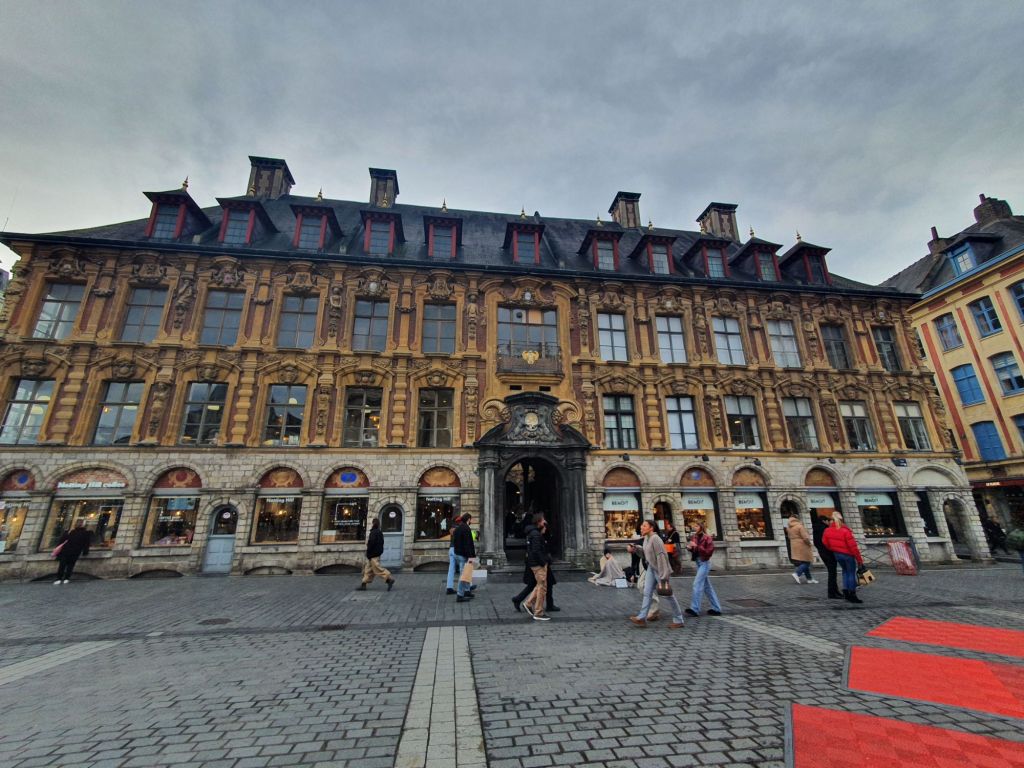
Today, the courtyard hosts a second-hand book market from Tuesday to Friday, chess games throughout the week, and tango dancing on summer Sundays. The building served as the stock exchange for nearly 200 years before being replaced by the current Chamber of Commerce.

Chamber of Commerce and Belfry
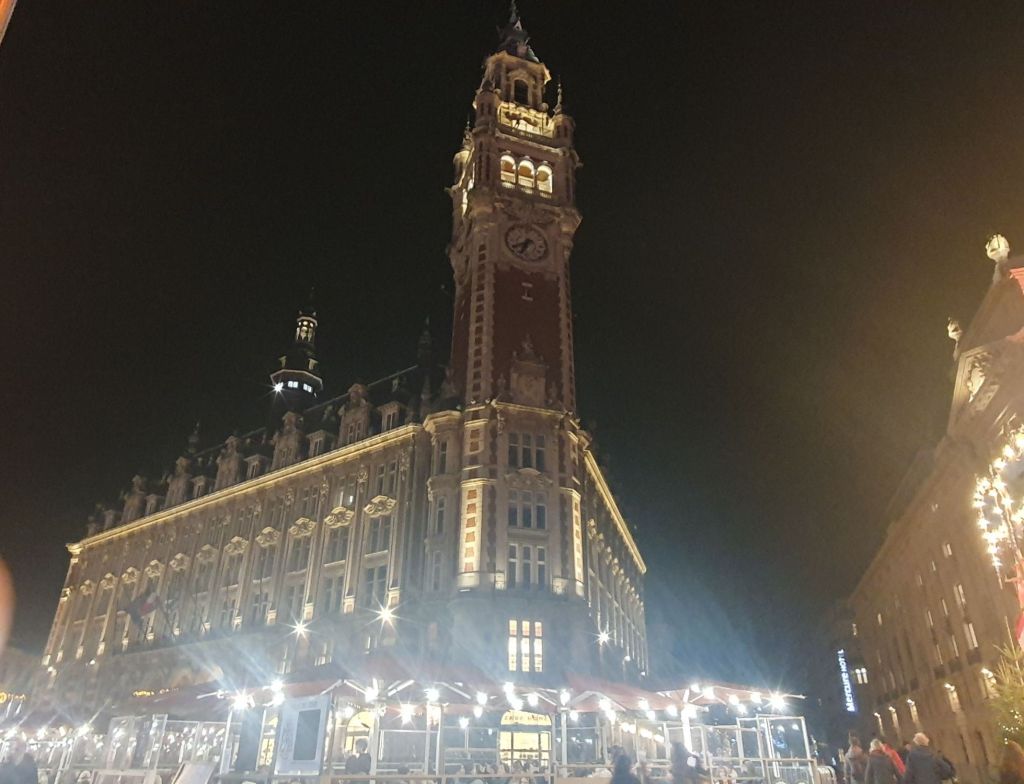
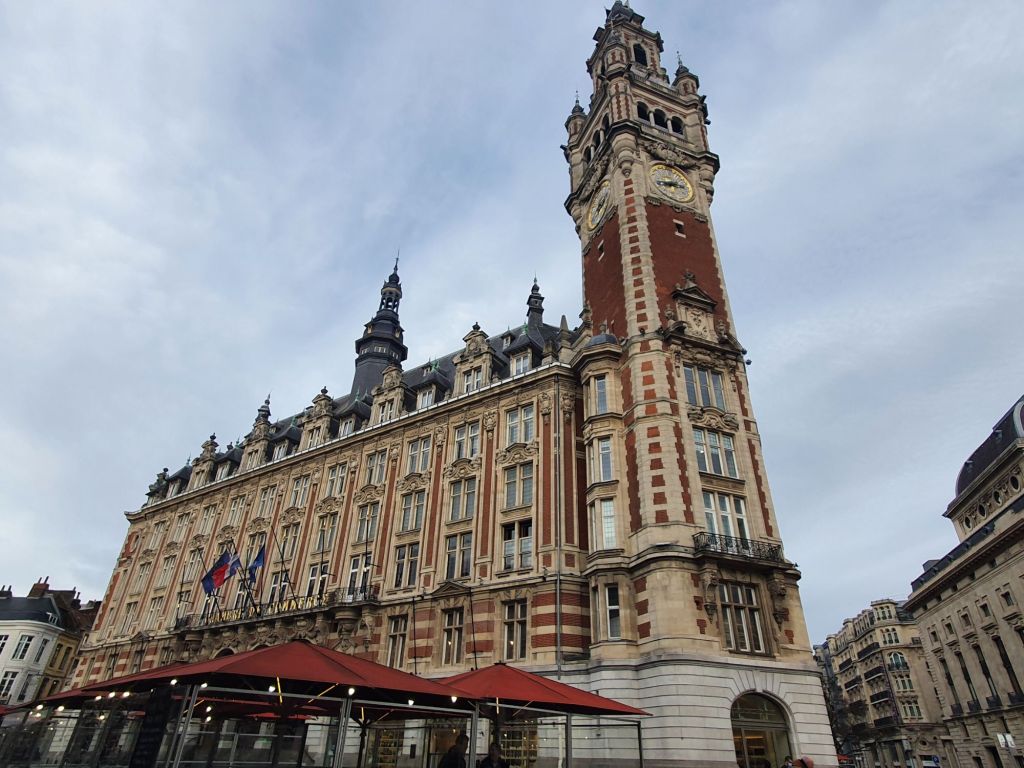
Built in the early 20th century, the Chamber of Commerce is designed in Neo-Flemish style. Its imposing belfry, with clocks on all four sides, echoes the 17th-century Flemish tradition.
Old Streets and Hidden Corners
From here, we wandered down the “street of large cobblestones”, where a golden hand pointing the way marks the former sign of a glove-maker. Many of Lille’s original wooden houses burned down over time and were replaced with stone buildings, once home to the bourgeoisie and now occupied by high-end brands.

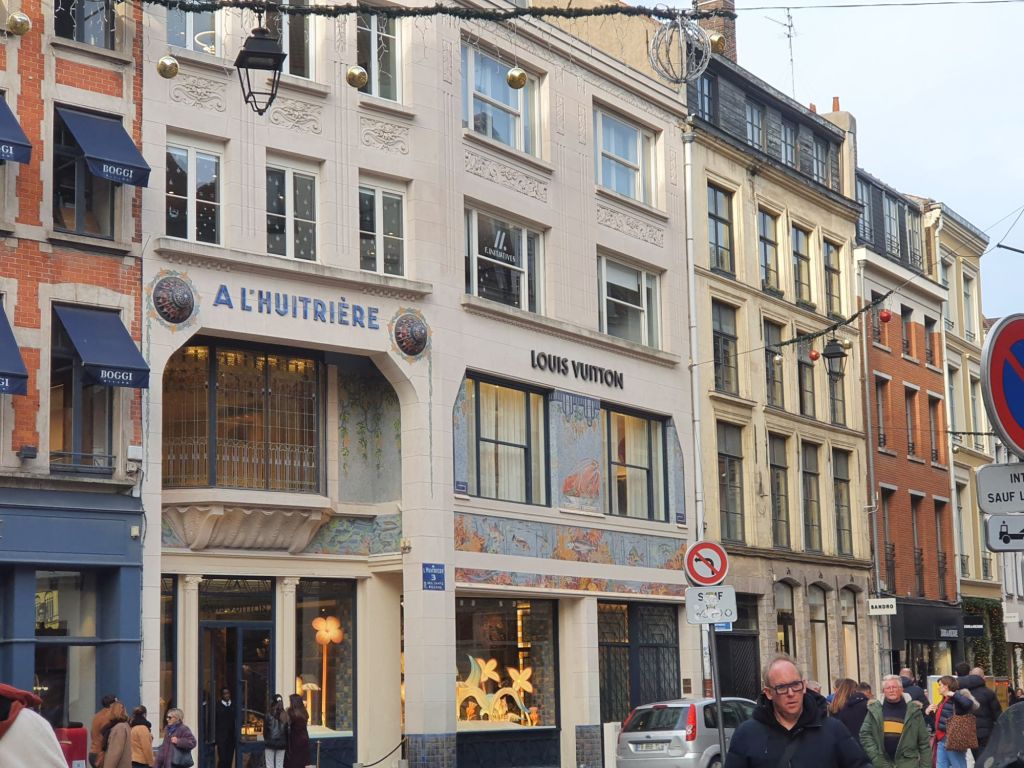
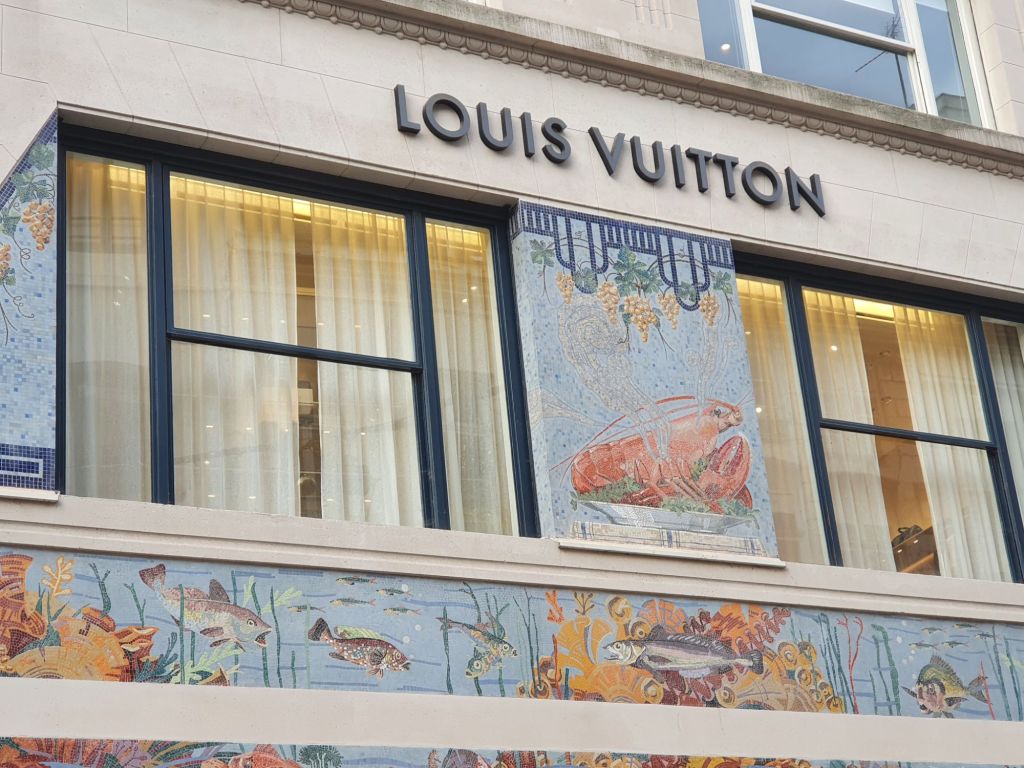
We passed L’Huîtrière, a former renowned seafood and oyster restaurant with a striking mosaic façade depicting underwater life. The restaurant has been closed, and the building is home to Louis Vuitton, but mosaics are still there for all to see.
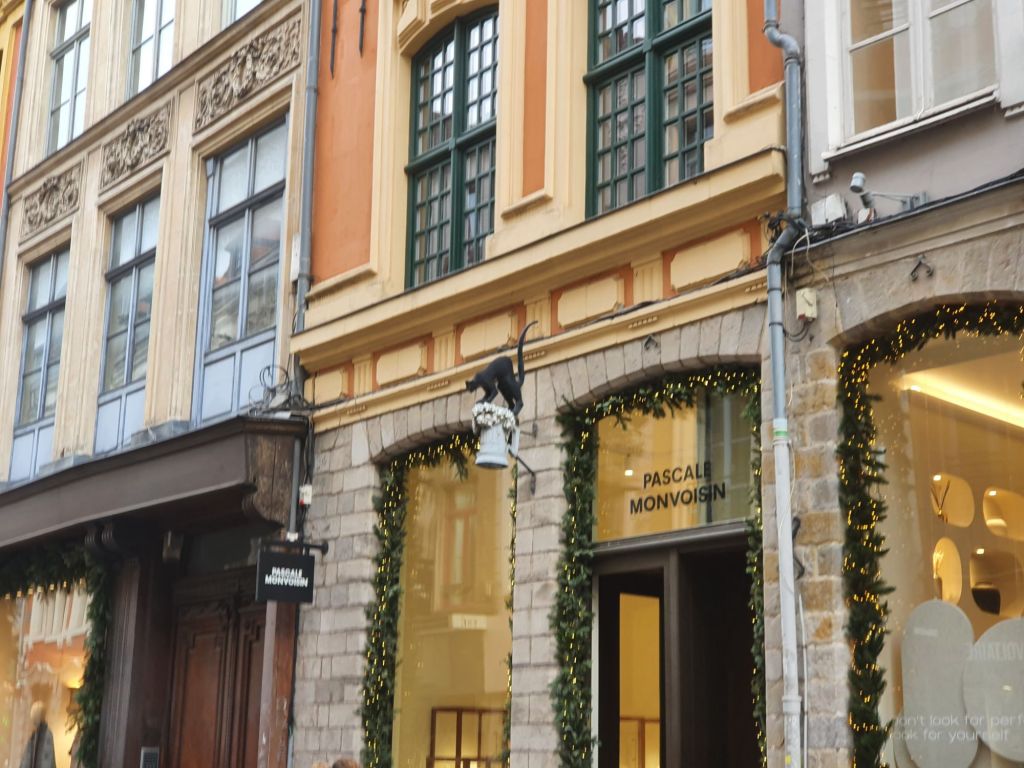
From hereon, we passed a few more points of interest.

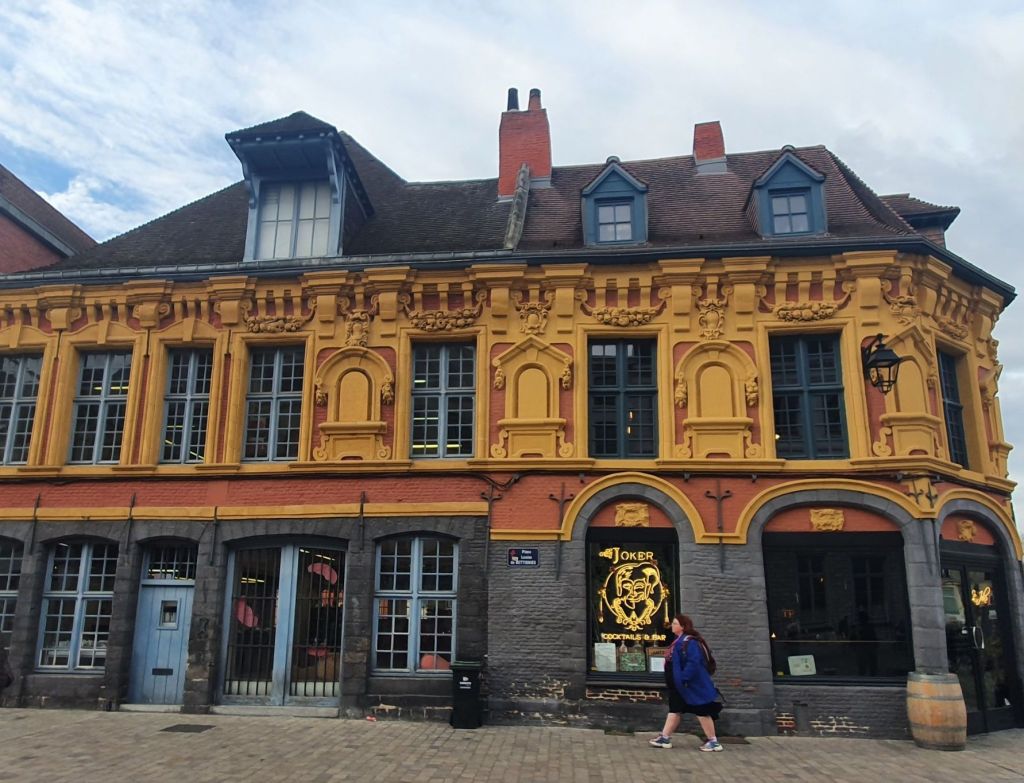
We also stopped by the Musée de l’Hospice Comtesse, founded in 1237 by Countess Jeanne of Flanders. Rebuilt and restored over the centuries, today it offers a fascinating glimpse into medieval hospital life and Flemish art.
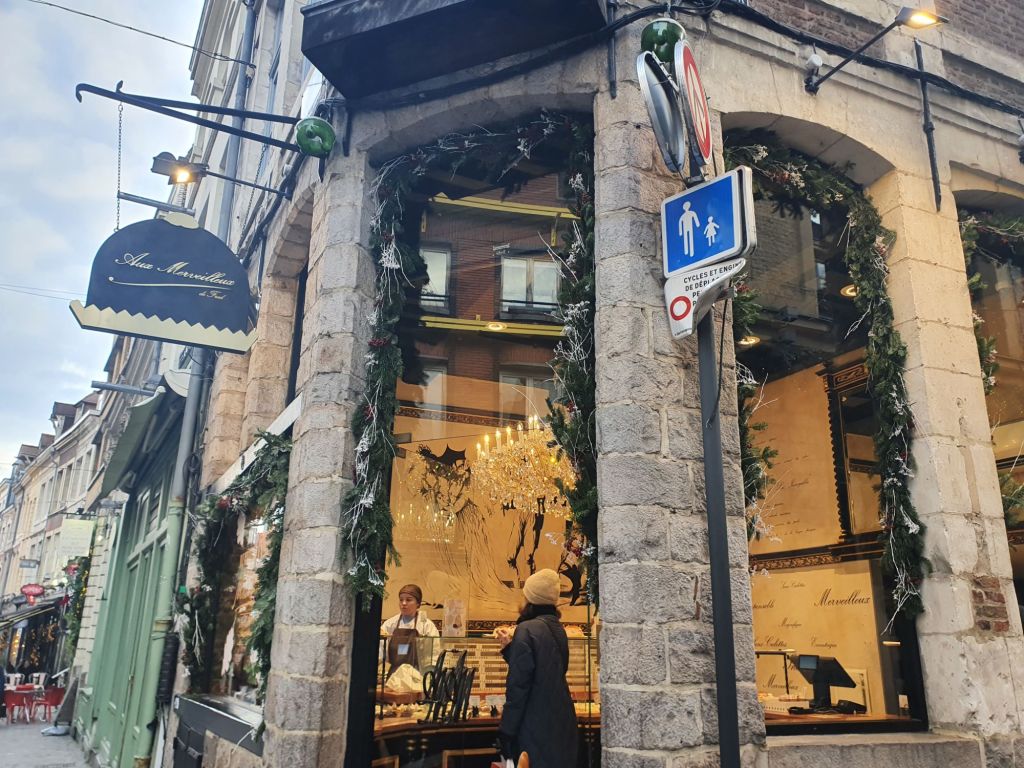
Nearby is Aux Merveilleux de Fred, famous throughout France for its indulgent meringue-based cakes. This shop in Lille was the starting point of the chain that covers all of France.
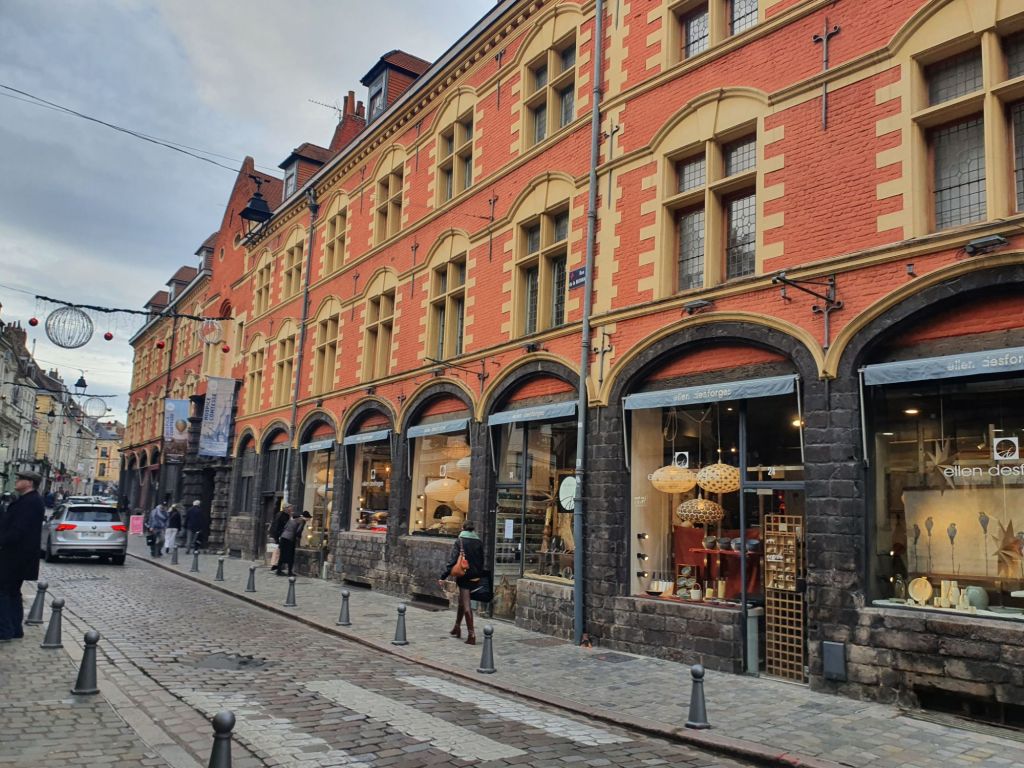
Walking down Rue au Péterinck, one of Lille’s oldest streets, we learned that it was identified in city records dating back to the 12th-century. This area was home to artisan weavers in the city’s heyday. The area became poorer in the 19th century and by the 1950s was a working-class neighbourhood before being restored.

Notre-Dame-de-la-Treille Cathedral
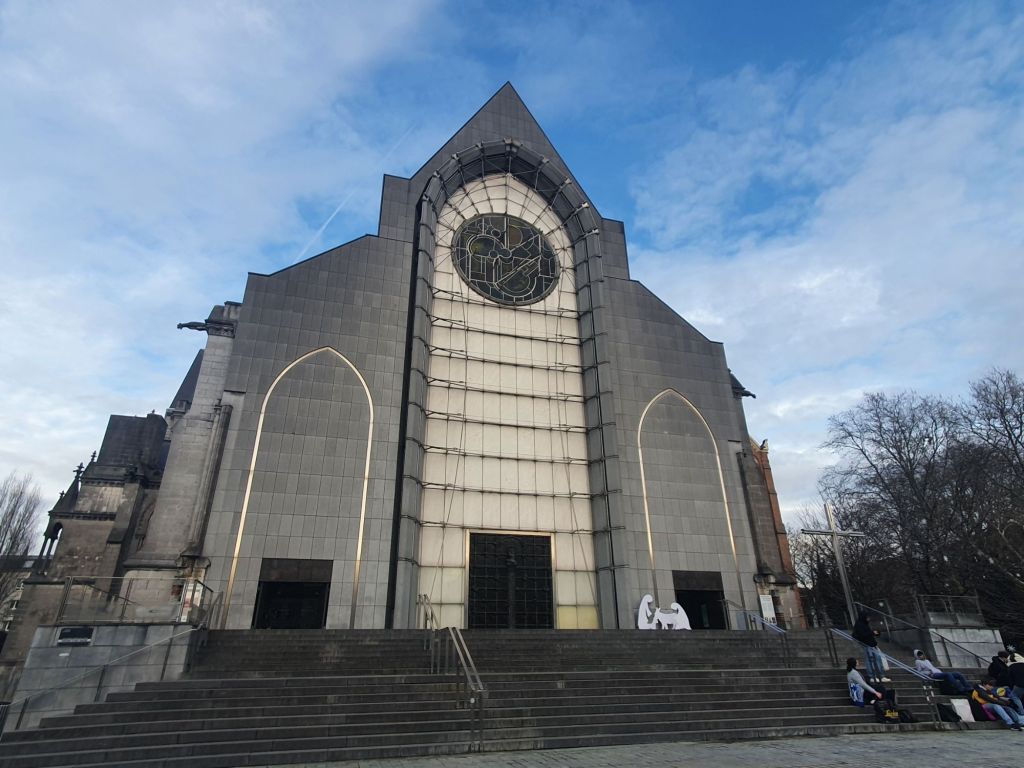
We then reached Notre-Dame-de-la-Treille, “Our Lady of the Vine”. Construction of began in 1866, but the cathedral was not completed until 1999. Its modern façade is made from Portuguese marble panels, each weighing around 150 kg, held in place by a steel structure.
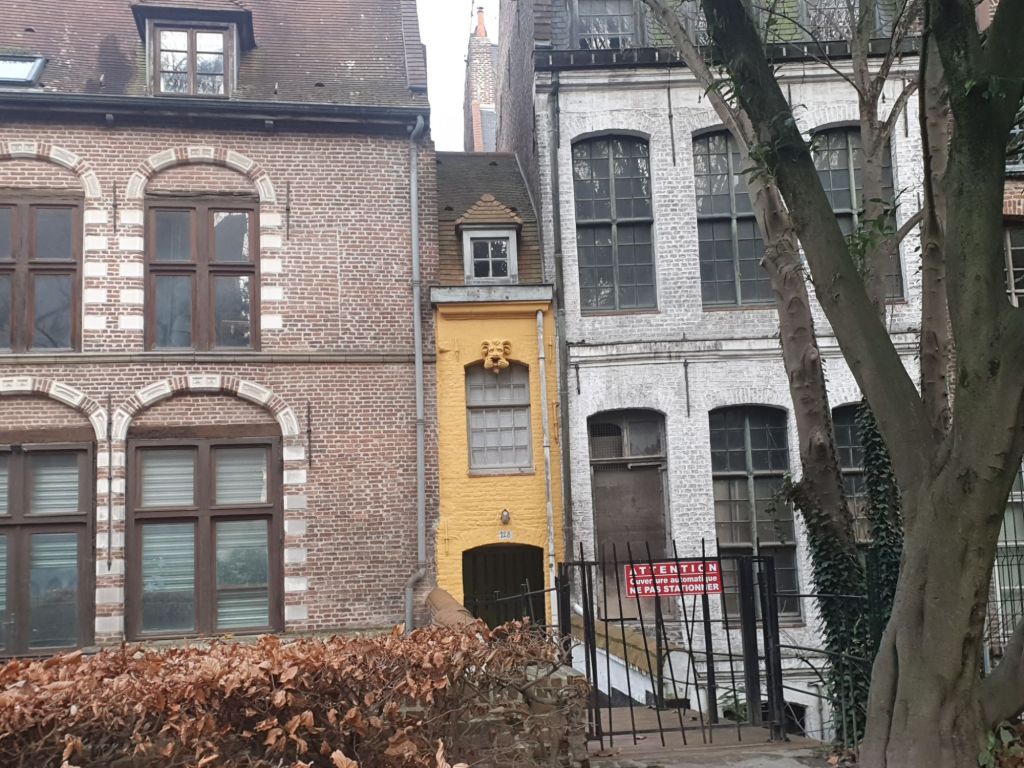
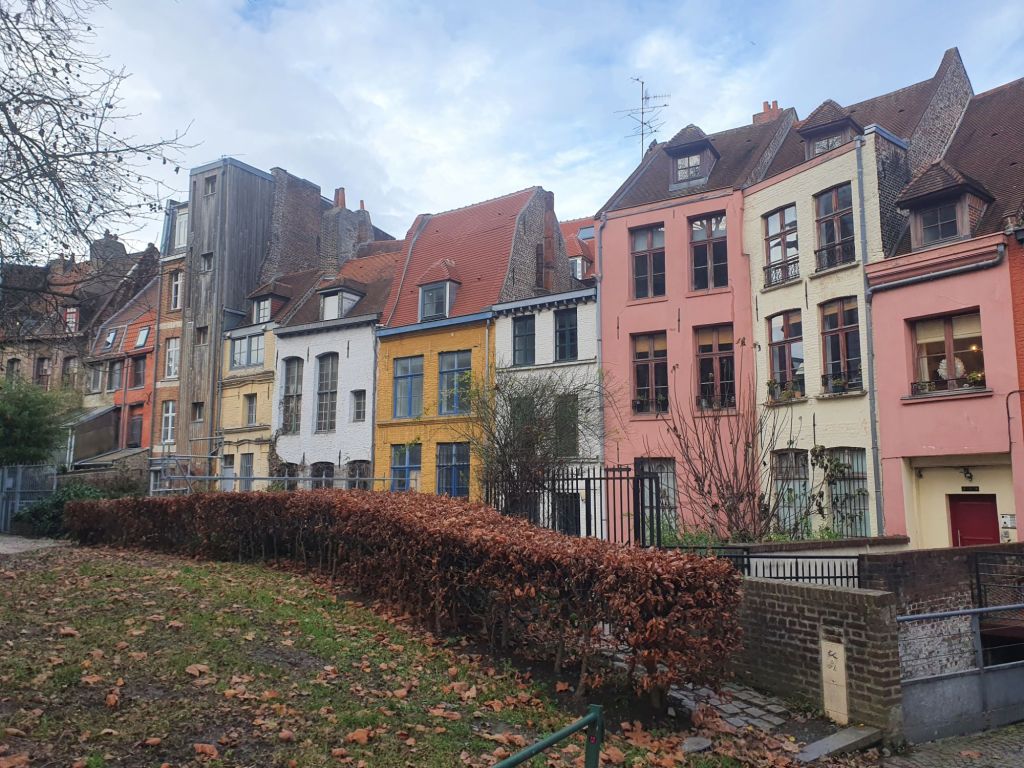
Behind the cathedral stands what is considered the narrowest house in Lille; flanked on either side by a row of terraced houses that showcases the architecture typical of Lille.
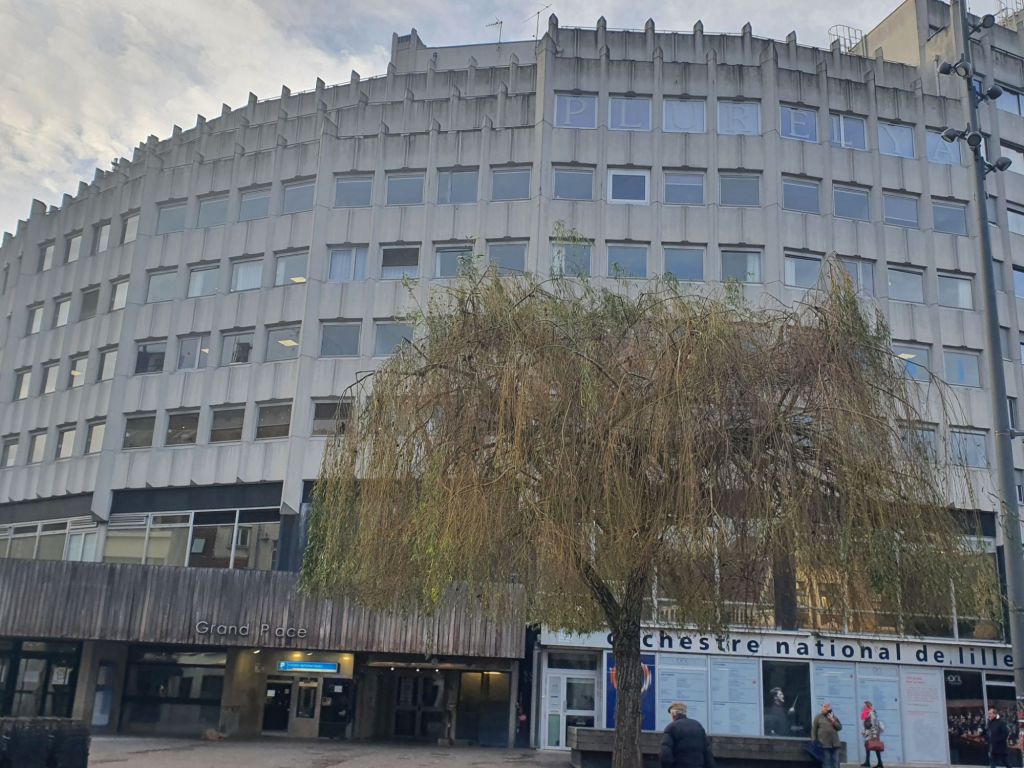
The Nouveau Siècle, built in the early 1980s, is an example of bold modern architecture with excellent acoustics. It is home to the National Orchestra of Lille.
Bit further along is Saint-Étienne Church, dedicated to St Stephen. Originally built in the 17th century, it showcases Baroque architecture and was rebuilt after a fire in 1606, though subsidence issues have affected it over time.

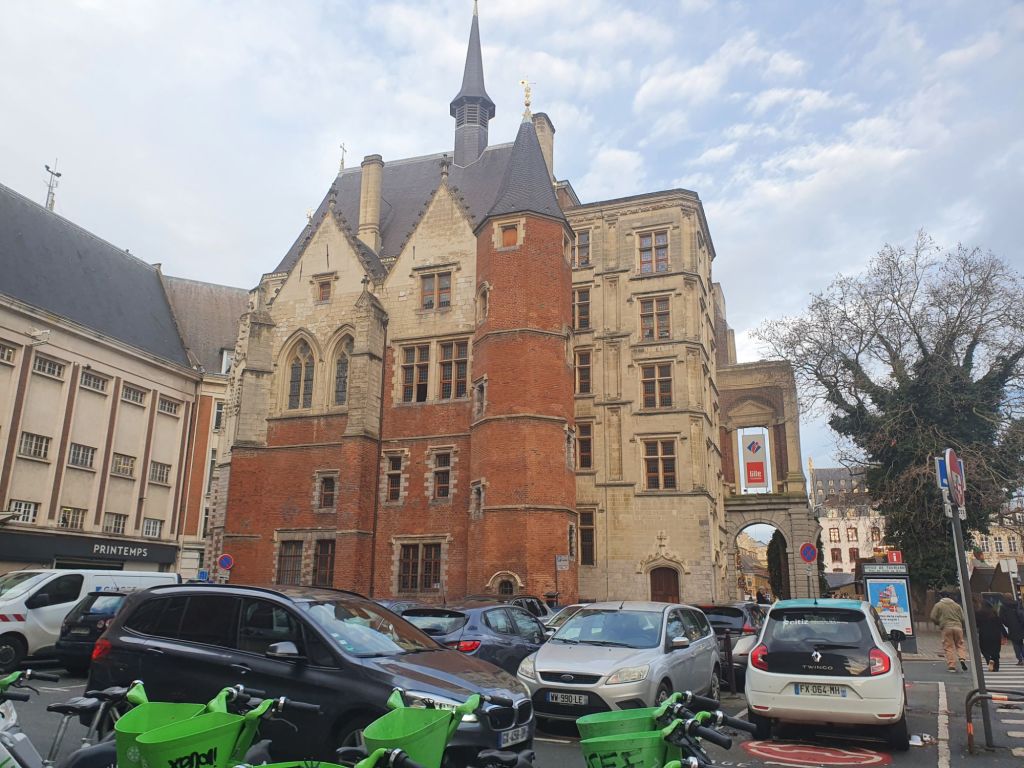
The Palais Rihour, dating from the mid-15th century, is built in flamboyant Gothic style. Once a town hall, it suffered from structural issues caused by the river beneath it. After a fire in 1916, much of the building was demolished, leaving only part of the original structure.
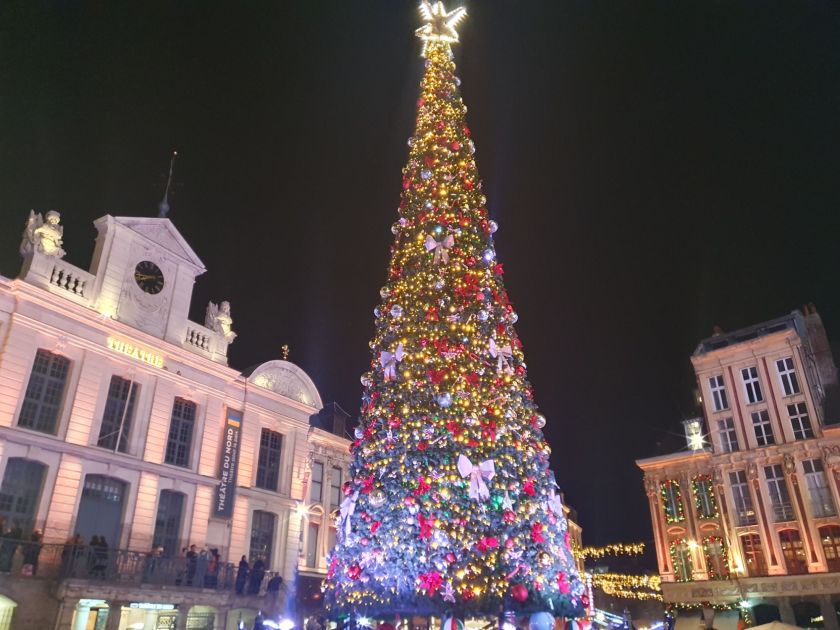
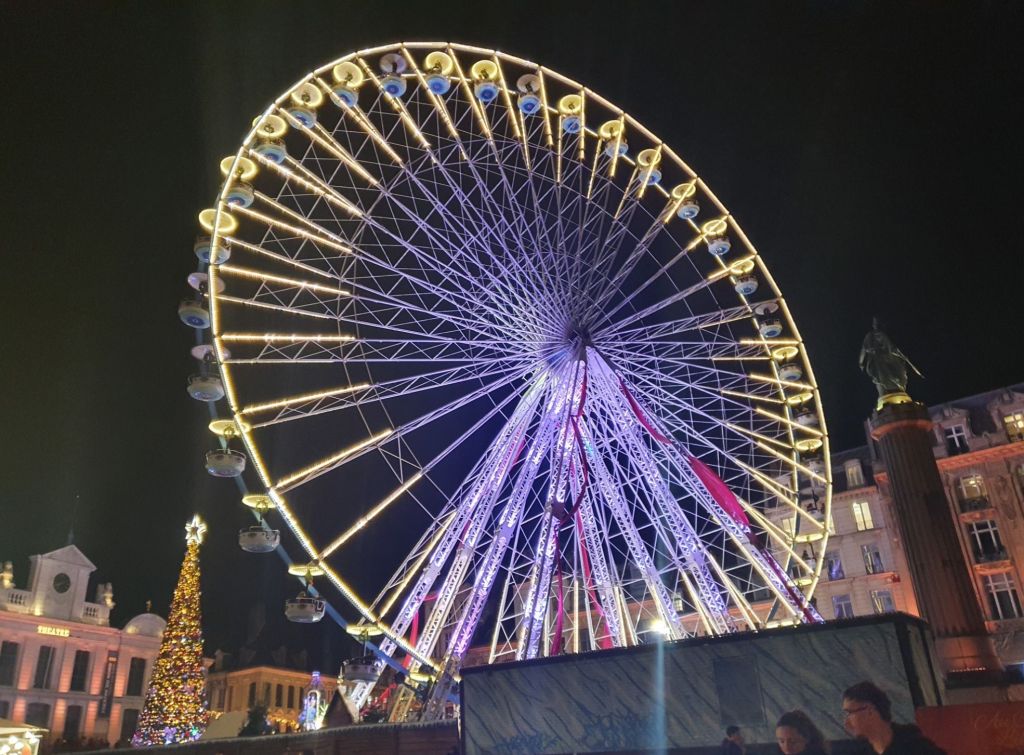
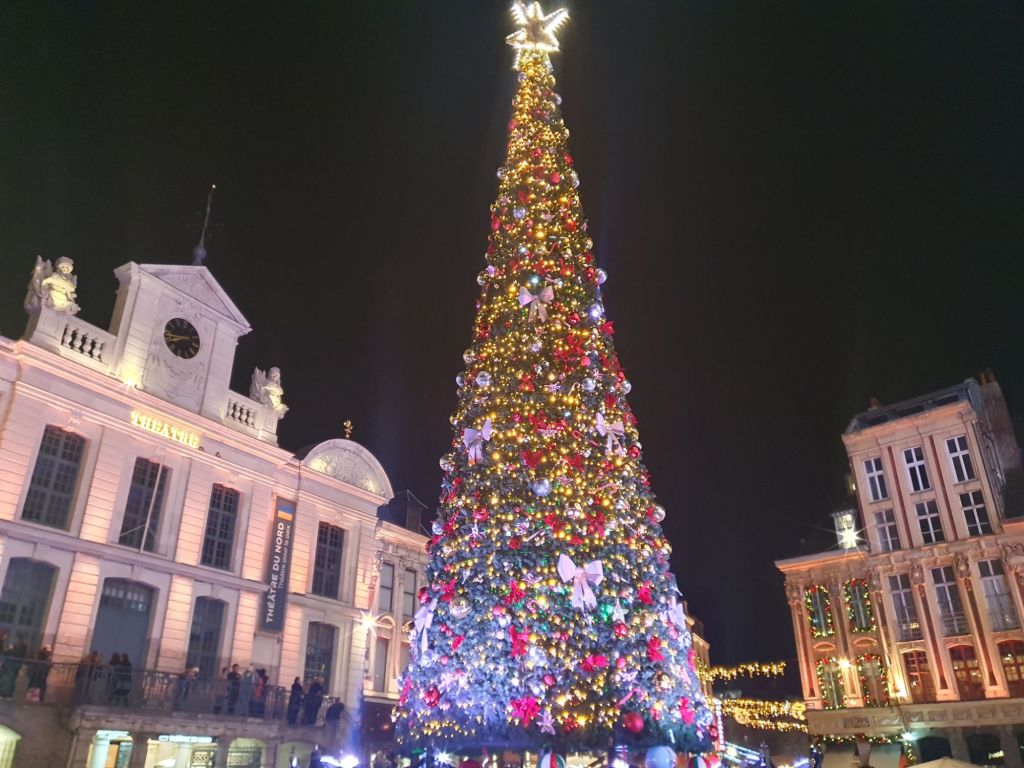
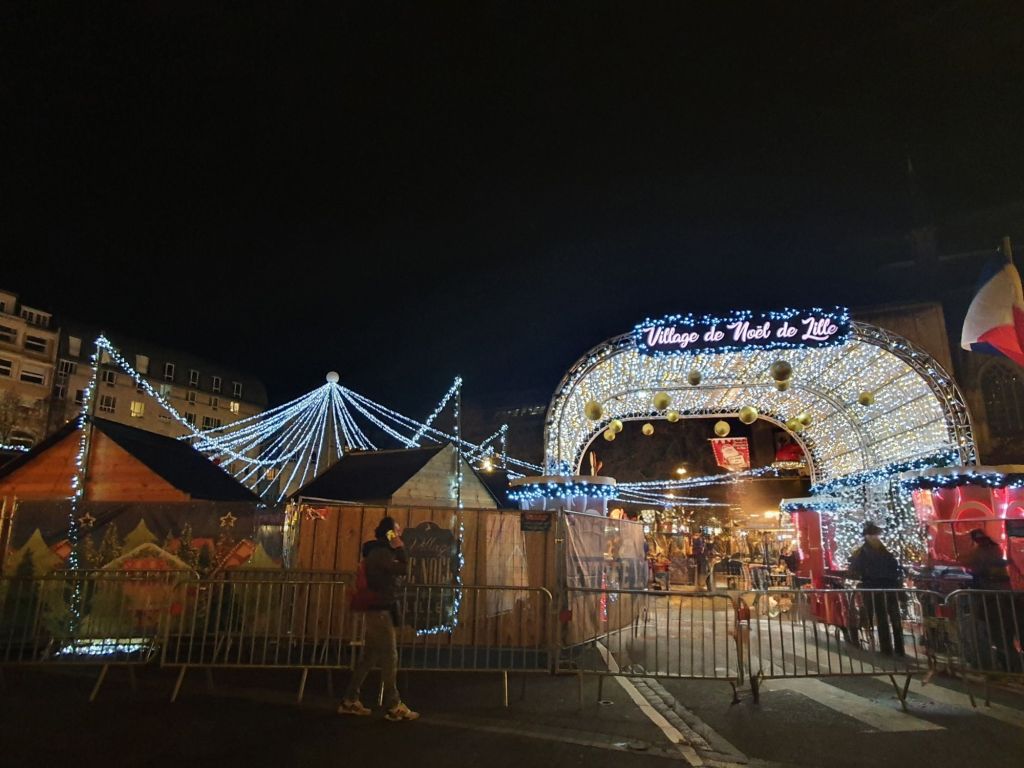
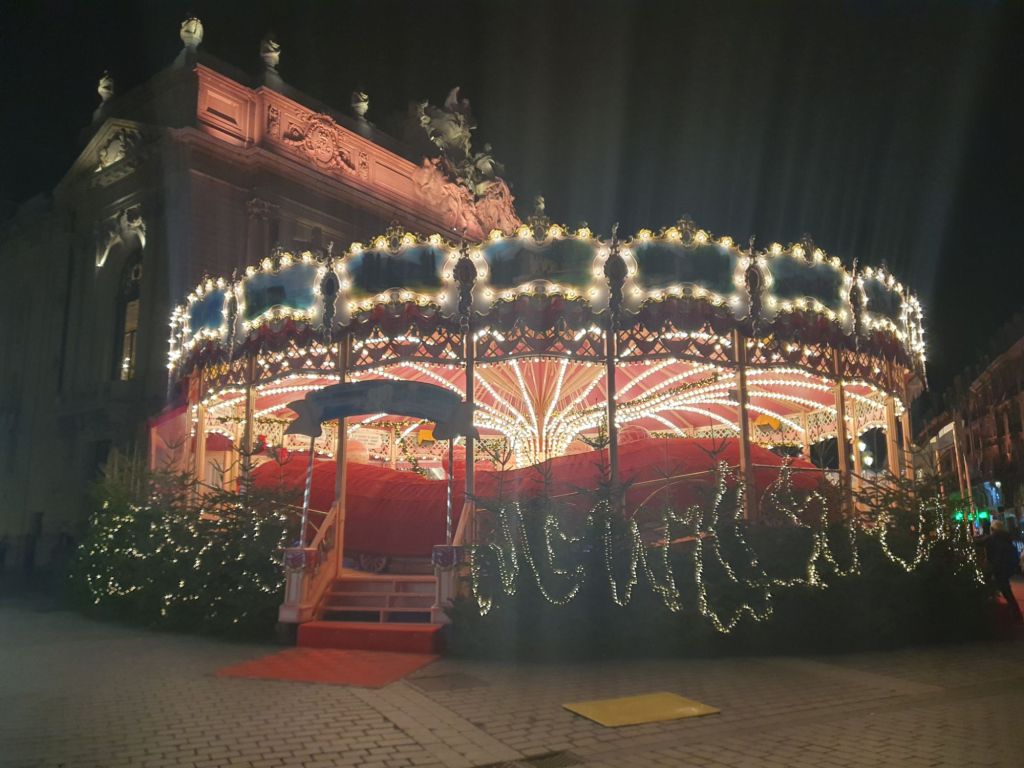
Finally, we reached Grand Place, officially Place Charles de Gaulle, the heart of Lille. Once marshland in the 14th century, it has long been the city’s main gathering space. As it was Christmas, the square is home to a giant ferris wheel and the coties Christmas tree.

At its centre stands the Column of the Goddess, commemorating Lille’s resistance during sieges. On the square’s edge is the Théâtre du Nord, originally built in 1772 as a guardhouse for the city garrison, marking Lille’s integration into France.
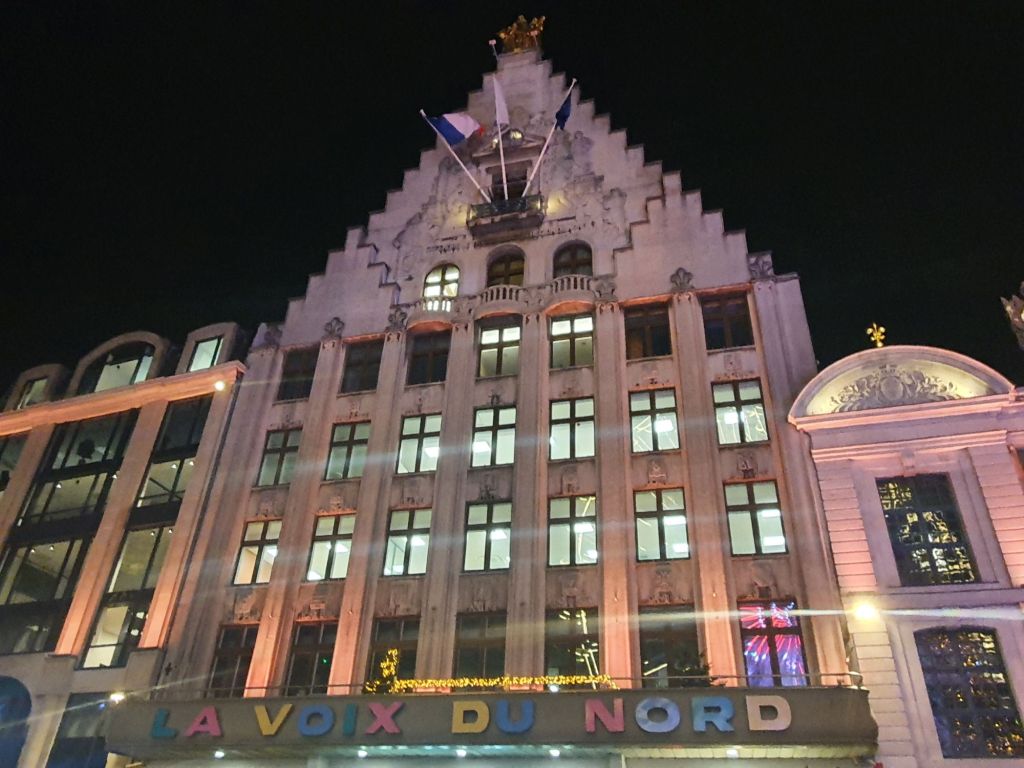
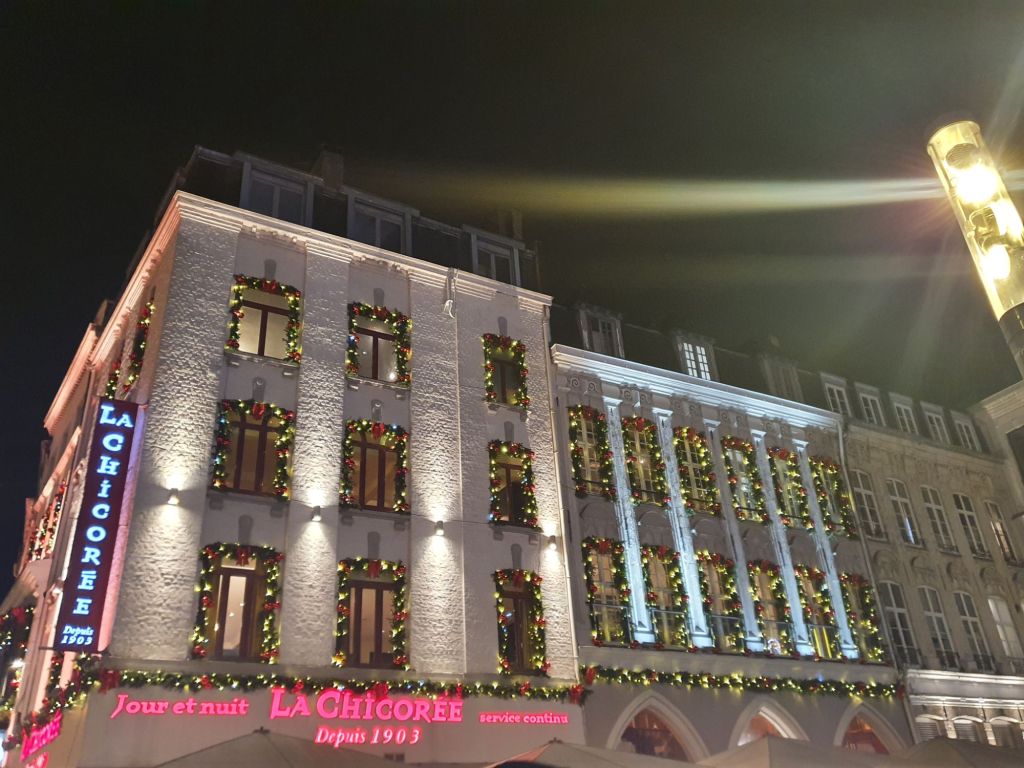
By this point we had completed about two thirds of the city app tour and covered the area of the medivela centre of Lille. But it was dark by this point, so we ended our walking tour here so that we could explore the Christmas markets and spend some time soaking up the festive atmosphere of the Grand Place.
Christmas Decorations in Lille

The remainder of the tour takes you past:
- Porte de Roubaix: One of Lille’s surviving 17th-century city gates.
- Porte de Paris: A triumphal arch built in the late 17th century to celebrate French victories during the wars against the Spanish Netherlands.
- Lille Belfry and Town Hall: Constructed in the 1930s in an Art Deco style. At 104 metres high, the belfry is one of the tallest in France and is listed as a UNESCO World Heritage Site.
- Place de la République and La Préfecture
- Saint-Michel Church: A neo-Gothic church built in the late 19th century.
- Louis Pasteur Monument: Pasteur was the first dean of the Faculty of Sciences at the University of Lille, where he carried out pioneering research into microbiology, including work that led to pasteurisation.
- University of Lille: one of the largest universities in France, with around 74,000 students.
- Saint-Maurice Church: One of Lille’s oldest religious buildings. Its layered construction reflects centuries of development, combining Gothic and later architectural styles.
Using the City App Tour
Overall, the City App Tour worked well and allowed us to explore areas of Lille we might otherwise have missed. However, it does require a good 4G connection and noticeably drains your phone battery.
Each audio clip was accompanied by photos of the building or monument you were meant to be looking at. This made it easy to figure out what buildings to look at.
The audio clips however, has been produced automatically, and could do with some testing. For example, during the tour we were offered several different pronunciations for Lille “Lee-lay,” “Lee-ly,” and “Li-ly”. For the record, Lille is pronounced “Leel”.
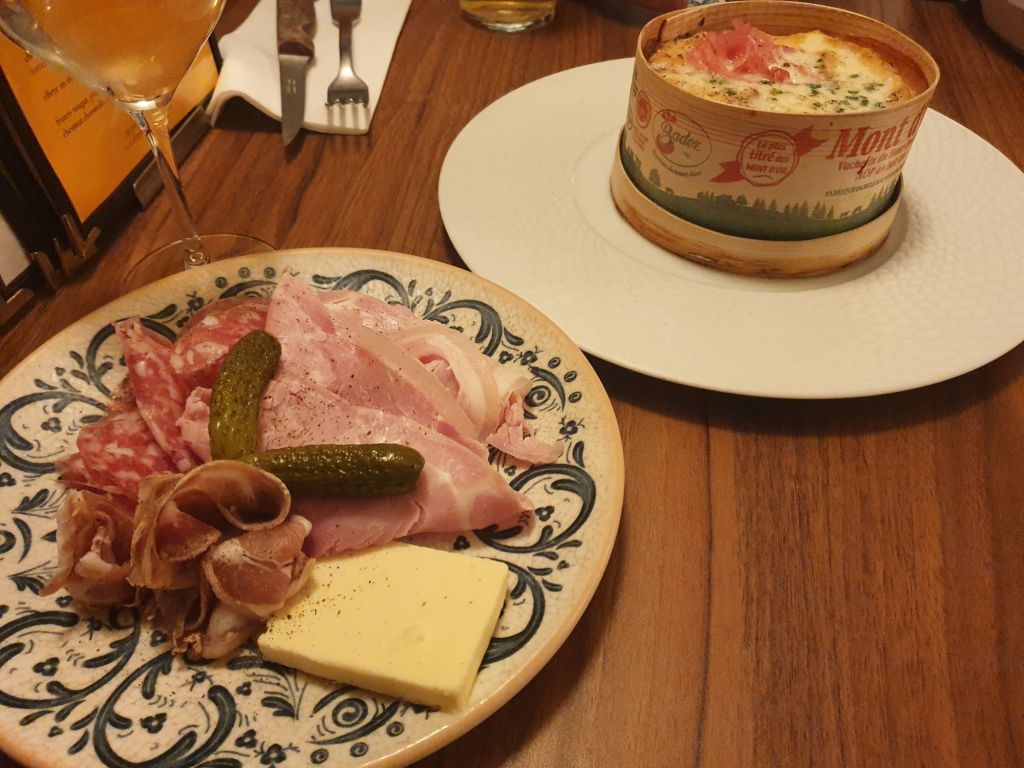
Afterwards we had dinner at the Sympa restaurant on Rue Pierre Mauroy. A very unassuming restaurant, just off the Theatre Square Lille, it has a changing seasonal menu and very hospitable atmosphere. When we visited, the melted cheese, charcuterie and mushrooms were excellent.
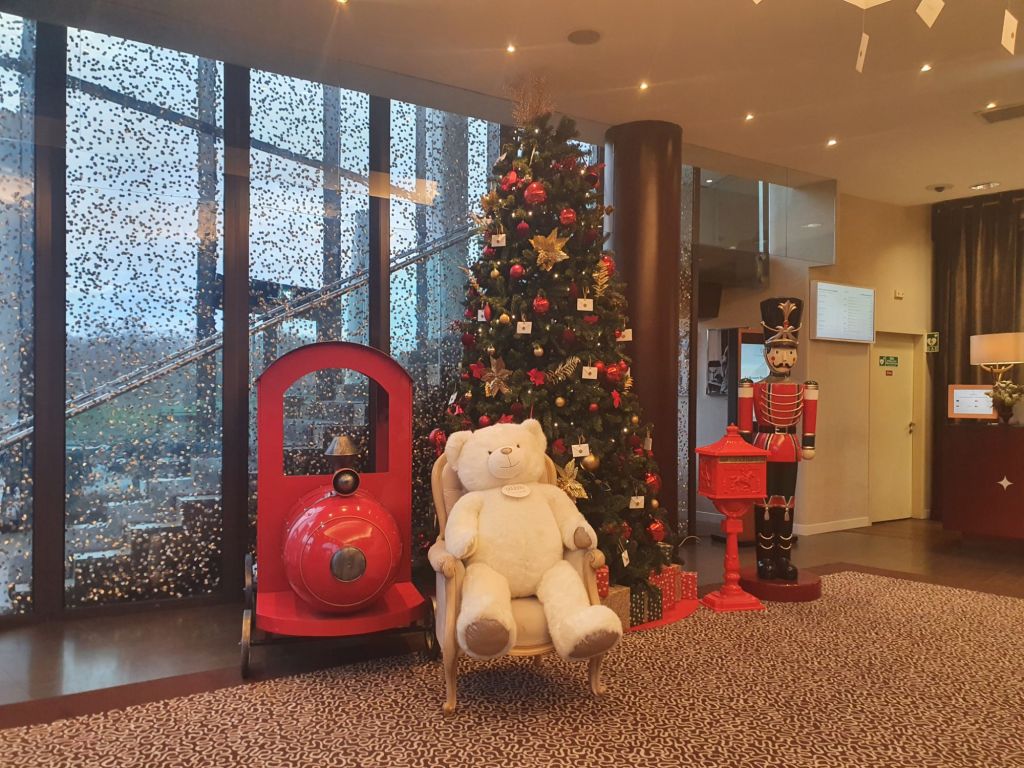
We were staying at Hôtel Barrière Lille, right next to Lille-Europe station. The hotel is nice and modern and has good facilities. It is about a 15 minute walk to Grand Place. However is, it is only 2 minutes walk to the station which made it very convenient for this trip, as we have to catch an 8 am train to Strasbourg tomorrow morning.
 Diary of a Tourist
A very interesting summary. Lille seems like a good place to stop off with lots of interesting history and architecture.
Pol.
LikeLiked by 1 person
Thanķs Pol. Yes, it is a good place for city break – so easy to get to from UK.
LikeLike
The buildings are so beautiful and artsy. I’d love to watch the tango dancing, too.
LikeLiked by 1 person