Where and when: Victoria Falls, Zimbabwe, September 2025
Back to Zimbabwe
0720: We leave the TLou Lodge hotel shortly after breakfast. By 07:30, we’re crossing the border from Botswana to Zimbabwe.
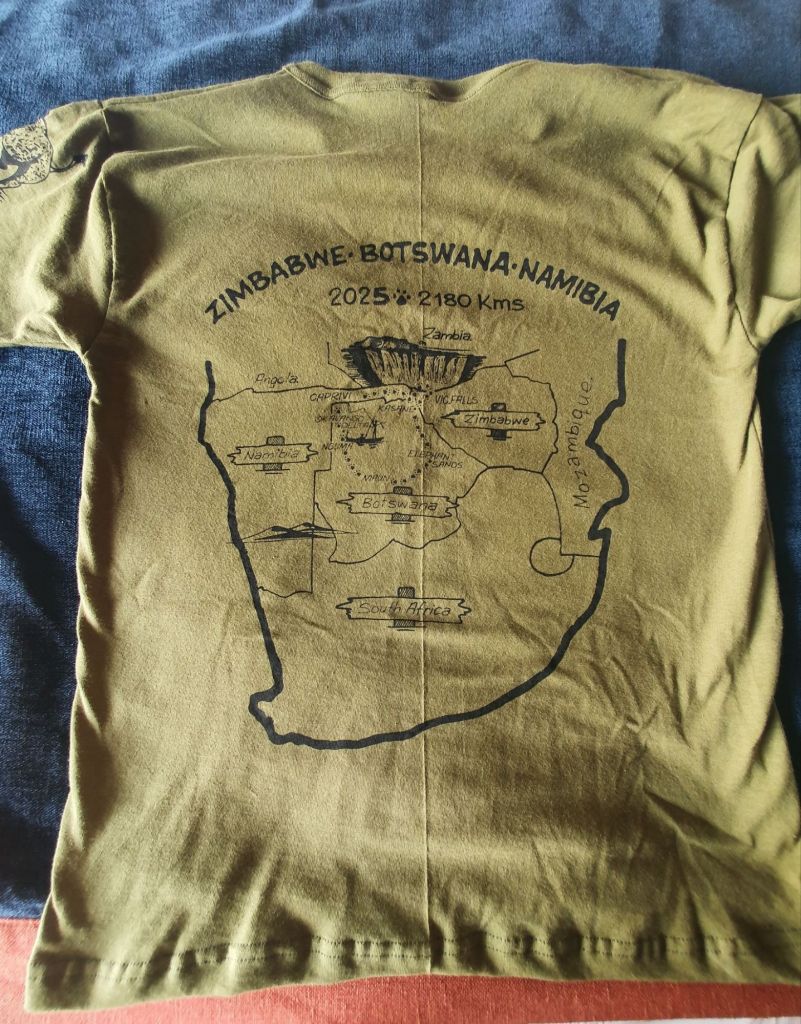
1000: By mid-morning, we’re back at Shearwater Adventures at Victoria Falls. There’s time for a coffee, and to pickup the personalised sourvernir T-shirt for the trip (we ordered it back in Chobe in Botswana and it was delivered to Shearwater, 2 days later).
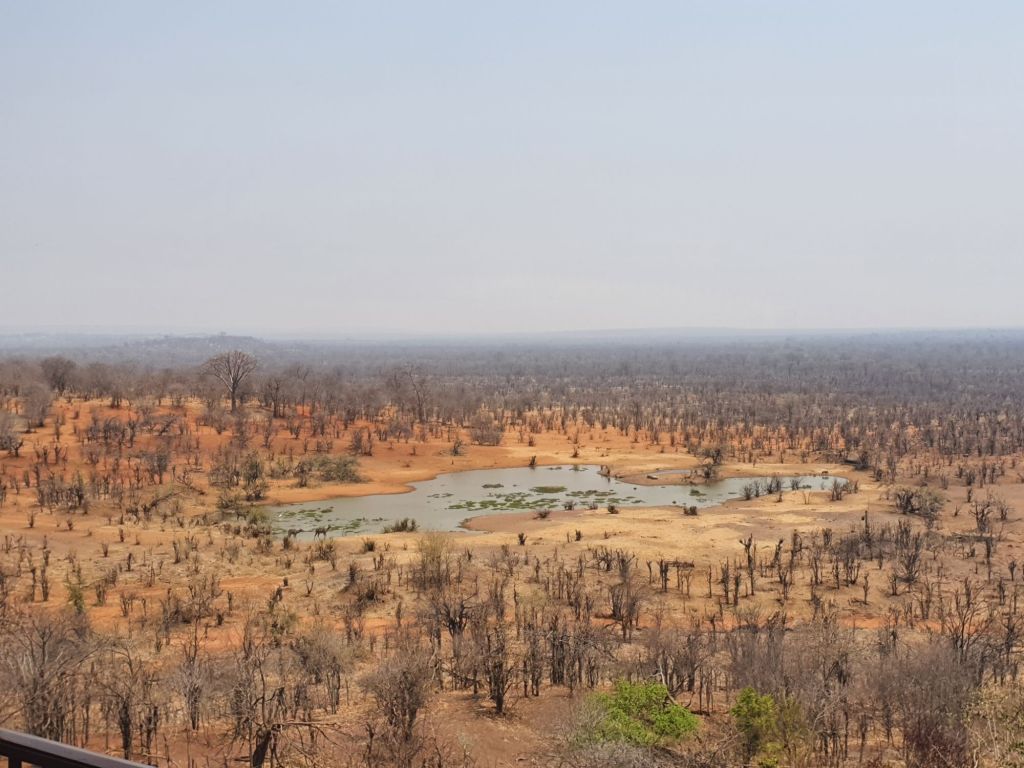
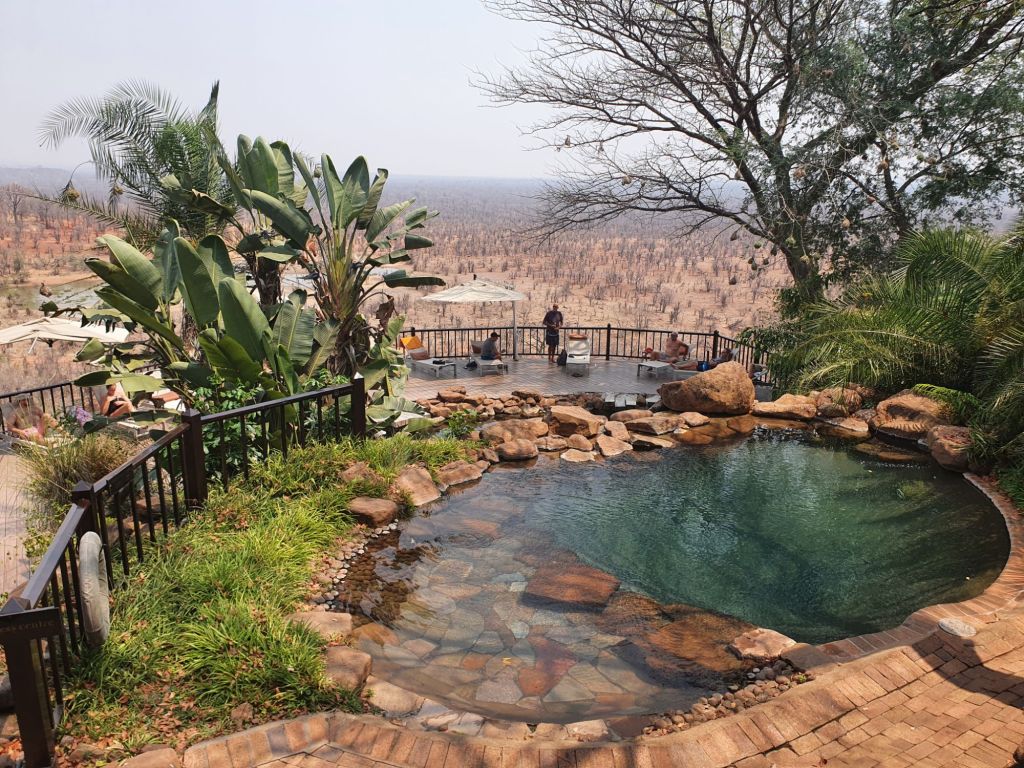
1100: We arrive at Victoria Falls Safari Lodge late in the morning. The lodge itself is beautiful, perched above the landscape with sweeping views. There is a man made waterhole here, similar to Elephant Sands, bringing in animals from across the bush.
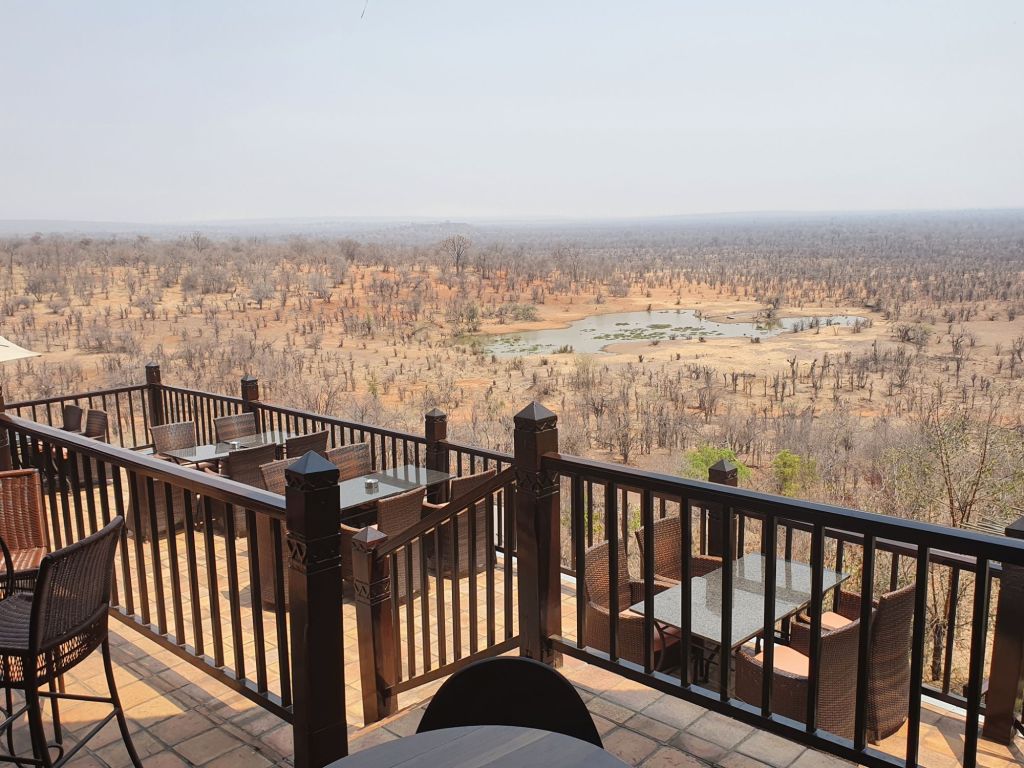
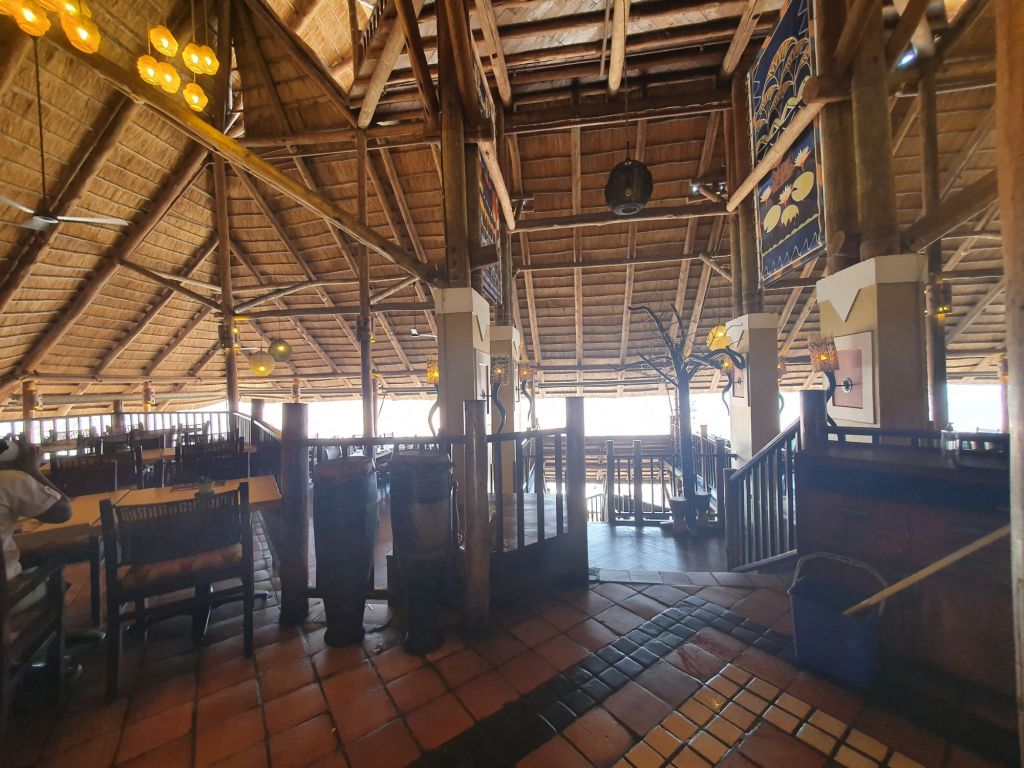
The hotel bar and restaurant is perfectly positioned for viewing wildlife.
Vulture Culture Experience
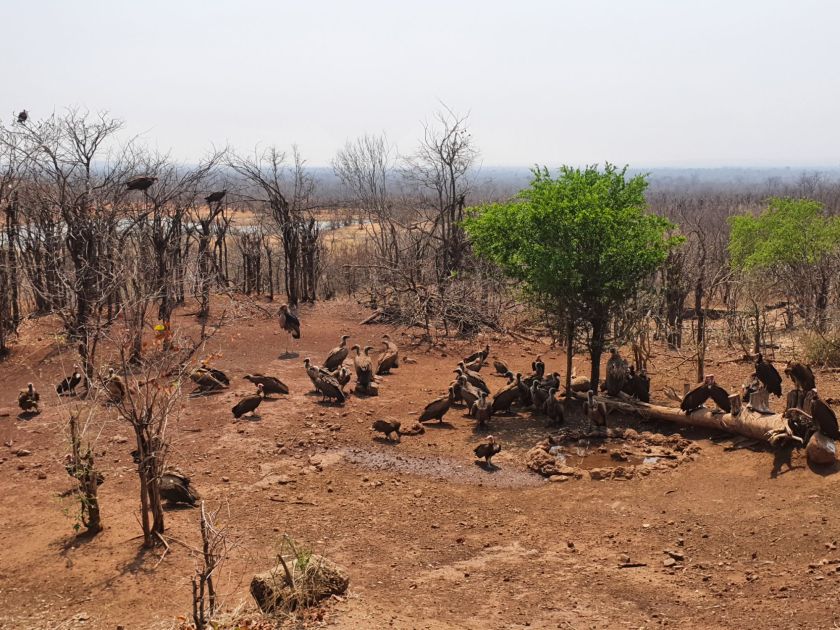
At one o’clock, we attend the lodge’s Vulture Culture experience, which turns out to be one of the most unexpectedly fascinating parts of the whole trip.
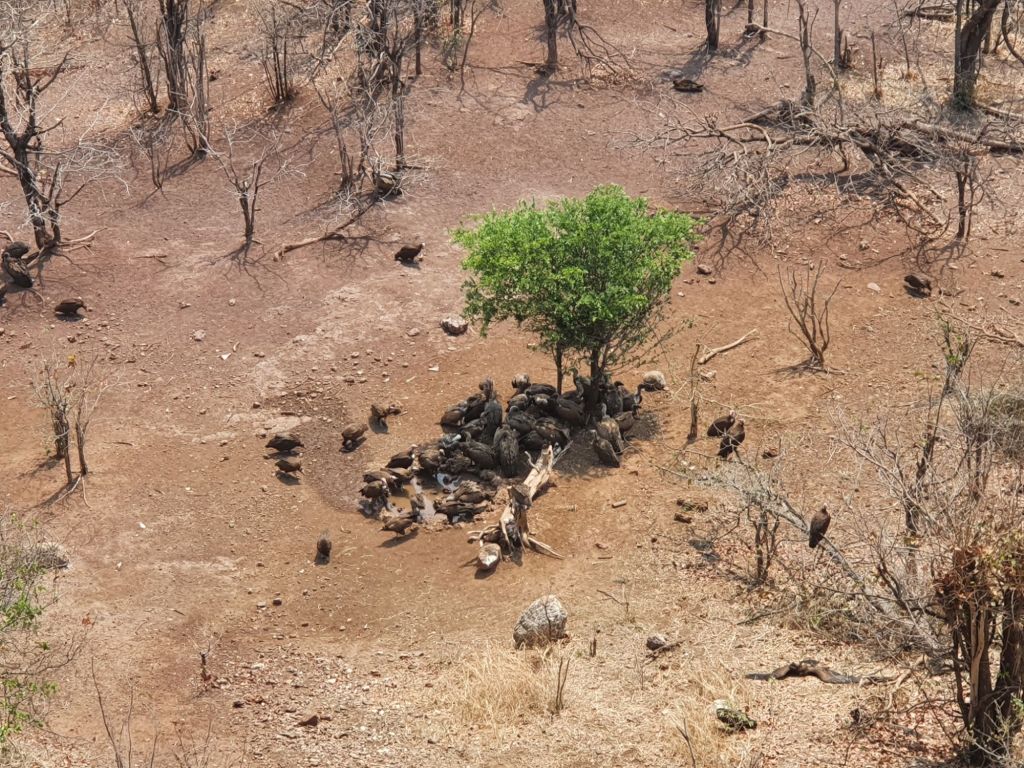
Vultures, we learn, are nature’s cleaners. A rotting carcass that might otherwise linger for days or weeks — spreading disease and bacteria — can be completely stripped in a matter of hours by vultures. In doing so, they play a vital role in preventing the spread of disease, not only among animals but also to humans.
Sadly, vulture populations have declined sharply over the past three decades. The biggest threat to them is humans. Poachers often poison carcasses deliberately because vultures circle above kills, making it easier for authorities to locate illegal hunting. One poisoned carcass can kill hundreds of vultures at once. They are also hunted for traditional medicine and so-called good luck charms, indirectly poisoned through veterinary medicines used on livestock, and frequently injured or killed by power lines.
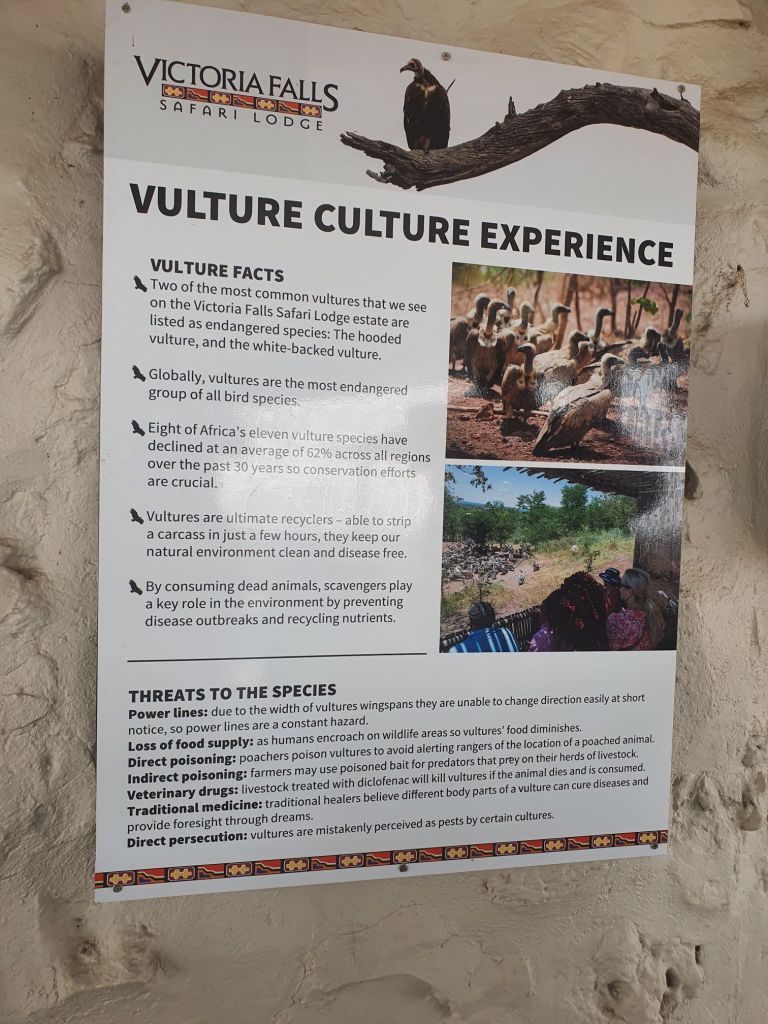
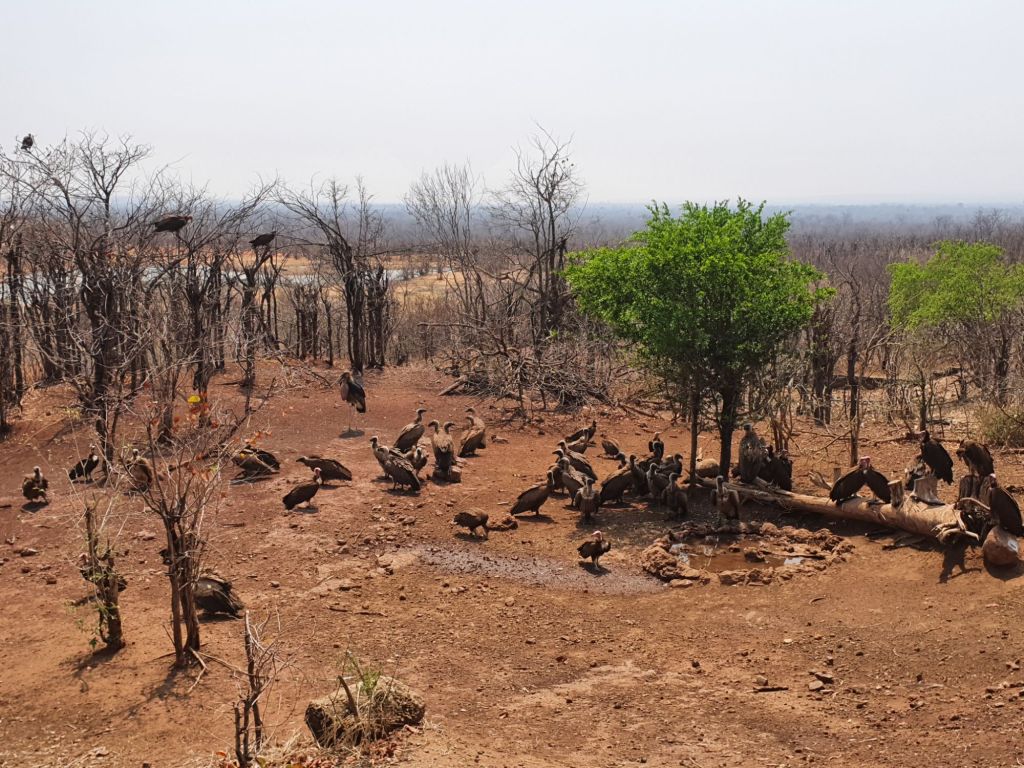
Victoria Falls Safari Lodge feeds vultures every day at 1pm as part of a conservation effort, helping to support local populations and raise awareness. We see both hooded vultures and white-backed vultures — both endangered — gathering quickly once the food is laid out. Several marabou storks also join in, towering and prehistoric-looking among the vultures.
The guide tells us that the vulture feeding is also featured sometimes on the WildEarth YouTube channel (although I have not been able to find the videos yet), which livestreams from waterholes across Africa.
Looking out over the lodge’s own waterhole, we spot warthogs, kudu, zebra, buffalo, and a few deer.
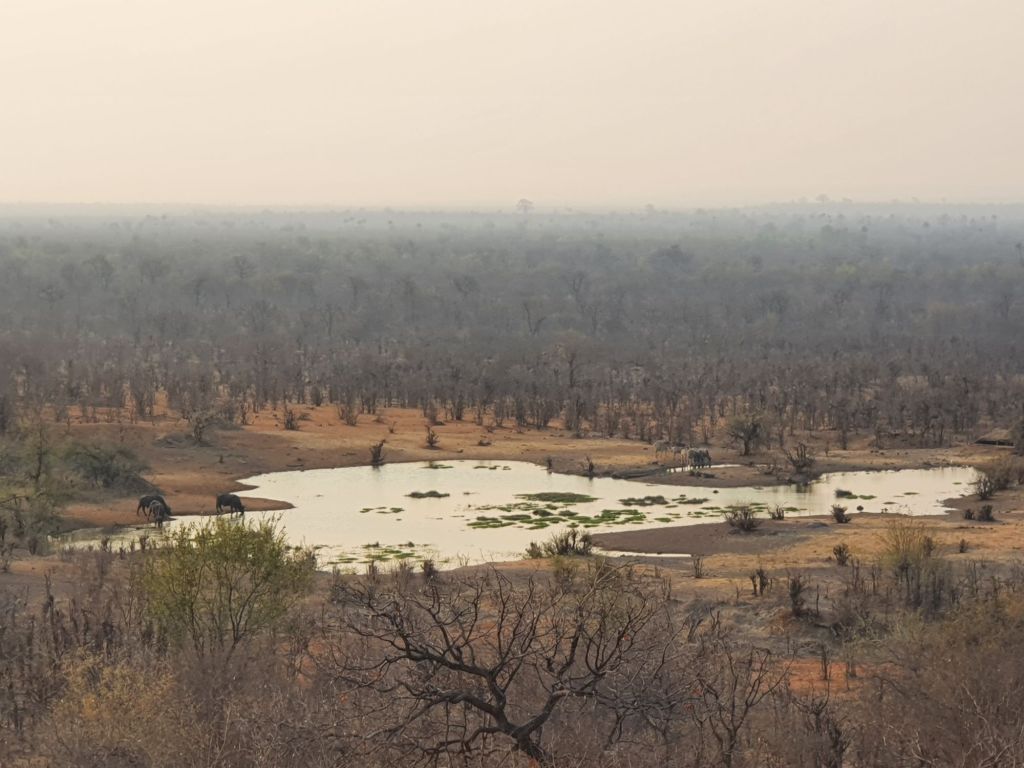
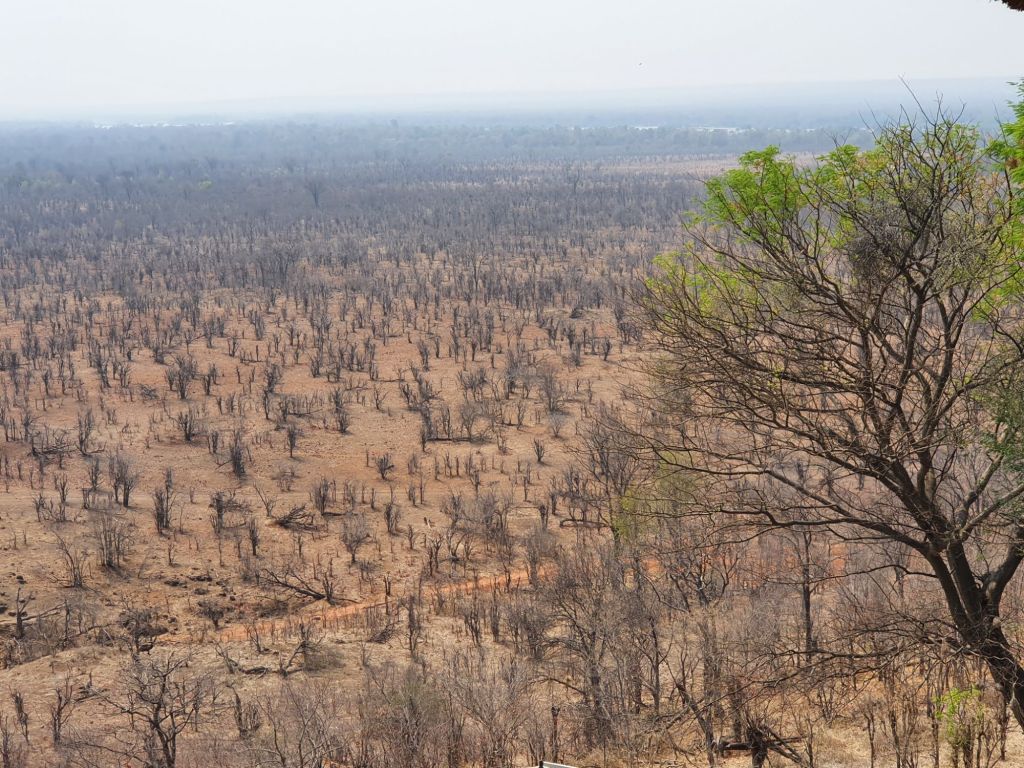
Far in the distance, elephants move slowly across the landscape. There aren’t many animals at the waterhole today, likely because the Zambezi River isn’t far away and water is easy to find elsewhere.
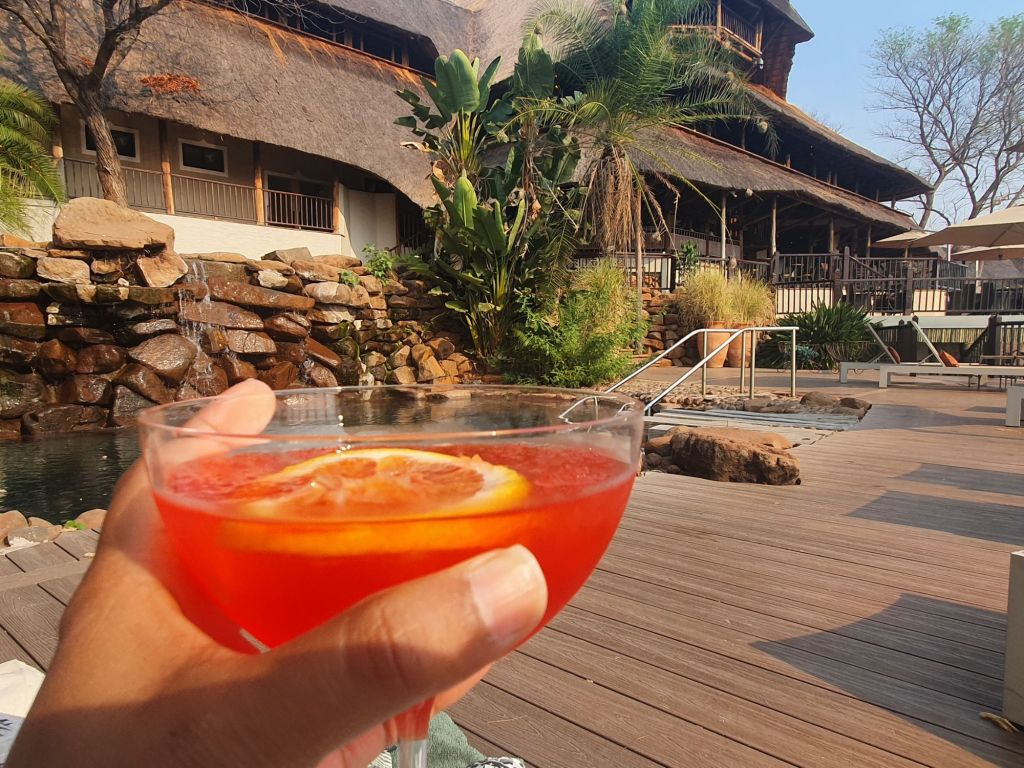
In the afternoon, it is time to relax by the pool with a cocktail.
As my trip draws to a close with an early morning flight tomorrow, I’ve been reflecting on the past two weeks. My journey has taken me from the vibrant urban landscape of Cape Town to the profound wilderness of the Okavango Delta, marking my first visit to Sub-Saharan Africa. In many way, the trip is exactly as I expected, offering abundant wildlife and breathtaking natural beauty. However, it also provided numerous bucket-list and once-in-a-lifetime experiences, such as visiting the Cape of Good Hope, Devil’s Pool, and Elephant Sands, to name a few. I have written a seperate post about the trip itinerary and highlights here.
Thank you for joining me on this series of posts on my African Adventure. I hope you enjoyed reading it.
Have you been to Southern Africa? Would you like to go? Leave a comment below and let me know!
 Diary of a Tourist