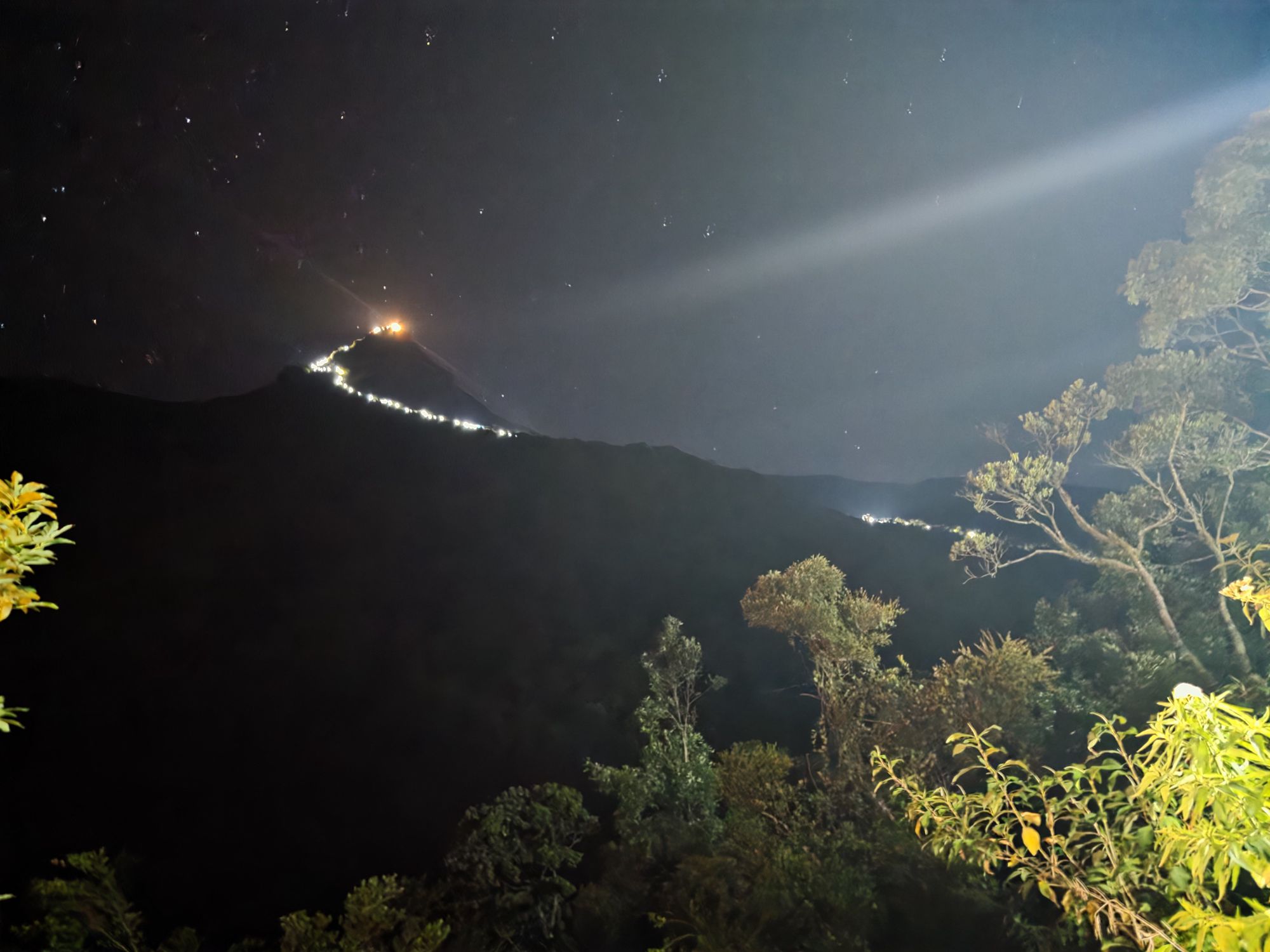
Where and When: Siri Pada, Sri Lanka, 26/27 January 2026
A bit of background…
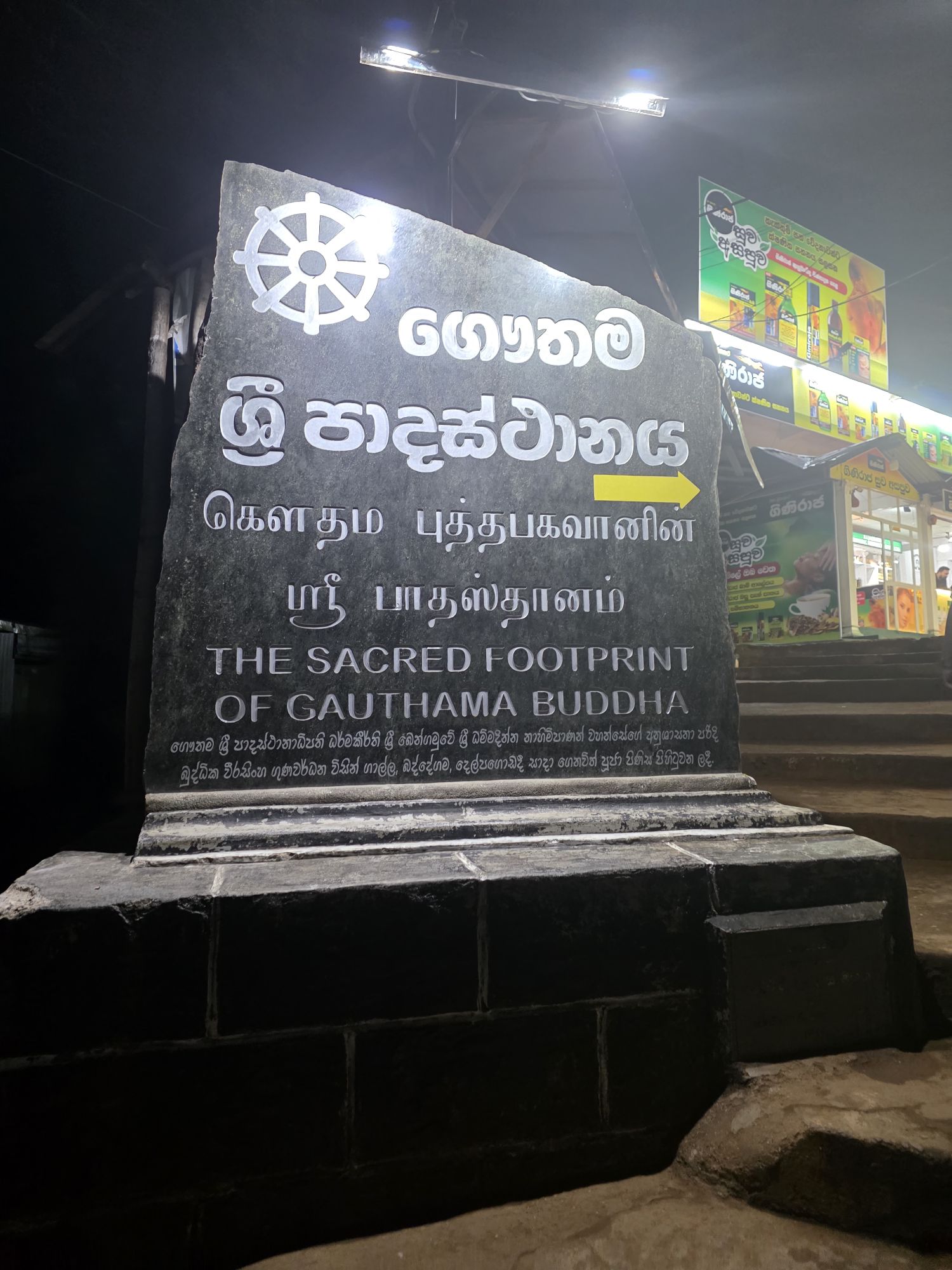
Siri Pada (literal meaning “Sacred Foot”), known in English as Adam’s Peak, is a prominent mountain located in central Sri Lanka. The peak is revered for its mysterious, large footprint-shaped impression at its summit, which is believed to be that of Lord Buddha by Buddhists, Lord Shiva by Hindus, Adam (the first human) by Christians and Muslims.
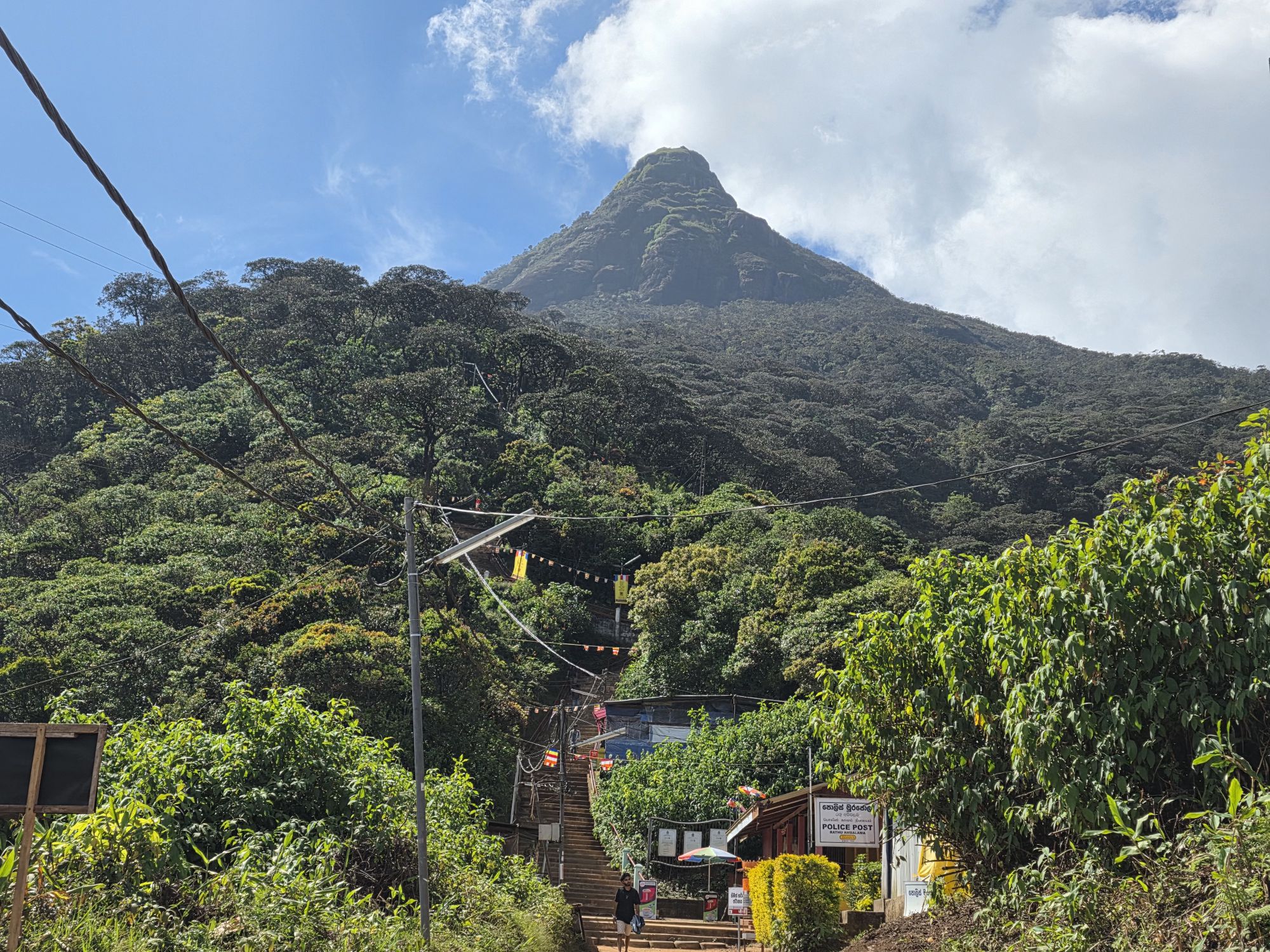
Buddhist lore has it that, when Buddha visited Sri Lanka for the third (and last) time, around 5th century BC, he placed an imprint of his left foot on top of the conical shaped mountain Siri Pada, on the invitation of a Prince named Sumana-saman. Sri Lankans believe that Sumana-saman is now the guardian deity of Siri Pada and is referred to as “Saman Deiyo” or “God Saman”.
For the majority Buddhist population in Sri Lanka, this is a must do journey, at least once in your life. This is my story of my first trip, nay, pilgrimage, to the top of Siri Pada.
The summit of the Siri Pada is 2,243 meters (7,359 feet) above sea level. There are 3 main routes to the summit: from the town of Hatton (hill country and tea estates), from the town of Ratnapura (centre of the gem industry in Sri Lanka and the oldest route) and from Kuruvita (apparently the most beautiful route).
We took the Hatton route up and down, so everything in this post is about the ascent and descent via the Hatton route. The starting point for the Hatton route is Nallathanniya, a small village in the tea country. From here it is ~6 km to the the summit and we would be ascending around 1000m along the way.
The start….
2130: It took us the best part of 3.5 hours to drive from Nuwaraeliya to Nallathanniya, mainly because of the really awful road from Diyagala junction to Maskeliya town.
Tip: If you are coming from Nuwaraeliya, take the road via Hatton and Dick-Oya. The road is shorter and in a lot better condition compared to the Diyagala junction to Maskeliya road.
2200: My aunt had packed us dinner to eat before the start of the trip. Good thing too, as this would sustain us for the next 15 hours (and 12km of walking). If you are looking for a place for dinner before your journey, I recommend Nawalapitiya Hotel in Nallathanniya. They were kind enough to let us eat our packed dinners in their restaurant, gave us many tips about the ascent and descent, and we had lunch there the next day when we finished our trip. The lunch was delicious and very reasonably priced.
As a Siri Pada novice, there were some traditions I chose to follow on the journey (no one actually enforces any of these traditions and it is entirely a personal choice whether you do them or not).
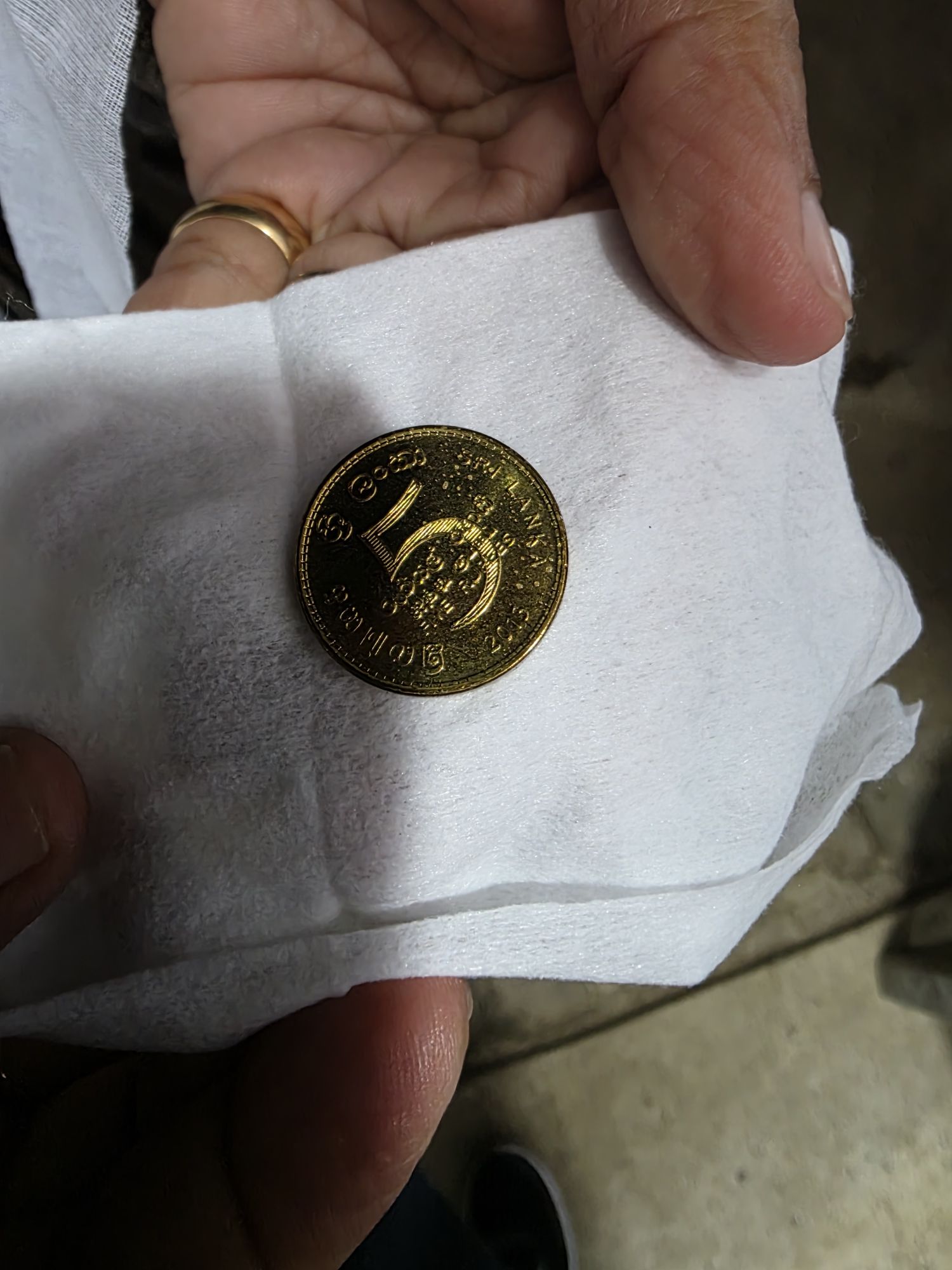
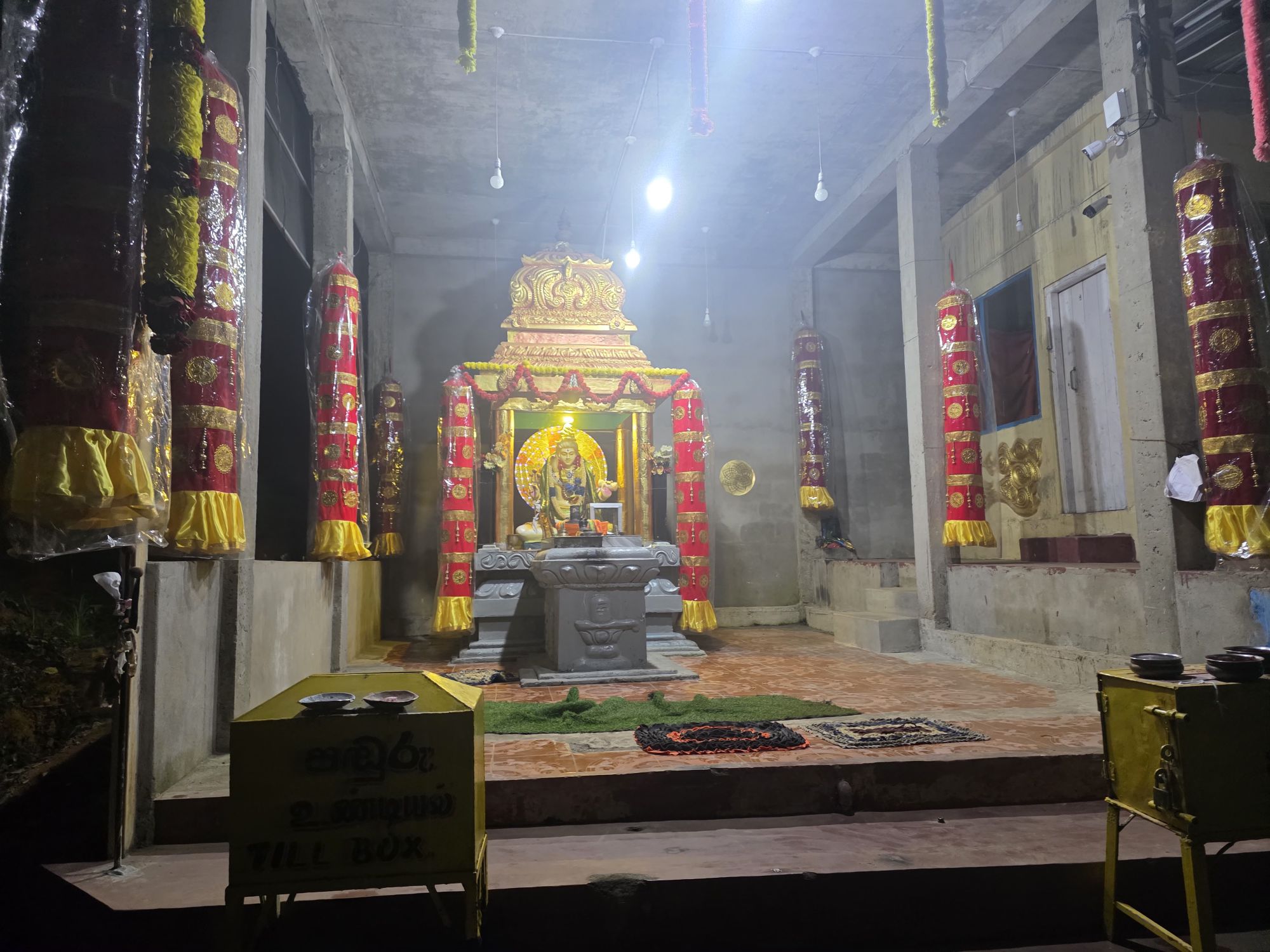
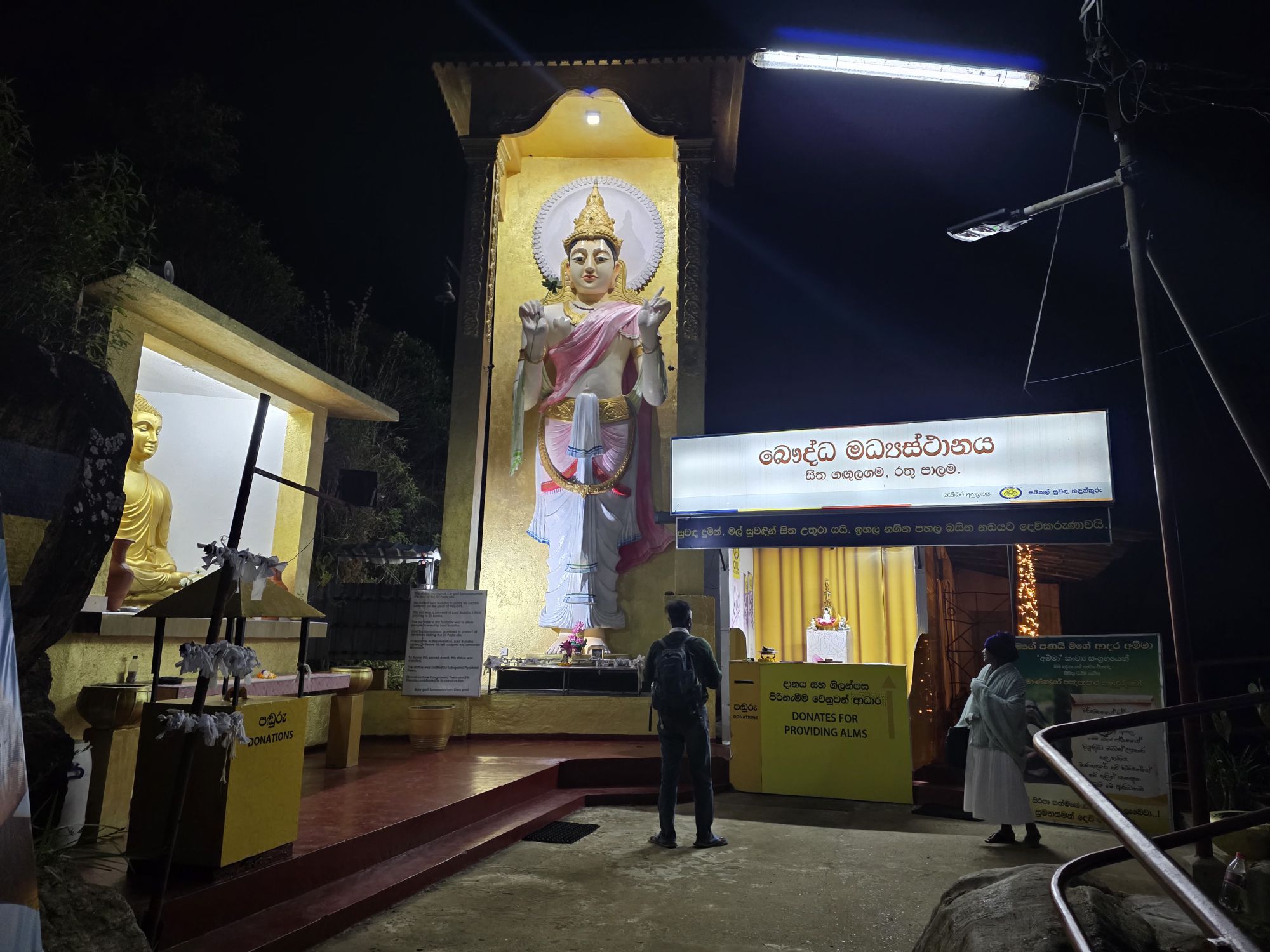
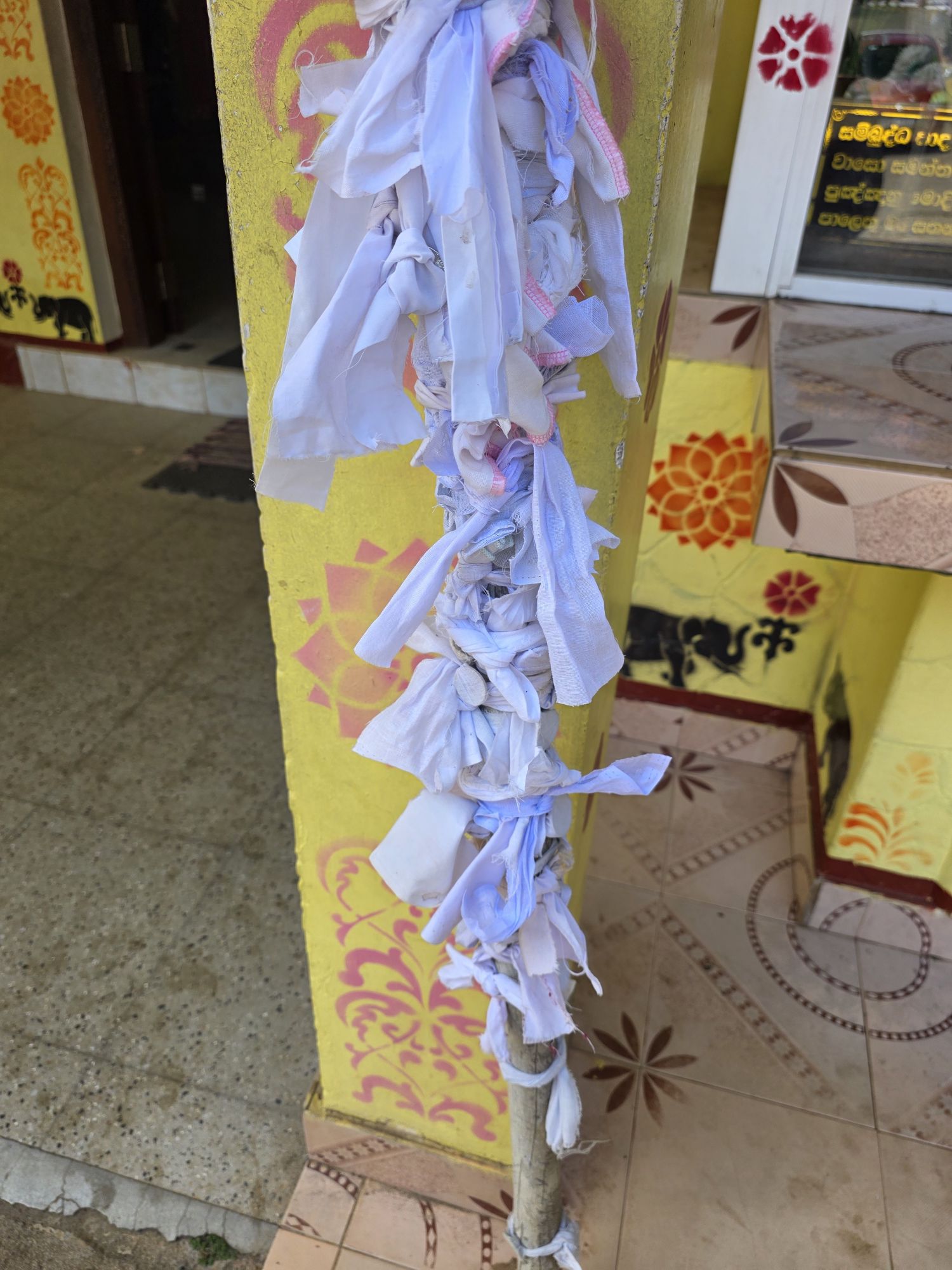
First was a “Panduru” offering to god Saman (the deity of mountain and the surrounding area). I made an offering to the god Saman and asked him to watch over me and my family on this journey. In return, I would make the pilgrimage with humility and respect. On successful completion of the trip, I would come back to this shrine to offer my gratitude. As a token of this promise, I washed and wrapped a coin in a clean strip of white cloth (readily available in nearby shops). I would carry this with me along the pilgrimage.
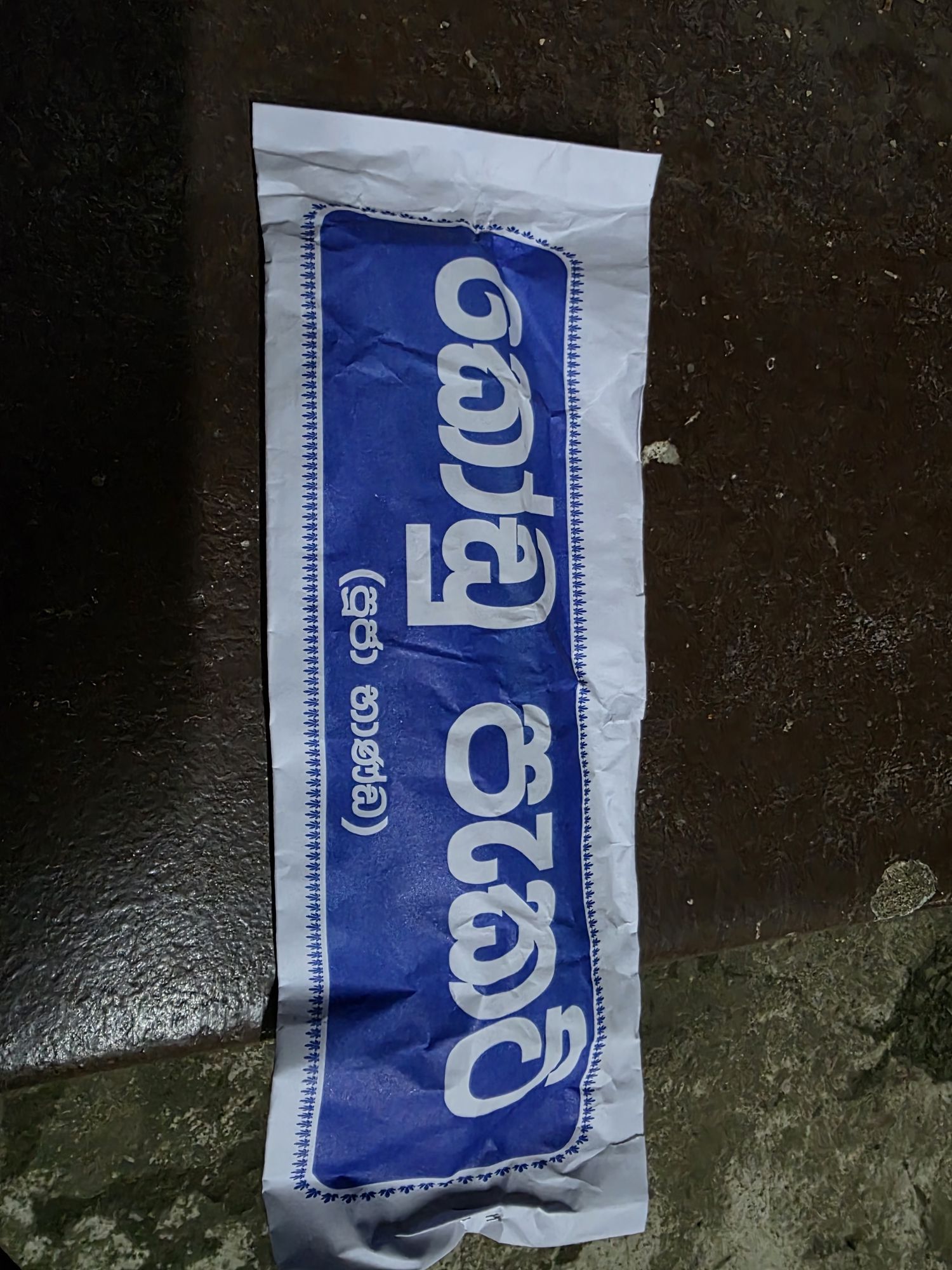
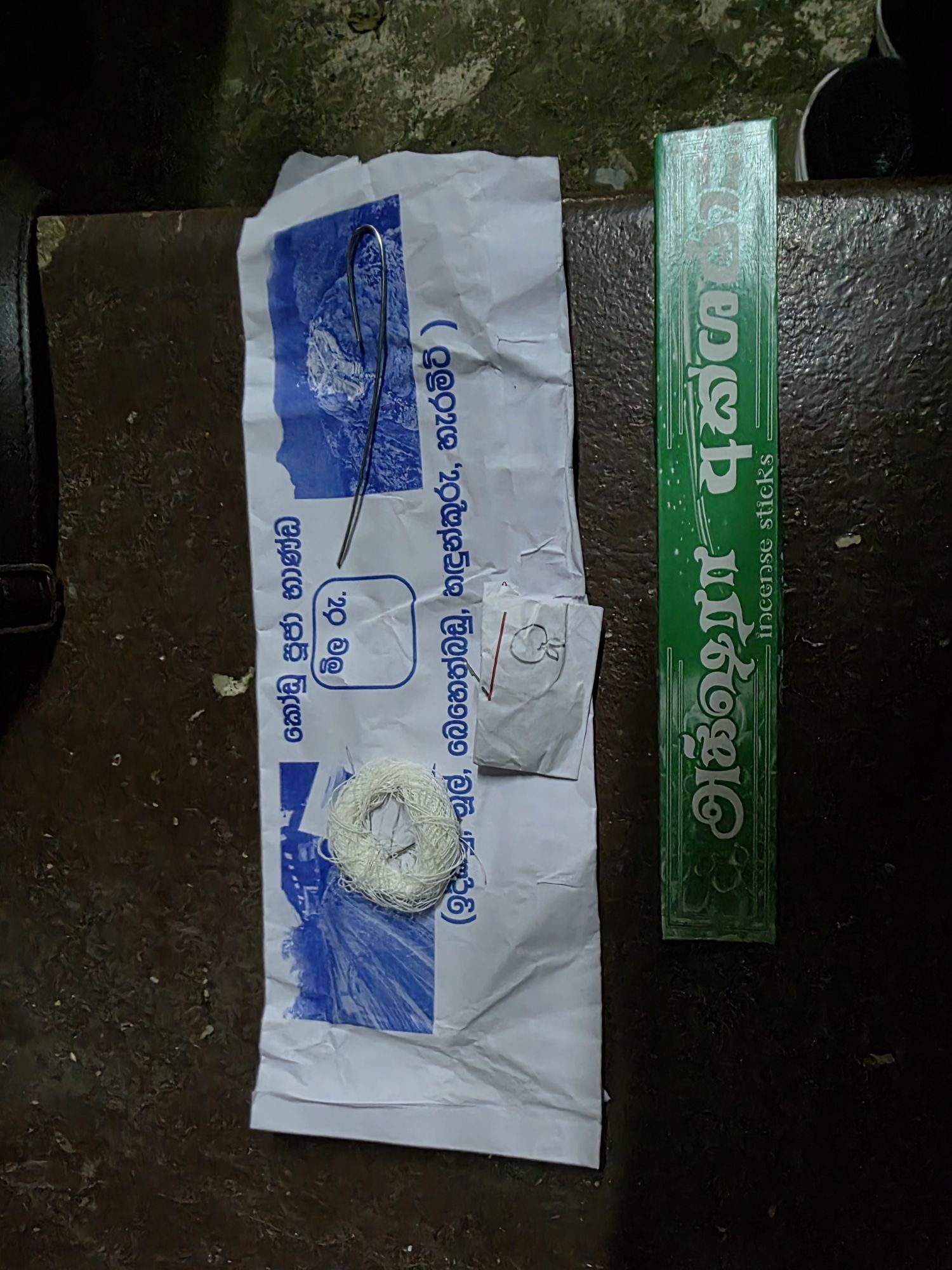
I also bought a “Kodu” (meaning “novice”) packet from the shops. More on that later in the post.
2245: And then we began…
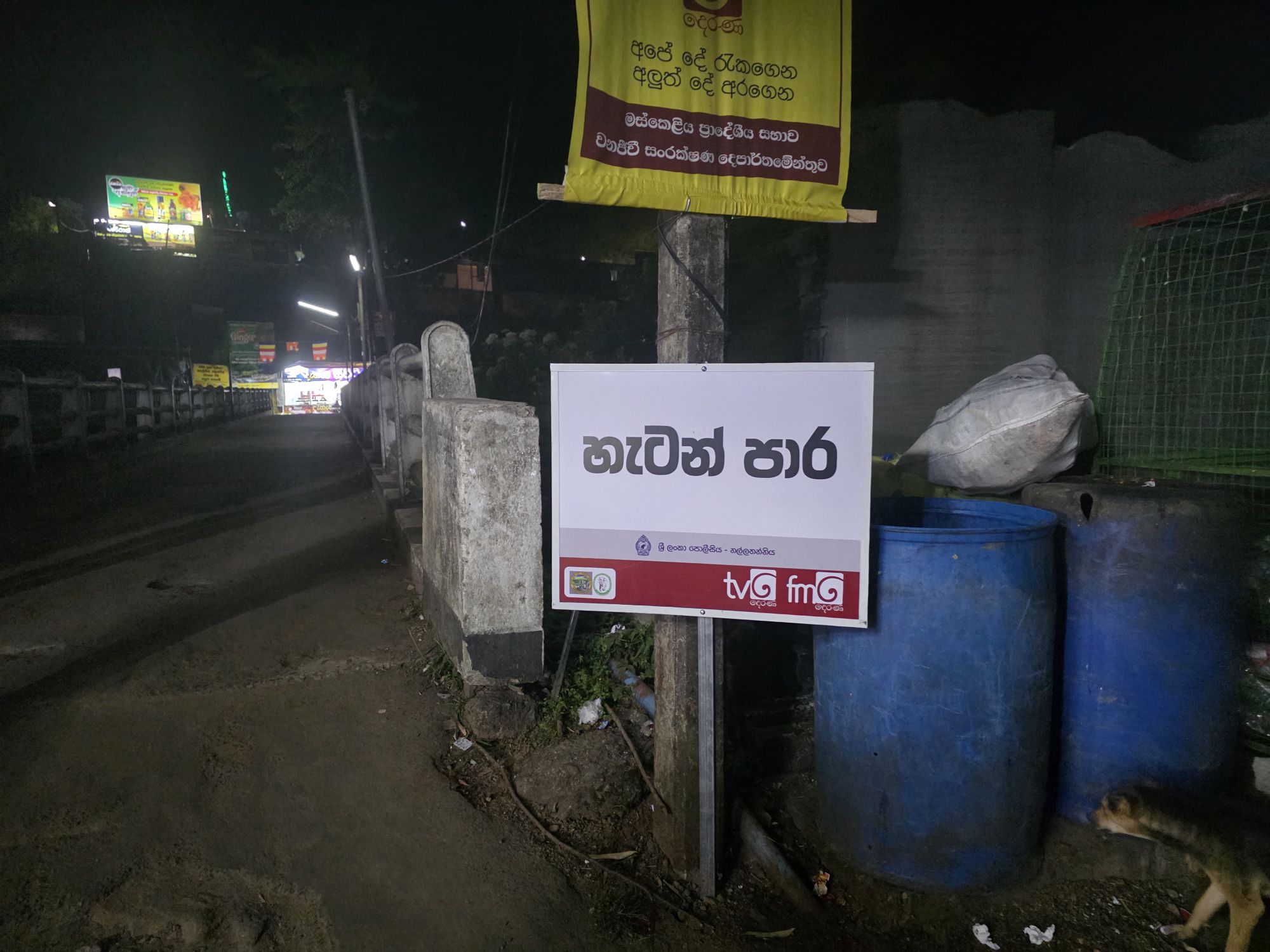
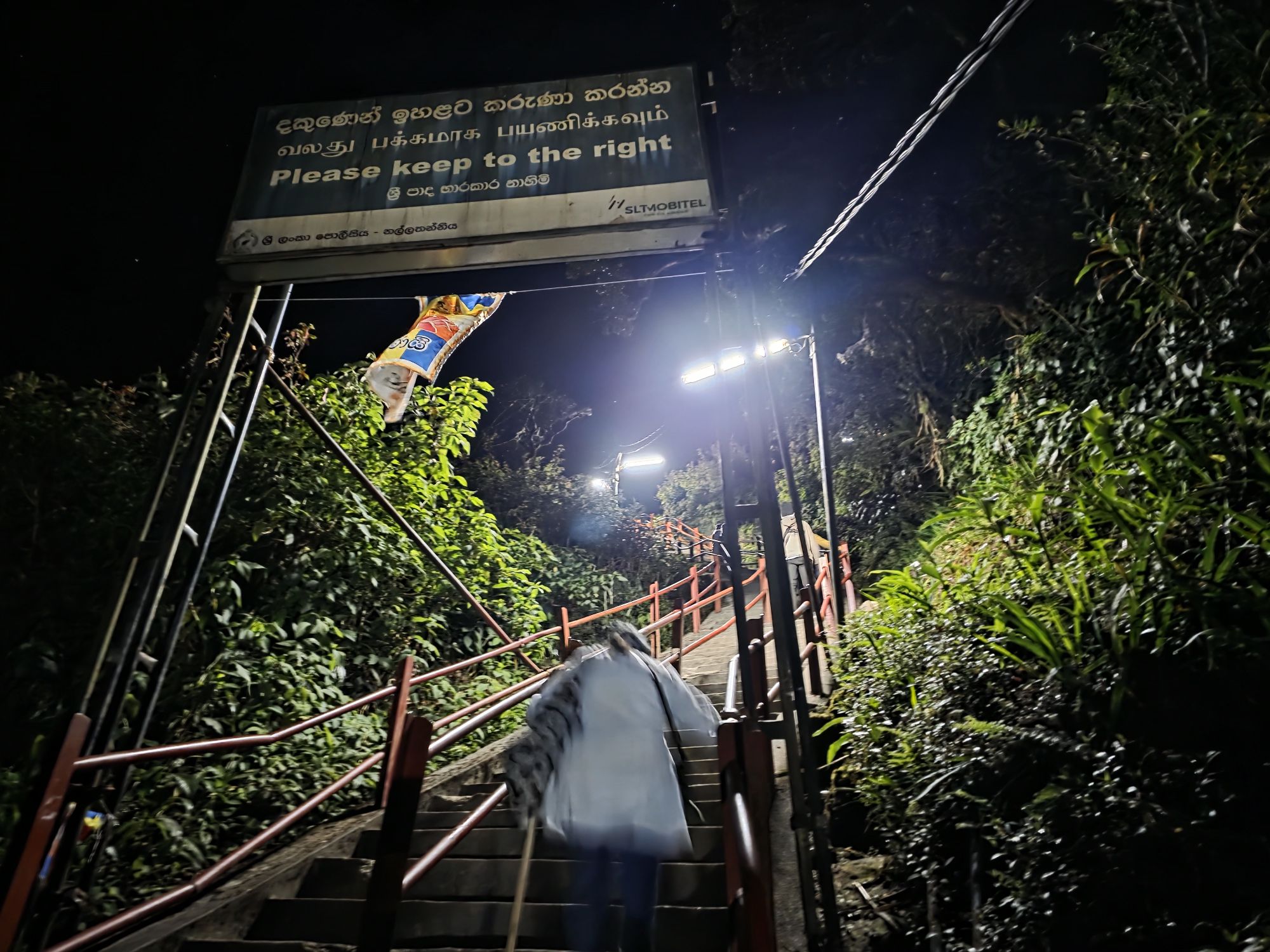
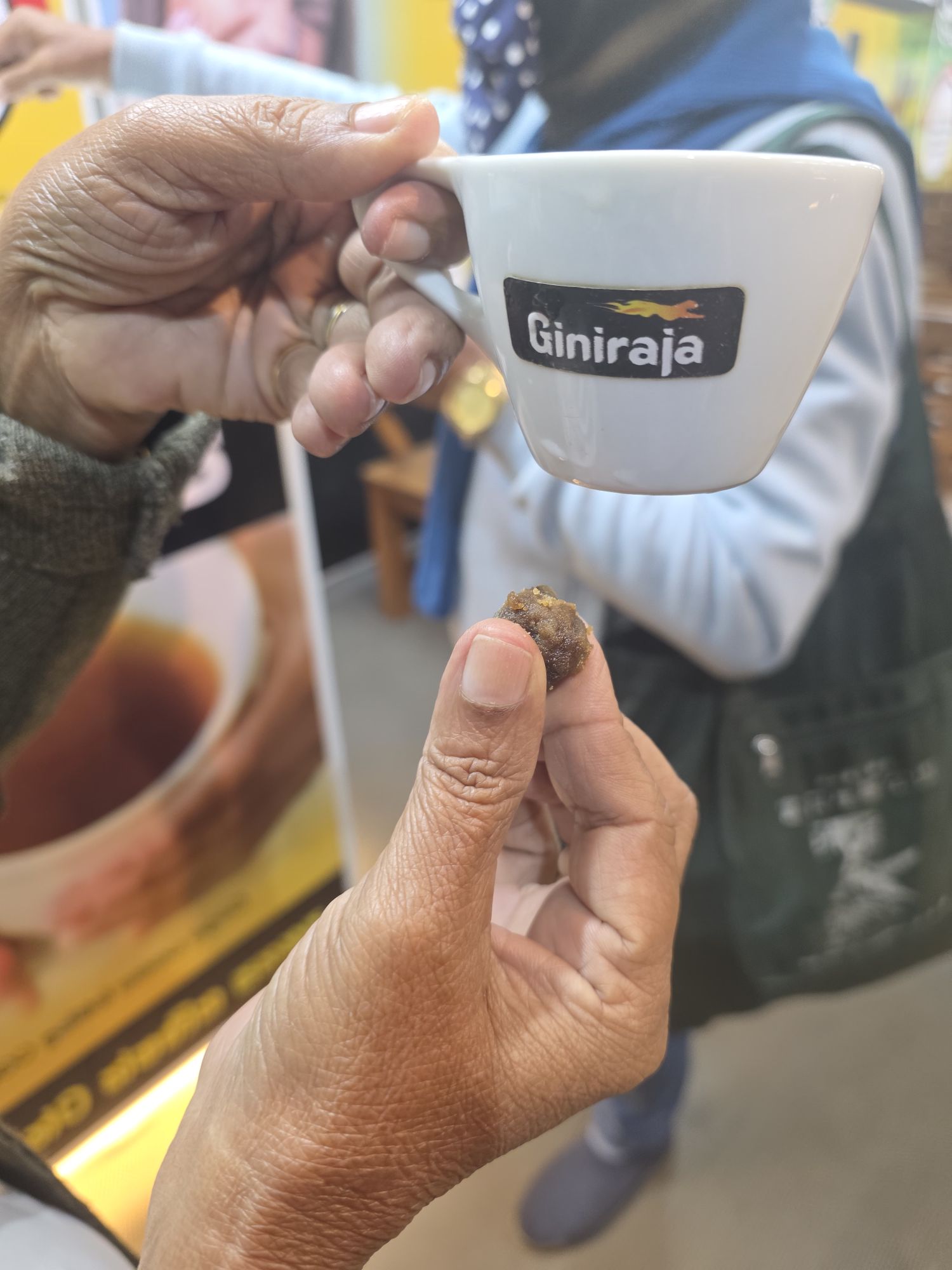
The road is very well lit and signposted all the way and there are signs marking all the major milestones. Our first stop was almost immediate – at Giniraja. A manufacturer of traditional ayurvedic products for many ailments.
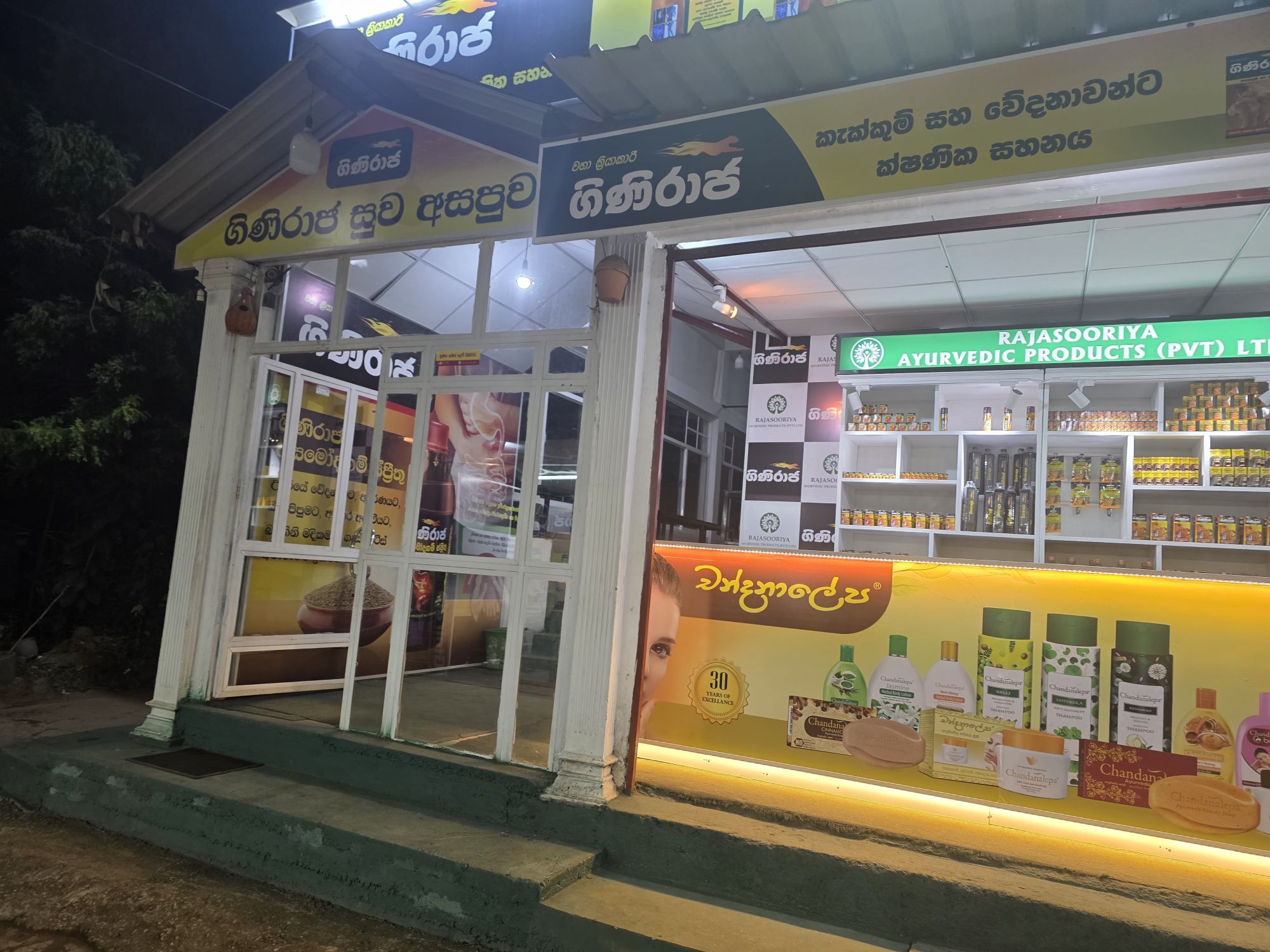
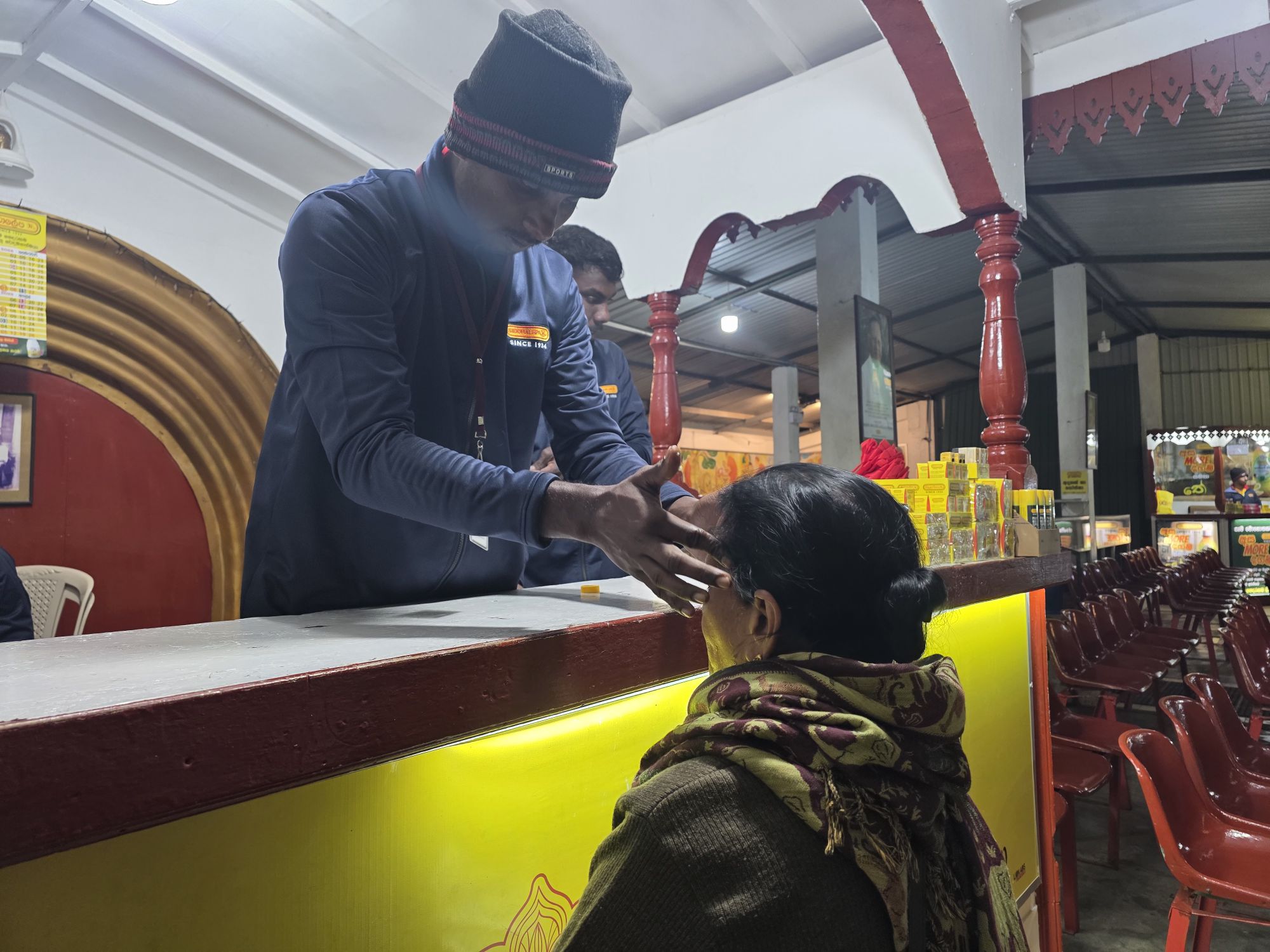
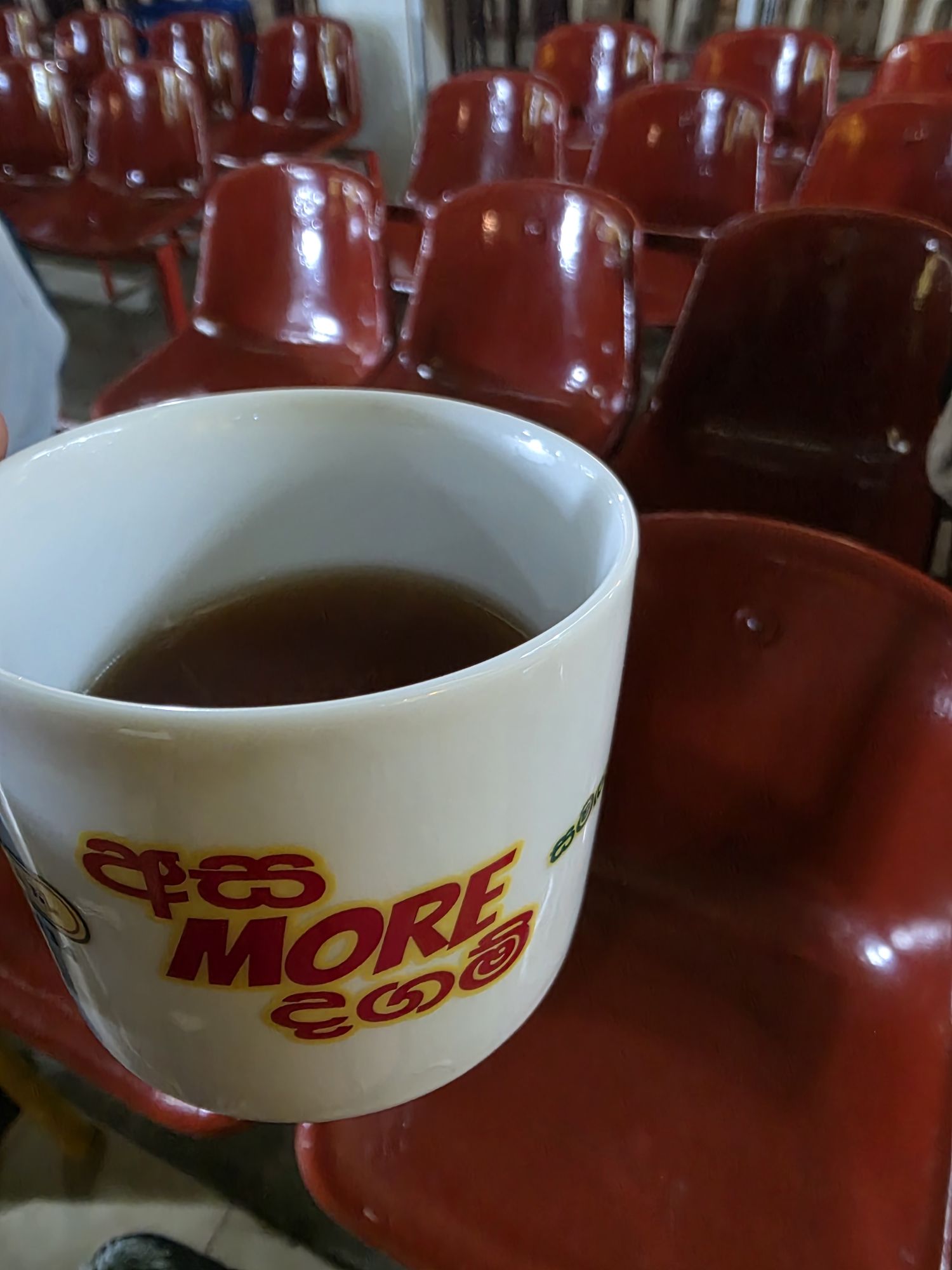
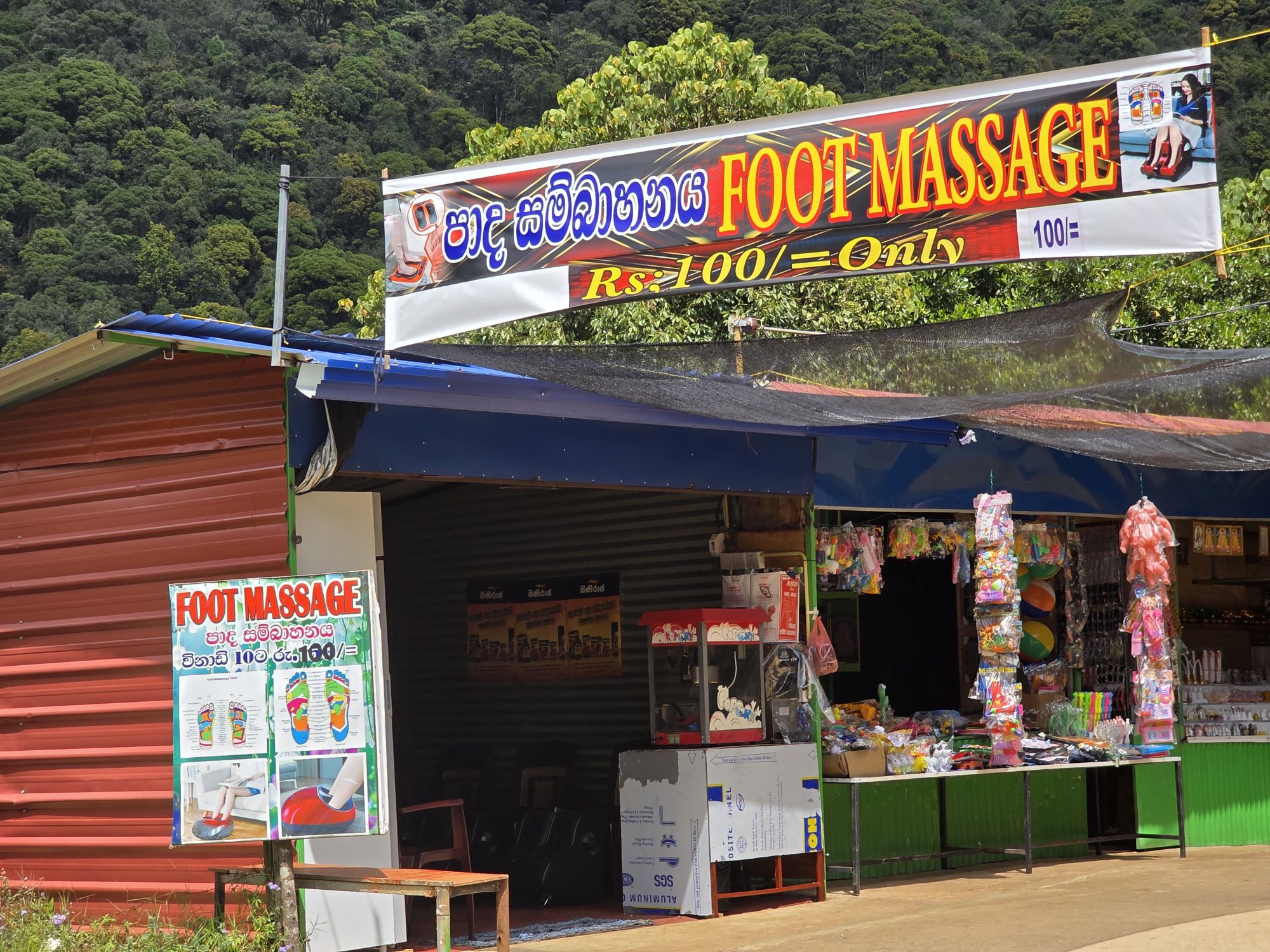
They provided us with a refreshing hot drink to get us on our way (and would also offer us complementary foot massages 14 hours later.)
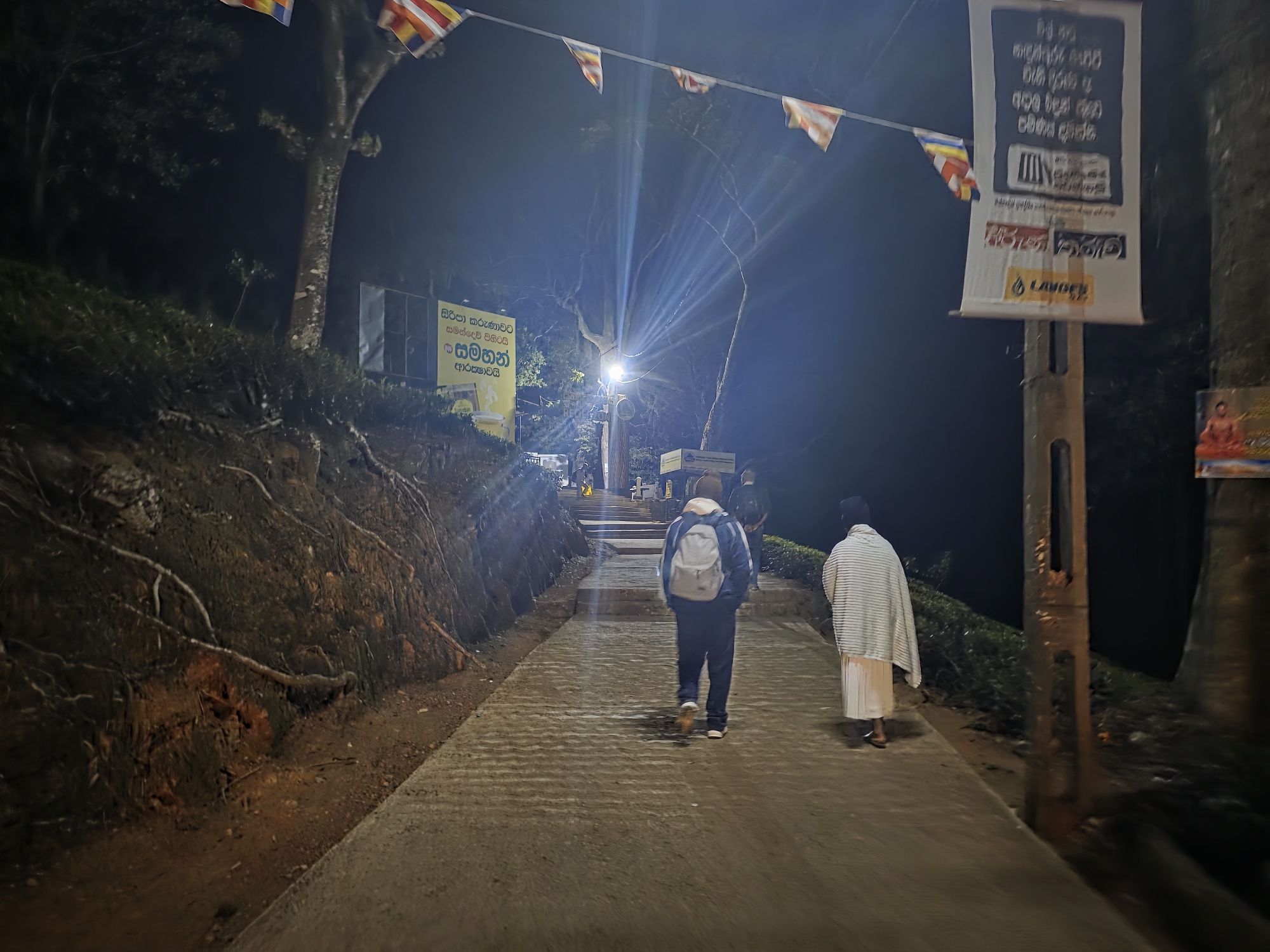
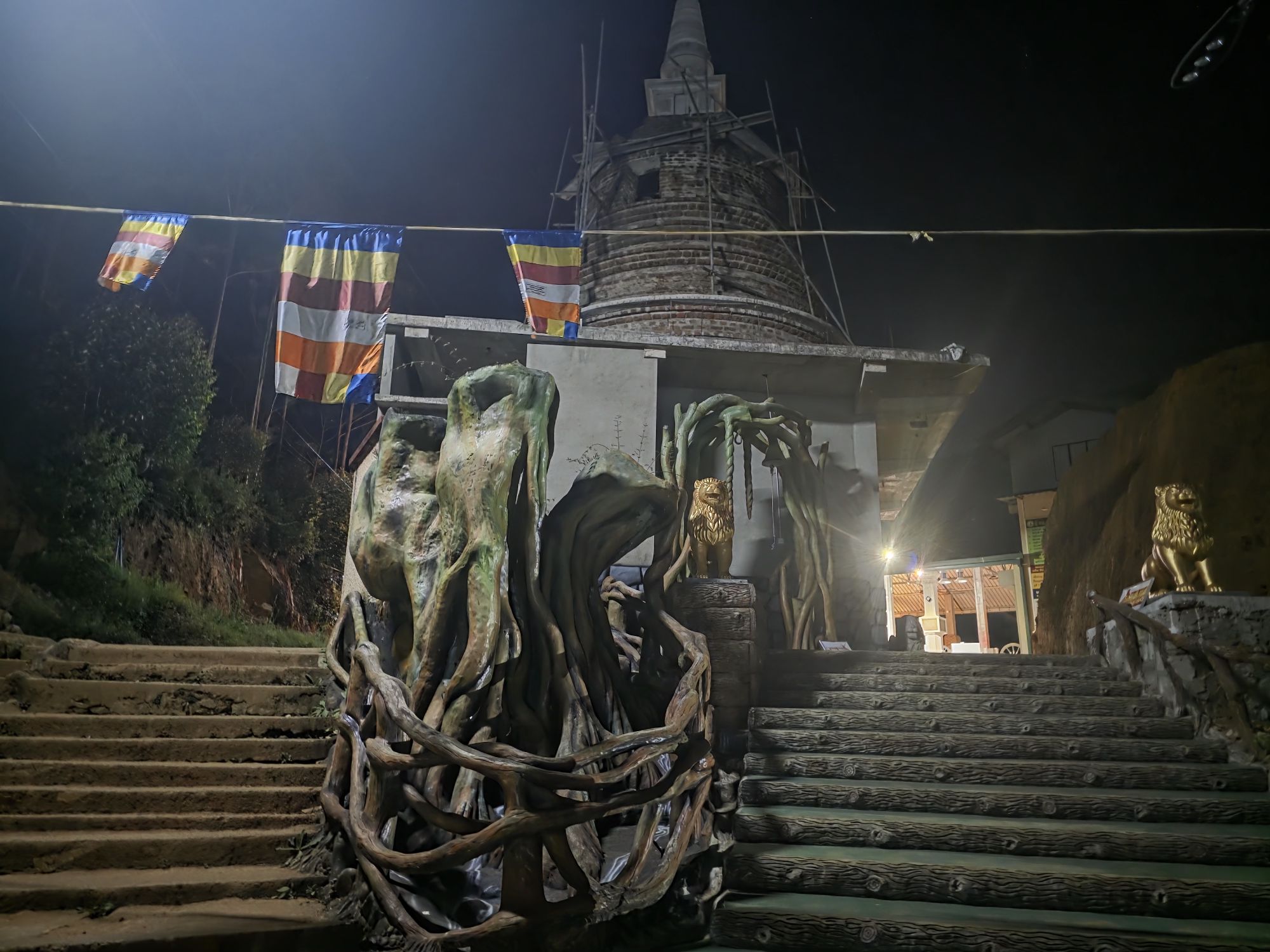
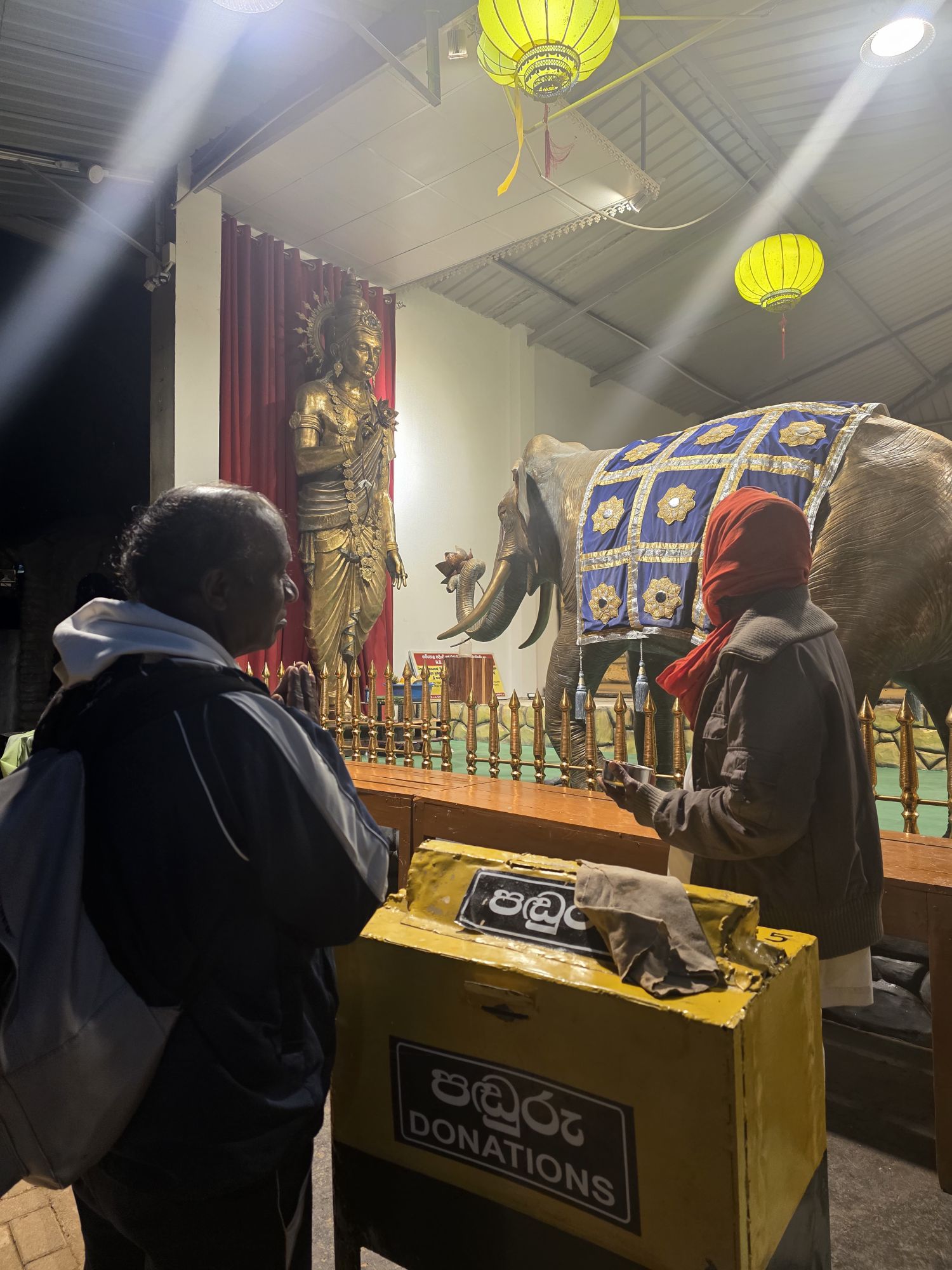
The road to the summit is dotted with Buddhist temples and shrines to many other deities. You can choose to visit as many of these as you like. If you like, the officials and/or monks at the shrines/temples will offer blessings or ask the gods to watch over you. It is customary to make a small donation in return.
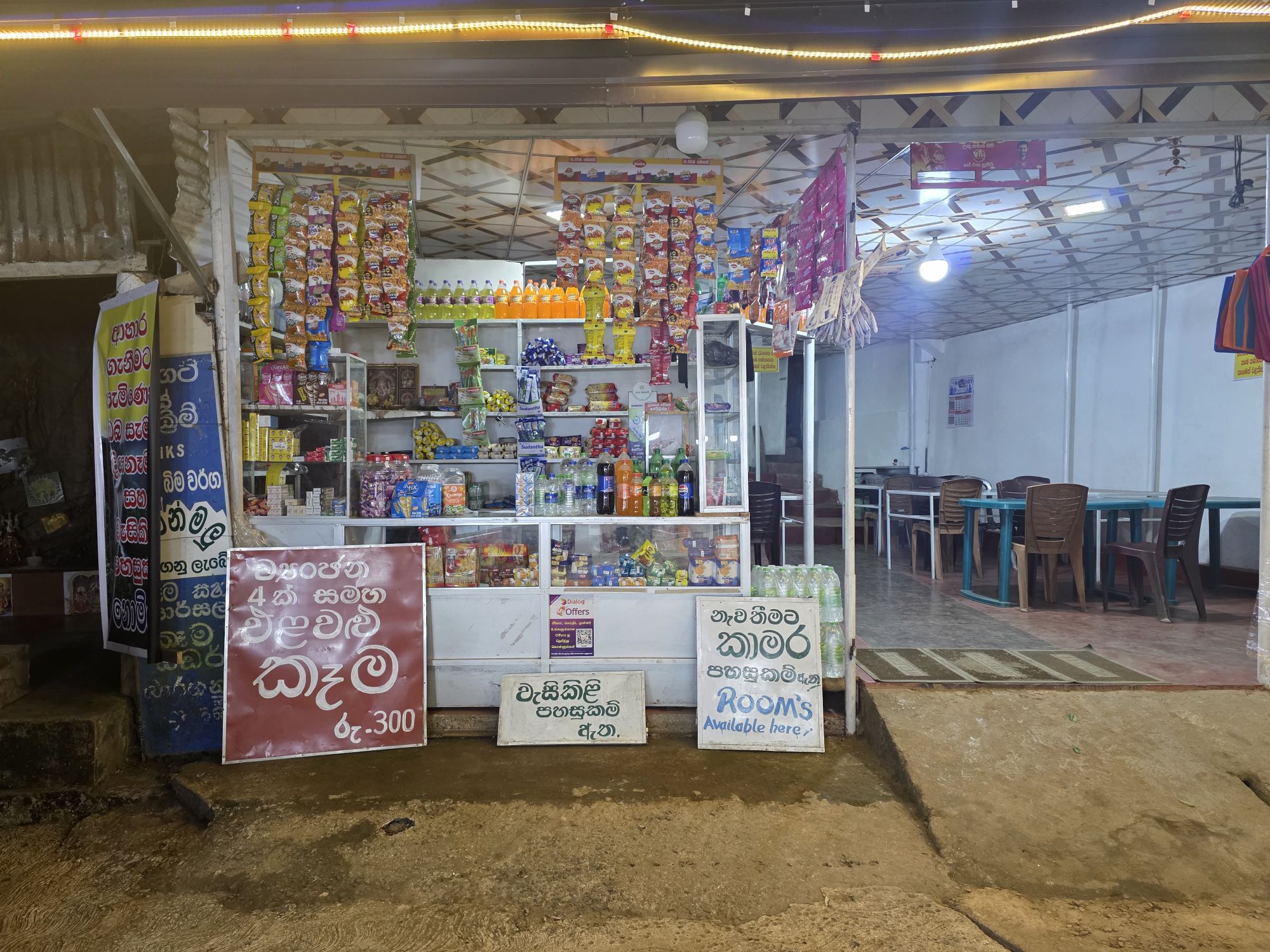
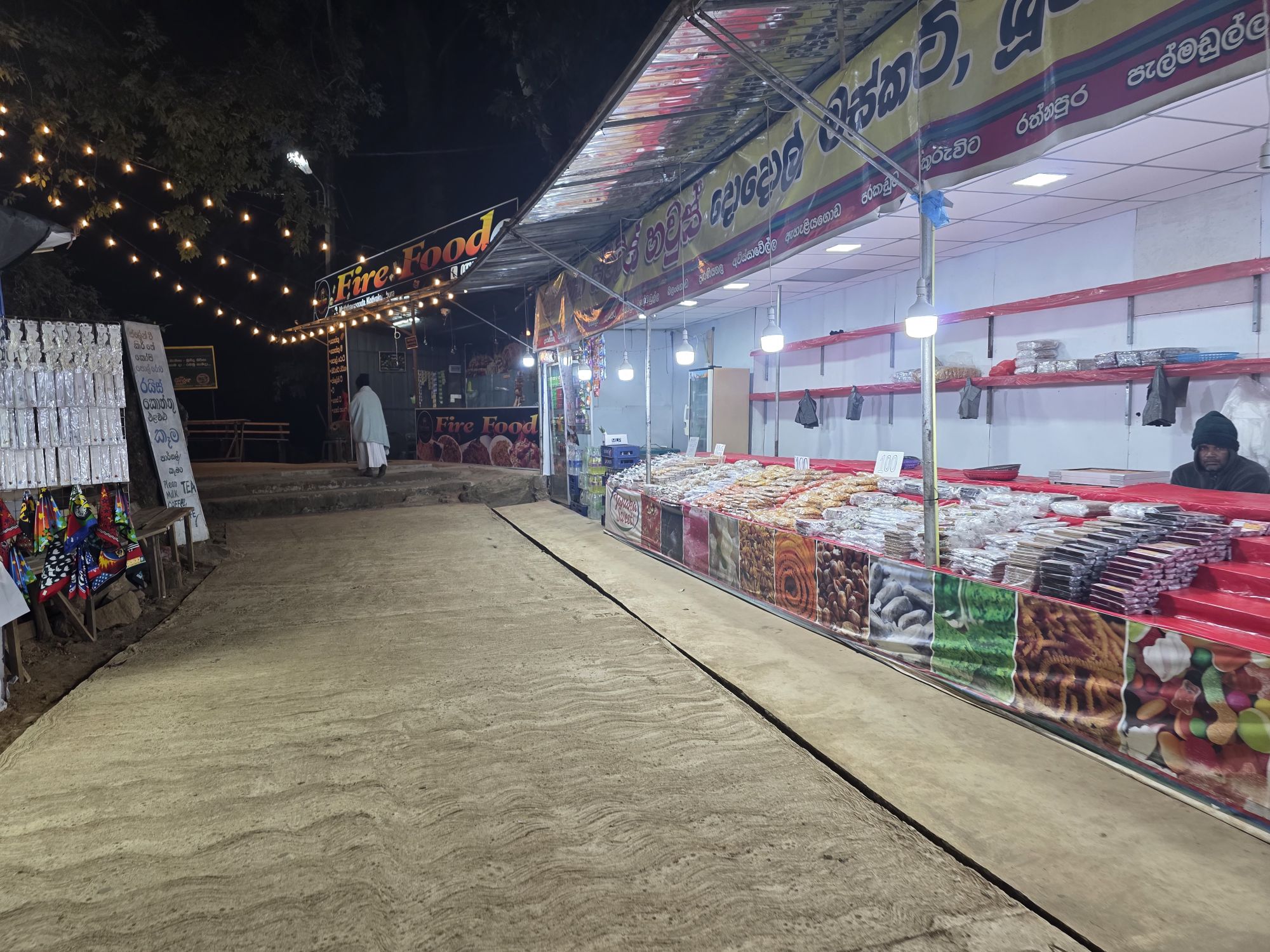
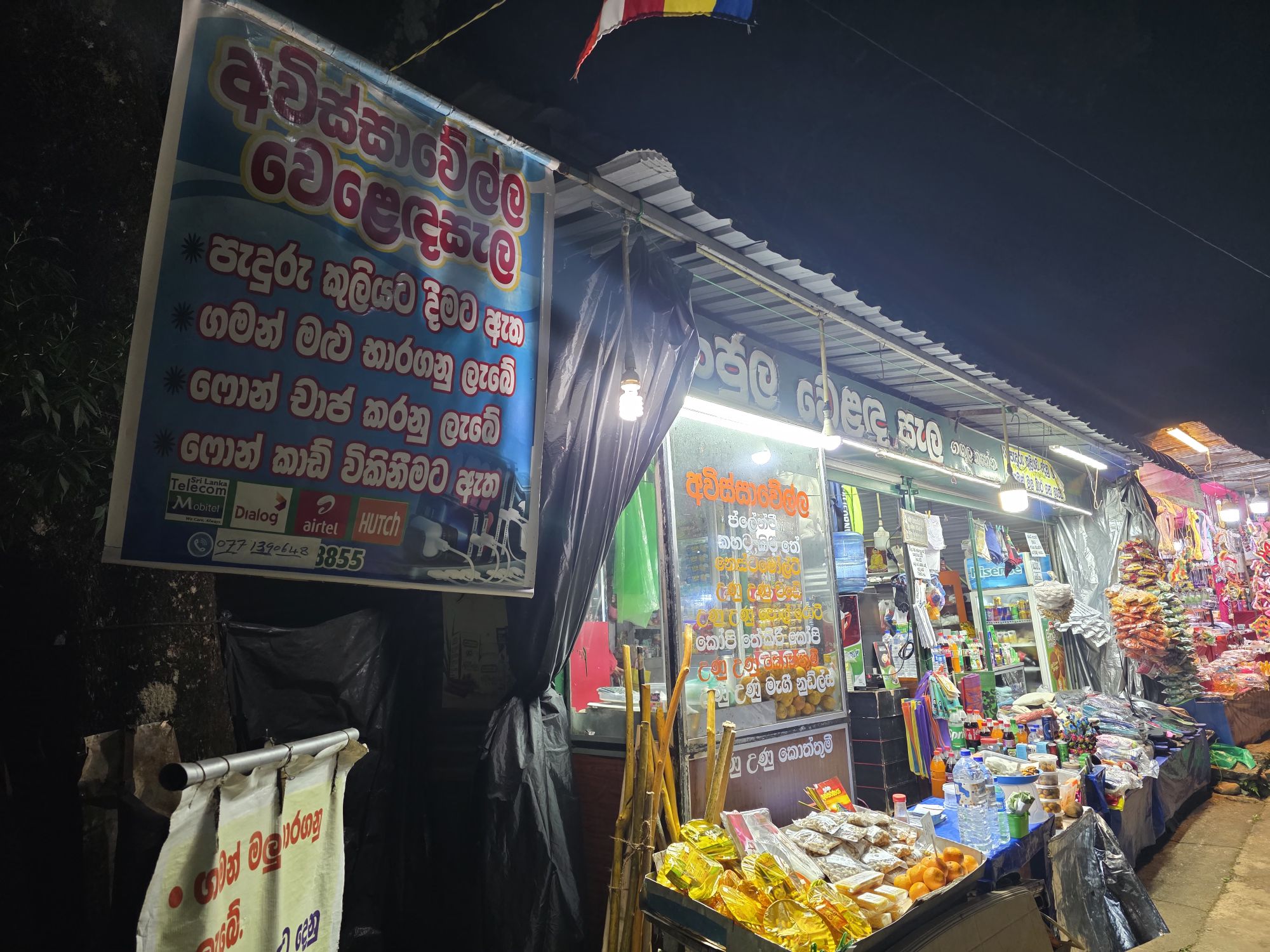
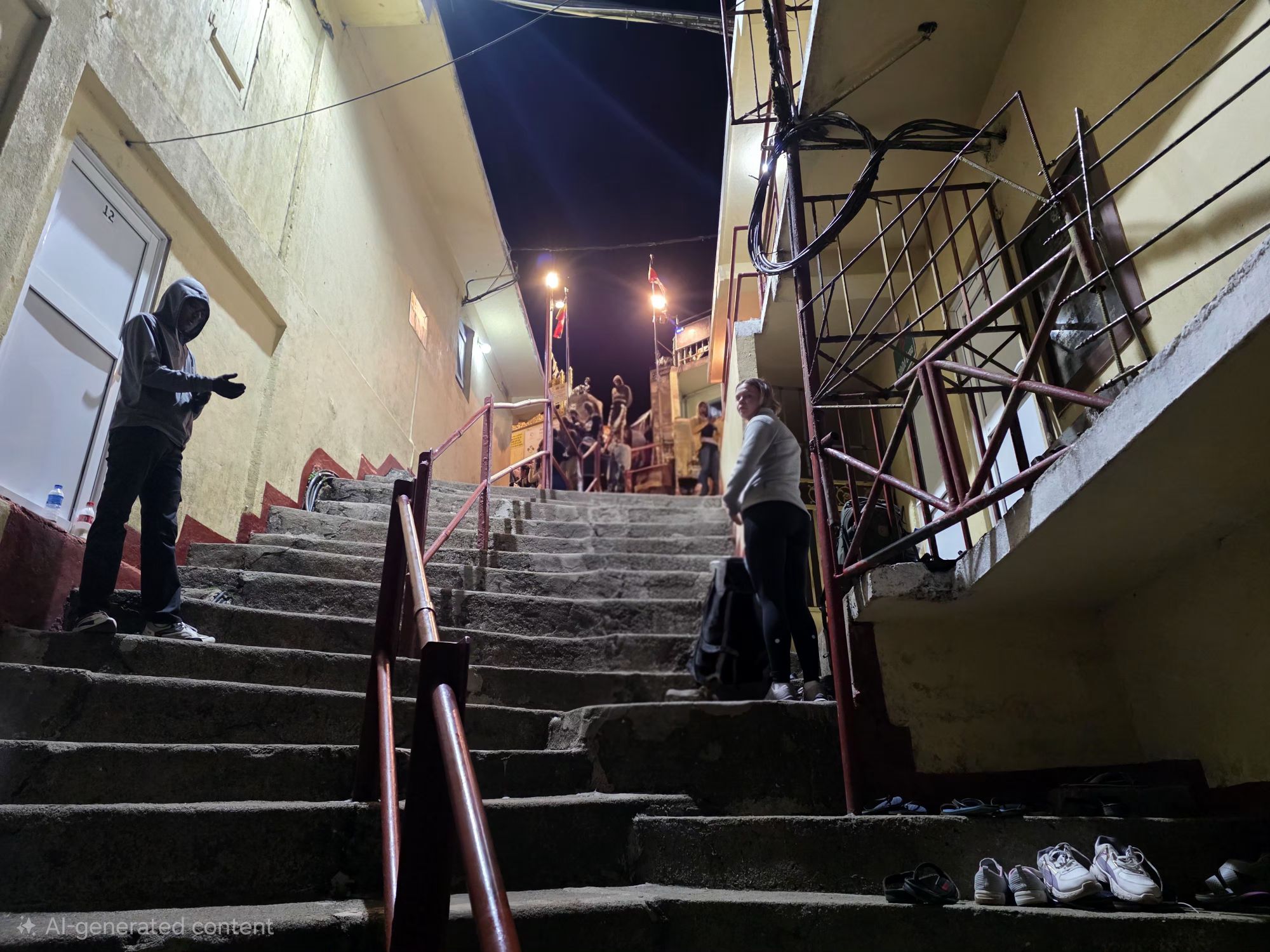
The road is dotted with many brightly lit shops and cafes, offering everything from food, drinks to phone charging and phone top-ups. Toilet facilities are also available at regular intervals (there is a small charge to use them).
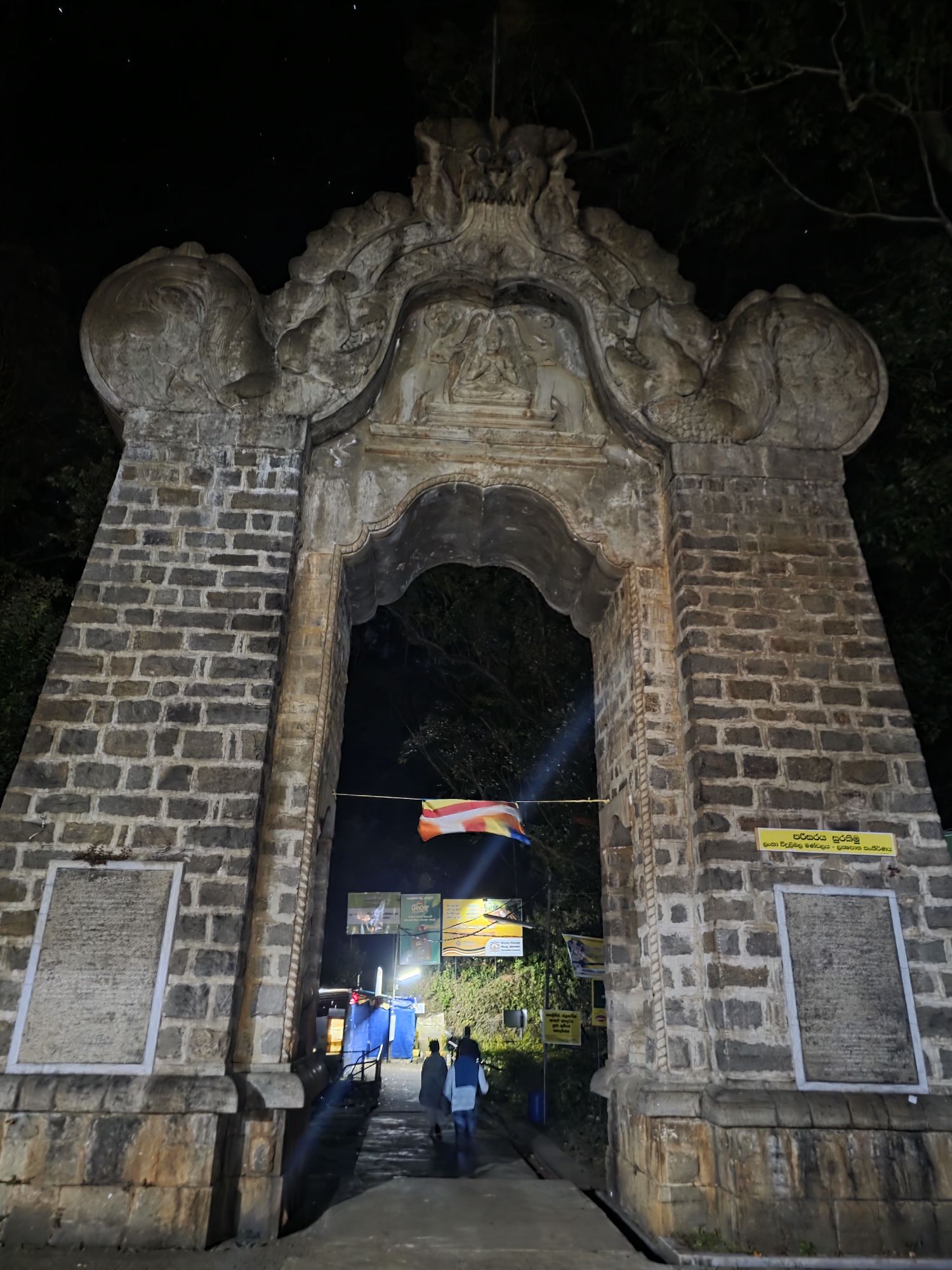
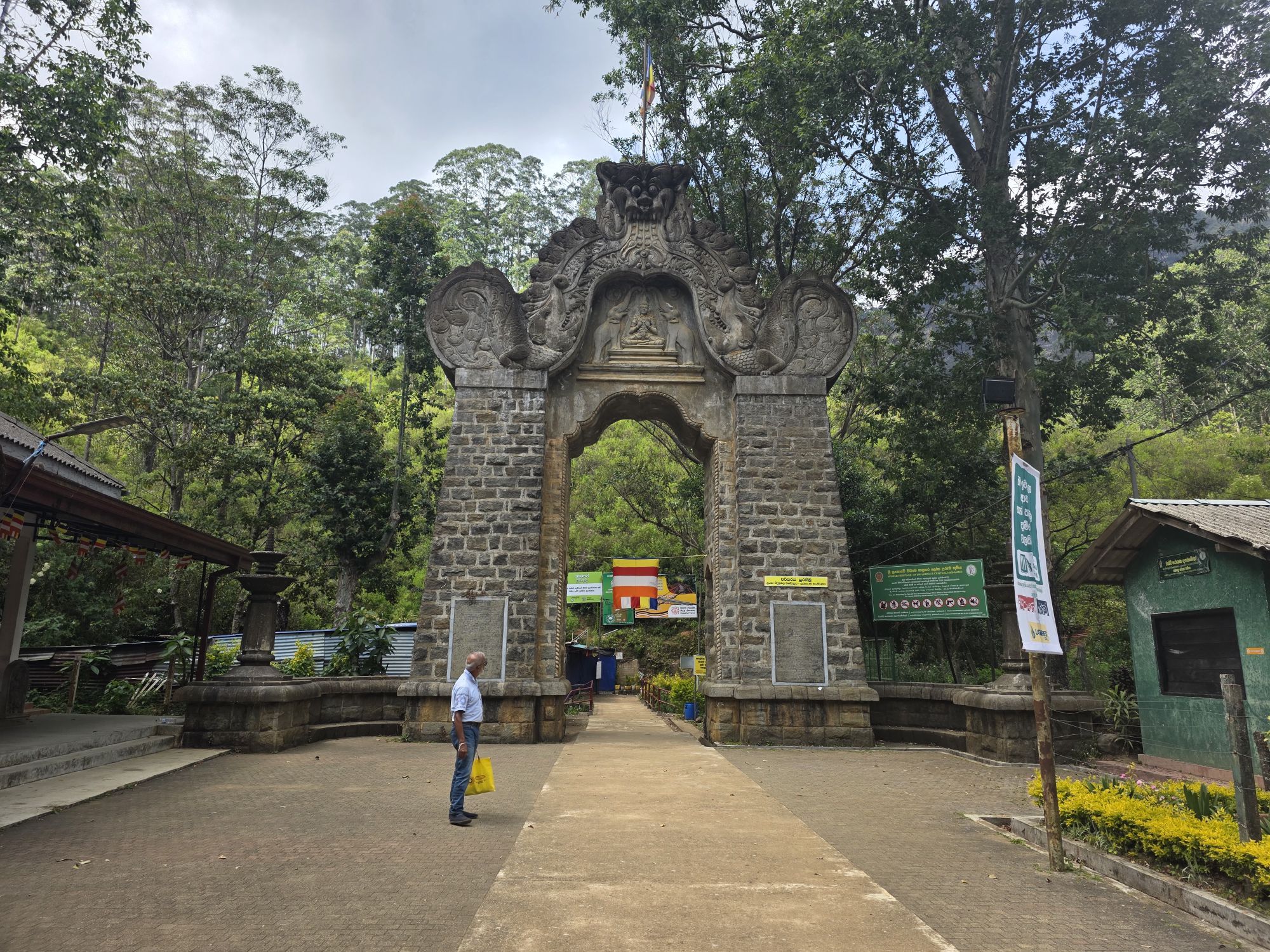
Makara Thorana – The Dragon Arch
2320: Then comes “Makara Thorana” (meaning Dragon Arch) this marks the official start of the Hatton pilgrim route.
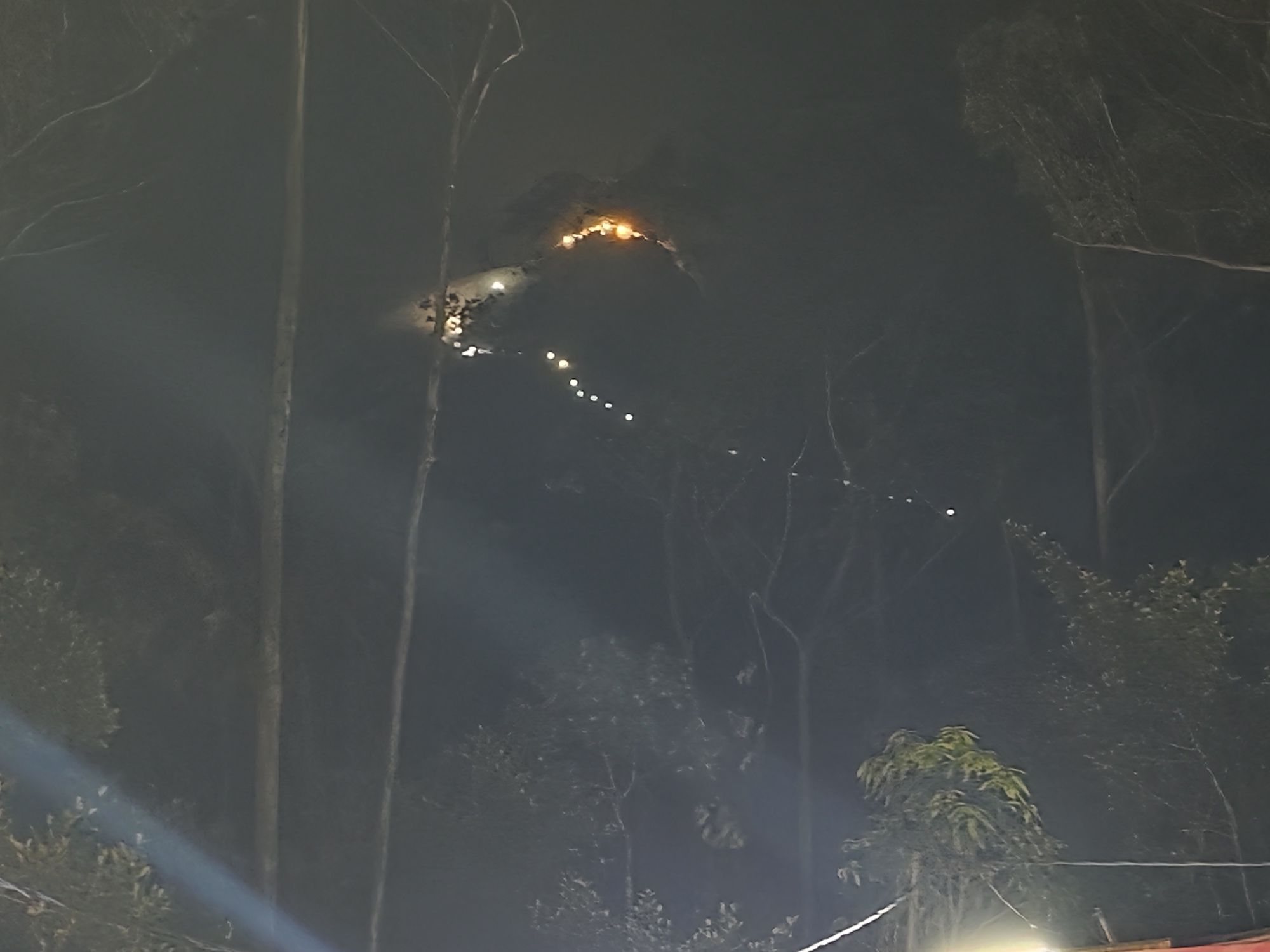
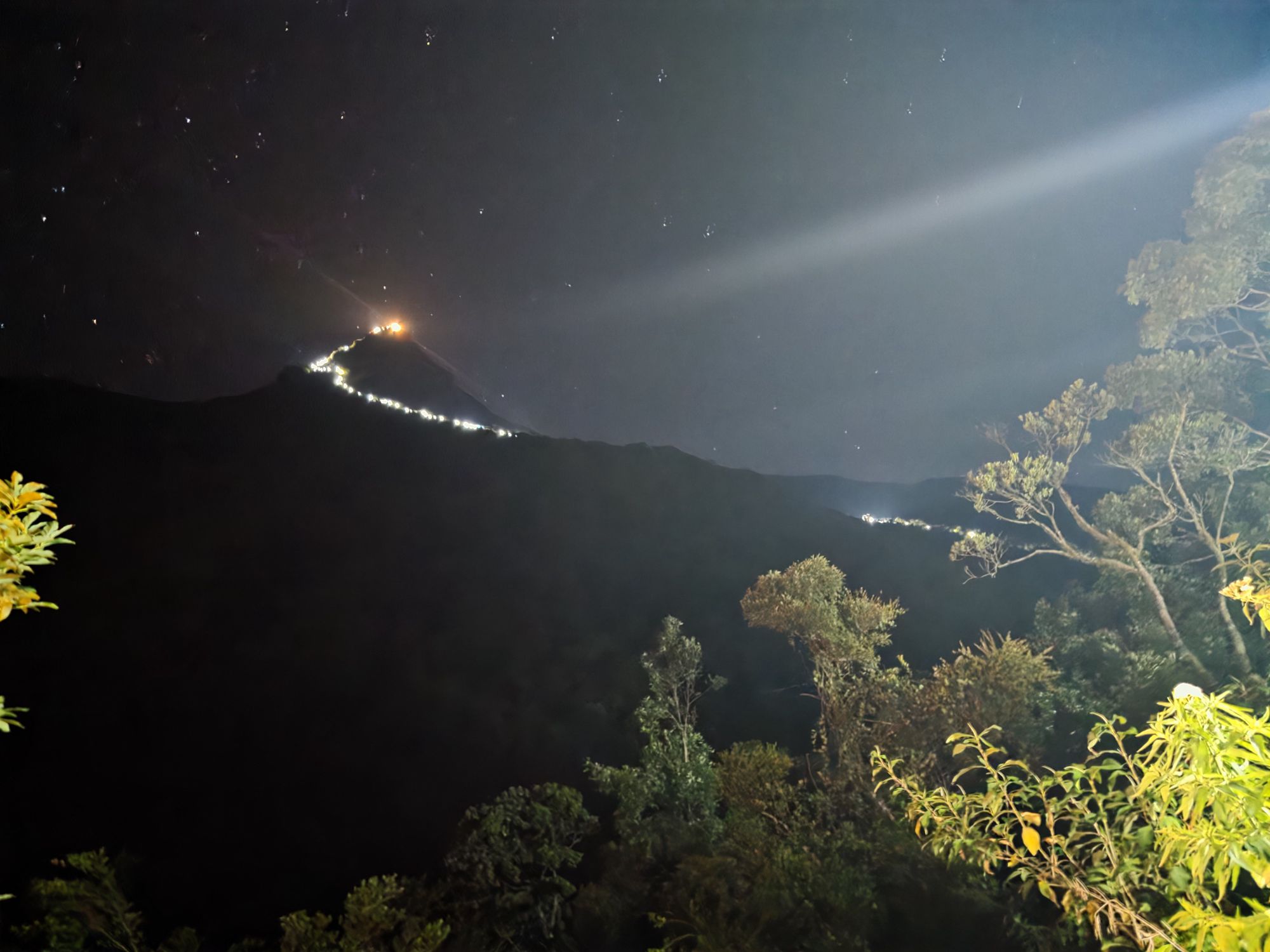
2330: We soon get our first view of the mountain summit and the path to the top – it does not disappoint.
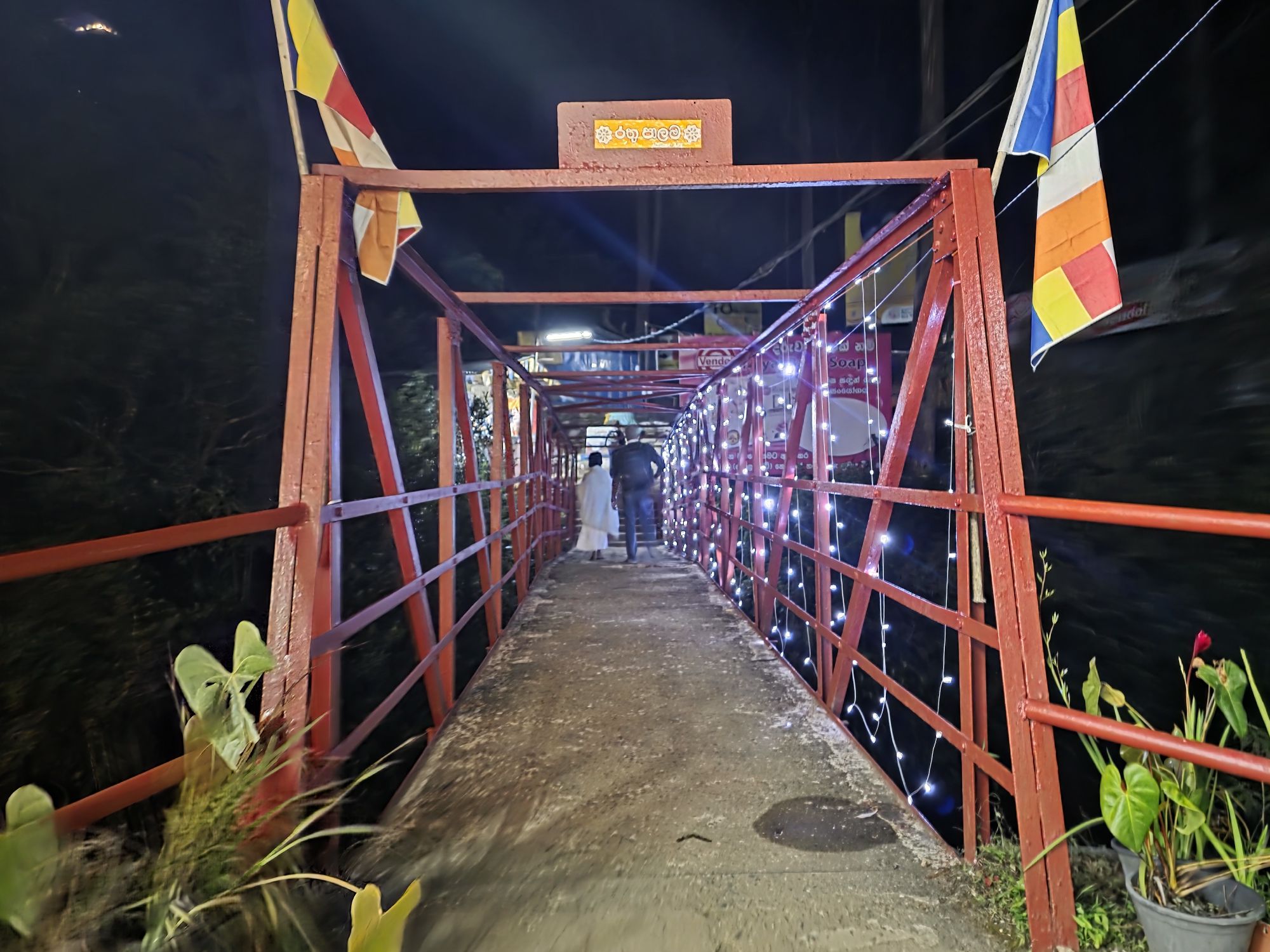
Soon after, we are at the Red Bridge and the Sumana-Saman deity statue.
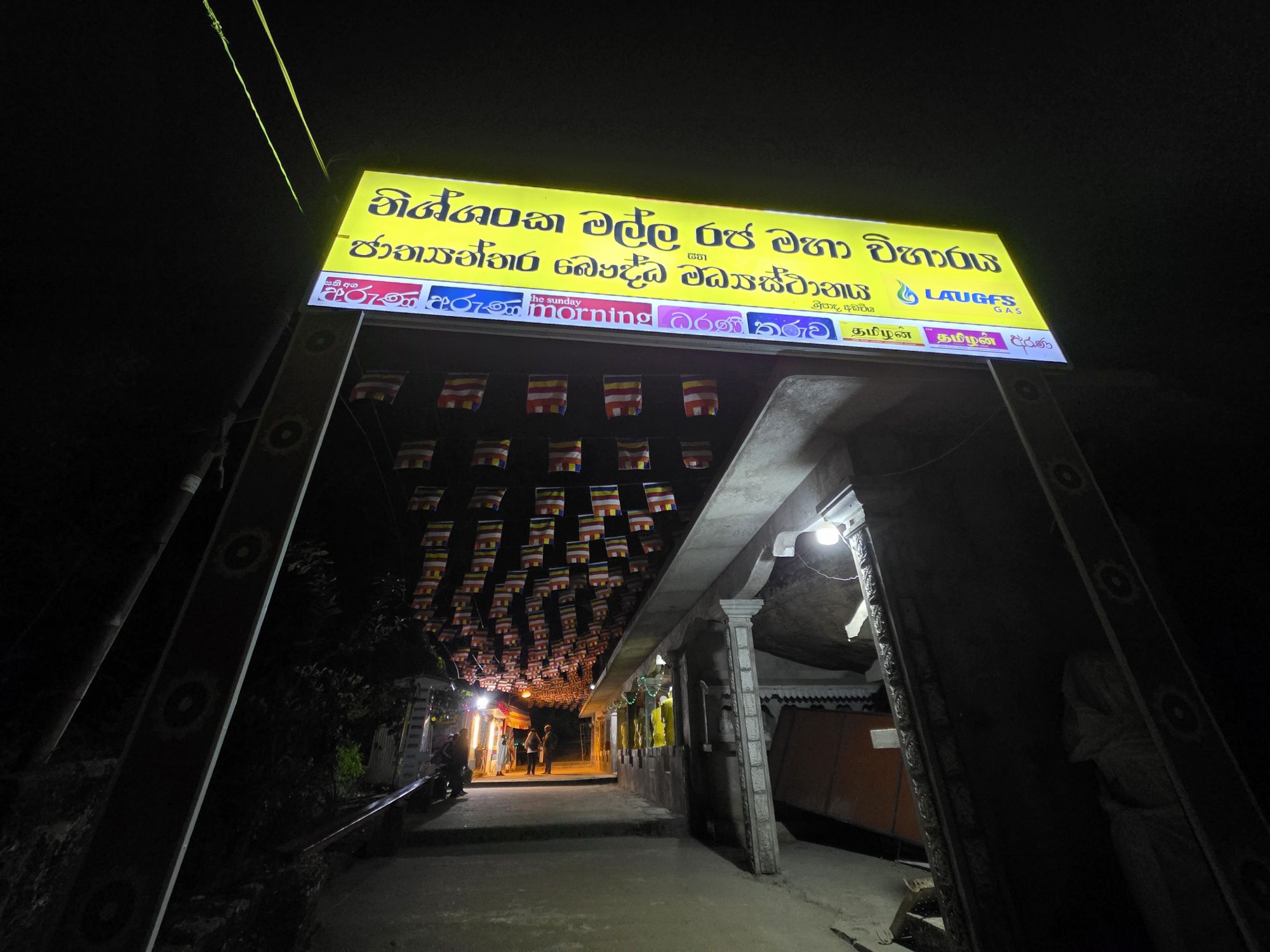
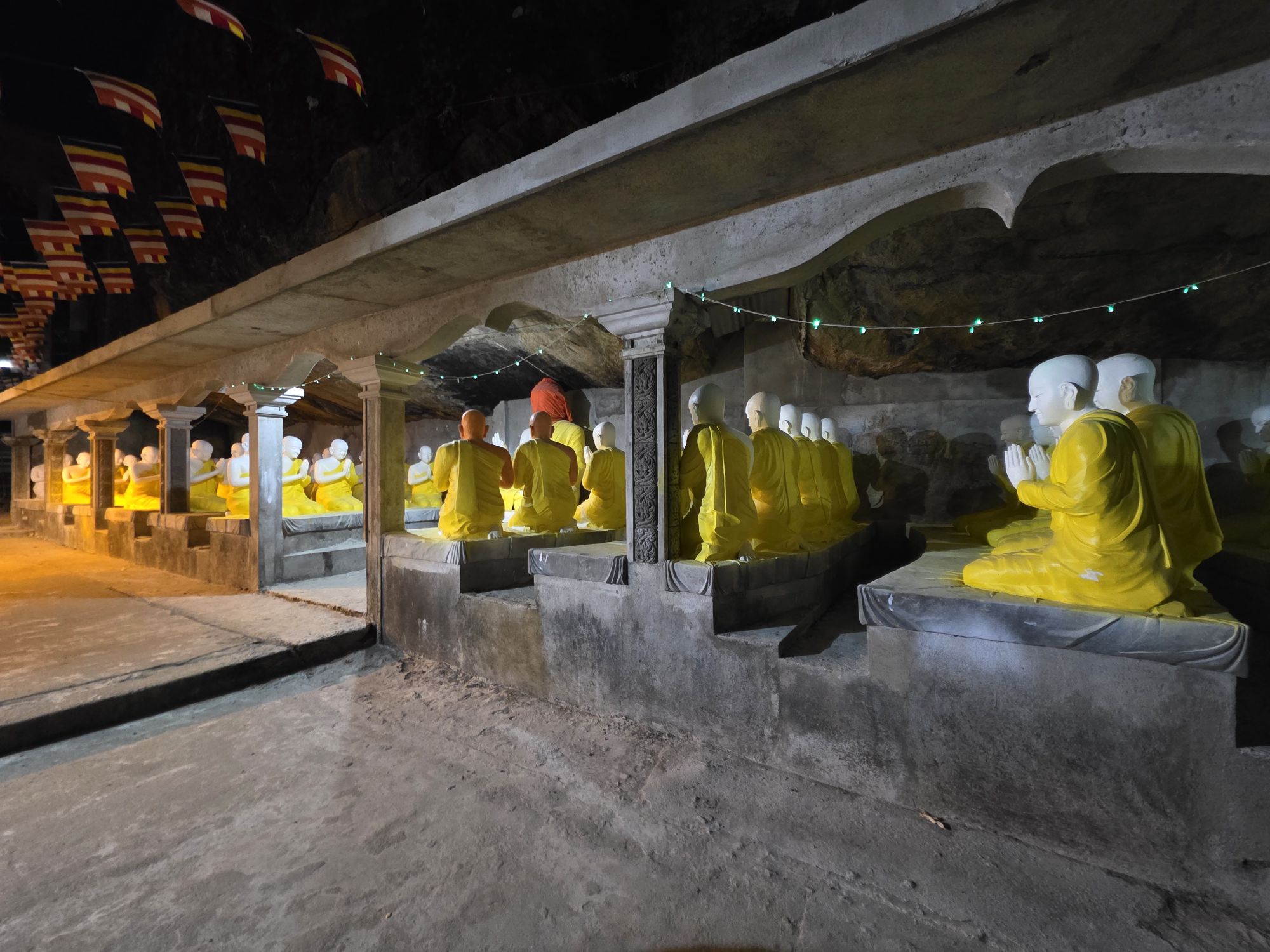
0000 (Midnight): Another milestone; “Nissanka-Malla” cave and temple. It is in this cave that Buddha is said to have rested on his journey to the summit. In 12th century, King Nissanka-Malla built a temple here, now named after him.
0015: Soon, another rest-stop, located opposite several shops with many essentials.
I took the opportunity of the rest-stop to investigate the content of the “Novice packet” that I bought at the start of the journey. It consisted of: A needle and a ball of thread, a mini model of a walking stick, joss sticks and a herbal packet. Each of this has a purpose, which I will tell you about soon.
0030: Another bit further and another rest stop. This one sponsored by “Siddhalepa” – A Sri Lankan Ayurvedic brand of over 50 years old.
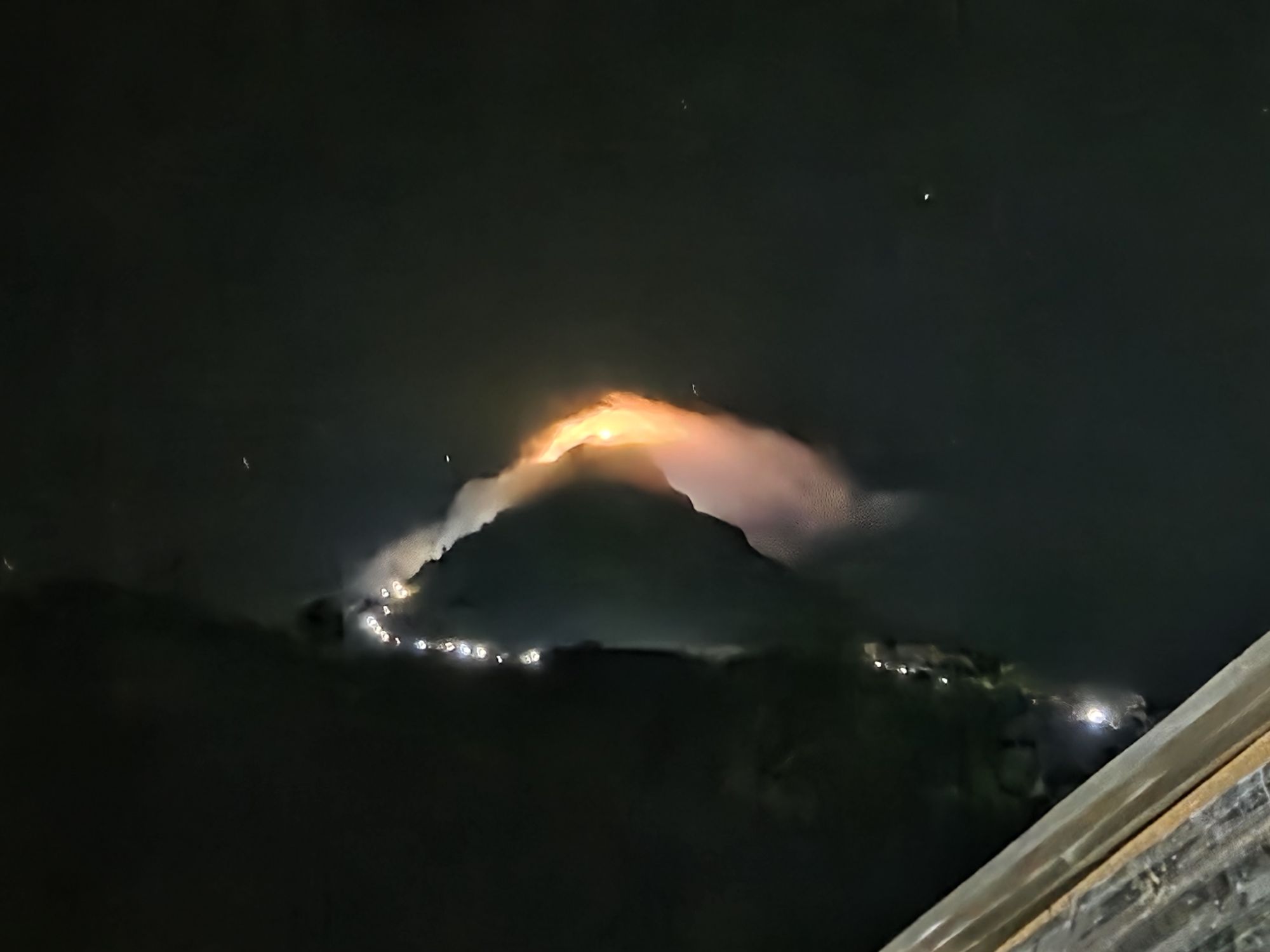
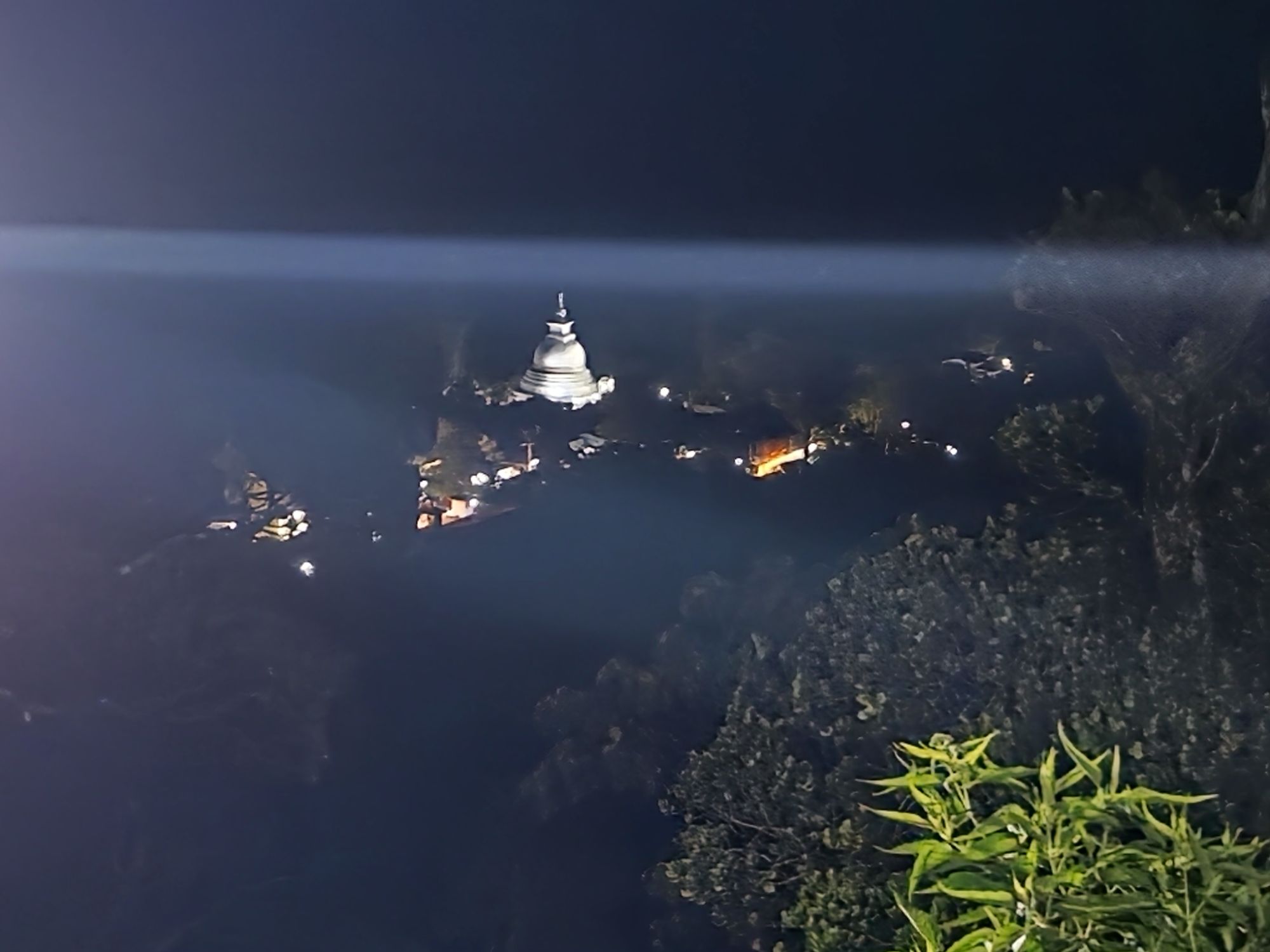
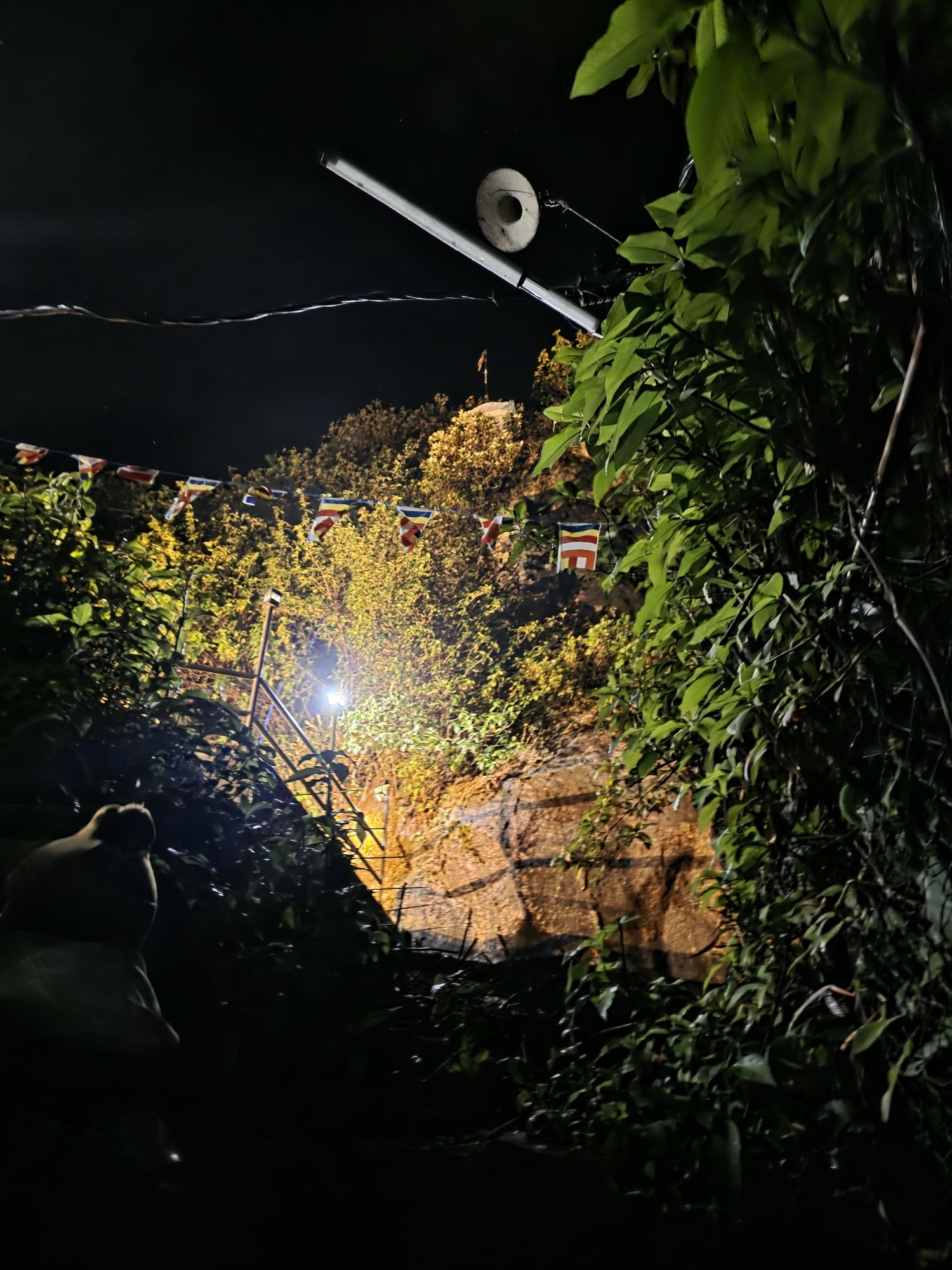
0045: More magnificent views of the summit on our way
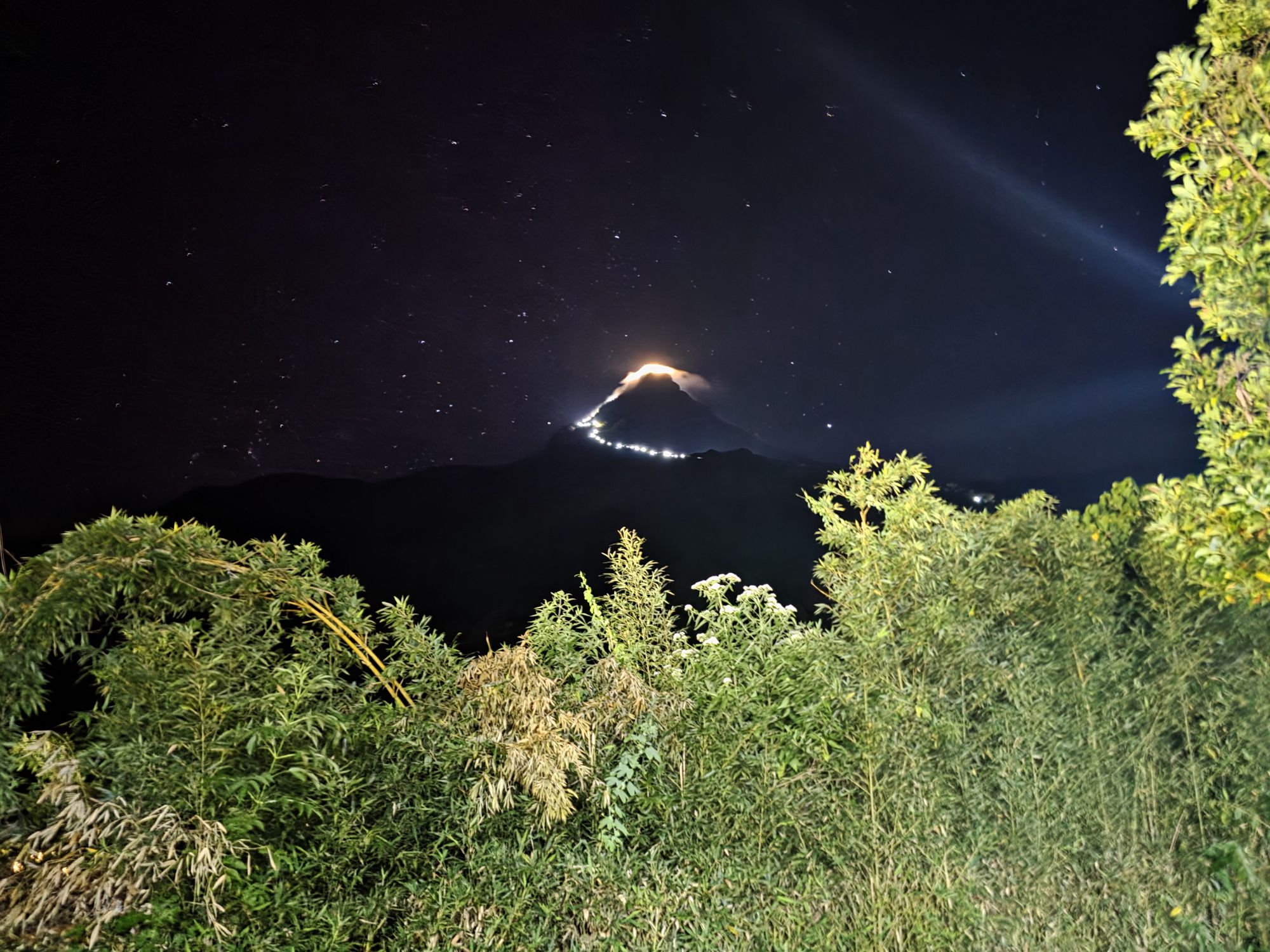
Seeing the beautifully lit summit and the path made me think how it was a very apt analogy for Buddhism; the final goal of any Buddhist is “Nirvana” or Enlightenment. The road to Enlightenment is not easy. But, just as our road to the summit is well lit and signposted, Buddha’s teachings guide the way to Enlightenment – but one has to be willing to put the effort in and make the journey.
“Seetha Gangula” – The cool water river
0100: We had arrived at Seetha Gangula (meaning “cool water”) river. It starts from Siri Pada and the river is considered sacred. Traditionally, this is the place where pilgrims would shower from the fresh water and most people change to a fresh set of white “temple” clothes. (There are changing facilities available). As it was 1 am, we didn’t have a full on shower, but did take the opportunity for a quick refresh.
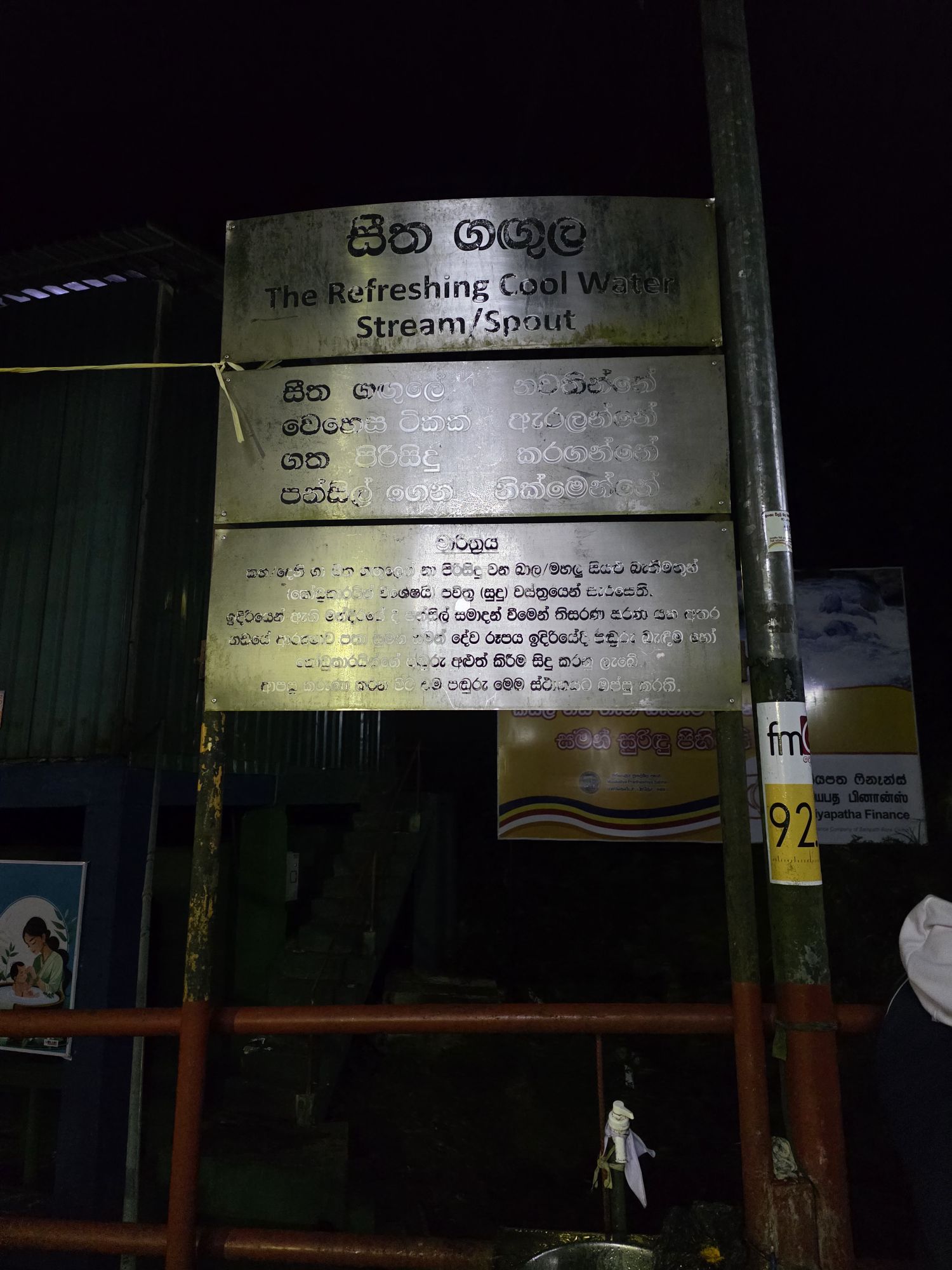
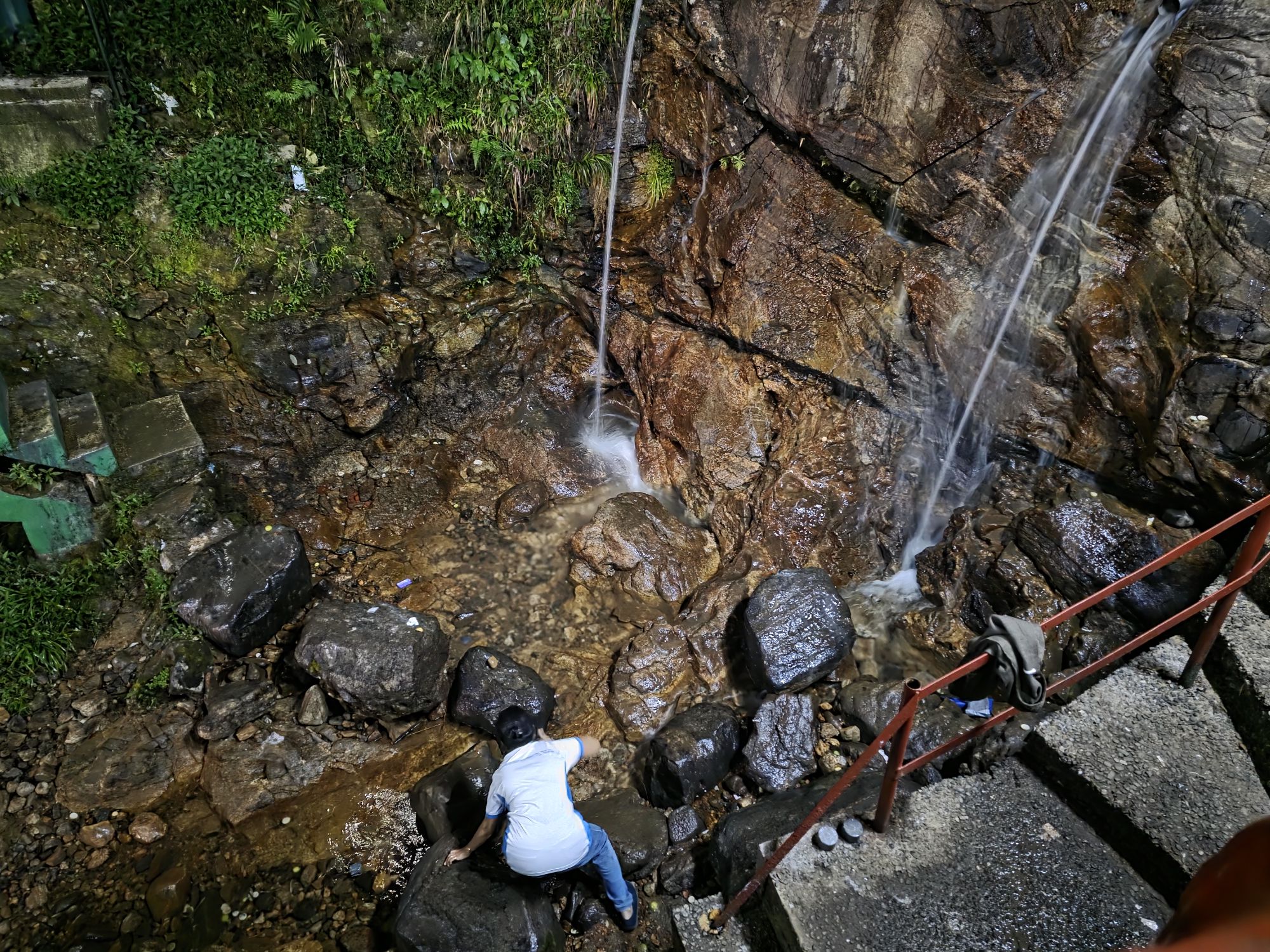
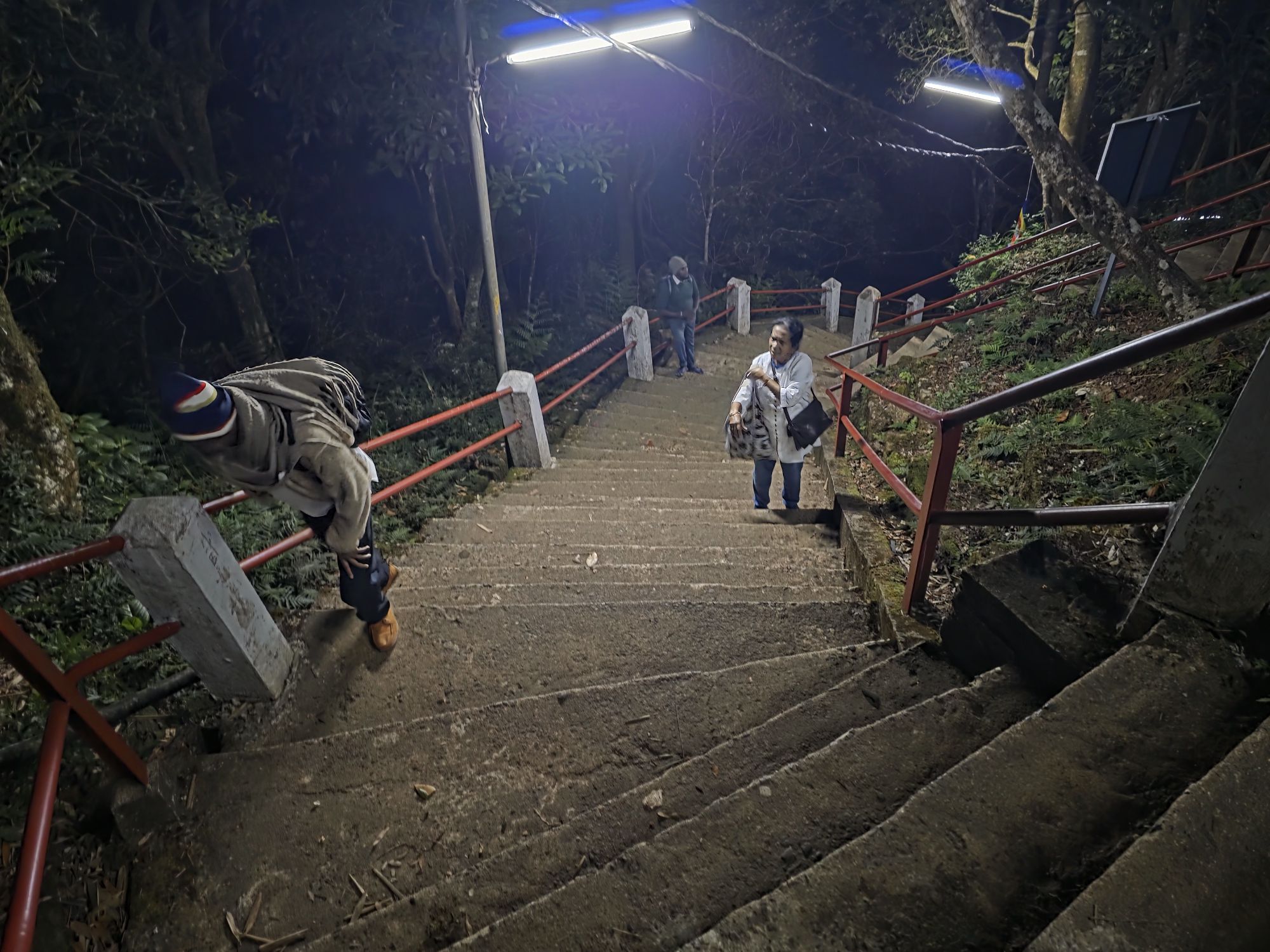
At Seetha Gangula, you are about 3 km in and about half-way through the journey. But the first half is relatively flat and is the easy half. After this point, the hike gets decidedly steeper and it becomes mostly steps. But the views get more incredible as well.
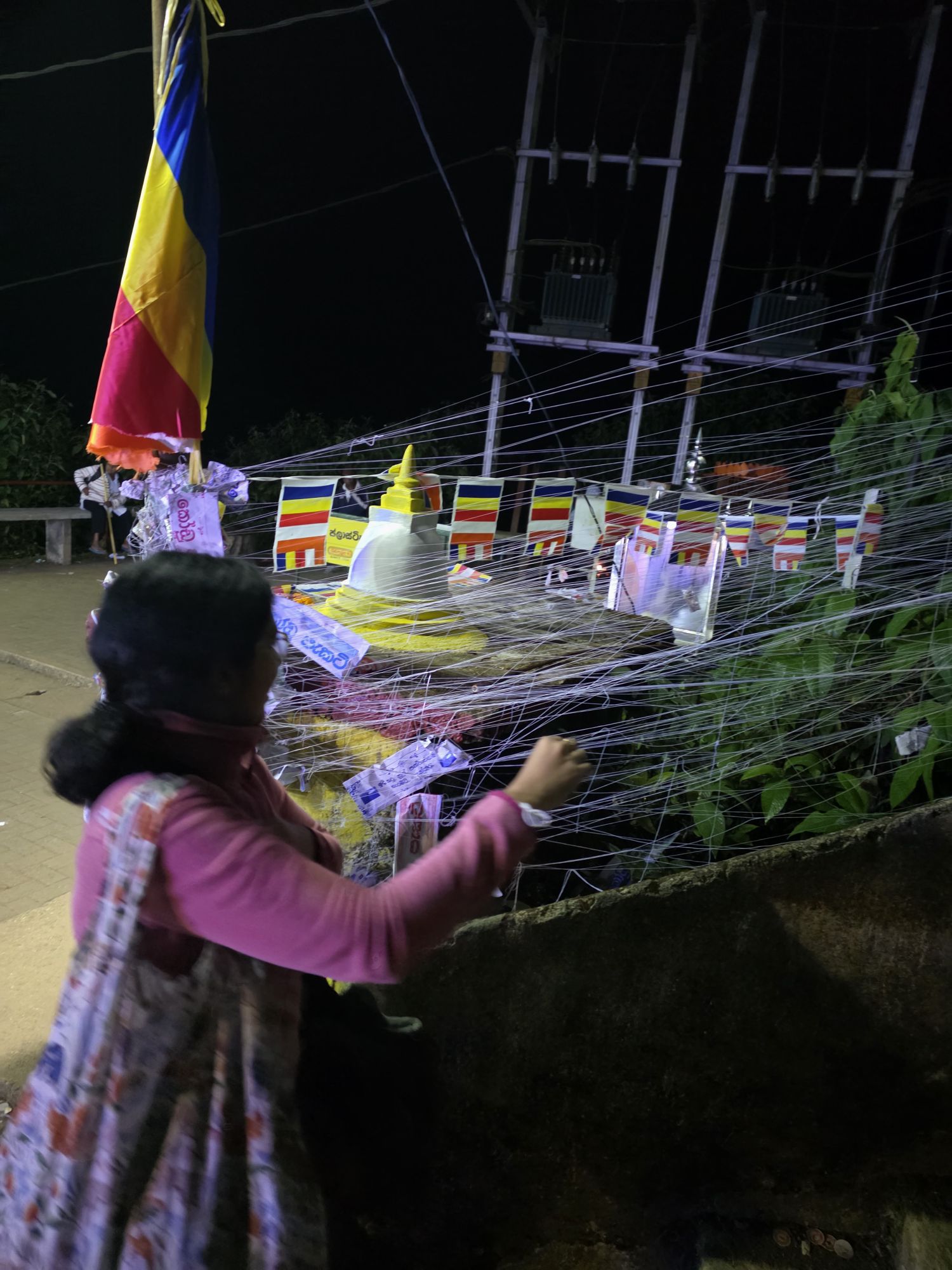
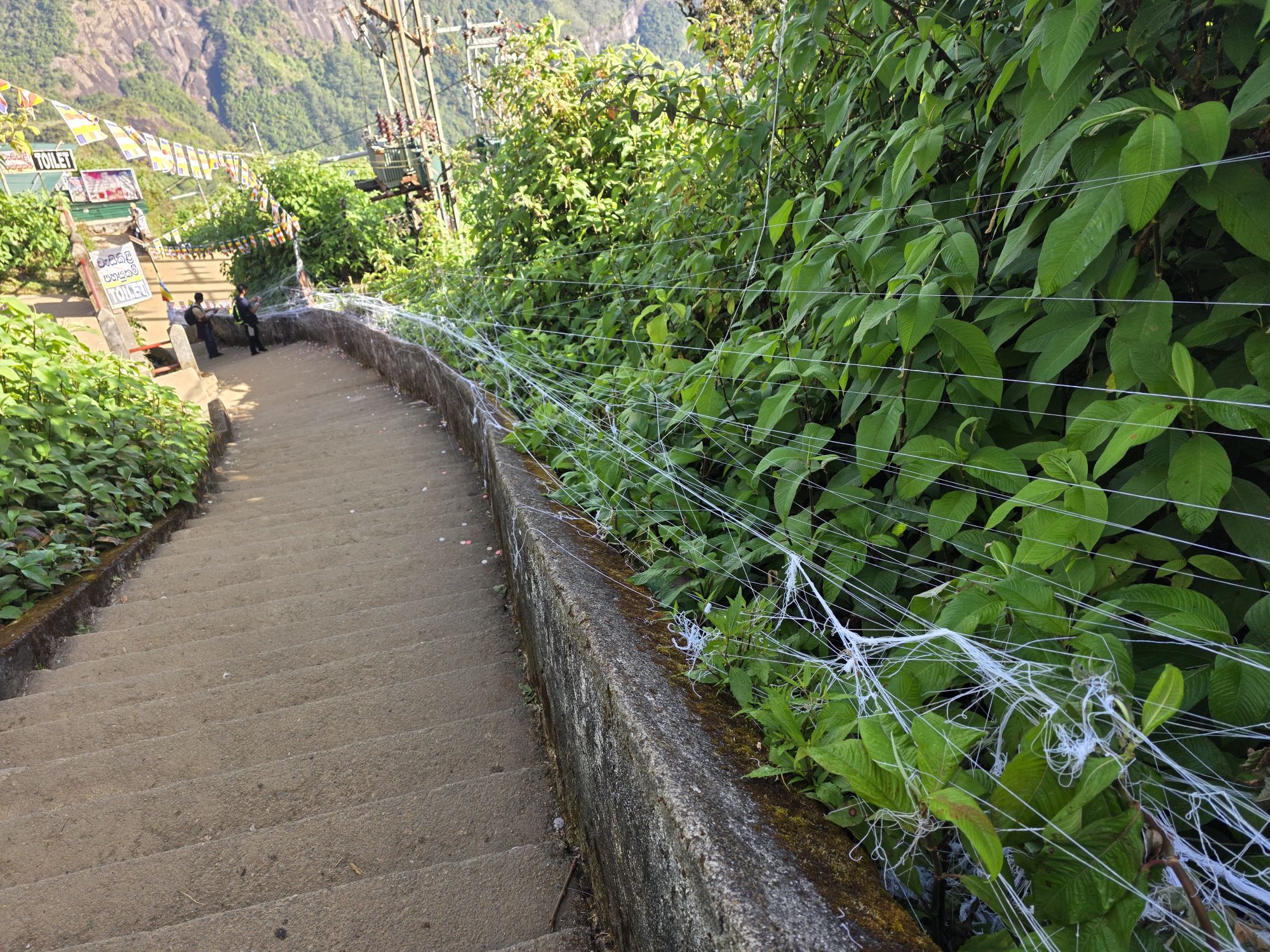
0300: We arrive at Gettham Pana (loosely translated as “sewing place”). This is an important pilgrimage point for Buddhists. It is said that the Lord Buddha’s robe had ripped during the climb and he repaired it at Gettam Pana. To mark this, there is a ritual to thread a needle and weave here. This is where the needle and thread in the novices’ packet comes in handy.
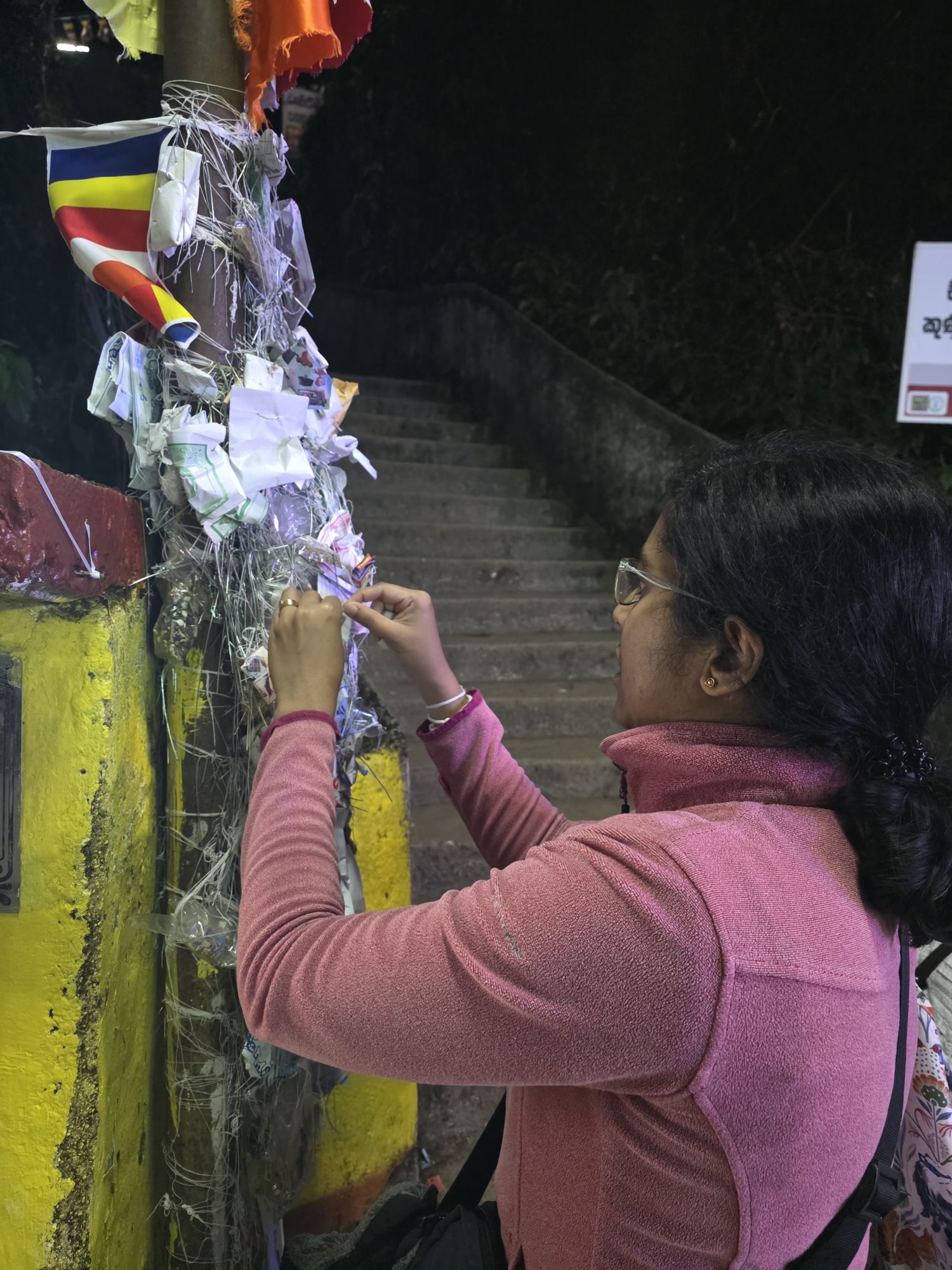
So, I threaded the needle, stuck it at the bottom of the set of stairs and took the thread up as I climbed the stairs, weaving it in and out of the threads that were there already, until the thread ran out.
“Maha Giri Dambya” – The “great rock climb”
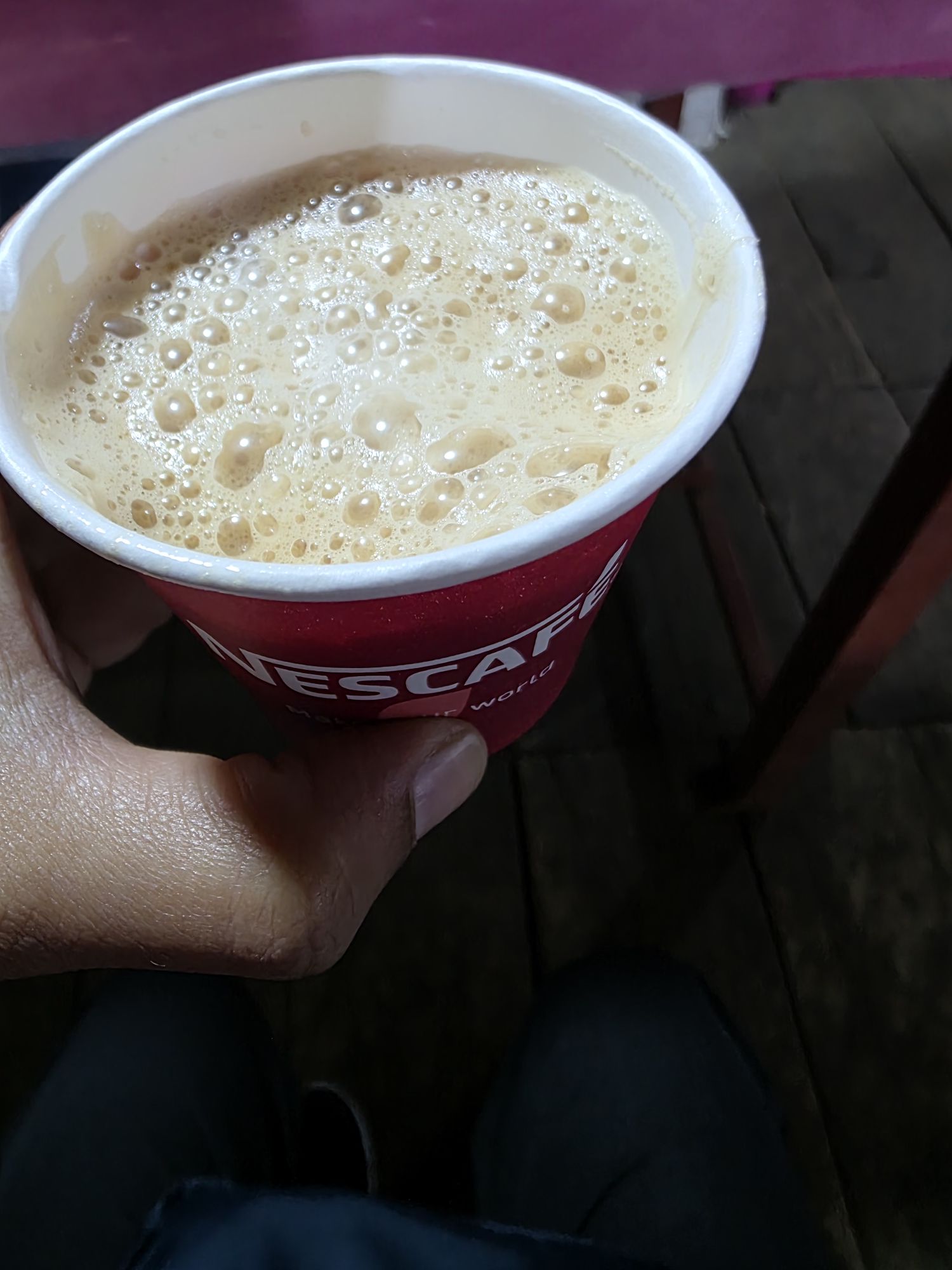
0330: Soon we enter the last bit of the climb, arguably the steepest. It is named “Maha Giri Dambya” (meaning “great rock climb”). We fortified ourselves with a last Nescafe and started the climb.
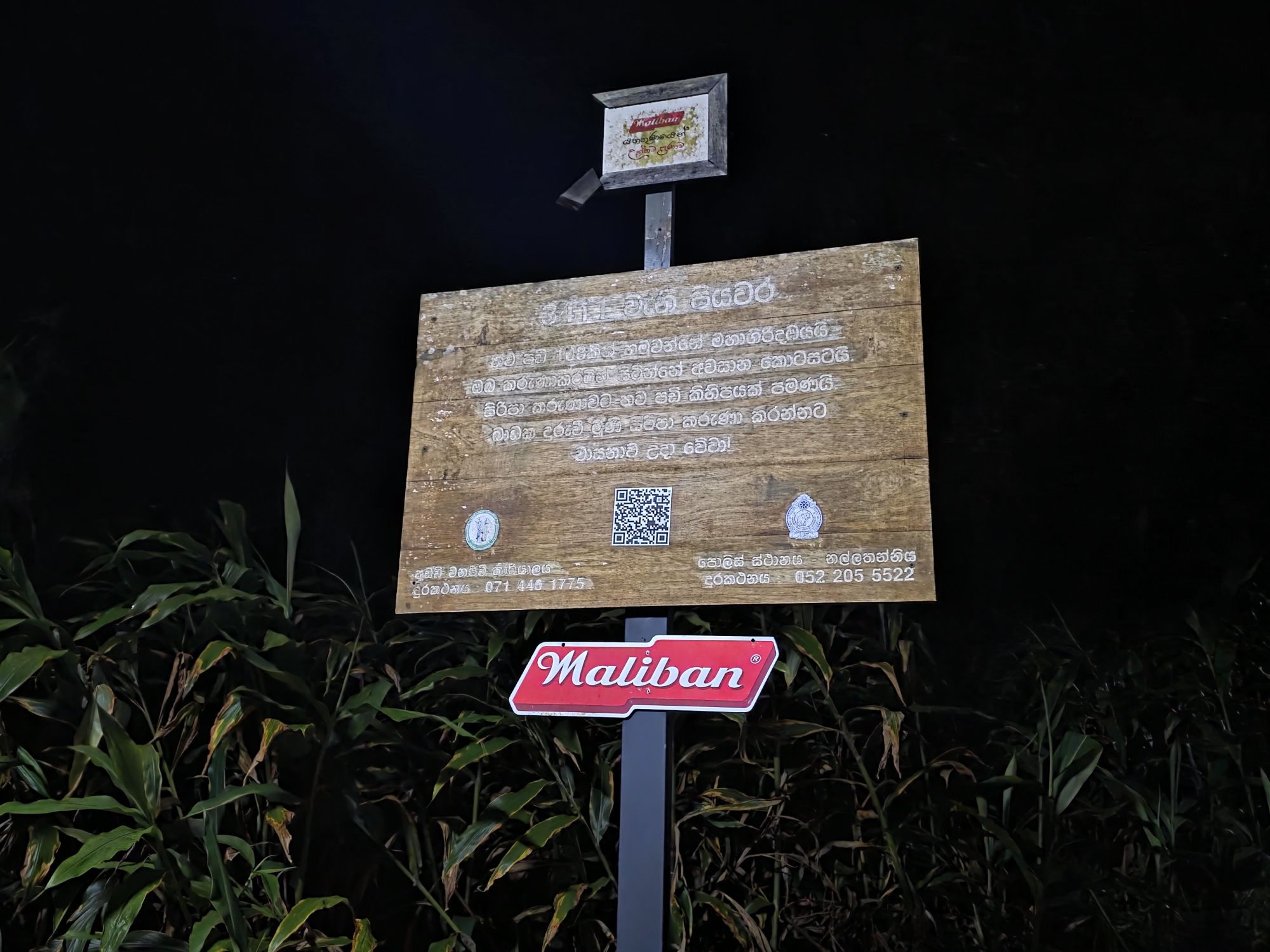
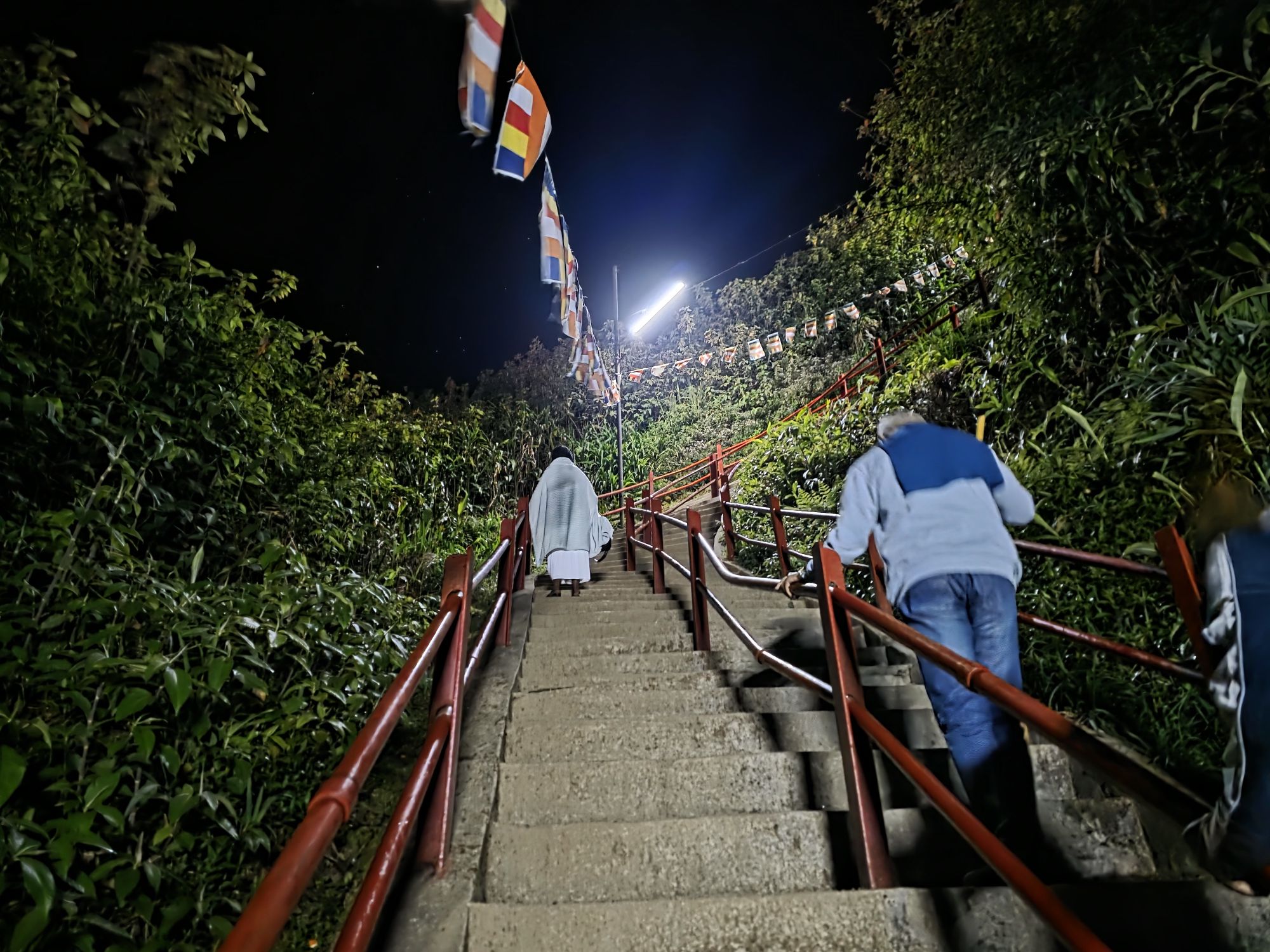
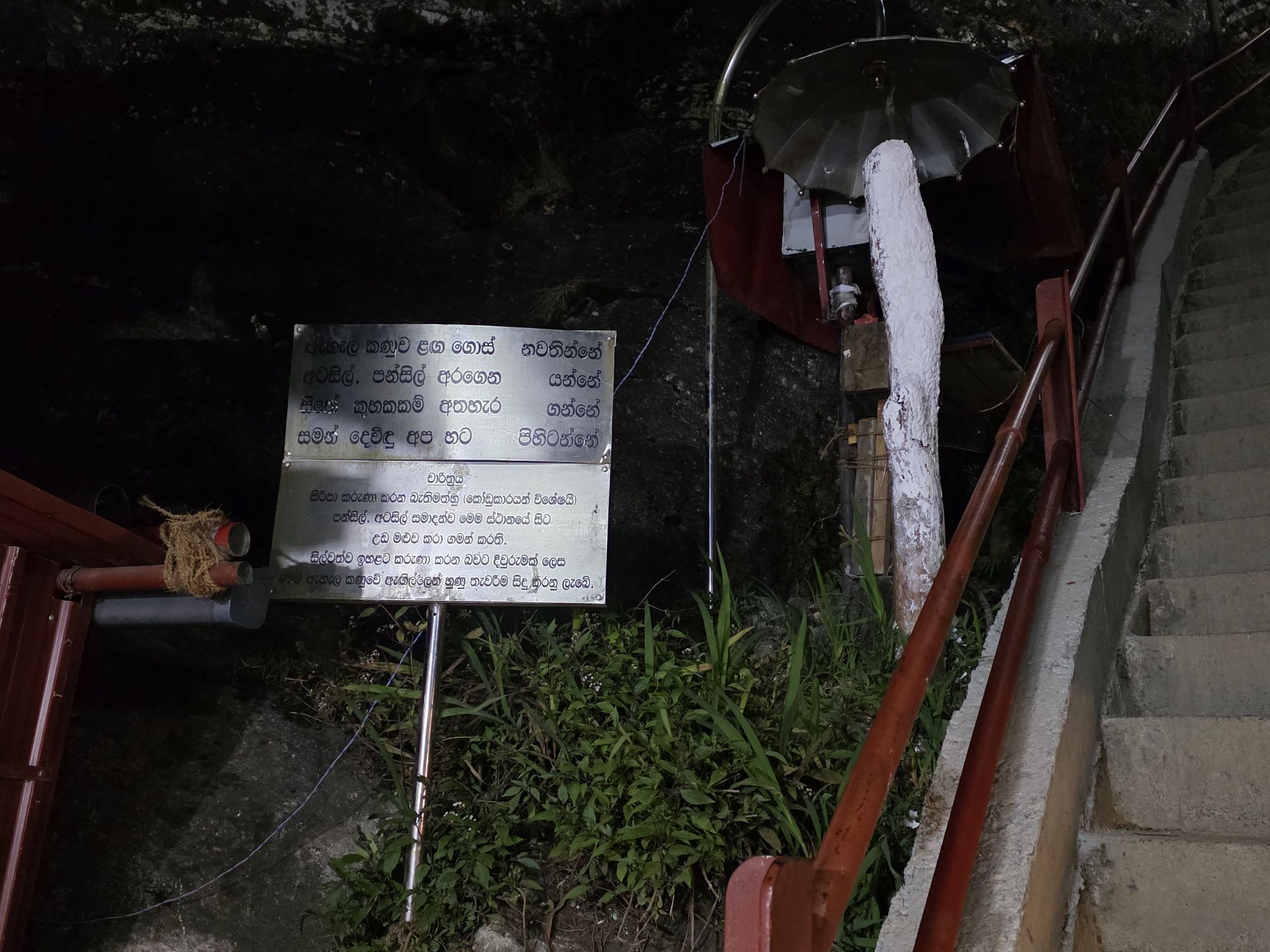
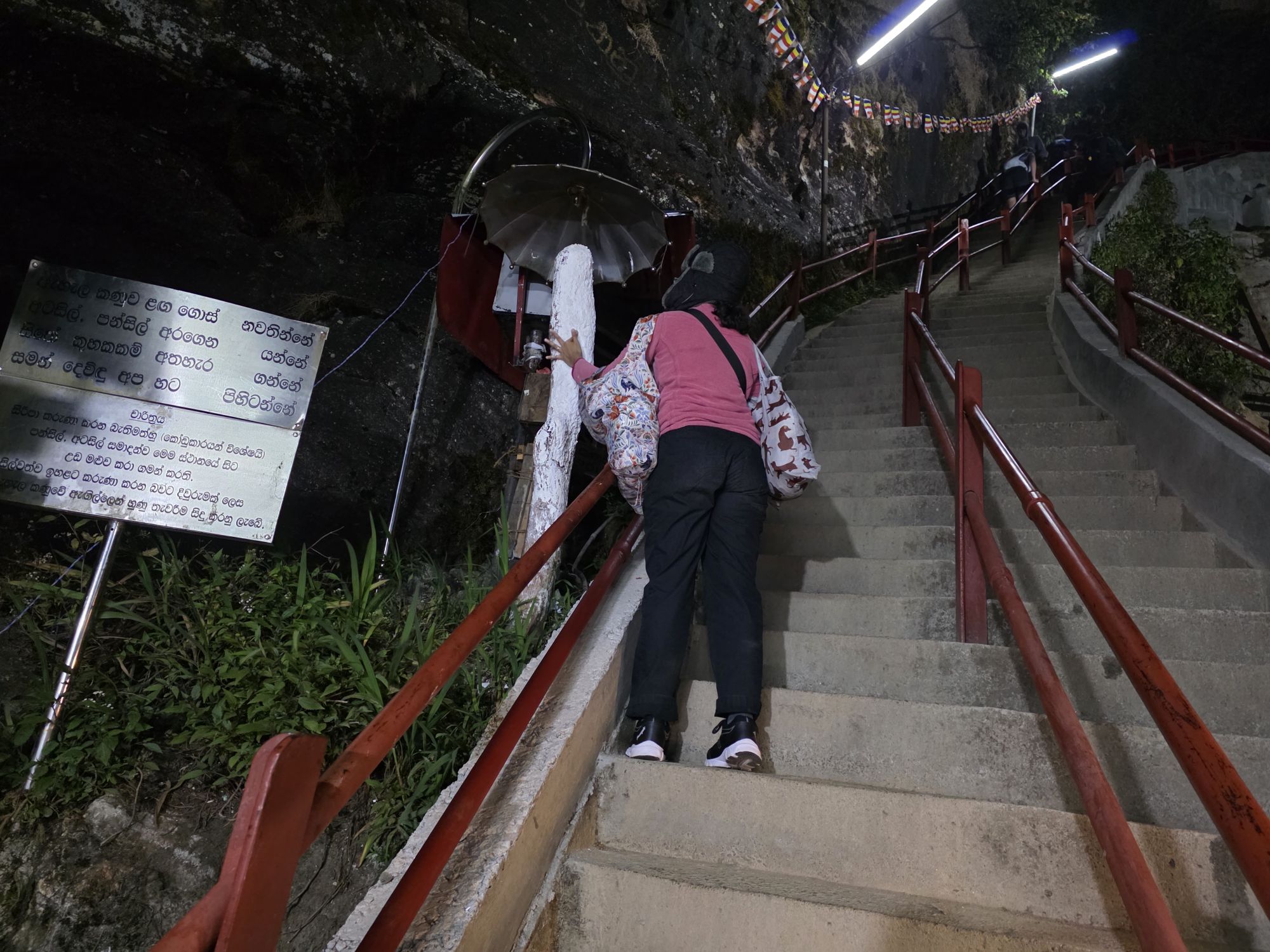
0440: After the hardest part of the climb, comes the last milestone. This is called “Ahela Kanuwa” (Meaning “pillar made from the Ahela tree”). There is a sign here reminding you to undertake the five precepts of Buddhism and make a promise to yourself to take the final few steps to the summit with a heart full of kindness and good thoughts. As a physical sign of of this promise, pilgrims would put a chalk mark on the “Ahela Kanuwa”. As a novice, this is exactly what I did (I could feel my temper starting to fray a little bit after nearly six hours of climbing, so it was a good reminder to mind my thoughts, words and deeds).
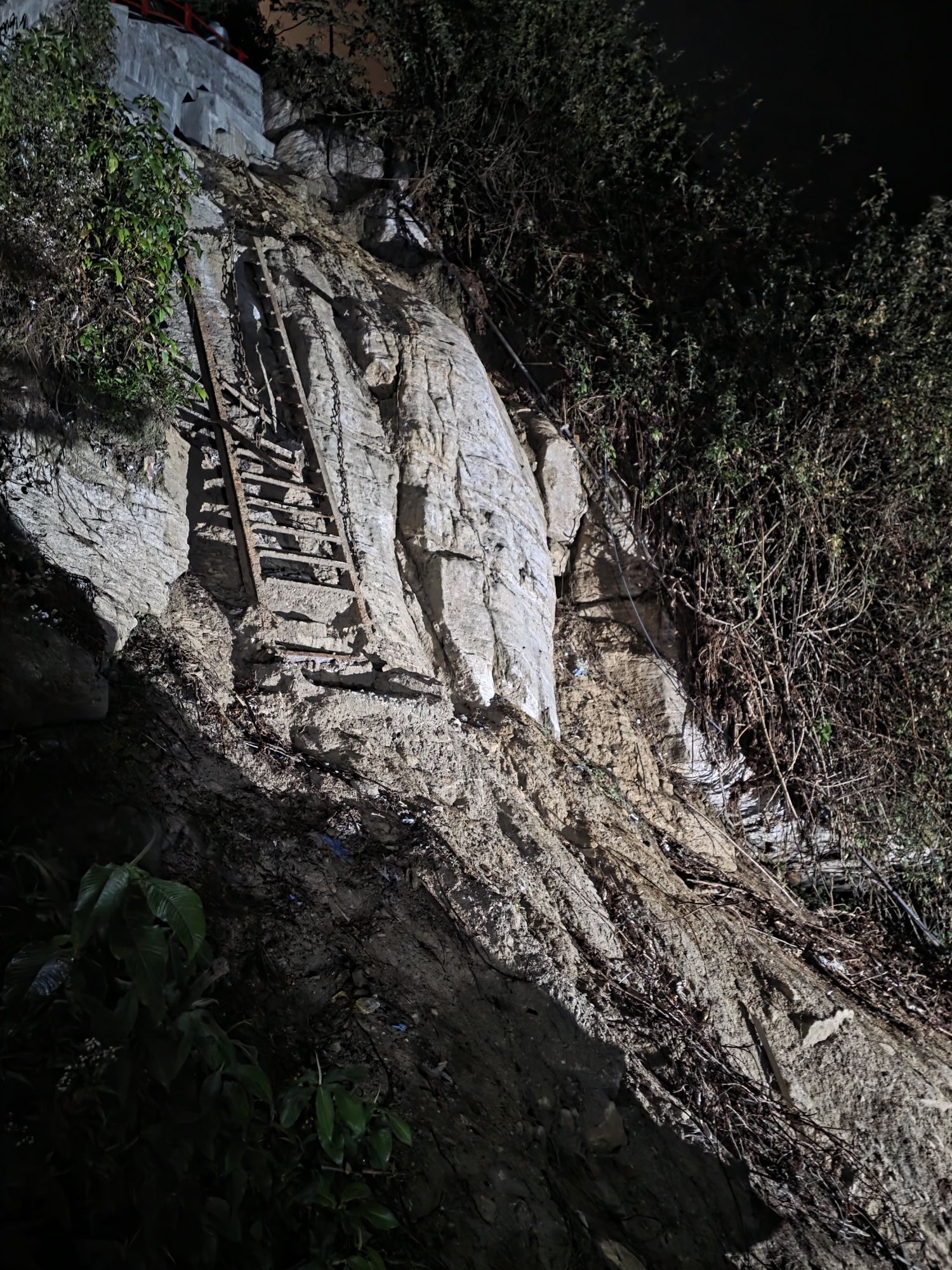
On the side here, there is an old set of iron stairs and iron chains that act as handrails. This is the old climbing route, no longer in use. My mother can remember climbing these when she made the pilgrimage as a teenager.
A few more steps and we are at the top.
At the Summit
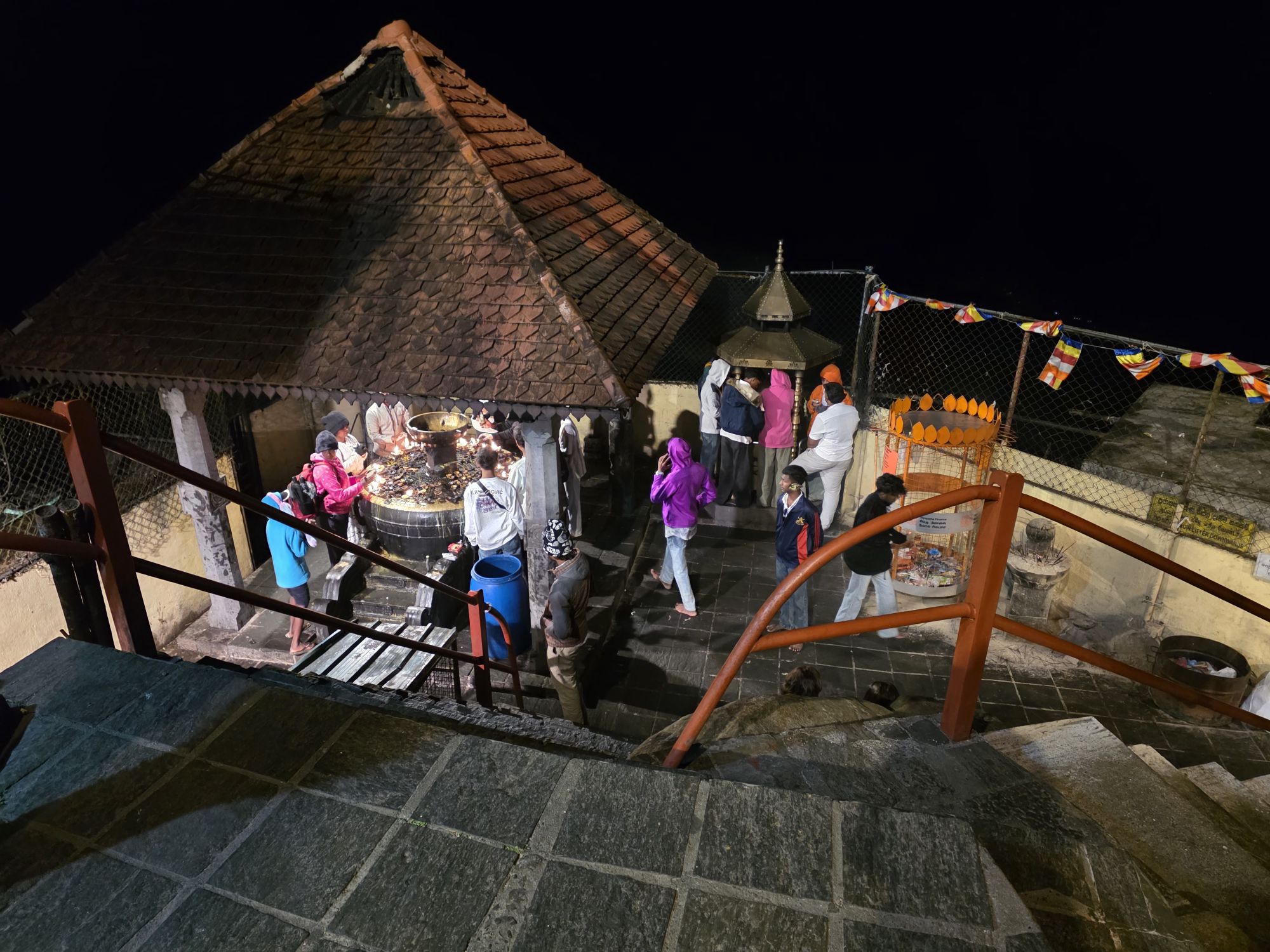
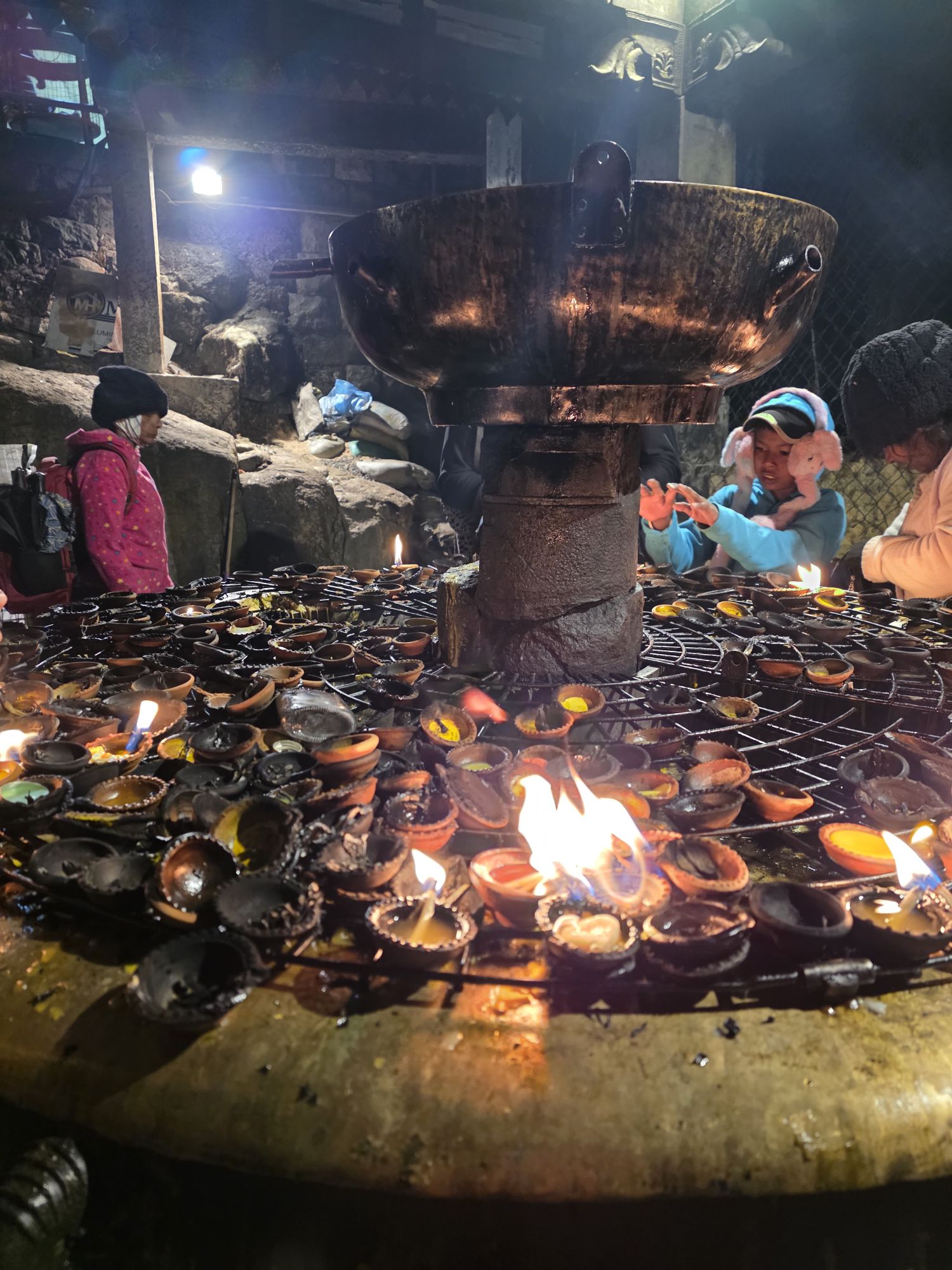
At the summit, there is a temple, so you have to remove shoes and head coverings and dress modestly (i.e. cover shoulders and knees). Photos are not allowed at the temple. There are two shrines – one with the foot print of the Buddha (you cannot see the actual footprint, but there is a gold plate covering it which can be seen). The other is a shrine to deity Sumana-Saman. You can also light oil lamps and joss sticks from the novice packet. The herbal packet from the novice packet goes into the oil lamps.
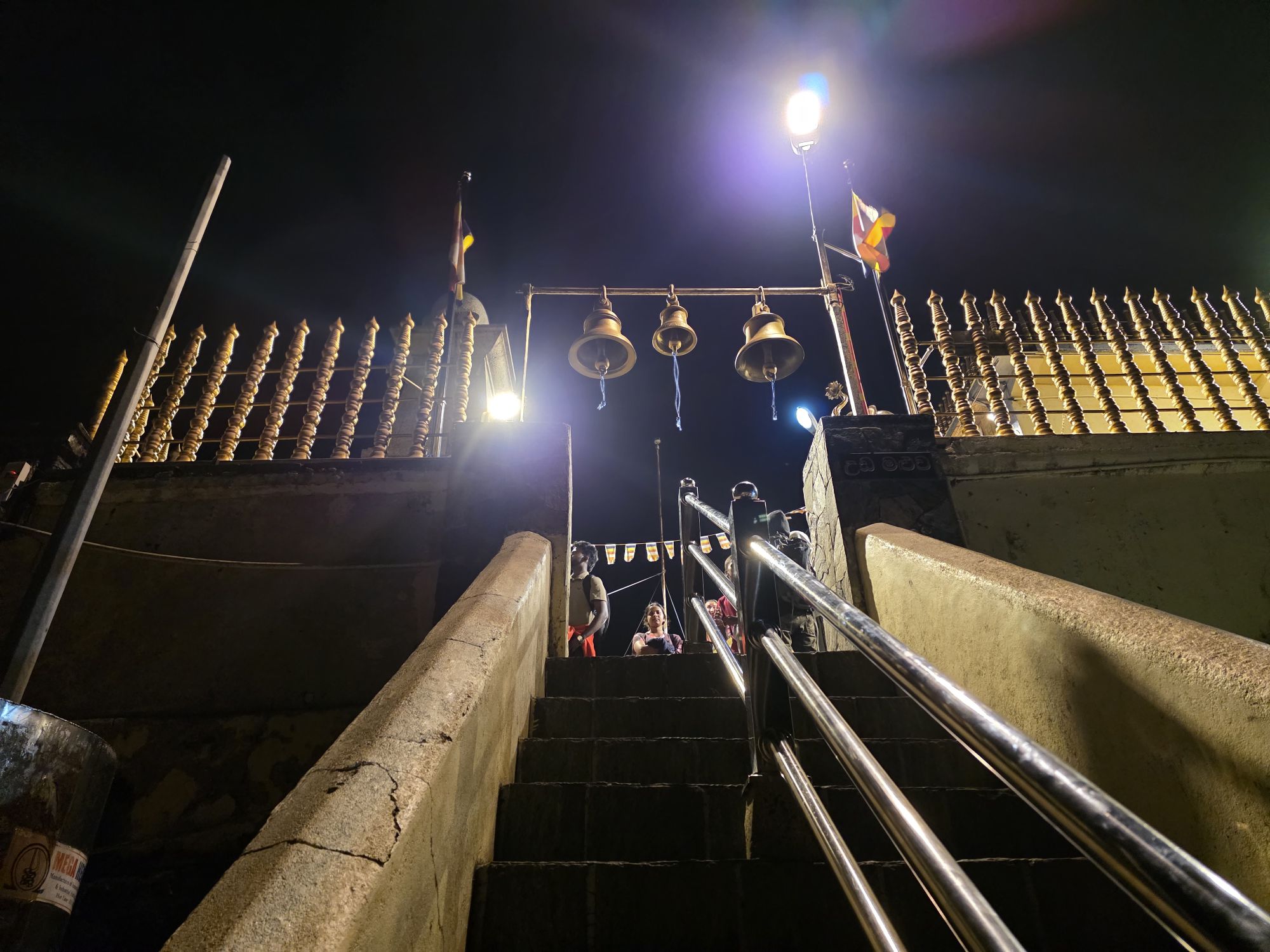
Rituals over, then comes bragging rights (which is also a ritual). There is a bell at the top, and you ring it – once for each time you have made it to the summit. It is my first trip, so I ring it once. My mother rings it four times, one for each journey she made, my dad three times and so on.
“Ira Sewaya” – The Sunrise
0600: Then comes the sunrise. Called “ira sewaya” meaning “The Sun’s salutation (to Siri Pada)”. This is why most pilgrims make the journey at night, so as to arrive at the top by sunrise. We could not have timed it any better. There’s only 26 minutes to go till sunrise. My cousin and I join the crowd gathered to watch the sunrise on the East facing side of the mountain. It is not busy today and there is space for everyone. But on crowded days, I am told that the police do not allow people to linger at the summit, so as to prevent traffic jams on the way to the top.
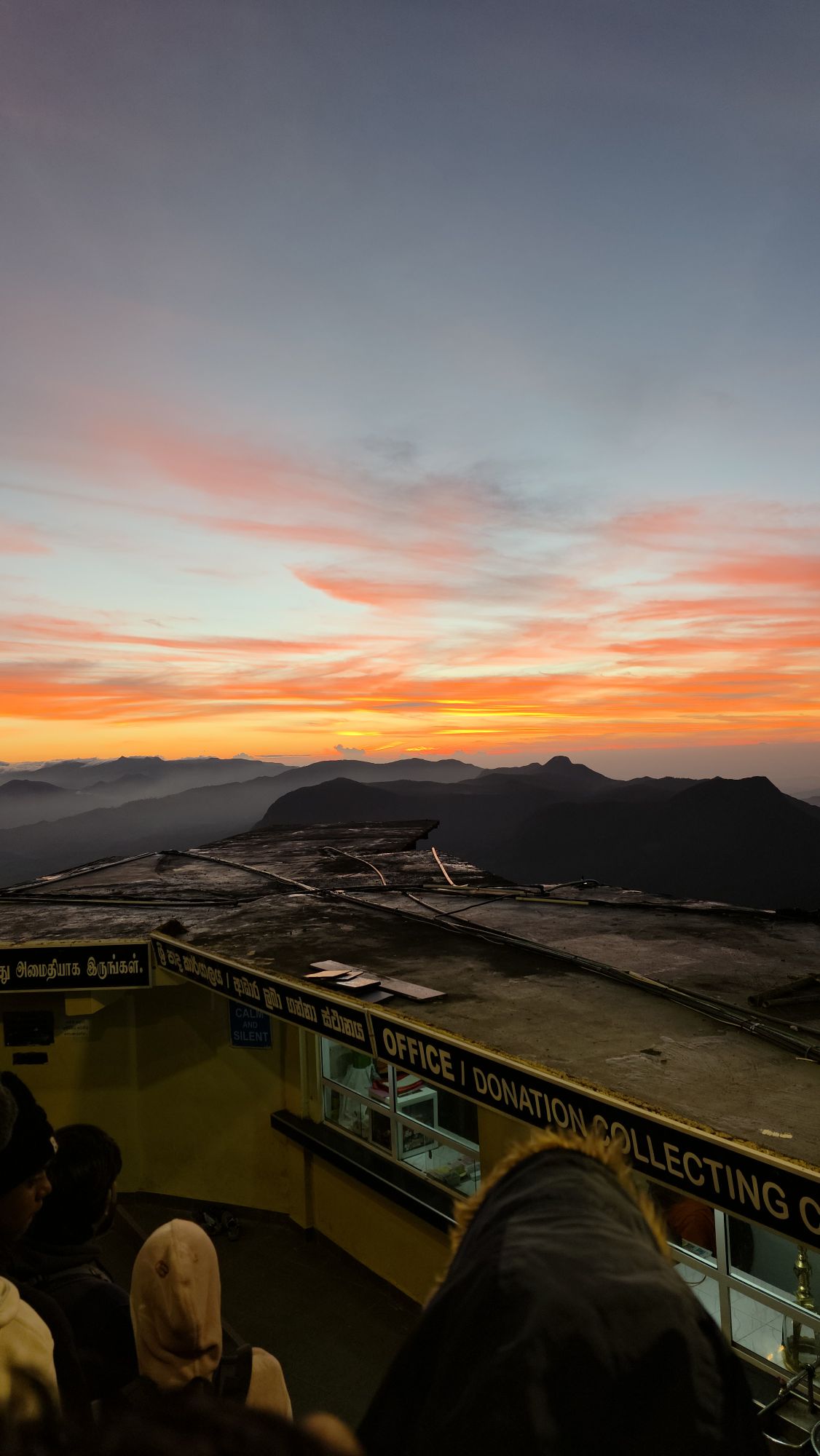
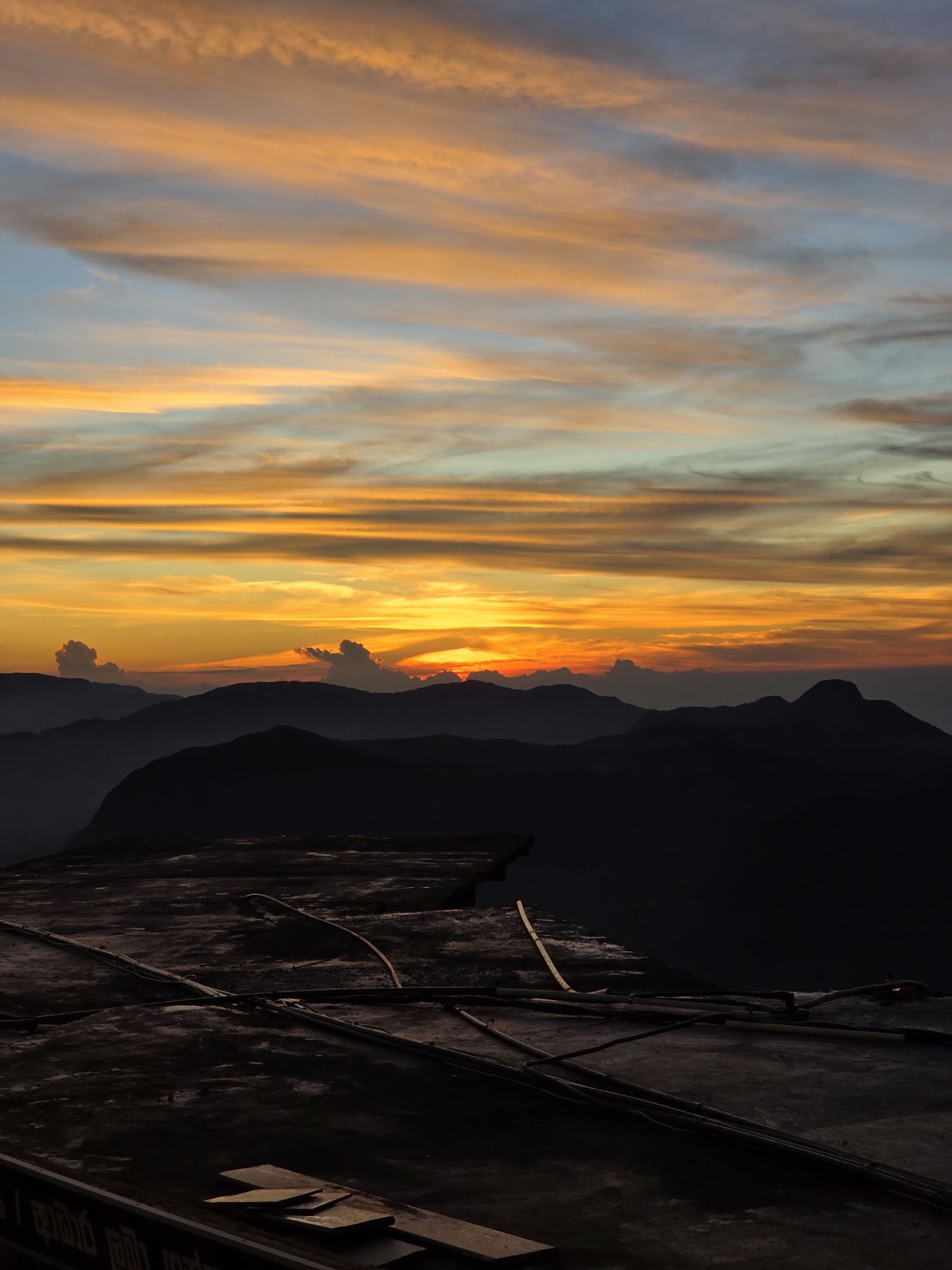
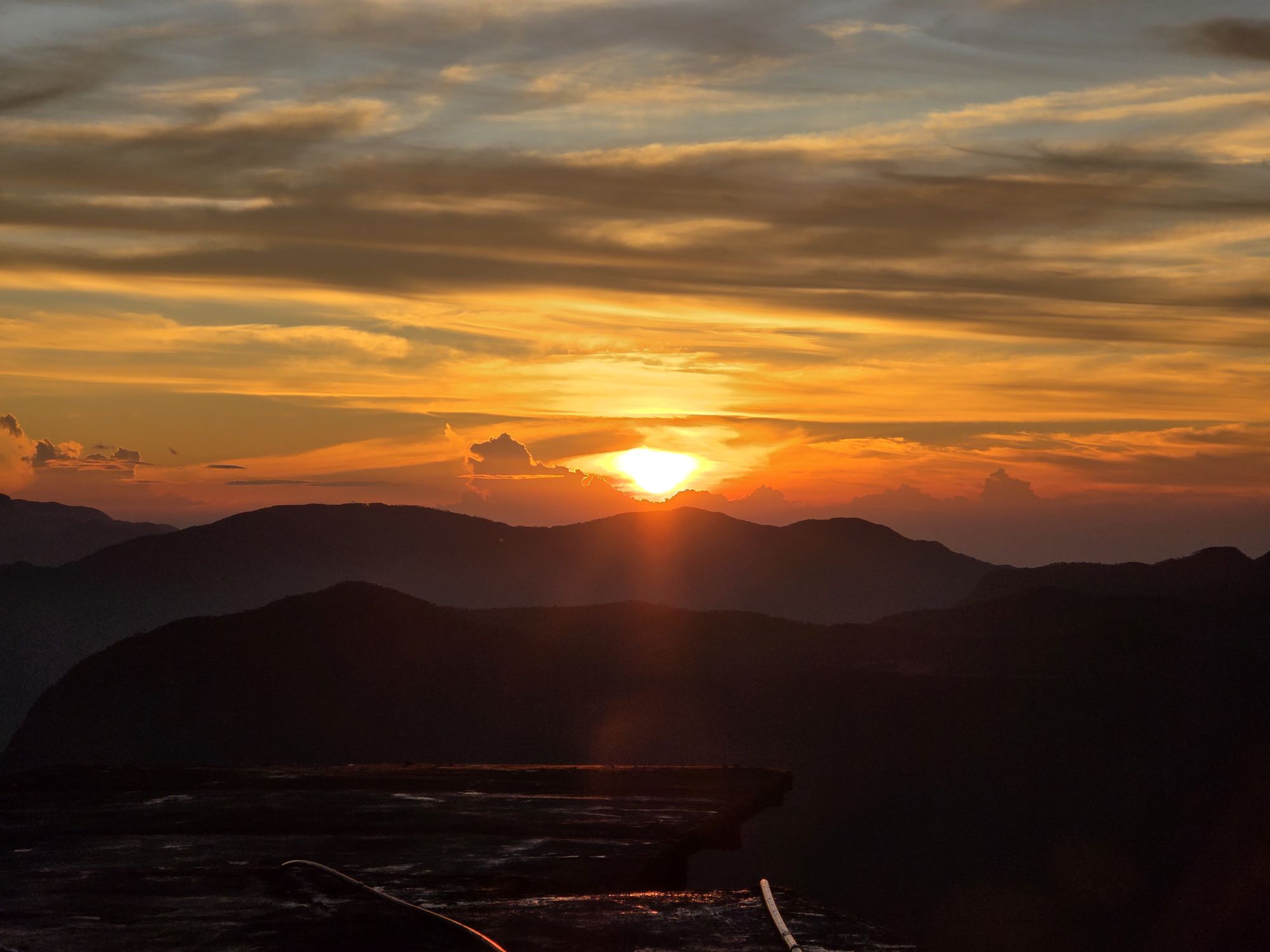
0626: Right on the dot as predicted, the sun comes out – and it is glorious. After years of planning (I had originally planned to make this trip in 2019, but it was cancelled due to the 2019 Easter Sunday bombings in Sri Lanka), I was at the summit, and made my offerings to Lord Buddha’s footprint. I had followed the footsteps of millions of pilgrims, and I was lucky enough to see the sunrise from the summit. Out of all my travels, this was a top-three emotional moment (Other two are Grand Canyon in the US and watching Liu San Jie in China).
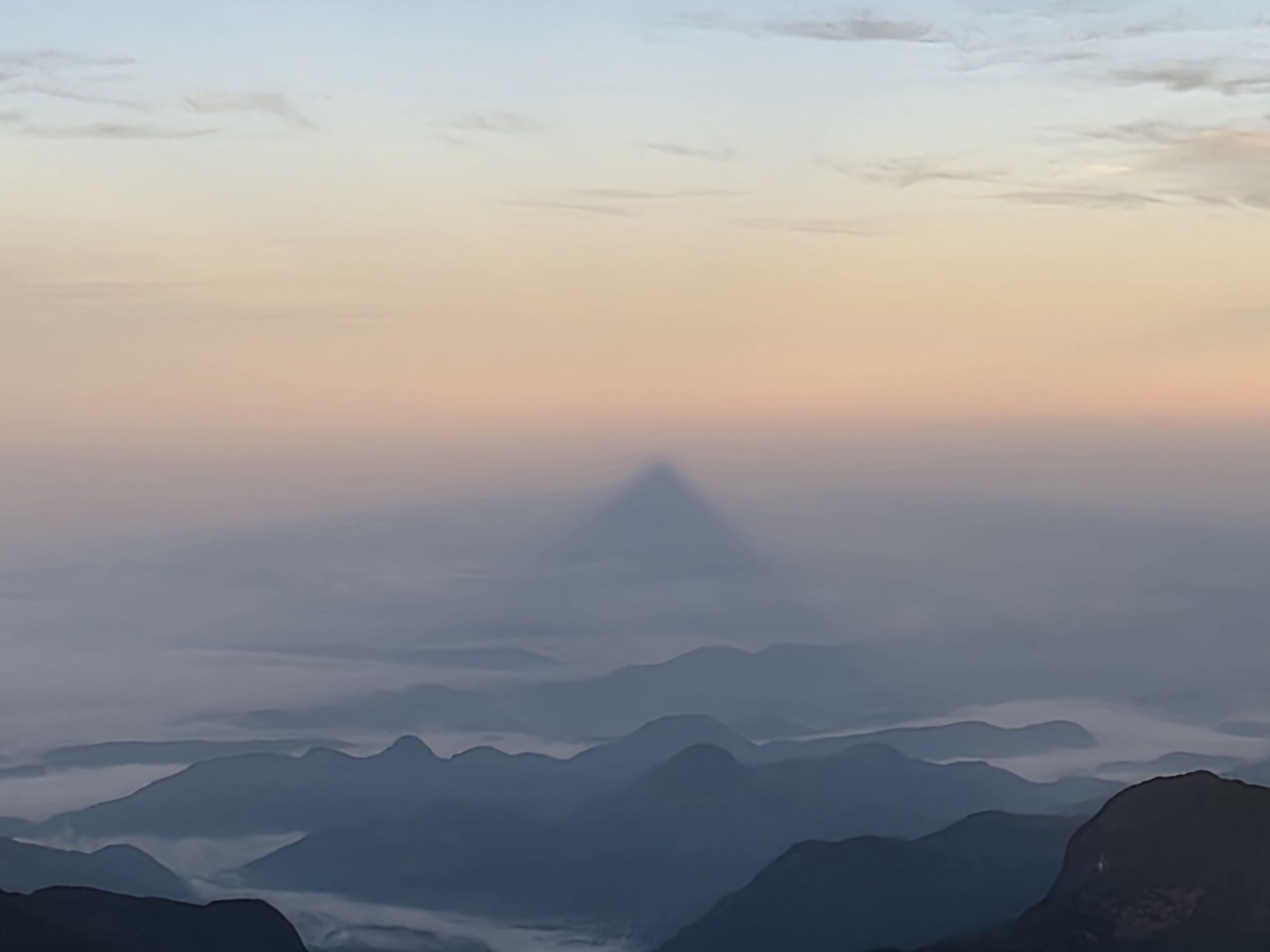
There is one last surprise in store for me – “the shadow in the sky”. My family who’d seen it before tell me to rush to the other side of the summit (the west facing side). There for us to see, is the perfect shadow of the Siri Pada mountain in the sky. It would only last for about 20 minutes until the sun had risen above the summit. For me, in many ways, this is more impressive than the sunrise.
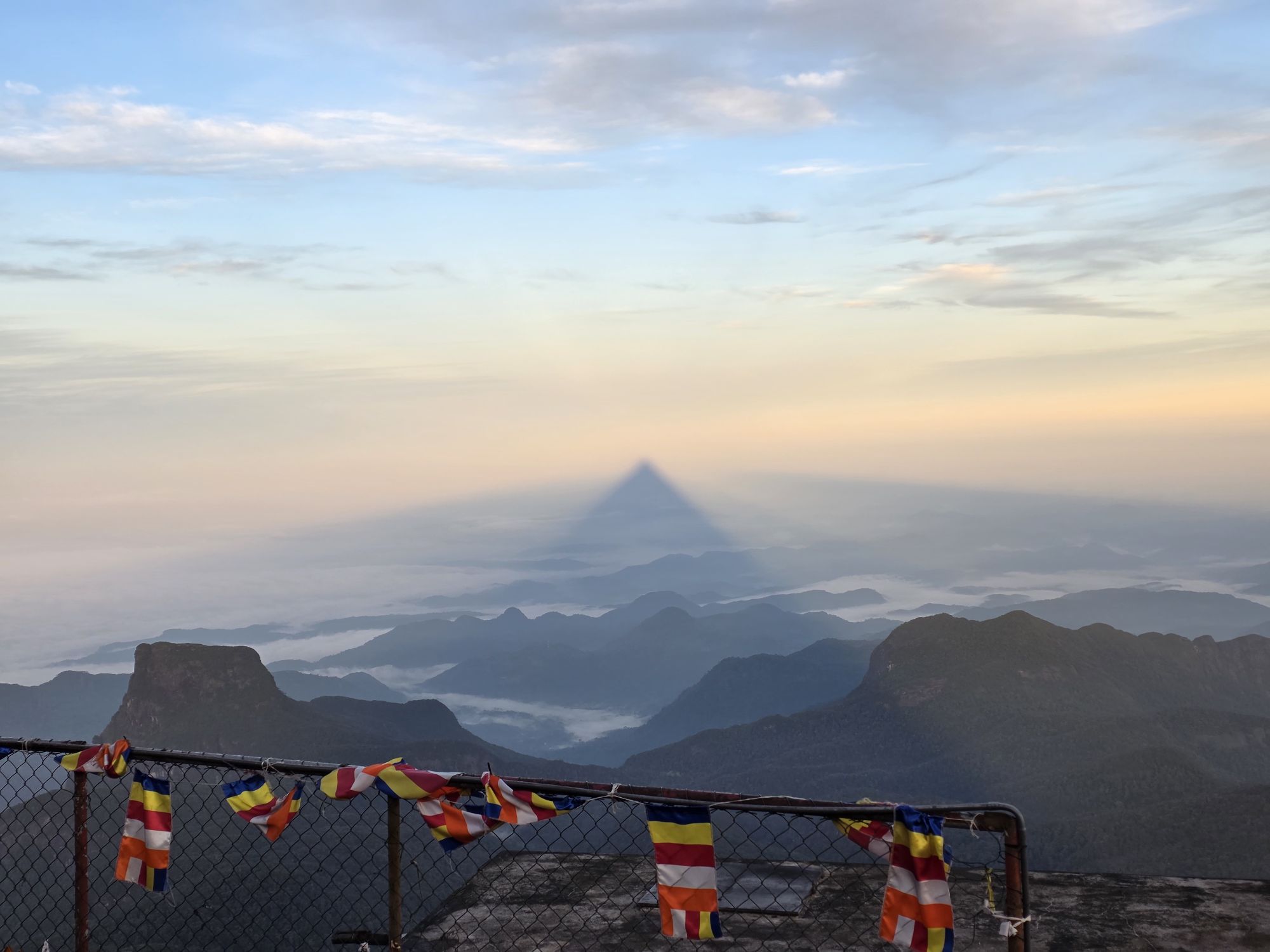
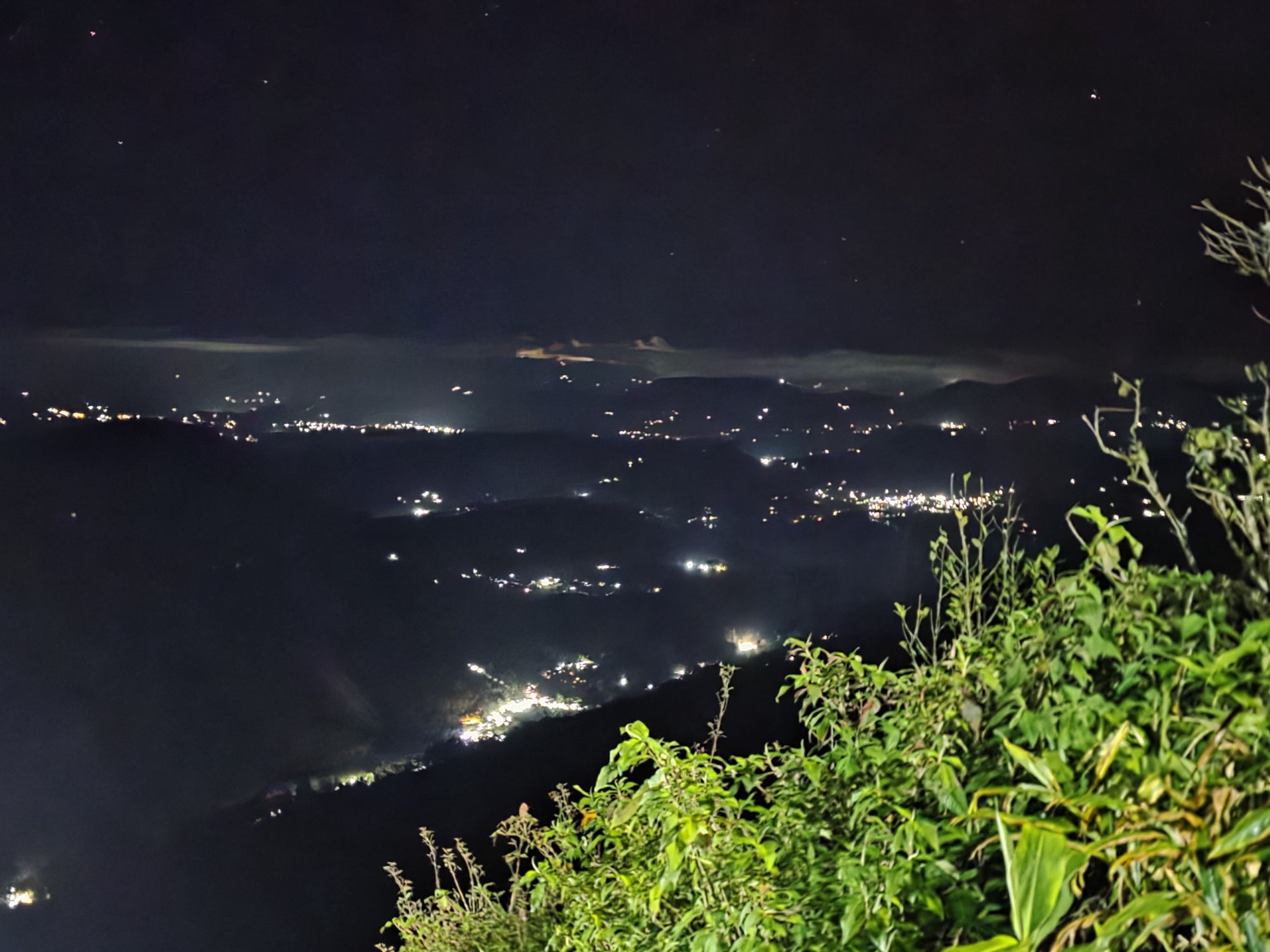
As I watched the spectacular view before me I reflected on the trip.
The climb is physically demanding and is a workout for the body – this I had always known. What I hadn’t expected was that how it would heal the mind. The awe-inspiring views of the summit and signs at each milestone along to the top served to remind me of the central tenants of Buddhism. If I had made this trip 10 or 20 years ago, I doubt I would have appreciated the spiritual side of it.
The journey also gave me the chance to renew bonds with extended family I had not seen for nearly 10 years. I spent a lot of time with them when young, but life in general and 5000 miles had got in the way of keeping in touch. But when I said I wanted to do this trip, my parents and relatives made it happen, for which I would be forever grateful.
0700: As I sat down to put my shoes back on, I realised that I have been awake for nearly 24 hours. But unlike other times when I have pulled an all-nighter, I’m not tired and am full of energy. Time to start heading back down.
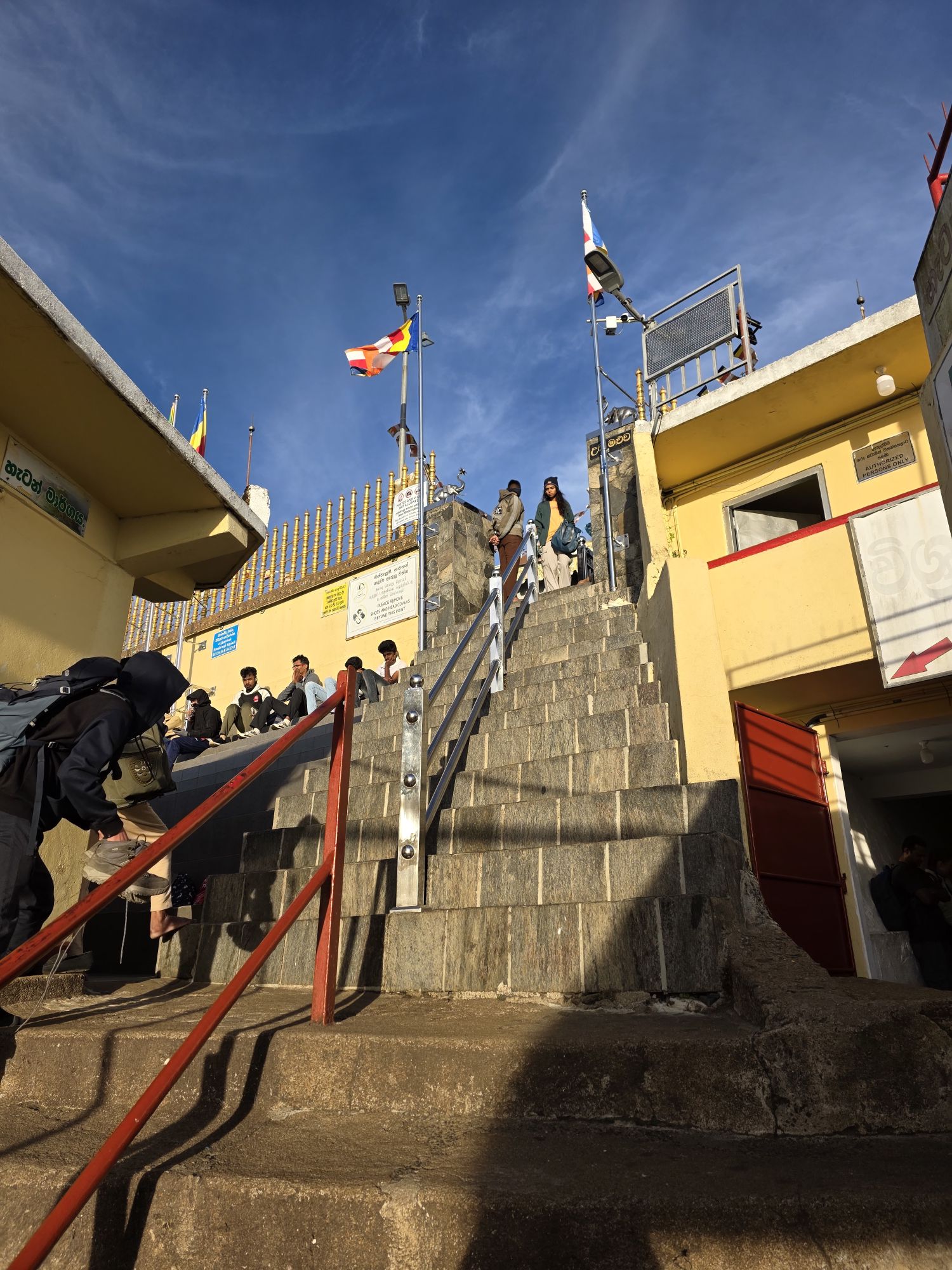
The Descent
In terms of the journey back down, there’s not a lot to say, except for that it was harder than expected. Going down many flights of stairs was not easy on the knees, but add to that sleep deprivation and the hot sun, it took us a lot longer to return to the starting point than expected.
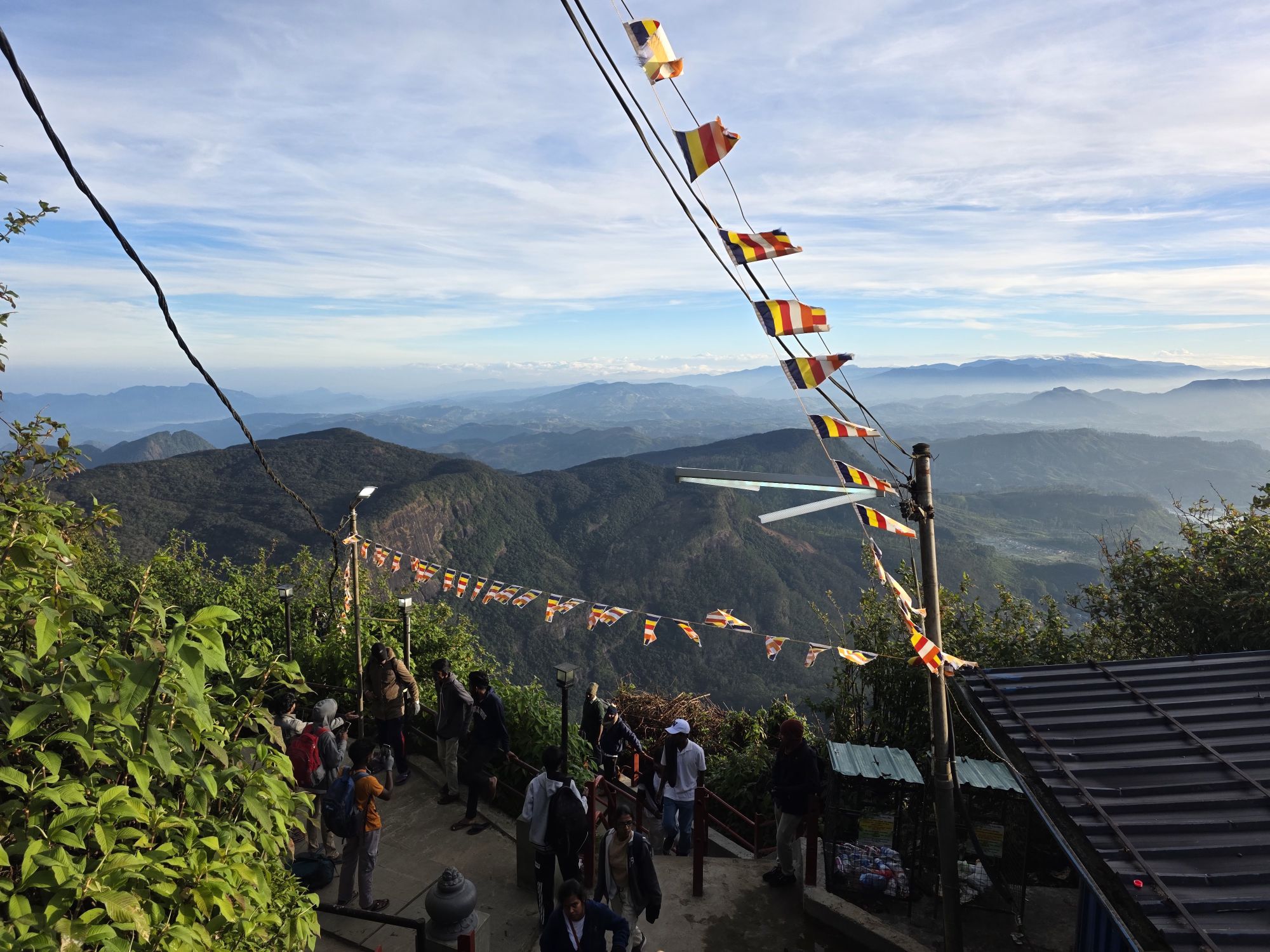
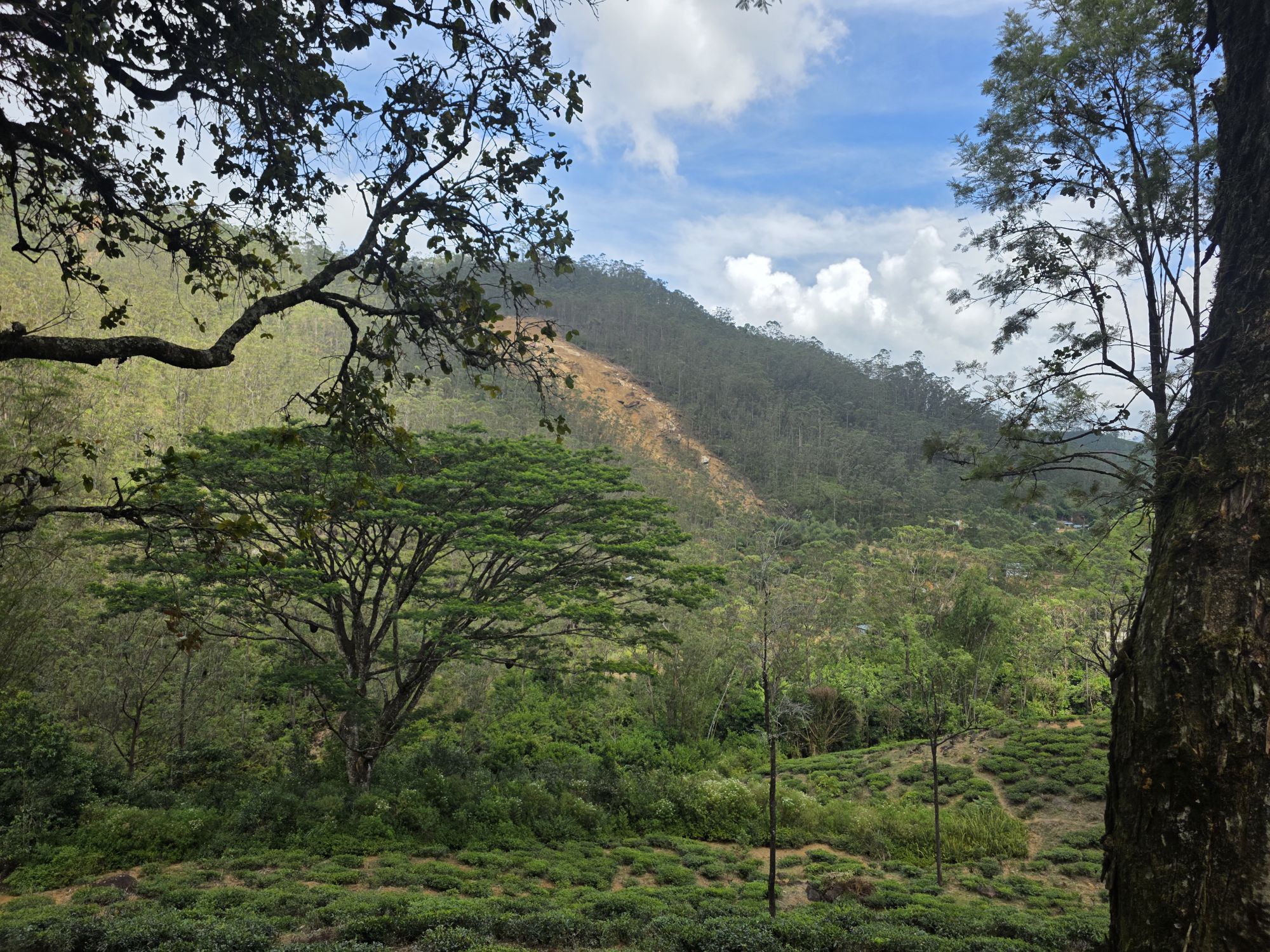
Another reason for taking longer – there were spectacular views, resplendent in the daylight everywhere we looked. And sometimes, it was hard to believe it was the same route we climbed up, because things looked so different in the daylight.
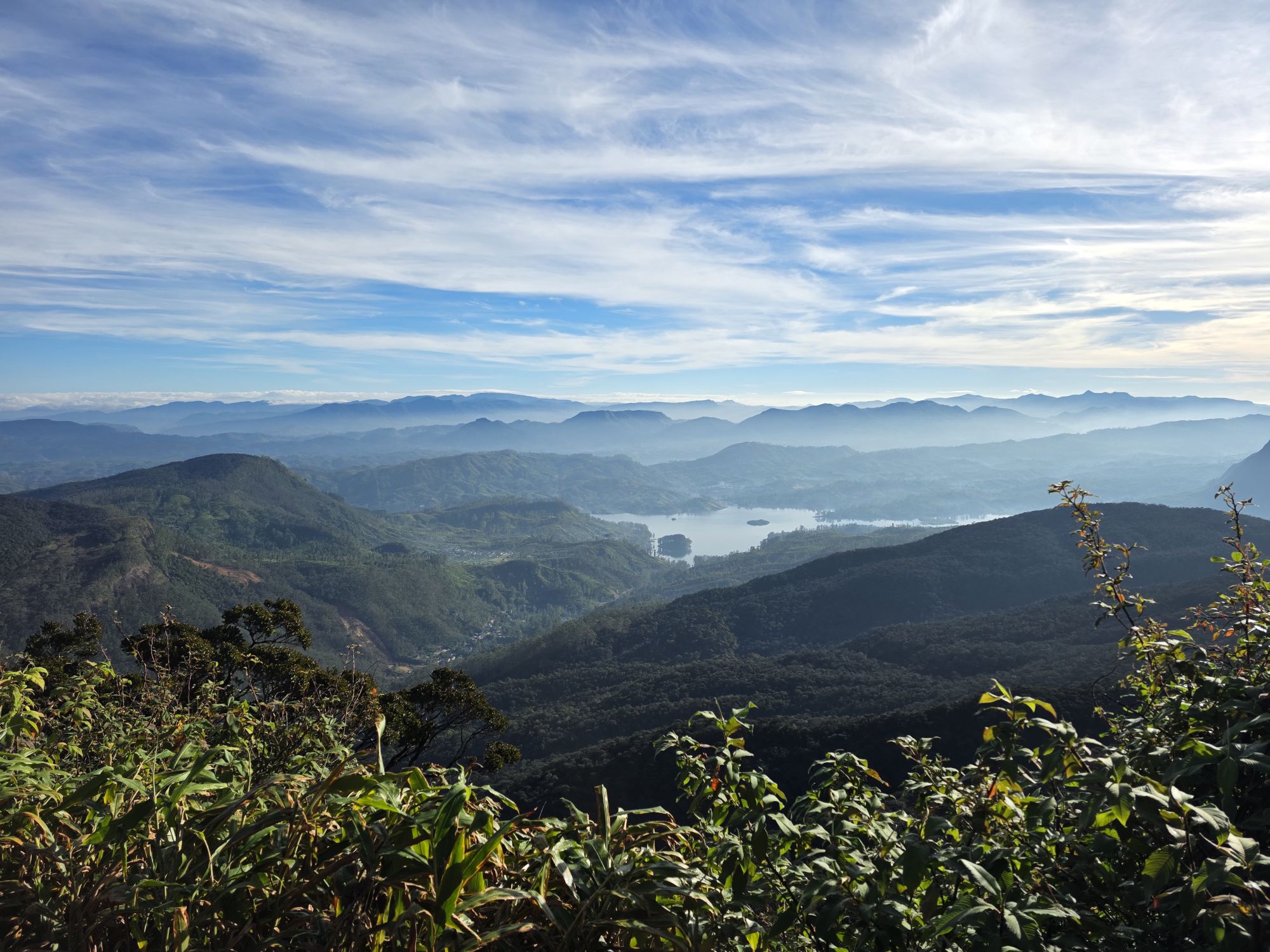
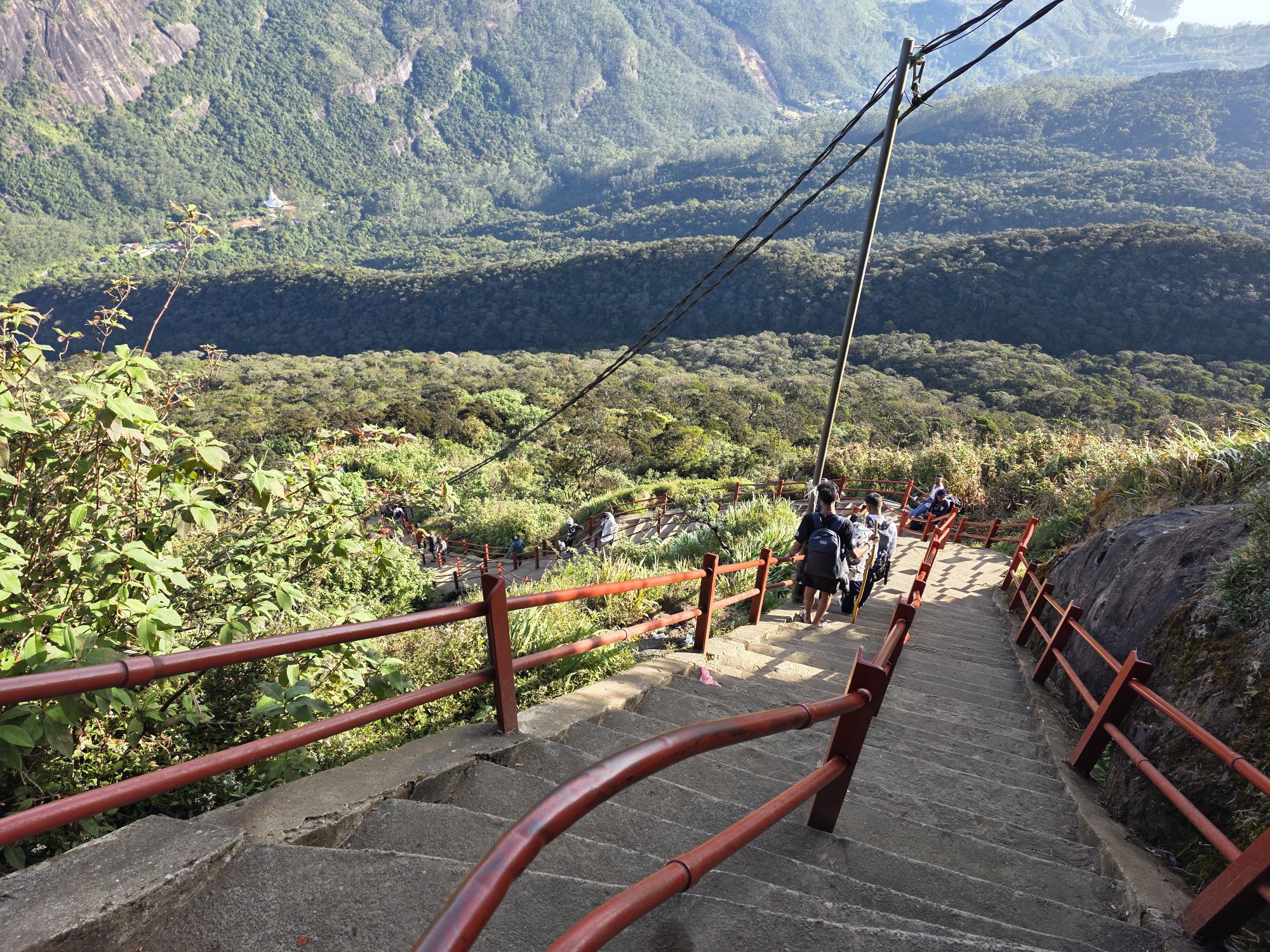
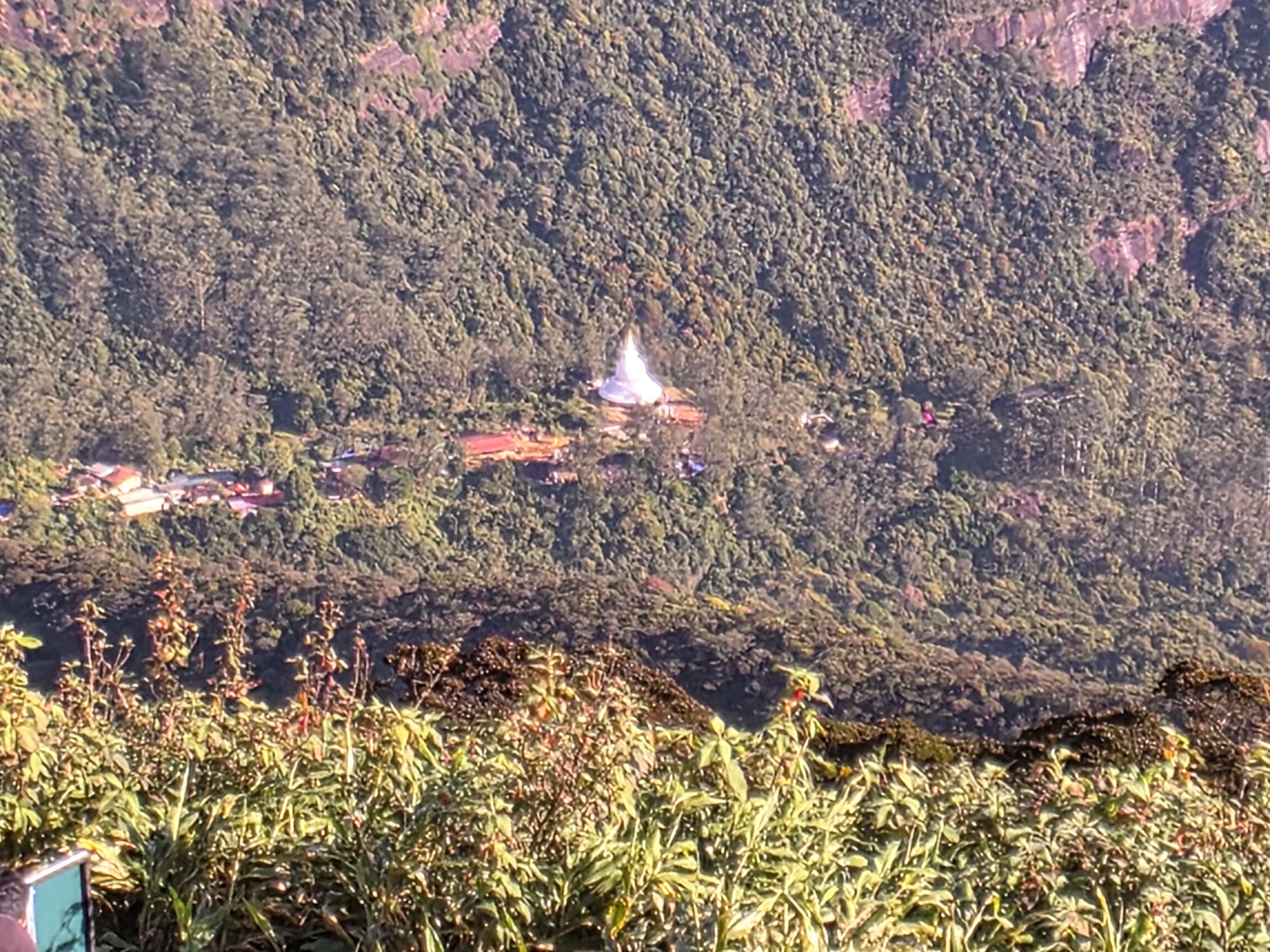
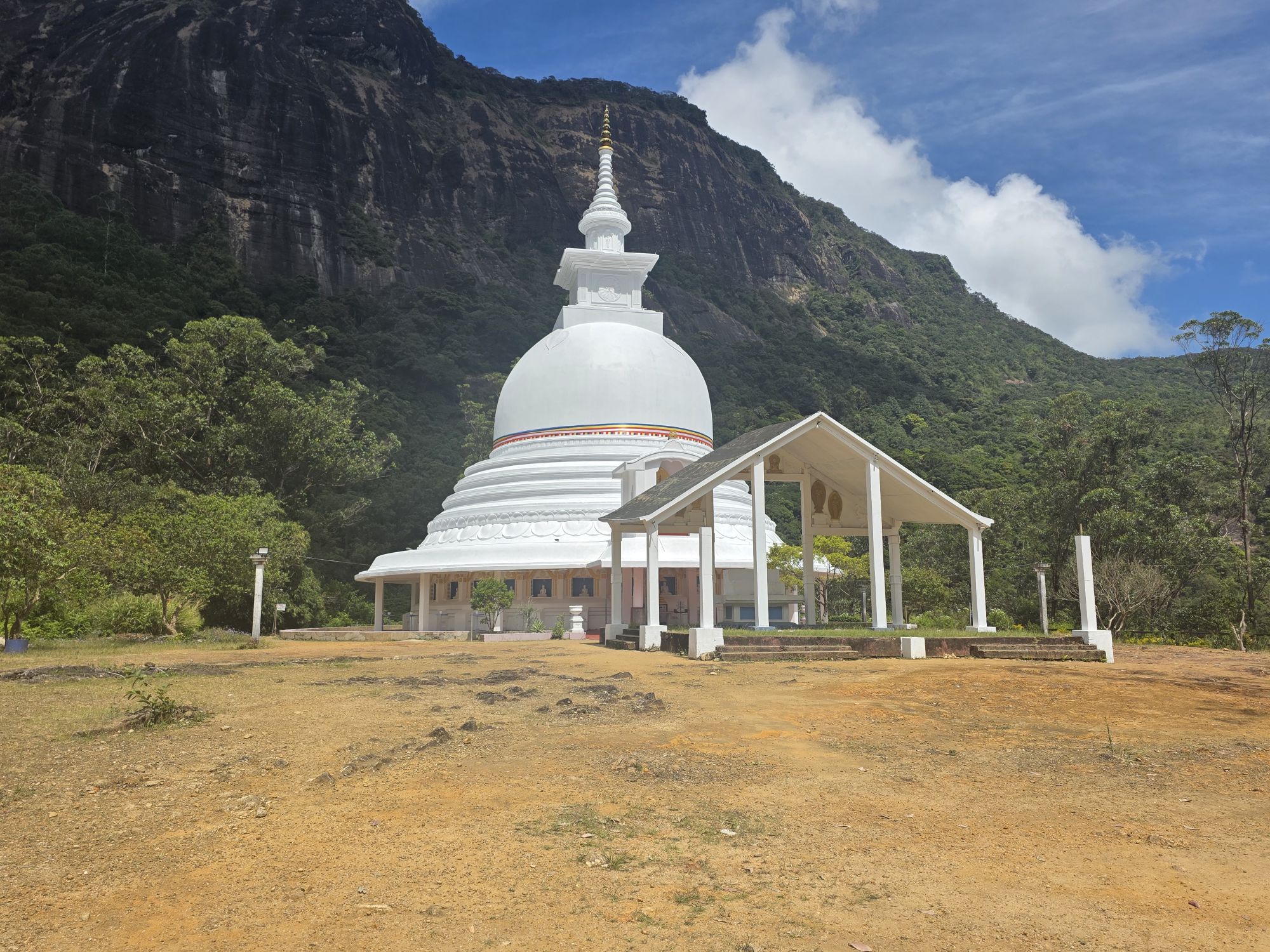
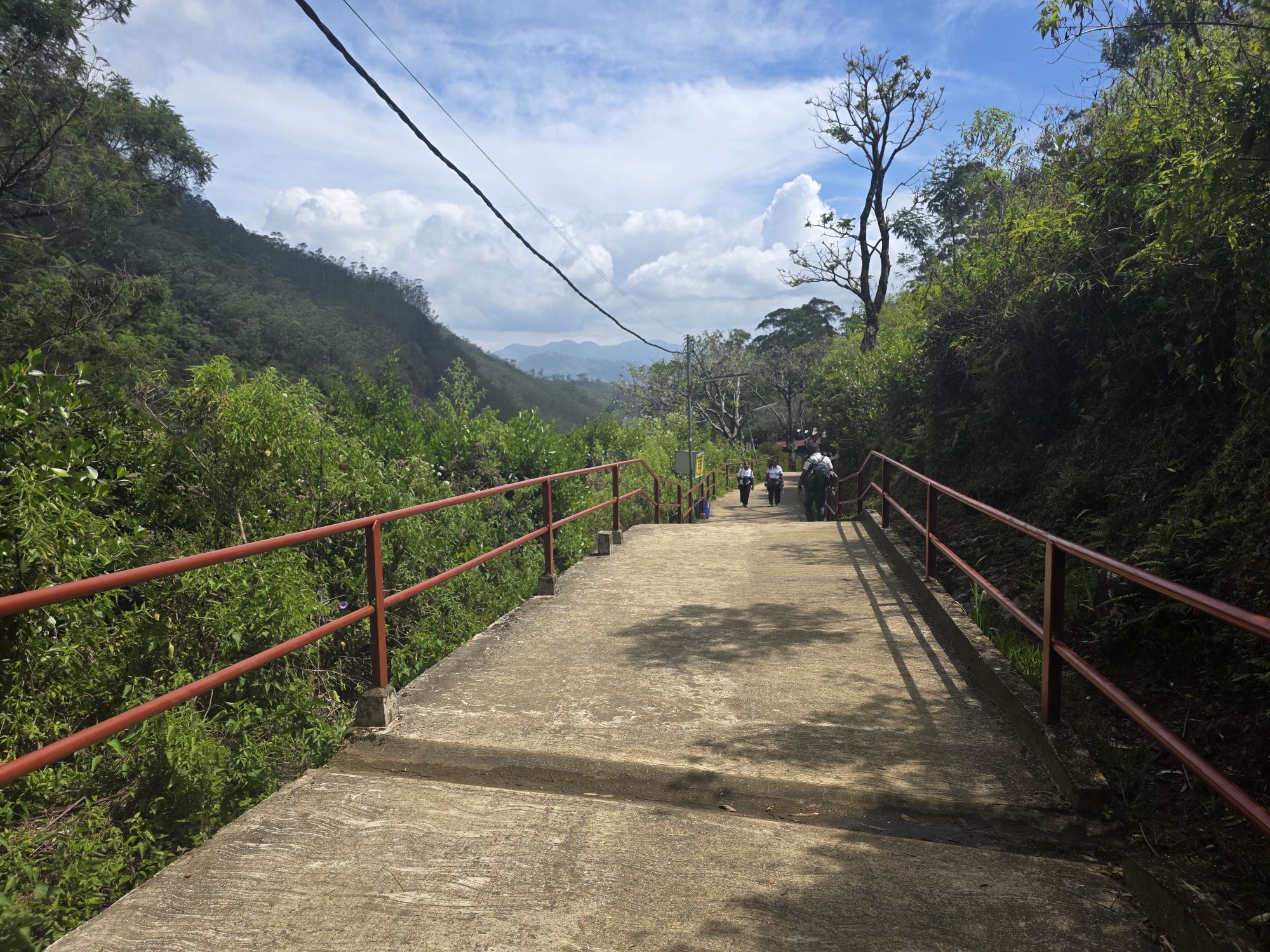
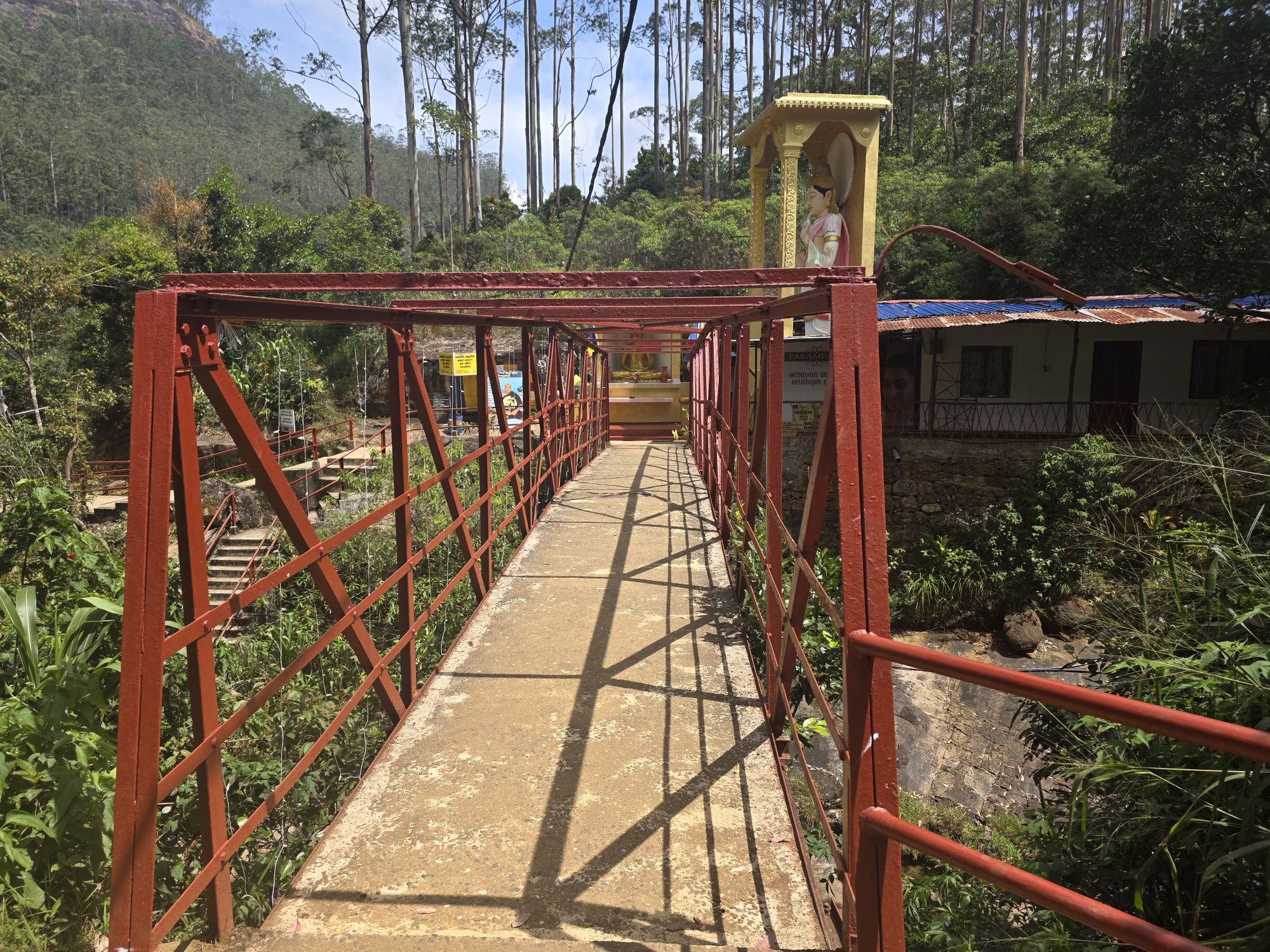
There aren’t any rituals on the way down. Except for the very end – time to fulfill my end of the bargain. I (and my whole family) had made a successful return journey, so it was time to thank God Saman for watching over us. Like countless others before me, I made an offering at the first shrine where I had asked for the blessing, and tied the coin wrapped in white cloth (which I had carried to the summit and back) at the shrine.
If you are considering taking the Hatton Route to Siri Pada, in next week’s post I’ve gathered a few practical tips and personal insights from my own experience that might help.
 Diary of a Tourist
Well done on completing such a meaningful journey, especially given how long you’ve had to wait since your original trip got cancelled. My legs ache for you. 🙂
LikeLiked by 1 person
Thank you! It did mean a lot. Legs are just about OK now after 4 weeks:😀 lovely to see you back!
LikeLiked by 1 person
Sort of back…
LikeLiked by 1 person