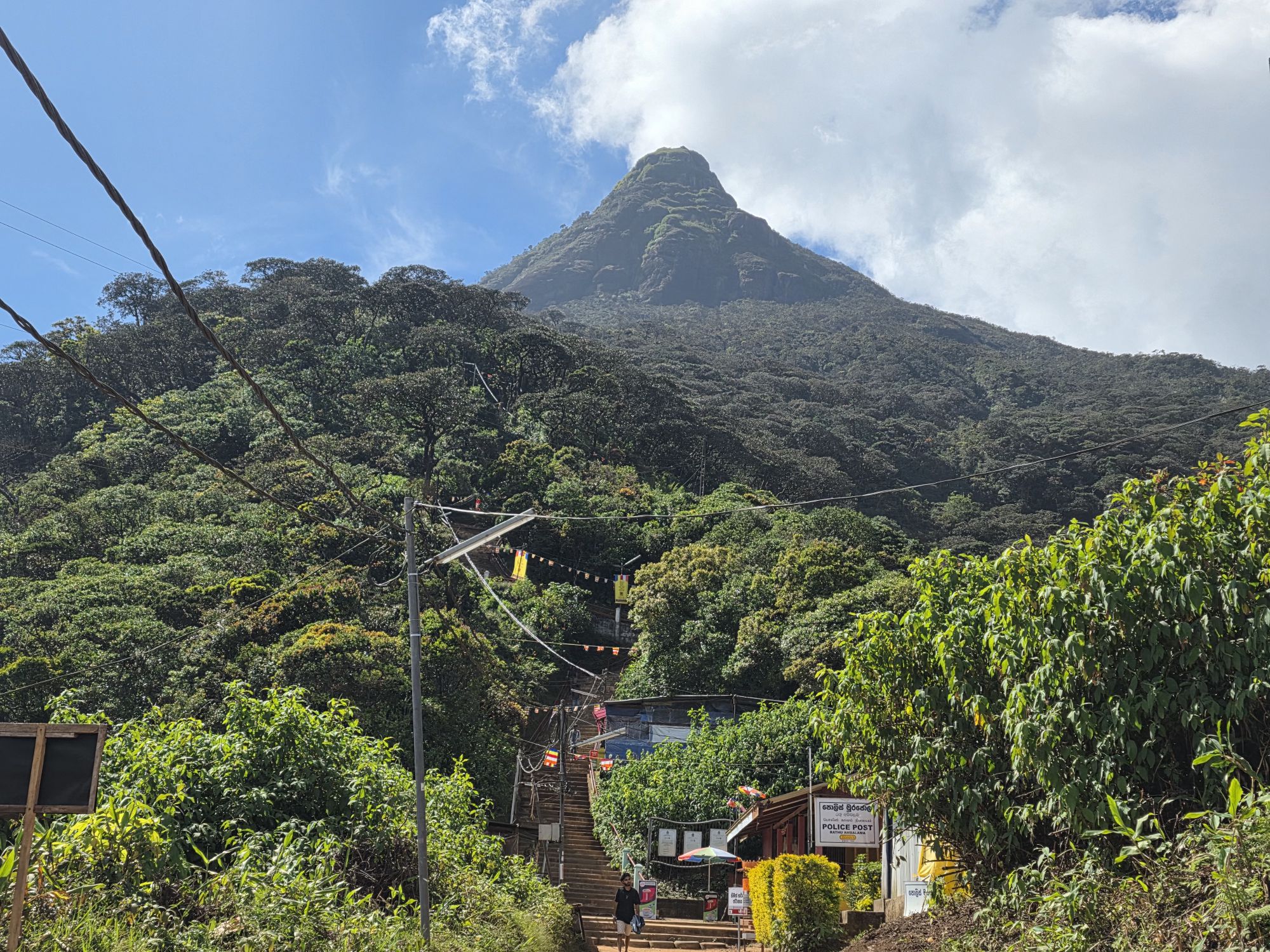
I recently made the pilgrimage to Siri Pada via the Hatton route, and it was an unforgettable journey.
If you’re considering taking the Hatton route to Siri Pada, I’ve gathered a few practical tips and personal insights from my own experience that might help you prepare for a similar journey.
When to go
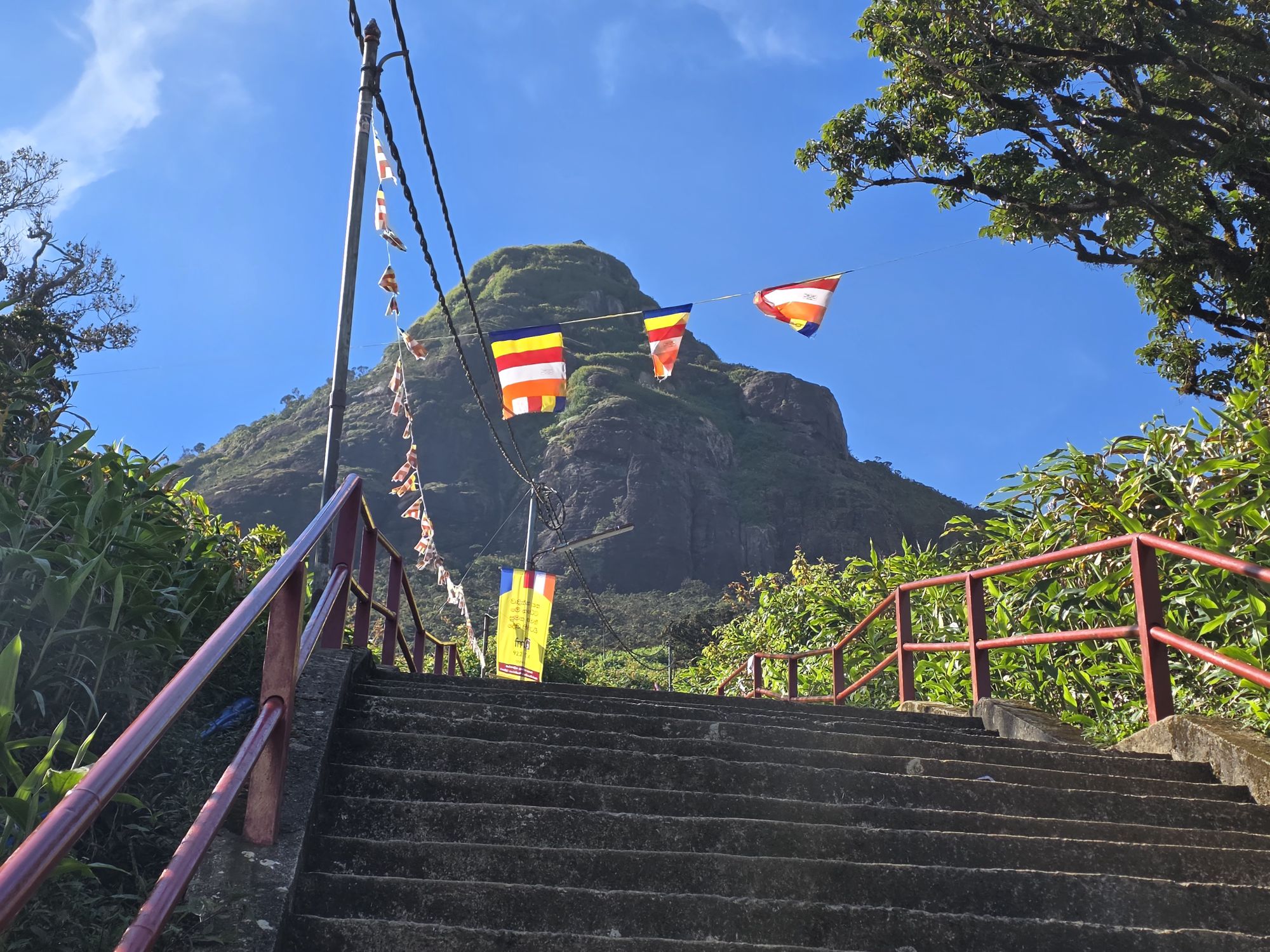
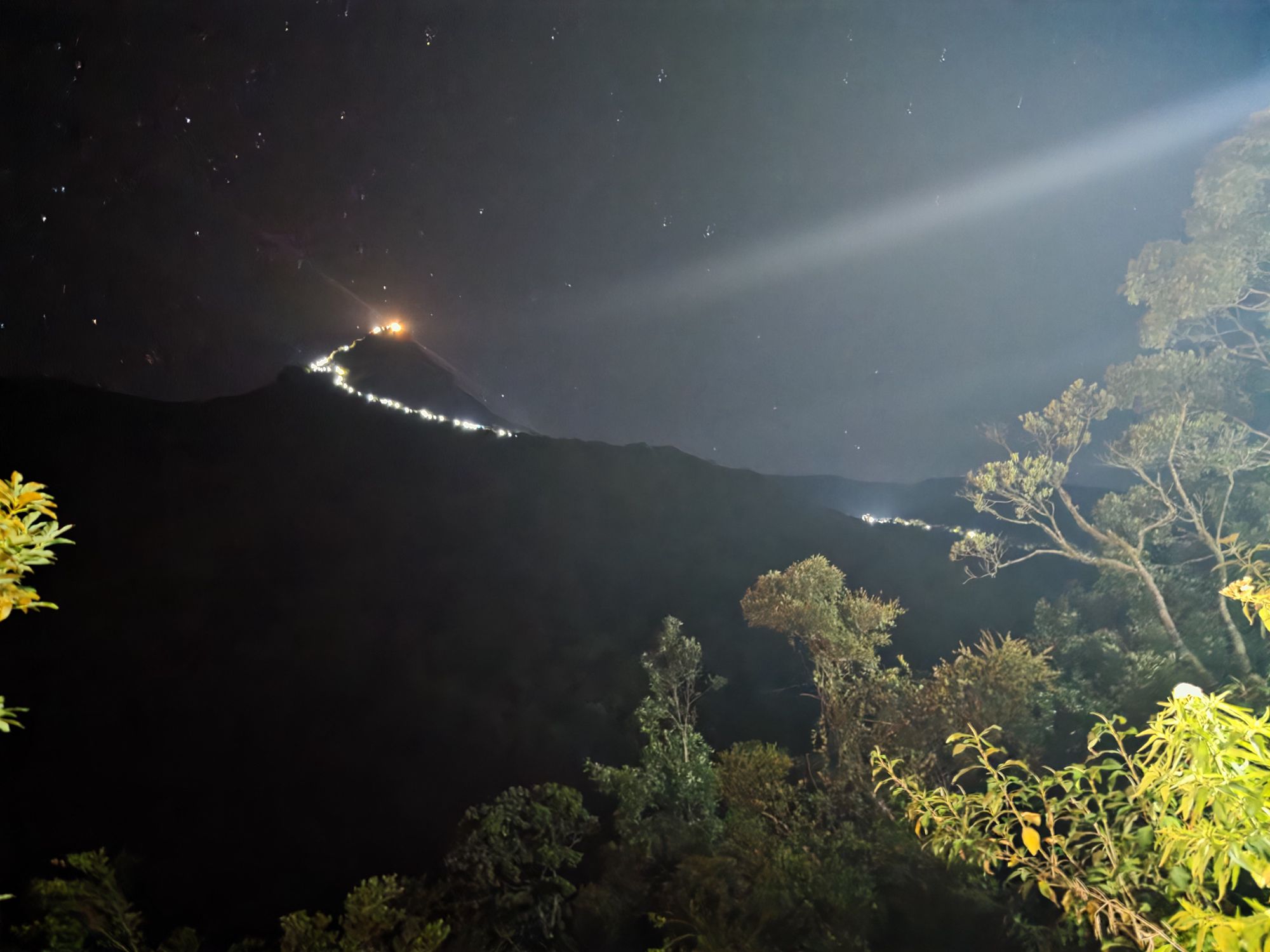
The official season for the climb is from the full moon day in December to the full moon Day in May. The weather is mostly dry. The route is maintained, and lit up at night, all the shops/restaurants/facilities are open. On the downside, it will be crowded, especially at weekends and full moon days. December, April and May also tends to be busy because of the holiday season. The best time to climb is a weekday in January or February. (But avoid full moon days, these are religious holidays on Sri Lanka and very popular days for a pilgrimage).
Off season, it will be quieter, but it will be wet, and cloudy (so no great views). The road is not lit up, so not great for a night climb. Most of the shops/restaurants will be closed and facilities (rest stops and toilets) won’t be maintained.
What time of the day is best?
Most people climb at night to get to the summit for the sunrise. A night climb also means cooler weather and no hot sun beating down on you as you climb.
What to wear
As with any hike, good footwear is a must. Most of the road is paved and fairly even, but the road has a lot of steps.
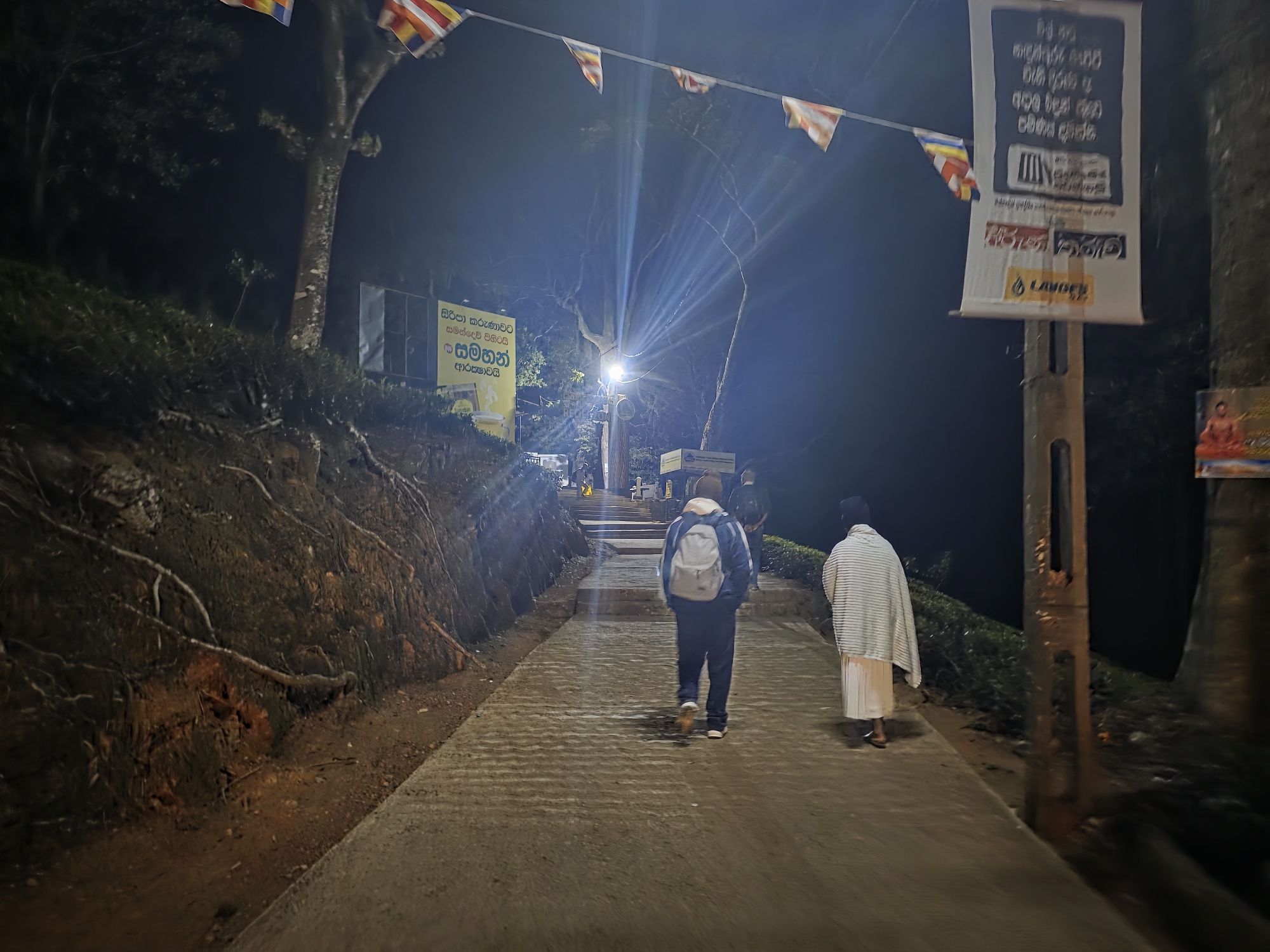
Wear durable, but loose trousers that you can roll up. You might want to dip your feet in the “Seetha Gangula” river. Or there are places offering herbal oils and foot massages (which are very appealing on the way down).
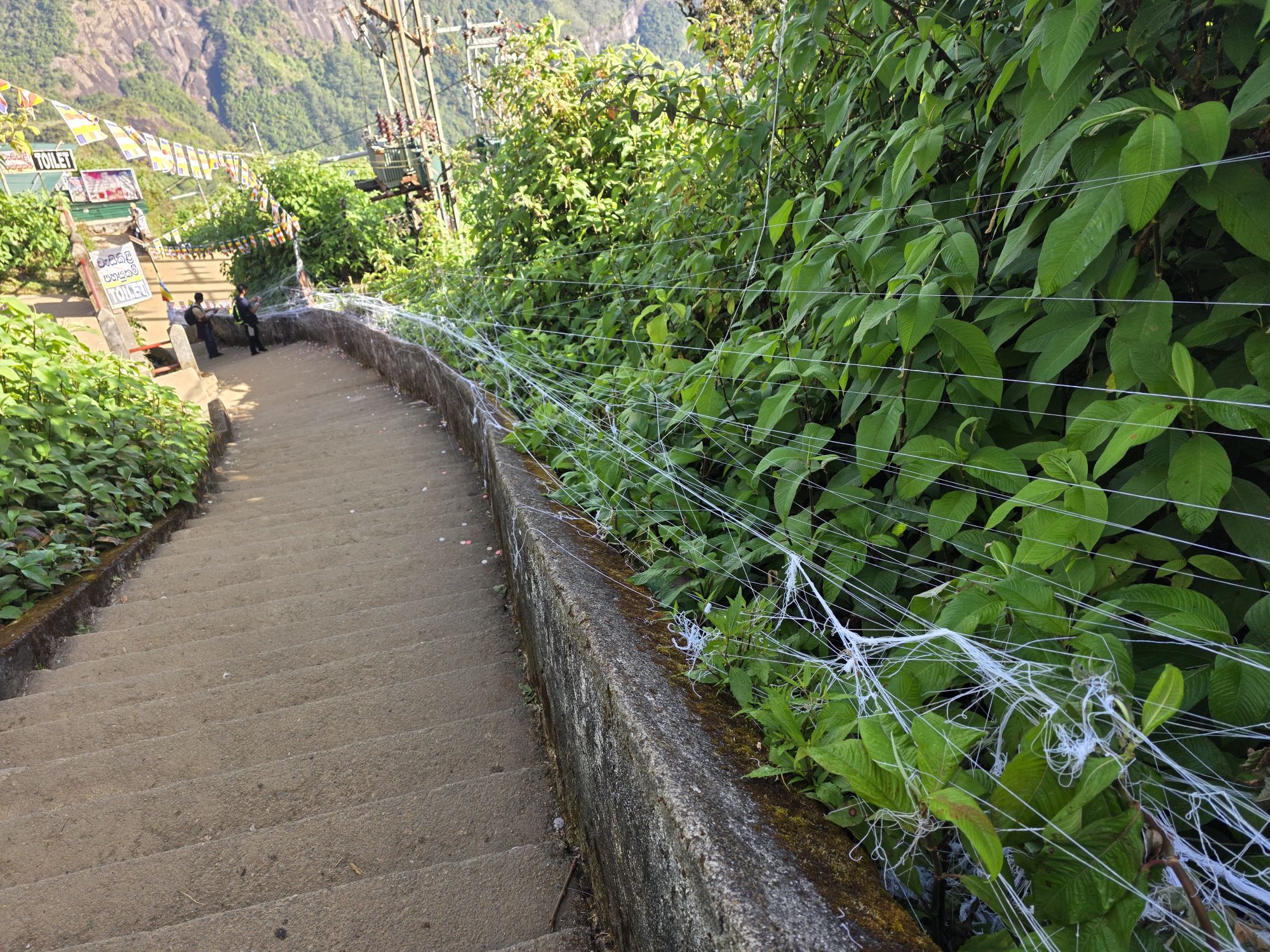
You can climb wearing shorts, but bear in mind that at the summit is a temple and you will not be allowed to enter wearing shorts. So if you wear shorts, do take longer trousers or a sarong as well. For the temple you will also need a top that covers your shoulders.
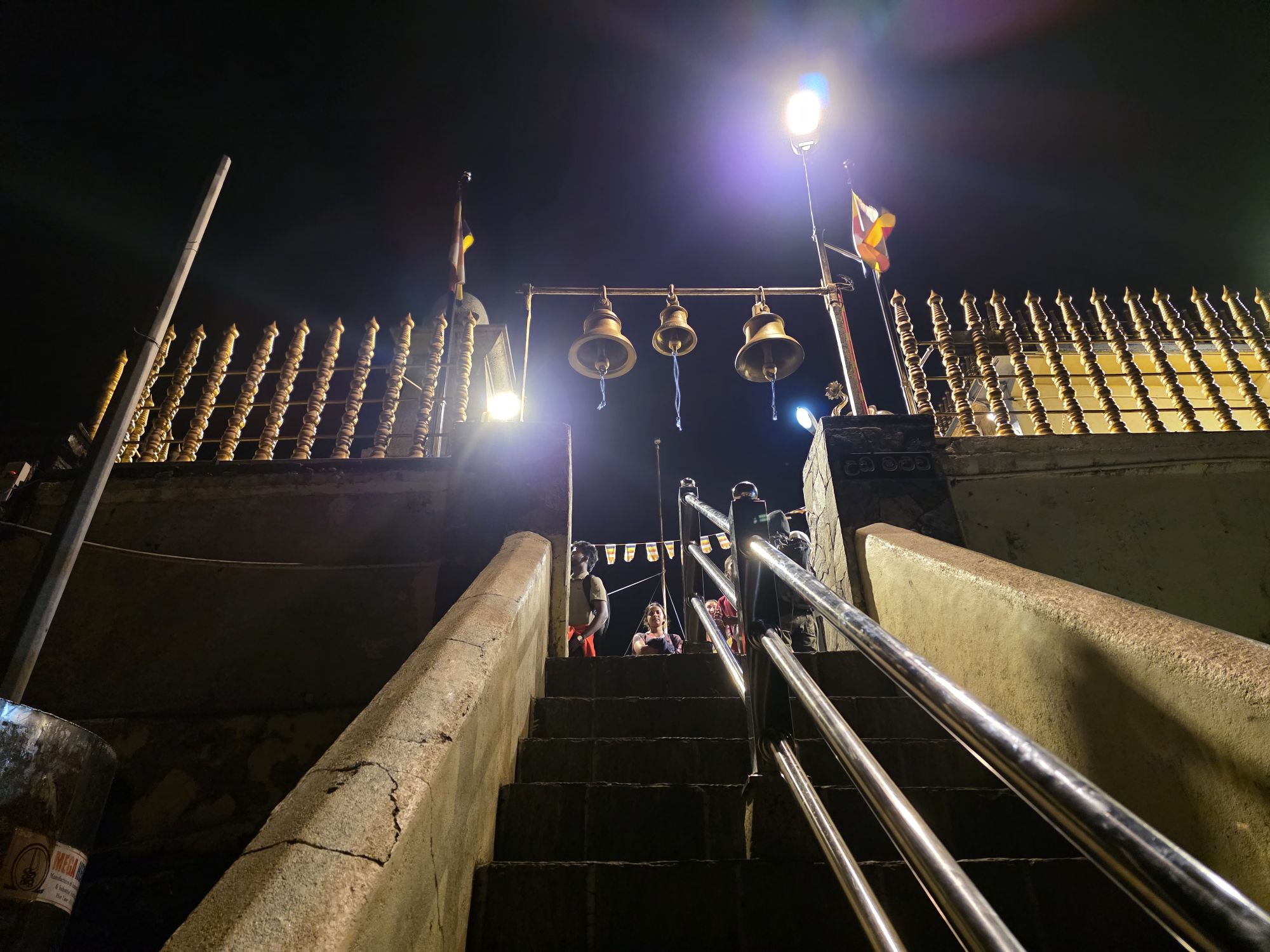
We climbed in January when the night temperature was around 15C-16C, (this is supposed to be the coldest time of the year for the climb). You’d only need a couple of layers, as the climbing will keep you warm. But it is cold at the top and you will need extra layers if you plan to wait at the top for the sunrise.
Things to take
Biggest tip here – take the bare minimum you need.
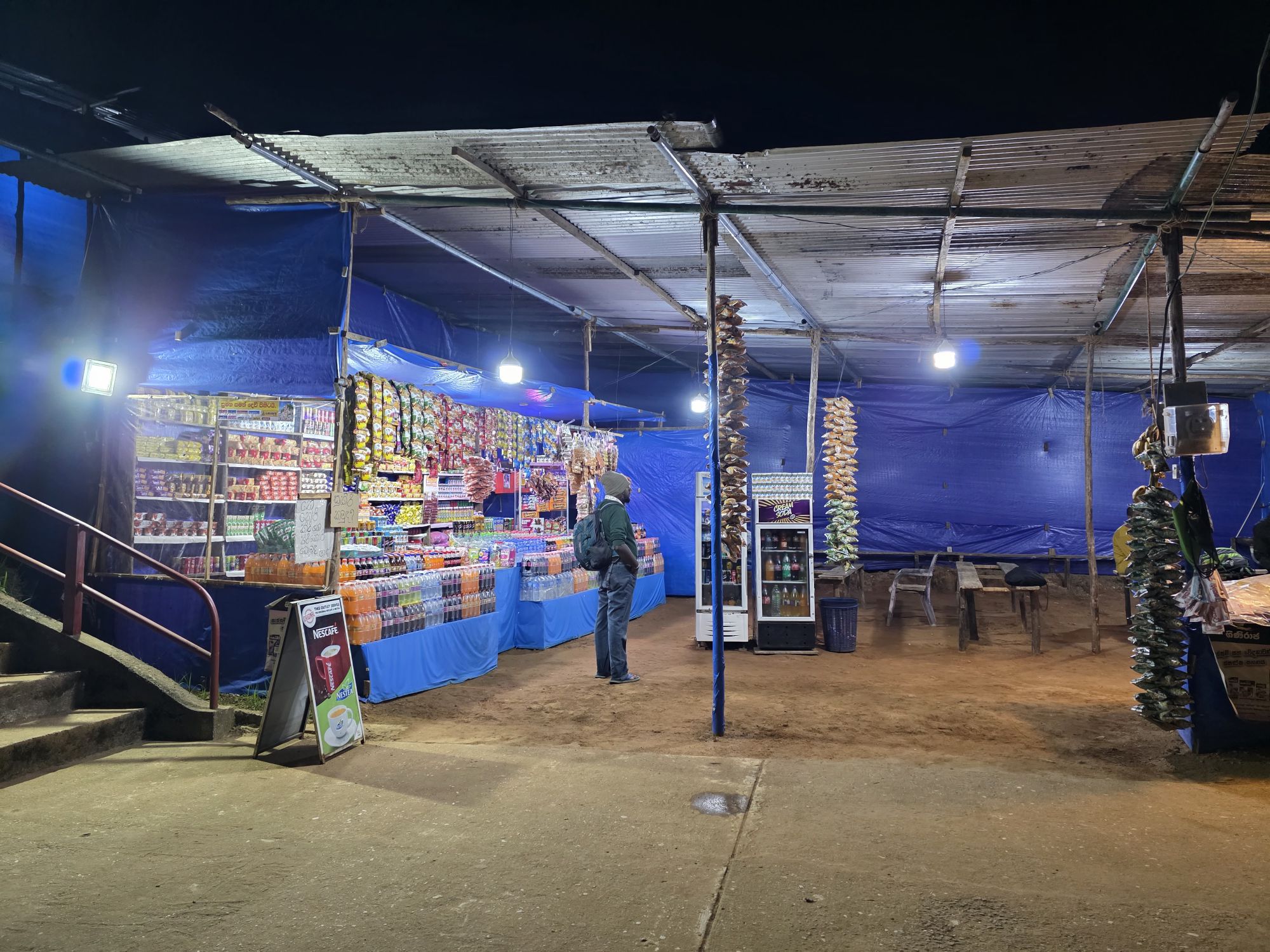
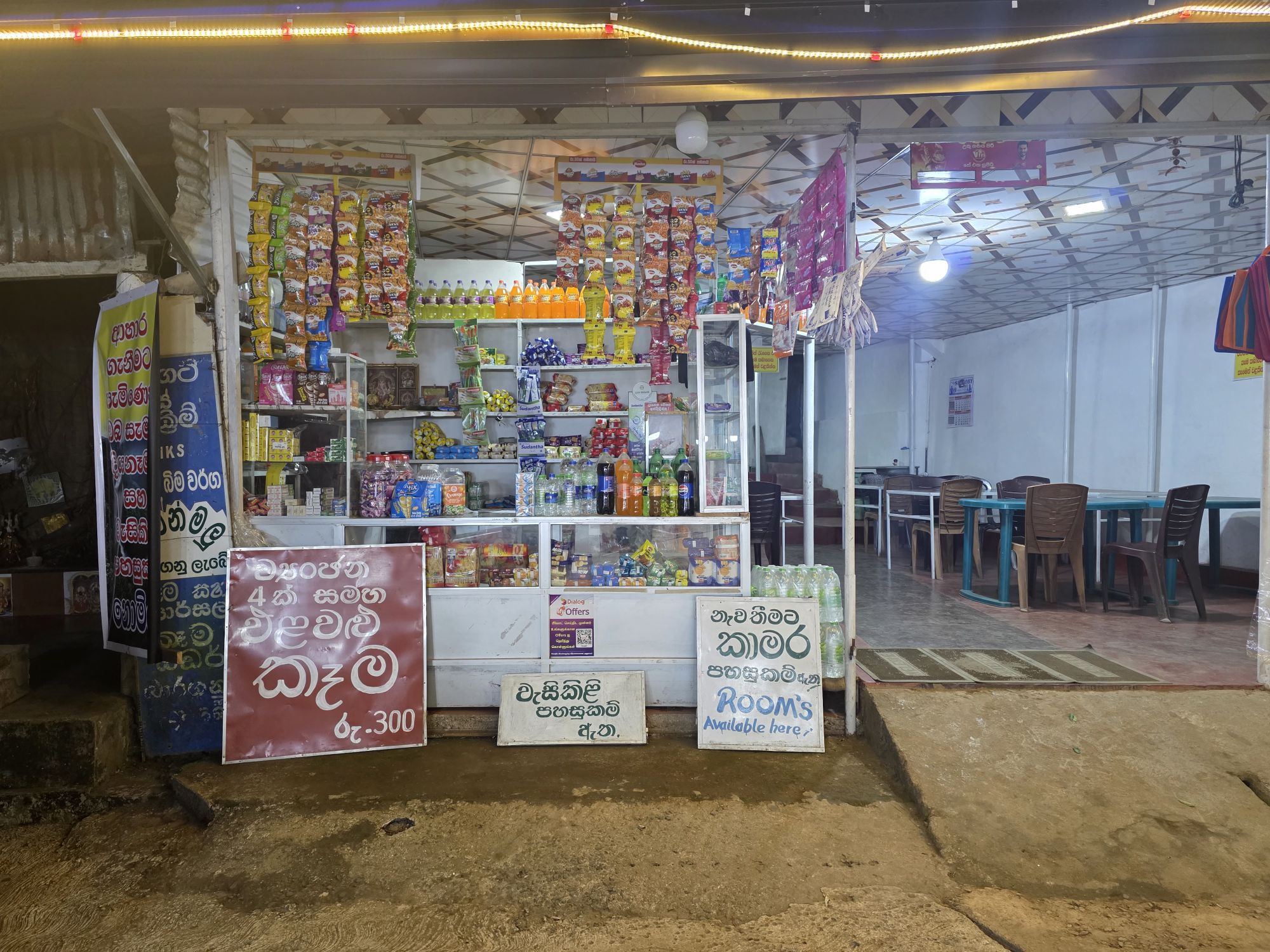
During the season, there are shops all the way to the top, and they sell everything you might need – food, drinks, hats, gloves, clothes. (Note: There are no drinking stations on the route, but plenty of shops sell bottled water).
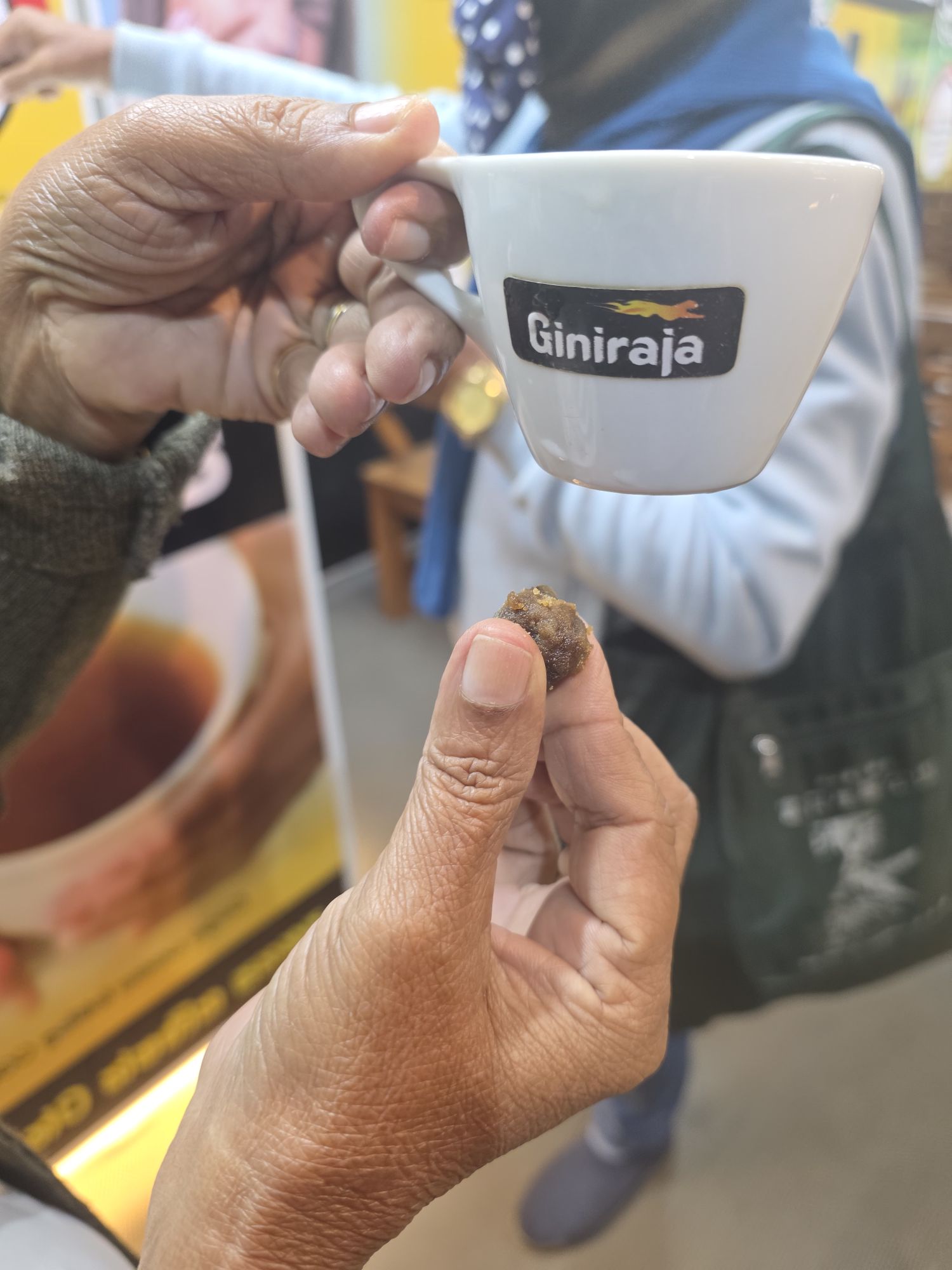
Take local currency (Sri Lankan Rupees) in small notes. Most shops won’t have card facilities.
Take a woolly hat (for the night climb, when it is cold)
Take a sunhat and sunglasses for the descent during the morning. The Hatton route is on the East side of the mountain, so the sun will be on you on the way down, if you descend shortly after sunrise.
If you are like me, you will use up a lot of the phone battery taking great night time photos during the climb, and there won’t by much left for the descent. So either take a phone battery pack or a charger. Many shops provide charging facilities for a small fee.
Facilities
There are toilets facilities at regular intervals on the route (there is a small charge to use these).
There are rest stops on the way and at the summit, where you can rest and nap.
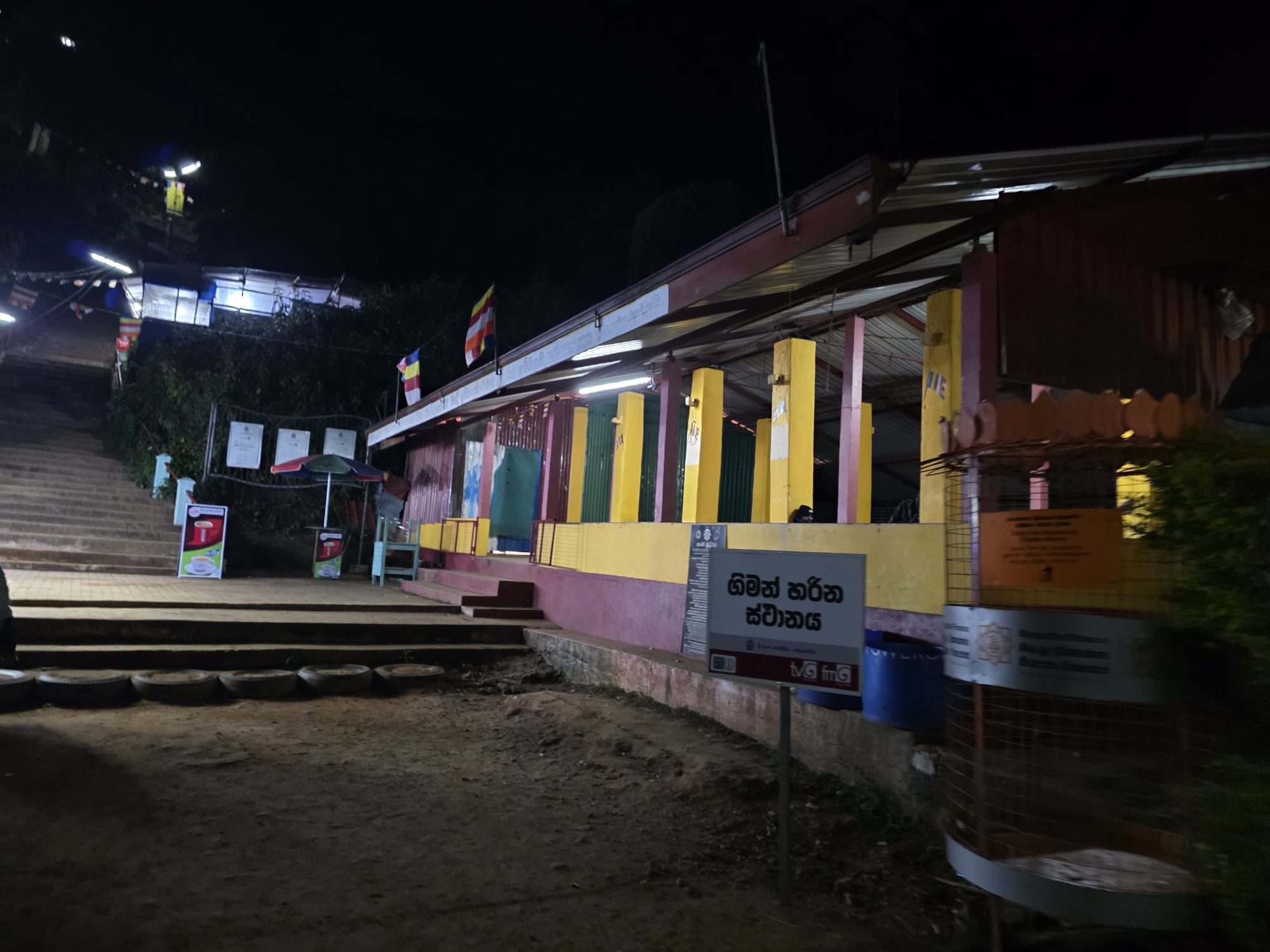
There are also changing facilities at “Seetha Gangula” river if you want to follow the traditions and have a wash.
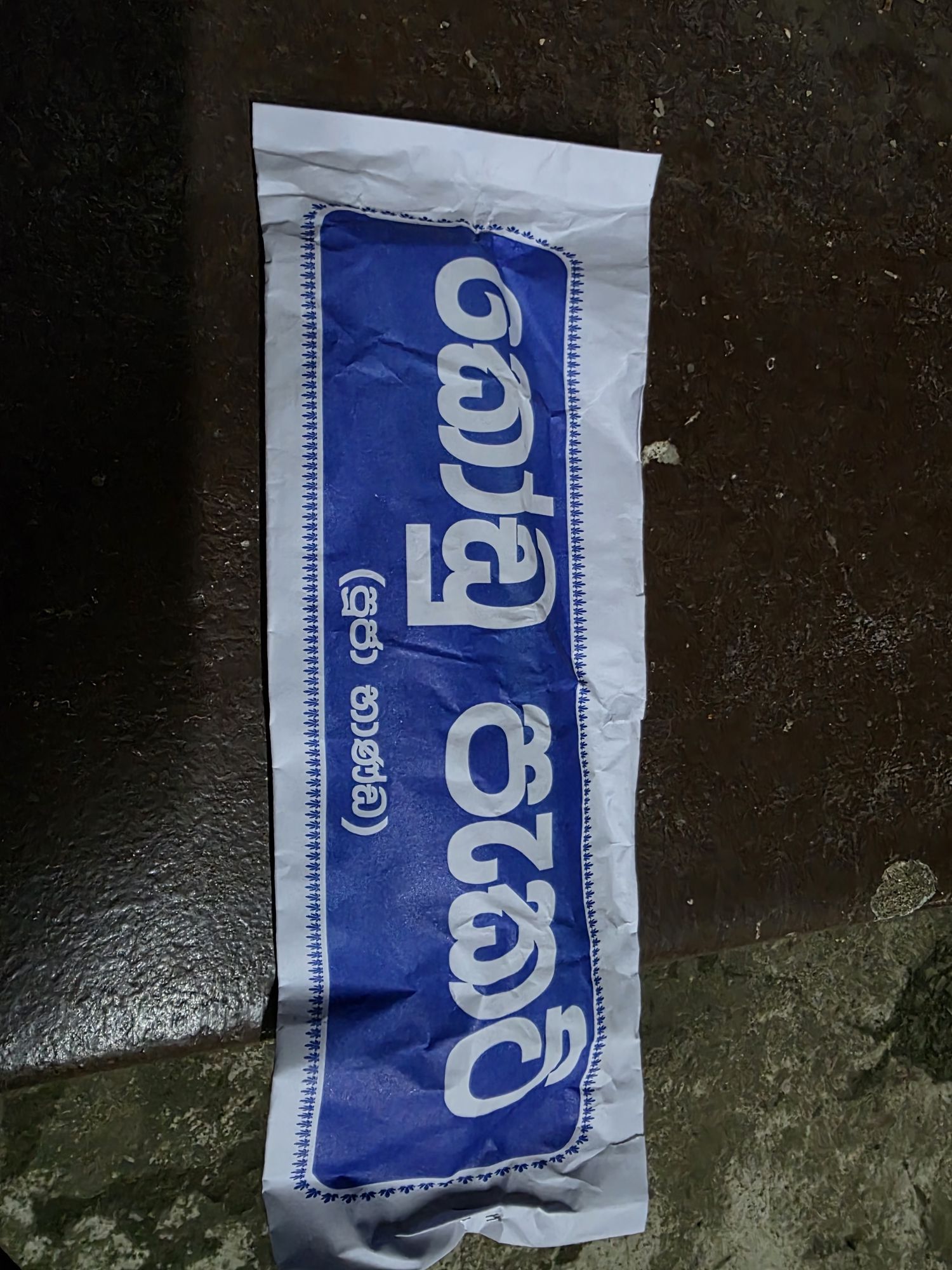
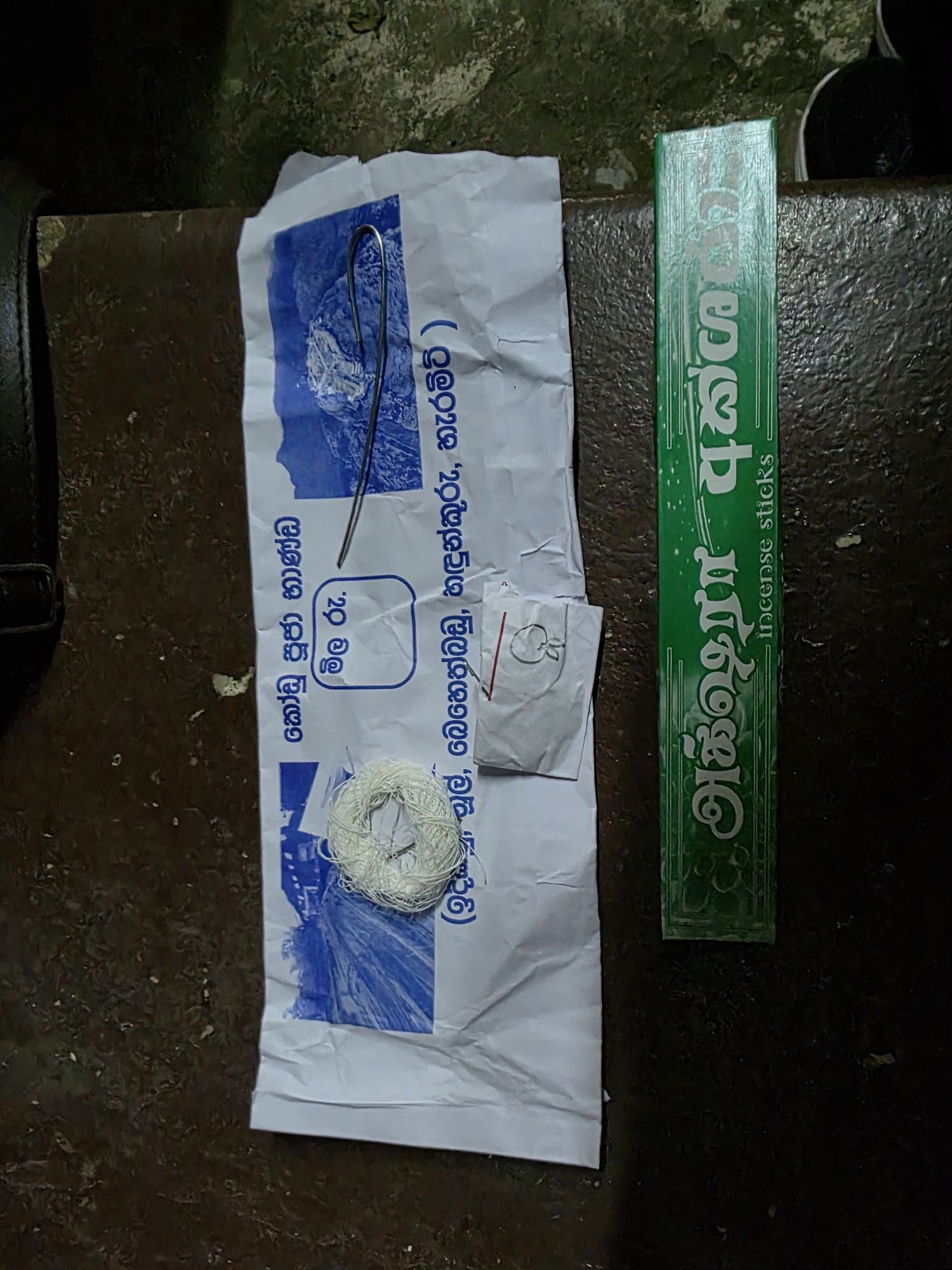
If you want to carry out the rituals up in the climb, there are “kodu” packets (meaning novice packets) available from shops in Nallathanniya. These contain all the things you need for the rituals, saving you the trouble if bringing it from home. See my previous post to see what is in a novice packet.
Sunrise and the Shadow in the Sky
Sunrise at the summit is spectacular, but for me, it is the shadow of the mountain in the sky that is most worth seeing. So if you want to see this head to the West facing side of the summit (most people will be on the East facing side)
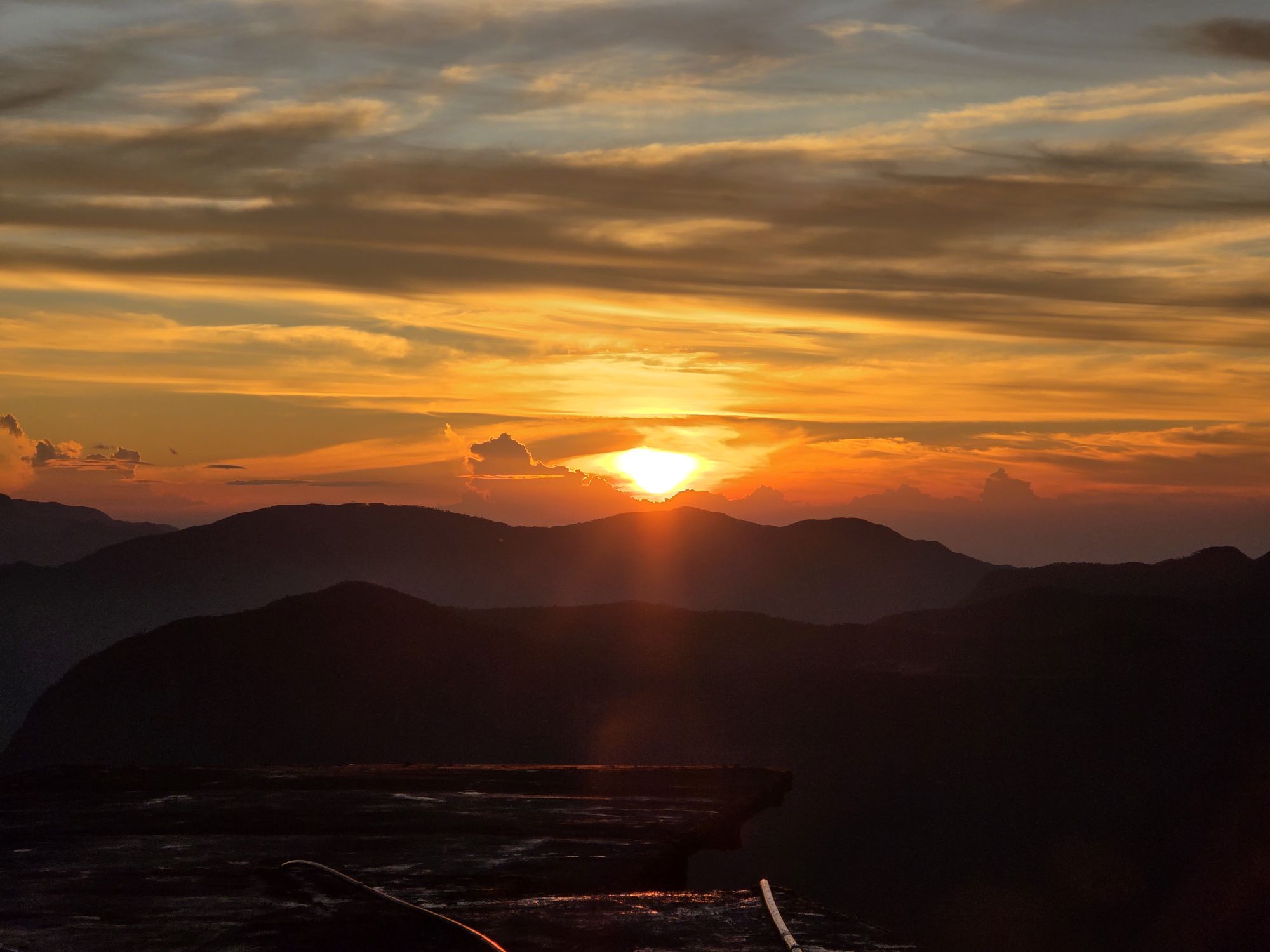
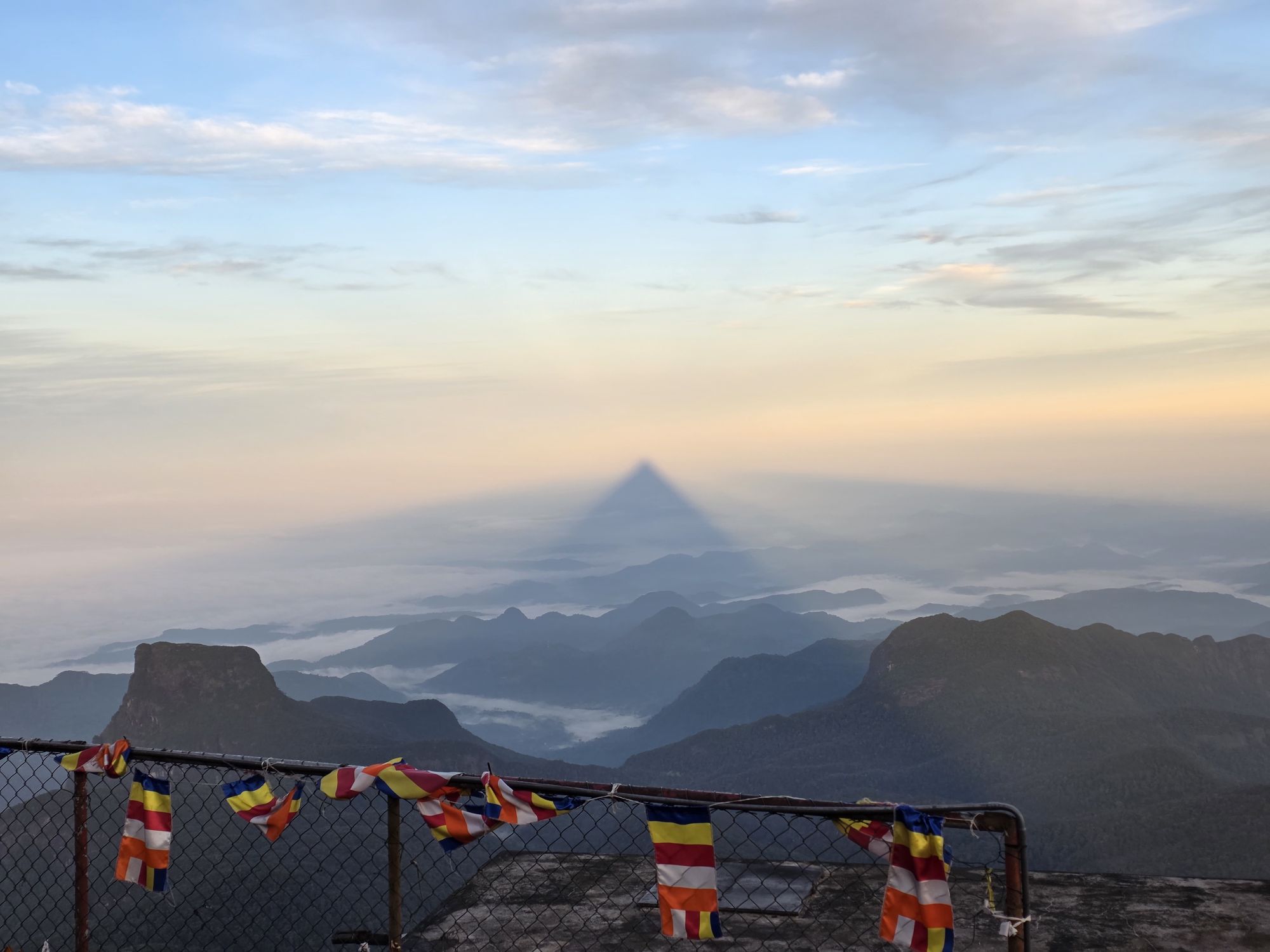
For many locals, this is a place of pilgrimage, so bear that in mind when you go. It is customary for the locals to say hello and wish each other well on their journey when passing.
Take your time, don’t rush. Soak up the atmosphere and enjoy the scenery. Try local snacks and drinks (the 25 pence Nescafe on the route is the nicest I’ve had anywhere). We took 6 hrs to climb and 6 hrs to descend (this included plenty of rest breaks), but the slow pace gave us the opportunity to take it all in.
 Diary of a Tourist
Great advice, especially the “what to wear” section. I can’t imagine hiking for six hours only to be told I can’t enter the temple because of my clothes. For people doing this hike for spiritual and religious reasons, I assume that would be devastating.
LikeLiked by 1 person
Yes, most temples in Sri Lanka has the facility for people to borrow a sarong, if they turn up in shorts. But the temple at the top is quite small I’m not sure they have the same facility.
LikeLiked by 1 person