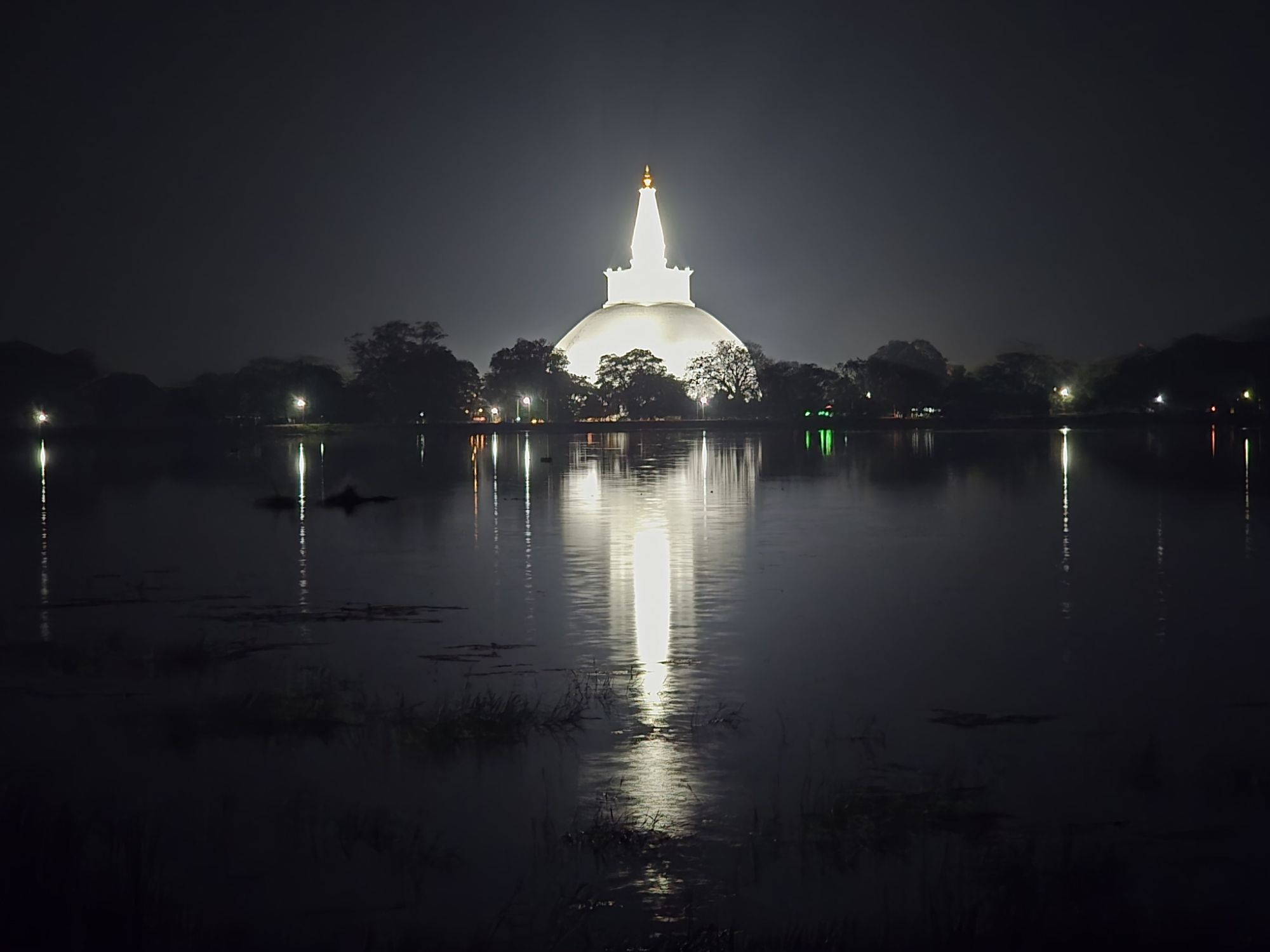
Where and when: Anuradhapura, Sri Lanka, January 2026
Anuradhapura, one of the ancient capitals of Sri Lanka, is a UNESCO World Heritage Site renowned for its well-preserved ruins that reflect the grandeur of ancient Sri Lankan civilisation. The landscape is dotted with impressive stupas and the ruins of the ancient city, which stands as a testament to the architectural brilliance of the time. The city was a hub for Buddhist scholarship and monastic life, hosting vibrant communities of monks and pilgrims.
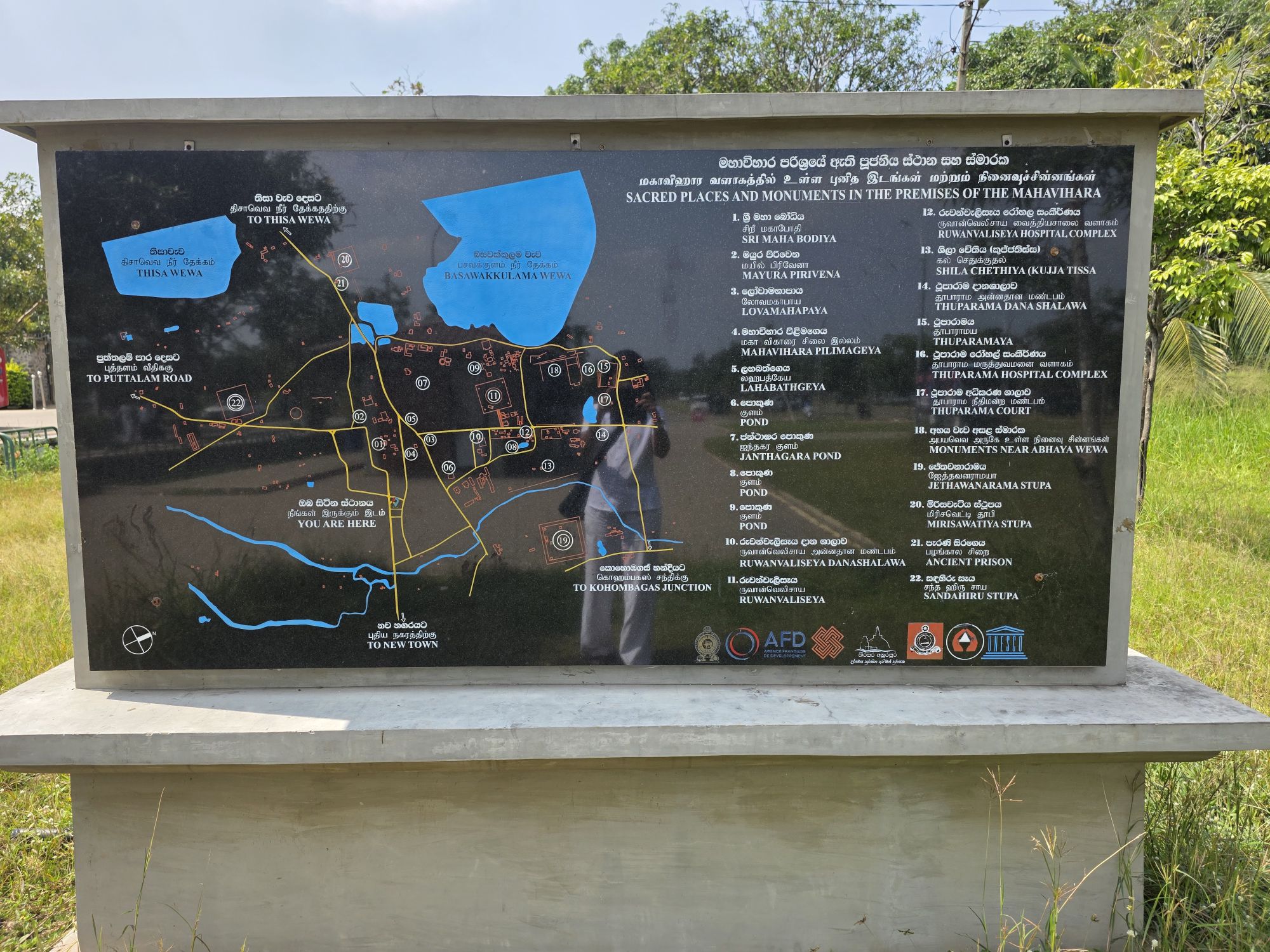
Established in the 4th century BC, the city served as the political and religious center of Sri Lanka for over a millennium. It had 113 rulers (including 4 queens), however, most of the major sites you can see today date back to the following kings.
King Devanampiya Tissa
Devanampiya Tissa ruled the kingdom of Anuradhapura in the 3rd century BC. He is famous for welcoming Buddhist monk Mahinda Thera (the son of emperor Ashoka of India) who brought Buddhism to Sri Lanka. During his reign, Buddhism was officially established in the country and important religious sites such as Mihintale and Thuparamaya were developed.
King Dutugamunu the Great
Dutugamunu the Great was a Sinhalese king who ruled in the 2nd century BC. He was a great-great nephew of King Devanampiya Tissa. He is well known for defeating the Tamil King Elara and unifying Sri Lanka. He also built many important Buddhist monuments, including the famous Ruwanwelisaya.
King Valagamba
King Valagamba was a nephew of Dutugamunu the Great and ruled in the 1st century BC. After losing the throne during a South Indian invasion, he later regained it and strengthened Buddhism. During his reign, the Abhayagiri Vihara was built and the Buddhist teachings were first written down at Aluvihara Rock Temple.
King Mahasena
Mahasena ruled in the 3rd century CE and is known for his great irrigation and construction works. He built large reservoirs such as Minneriya Tank and important religious monuments including Jetavanaramaya.
Mahamewna Park
Many of the ancient ruins of Anuradhapura are in “Mahamewna Park”, which was established during the reign of King Devanampiya Tissa in the 3rd century BC. The park became famous because it was the place where Mahinda Thera first preached the teachings of the Gautama Buddha to the king and his followers. After this event, the park became an important Buddhist religious area and many sacred monuments were built.
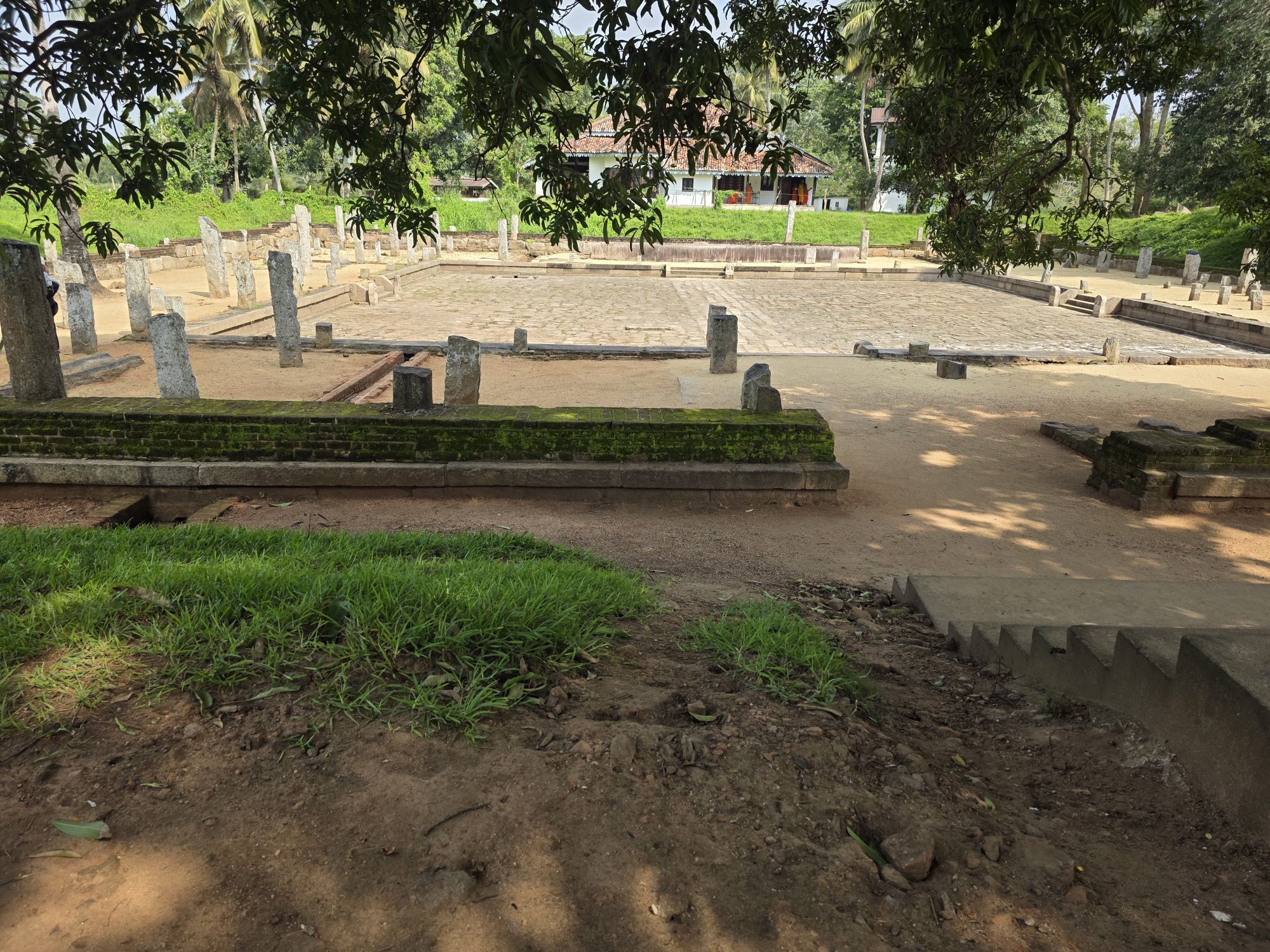
The park is filled with many ancient ruins of stupas, ponds, statues, hospitals, dinner halls, education centers etc. all dedicated to Buddhist monks. You can spend the whole day waking around Mahamewna park, but if you are short of time I recommend seeing the following (which can be covered in about half a day).
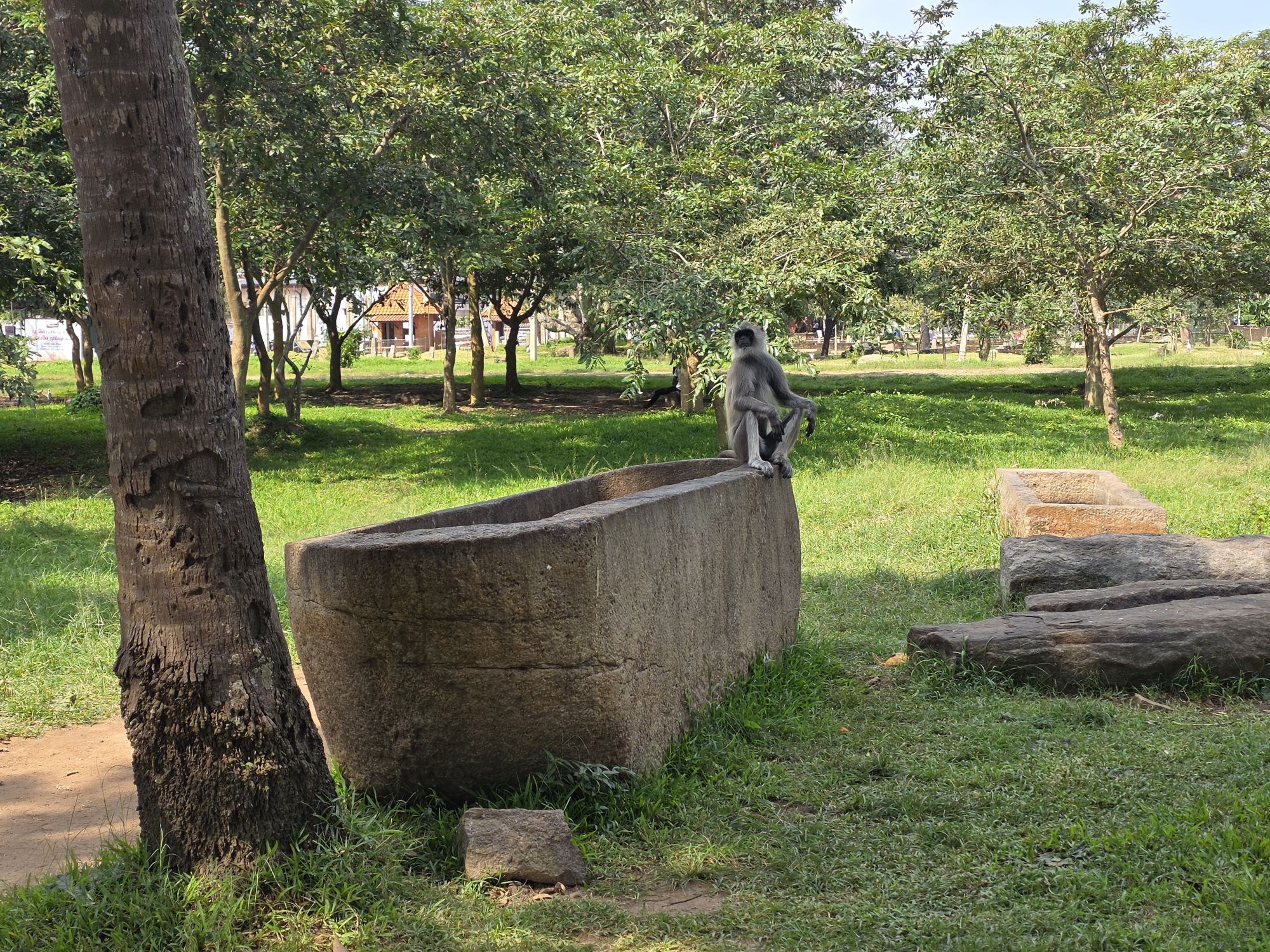
Sri Maha Bodhi
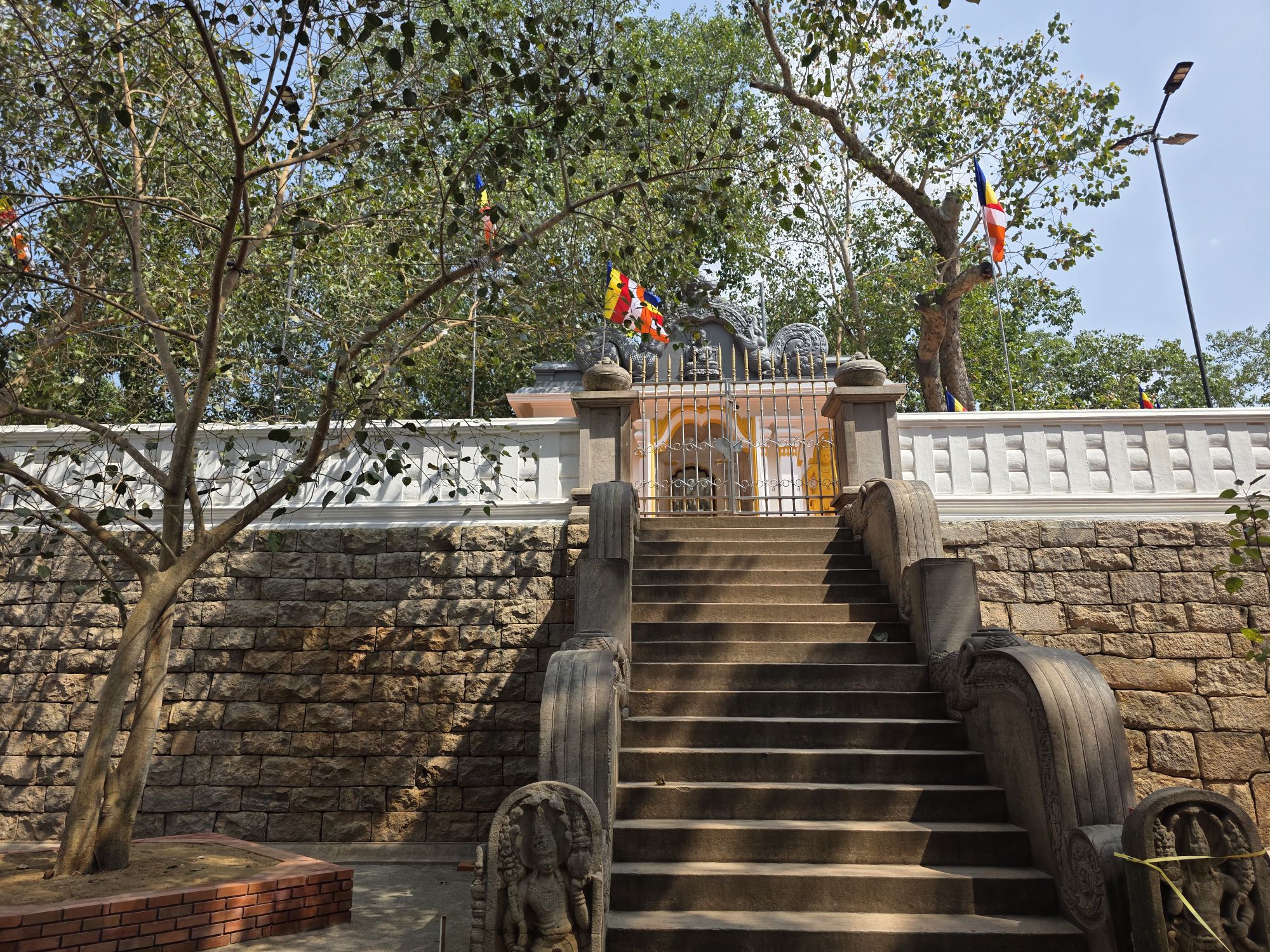
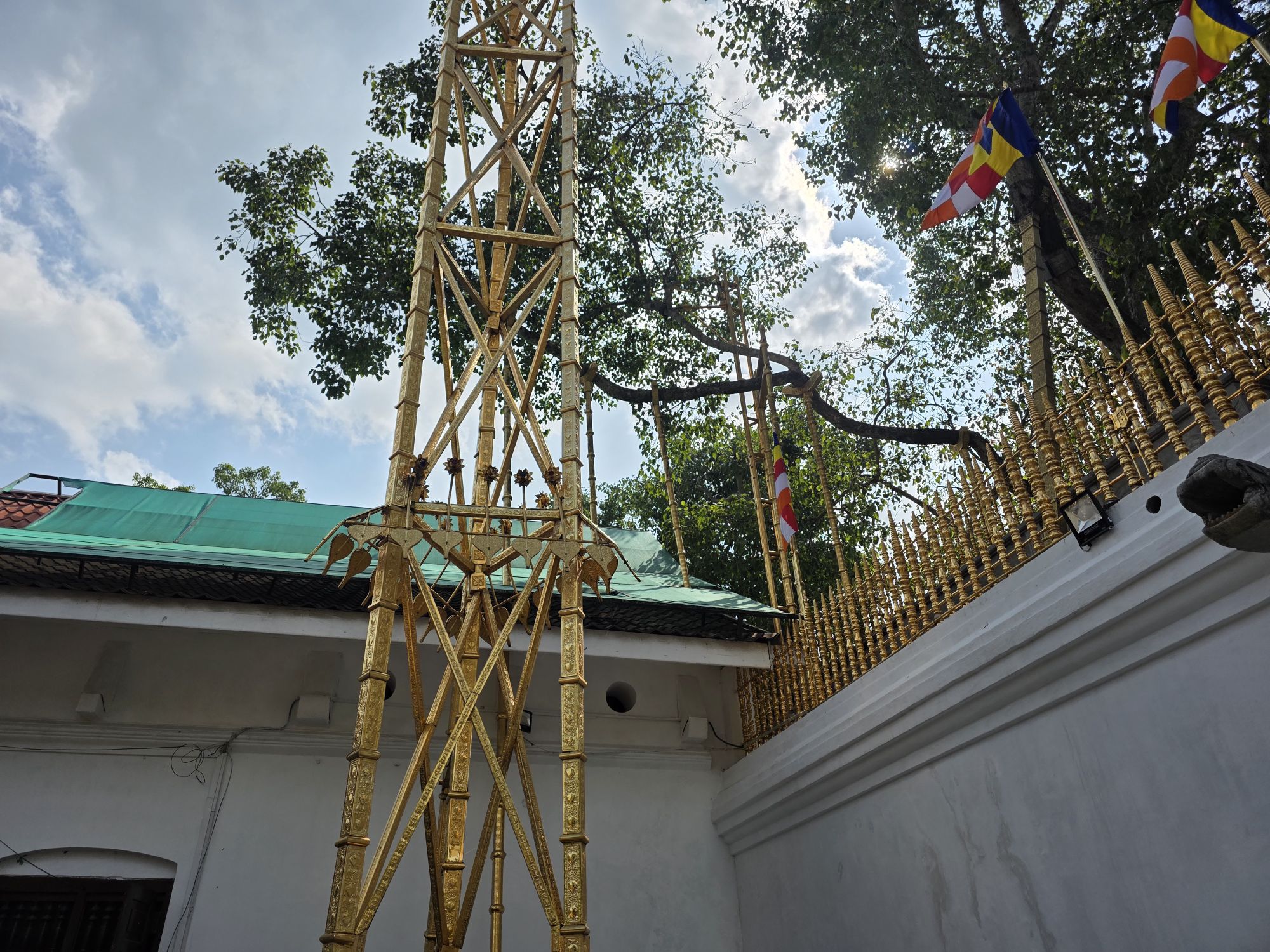
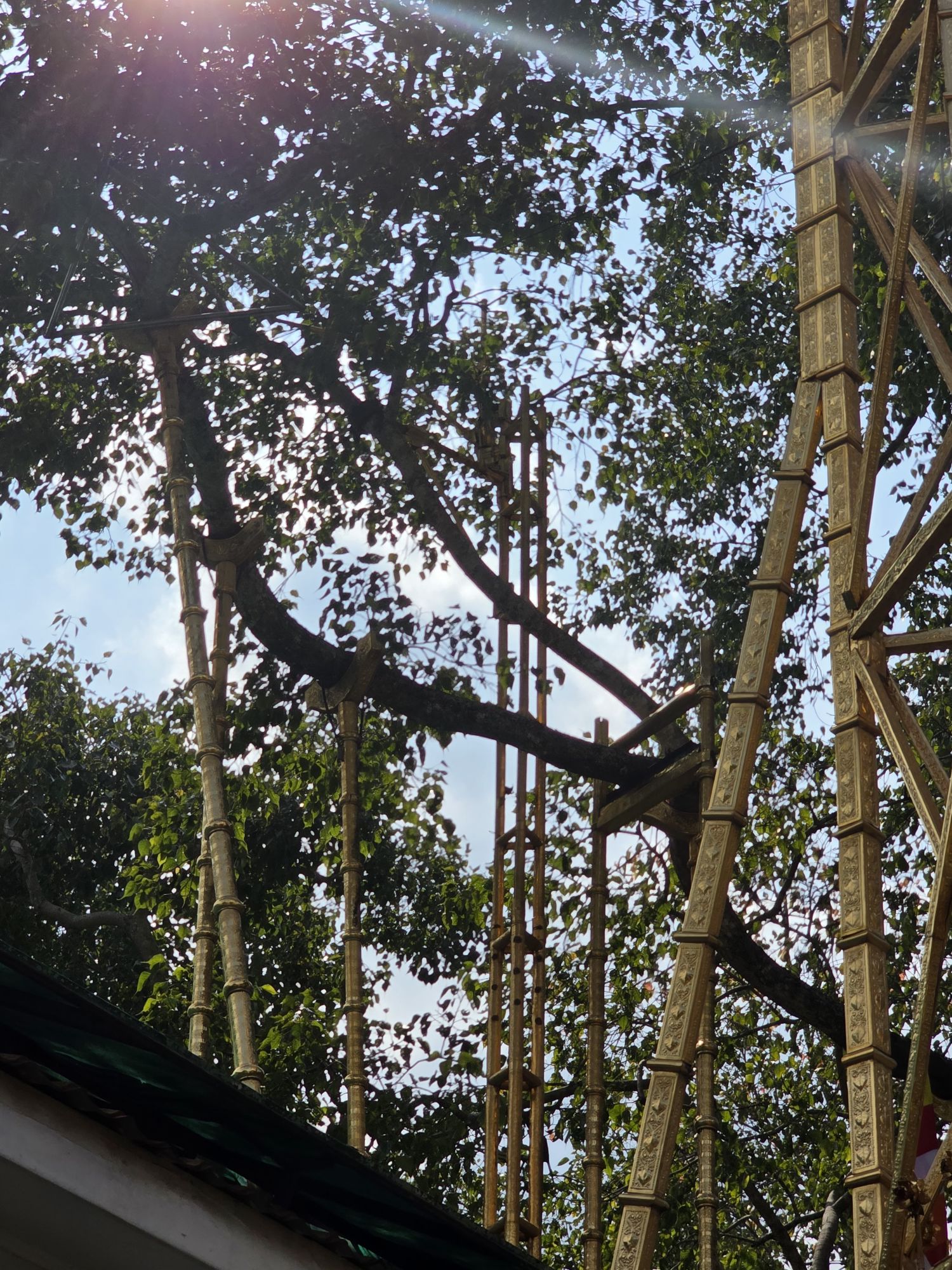
The Sri Maha Bodhi is a sacred fig tree grown from a branch of the original Bodhi tree in Bodh-Gaya. It was brought to Sri Lanka during the reign of King Devanampiya Tissa by nun Sanghamitta, (the daughter of emperor Ashoka of India) and planted in Anuradhapura. It is one of the oldest historically documented trees in the world.
Ruwanwelisaya
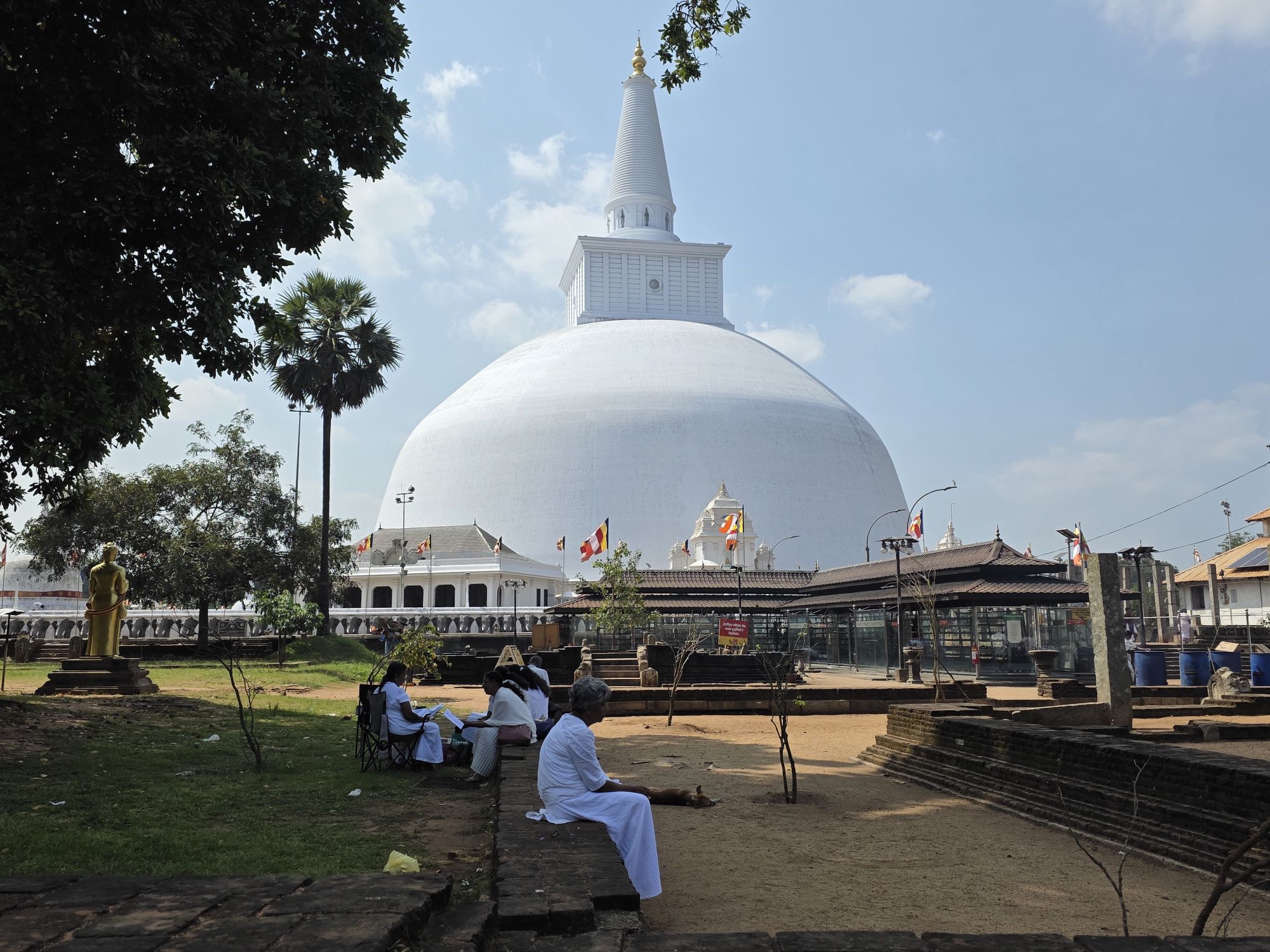
This magnificent white stupa was built by King Dutugamunu in the 2nd century BC. It is one of the largest and most sacred stupas in Sri Lanka and enshrines relics of the Buddha. The story goes that King Dutugamunu was on his deathbed and the stupa was not yet complete. So his brother and heir, King Saddha Tissa, covered the unfinished parts of the stupa in white cloth so that King Dutugamunu would die happy, that the stupa was complete.
Lovamahapaya
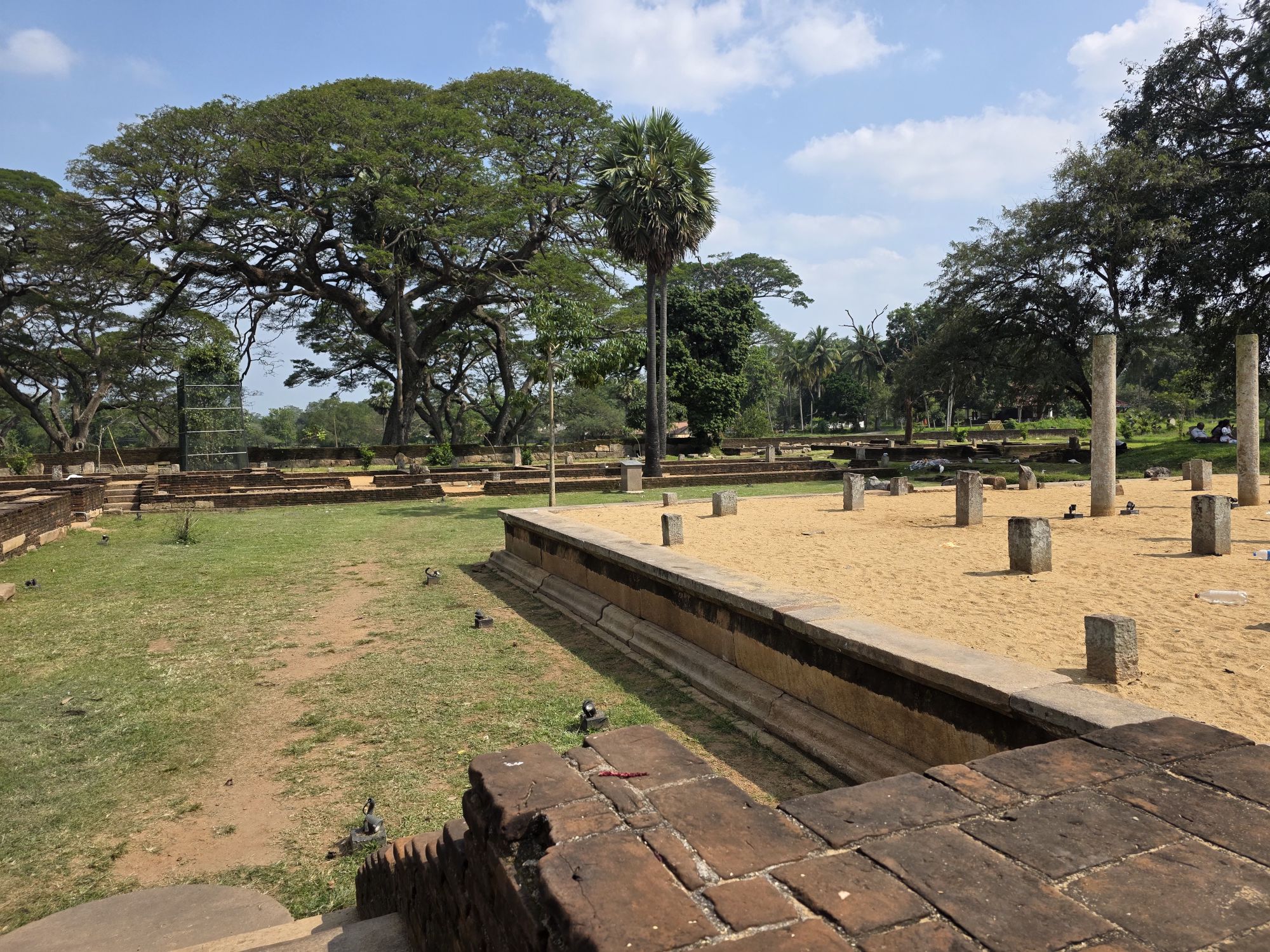
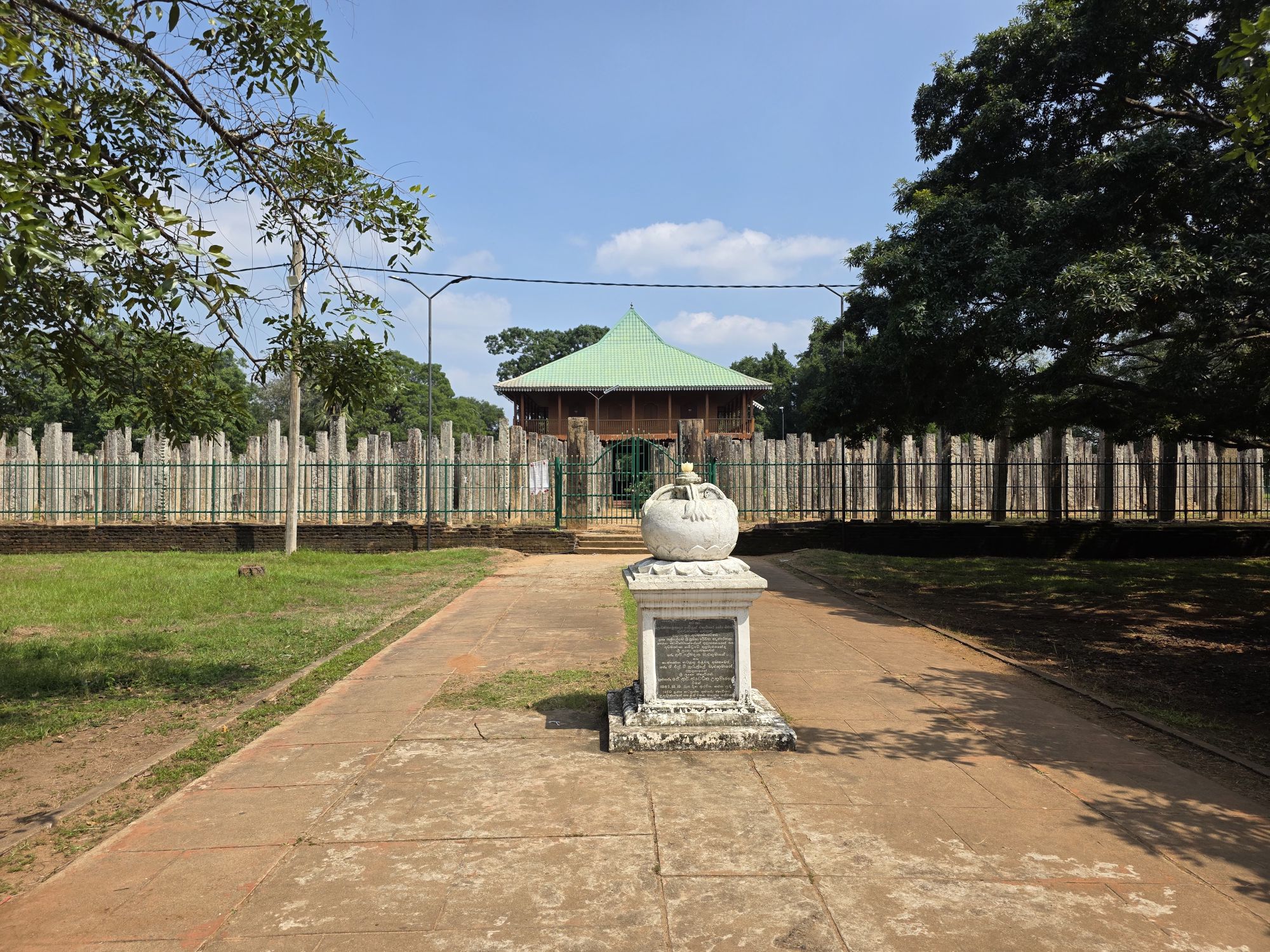
In between Sri Maha Bodhi and Ruwanwelisaya, is a monastic residence built by King Dutugamunu (2nd century BC). It is said to be a large building with 9 stories and 1000 rooms, with bronze roof tiles, giving it the name “Lovamahapaya” meaning “The Brazen Palace”. It burned down during the reign of Dutugamunu’s brother and heir King Saddha Tissa. It was rebuilt to 7 stories by King Saddha Tissa and renovated by subsequent rulers. Today, only the stone columns of the original building remains. There is also a modern small two storey building in the middle used by monks for Buddhist rituals.
Jetavanaramaya Stupa
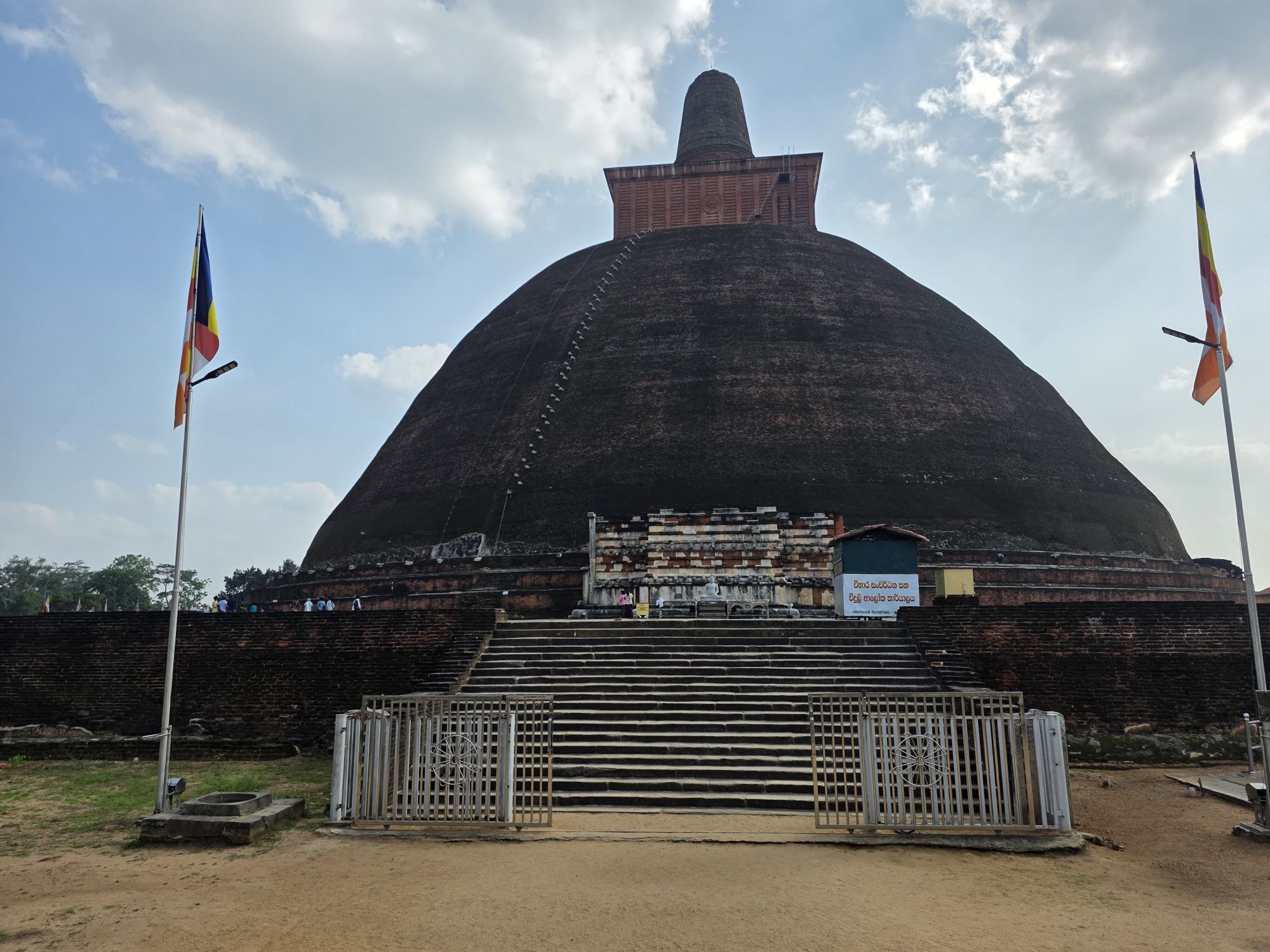
Constructed by King Mahasena in the 3rd century AD, Jetavanaramaya was once one of the tallest structures in the ancient world and is among the largest brick monuments ever built. It was said to be originally 400 feet tall (the Great Pyramids of Giza are ~450 feet tall). It was rebuilt by later rulers and was built in its current form (233 feet tall) by King Parakramabahu I in the 12th century.
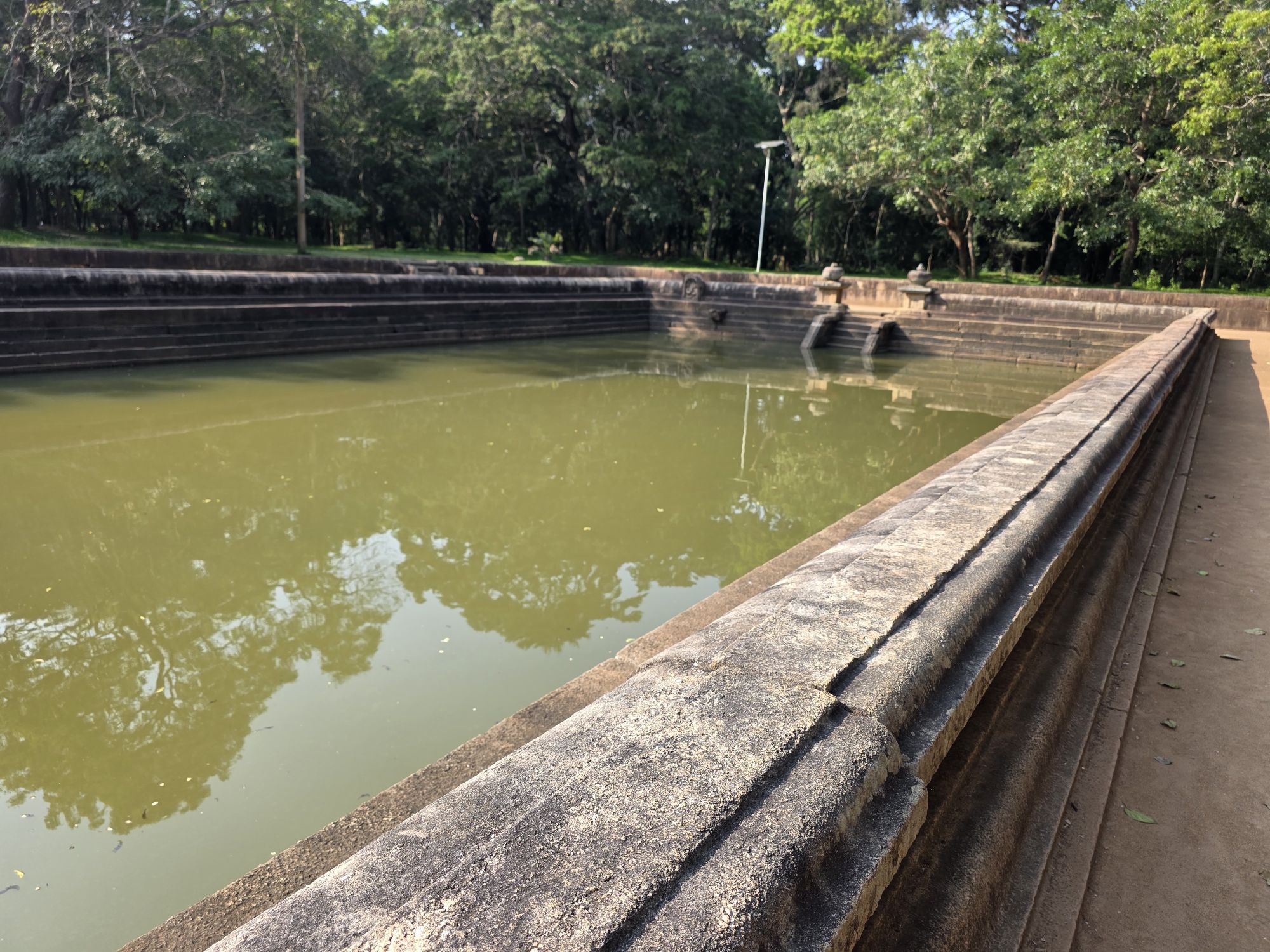
Kuttam Pokuna – The Twin Ponds
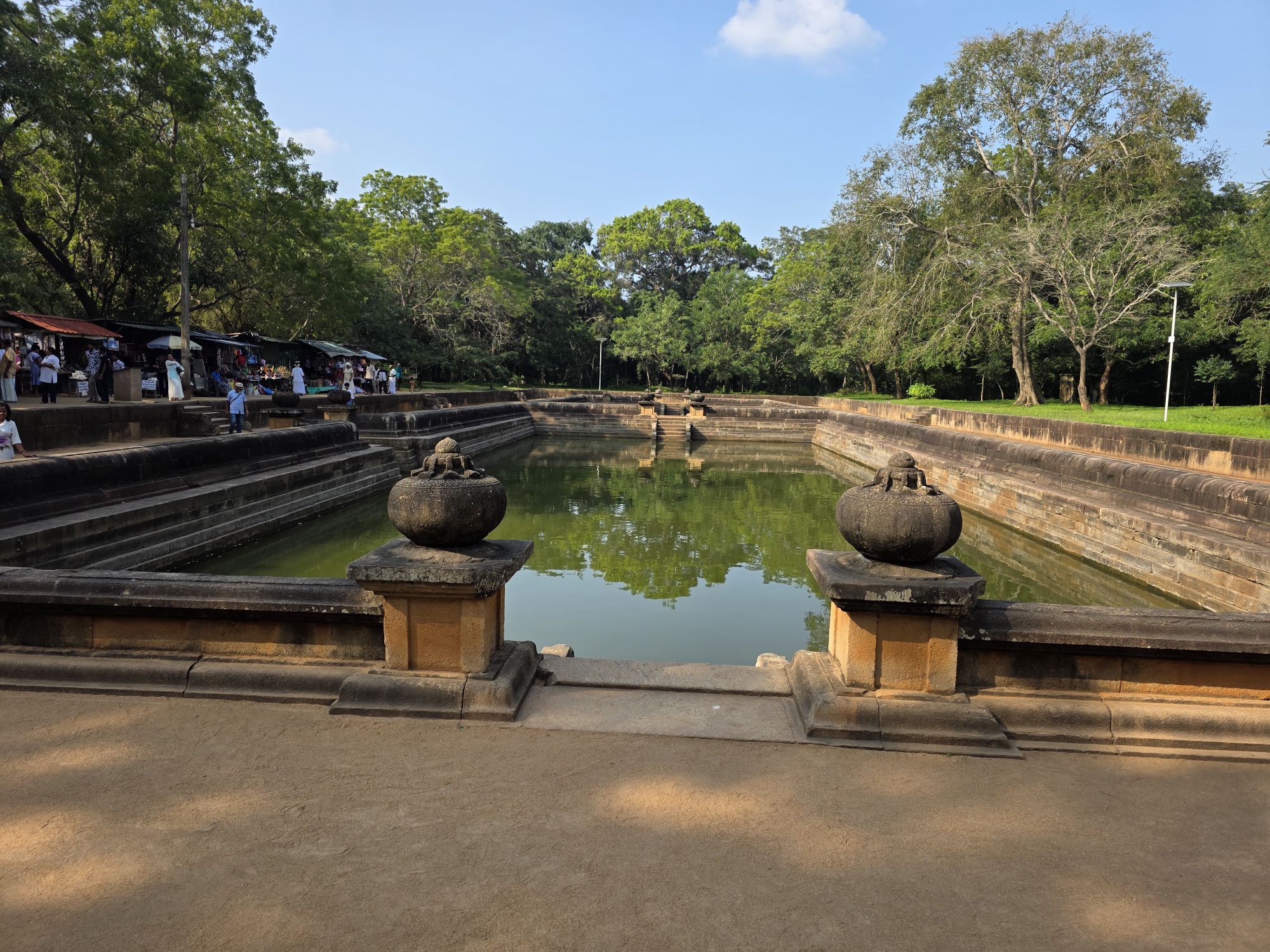
“Kuttam Pokuna” means “Twin Ponds.” The ponds were built within the Abhayagiri Vihara monastery for the use of Buddhist monks. They are believed to have been constructed during the reign of King Aggabodhi I (6th–7th century CE).
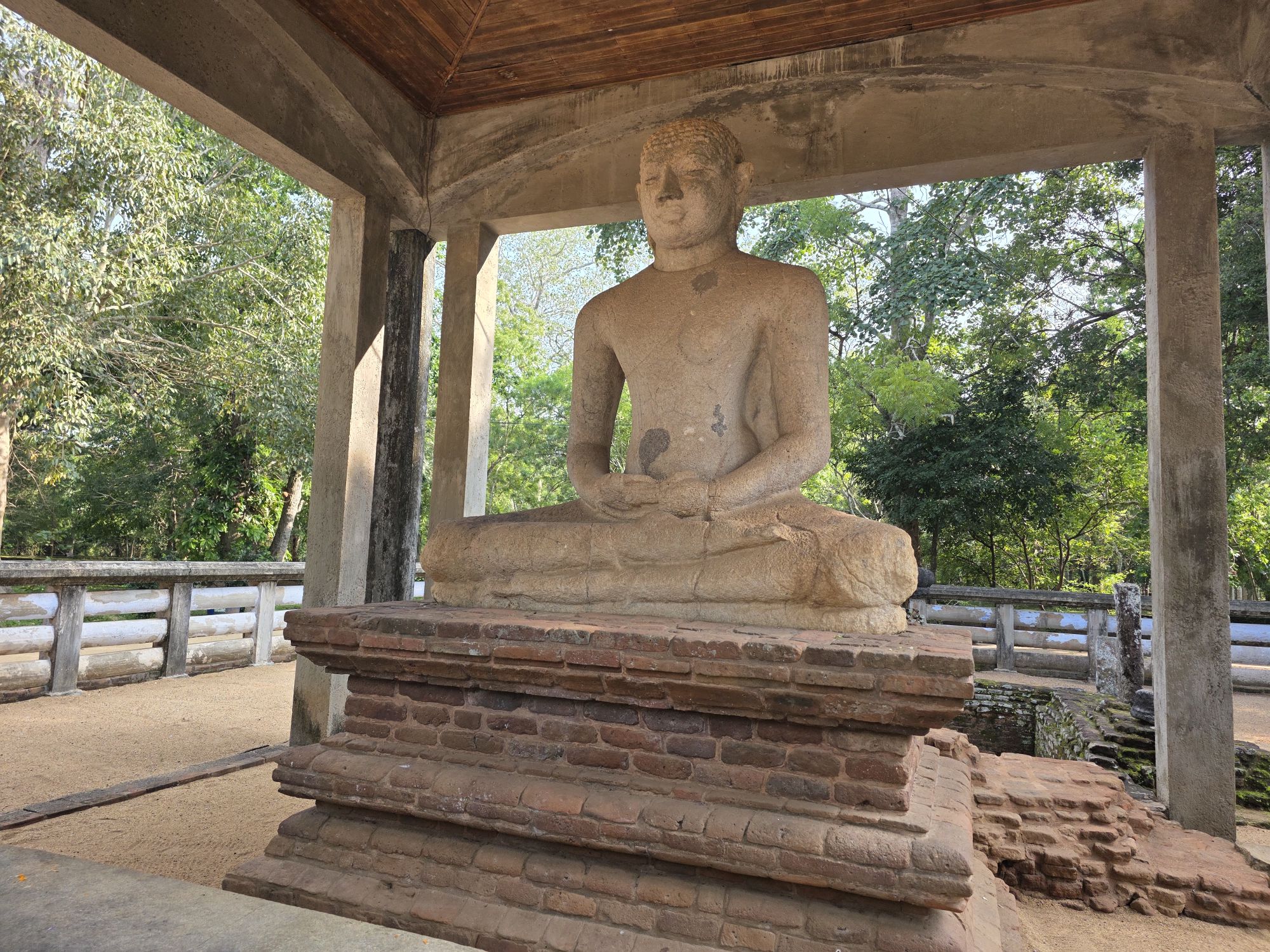
Samadhi Buddha Statue
Samadhi Statue is a famous statue of the Gautama Buddha located in Mahamewna Park in Anuradhapura. The statue depicts Buddha is deep meditation, or “Samadhi” and was created around the 4th century AD. It is carved from a single block of granite stone and is considered one of the finest examples of Buddhist sculpture in Sri Lanka.
Abhayagiri Stupa
Built by King Valagamba (1st century BC), this massive stupa became the centre of the Abhayagiri monastic complex, which was an important centre of Buddhist learning. The original stupa was said to be 400 feet tall, today it stands around ~245 feet tall.
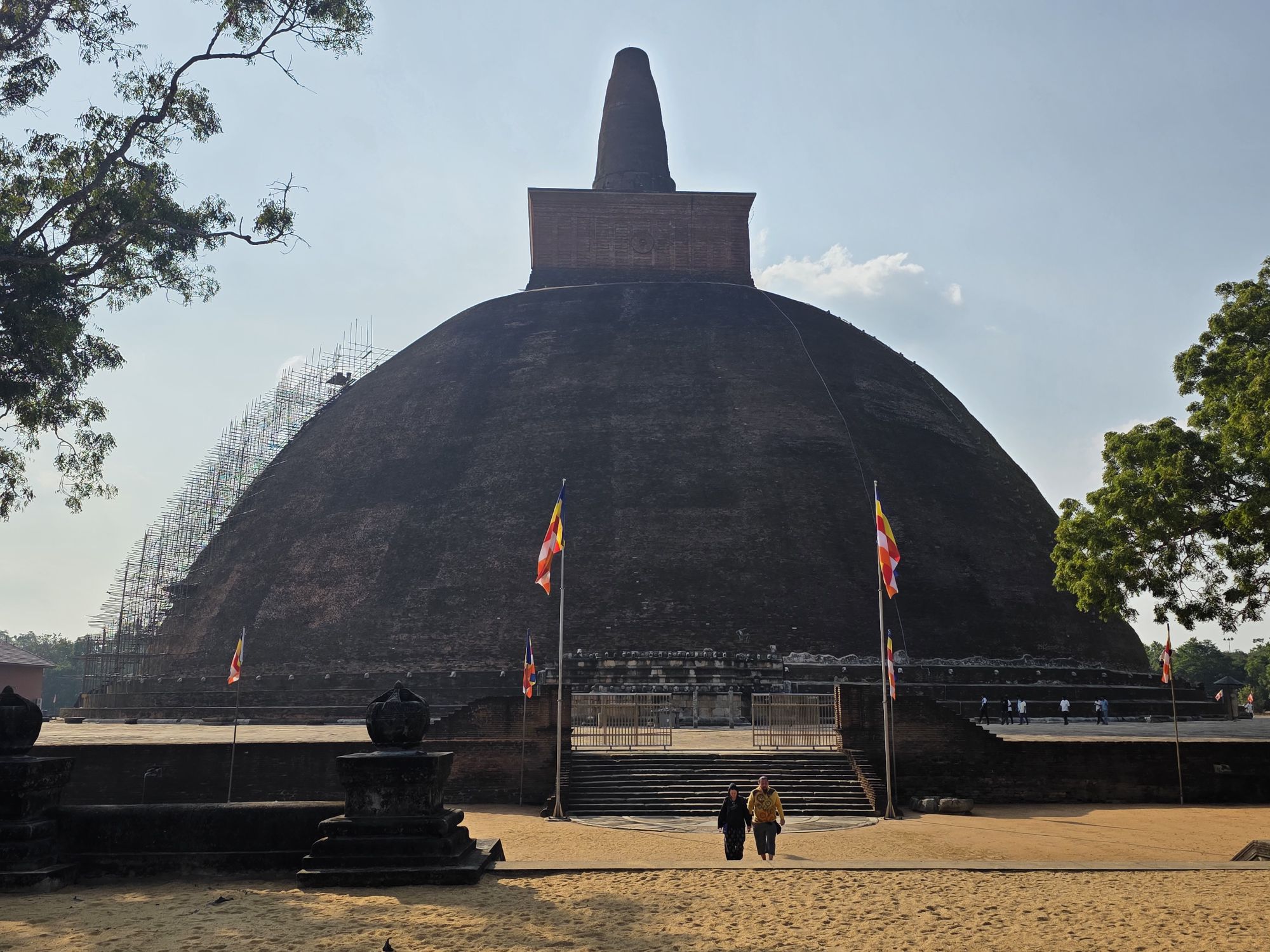
According to the Sri Lankan chronicles, soon after the King Valagamba came to the throne, he was attacked by Tamil invaders from Southern India. The King and his family were fleeing when a Jain monk called Giri raised the alarm to the invaders. The king ignored this comment, but when he regained his throne 14 years later, he razed Giri’s hermitage to the ground and build a massive stupa and a temple complex, and offered it to Mahathissa Thero who helped him regain the throne.
Sandakada Pahana
Sandakada Pahana (meaning “Moon Stone”) is a beautifully carved semicircular stone slab placed at the entrance of ancient temples in Anuradhapura (and many modern day temples in Sri Lanka). It symbolises the human journey through the cycle of Samsara, (birth, death and rebirth) toward Nirvana
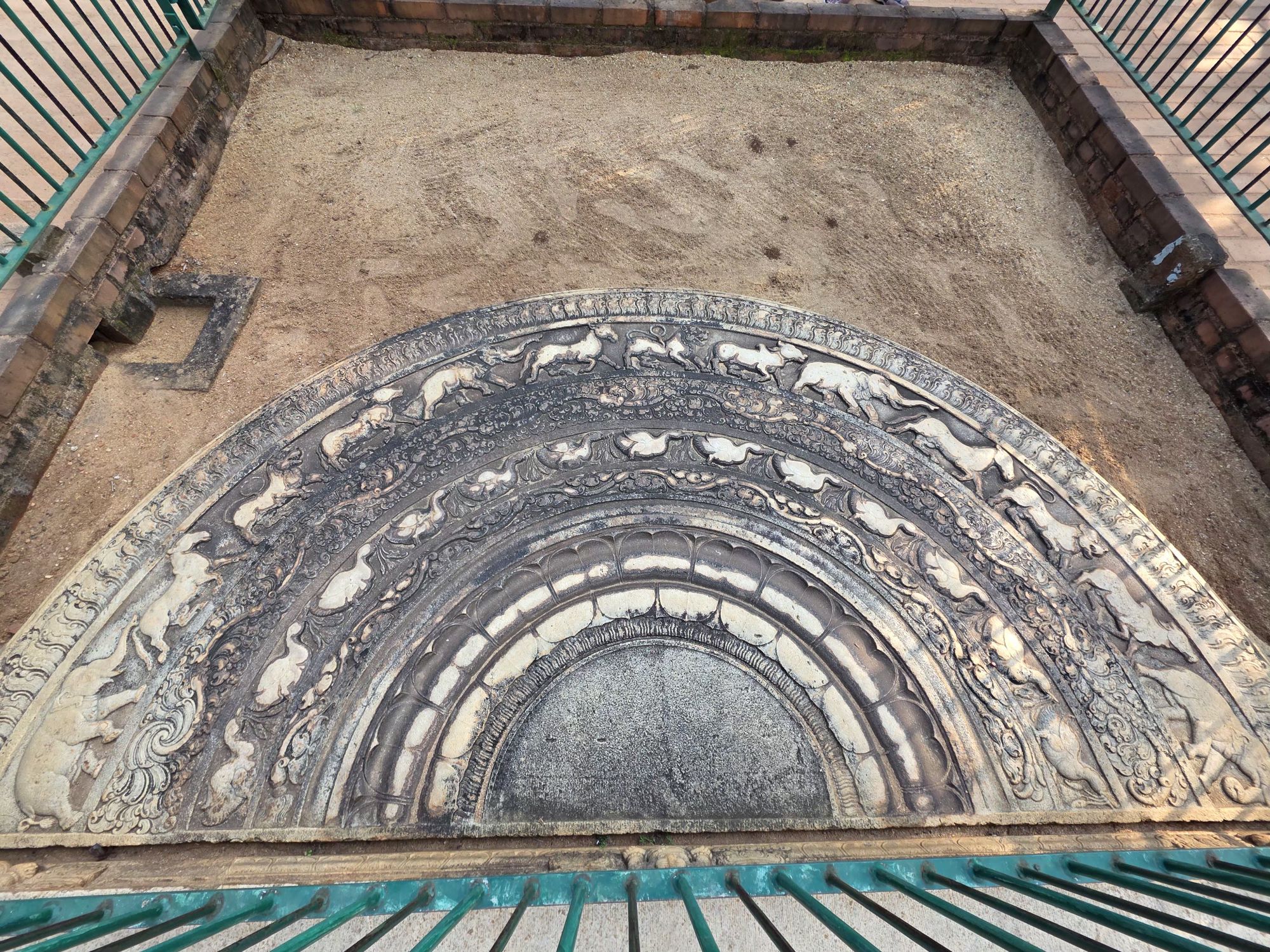
It acts as a sacred threshold separating the mundane world from the spiritual realm. There are many Moon Stones in Anuradhapura, but the best preserved example is said to be the one near Abhayagiri stupa.
Muragala (Guard Stone)
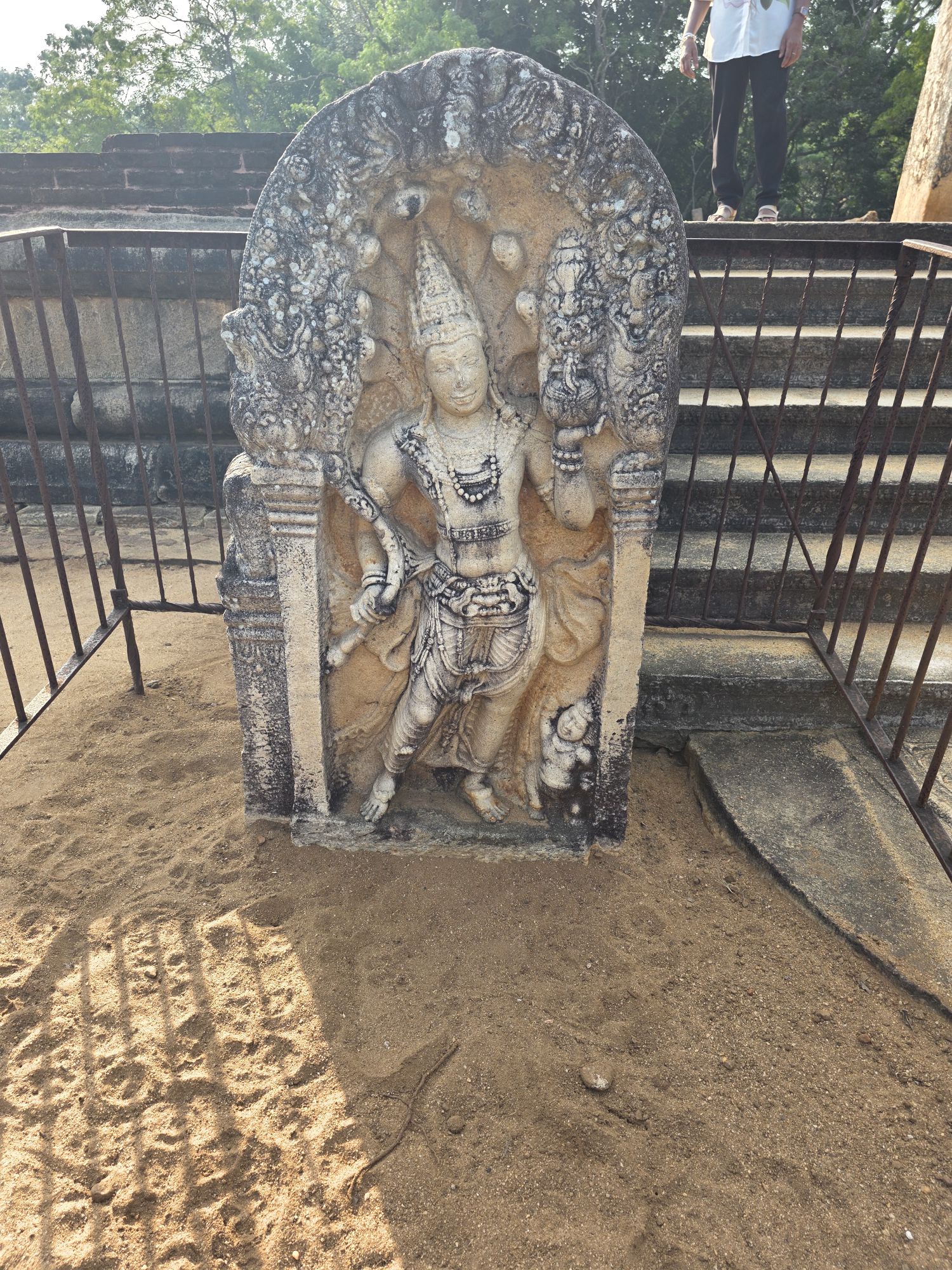
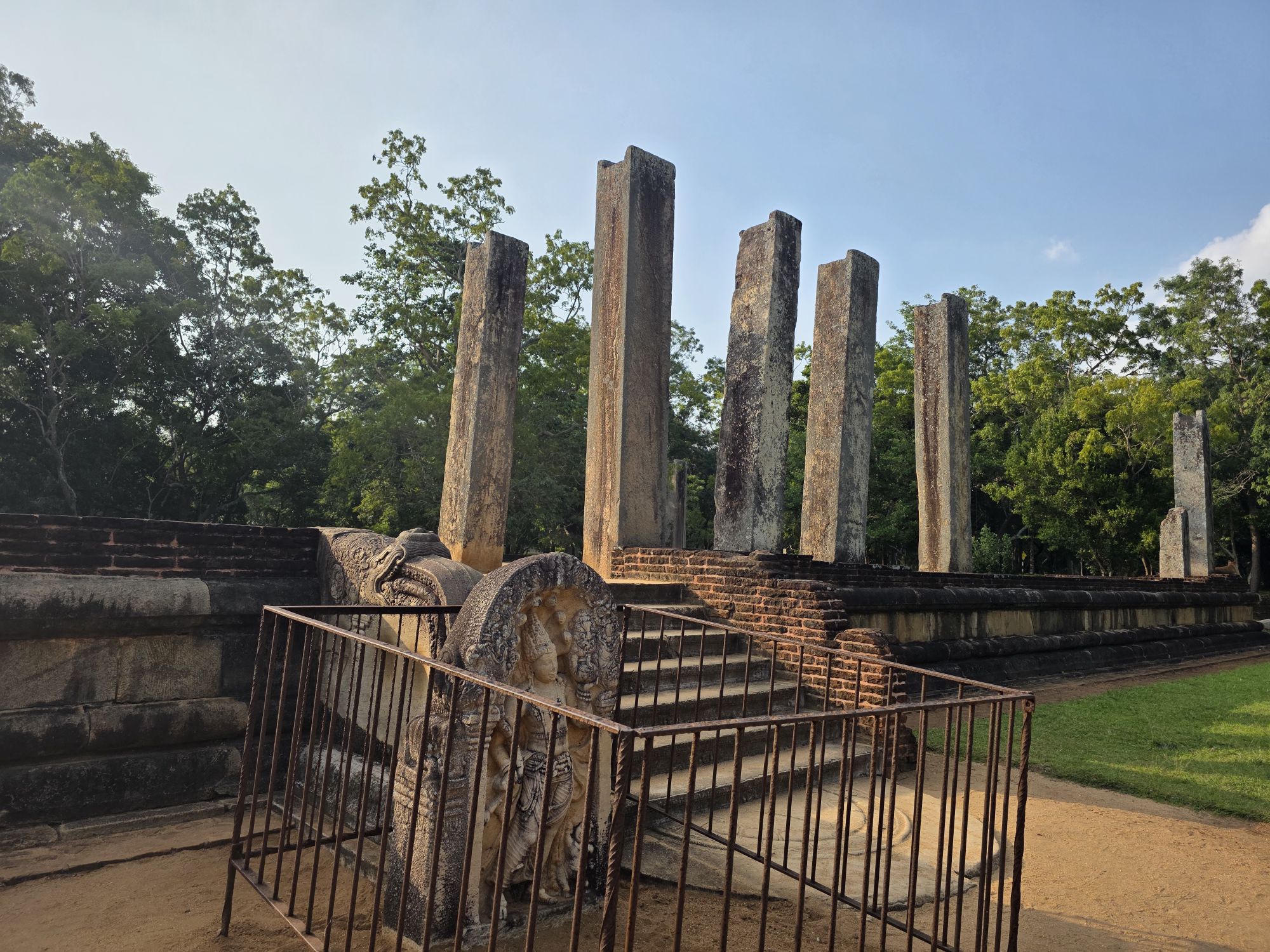
Like the Moon Stone, Muragala is a feature of ancient Sri Lankan Architecture and can be found at the entrance to important buildings. It usually contains a carving of a guardian deity. The best example Muragala in Anuradhapura can be found at the entrance to ‘Rathna Prasadaya’, a tower built by King Kanittha Tissa who ruled from 167 to 186 AD.
Lankaramaya Stupa
Lankaramaya is a smaller but historically important stupa believed to have been built during the reign of King Valagamba (1st century BC). It features stone pillars that once supported a protective roof.
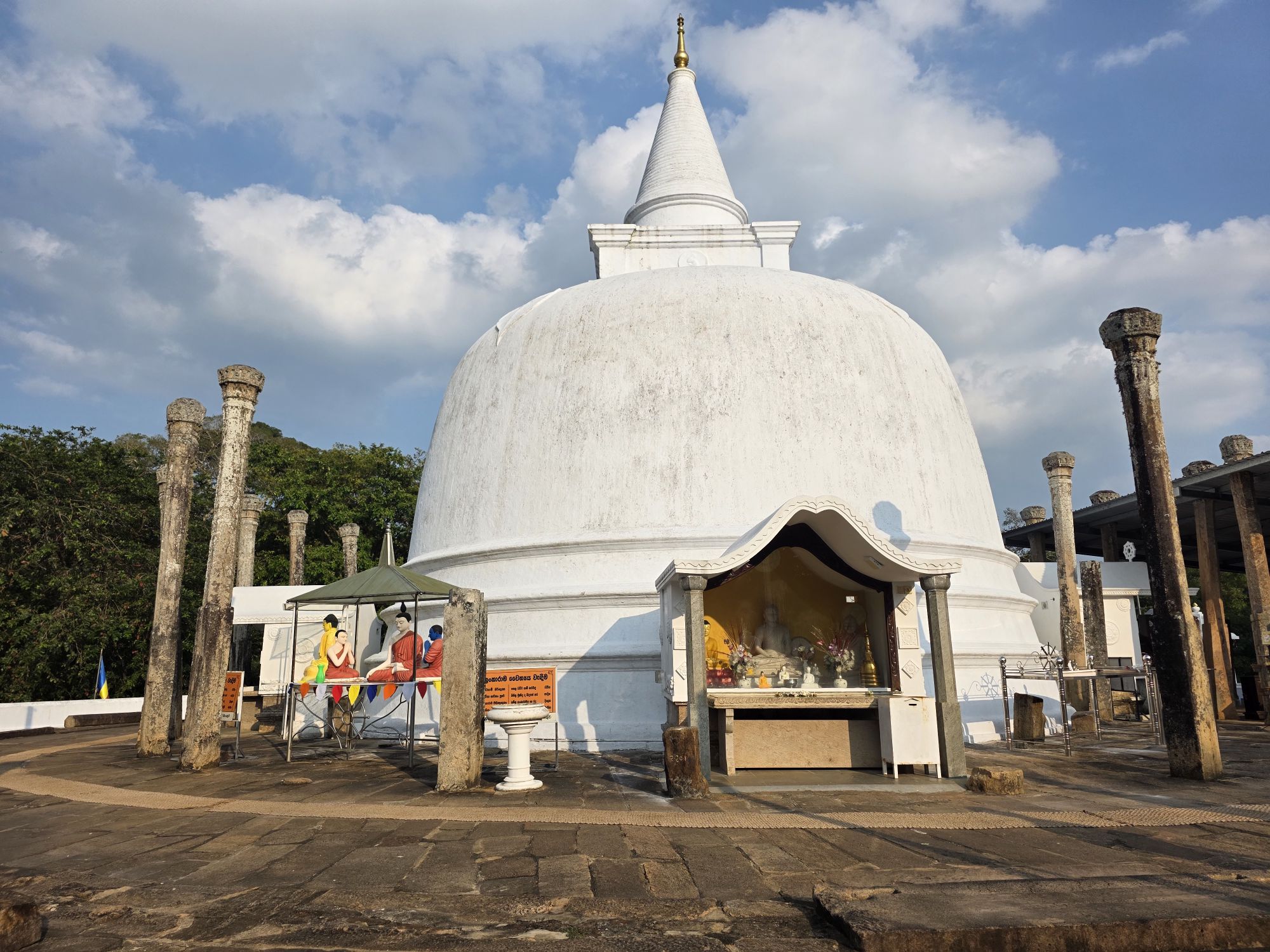
Some legends state the the stupa was built on one of the sites King Valagamba took refuge during his 14 years of exile. Another story is that it was originally called “Somaramaya” and was built in commemoration of Valagamba’s Queen Somawathi, who enabled the king’s escape by giving up her place in the Royal Wagon, when they were fleeing the invaders.
Thuparamaya Stupa
Thuparamaya is considered the first stupa built in Sri Lanka after the introduction of Buddhism. It was constructed by King Devanampiya Tissa (3rd century BC) and is believed to contain the Buddha’s right collarbone relic.
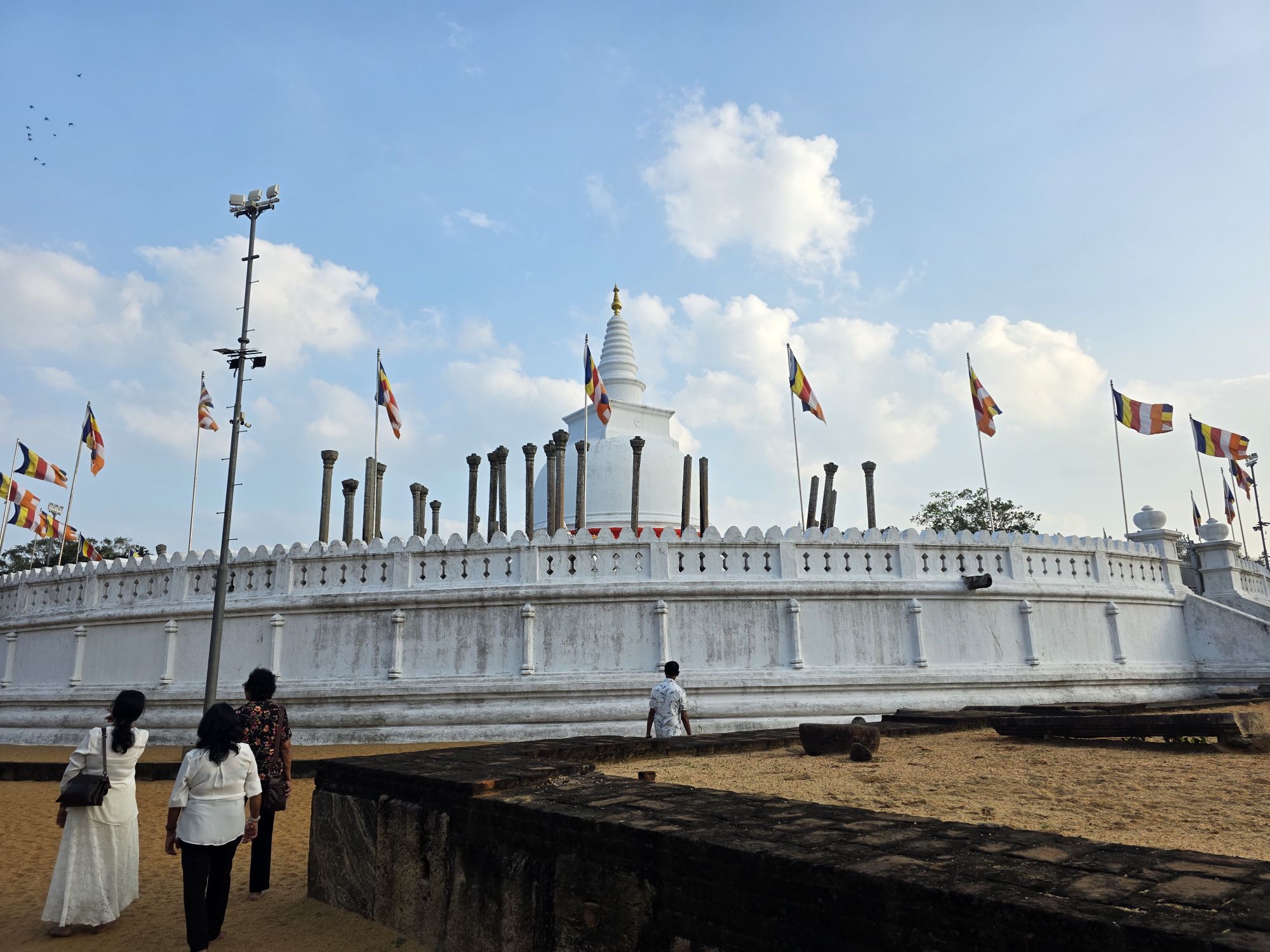
Originally, it is believed that 176 pillars supported this shrine and it would have had a wooden roof. Some of the remaining pillars can still be seen today.
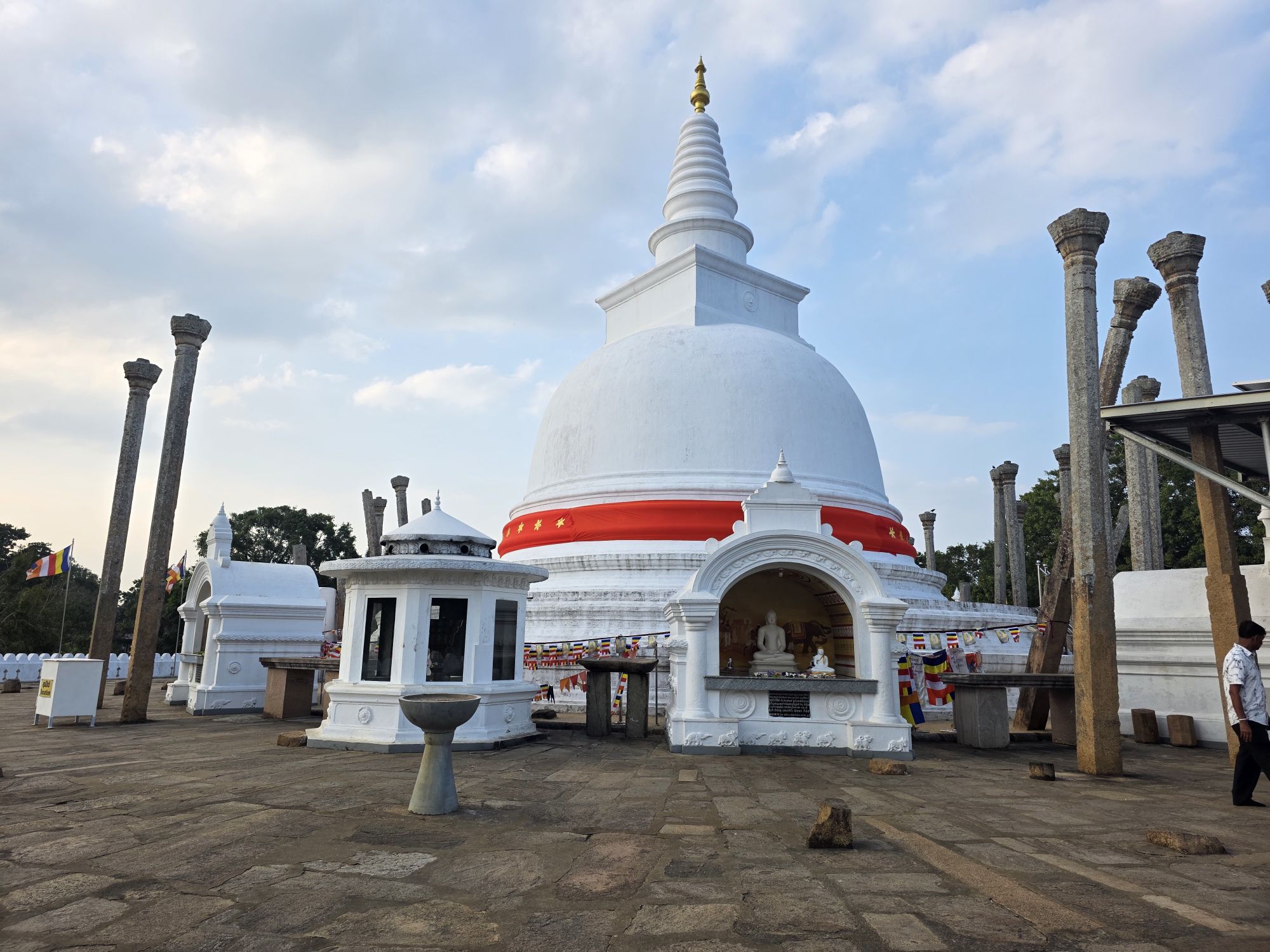
Mirisawetiya Stupa
Mirisawetiya Stupa was built by King Dutugamunu (2nd century BC). According to tradition, it was constructed at the place where the king left his sceptre momentarily, but it could not be moved.
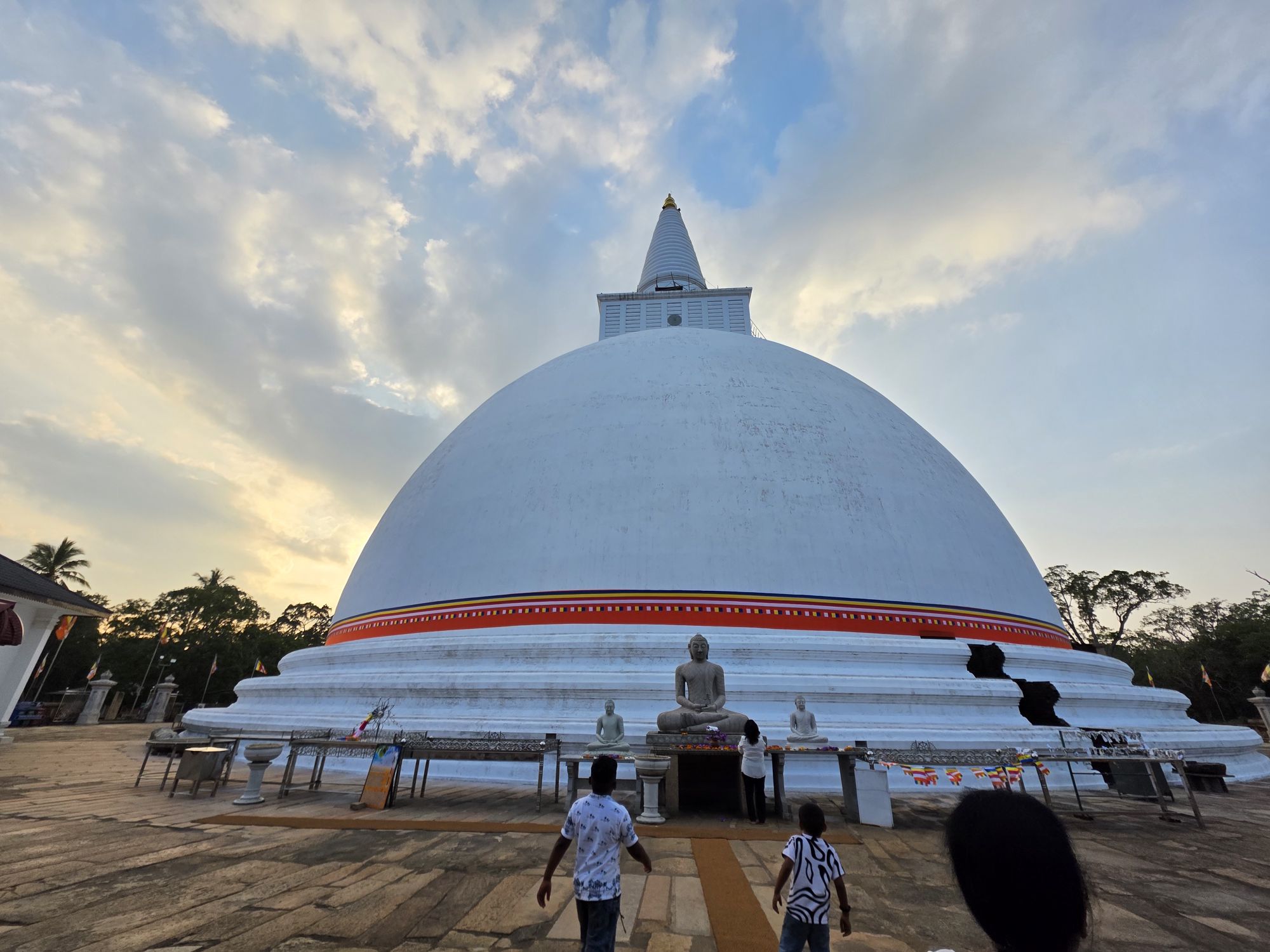
Isurumuniya Temple
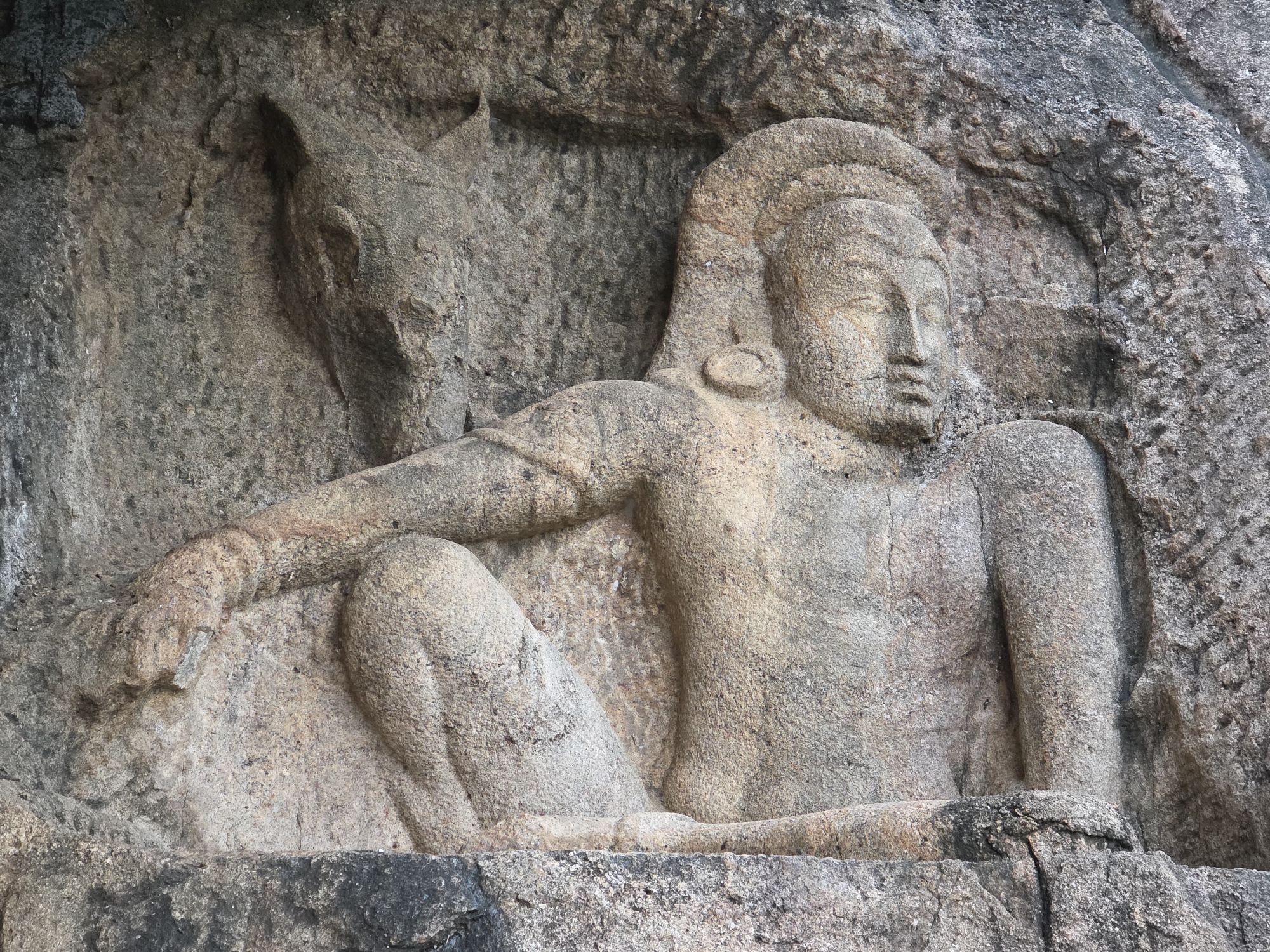
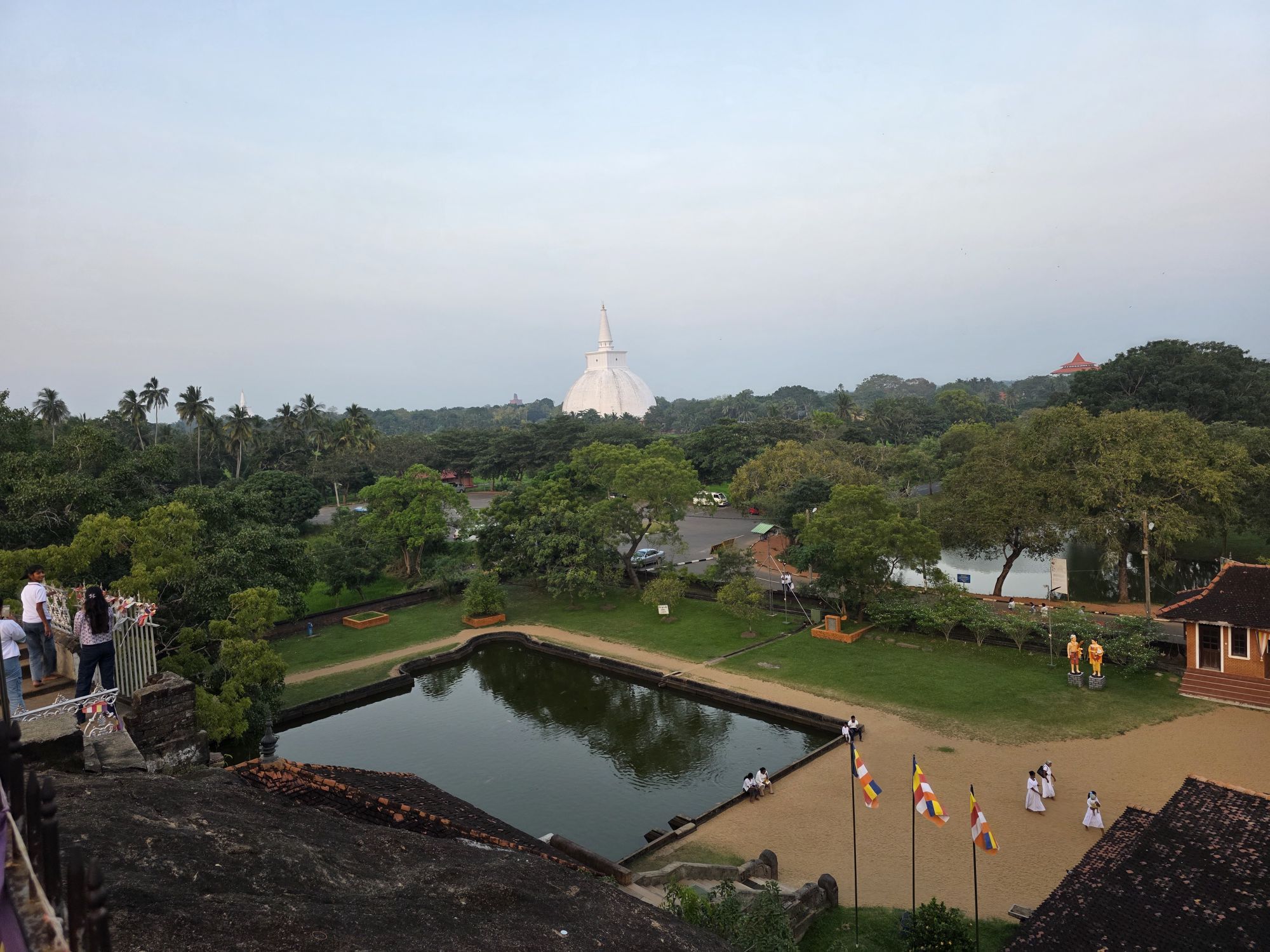
Isurumuniya Temple is a temple built during the reign of King Devanampiya Tissa in the 3rd century BC. The temple was constructed as a monastery for young monks of noble families. It is built near the “Tissa Wewa” reservoir, adding to its scenic beauty. The temple is built in and around a rocky outcrop, which gives in unusual architecture has compared to some of the other temples in Anuradhapura.
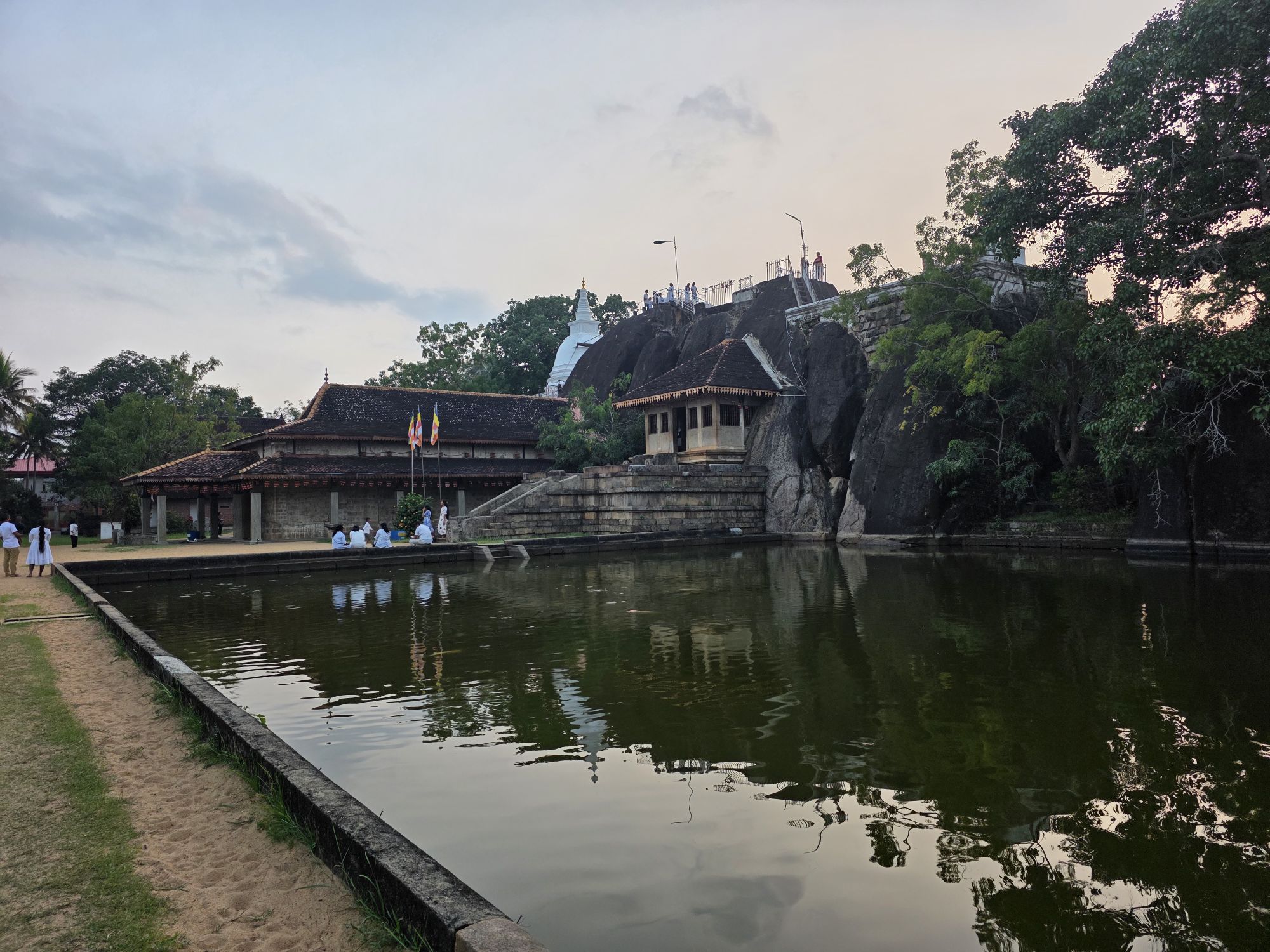
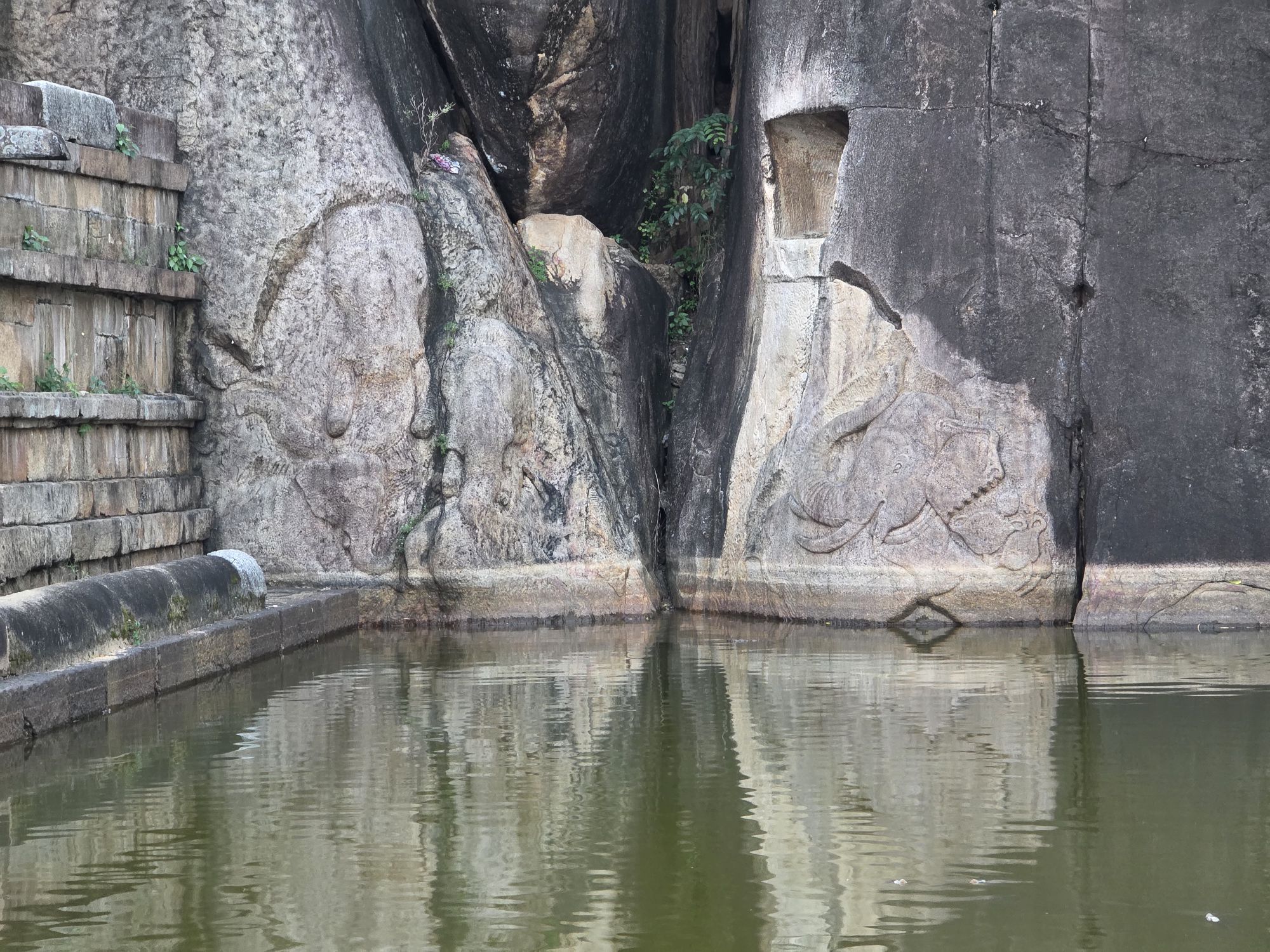
The temple is well known for several important rock carvings, including:
“Isurumuniya Lovers” (no photos allowed) – a famous carving of a man and woman believed to represent a royal couple, “bathing elephants” and “soldier and horse”.
Tip: If you are taking a guided tour of Anuradhapura ancient city, make sure the tour includes the above points (which are considered most important and sacred by the locals). It took us about 5 hours to cover everything.
Anuradhapura Accommodation
We stayed the night at the Abhaya Mandapa Hotel, situated on the edge of the reservoir “Abhaya Wewa”, thought to be the first man made reservoir in Sri Lanka. This small boutique hotel is an ideal accommodation for pilgrims visiting Anuradhapura, offering a serene environment conducive to reflection and contemplation. The staff members are notably friendly, ensuring that guests experience a welcoming atmosphere. The establishment serves vegetarian food exclusively, and alcohol is not served on the premises.
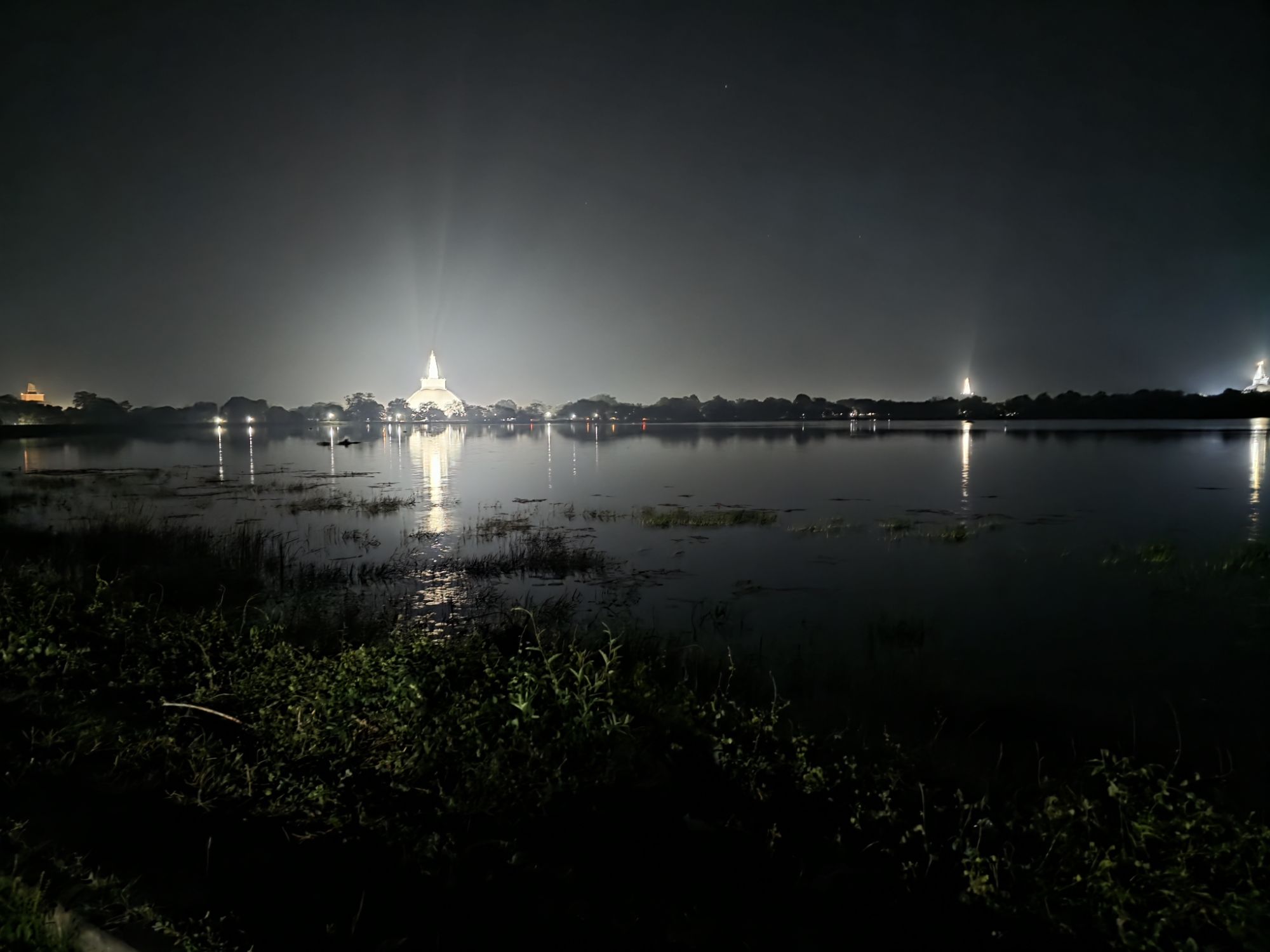
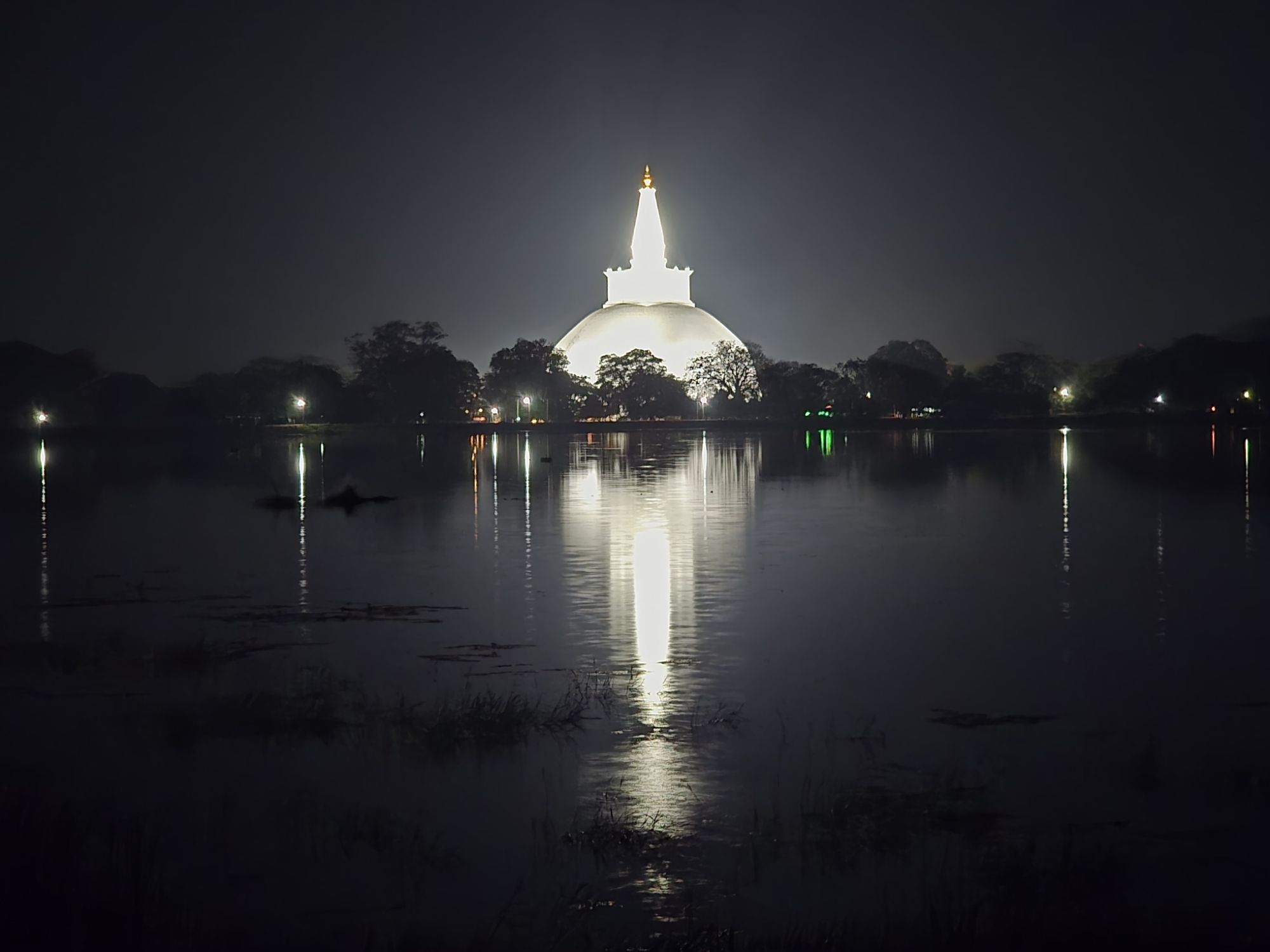
The best thing about the hotel, in my opinion, is the expansive views from the front; across the lake, several ancient monuments can be observed. At night, these structures are illuminated, presenting one of the most striking sights in the vicinity, exemplifying the rich historical tapestry of the area. You can also walk to Ruwanwelisaya along the reservoir, perfect if you want to take in the views in the evening.
If you would like a bit more luxurious accommodation (but a bit further away from the city), the Lake Forest Hotel also has good reviews.
As Sri Lanka’s capital for over 1500 years, Anuradhapura is packed full of ruins – if you have more time and want to see more, I would recommend the following:
- Ranmasu Uyana (Goldfish Park): Mahamewna Uyana was for the use of the monastics, whereas the Ranmasu Uyana was for the use of the Monarch and his family. It is smaller than the Mahamewna park, but contains a few ruins worth visiting, such as Royal Gardens and ponds, rock carvings and an ancient star map.
- Mihintale: About 25 minutes outside the central ruins, this mountain is thought to be the origin of Buddhism in Sri Lanka.
- Royal Palace of King Vijayabahu the 1st: One of the few surviving royal palaces from the Anuradhapura period
- Yathuru Pokuna (Key Pond) and Ath Pokuna (Elephant Pond): Most ancient irrigation systems
- Vessagiriya: This is ancient Buddhist forest monastery close to Isurumuniya built in the reign of King Devanampiya Tissa.
 Diary of a Tourist