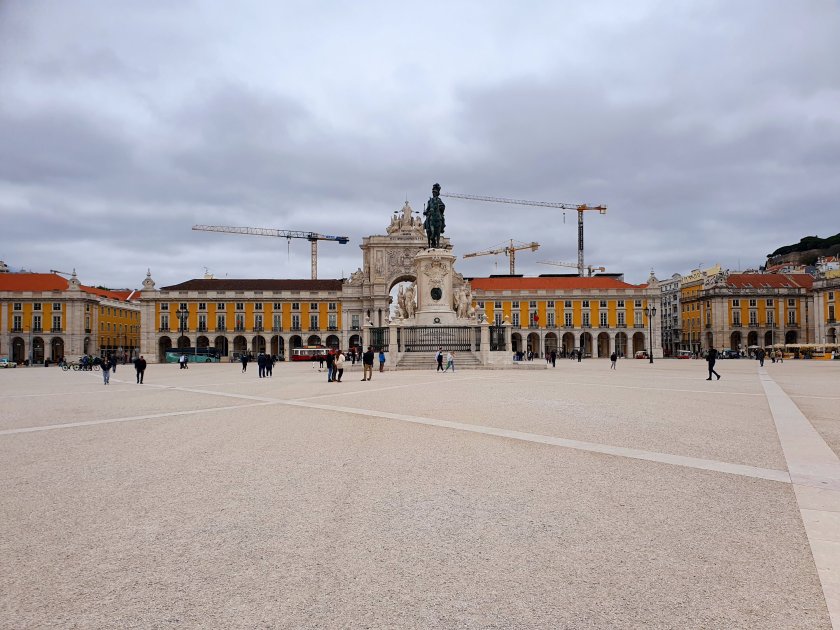
Where and When: Lisbon, Portugal, 02 April – 5 April 2022
This busy city break in early 2022 was a great way to get back into travelling after Covid. We spent a total of 4 days, including a day trip to Sintra.
Day 1 – Arrival and Walking Tour
1025: After a 4 am start in London Luton airport, we have arrived our destination, Lisbon. Although the landing is smooth, immigration takes over an hour.

1200: After a taxi ride to the hotel in the centre of Lisbon, we decided to drop off our bags and go for a little wander.

1315: As it is lunch time, we made a beeline for the Time Out Food Market in Lisbon. The food hall here has some of the best local cuisine.

As it was a Saturday, the food hall was very busy; but we managed to try two of the local specialities: “Pastéis de Bacalhau”, the Portuguese traditional cod fishcake and “Pastéis de nata”, the sweet egg custard tart, which originates from Lisbon.

Whilst waiting in the immigration queue at Lisbon airport, I managed to book ourselves on to a walking tour of Lisbon. We booked the tour via the Guruwalk – the idea is that the tour is “free”, but you pay the guide what you think the tour was worth. All the guides are local.

1430: The walking tour begins at Praça de Luís de Camões. Over the next 4 hours, the tour covers all the major attractions in Lisbon.
The tour begins in Barrio Alto. This neighbourhood is the hub of Lisbon nightlife, and “Fado” music. Fado is Portuguese folk music, famous for its mournful ballads on subjects such as sea voyages, sailors and lost loves. The soulful singing is accompanied by string instruments, most notably the Portuguese violin.
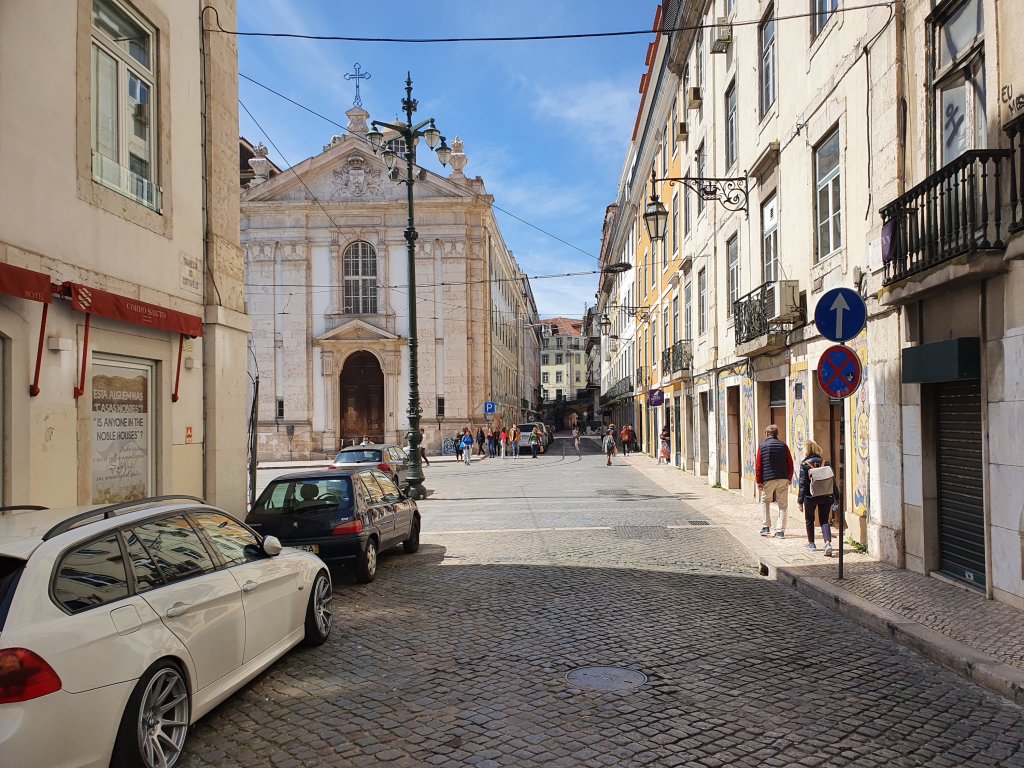
Lisbon is built on 7 hills, and is the second oldest capital in Europe (after Athens). As the city is built on hills, walking does mean a lot of climbing up and down.
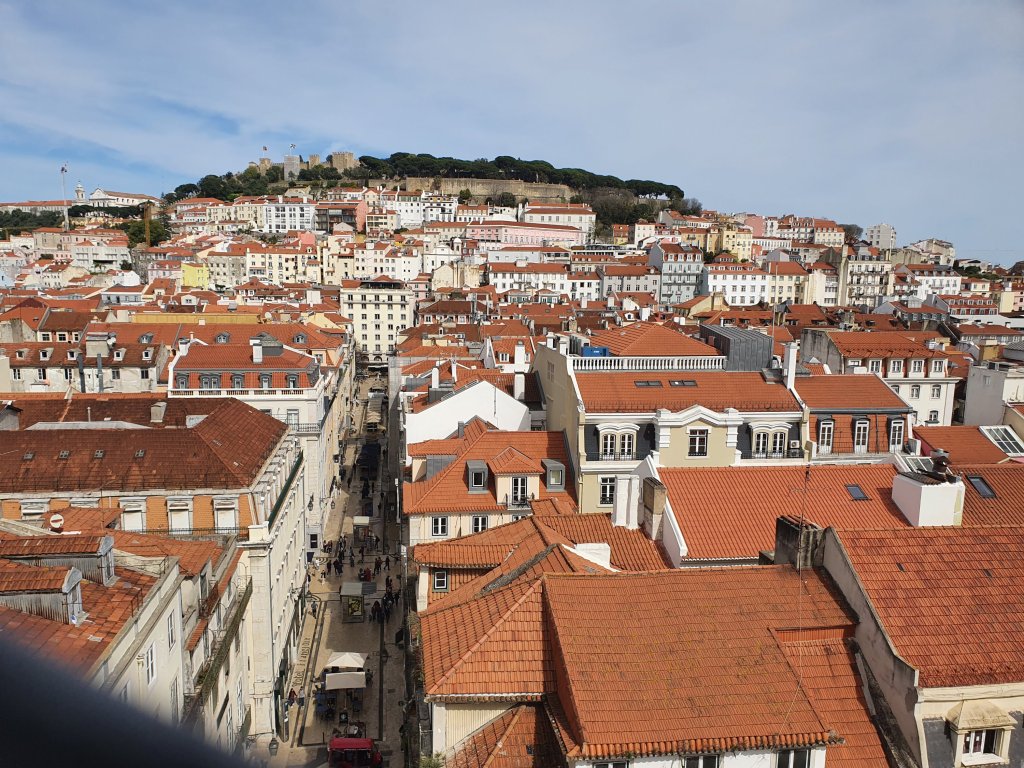
Next stop is at the ruins of Carmo Convent. This is located on top of a hill, so there are great views across Lisbon from here. From here, you can also take the Elevado de Santa Justa (the Santa Justa Elevator) down 45m to the lower streets of Baxia district.

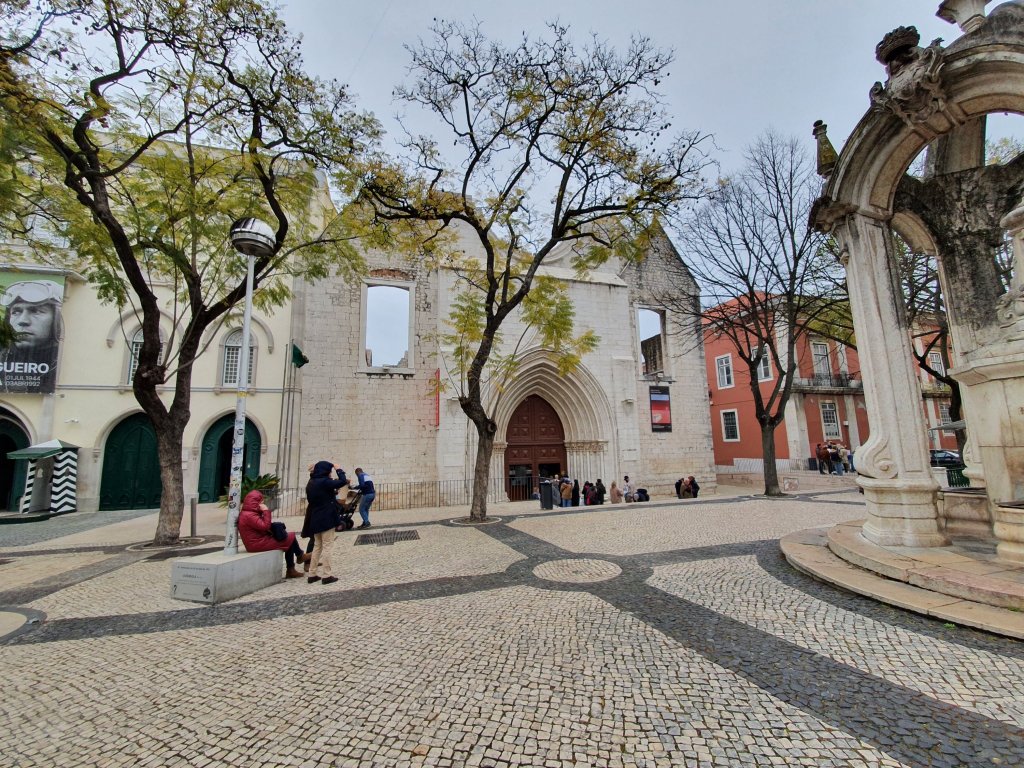
Next we are at The Santa Domingos Church. This is a Catholic Church in the centre of Lisbon and dates back to the 13th century. It has a rather unsavoury history, being the site of the Catholic inquisition and the Lisbon massacare of New Christians.
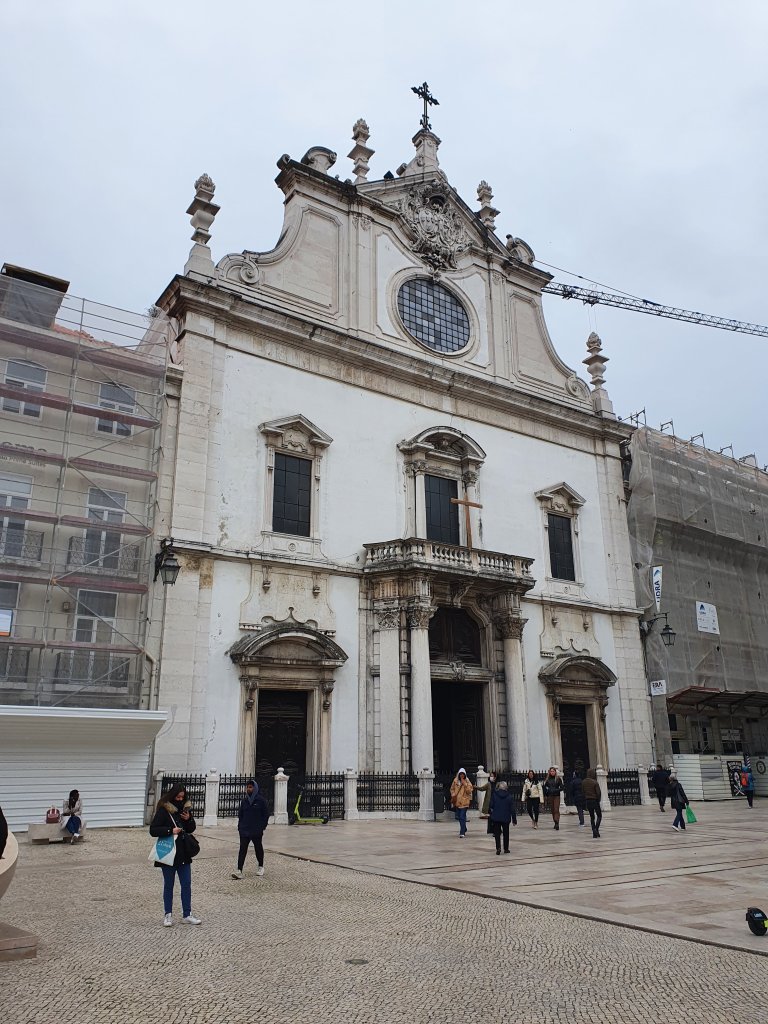
The church was damaged by several earthquakes over the centuries and a fire in 1959, signs of which can still be seen today inside the church.

After the church, the tour heads down Rue Augusta, the main shopping promenade of Lisbon, which ends at the Rue Augusta Arch (more on this later). On the other side of the arch is the Praca do Comercio. This is the central plaza in Lisbon – it was built during the restoration of Lisbon after the 1755 earthquake. It is one of the largest urban squares in Europe and is surrounded by many government institutions.

Next, we are off to Alfama; the oldest and most characterful district of Lisbon. It is a maze of narrow streets and traditional houses that are located in the slopes of a steep hill, from the banks of the Rio Tejo up to the São Jorge castle. Historically, this part of the city was home to the poorest residents of Lisbon.
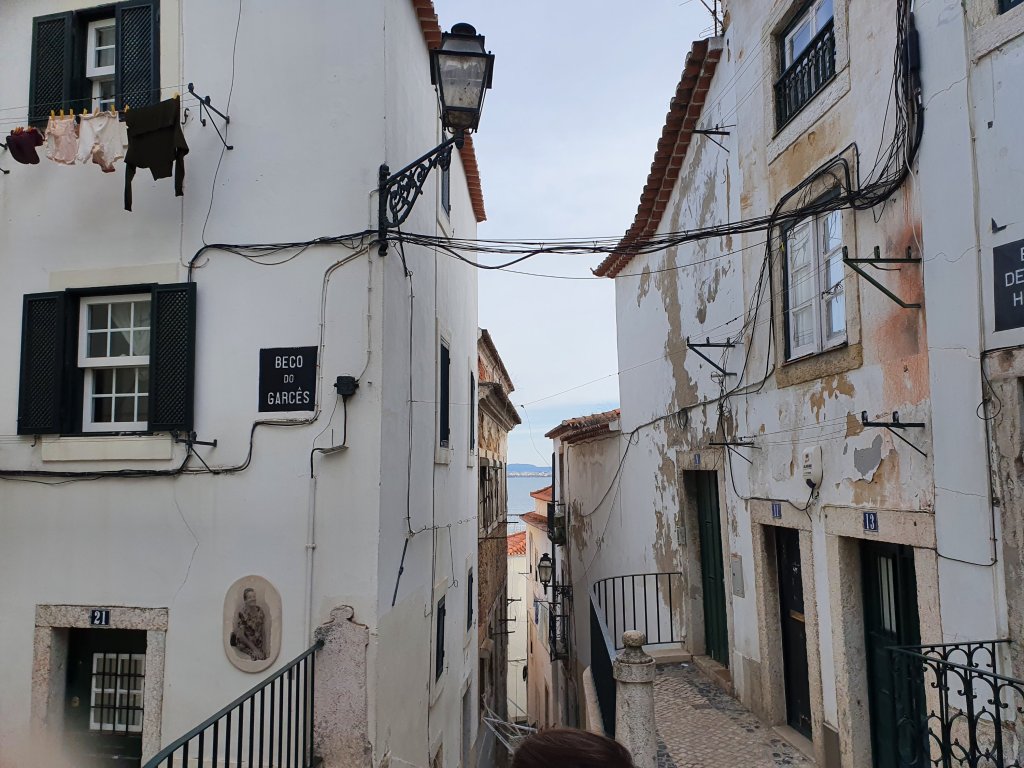

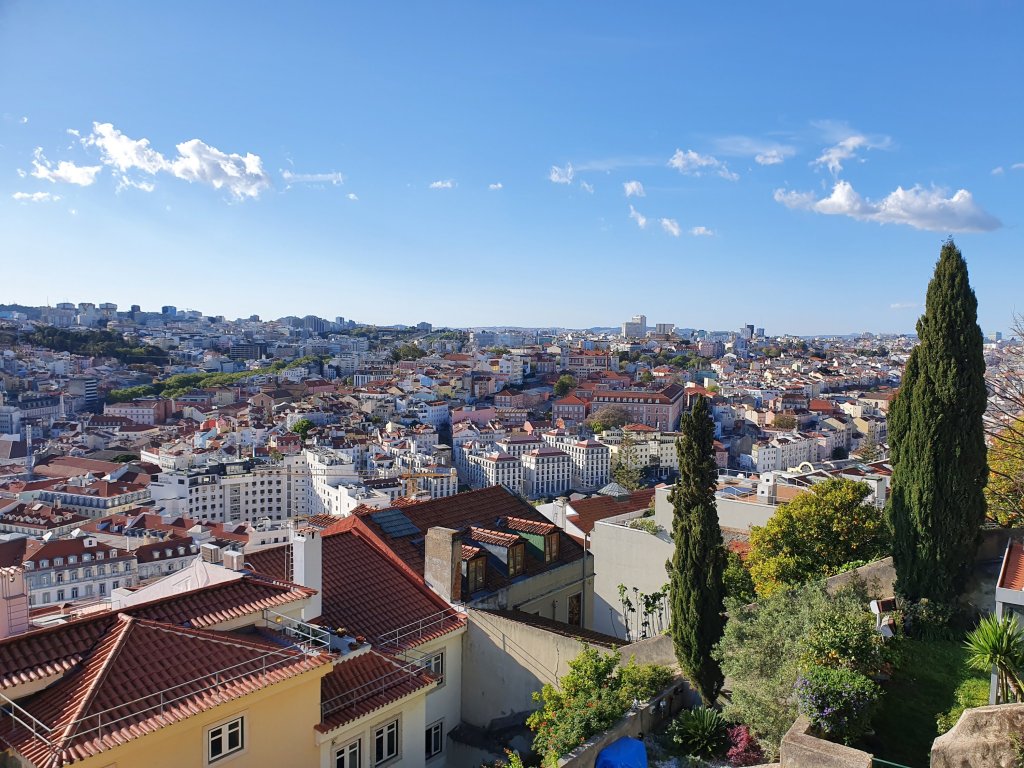
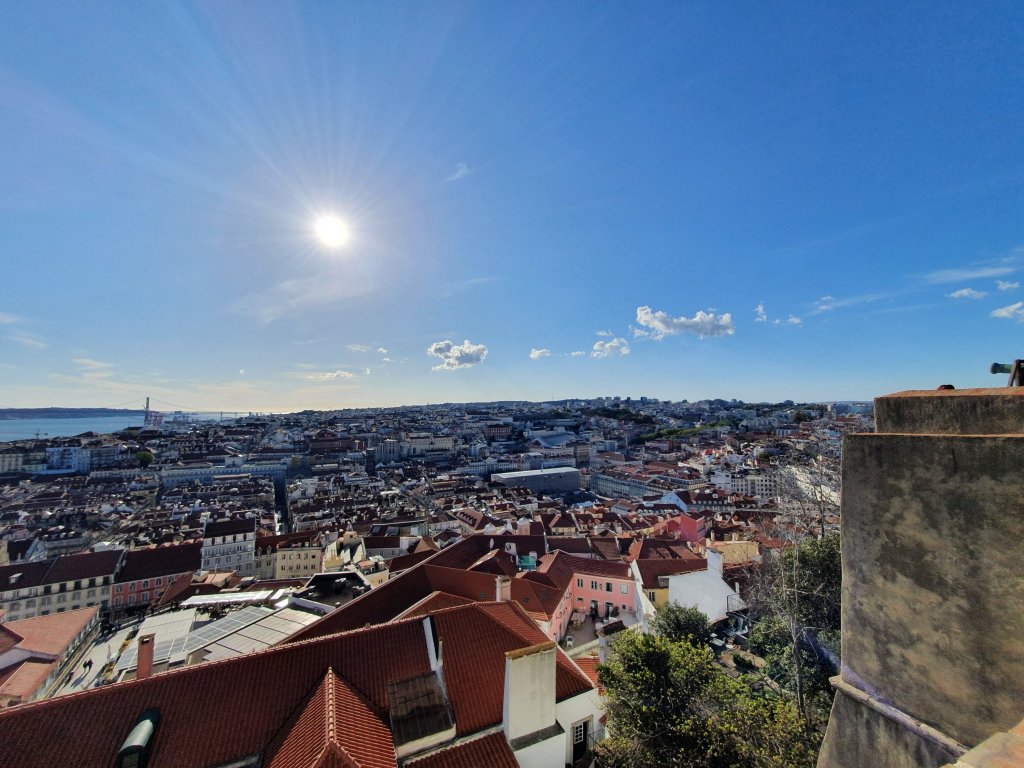
1830: The walking tour ends at Miradouro das Portas do Sol in Alfama. This is a viewpoint overlooking the patchwork of orange roofs and whitewashed houses extending down to the Lisbon cruise terminal.

Tip: I would highly recommend a walking tour of Lisbon. In 4 hours our tour covered many of the best sights in the city. There was also a refreshment break at Rue Augusta where we got a free Pateis de nata each.
Given the narrow streets of Lisbon, I think you can see a lot more by walking compared to a traditional tour bus. Plus, you can work-up an appetite for a thoroughly delicious dinner afterwards!
1930: Head back to hotel and dinner at a local restaurant – the food at the restaurant we tried was simple (meat or fish accompanied by vegetables), but delicious and inexpensive.
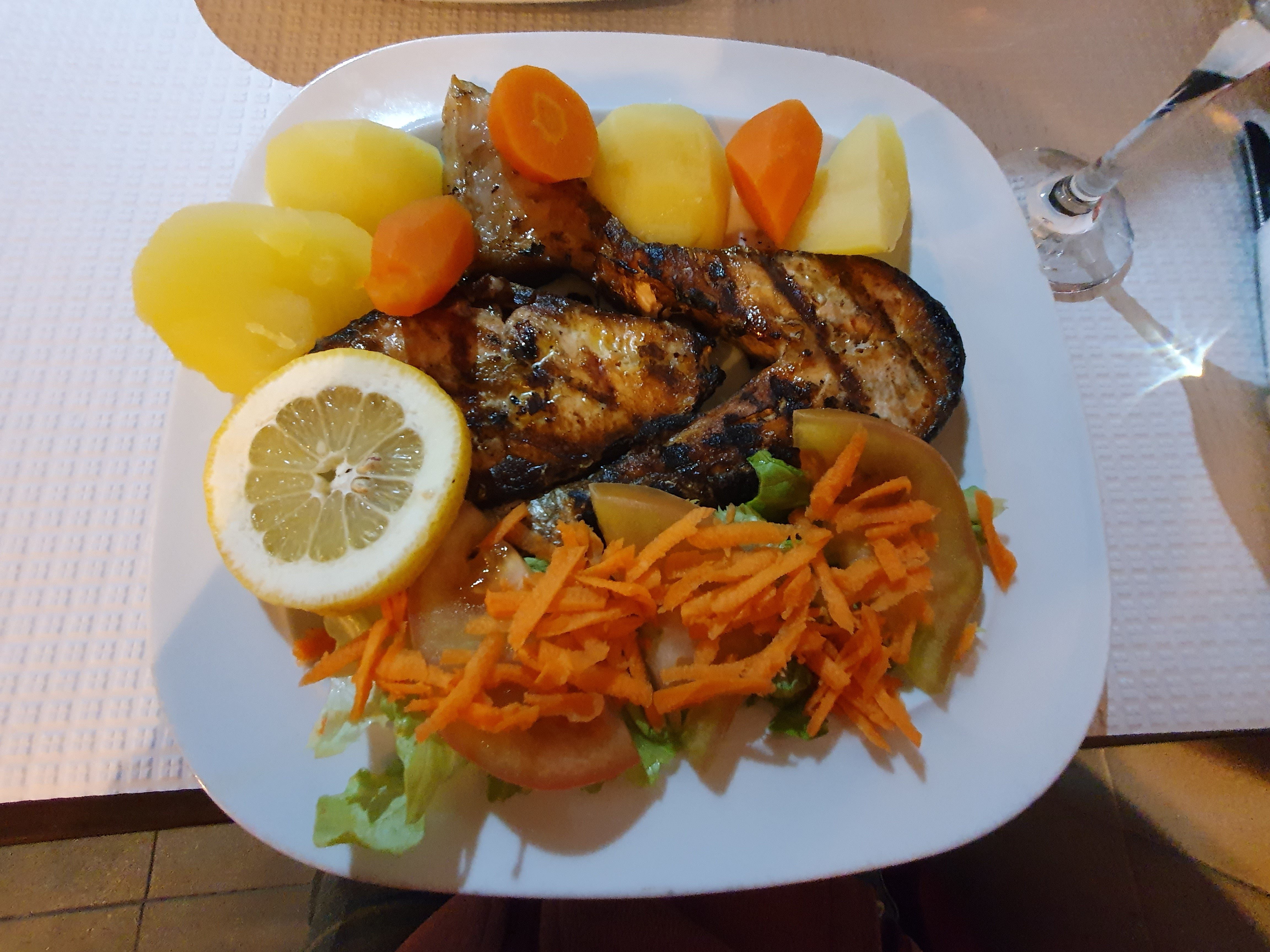
Tip: According to our guide, in Lisbon, signs of an authentic local restaurant are: Lots of fish on the menu, Daily specials and local diners. Any place too expensive and with pictures on the menu is a tourist trap and is best avoided.
Day 2: Jeronimos Monastery and Belem Tower
Today, we are visiting the district of Belem on the outskirts of Lisbon. It takes about 20 to 30 minutes by tram to get here from the centre of Lisbon.
1130: At Jeronimos Monastery.

This monastery complex dates back to the early 16th century and is one of the most visited attractions in Lisbon. It houses the tombs of the Portuguese Royal family (before Portugal became a Republic) and tombs of notable Portuguese explorers such as Vasco de Gama.

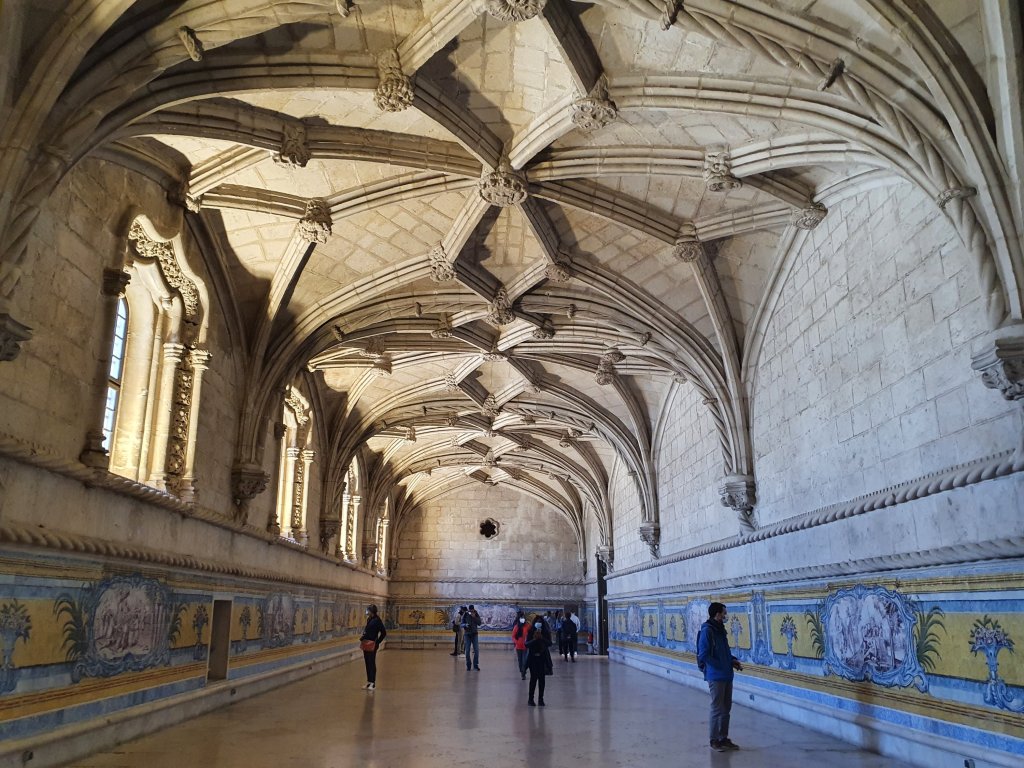

1230: One wing of the Jeronimos complex is the Lisbon Maritime Museum. Portugal has an illustrious history when it comes to maritime exploration the middle ages, it was the first European nation to navigate to the East and establish trade links, before being usurped by the Dutch and the British.


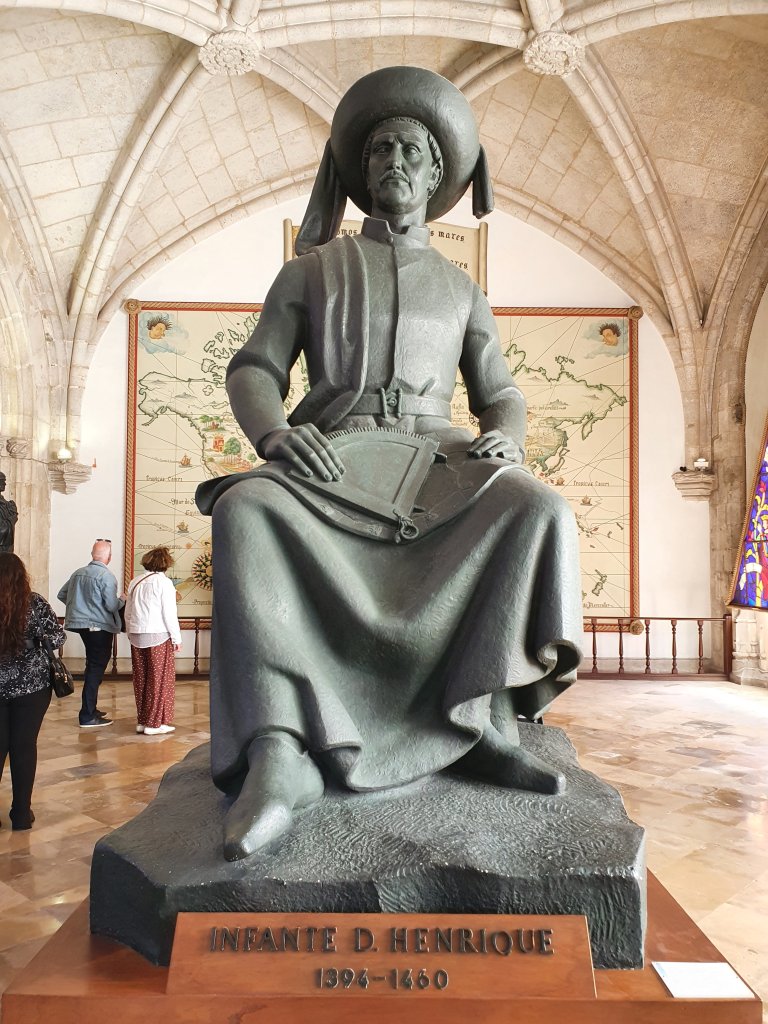
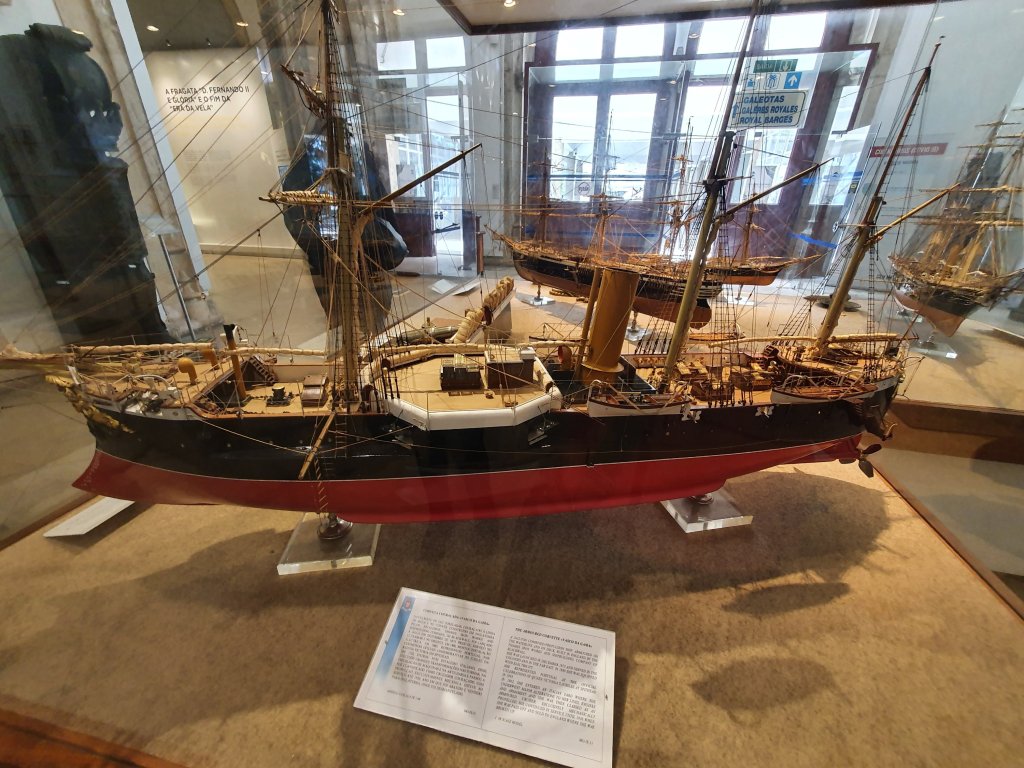
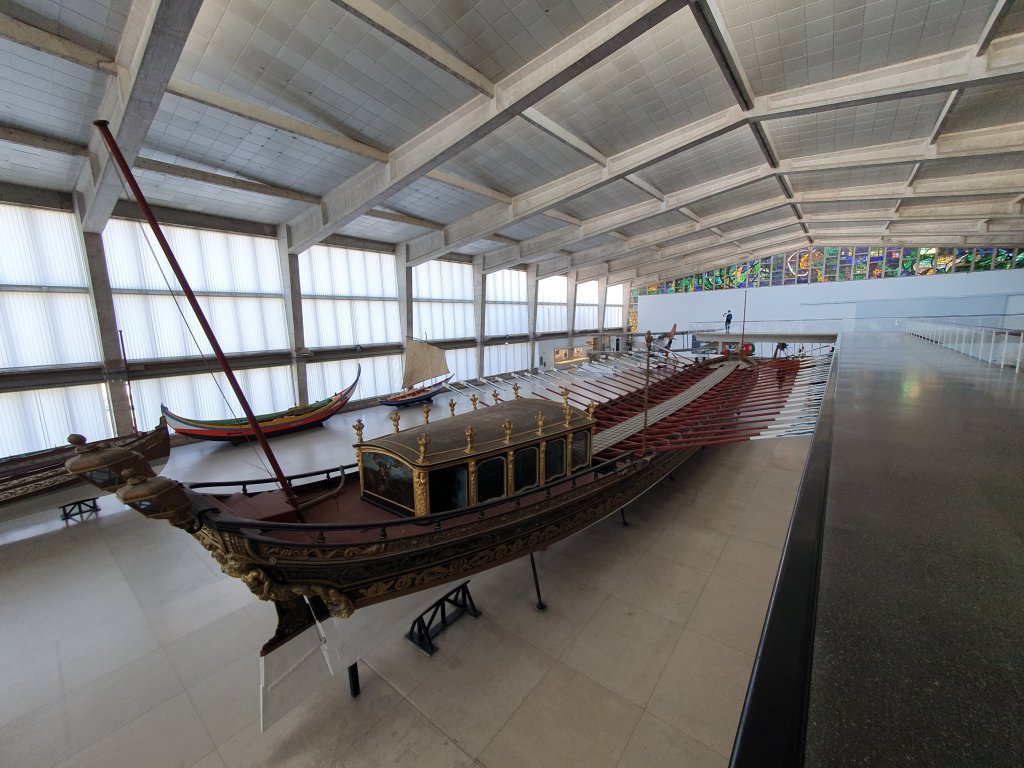
1445: At Torre de Belem or Belem Tower. This is one of the most iconic tourist sites in Lisbon, on the banks of River Tagus. It was first built as a lookout and a guard tower to protect the city from enemies who may approach via water.


Tip: Both the Jeronimos Monastery and Belem Tower are very popular, so it is best to reserve your tickets in advance. Also, if possible, avoid visiting on the first Sunday of a month. Residents of Lisbon can visit tourist attractions for free on the first Sunday – which means that tourist attractions are extra busy.
1600: After visiting Belem Tower, we walk back along the waterfront. On the way, we go past the Padrão dos Descobrimentos, a monument built to celebrate Prince Henrique the Navigator, who funded many early Portuguese expeditions in the middle ages.
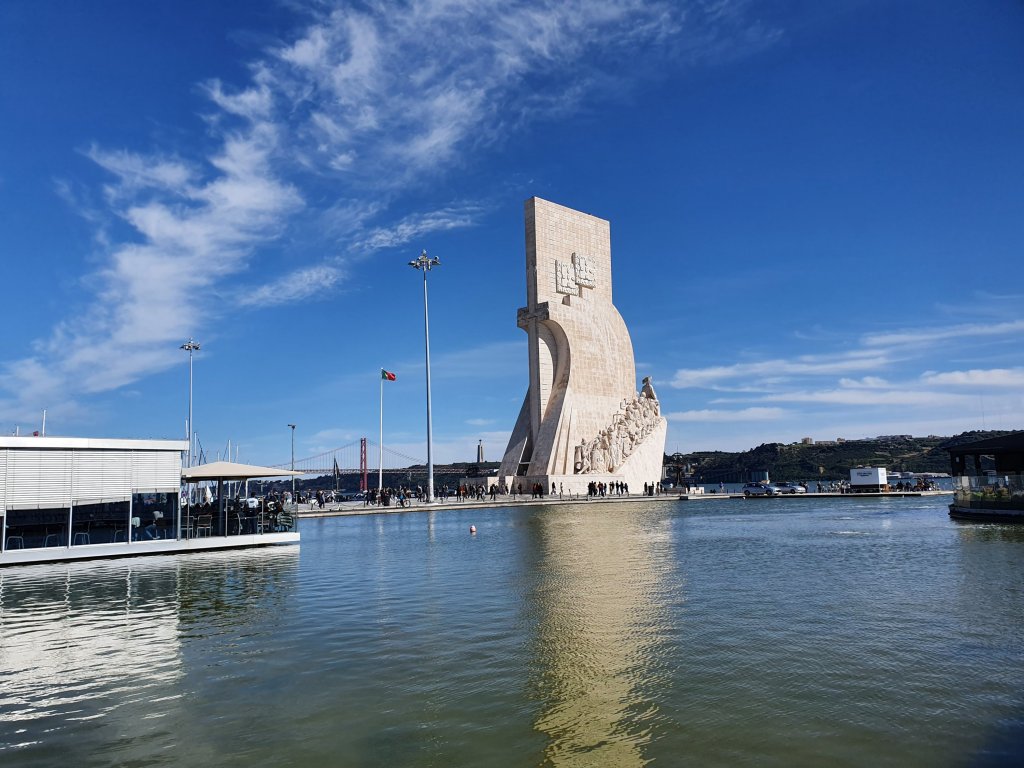

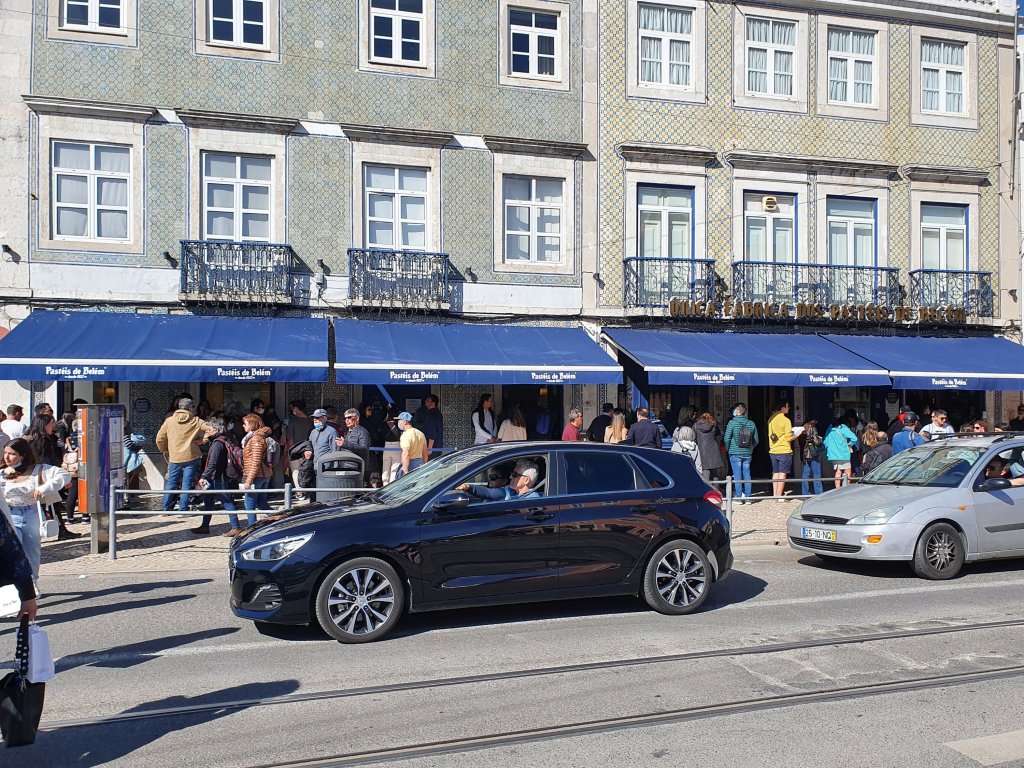
1630: Next we stop at the Bakery “Pastéis de Belém”. This is famous for being the first bakery to commercially sell the famous Pastéis de nata.
The monks at the Jeronimos Monastery are thought to have first created the very famous Pastéis de nata, the Portuguese Custard Tart. Apparently in the 18th Century (and before) monasteries used a lot of egg whites for starching their clothes – which left them with a lot of egg yolk, from which tasty treats were created. The story goes that a local businessman named Domingos Rafael Alves who owned a local sugar refinery bought the recipe for the custard tarts from the monks at the monastery. He opened Pastéis de Belém, which, to this day, is still run by his descendants. Only a handful of people know the recipe, which is a closely guarded family secret. At the bakery you can either buy boxes of tarts to take away, or you can go to the café section to enjoy the Pastéis de Belém with a drink. You need to queue for both, takeaway queue is much shorter, so we decided to go for the takeaway and head back to the centre of Lisbon. .
1730: The Castelo de São Jorge. Every major city in the World worth their salt has an ancient castle – something that dates back to the start of the city. For Lisbon, this is Castelo de São Jorge.

The castle was first was built by the Romans in 2nd century BC. In subsequent centuries the castle was held by the Visigoths, North African Moors and Christian Crusaders. In the middle ages it was the seat of the Royal power, before falling into disrepair. It was restored and opened as a tourist attraction in the mid 20th century.

Inside the castle, you can walk along that castle walls and explore the courtyards. There is also an archaeological museum.

There are also great views across the city from the castle ramparts.
1930: At the end of a long day, it is back to the hotel.
Day 3 – Sintra
On Day 3, we visited Sintra, a small but vibrant town about 25km from Lisbon. It is one of the most popular tourist spots in Portugal, with millions of visitors flocking to the former residences of the rich and royal families. To keep the size of this post manageable, I have done a separate blog post about the trip to Sintra.
Day 4 – More time Lisbon and return to the UK
0945: At the oldest bookshop in the world. Lisbon is home to “Livraria Bertrand”, the oldest continuously operating bookshop in the world. Founded in 1732, its original store (in the Chiado neighbourhood of Lisbon) was declared to be the oldest operating bookstore by Guinness World Records in 2011.
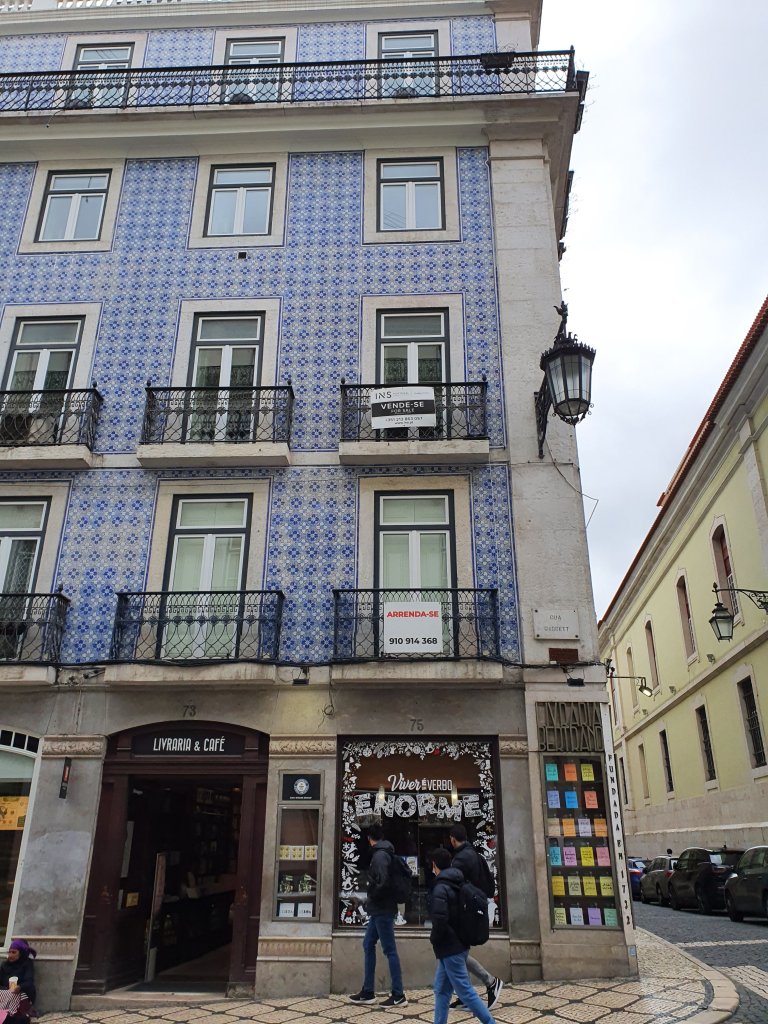

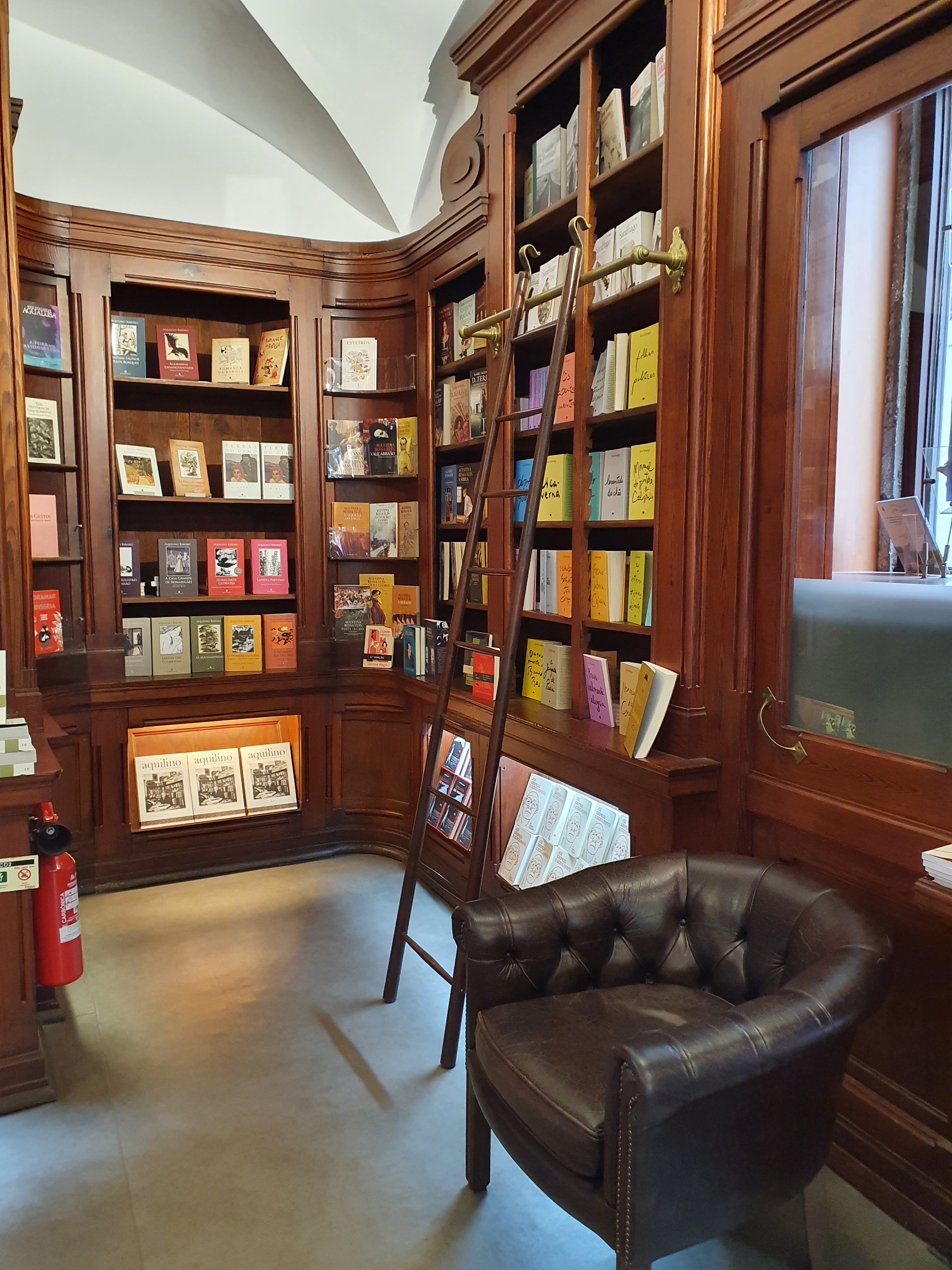
Most of the books inside are in Portuguese, but there is a selection of English books as well. Being a book lover, I could not pass up the opportunity to buy a book from the oldest bookshop in the World. I selected this book on Isabel of Portugal, Duchess of Burgundy by author Isabel Stilwell. It is the story of the only daughter of John I of Portugal and Philippa of Lancaster. When you buy a book here, if you like you can ask them to stamp the book indicating that it was bought at the oldest bookshop in the World.
1100: We spent rest of the morning exploring more of Lisbon, including taking a closer look at the Santa Justa elevator. It was built in 1900 to facilitate movement between the Baxi district and the Carmo Square; a particularly “hilly” part of Lisbon, and since it’s construction has become a popular tourist attraction.

1235: On top of the Rua Augusta Arch. This arch was built at the entrance to Praca do Comercio to commemorate the city’s reconstruction after the 1755 earthquake. It has six columns and is adorned with statues of various historical figures.


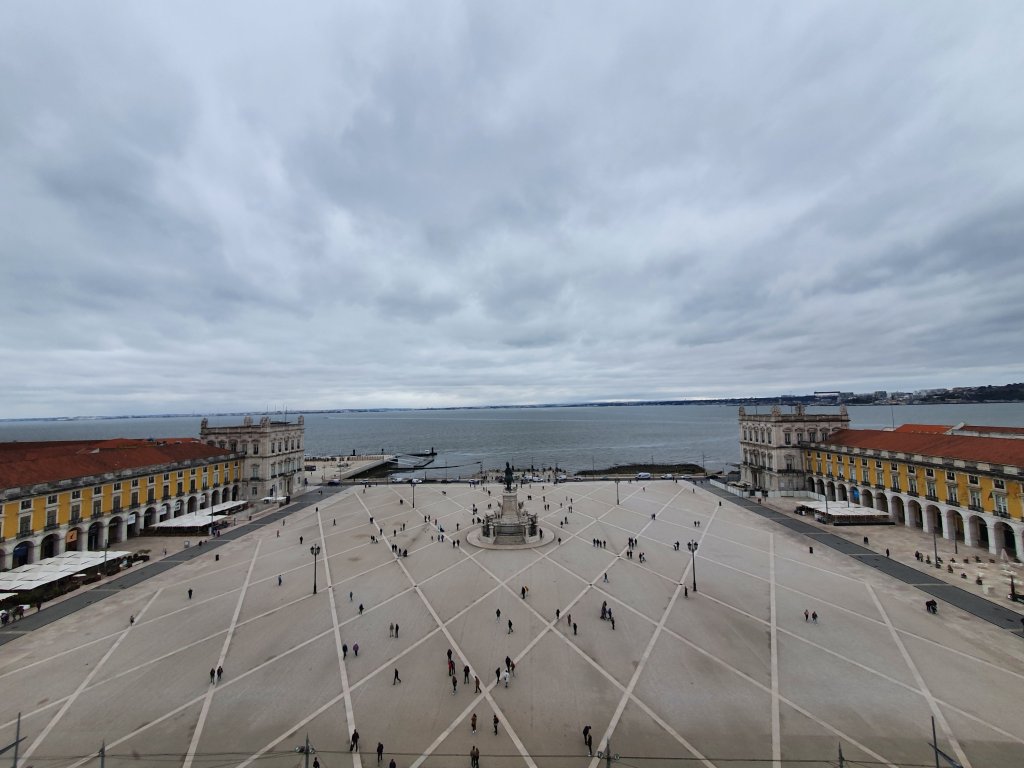

1400: After a late lunch, it is time to head back to the airport.

Although our time in Lisbon was very busy, we found it to be a relaxed city with an easy going vibe. It was also my first time in Portugal and if the capital is anything to go by, I can’t wait to explore the rest of it.
Have you been to Lisbon? How does your experience compare? Or may be you are planning to go? What would you like to see? Leave a comment below and let me know.


More great information!
LikeLiked by 1 person
Thank you!
LikeLiked by 1 person
I was just there. Went to some of the same places and logged thousands of steps. Walking was a great way to see Lisbon. Though we caught a cab to Belem!
LikeLiked by 1 person
This is a great preview of just about everything we plan to see and do in Lisbon. Getting excited (and thanks for the useful tips).
LikeLiked by 1 person