When and where: October 11, 2024, Kyoto, Japan
Today is our last (and only) full day in Kyoto. Kyoto has so much to see, and it is not the most straight forward city to get around; so I booked a guided tour that would cover most of the major attractions in Kyoto.
Arashiyama Bamboo Grove
0850: Meet our guide, Masako-san at Arashiyama bamboo grove train station. From here, it was a short walk to the Arashiyama bamboo grove.

This is a natural bamboo forest in Arashiyama. There is a path through the bamboo forest that takes you up hill. Even though it was only 9am, the bamboo forest was pretty full of tourists.

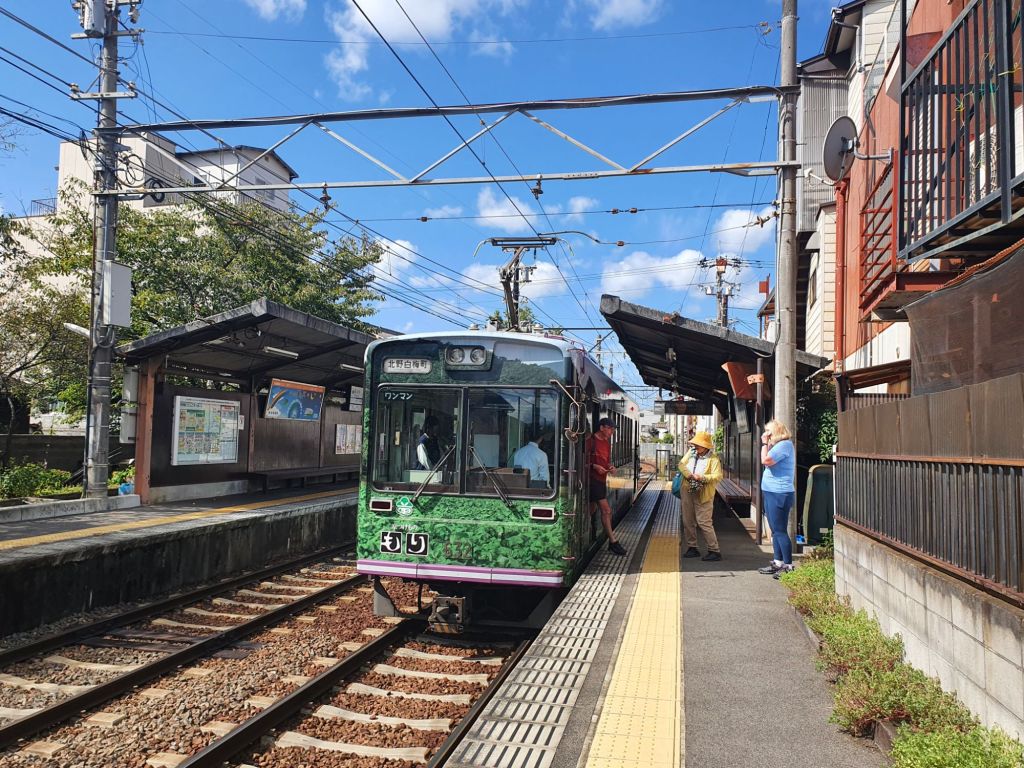
Randen tram line
From Arashiyama, we took the Randen tram to Ryoanji temple. This is a small local tram service in Kyoto.
Ryoanji Temple
Ryoanji Temple is the site of Japan’s most famous rock garden and a World Heritage site. The garden consists of a rectangular plot (25m length) of white pebbles surrounded by low earthen walls, with 15 rocks laid out in small groups on patches of moss. An interesting feature of the garden’s design is that from any vantage point at least one of the rocks is always hidden from the viewer, thought to represent the imperfect nature of life. The garden is thought to have been created around 1500 by Zen monk Tokuho Zenketsu.
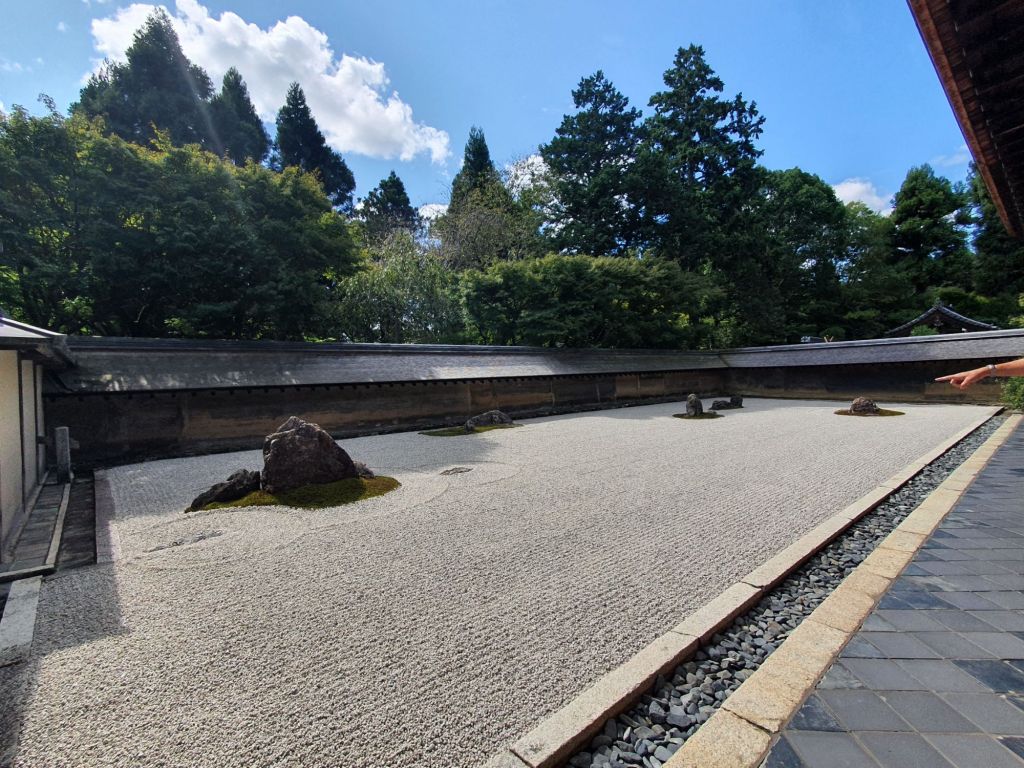
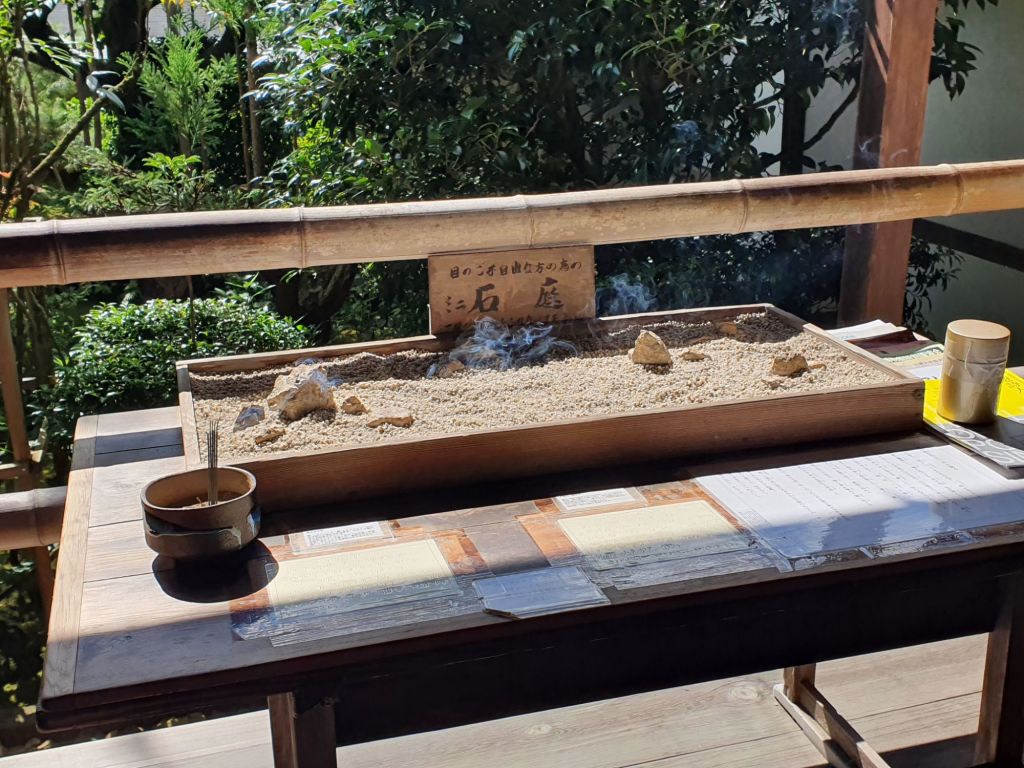
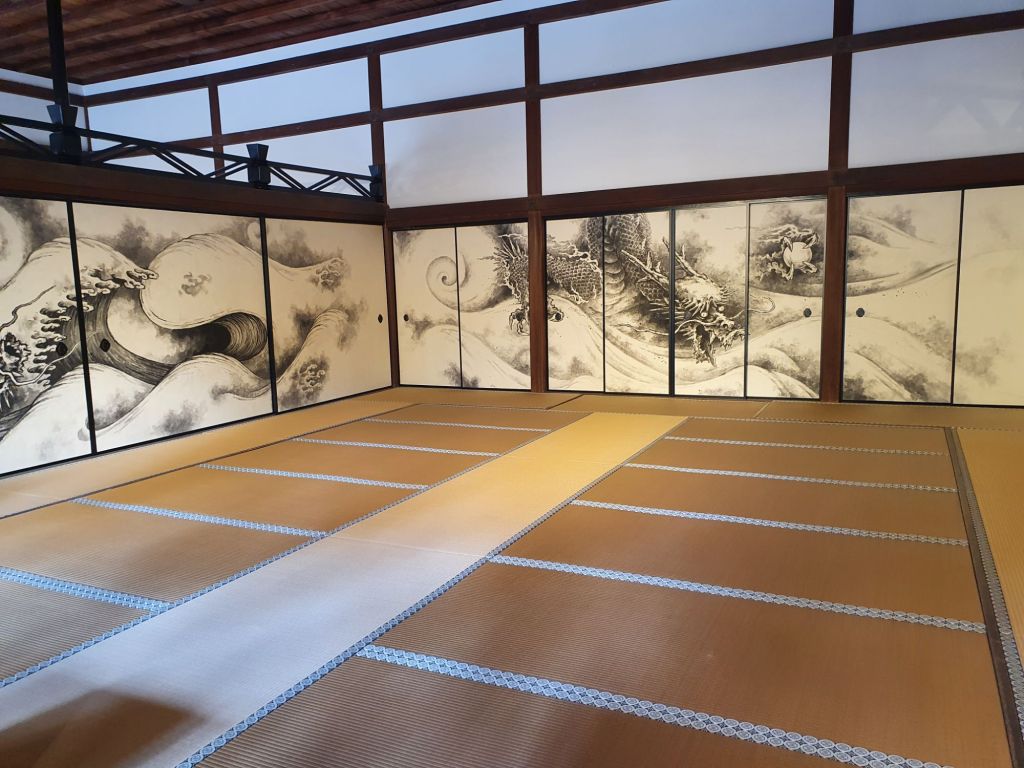
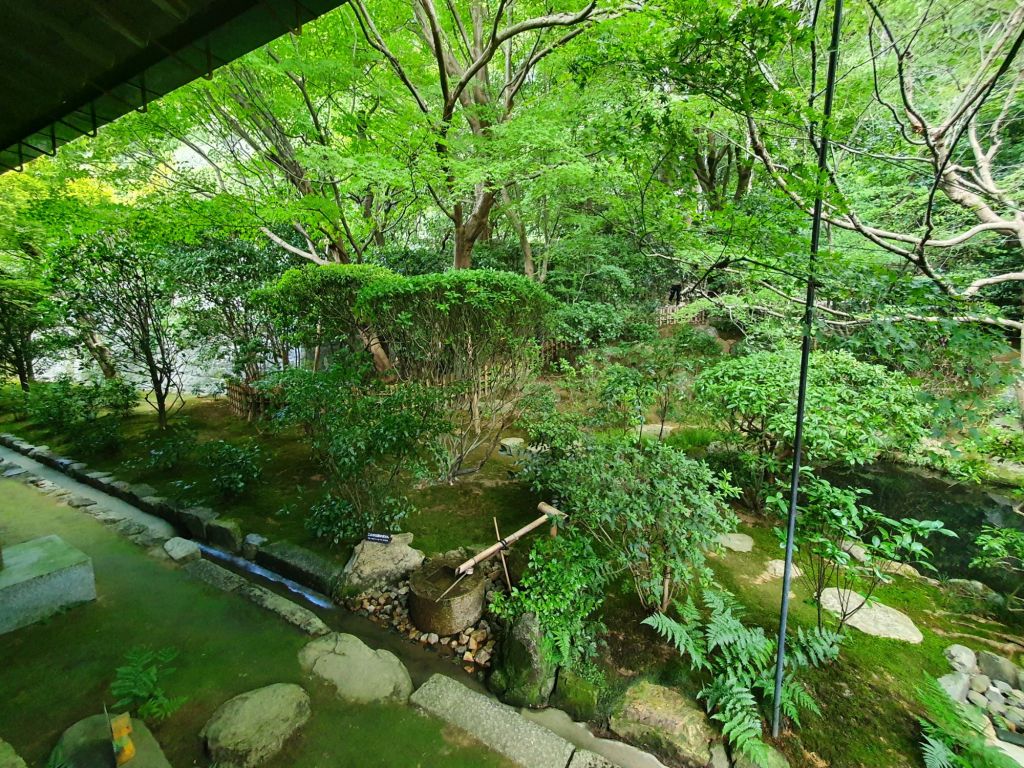
Ryoanji’s garden is viewed from the Hojo, the head priest’s former residence. Besides the stone garden, the Hojo features some paintings on the sliding doors (fusuma) of its tatami rooms. When we visited, the panels displayed a series of striking paintings by former Japanese Prime Minister Morihiro Hosokawa. The paintings depict the life of a dragon, from birth to death.
Lunch at Kura sushi restaurant
1200: After a short walk from the Ryoanji temple, we stop of lunch. Kura sushi is a chain restaurant in Japan with a revolving sushi bar. The sushi is on a conveyor belt and you help yourselves to the dishes you like. You can also order additional dishes from the tablet on your table. These come on a different conveyor belt and stops at your table.

To encourage you to eat more, there is even a game where you enter the empty plates into a slot at your table – you get a lucky dip spin for each plate you finish, so the more you eat, better chance of winning.
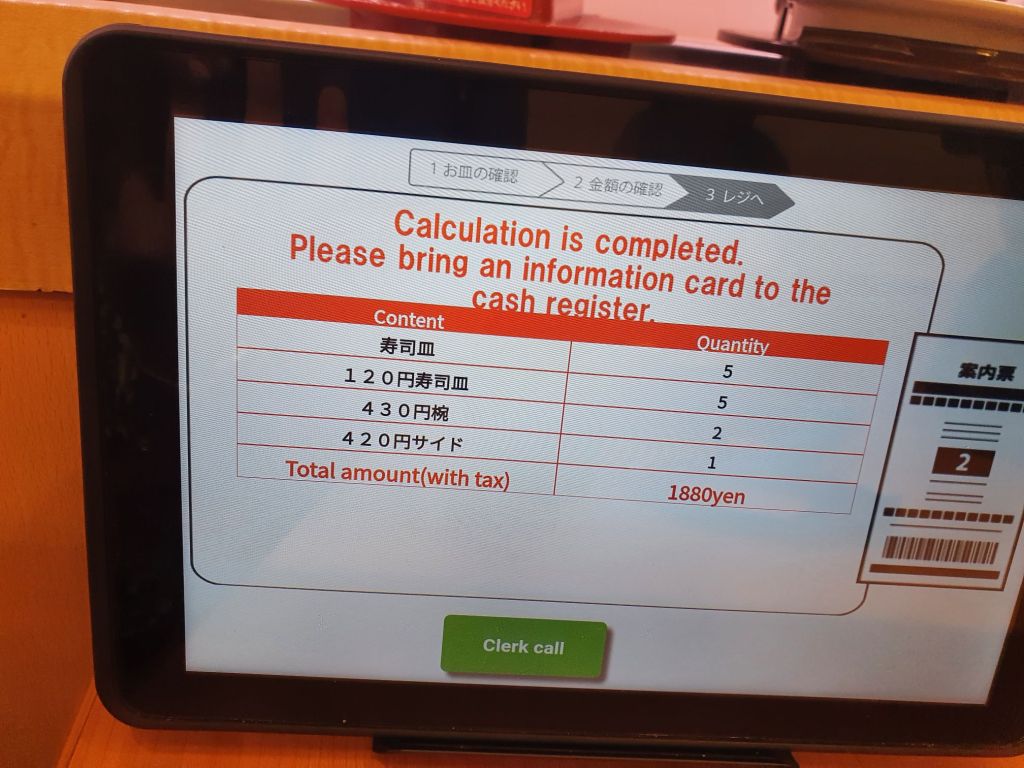
It was a bit of a hurried lunch over 30 minutes, and we had plenty to eat. The food was very reasonably priced and only cost 1880 yen (10 GBP) for 3 people (total of 13 dishes).
Kinkakuji Temple
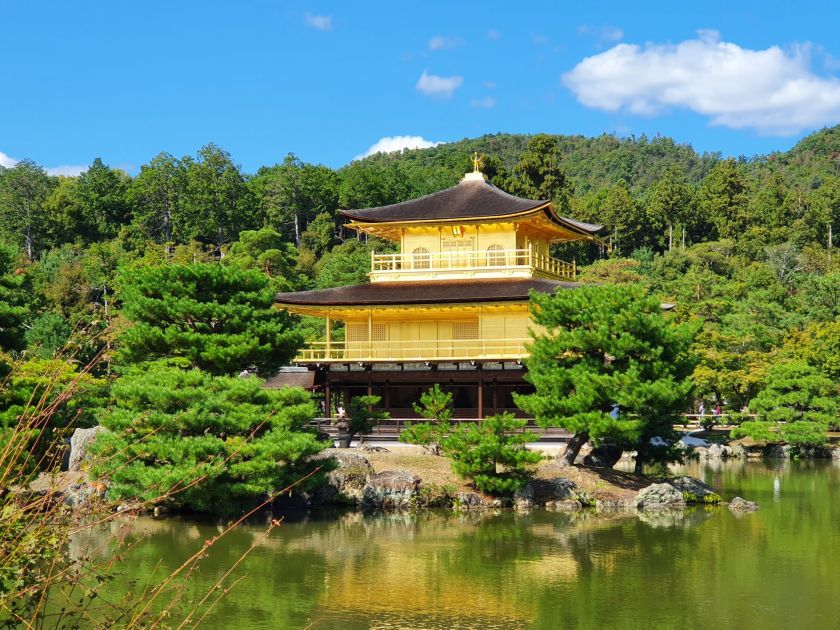
Kinkakuji (Golden Pavilion) is a temple in northern Kyoto whose top two floors are completely covered in gold leaf. Formally known as Rokuonji, the temple was the retirement villa of the shogun Ahikaga Yoshimitsu, and according to his will it became a Zen temple of the Rinzai sect after his death in 1408. It is also a UNESCO World Heritage site.

Kinkakuji is an impressive structure built overlooking a large pond, and is the only building left of Yoshimitsu’s former retirement complex. It has burned down numerous times throughout its history. The present structure was rebuilt in 1955.

Kinkakuji is one of the most popular tourist attractions in Kyoto. We visited shortly after midday and it was packed.
Fushima-Inari Temple
From Kinkakuji, we took a bus and then the train to Fushima-Inari shrine which is in South Kyoto.

Fushima Inari is the most important of several thousands of Shinto shrines dedicated to Inari, the Shinto god of rice. Foxes are thought to be Inari’s messengers, so there are many fox statues across the shrine grounds.
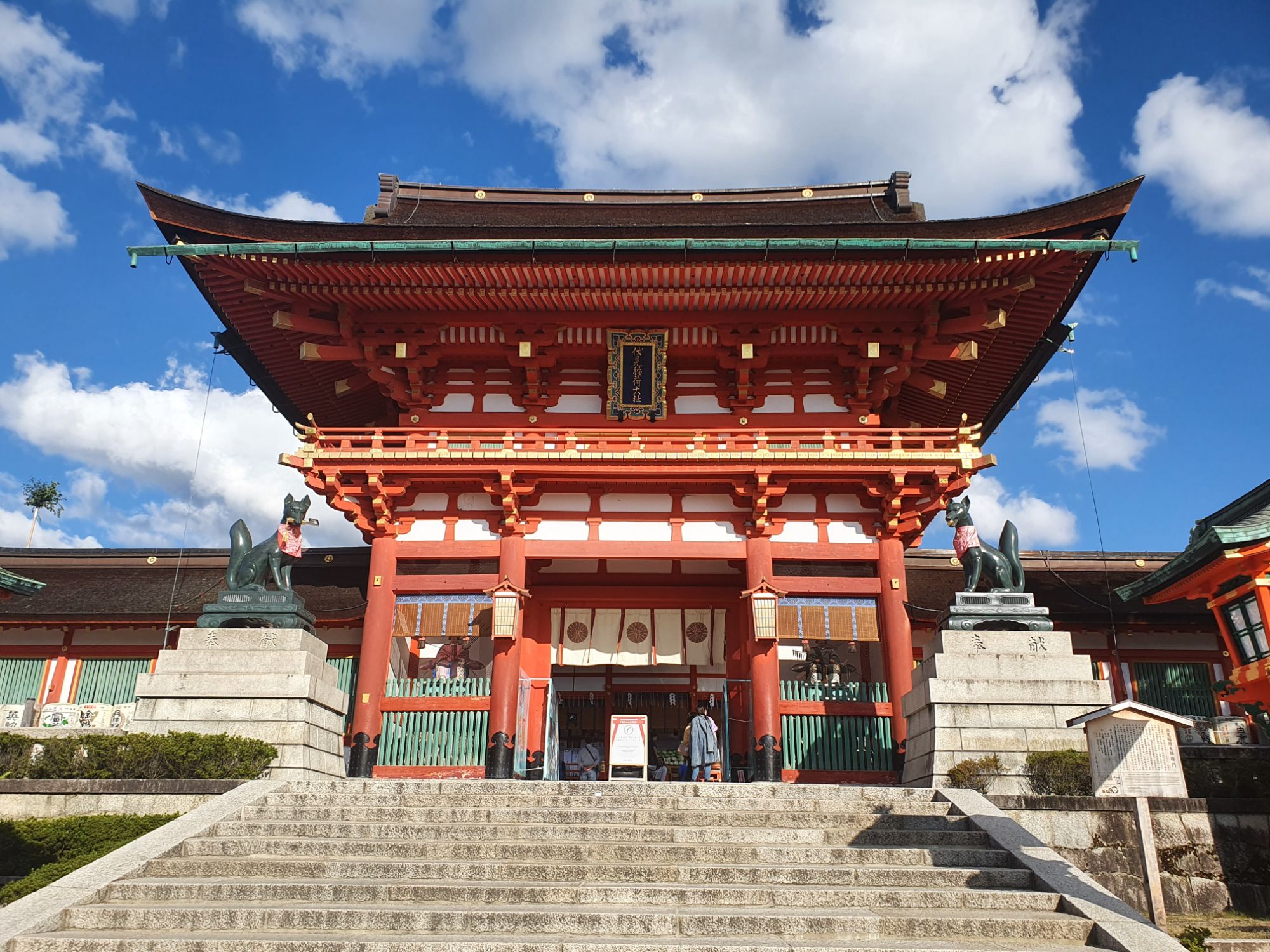
Fushima Inari is also famous for its thousands of vermilion Torii gates, which straddle a network of trails that lead into the wooded forest of the sacred Mount Inari.
You can enter the hiking trail at the back of the shrine’s main grounds, where it starts with two dense, parallel rows of gates called Senbon Torii (“thousands of Torii gates”).

The torii gates along the trail are donations by individuals and companies, and you will find the donator’s name and the date of the donation inscribed on the back of each gate.
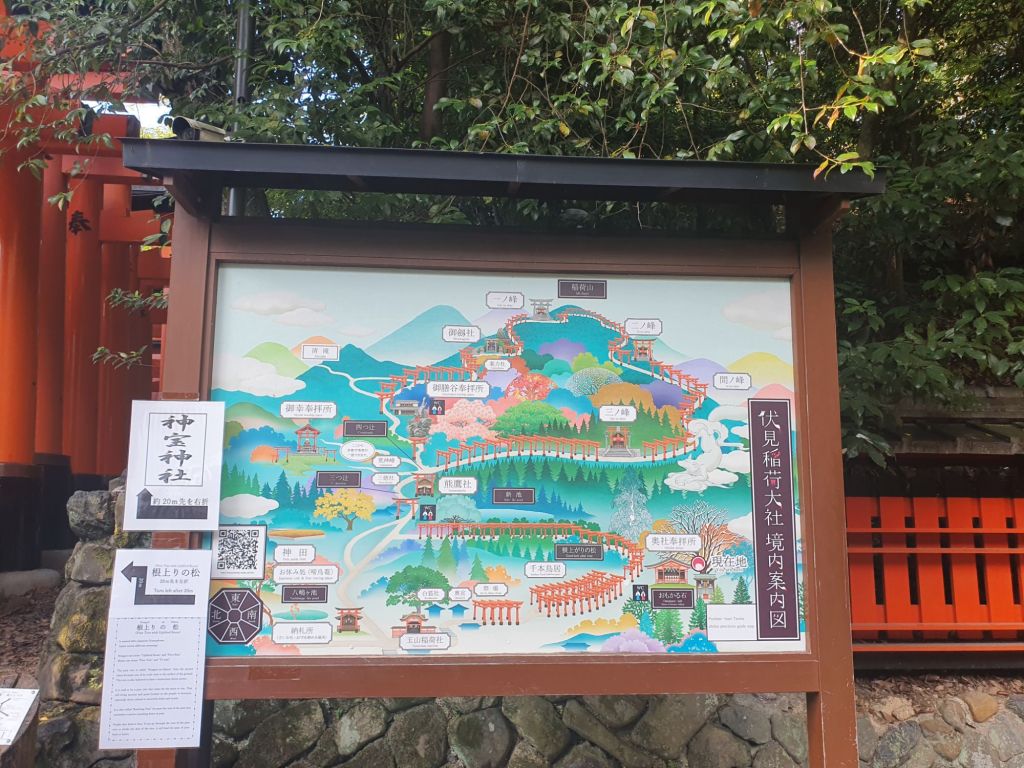
We didn’t have time to explore the hiking trail due to our schedule, unfortunately. So this is definitely one for the list when we go back.
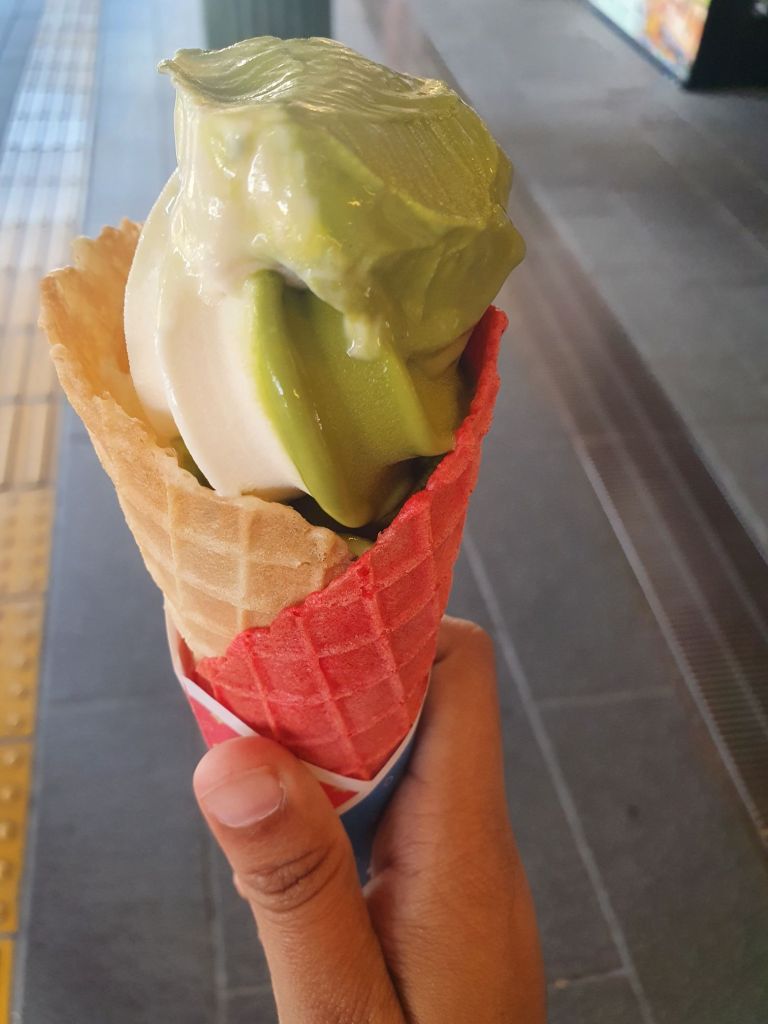
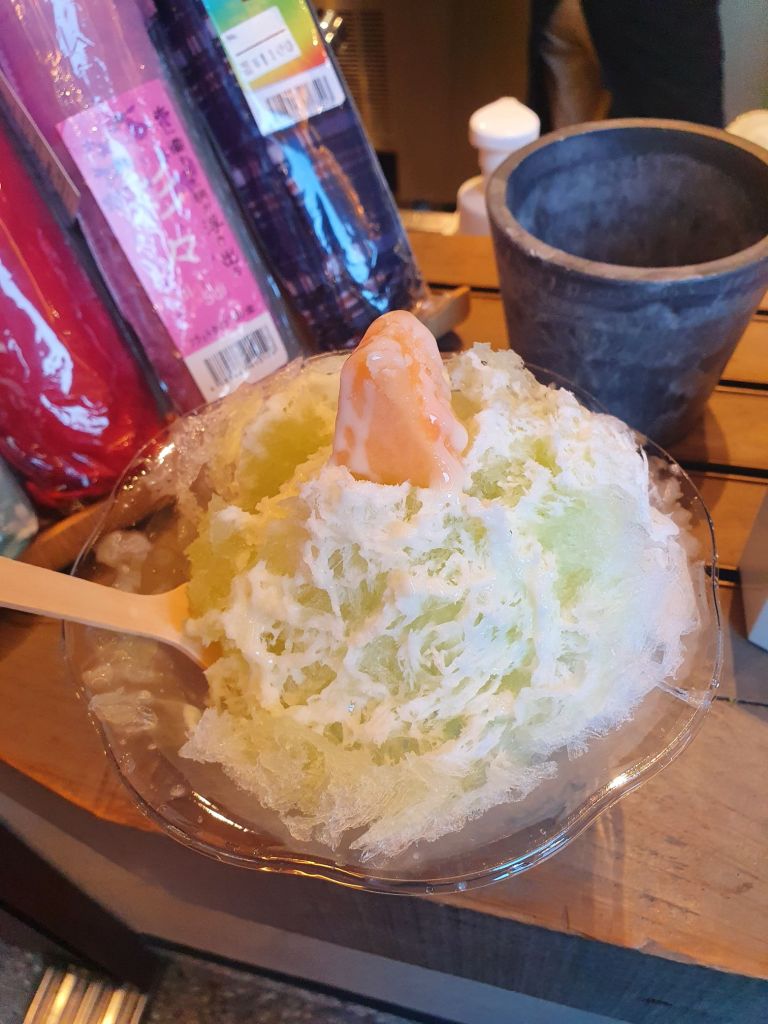
From Fushima-Inari, we take the train and then a bus to the Kiyomizu-dera temple. We have time for a short ice-cream break, which is much needed, as the approach to the Kyomizu-dera is on a steep incline.
Kiyomizu-dera
Kiyomizu-dera (“Pure Water Temple”) is one of the most celebrated temples of Japan. It was founded in 780 AD on the site of the Otowa Waterfall and is a World Heritage site.

Kiyomizu-dera is best known for its wooden stage that juts out from its main hall, 13 meters above the hillside. The stage affords great views of the cherry and maple trees below that are incredibly colourful in spring and fall, as well as of the city of Kyoto in the distance.
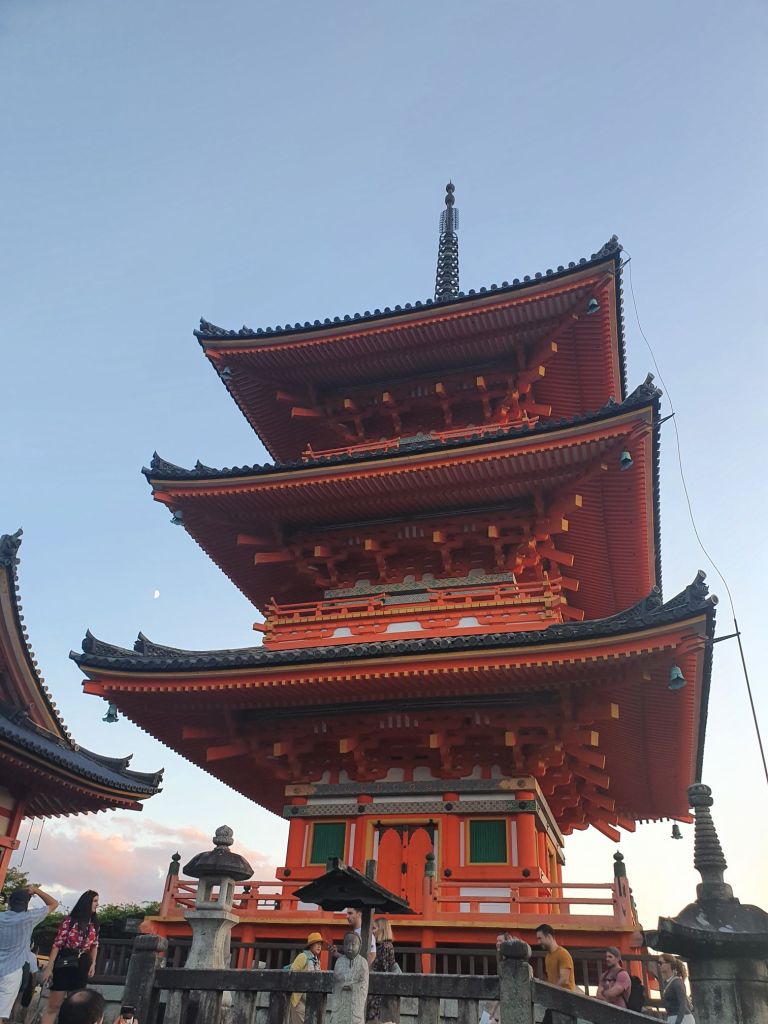
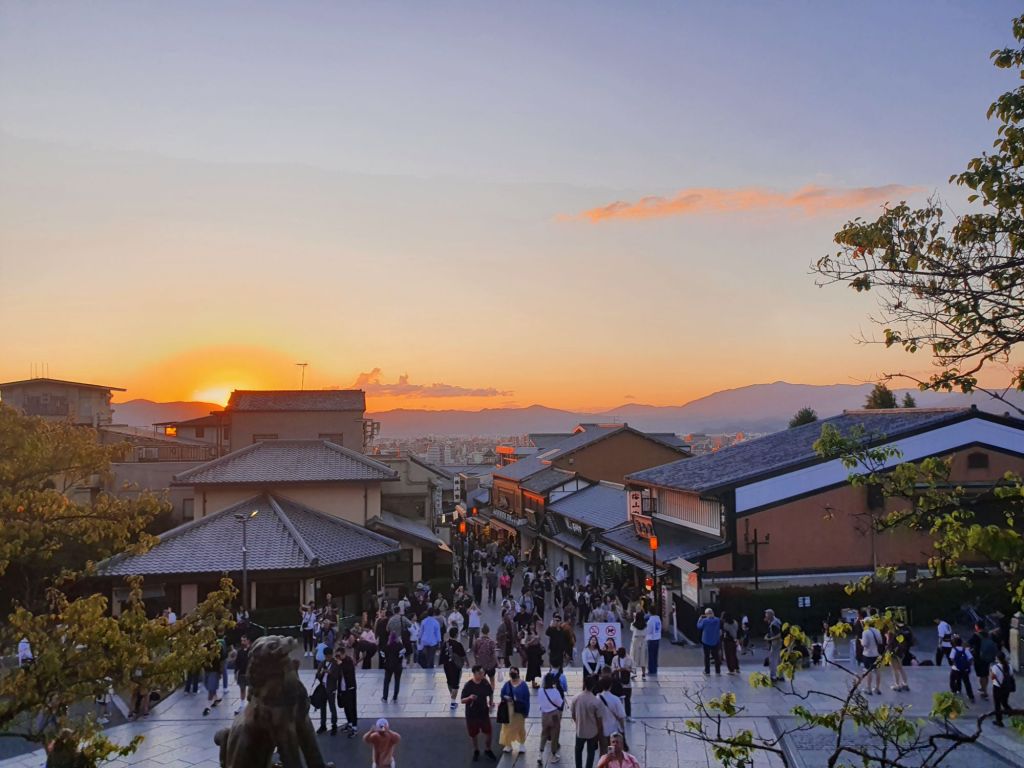
When we visited, it was sunset time over Kyoto, and we could see beautiful views of the city, including the Kyoto tower, which is built to look like a candle.

The temple closed at sunset, so we did not have enough time to explore the rest of the temple, including drinking from the fountains that supposedly grant wisdom, longevity and wealth. So, another one for the next visit.
Sannenzaka path
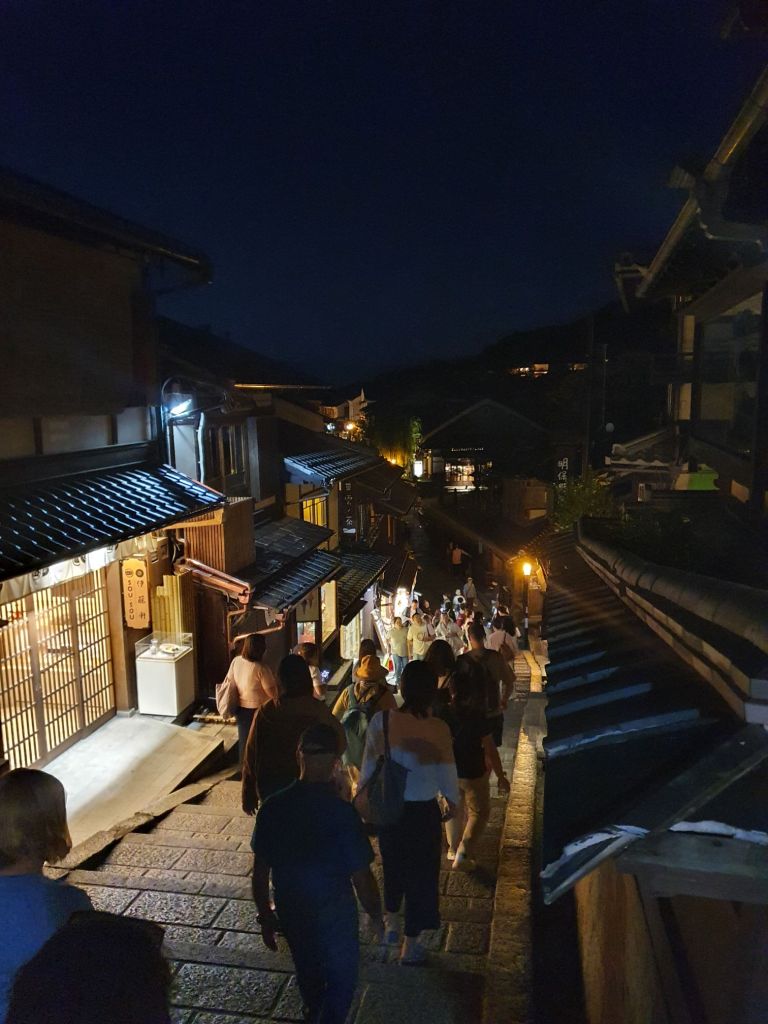
Sannenzaka, or Sannen-zaka is a stone-paved narrow pedestrian path and tourist attraction near Kyomizu-dera. The path slopes down and is filled with shops and restaurants that sell traditional Kyoto products and food. According to our guide, if you fall down on this road, it means you will die within 3 years – not brilliant when you have to navigate it downhill in the dark with hundreds of others!
Yasaka Pagoda
The Yasaka Pagoda, also known as the Tower of Yasaka, is a Buddhist pagoda at the end of Sannen-zaka. It was well past closing time when we arrived at the pagoda, so we took a look from outside.

Gion district
Our last stop of the day was the Gion District. Gion is one of the four famous Geisha districts of Kyoto. Geiko and Maiko (apprentices) are professional entertainers who train for years in traditional crafts such as singing, dancing, playing musical instruments and tea ceremony. It is a dying art as there are not many new entrants to the training.
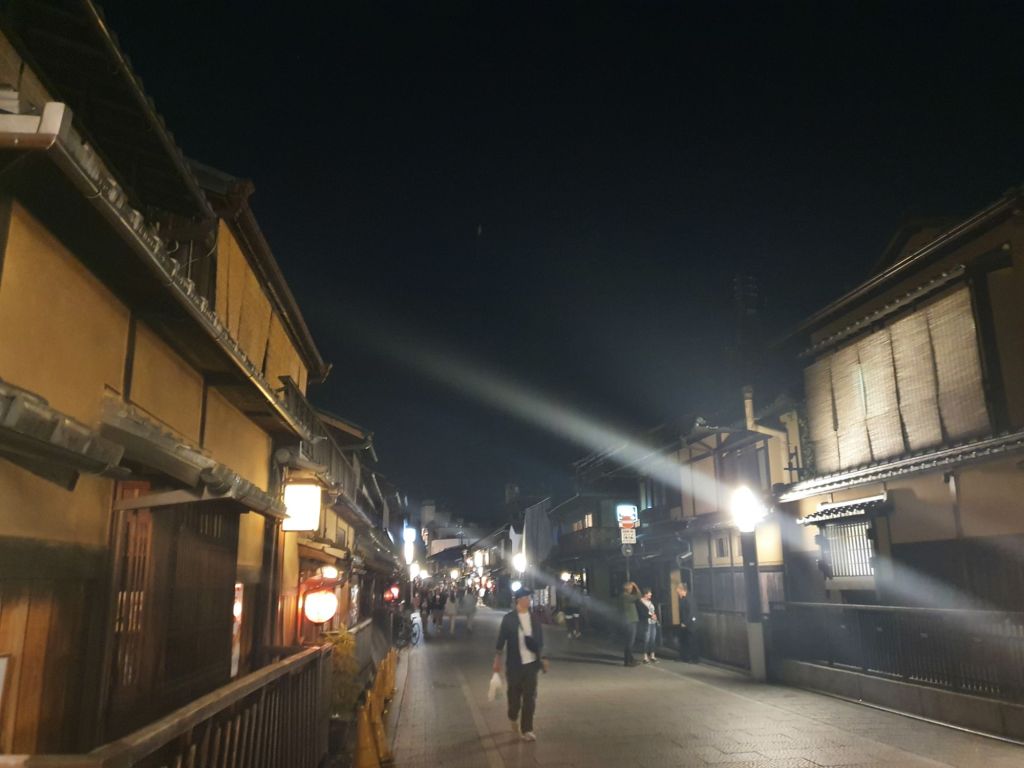
Our guide showed us a famous Okiya, or tea house where the Geiko and Maiko reside, with their names affixed to the front.

We also found that you can attend a traditional dance performance here.

1900: Tour ends at Gion Shirakawa canal, which is a famous landmark in Gion.

Overall, the guide was great, and there is no way we would have seen so much of Kyoto in a day without the tour. However, I would not recommend this tour. For starters, it promised 12 must see highlights of Kyoto, when it reality there were only 8 highlights, and it was dark by the time we got to the last 4 attractions. It was also a very tiring day – with 11 hours of walking (26000+ steps) with only a 30 minute break for lunch and 15 minute break in the afternoon. I also didn’t think it was good value for money. The tour cost about 75 GBP per person, but all transport is on public busses, trams and trains (which you need to pay for) as well as entrace tickets to attractions throughout the day.
If I were to visit Kyoto again, I would spend at least five days here:
- Day 1: Arashiyama, Ryoanji temple, Kinkaku-ji
- Day 2: Kyomizu-dera, Sannen-zaka and Gion (including a cultural performance)
- Day 3: Tea ceremony and Fushima-Inari shrine
- Two further days to see other attractions we didn’t have time for (the silver pavilion temple, Kyoto imperial Castle etc).
I would also visit Kyoto in the winter. Even in mid-October, everywhere we went was very busy with tourists. Although the crowds are not a big issue for cities like Tokyo and Osaka, in Kyoto’s narrow cobbled streets and traditional buildings, it does impact sightseeing.
 Diary of a Tourist
This is very informative, especially your recommendations at the end. Kyoto is the top spot on my Japan list, so I’m taking note.
I wonder what happens if you fall down the Sannenzaka Path (die within 3 years) but also drink from the fountain of the Pure Water Temple (which grants longevity)… Hmmm. A conundrum… 🙂
One more question: I was interested to see you bought an ice cream cone for the tram. I was under the impression that public eating was a big no-no in Japan. Are the social rules relaxing? Or relaxed for tourists?
LikeLiked by 1 person
Re: the ice cream. We were all busy gulping down the ice cream when the guide told us it was ok to eat on the tram as it wasn’t very busy and was mostly tourists. As far as I could work out, the no eating rule applied mostly to busy subway and local trains in cities, where there was no room to eat anyway. On the long distance trains it was perfectly fine to eat and drink. We also didn’t see anyone local with “to-go” cups either. Also, there are no public bins anywhere in Japan so you have to carry all your empties home (or hotel) with you.
LikeLiked by 1 person
Very good point about the path and the fountain – I guess it depends which one you do first ( or should that be last? 😉 maybe if you fall down, solution is to go back to the temple and take a sip from the fountain!
LikeLiked by 1 person