Where and when: Koyasan, Japan, 14 October 2024
Mount Koya is a temple settlement in the Wakayama prefecture, of Japan about 50 miles south of Osaka. It is the headquarters of Shingon Buddhism, introduced to Japan in 805 AD by Kobo Daishi and one of the most sacred places in Japan. So we decided to visit there as a day trip from Osaka.
0900: Our journey begins at Osaka-Namba station.

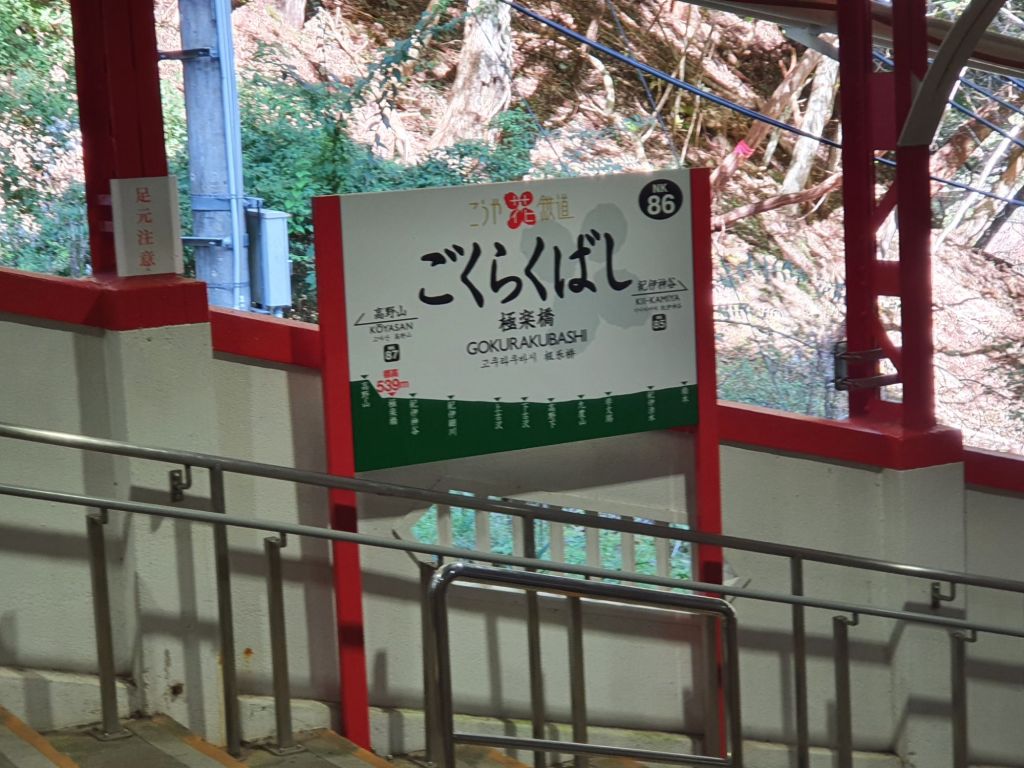
From Osaka-Namba Station, you have to take a train to Gokurakubashi. The journey takes you away from the hustle and bustle of Osaka and into the quiet mountains.
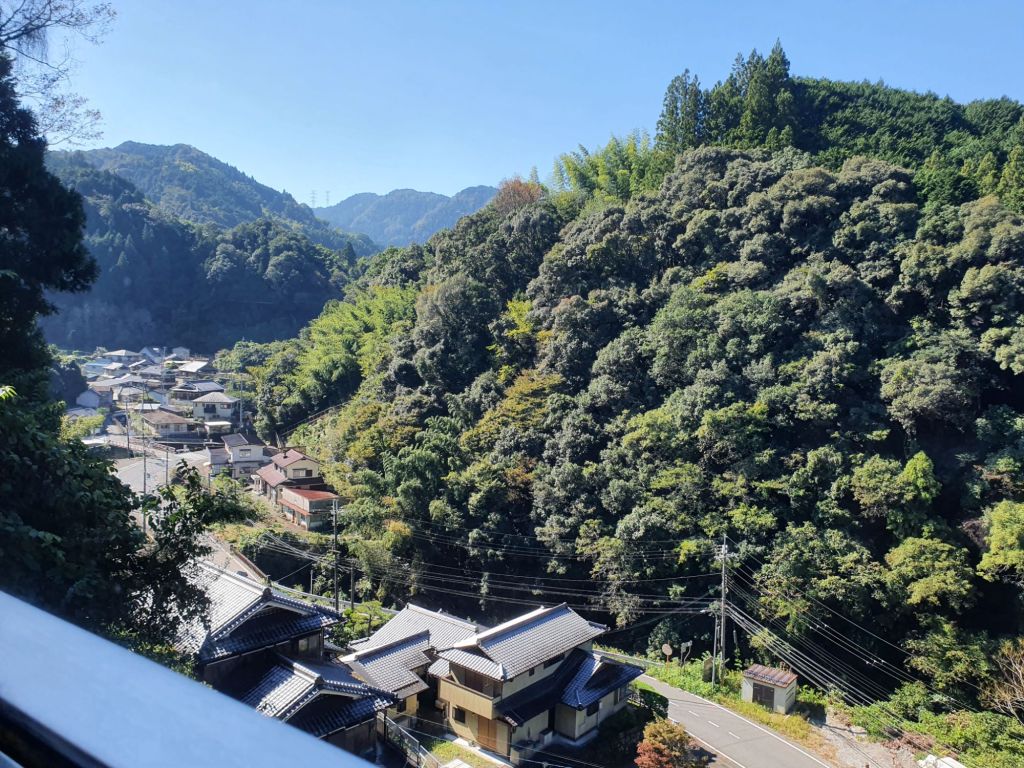
From Gokurakubashi, there is a funicular to the top of mount Koya.

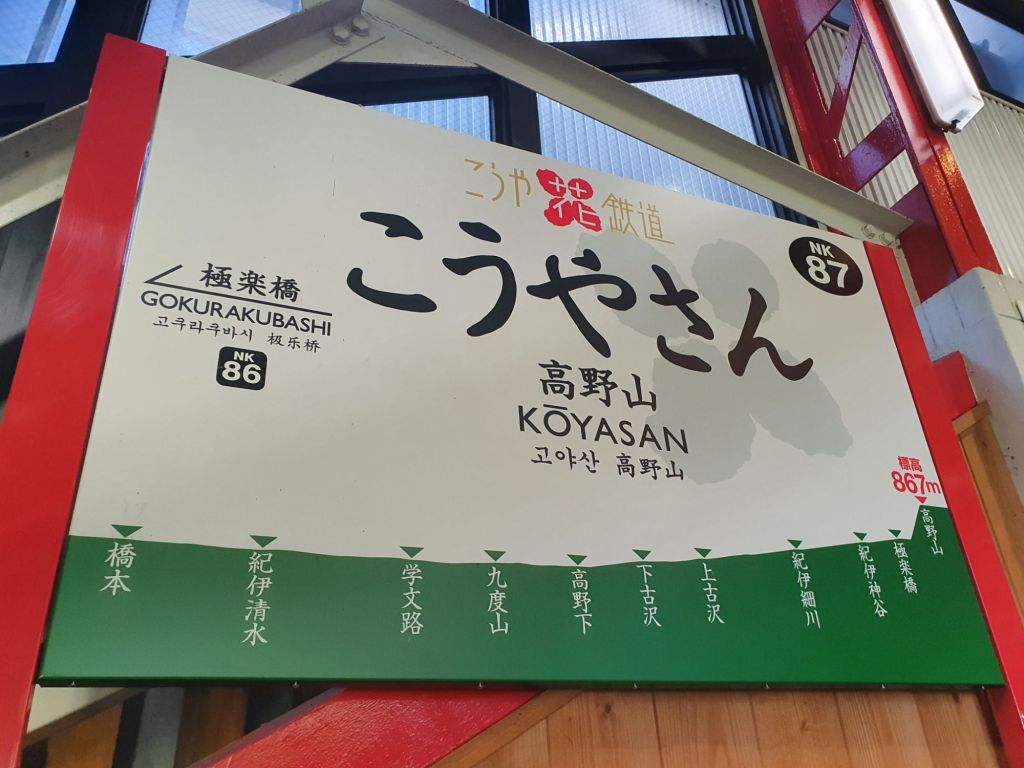
Once at the top there are buses to the centre of Koyasan. All the connections from Osaka to centre of Koyasan are planned so there is a seamless transition from train, to funicular to bus, and staff at each station will point you which way to go. The total journey takes about 2.5 hours.
There are many different ways to buy tickets for the journey, but after some research, I found best thing to do is to buy a Koyasan World Heritage ticket (costing around 3500 yen), which gives you a return ticket from Osaka to Koyasan on consecutive days. The staff in the central ticket office in Osaka-Namba station were really helpful getting the right ticket and tell me which trains I could and couldn’t take.

The first thing that strikes you about Koyasan is how quiet it is, compared to the big cities of Tokyo, Osaka and Kyoto. There is no hustle and bustle here, and with traditional buildings, small roads and fewer people we felt a world away from the rush.

Koyasan has around 117 temples dotted around the mountain and about half of them offer overnight accommodation to tourists as well.
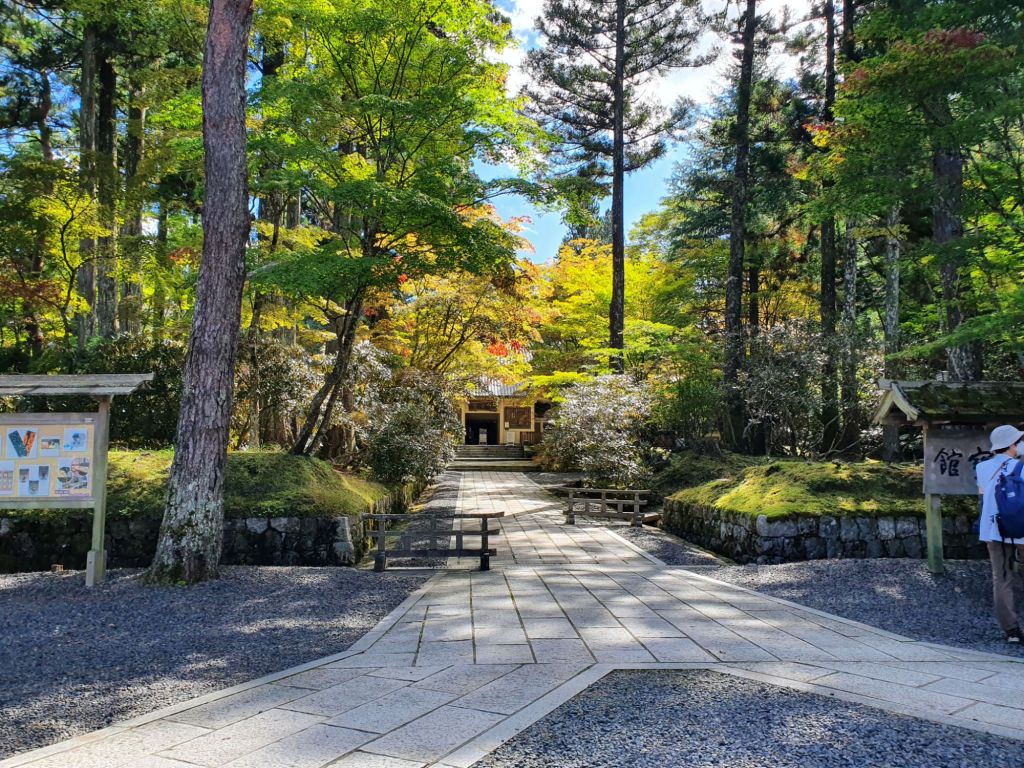
1330: In the centre of Koyasan, there are a number of temples and museums you can visit. Since we were doing a day trip, and only had limited time, so I booked a guided tour of the two largest temples in Koyasan: Garan and Kongobuji.

Legend has it that Kobo Daishi, the founder of Shingon Buddhism, was studying in China; he wanted return to Japan and start a centre for Buddhism. He threw his “sankosho” (a metal implement that looks a bit like a double ended trident) from China toward Japan. Back in Japan, he came across his sankosho stuck in the branches of a pine tree in Koyasan and here he started construction of the Garan, Koyasan’s central temple complex.
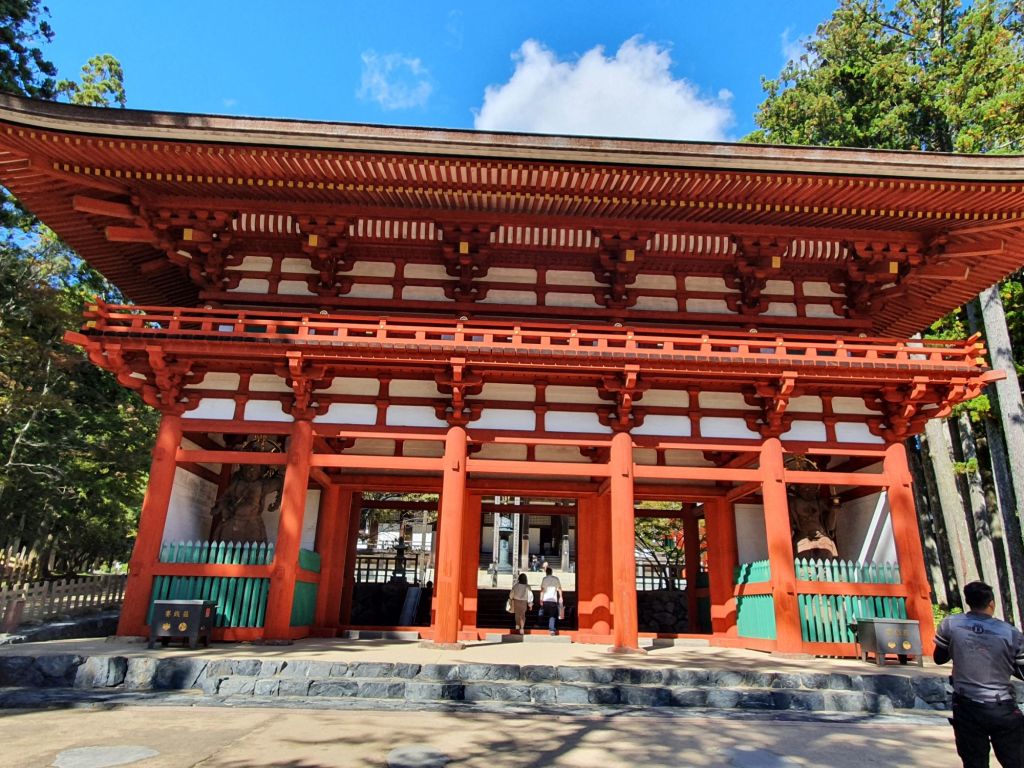
The pine tree that caught the sankosho is still growing at the Garan temple. Our guide told us that three pronged pine leaves from this tree are considered very lucky.

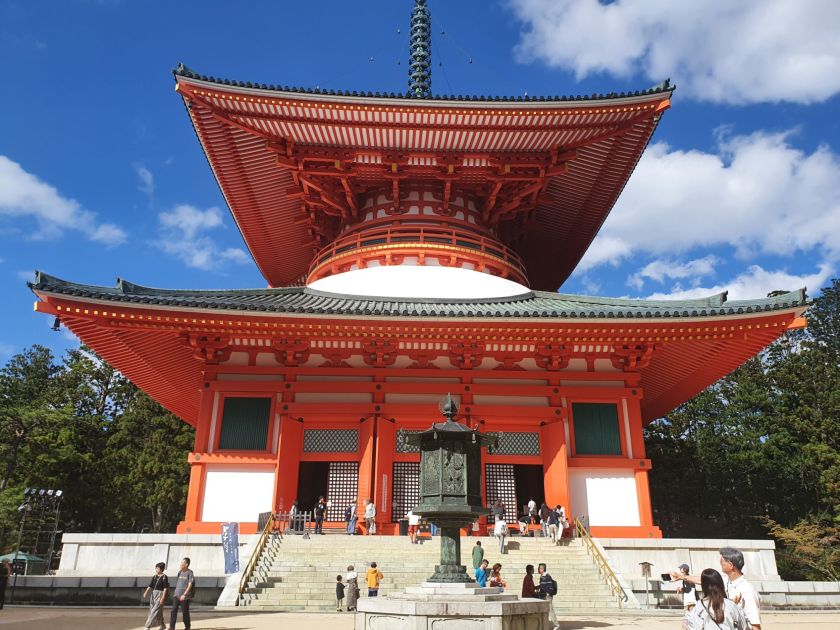
The two most prominent buildings of the Garan are the Kondo Hall and the huge Konpon Daito Pagoda. The Kondo Hall is a large wooden temple hall where major ceremonies are held. The building has burned down multiple times over the centuries, and the current hall dates back to 1932.

Next to the Kondo Hall stands the striking Konpon Daito Pagoda, a 45 meter tall, two tiered pagoda. Inside (no photos allowed) there is a statue of the Dainichi Nyorai (Cosmic Buddha, also known as Variocana), the central Buddha in Shingon Buddhism.

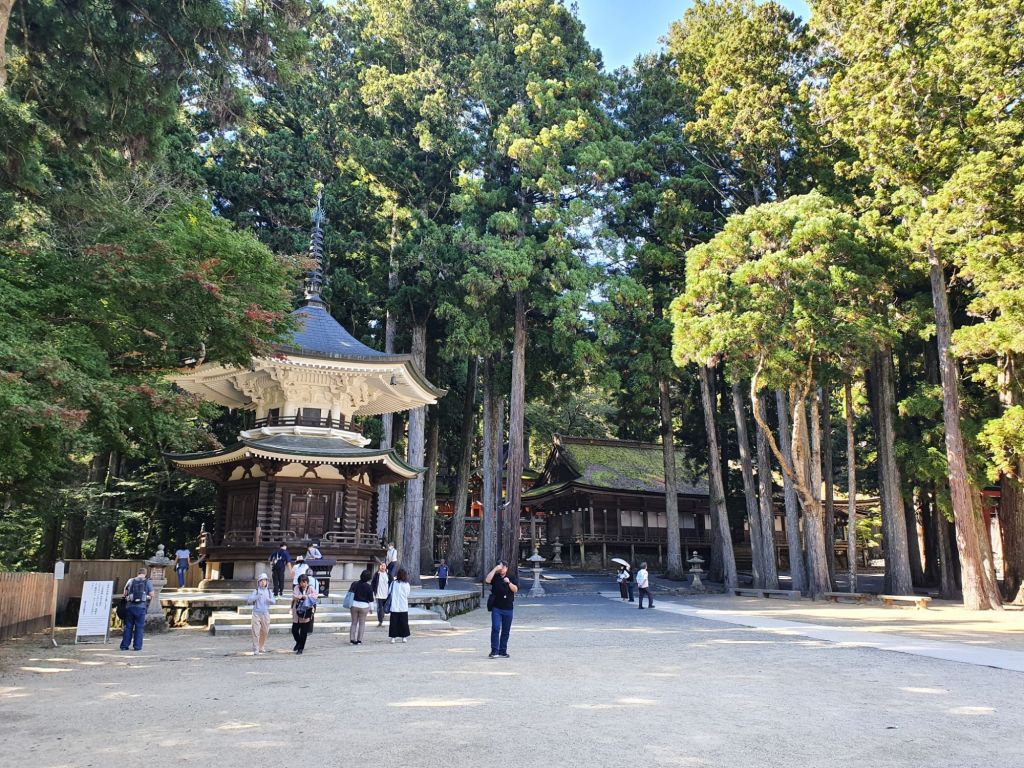
There are also a number of other shrines and pagodas in the Garan temple complex.

The second temple on the tour was the Kongobuji temple. This temple was originally constructed in 1593 by Toyotomi Hideyoshi (a samurai and a feudal lord who unified Japan and constructed Osaka castle) to commemorate the death of his mother. Later it was merged with a neighboring temple and reorganized into the head temple of Shingon Buddhism. Only limited photographs are allowed inside the building.

This is also the building in which Toyotomi Hidetsugu committed ritual “seppuku” as ordered by his uncle Hideyoshi. This is seen as one of the main reasons for the downfall of the Toyotomi family just a few years later (which is the central story of the novel “Shogun” by James Clavell).

Behind the building is the Banryutei Rock Garden, the largest rock garden in Japan. Built in 1984, its large rocks from Shikoku, the birthplace of Kobo Daishi, represent a pair of dragons emerging from a sea of clouds.

1500: Once the guided tour was finished, we headed to the most famous site in Koyasan – the Okunoin cemetery; this is the site of the mausoleum of Kobo Daishi, founder of Shingon Buddhism. Because of this, Okunoin is one of the most sacred places in Japan and a popular pilgrimage destination.
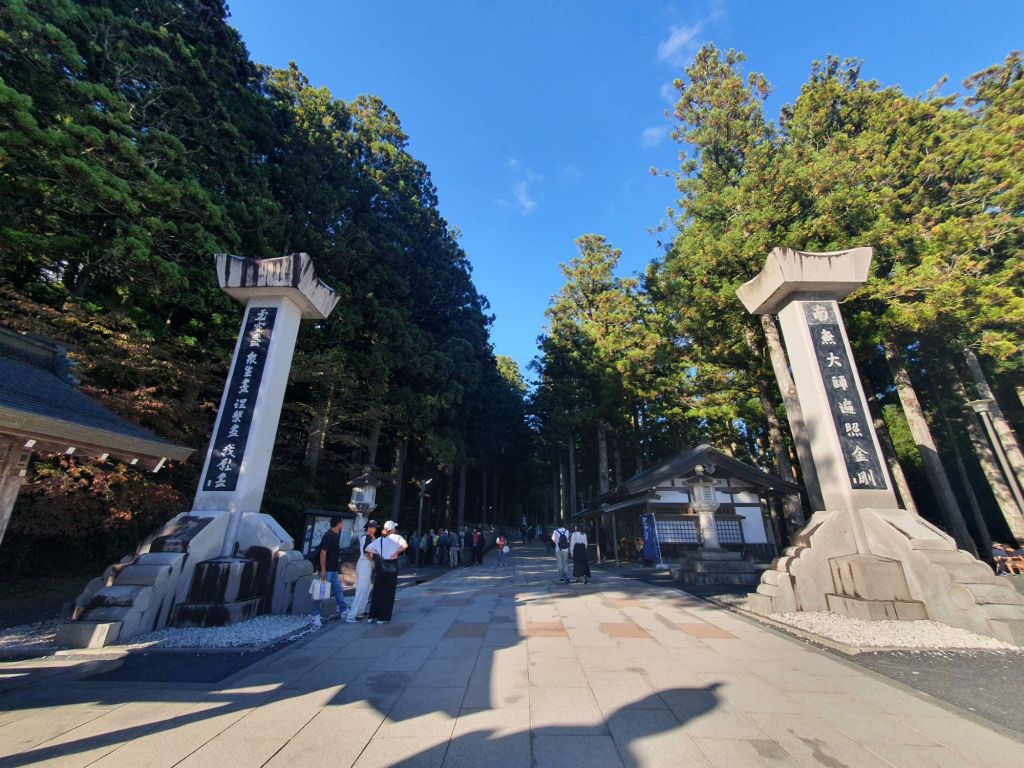
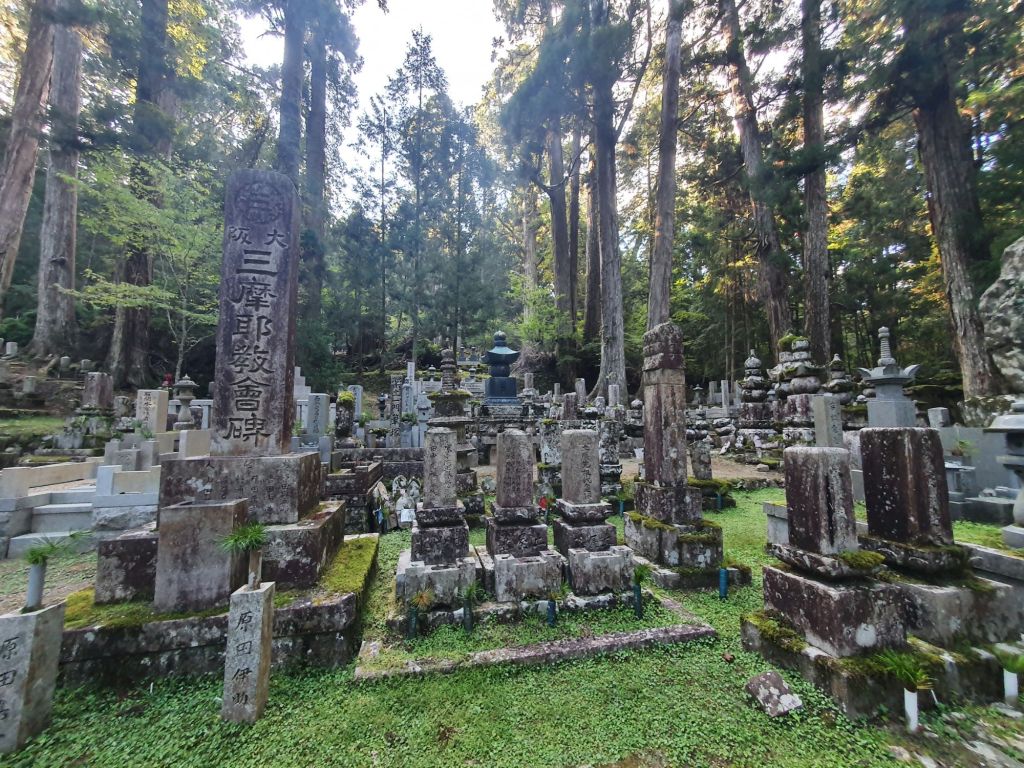
Okunoin cemetery, has over 200,000 tombstones and is the largest cemetery in Japan. Wishing to be close to Kobo Daishi in death in order to receive salvation, many people, including monks and feudal lords, have had their tombstones erected here over the centuries.
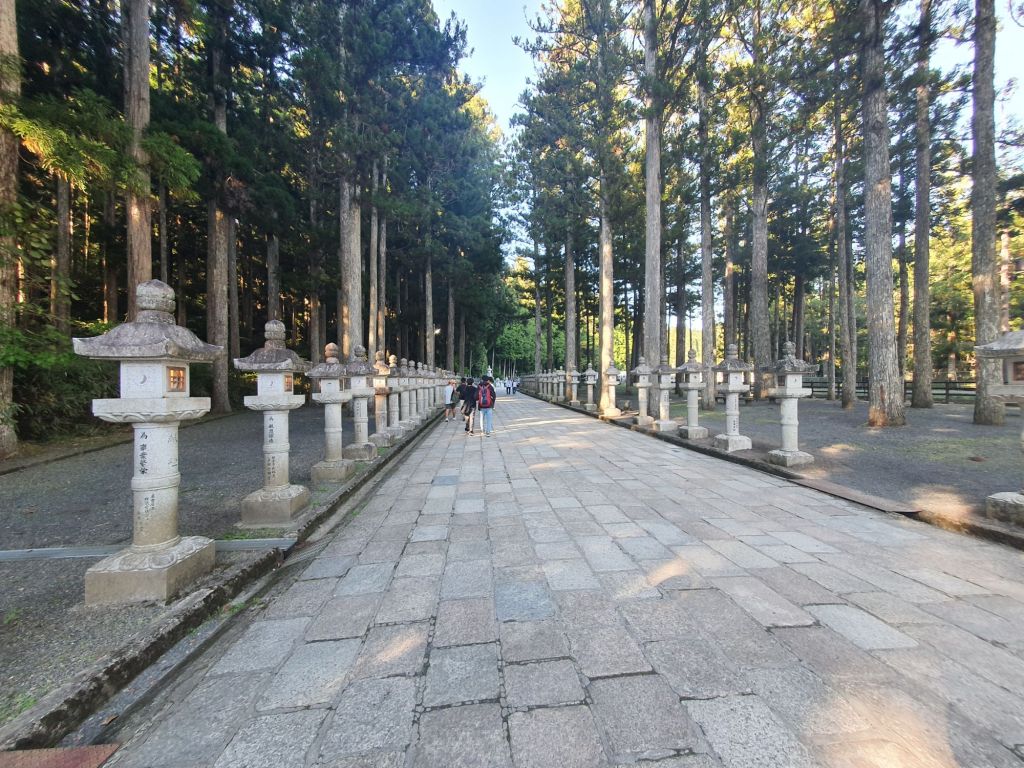
As our guide explained, there are no graves or bodies buried at Okunoin. Just memorial headstones (so, as she put it, if you walk here at night, there are no ghosts).

The other feature of the Okunoin cemetery is the very tall cedar trees that line the path through the cemetery. Walking deeper into the cemetery surrounded by headstones and the trees it feels like you are leaving the real world behind and entering the spirit world.

The path takes you to the Gobyobashi Bridge and Gokusho Offering Hall. Here there is a row of statues depicting Jizo, a popular Bodhisattva that looks after children, travelers, and the souls of the deceased. Visitors make offerings and throw water at the statues, to pray for departed family members.
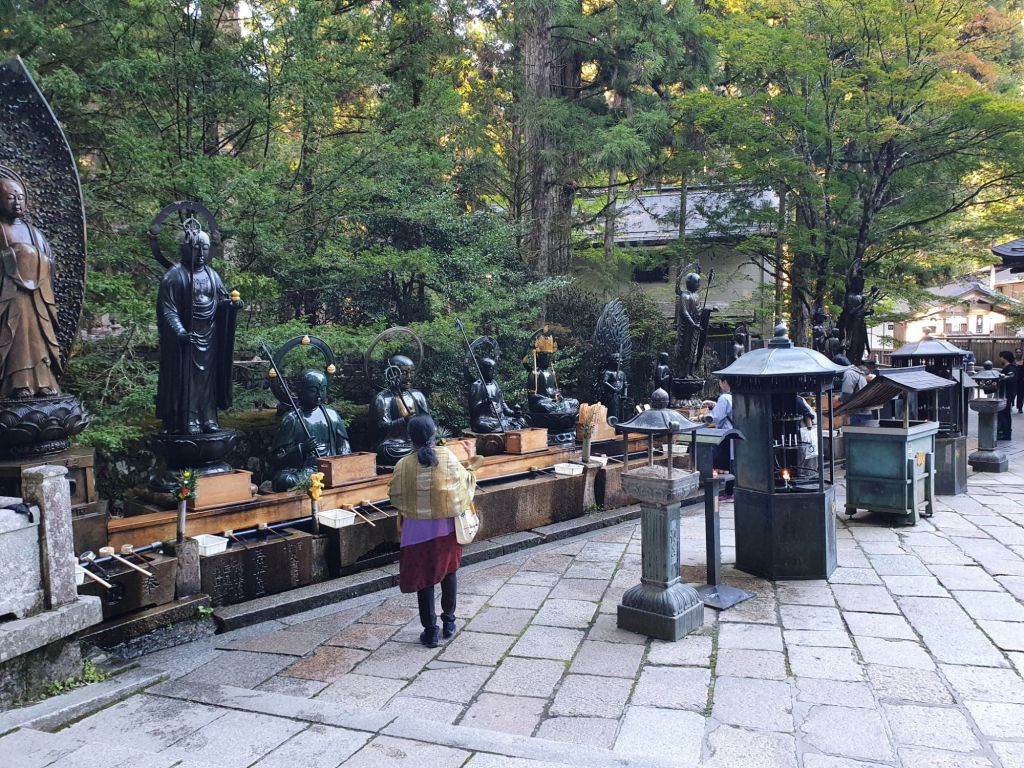
The Gobyobashi Bridge crosses a stream that separates the innermost grounds of the temple from the rest of Okunoin. Photography, food and drink are forbidden in this part of the cemetary.

Beyond the bridge is Torodo Hall or Hall of Lamps and Kobo Daishi’s mausoleum. This is Okunoin’s main hall for worship. Inside the hall are more than 10,000 lanterns, which were donated by worshipperd and are kept eternally lit. We were able to go in an make an offering, and the thousands of lanterns really do make a remarkble sight (unfortunately no photos allowed).
1630: Soon it was time to head back, and we retraced our steps from this morning (bus, cable car and train) back to Osaka.
Tip: On the way back, if you have time, go upstairs to the waiting room at Koyasan cable station. This had the best views around mount Koya we’d seen all day.

Overall, I felt that the visit to Koyasan was well worth it. My only regret is that we didn’t spend the night at one of the temples. So this is definitely one for the list next time.
Tip: If you are visiting Koyasan, make sure to stay overnight at a temple for the full experience. This is a unique experience, staying in traditional temple accommodation, and trying “Shojin Ryori” (Buddhist vegetables cuisine). The temple stay is expensive, but having done a day trip to Koyasan, I think the experience would have been much more enhanced if we stayed the night.

 Diary of a Tourist
I will visit Osaka and I was thinking about a day trip. Loved your post!. thanks for sharing!
LikeLiked by 1 person
Thank you! Hope you have a great time in Osaka!
LikeLike
Thank you! Hope you have a great time in Osaka and Koyasan!
LikeLike
Even before you said it, I thought: I’m staying overnight. It looks so peaceful.
LikeLiked by 1 person