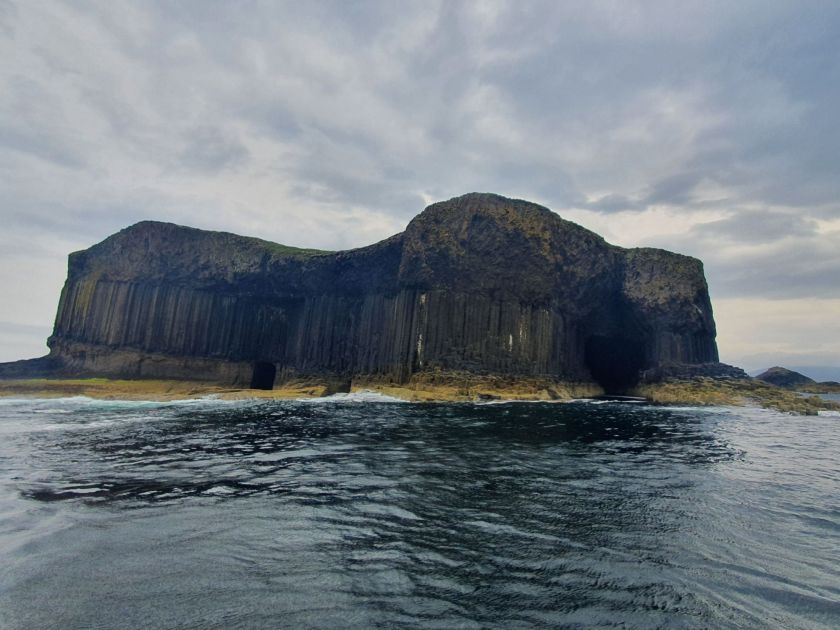
Where and when: Inner Hebrides, Scotland, 22 May 2024
This is a day trip we took to the Isles of Staffa, Iona and Mull, off the West coast of Scotland during our recent trip to Scotland.
The three islands are part of the Scottish Inner Hebrides islands. When planinng the trip, I actually only wanted to visit Staffa and Iòona. But to get to these two islands you have to go through the Isle of Mull. If you have a car, you can do the trip yourself, booking the ferry and boat rides individually. However, I decided to book the tour with West Coast Tours as it provided us with a break from driving for the day (we had arrived in Oban the evening before after a 9 hour trip from the midlands).
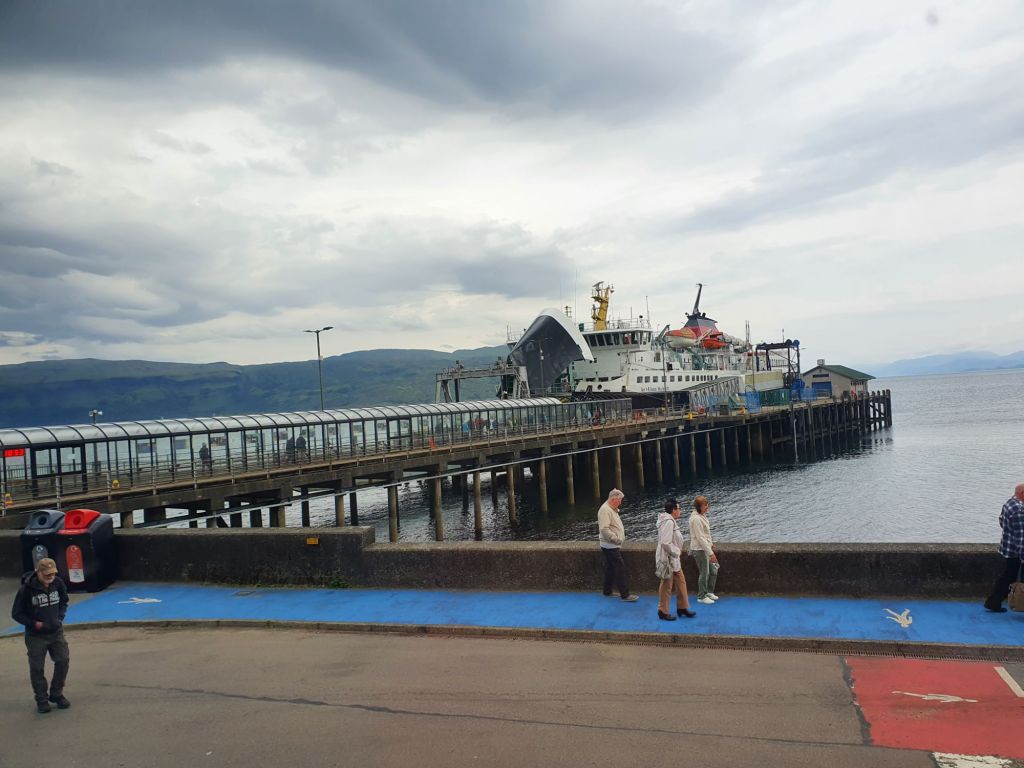
0925: At Oban ferry terminal.
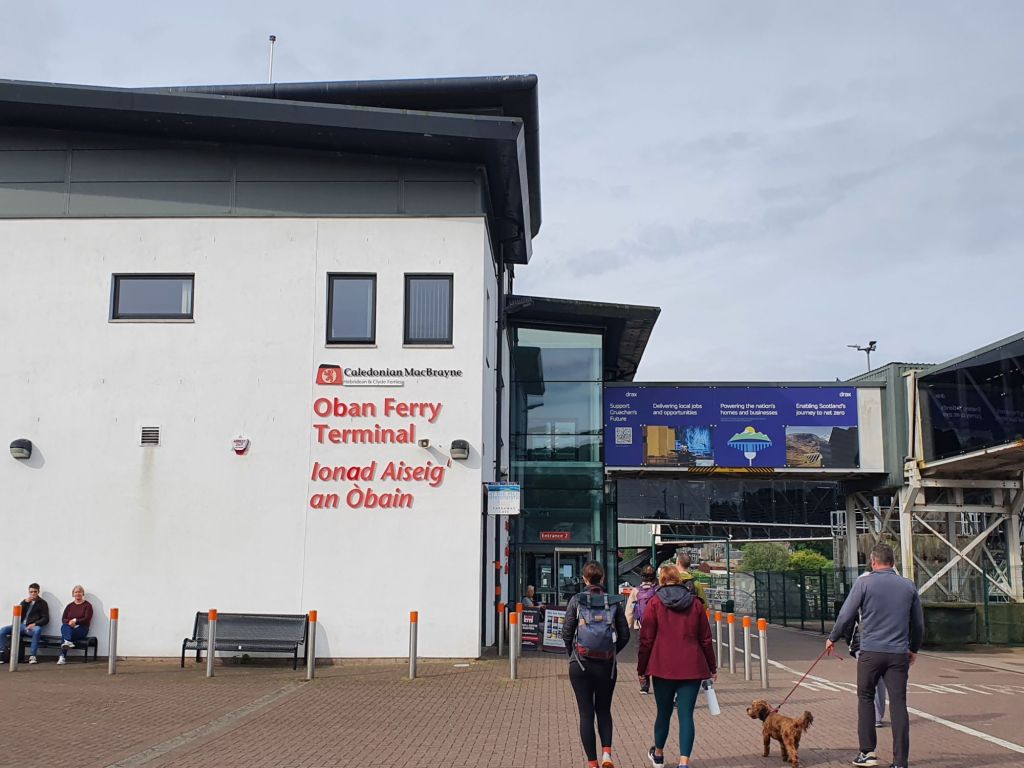
If you are taking this ferry (or an earlier one) I would recommend staying in Oban the night before. It is a nice seaside town, with a number of good restaurants (We tried the Cuan Mor seafood restaurant and the Piazza italian restaurant, and both were excellent).
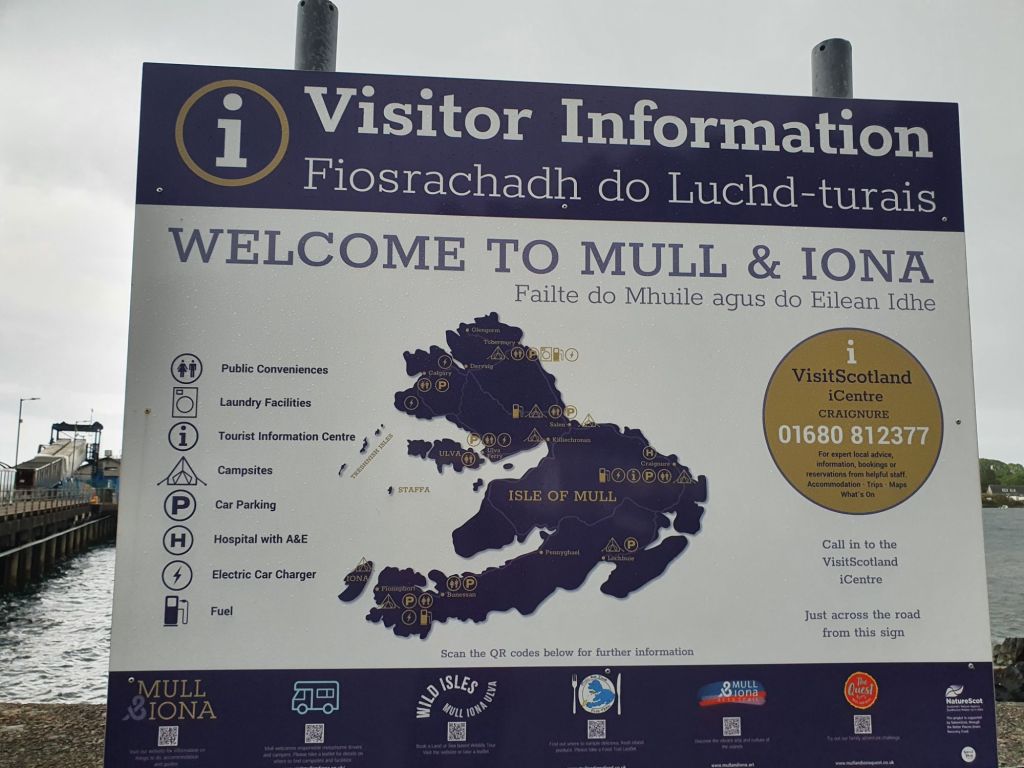

0955: The ferry leaves Oban terminal. It takes about 40 minutes to cross over to the Isle of Mull. If you can brave the weather, the open top deck of the ferry has great views of the Hebridian islands and the mainland.
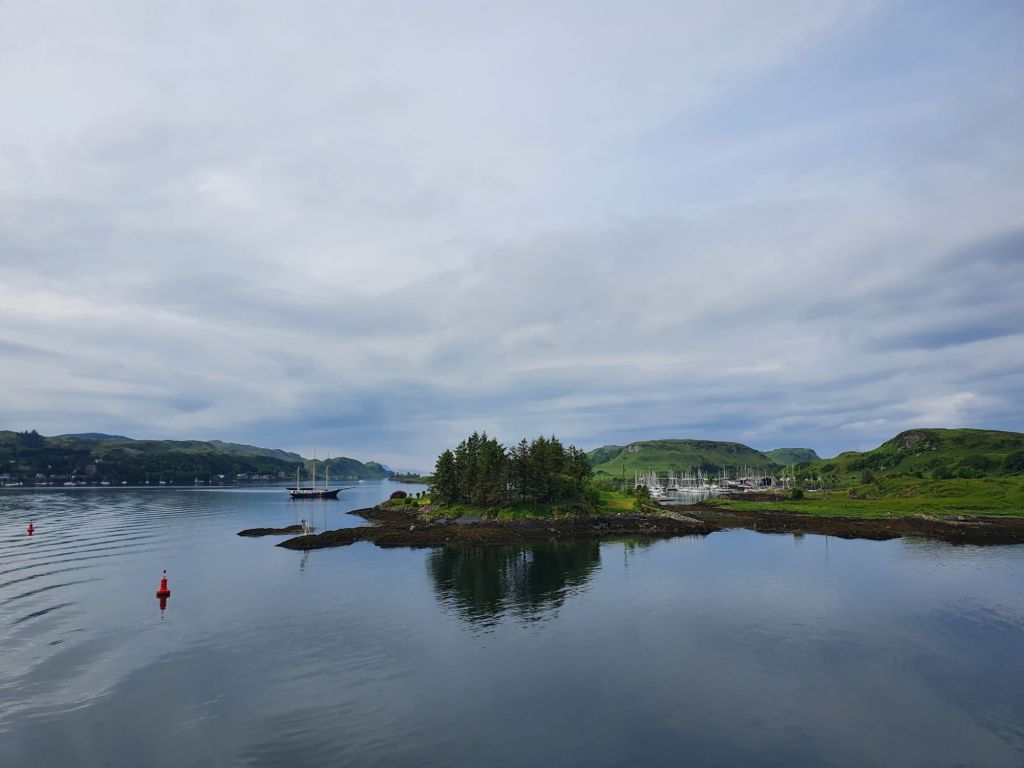
1040: Arrive at Isle of Mull ferry port at Craignure. The coaches are parked at the ferry port as you disembark. The staff will direct you on to the coaches, depending on the tour you are on (we were on the three isles tour, but there are other tours as well, covering just two isles, wild life etc.)
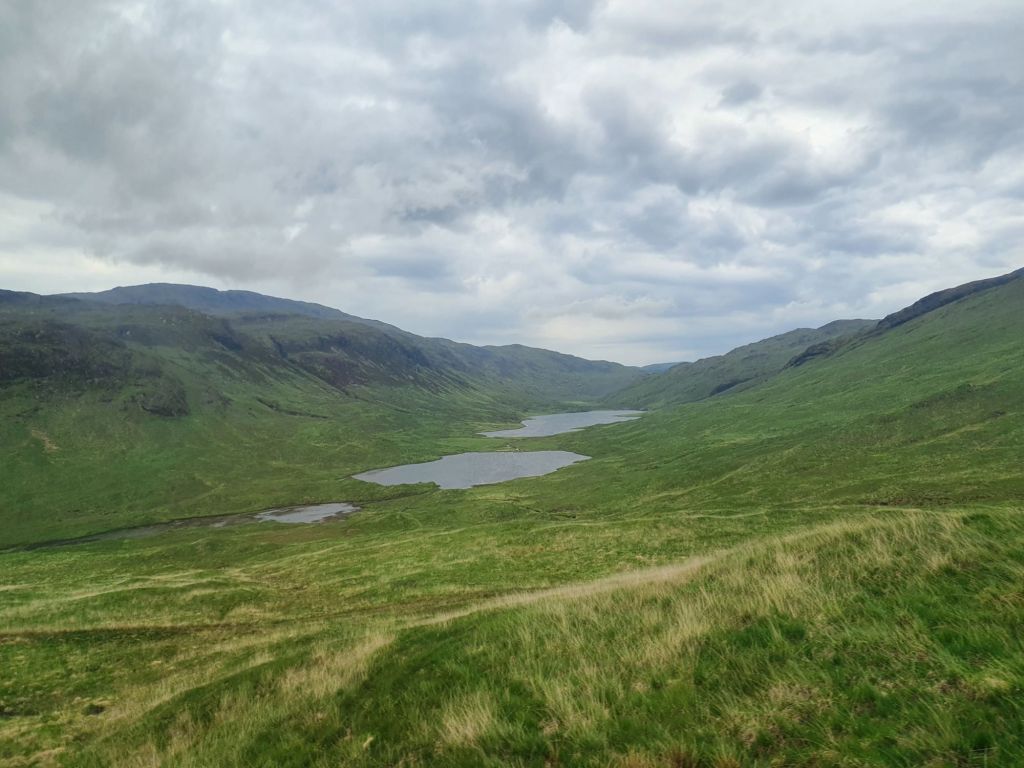
1100: The journey across the Isle of Mull begins. The coach takes us from Craignure to Fionnphort – the jumping off point for the Isles of Iona and Staffa. The 35 mile journey takes a little over an hour, due to the windy single track road. The journey is very scenic, and there is recorded audio and live commentary on the coach as well, explaning the history and geography of Mull.
1215: Arrive at Fionnphort. Those of us going to the Isle of Staffa are directed to the speedboat operated by Staffa tours.
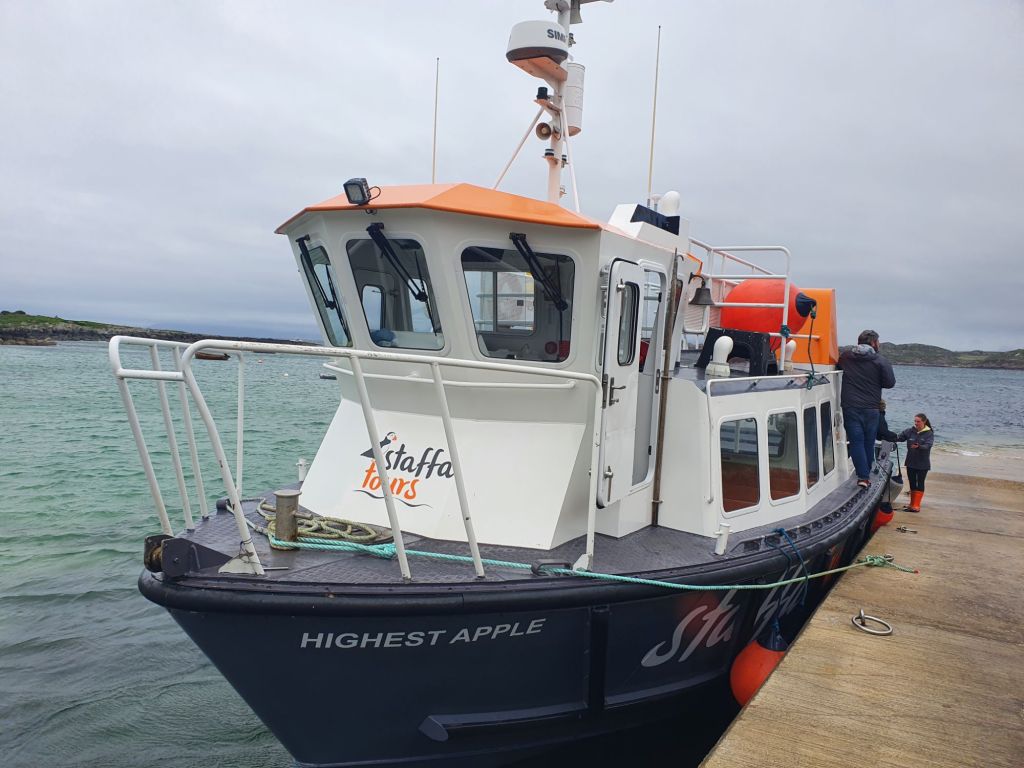
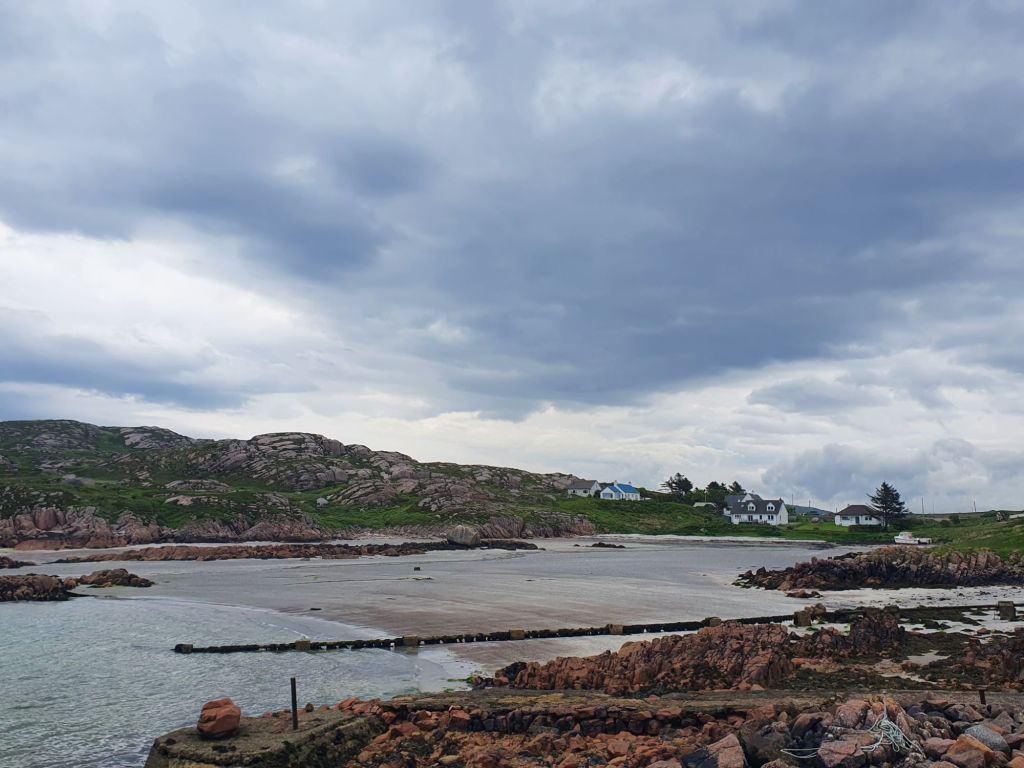
1230: The boat departs for Staffa. The journey takes about 30 minutes. There’s an audio commentary on the boat as well.
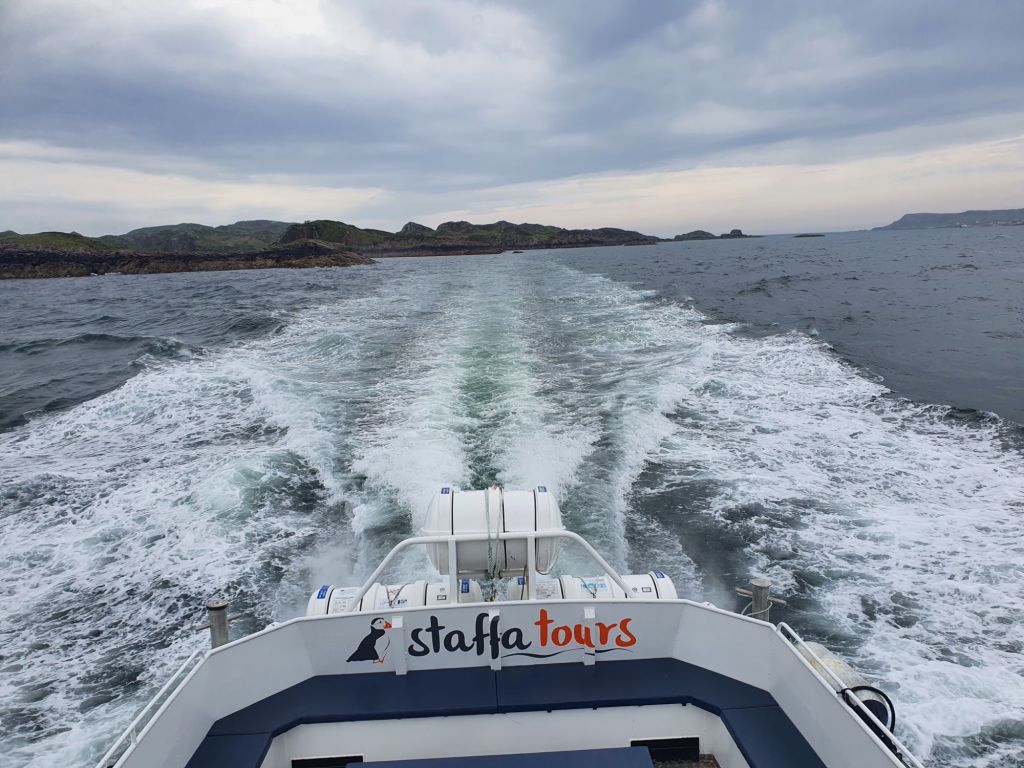
Staffa lies about 10 kilometres (6 miles) west of the Isle of Mull; its area is 33 hectares (82 acres) and the highest point is 42 metres (138 feet) above sea level.
The island became well known in the late 18th century after a visit by Sir Joseph Banks. He and others extolled the natural beauty of the island and of the island’s main sea cavern, which Banks renamed ‘Fingal’s Cave’. Their visit was followed by many other prominent persons throughout the next two centuries, including Queen Victoria and Felix Mendelssohn. The latter’s Hebrides Overture brought further fame to the island.
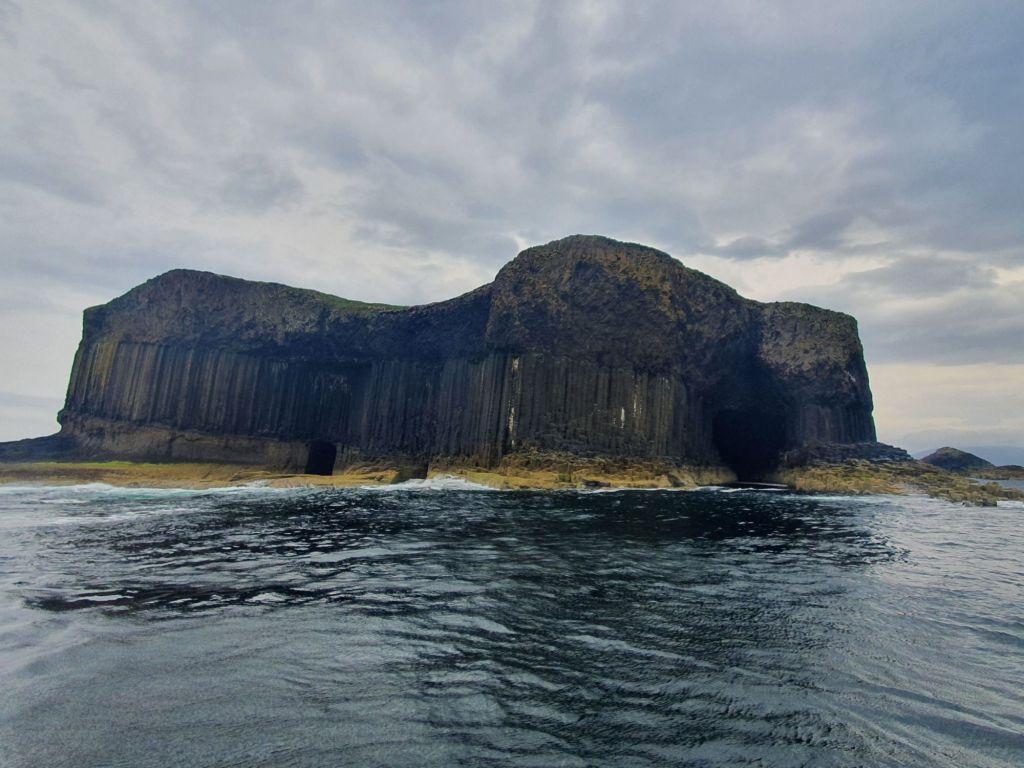
1315: After a close by sailing to see Fingal’s Cave, the boat disembarks at Staffa. We have 1 hour to explore the island.
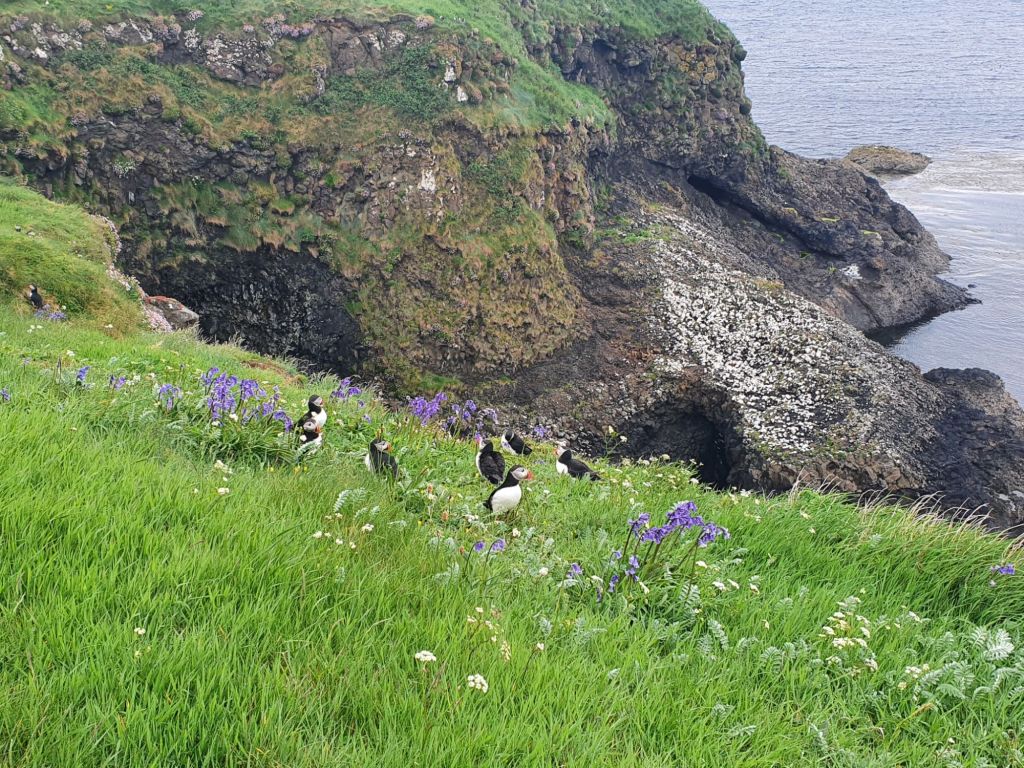
We decided to go see the puffins first. They are nesting on the ground on the North of the island. With their bright orange beaks and mask like faces they are very distinctive. Staffa is one of the few areas you can see them up close.
Next we headed back to the boat dock and to further explore the basalt columns and Fingal’s Cave.
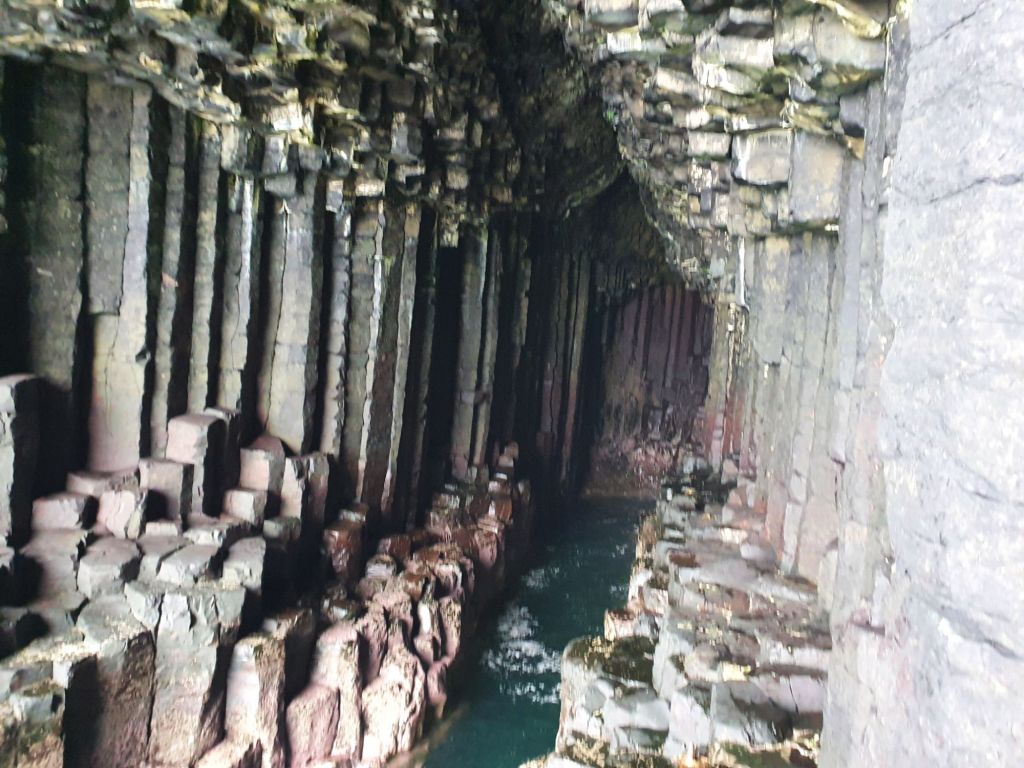
Fingal’s Cave is a sea cave made up of basalt column that make up the South part of Staffa island. It became known as Fingal’s Cave after the eponymous hero of an epic poem by 18th-century Scots poet-historian James Macpherson.
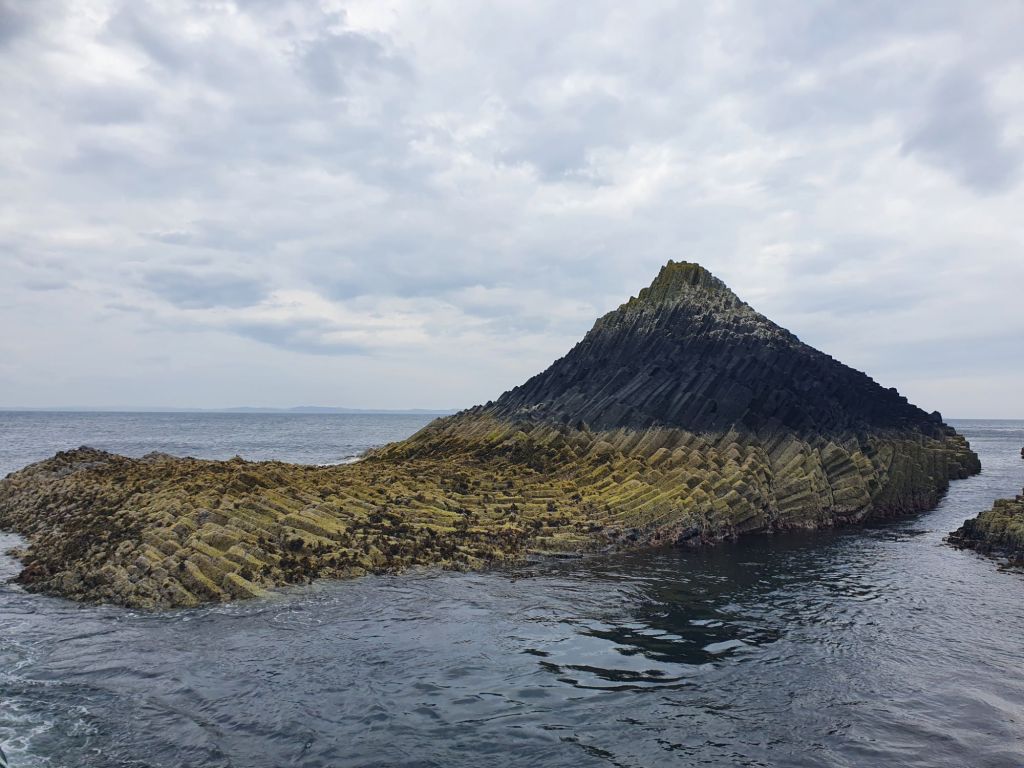
According to legend, the basalt columns at Staffa are the remains of a causeway built by a giant, the other end being the Giant’s Causeway in Northern Ireland.
The story goes that the Irish giant Fingal Fionn mac Cumhaill (Finn MacCool), was challenged to a fight by the Scottish giant Benandonner. Fionn accepted the challenge and built the causeway across the North Channel so that the two could meet. In one version of the story, Fionn defeats Benandonner. In another, Fionn hides from Benandonner when he realises that his foe is much bigger than he is. Fionn’s wife, Sadhbh, disguises Fionn as a baby and tucks him in a cradle. When Benandonner sees the size of the “baby”, he reckons that its father, Fionn, must be a giant among giants. He flees back to Scotland in fright, destroying the causeway behind him so that Fionn would be unable to chase him down.
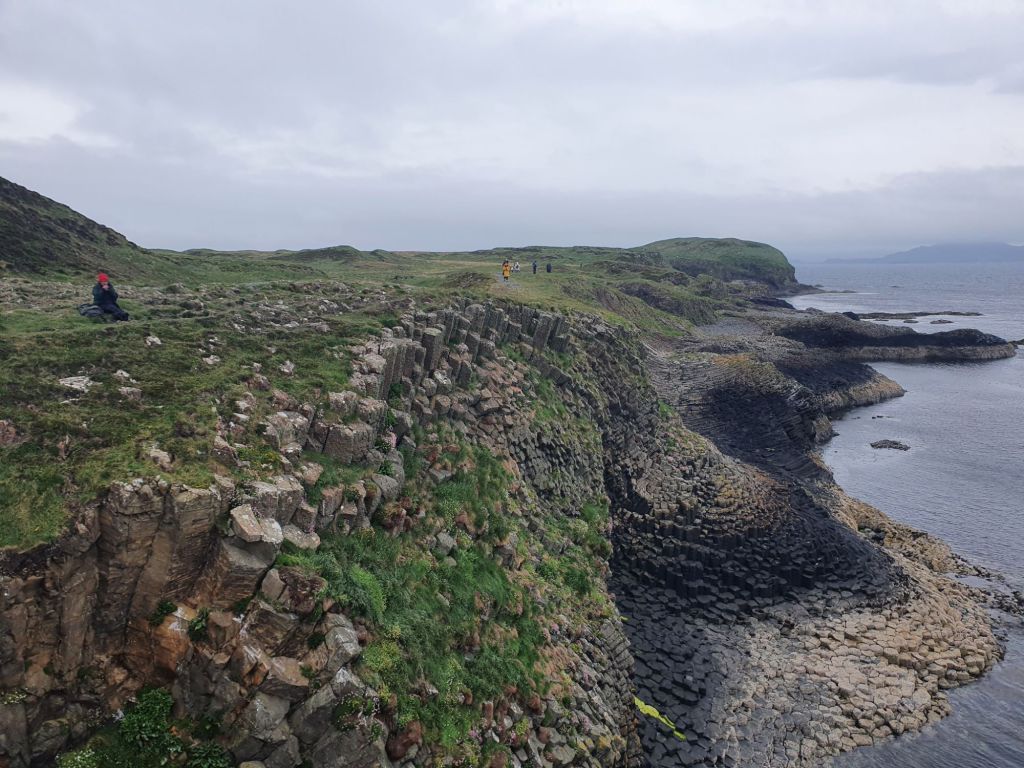
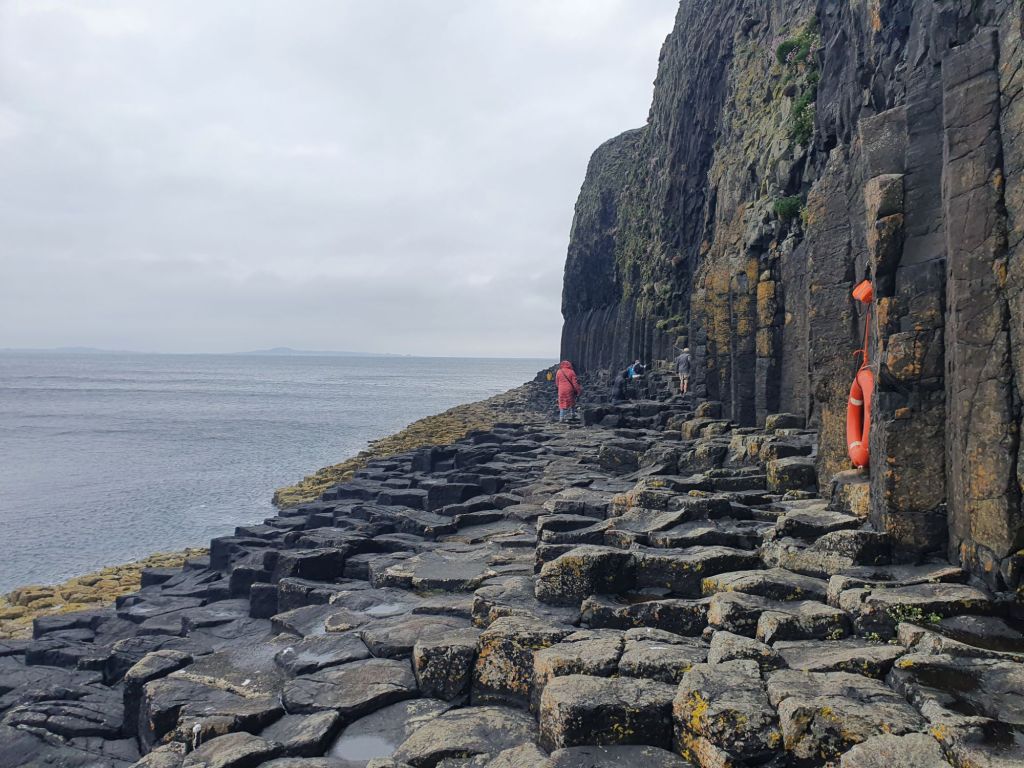
The walkway to Fingal’s cave from the boat dock looks rather treacherous- but a closer look shows that it is not that bad – the top of the balsalt colums are nearly stacked against one another and forms a natural pathway. A handrail is tacked on to the wall. The photo plaques nearby show the tourists in the Victorian era on the same part of the island as we are. Very little has changed since then.
The cave itself is made up of basalt columns and you can go partway inside.
1430: We leave Staffa and head over to the Isle of Iona.
Iona is another tiny island off the southwest coast of Mull. It is only 1.5 miles wide by 3 miles long, with a population of around 170 permanent residents and mainly known for Iona Abbey.
1500: We arrive at Iona ferry port.
Iona has a long and colourful history and known as being ‘The Cradle of Christianity’ in Scotland.
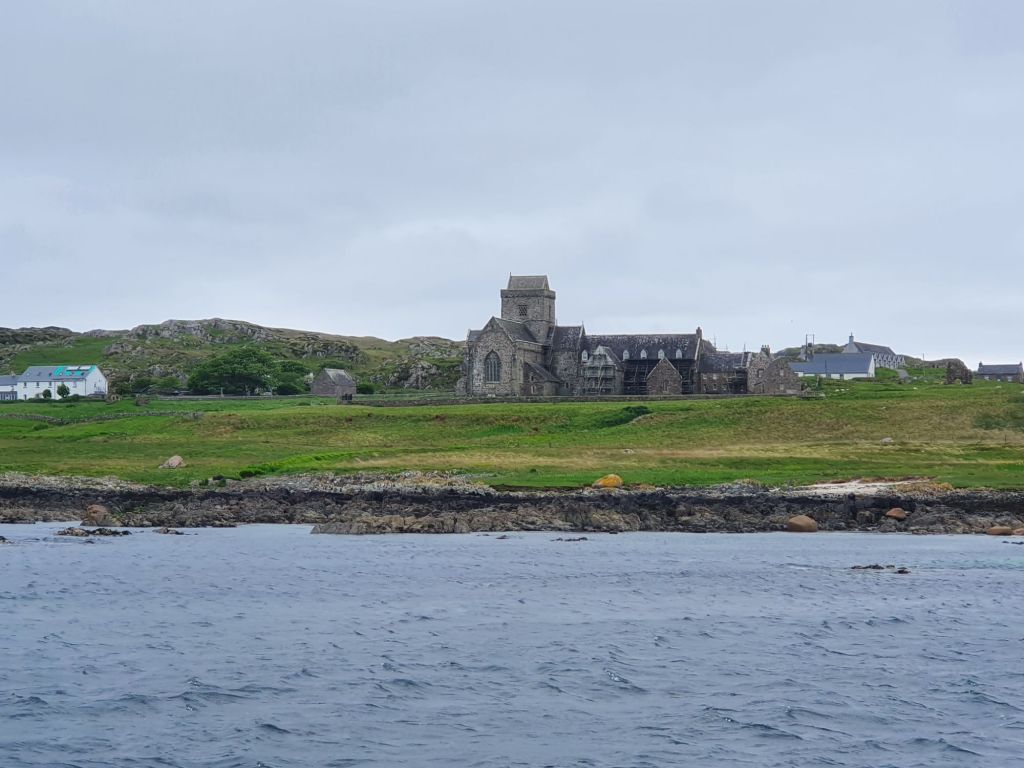
In 563 an Irish priest called Columba arrived on Iona. For 34 years, Columba and his monks, from their base on Iona, pursued an active missionary outreach, of what has come to be known as Celtic Christianity, throughout the Western Isle and up into the North Eastern parts of Scotland. Through their work, Iona came to be known as a centre of learning, healing, and hospitality.
Columba died in 597, and his successors, still based on Iona, carried on the work he started, extending their missionary reach to the north of England and even into continental Europe.
In 802, the settlement on Iona was raided and destroyed by Vikings. Forty years later, Columba’s remains were removed to Dunkeld, and the monks gradually withdrew to the safer shores of Ireland, taking with them the Book of Kells, which can still be seen today in Dublin.
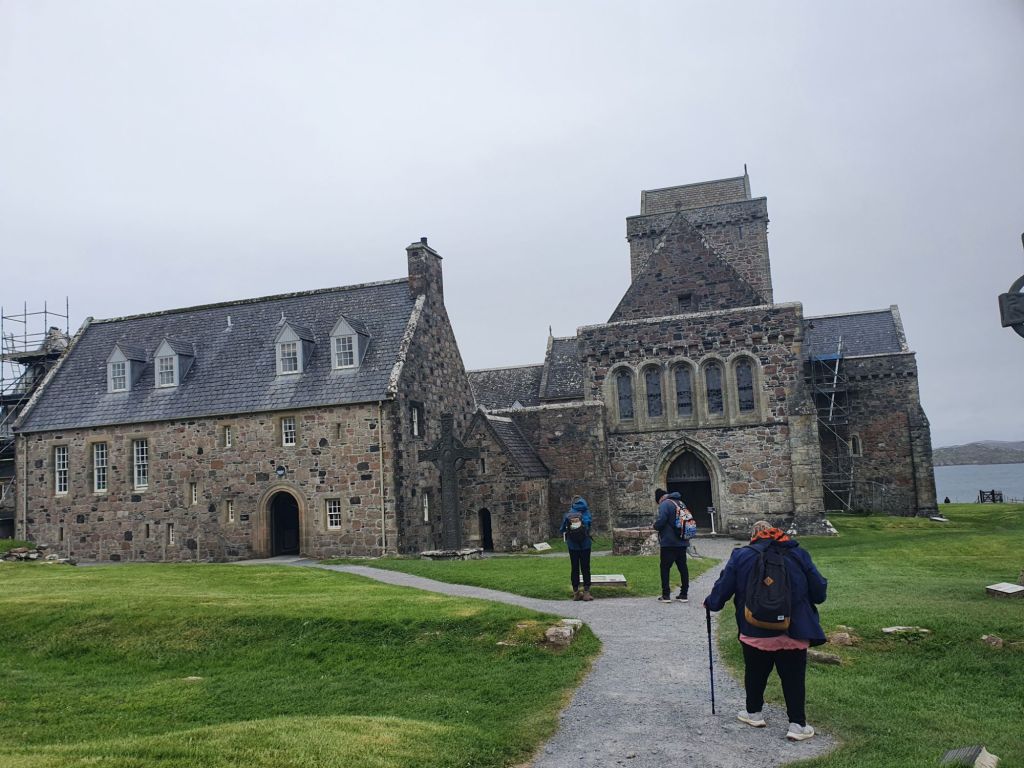
After a short lunch break at the nearby cafe, we set out to explore the islands. The main tourist attraction at Iona is the Abbey.
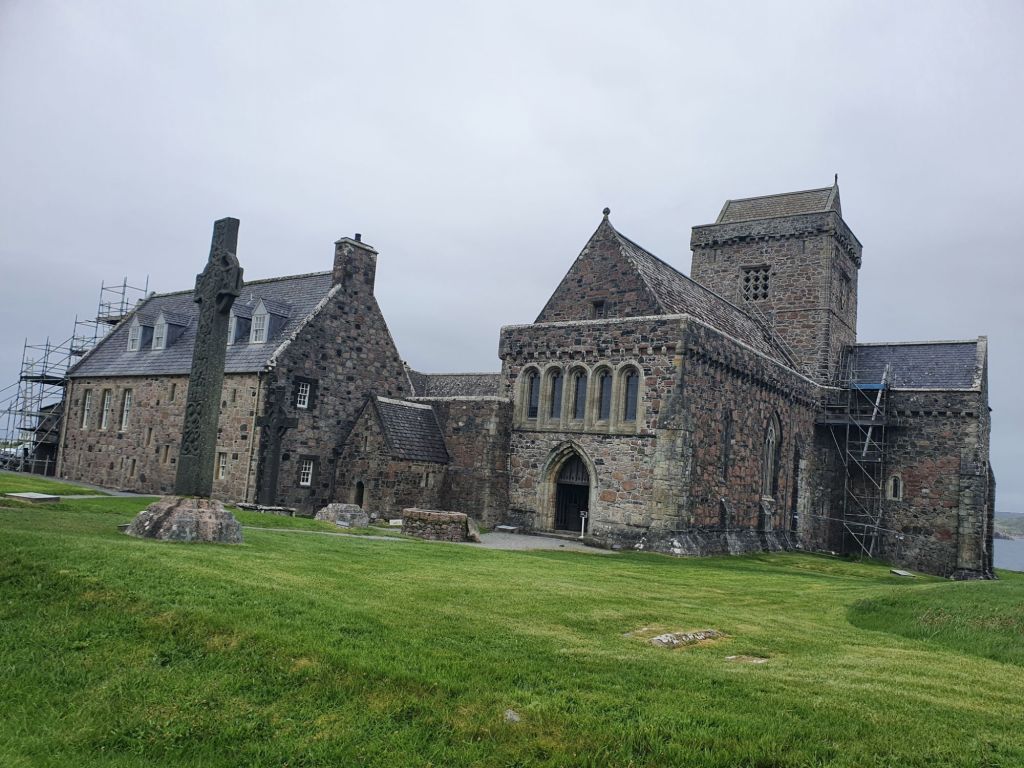
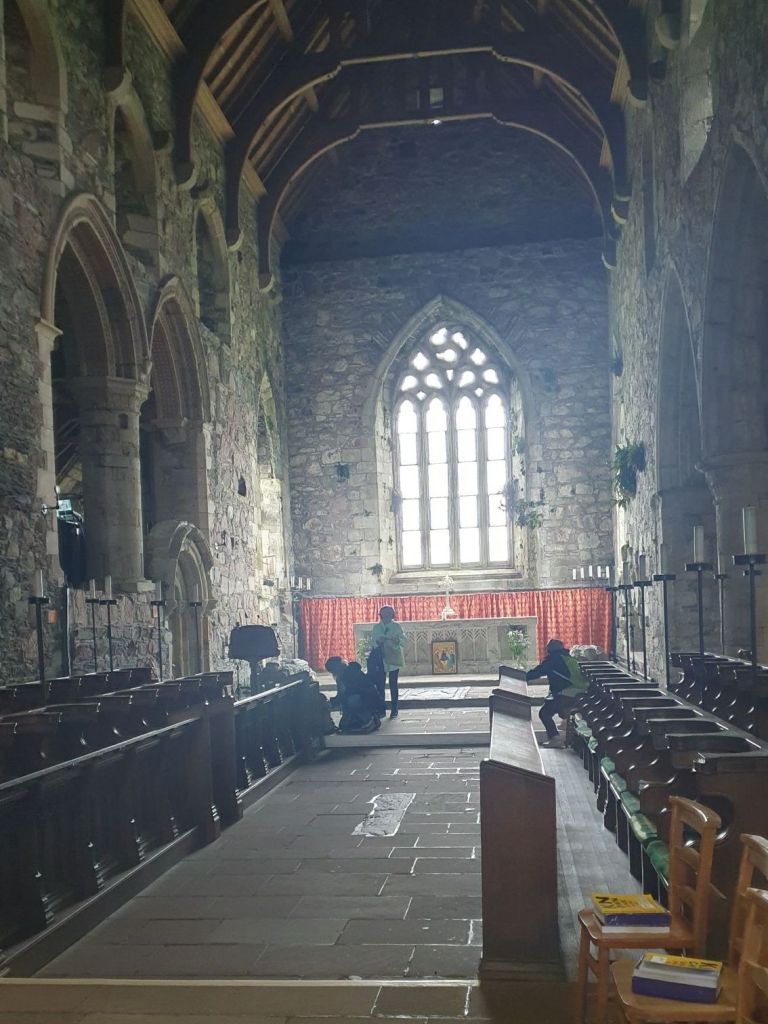
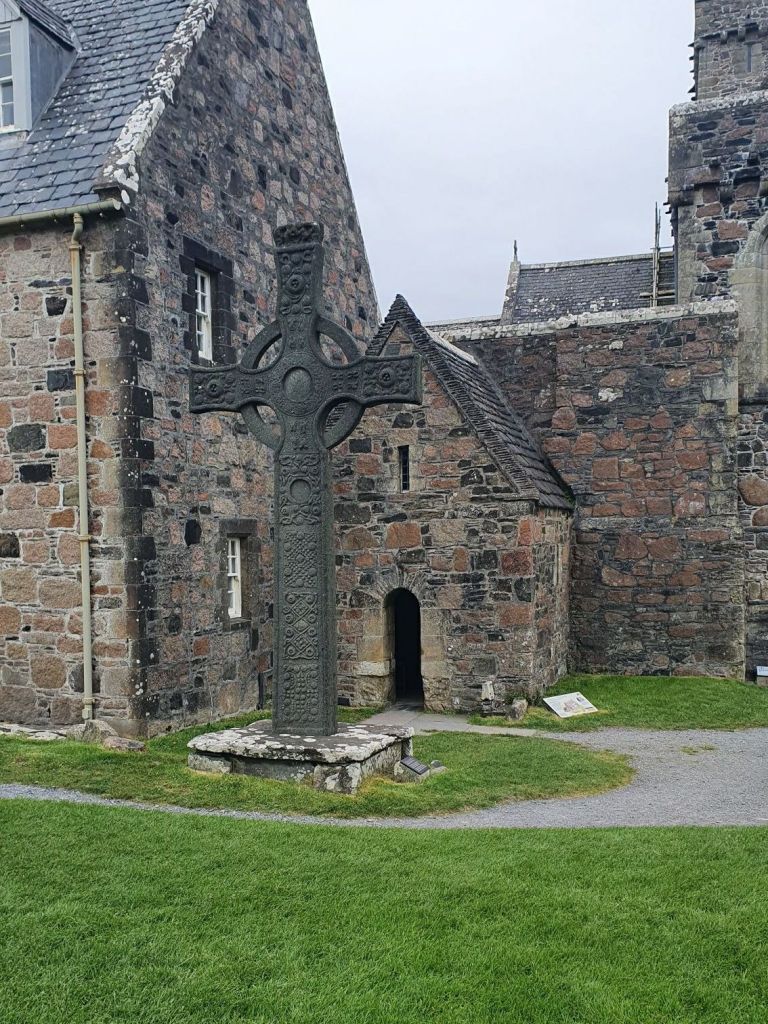
Iona Abbey dates back to the early days of Columba. Many early Scottish kings have been buried here.
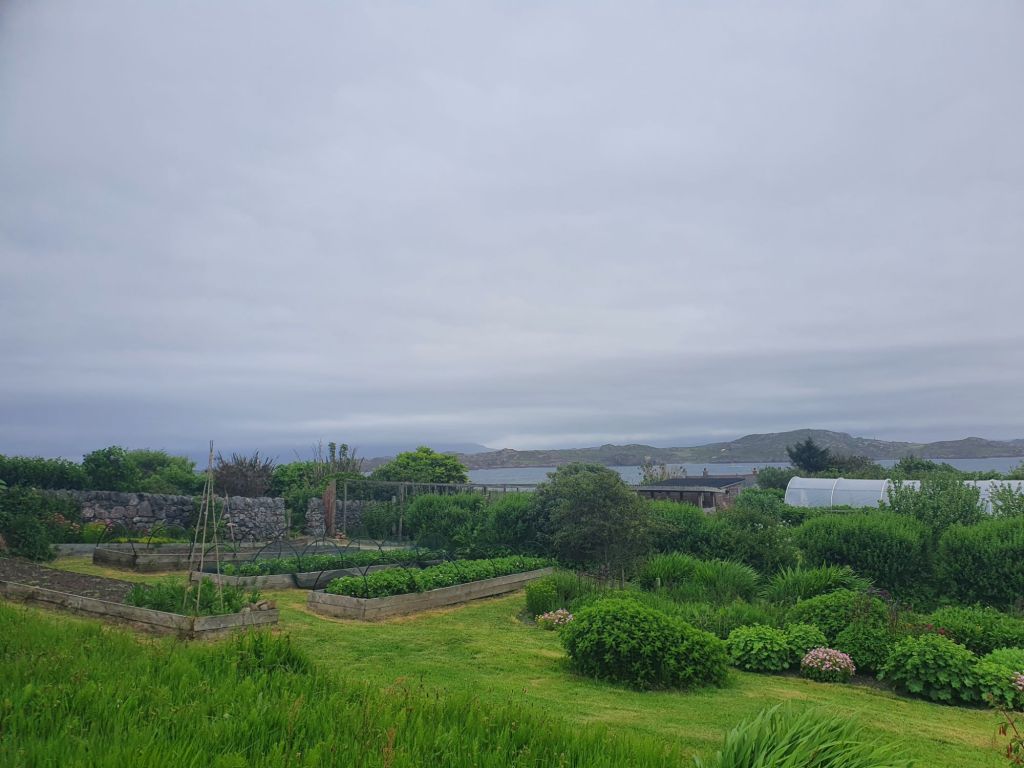
1630: We started to head back to the ferry port. We’d been given strict instructions to take the 1715 ferry (or earlier) back to Mull, in order to catch the return coach to Craignure.
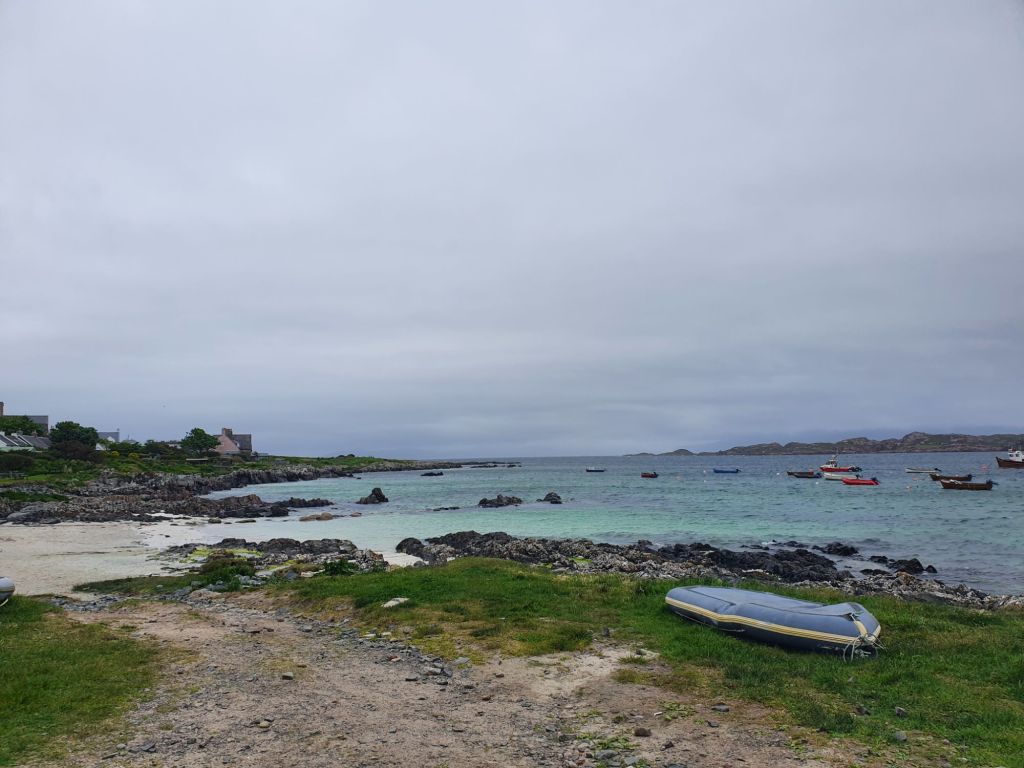
The rain that had been threatening all day started to pour down at this point. There was time for a hot chocolate at the cafe, before boarding the ferry. The Iona to Mull ferry ride is really short – no more than 15 minutes.
1745: Back on the coach and back to Craignure.
1900: The ferry back to Oban docks just as we arrive at Craignure, so we were soon back on the way to the mainland.
During the return trip, over a glass of Talisker, I reflected on the journey. It had been a great day out, that was no doubt. I had looked at different options for the tour and although the DIY option would have been cheaper, this was a good alternative, as it gave us a break from the car and driving and also took a lot of the hassle away. It was not an escorted tour as such – all the ferry tickets and boat tickets and booked for you and transportation across mull is provided on a coach. But other than that you are left to your own devices on each island.
The Isle of Staffa had been as I imagined it to be. It brought back memories of my visit to Giant’s Causeway in 2017; and I was able to complete a bucket list item I had set for myself there – to visit the other end of Giant’s Causeway – Staffa and Fingal’s cave. Isle of Iona was another bucket list item – it is not hard to find a stone built abbey dating back to the 12 century in the UK – but Iona abbey set on a remote island is, there is no other word for it, mystical.
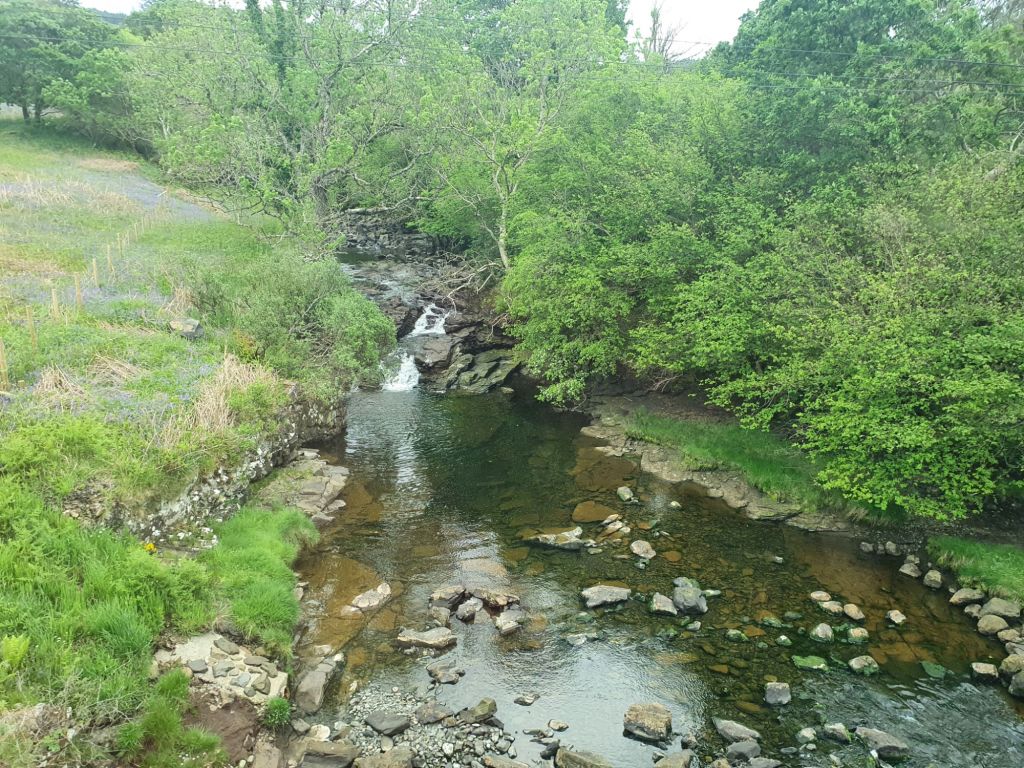
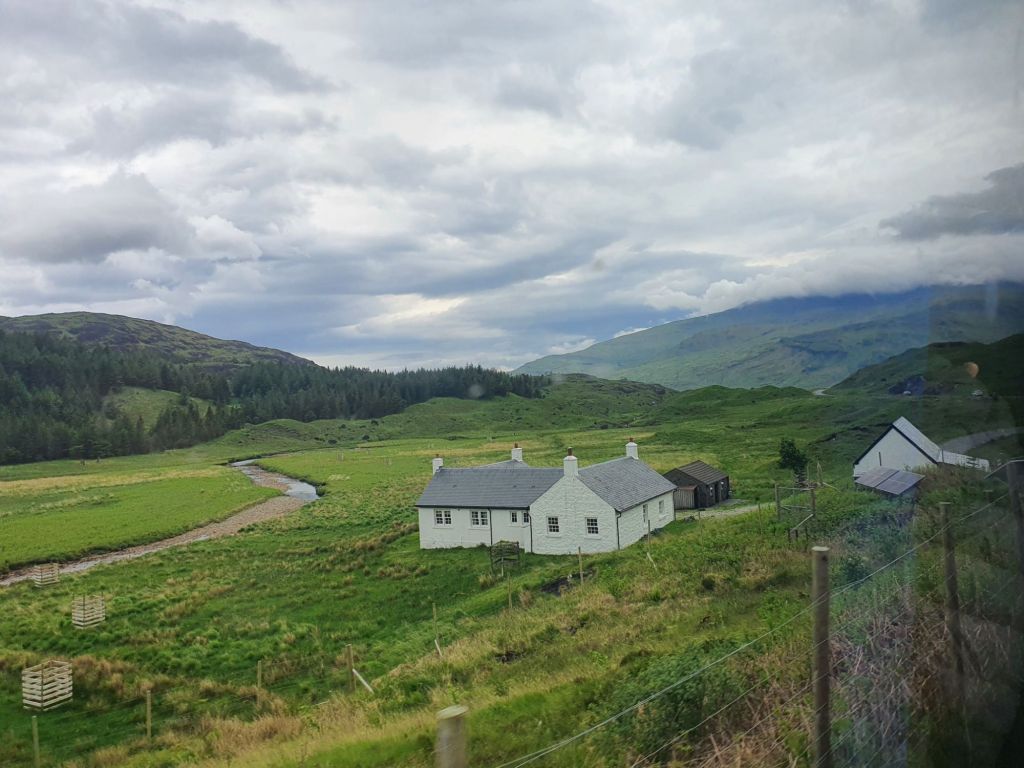
I had a third purpose for this trip – to scout out inner Hebrides as a future “long and slow” holiday destination – as the Outer Hebrides (specifically the Isle of Harris) is my favorite place in the whole world, I wanted to see how it’s inner neighbour compared. On this count, I have to say I was disappointed. Whilst Mull and Iona are no doubt beautiful, it didn’t have other worldly beauty, isolation and big sandy beaches and blue sea that made Harris very special. The landscape of Iona and mull are more like the Scottish Highlands – so I think given the choice between the outer and inner Hebrides, I would still opt for the outer hebrides.
2015: We were back on the dock at Oban. We picked up the Pizzas that I had ordered on the way back from the boat and headed to our apartment for dinner.

