
Where and when: Riga, Latvia, May 2025
1300: Arrive in Riga and it is short taxi ride from the airport to the hotel. We are staying at the Grand Palace Hotel on the edge of Riga Old Town.
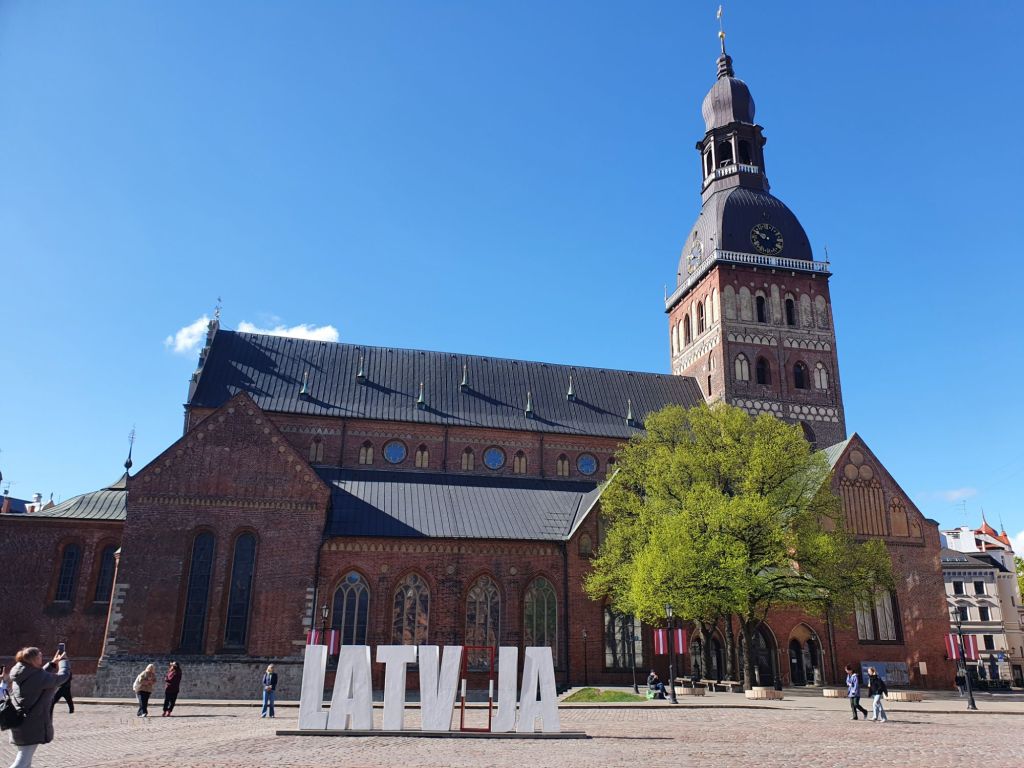
1500: On a walking tour of Riga with old town free tour.
The tour starts with a quick history lesson. Riga is the capital of Latvia and is located near the mouth of the river Duagava. It has a population of neary 600,000; a third of the population of Latvia. Riga’s history dates back 800 years when it was first established by the Livonian people.

After World War I, Latvia became independent, with Riga as its capital. However, this independence was brief as the country was invaded during World War II by the Soviet Union and then Nazi Germany, subsequently falling under Soviet control for nearly 50 years. Latvia declared its independence from Soviet Russia in 1991, joined the EU and NATO in 2004, and adopted the Euro in 2008.
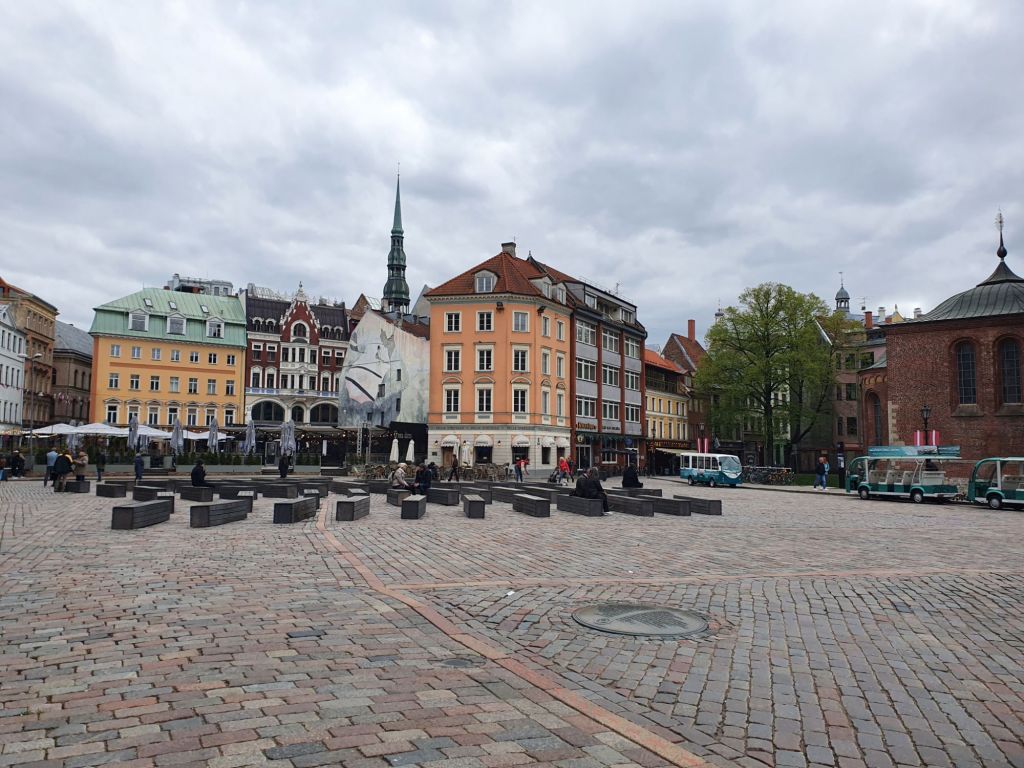
Things to see in Old Town Riga
These are a few of the places we stopped by during our tour of the old town.
St Peter’s Church
Dating back to 1200 AD, one this is of the most prominent landmarks in Riga. Its towering spire is one of the most recognisable in the Riga skyline. For 9 Euros you can go to the top and get great views across the town.

Our guide also told us of a legend about the church and its architect. The architect who built the church would, upon completion of the building works, climb to the top of the spire, have a drink and drop the glass they drank from. The glass would ofcourse, break into pieces and they would count the number of pieces. This then gives you the number of years the church will stand for, before having to be rebuilt. St Peters Church’s most recent restoration was after World War II – and the architect’s glass smashed to smithereens, so Riga locals are hopeful that the church will stand for many years to come.
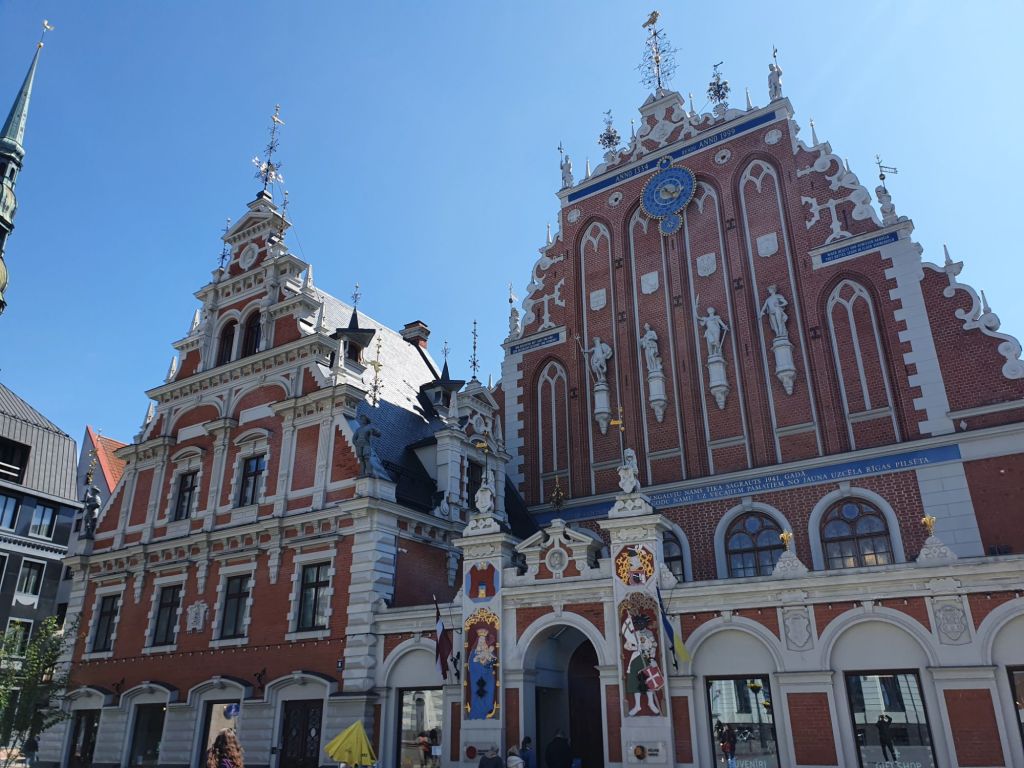
House of the Blackheads
This is one of the most prominent buildings in the main square of Riga. The original building was erected in 1334 as a warehouse, meeting and celebration place for merchants. We would visit this the next day, so more details on this in the next post.
First decorated Christmas tree
Riga’s Baltic neighbour, Tallin, the capital of Estonia claims to have had the world’s first Christmas tree. Not to be outdone, Riga claims to have the first decorated Christmas tree in the World – and it was funded by the merchants from the House of the Blackheads. In the main square there is a permanent metal Christmas tree celebrating this.

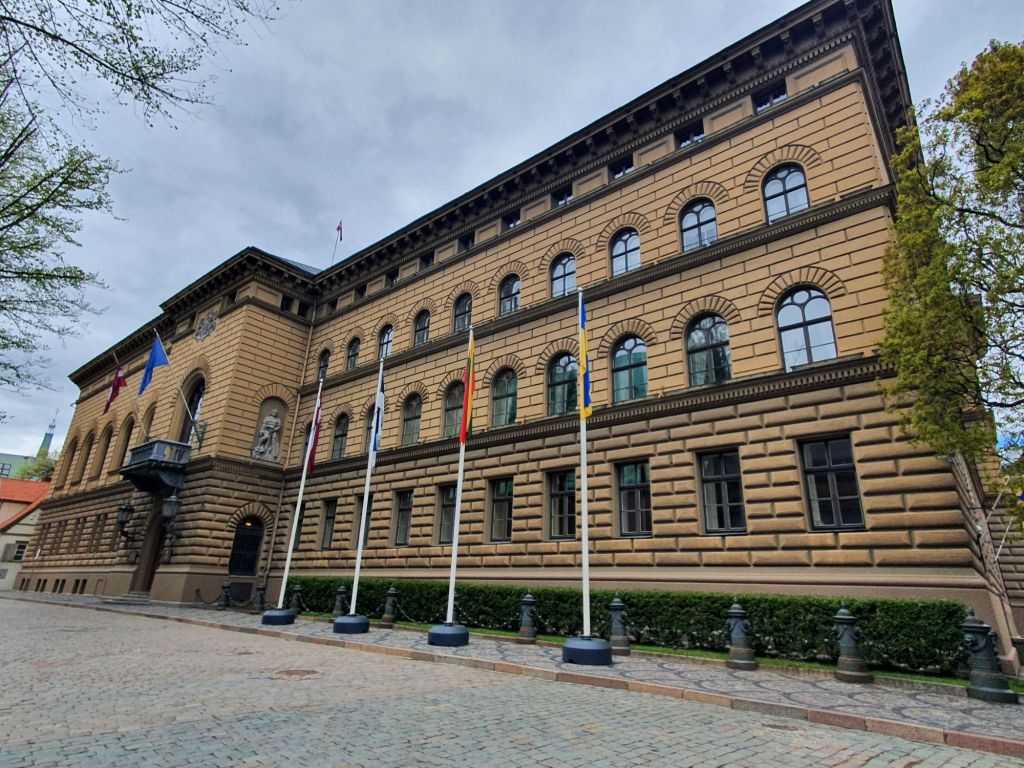
Latvian Parliment
The Parliment of Latvia is quite an unassuming building in the old town. It was built in the 19th century. It was also here that Latvian’s stood up for their independence from Soviet Russia in 1991.
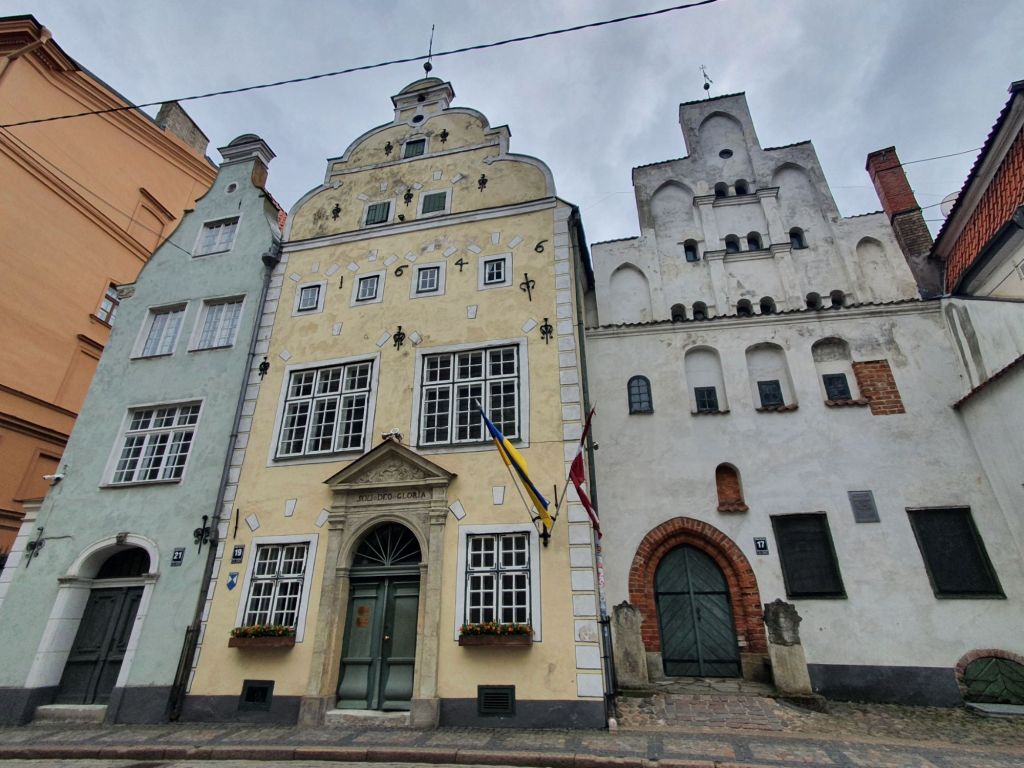
The Three Brothers
This is a housing complex consisting of three houses – built in the 15th, 16th and 17th centuries respectively. The complex houses the Lativian Museum of Architecture.
Cat House
The cat house is probably one of the most well known buildings in Riga old town. It’s an art nouveau building built in 1909 by architect Friedrich Scheffel.
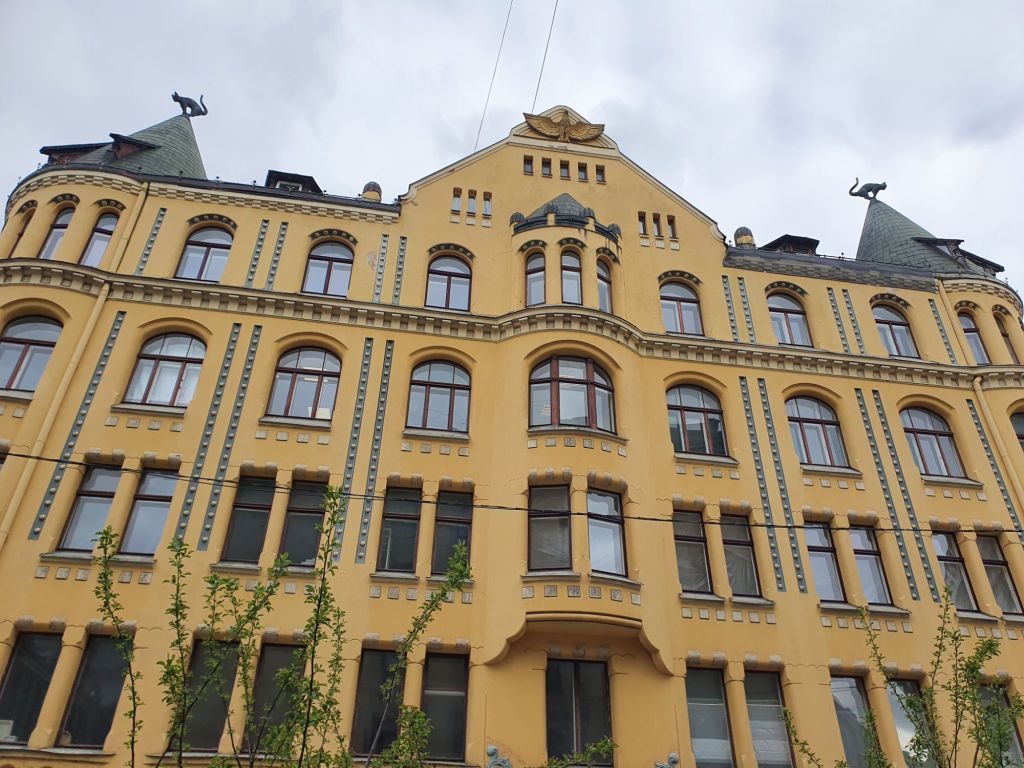
The tale of the cat statues on top of the house is well known in Riga. The legend goes that the wealthy tradesman who commissioned the building was refused membership of the Riga Tradesmen’s Guild. Seeking retribution, the tradesman had two copper statues of angry-looking cats with arched backs and raised tails placed on the turret rooftops of the building with their tails turned towards the house of the Great Guild, situated across the street. After years of disputes the tradesman was finally allowed to become a member of the guild, in return for turning the cat statues the other way round. It is not known if it is a true story, but it has certainly taken hold in Riga; as a result, many of the tourist souvenirs of Riga have cats on them.
The Muscians of Bremen – through the iron curtain
Most cities have a bronze statue of some sort of an animal that you rub for good luck, right? Well, Riga has a statue of four animals. This is based on the Brothers Grimm’s story of the Musicians of Bremen.
The story is about four ageing domestic animals (a donkey, a dog, a cat and a rooster), who after a lifetime of hard work are neglected and mistreated by their former masters. They decide to run away and become town musicians in the city of Bremen. On the way, they come across a band of robbers. They succeed in tricking and scaring off the robbers, capturing their spoils, and moving into their house and they live happily ever after.
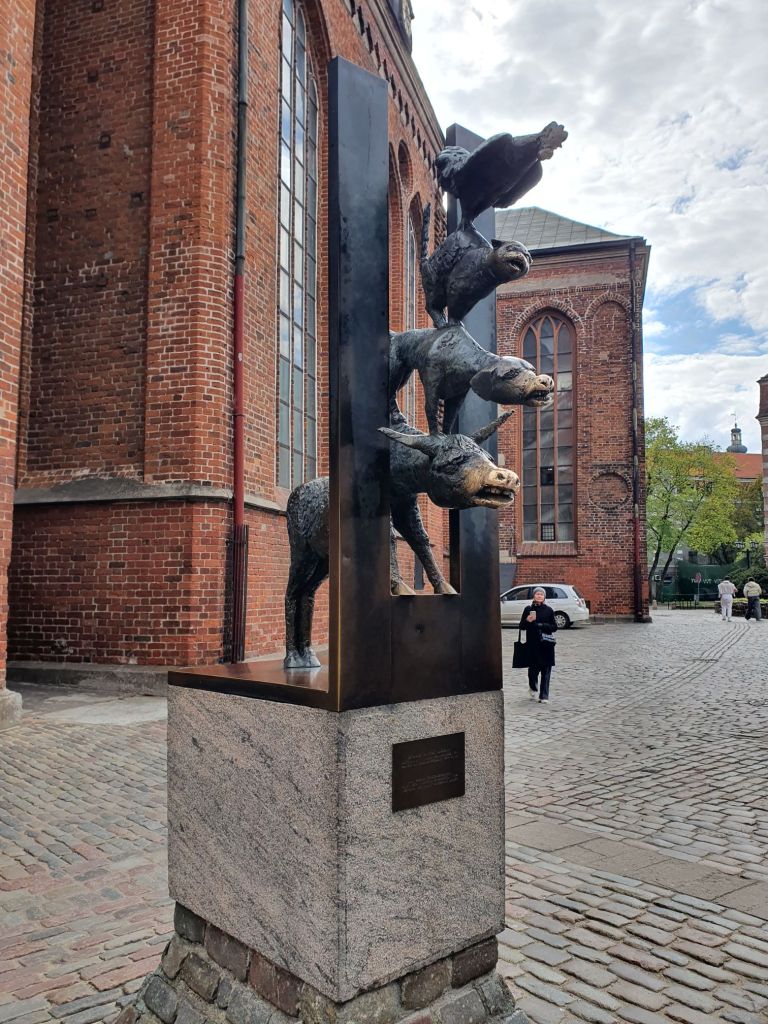
The bronze statue in Riga is next to St Peter’s Church and is a present from their sister town of Bremen in Germany. But unlike its counterpart statue in Bremen, in Riga, the animals are squinting to see through the Iron Curtain – thought to be a reference to the Soviet Regime which Latvia was under at the time. Today, it is believed that rubbing the statue will bring good luck, and the higher you can reach, the better your luck. (I could just about reach the cat with a big jump – the rooster is out of reach unless you are very tall or is an Olympic level high jumper).
Beer Trolleys
I’m sure other cities have them, but I saw a beer trolley for the first time in Riga. The idea is that you and a group of friends hire the beer trolley for a couple of hours. The trolley driver, sitting at the front will take you on a guided tour around the old town, and the host at the back will serve you beer on the way. But you all have to pedal to move the trolley – and there is (loud) music. We saw many beer trolleys in Riga over the weekend – almost always with a stag or hen group.

Powder Tower
This is another common attraction found in most medival European cities. Used to store gun powder, it was on the edge of the town, away from most of the key building but still close enough if needed to defend the city. Riga’s powder tower was built in 1650 and renovated in the 20th century.

Food at Folkklubs ALA Pargrabs
After the 2.5 hour walking tour we had worked up quite an appetite (plus we had skipped lunch and had a tiny breakfast). The tour guide recommend Folkklubs ALA Pargrabs (meaning: Folk-club Cave).
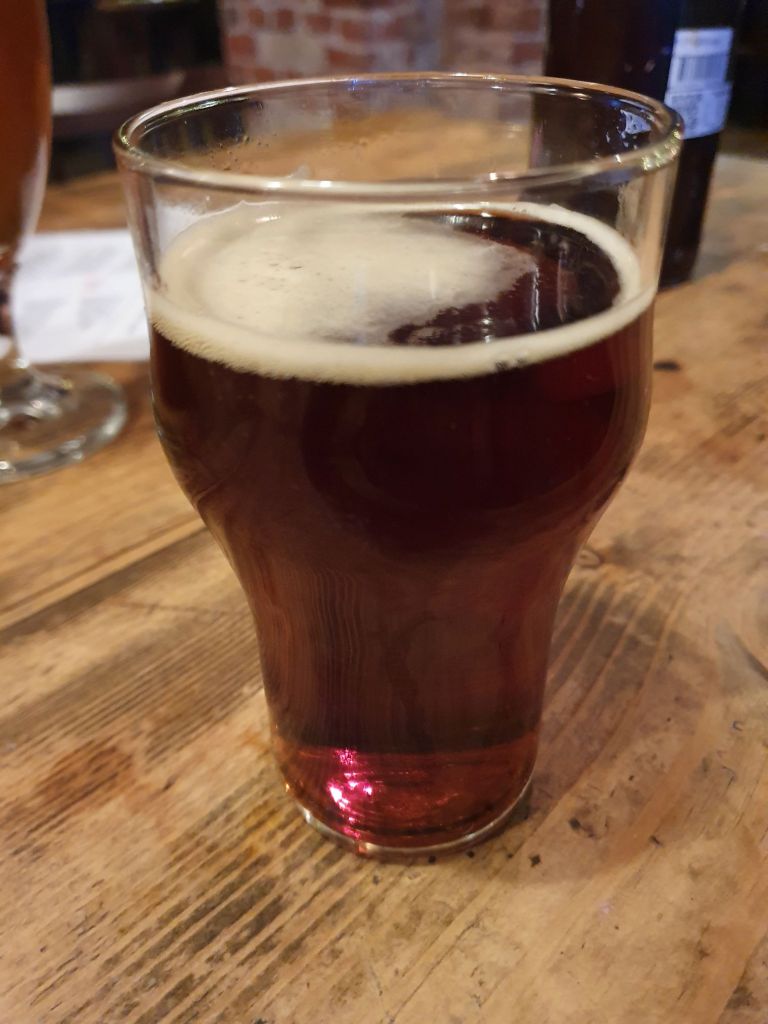
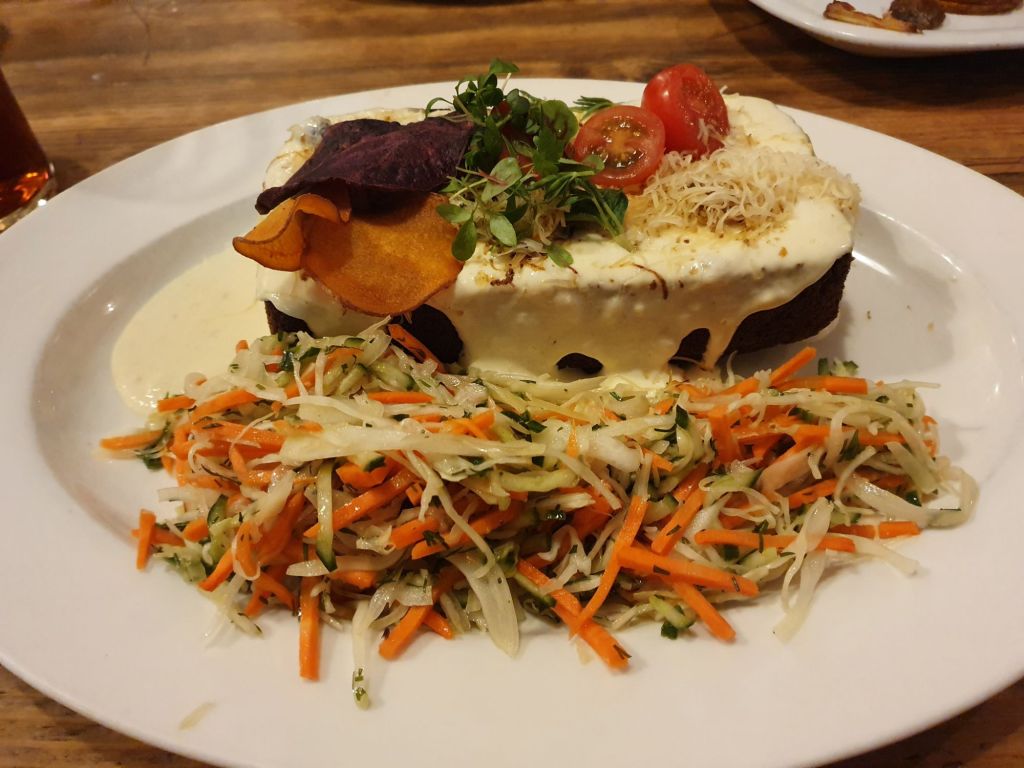
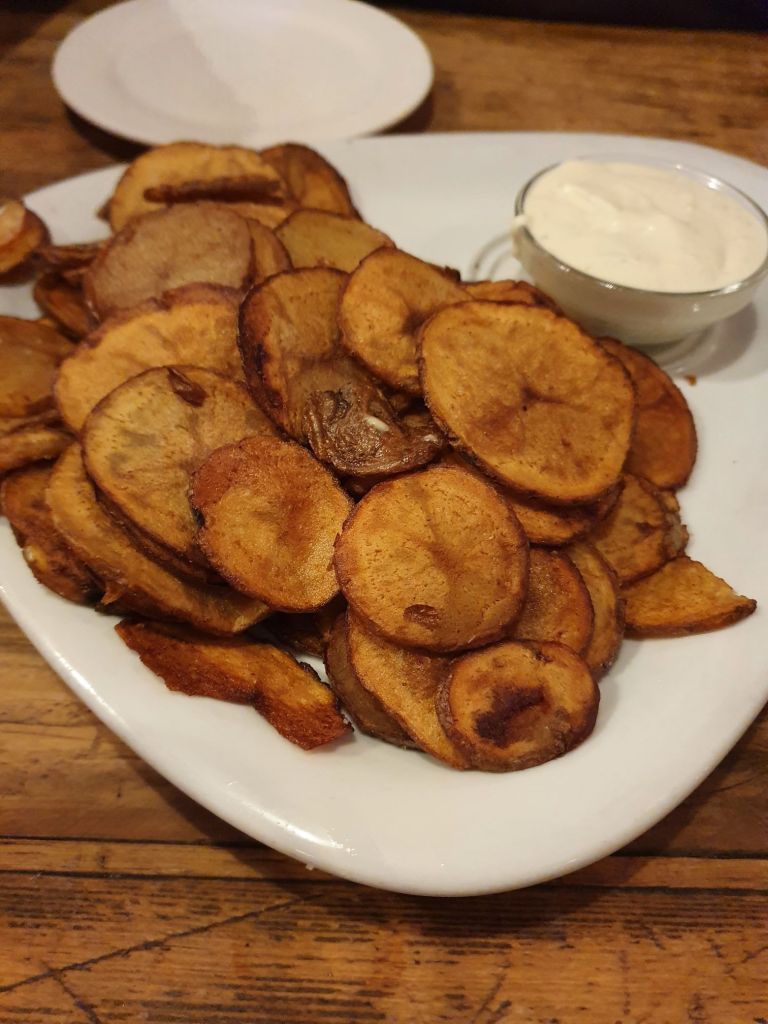

The restaurant is located in a cavernous basement of an old building and serves traditional latvian food, drink and music. We tried Kvass (fermented Rye drink), fried potatoes, meatballs and tradtional grey peas (I managed to finish all the grey peas; the next day I would be I glad I did this. In the next post, I will tell you why).
 Diary of a Tourist