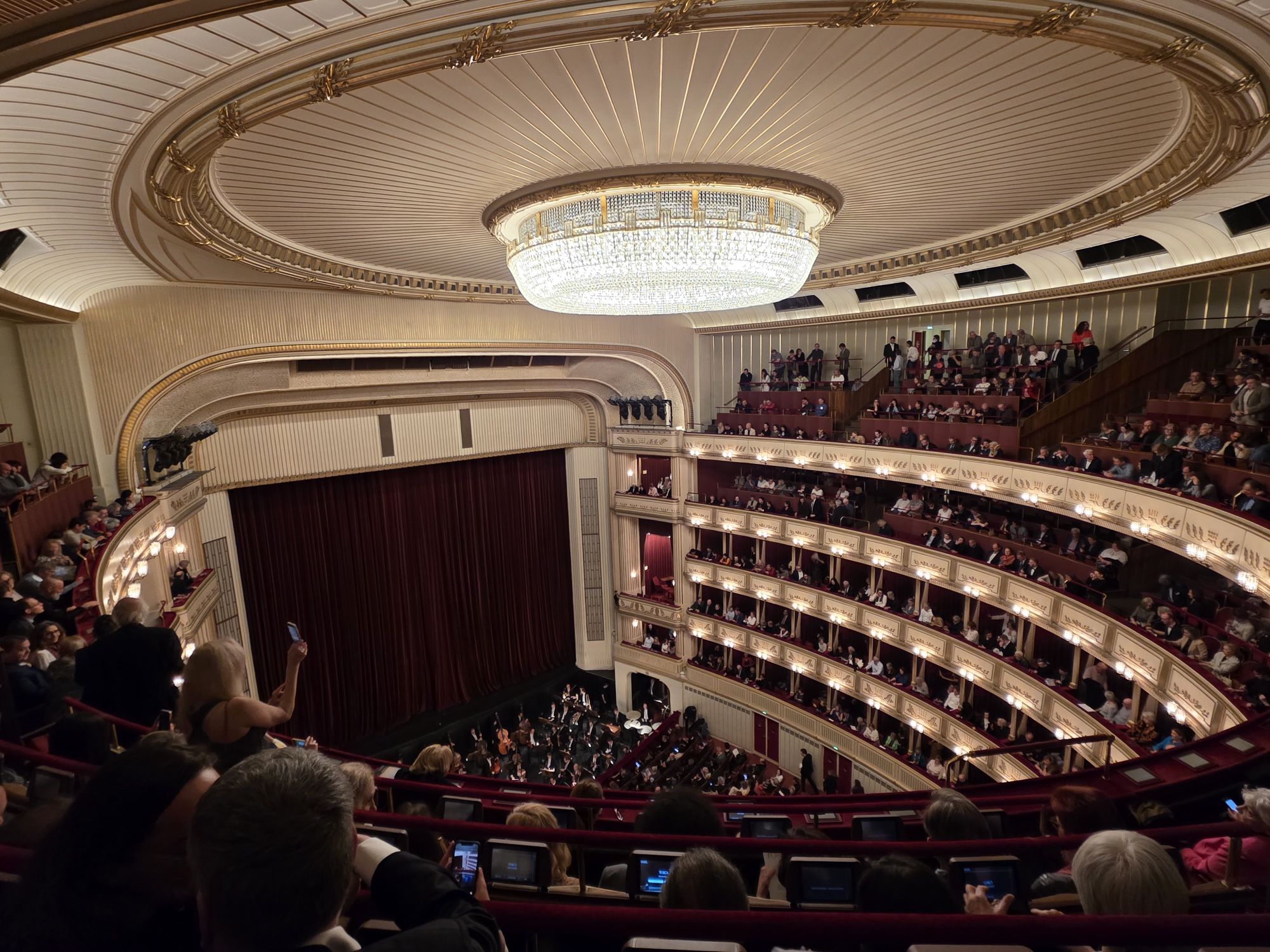
Where and When: Vienna, Austria, April 2026
I love the theatre, especially musicals, but I’ve never been to the opera. It seemed very sophisticated, and I never felt like I knew what the opera etiquette was. Plus, a suitable chance never presented itself.
But when I got the opportunity to have my first taste of opera at the Vienna State Opera, seeing Tosca, I jumped at the chance.
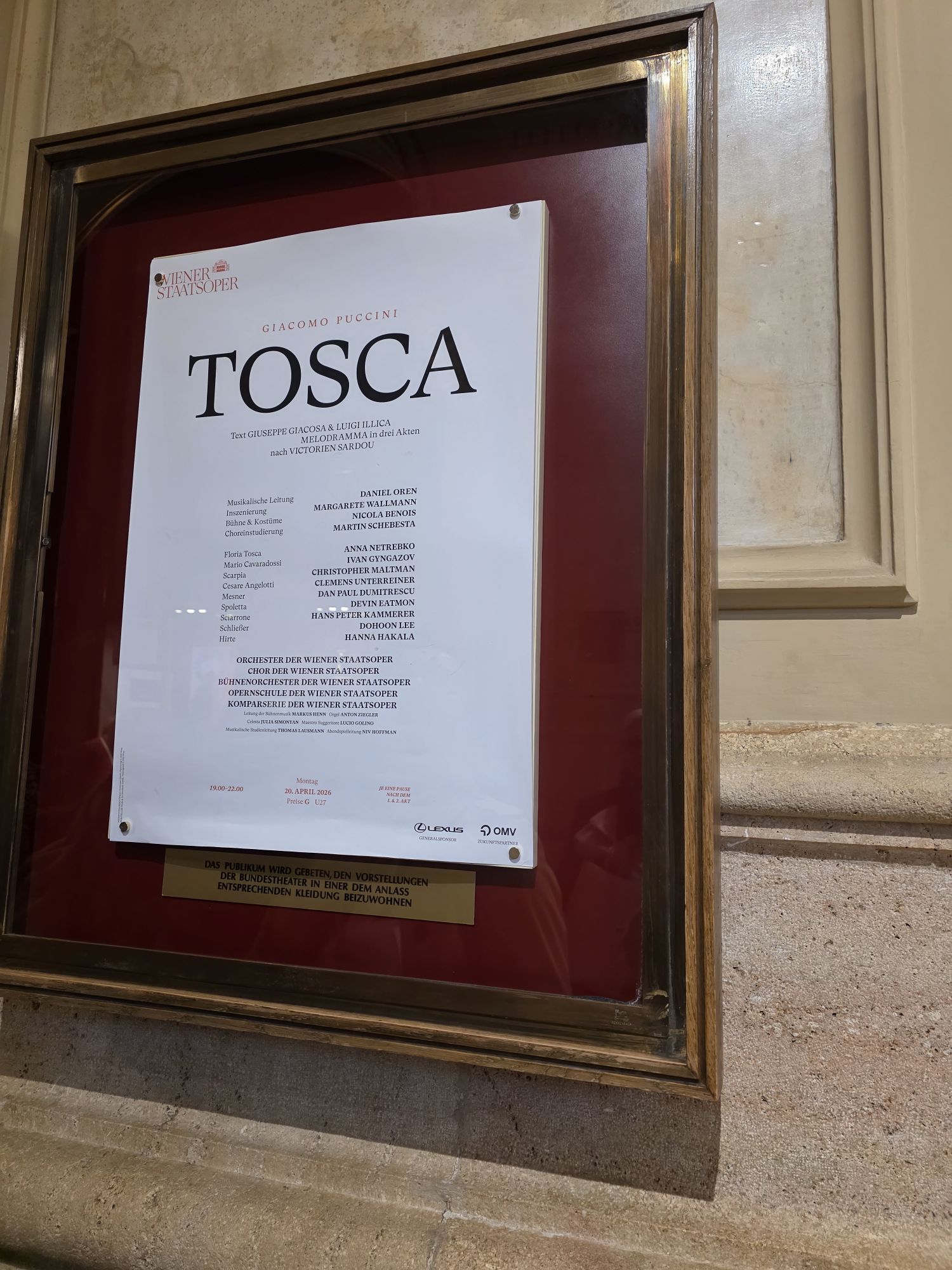
Getting Tickets
The Vienna State Opera is a repertoire theatre, which means that each season they have a repertoire of works and different productions are rotated throughout the season. Unlike a theatre production which might run for several consecutive nights or weeks, the Vienna State Opera can have a different opera or ballet on the stage every night. This means that the sets and costumes have to be changed almost daily.
Tickets go on sale a couple of months before the shows and, for the more popular performances, can sell out quickly. But, as luck would have it, a last-minute ticket became available on the website the night before.
It was one of the cheapest seated tickets, but at €45, you couldn’t go wrong, so I didn’t have anything to lose.
There are also standing tickets (which give you a space to stand in the highest tier in the theatre), which are a good option if you want to see a performance without spending much money.
What to Wear to the Opera?
Then came the question of what to wear.
The ticket email advised that there was no dress code as such, but shorts, T-shirts and slippers were not permitted.
I dressed in a smartest-casual outfit I could muster from my travelling gear – and hoped that would be enough.
I turned up at the opera house about an hour before showtime and found a varied mix of people of all ages, from different countries, some were local, and were some tourists like me.
The Vienna State Opera House building itself is amazing. It was built between 1861 and 1869 and opened on 25 May 1869 with Mozart’s Don Giovanni.
It is sometimes referred to as a “sunken box” or “shoe box”. After it was built, the level of the surrounding Ringstrasse was raised, leaving the opera house looking slightly lower than the surrounding street. This led to it looking out of proportion and hence called a “shoe box”.
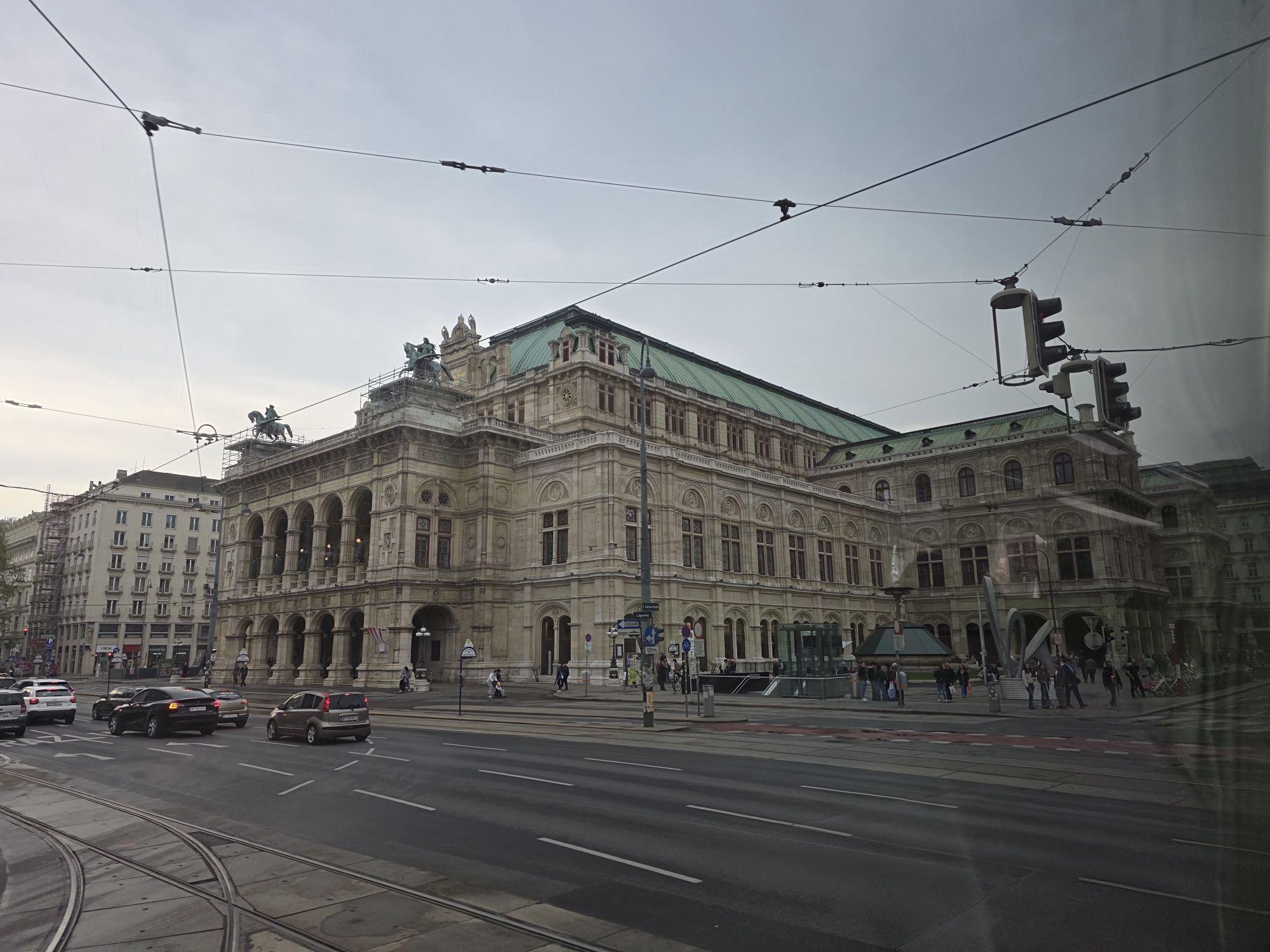
The Vienna Opera house has also played host to many TV shows and films, one of the most recent being Mission Impossible 5.
Inside, there is a grand staircase and two more staircases to either side. There are also a number of bars and cafés.
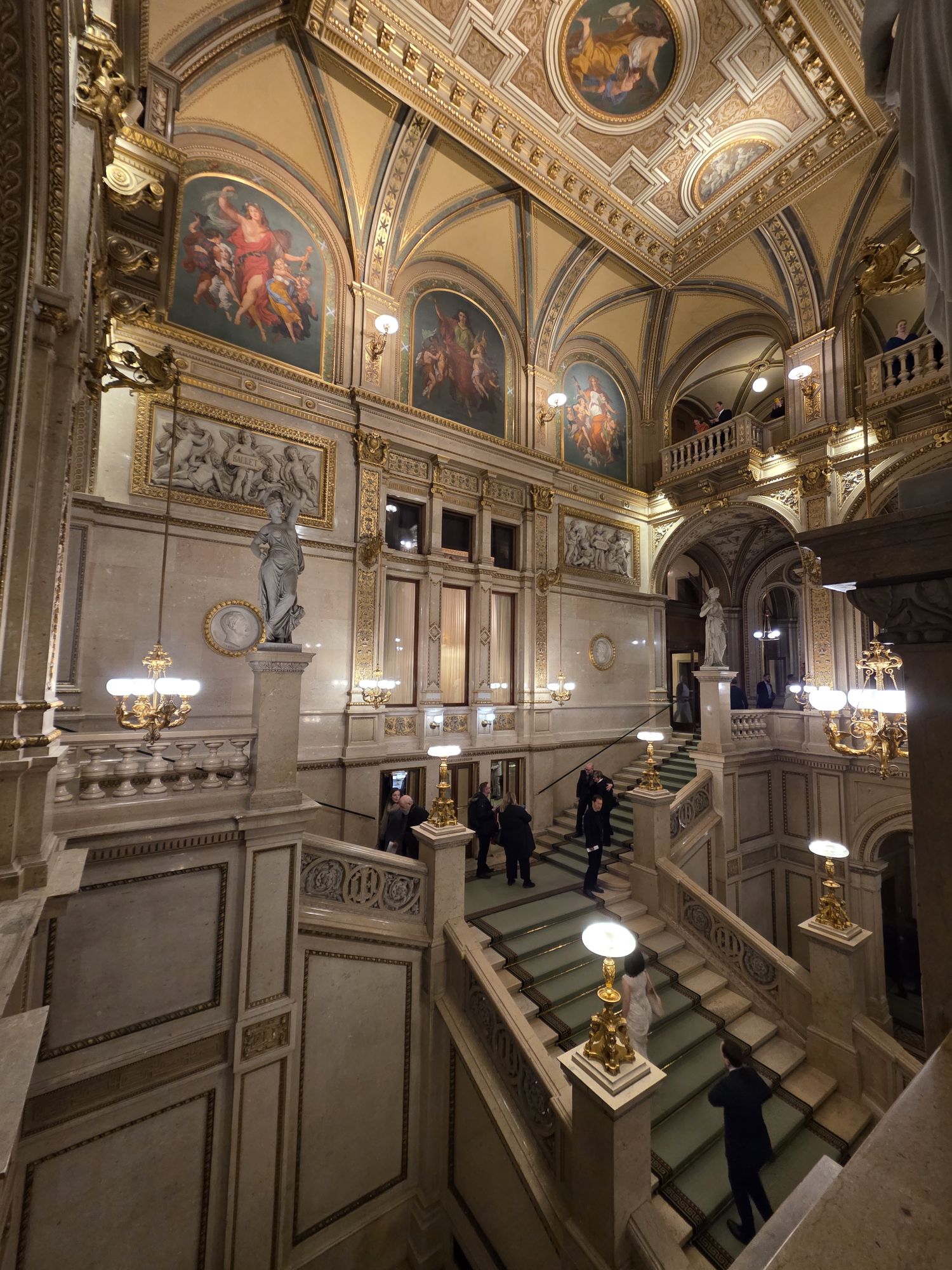
When the bell rang for showtime, we were directed to our seats via the staircases. It was a fascinating example of social engineering – the most well-dressed tended to be on the ground floor or the first floor, where the most expensive seats were.
As we climbed up past the third, fourth and fifth tiers, the level of dress gradually decreased, and by the time I got to my seat everyone was dressed in smart-casual evening attire, so I didn’t feel out of place.
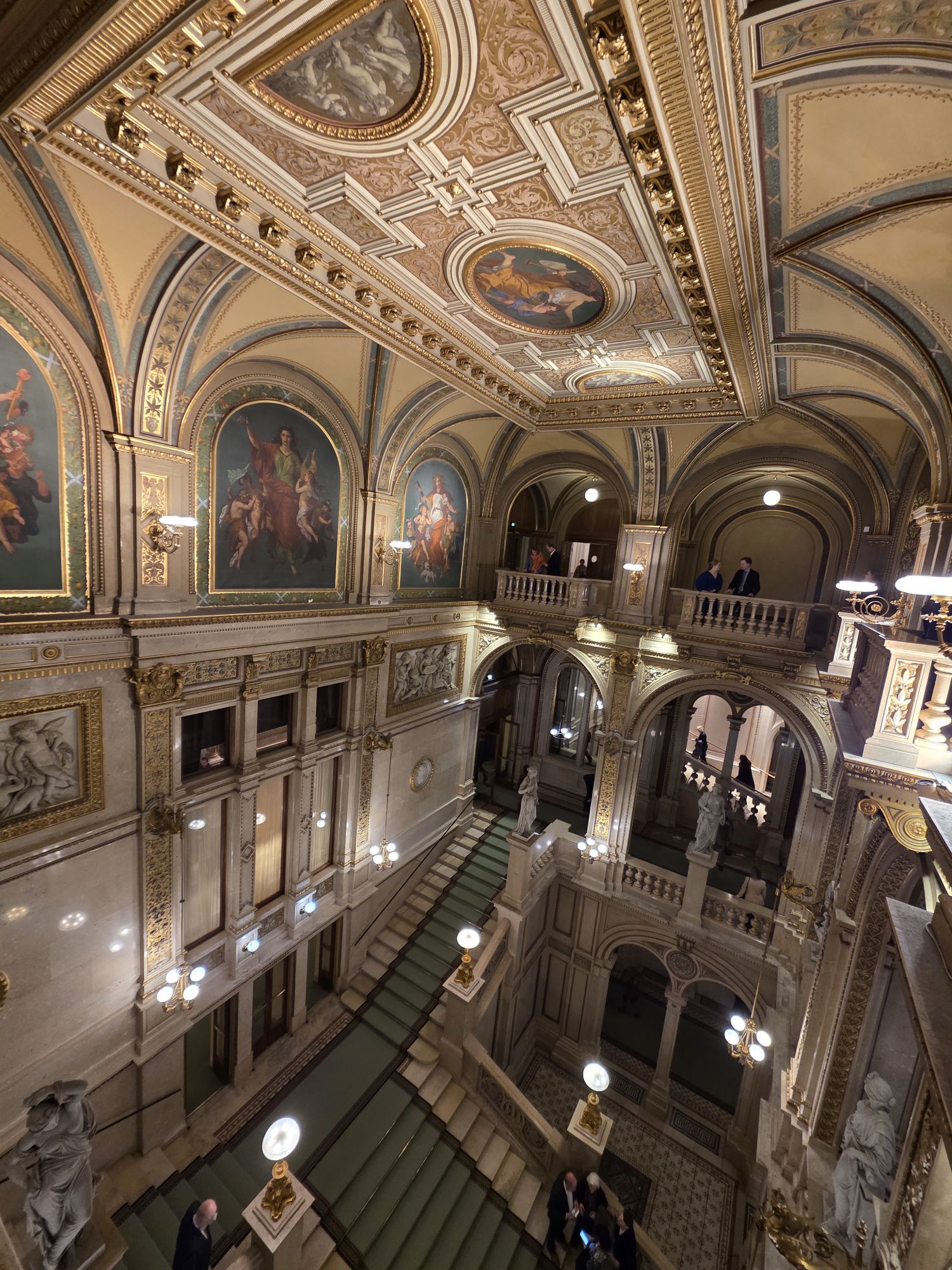
There was no one enforcing a dress code that I could see. But they did enforce the coat check. At each level there was a cloak room, and you had to leave coats here. You could rent opera glasses here too.
The Performance
Unlike theatre shows, this opera had two intervals of about 25 minutes each. One came after 50 minutes, and the second after another 50 minutes, with the third act being around 30 minutes long.
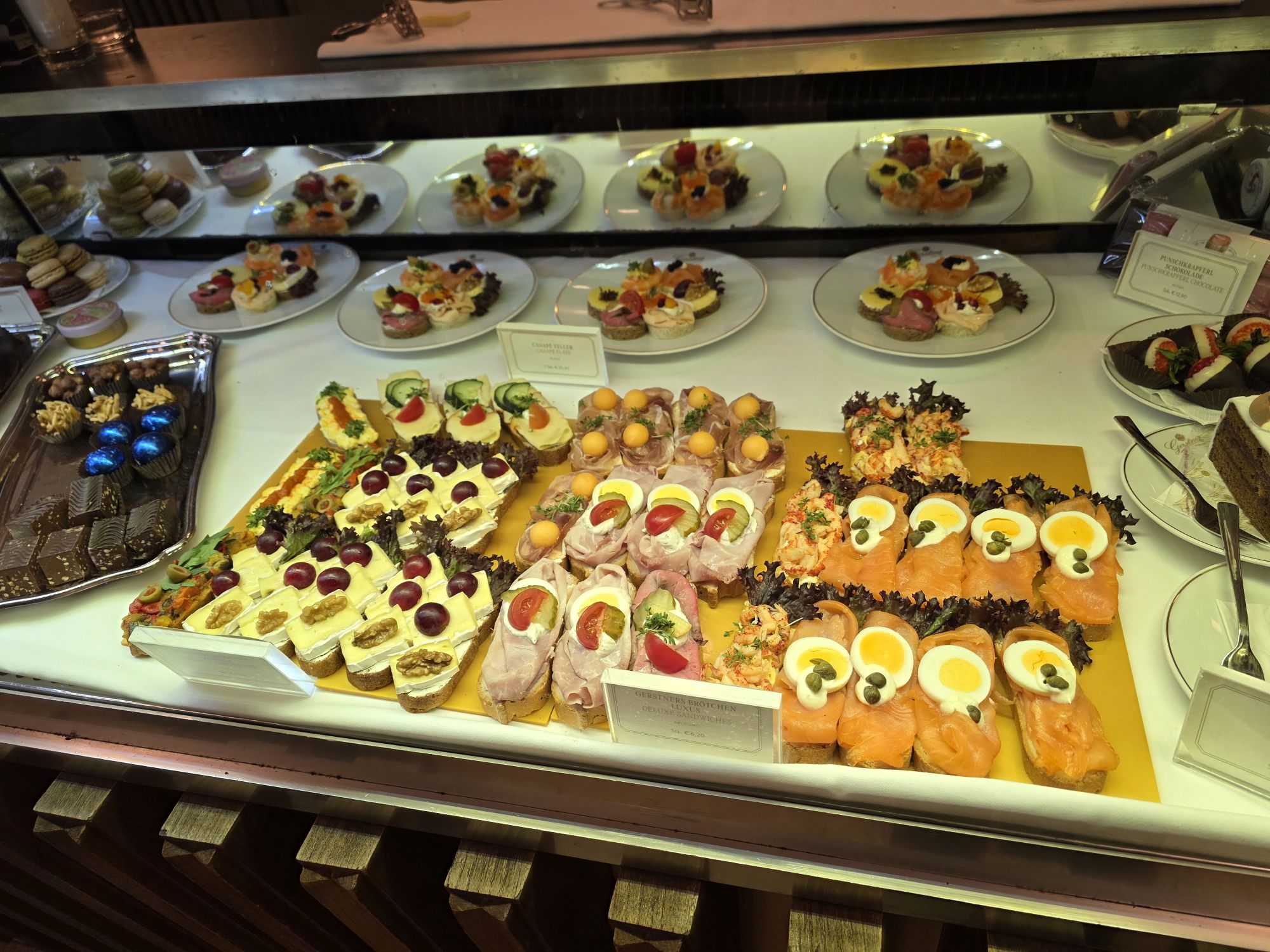
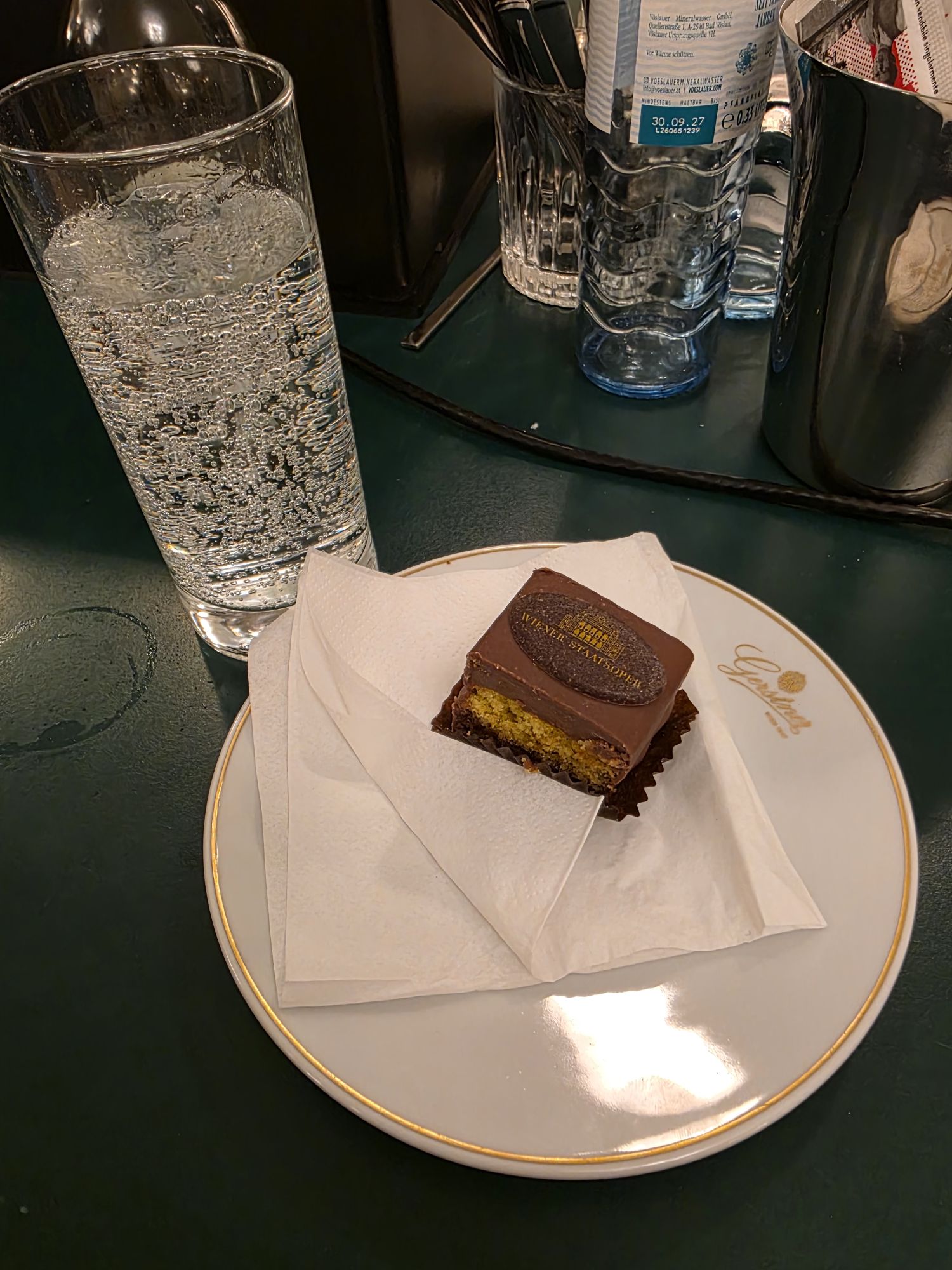
You could reserve a table and order food to be served at your table during the interval. And because it is Vienna, they have cakes for the second interval.
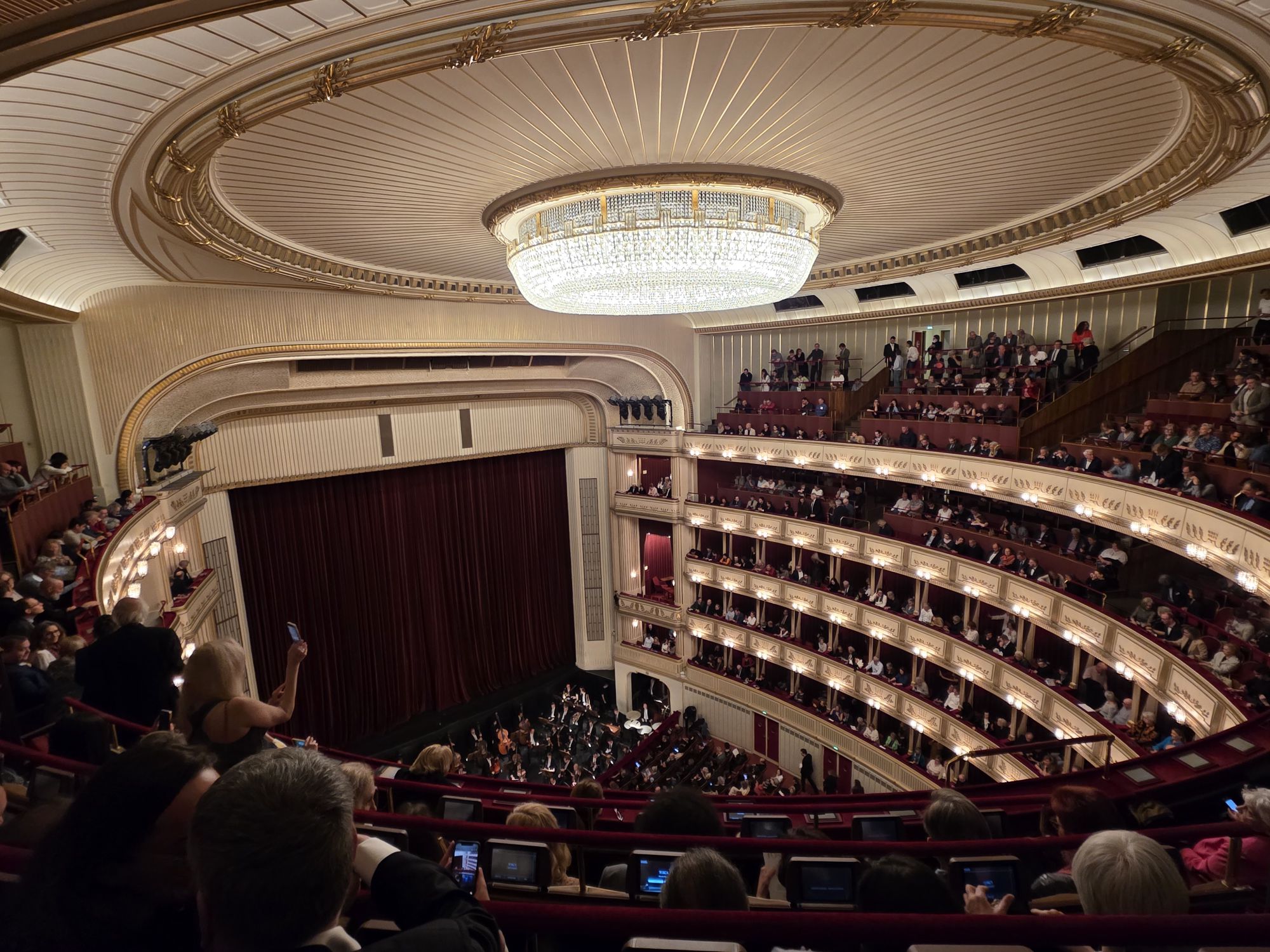
But the main event itself – the opera – is stunning.
Tosca is a tragedy written by Giacomo Puccini. The story is based around Floria Tosca, an actress, and her lover Mario Cavaradossi, a painter. The chief of police, Baron Scarpia, lusts after Tosca and arrests Cavaradossi and uses the political situation in Rome to get what he wants. Long story short, everyone dies in the end.
The story lends itself to some amazing arias, and Tosca is considered one of the great tragic operas.
I was very lucky that my visit coincided with the April 2026 Tosca series, which had Anna Netrebko playing the title role of Floria Tosca, Ivan Gyngazov as Mario Cavaradossi and Christopher Maltman as Baron Scarpia.
It was a classical production, true to the original story, costumes and music. Music is provided by a full complement live orchestra. The artists’ voices and emotions carried over the orchestra and the theatre. I was in the highest tier of seats, but their voices sounded as though the sound was coming from a radio next to you. All the more impressive that (again unlike theatre) the voices are not augmented in any way.
This is why it is worth seeing opera live – you can feel the raw emotion, and you can’t replicate it by watching it on a screen. You can also see why the same performance is not repeated over consecutive nights. The range of the arias is so large that it is very taxing on the performers.
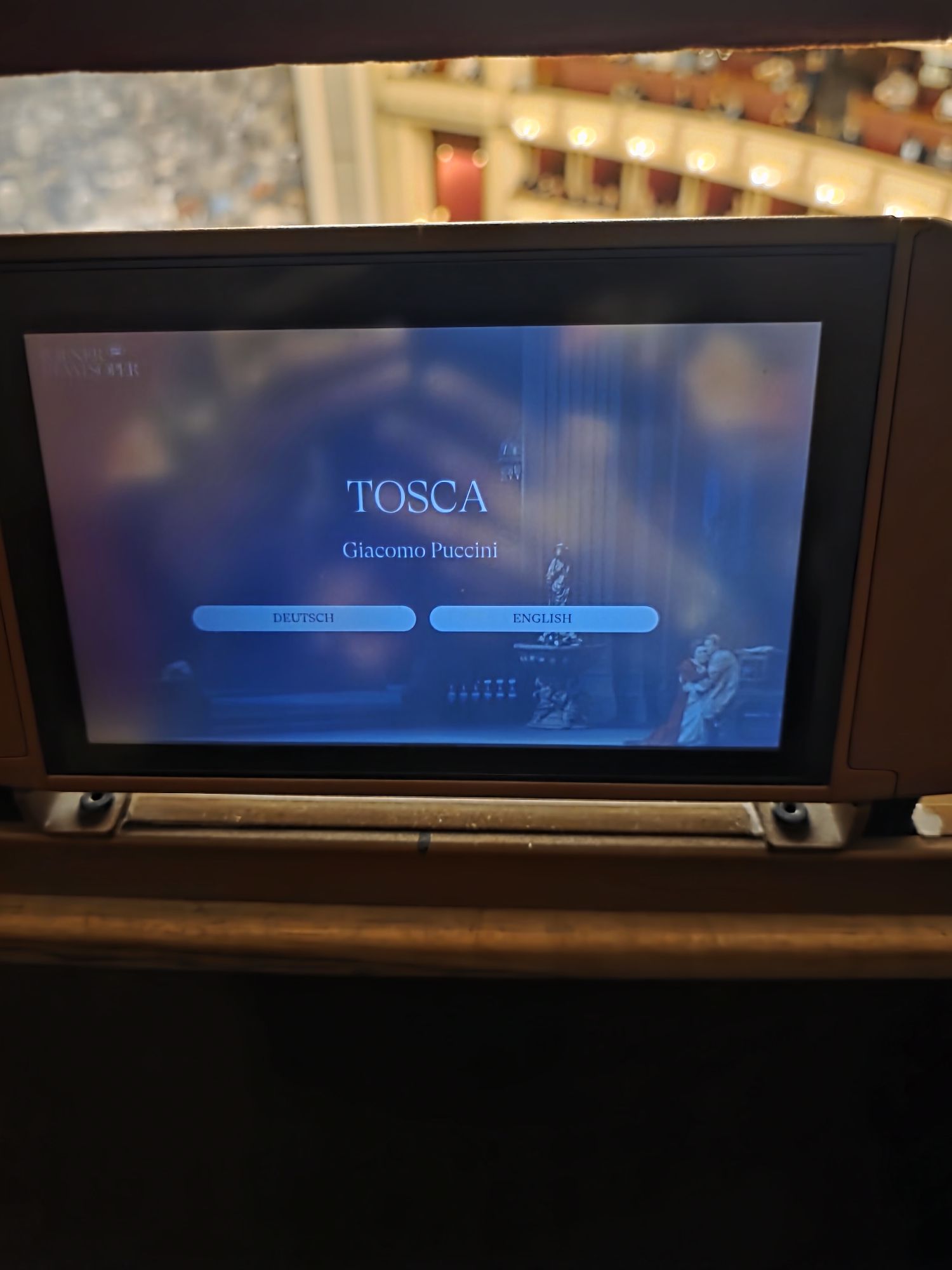
The opera is in Italian, and there are mini screens in front of your seat for translations into many languages. You can choose whichever language you like.
Anna Netrebko delivered several impressive arias, after each of which the audience broke into applause for about five minutes.
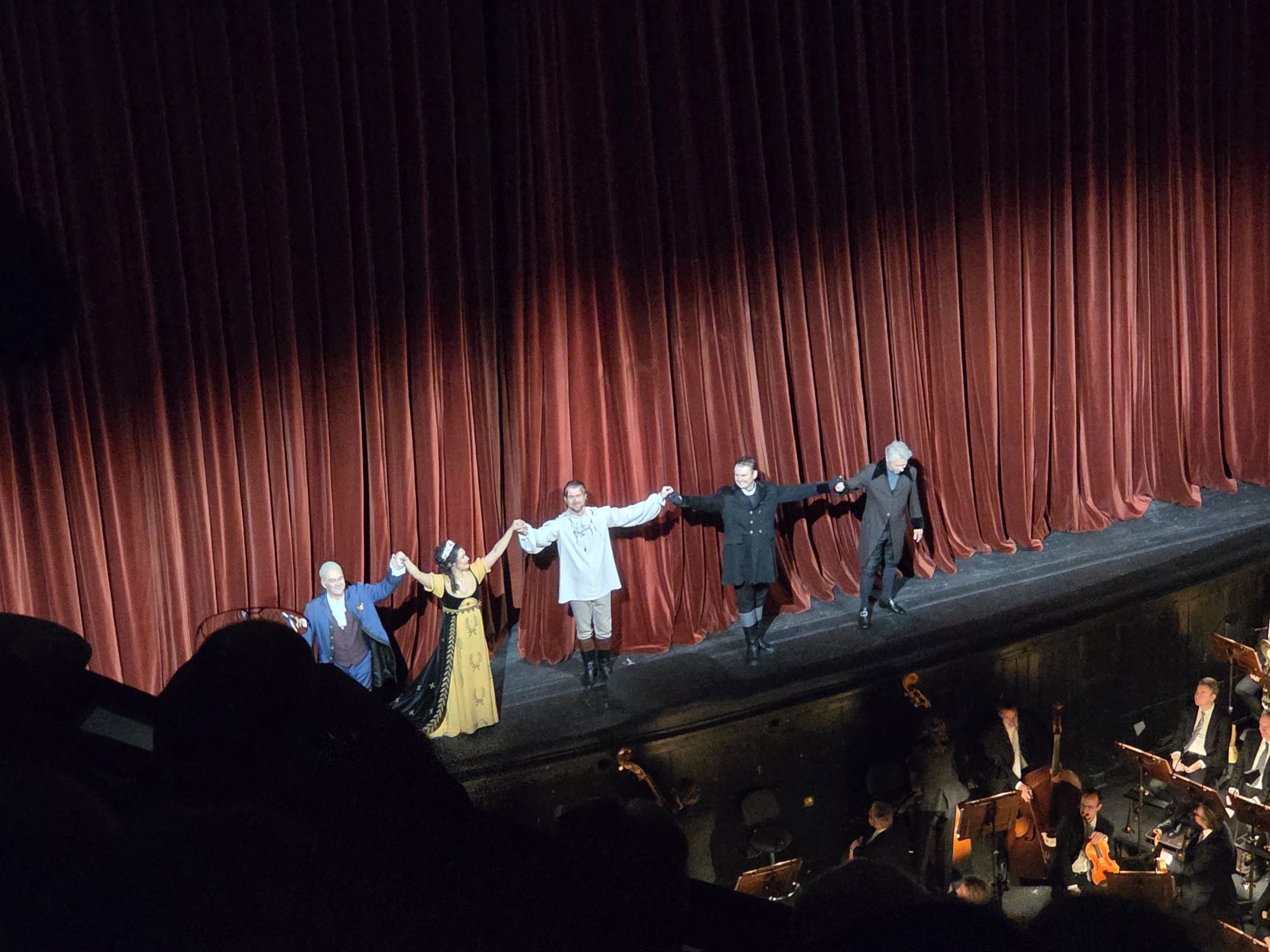
Again, unlike the theatre, the audience applauded at the end of each act and the cast came out for a curtain call. At the end of the last act, there was a standing ovation for over 15 minutes.
Would I Go Again?
I went into the opera thinking it was something very sophisticated that I probably wouldn’t understand. Instead, I found it was surprisingly easy to follow (with the subtitles), and the experience of hearing those voices live was something that I don’t think can be replicated on a screen.
So, would I go again? Absolutely.


We saw The Barber of Seville many years ago and really enjoyed it. There was a large central digital translator above the stage rather than individual screens, though. Glad you had such a rewarding experience, and in Vienna no less!
LikeLiked by 1 person
It was a great experience. Barber of Seville – I’ve heard it’s really good. Where did you see it?
LikeLiked by 1 person
Here in Minnesota, USA.
LikeLiked by 1 person