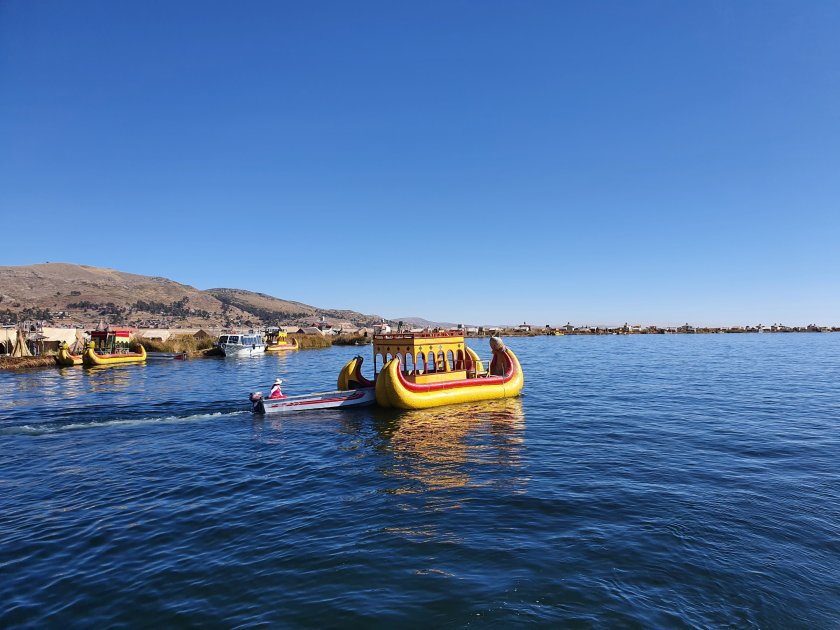
Where and when: Lake Titicaca, Puno, Peru, 1 June 2023
0600: Another early breakfast. Feeling pretty rough this morning. Could be the altitude, or the Pisco Sours on the train yesterday. But the nice breakfast served with a view of the lake makes up for it.
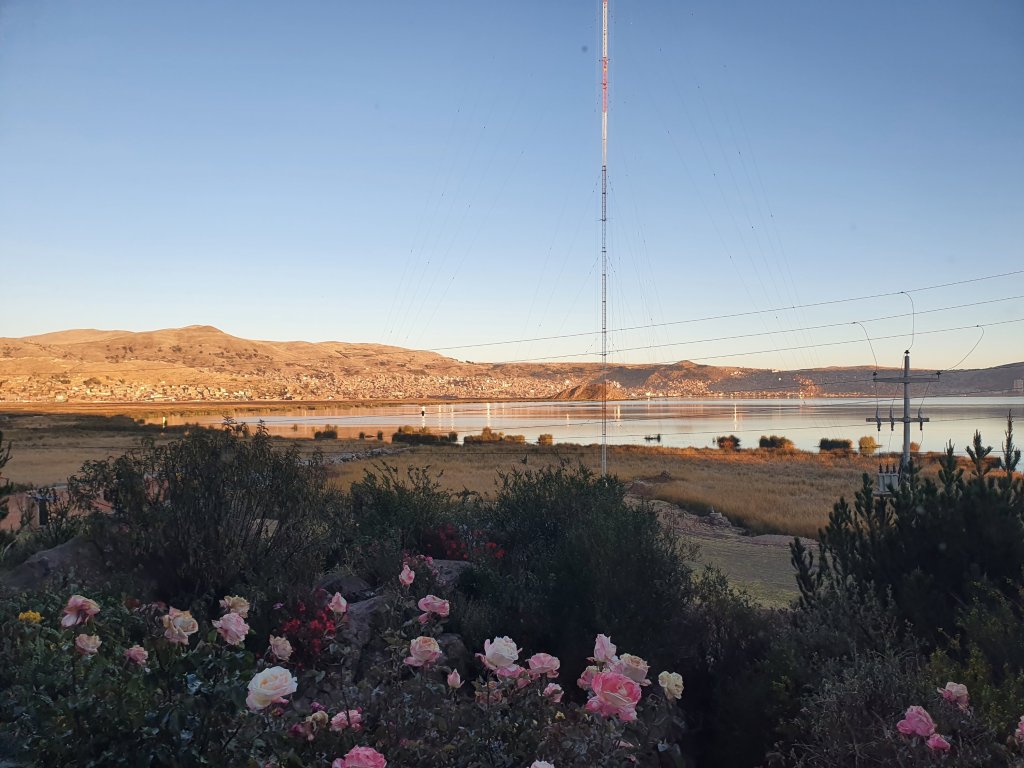
0700: Our tour guide picks us up for our tour in Lake Titicaca and we drive to the departure point.
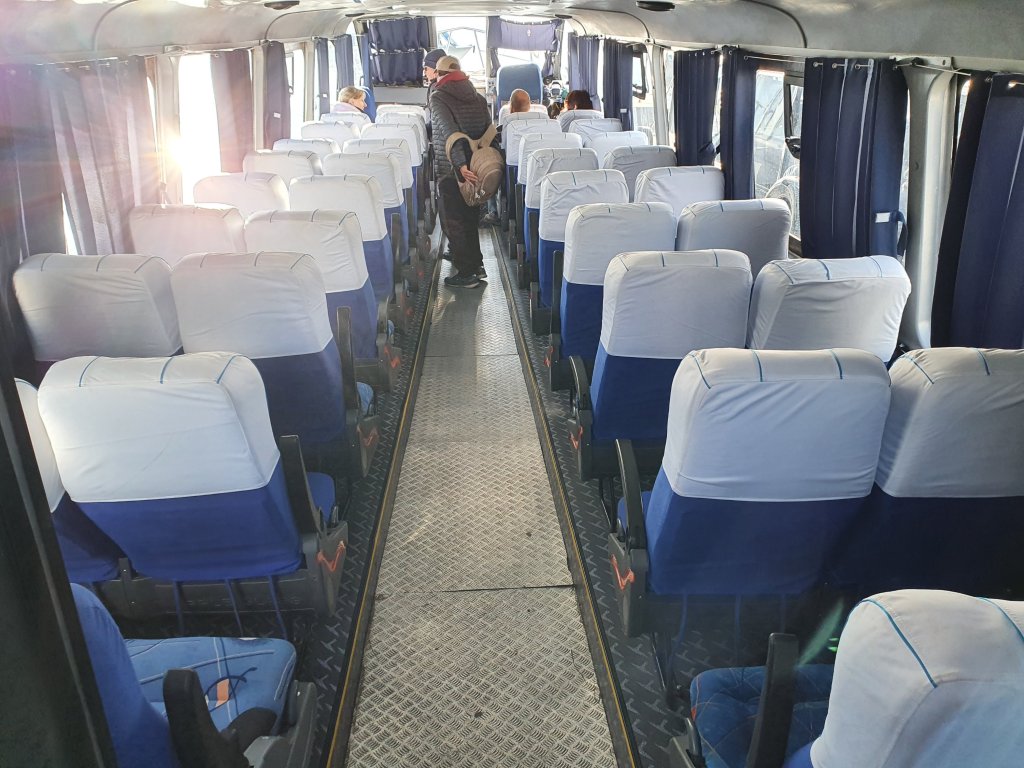
0715: We arrive at a small harbour and board the boat. It’s a medium size speed board, carrying about 40 passengers. The boat is covered and has curtains – for which we will be very grateful later today.
0735: Whilst we are waiting for the rest of the passengers, we are entertained by a one-man band playing music with the Andean flute and the ukulele.
0745: Boat leaves Puno. There are several small groups like us with their own guide and one big group travelling on the boat.
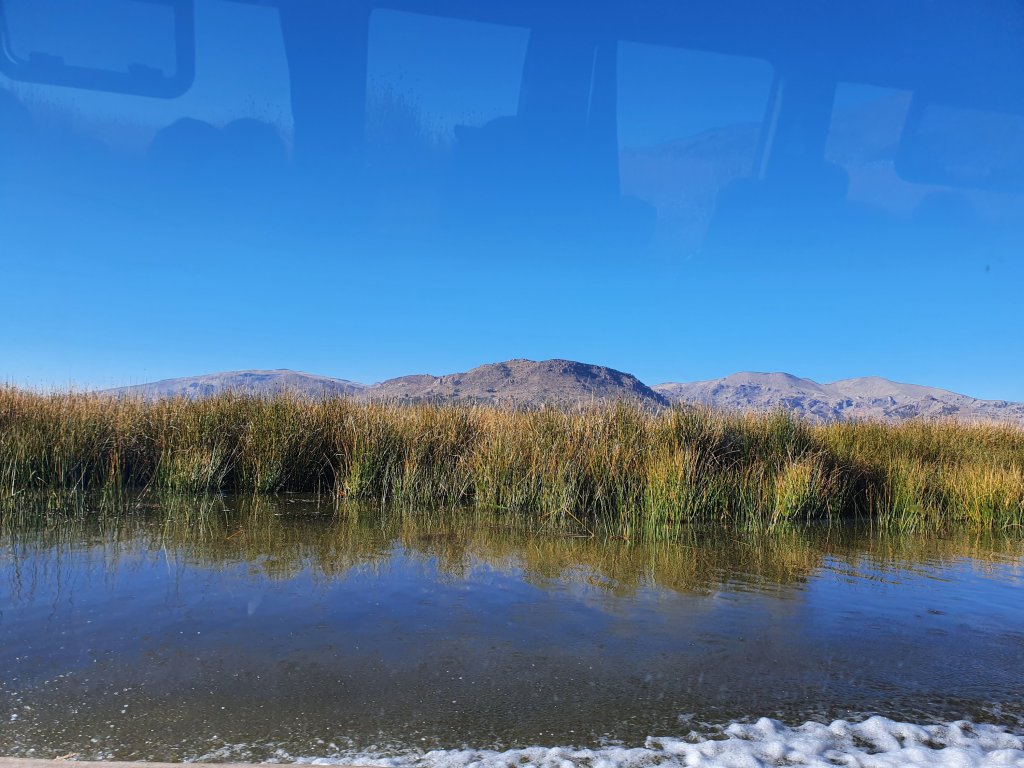
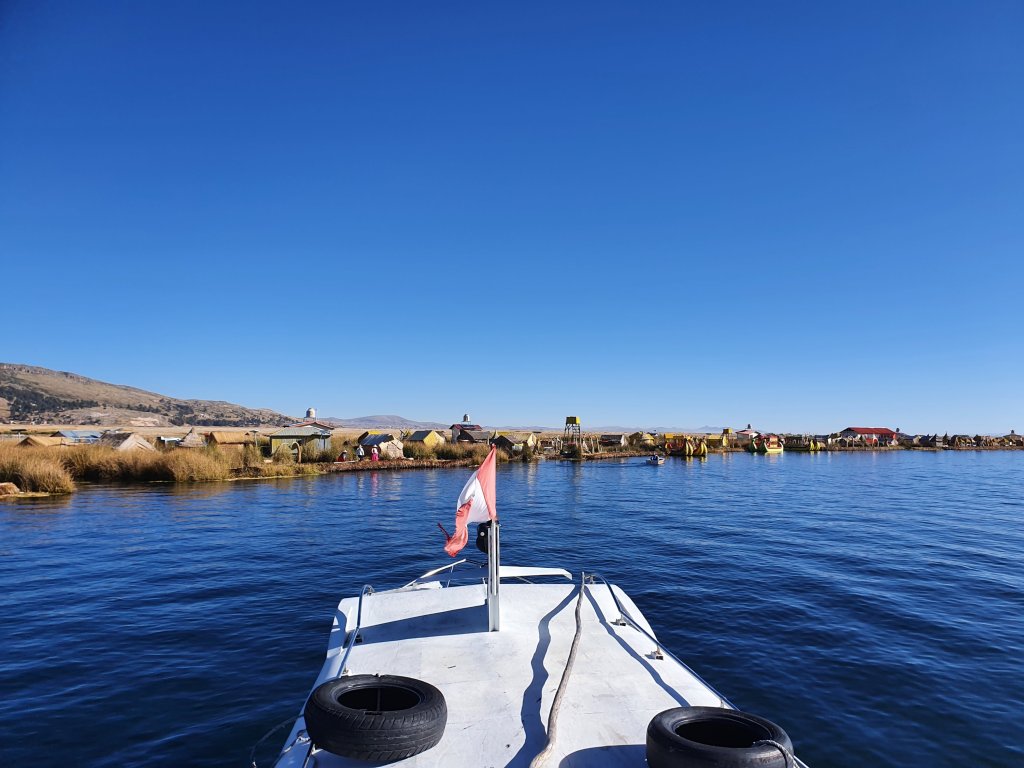
Titicaca is the largest lake in South America, both by volume of water and surface area. Located at 4000m, it is also the largest navigable lake in the World. The lake is split between Peru and Bolivia, the border running across the lake.
0815: We disembark at one of the Uros Islands. It is one of the smaller islands, home to three families. Uros people used to live on the edge of the lake, but moved on to reed islands many centuries ago to protect themselves from enemies.
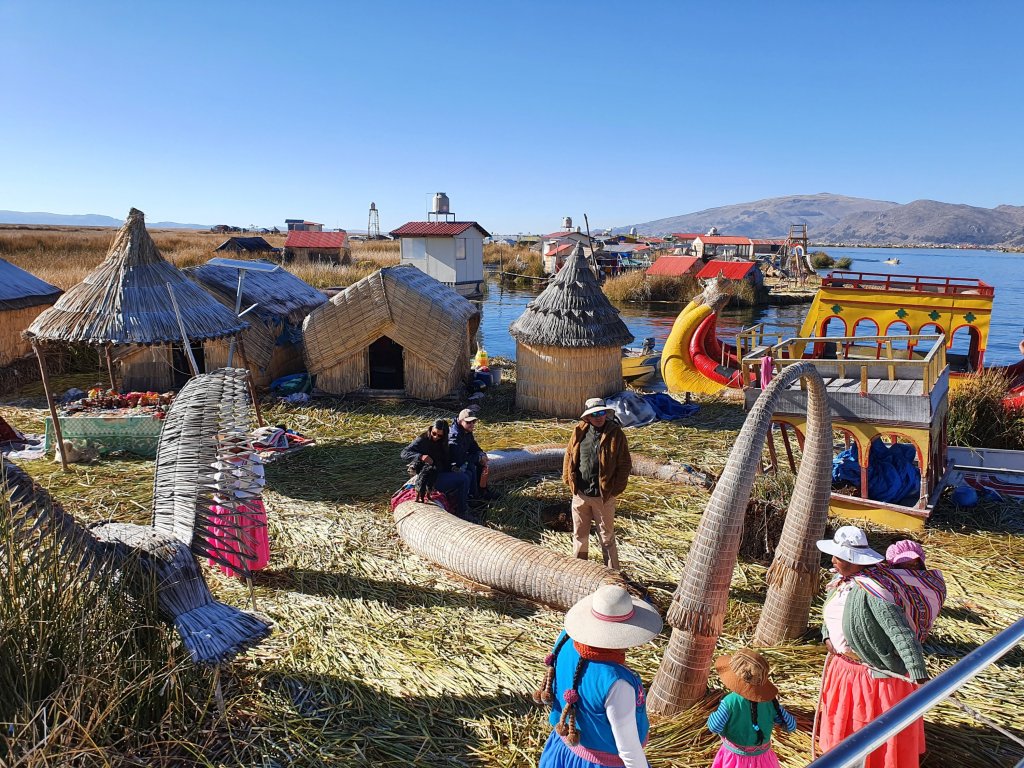
One of the families tells us about their way of life, everything from how the islands are made, daily life, and local customs.
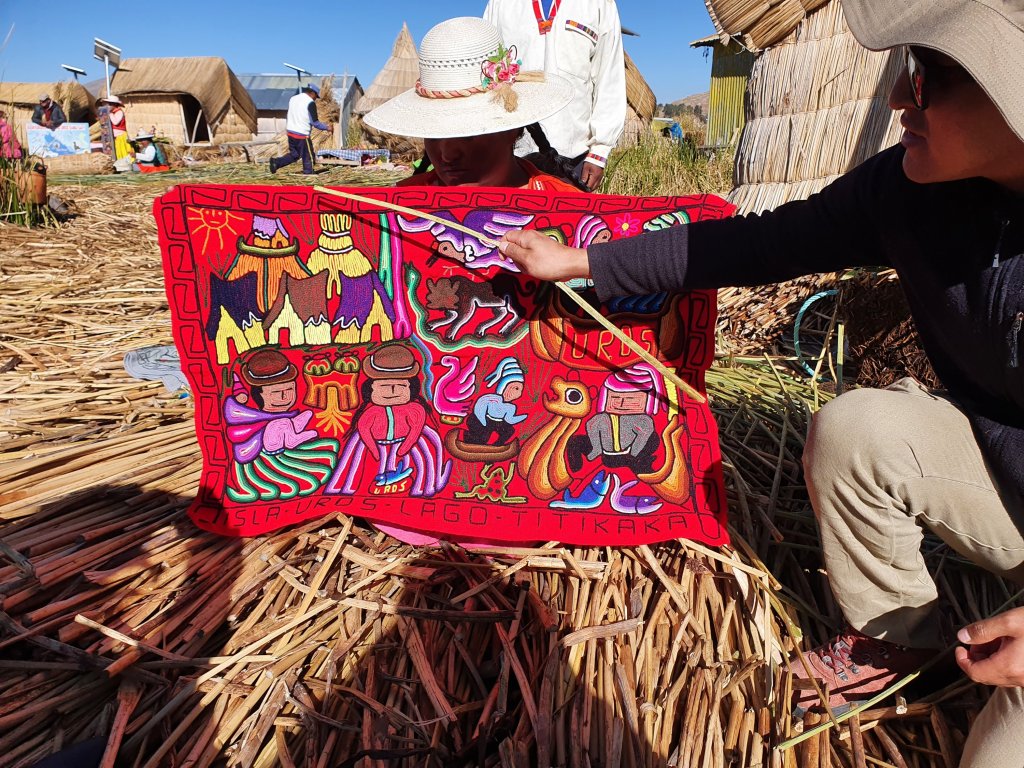
The Torta reeds grow in the shallow waters of the lake Titicaca. The foundations of the islands are made of blocks of reed roots, dug from the lake bed. These blocks are tied together to make foundations of the island. Reeds are laid on top of the foundation in criss cross shape to form the island floor. Homes are build on top of this, also using reeds.
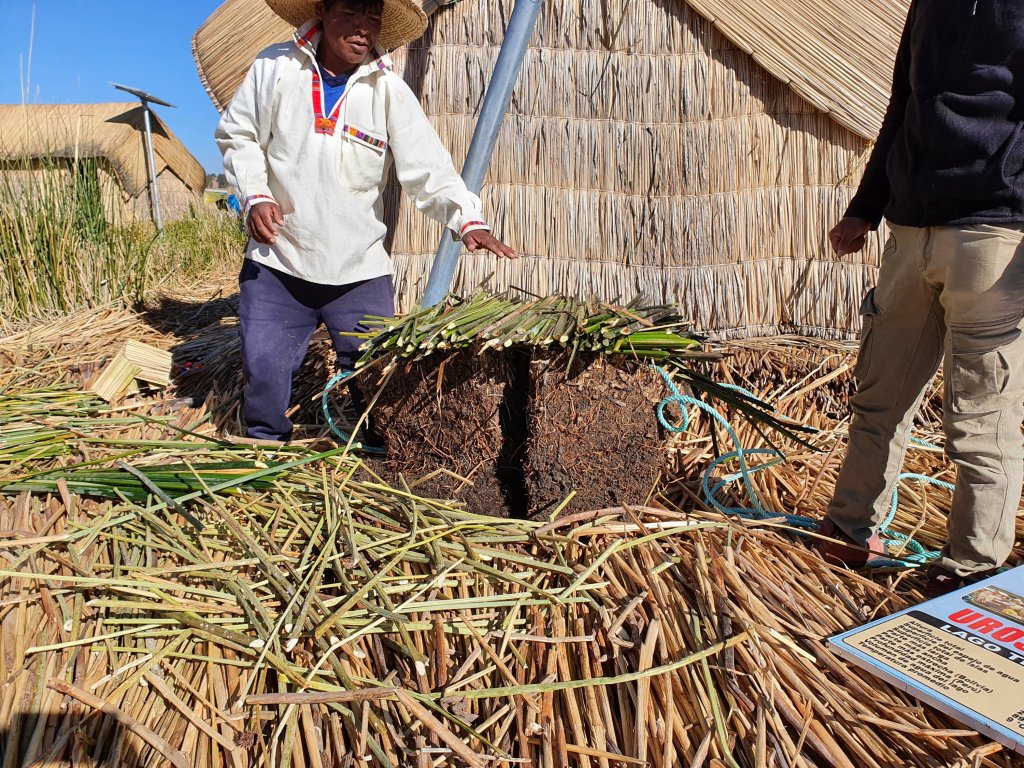
The lake water soaks through the reeds (albeit quite slowly), so every few months, a new layer of reeds must be added on top. Although the island floor is solid, it moves when you walk on it; it feels very similar to being on a boat.
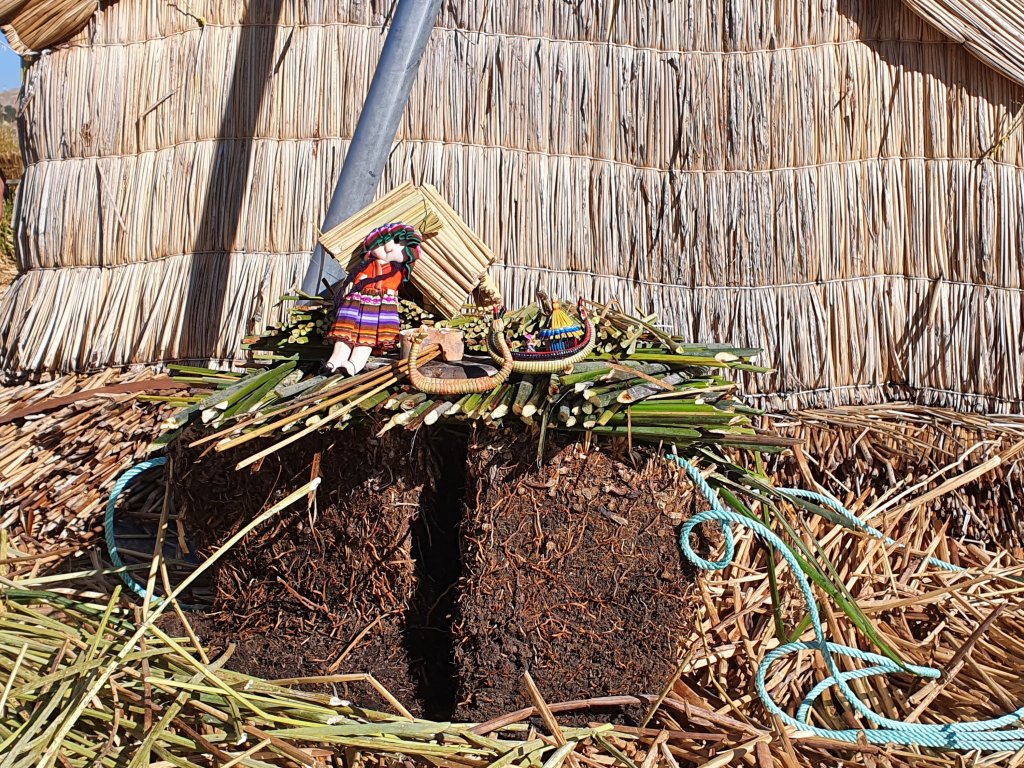
Each island lasts for about 30 years. When the foundations are no longer able to support the islands, a new island must be built. And of you fall out with your neighbour, they have an easy solution. The island is cut into two (or more) pieces using a bow saw, separating the warring neighbours.
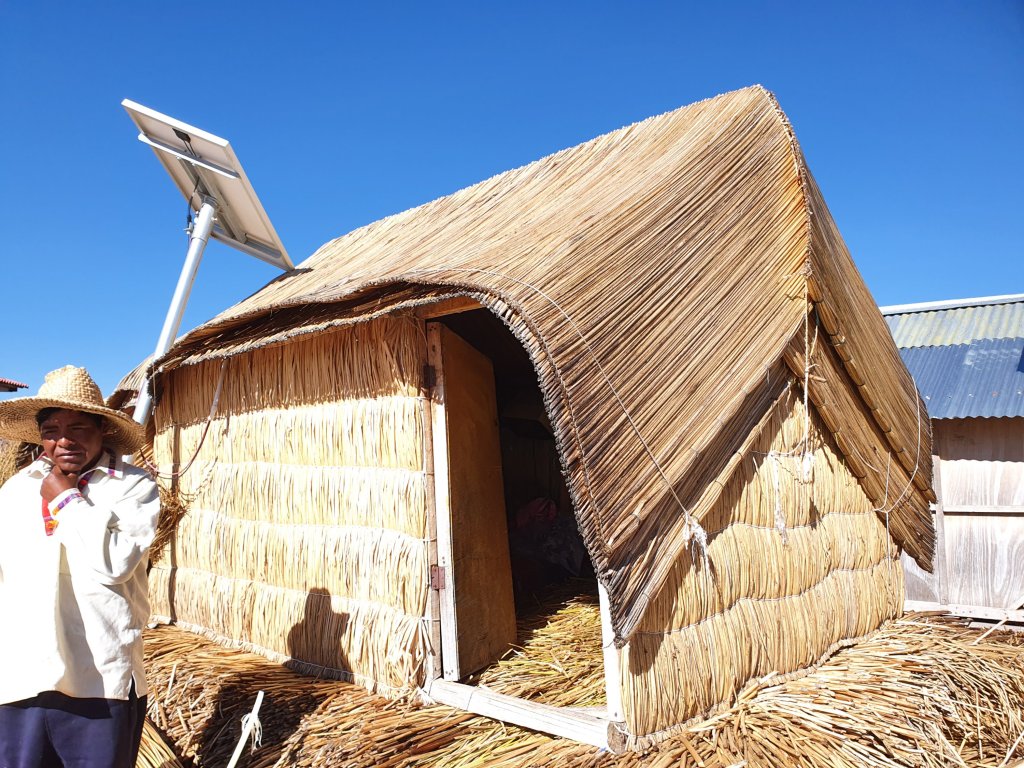
We were invited to visit one of the family homes. It is a small one room house, sleeping 2 adults and 3 children. Solar power provides electricity and there is a small CRT television.
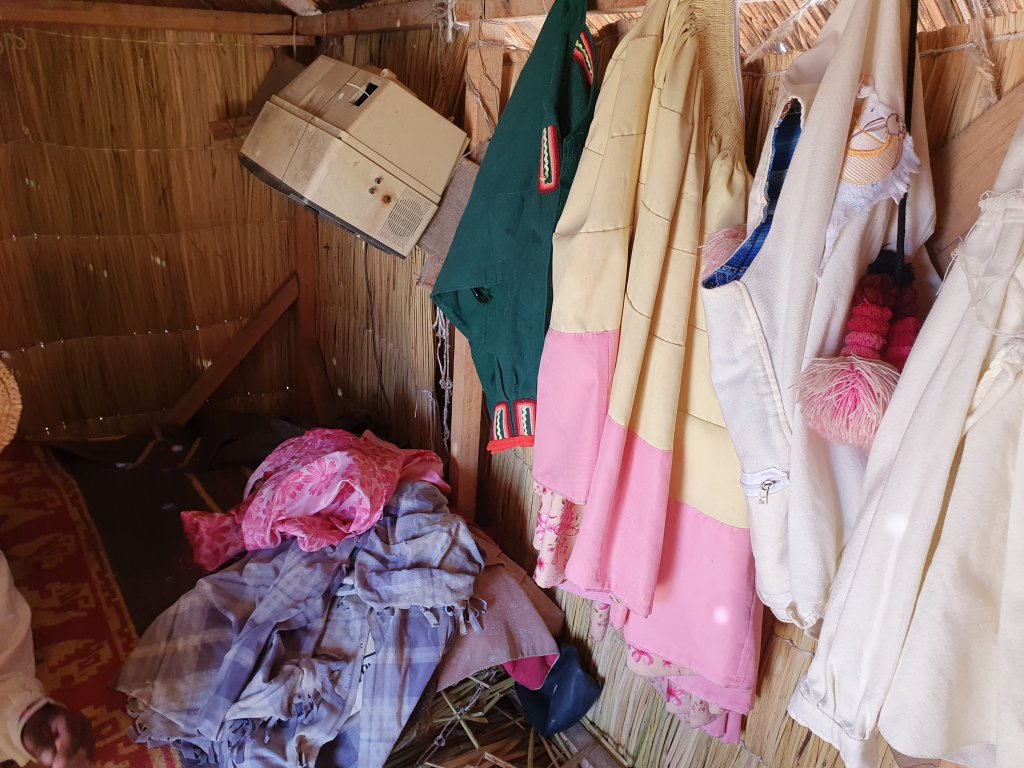
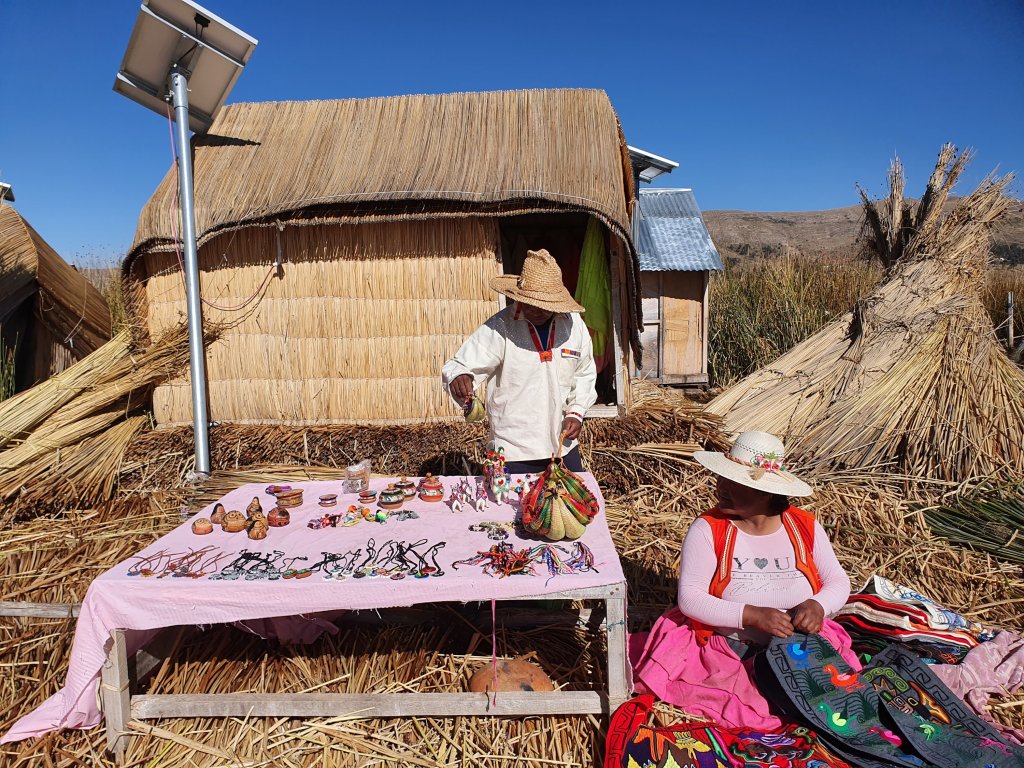
There are about 40 islands in total and their main income source is tourism. The Uros people also catch fish, hunt birds and make handicrafts which are then exchanged in Puno for other essentials like vegetables, rice and salt.
There is also a communal kitchen, with the hearth and cooker on a stone slab (very important to make sure the island doesn’t catch fire) Firewood is made of dried reeds.
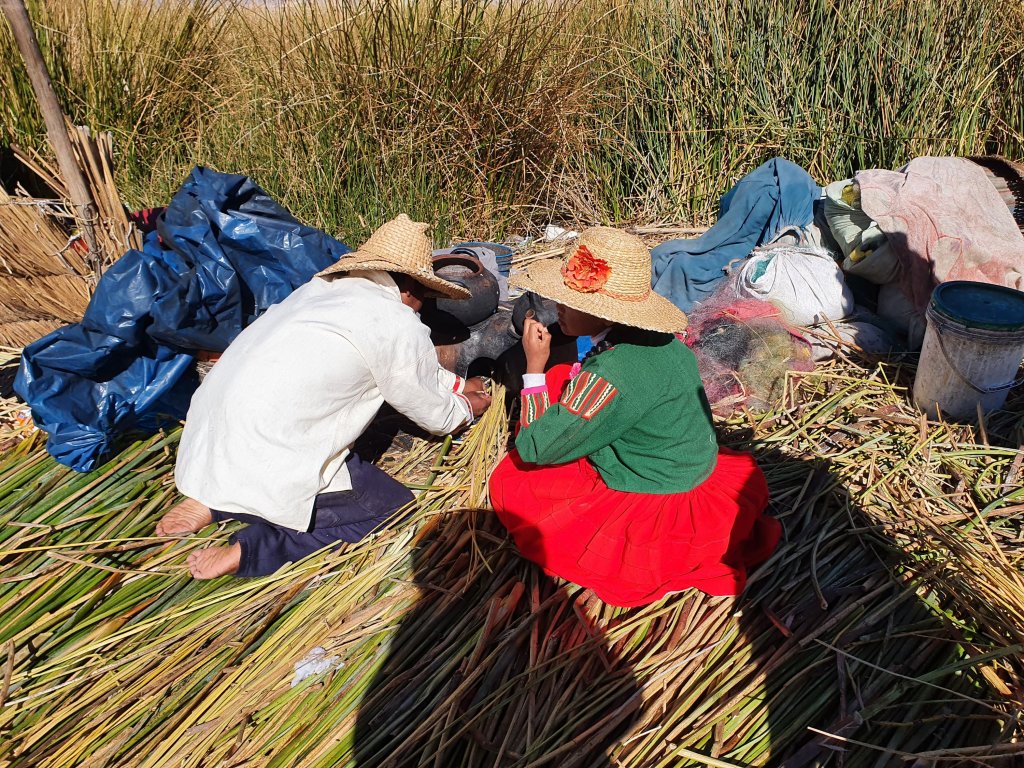
There is no doubt that the Uros way of life is on its way out. Younger generations leave the islands for secondary and tertiary education and few comeback to live on the islands. It is estimated that within a generation, the genuine Uros way of life will dissappear (there might be a version of it left as a tourist attraction)
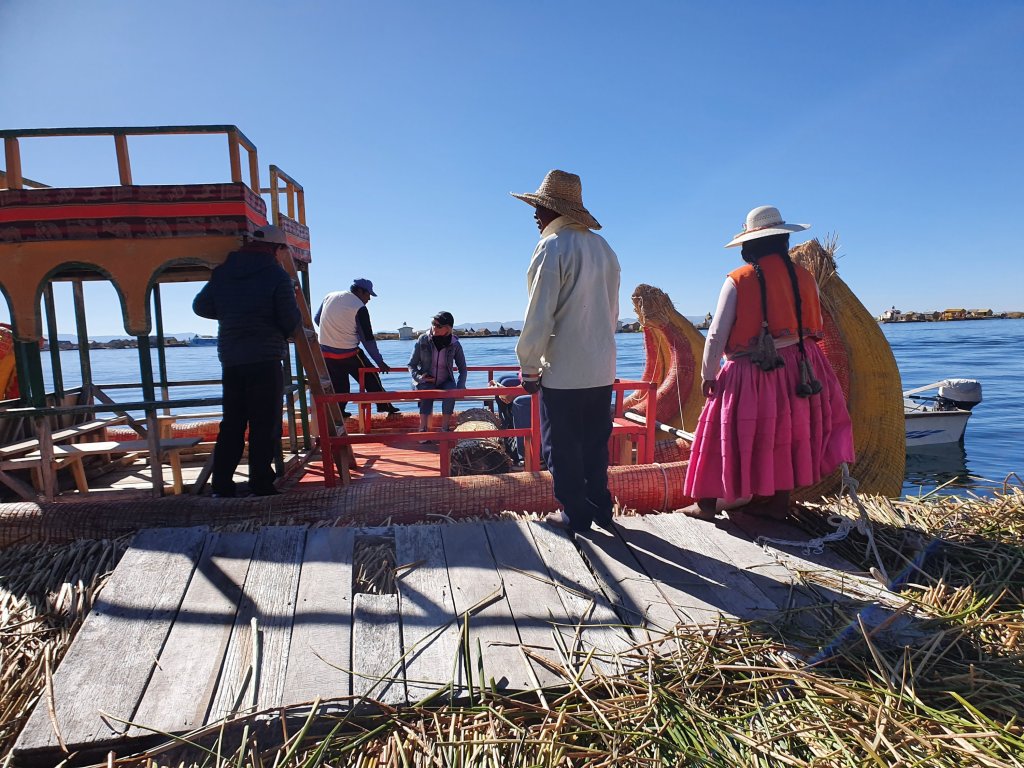
0915: We leave the island on a Uros reed boat. Although made of reed, it is large and very sturdy. Nowadays, the islanders travel using small motor boats, so the reed boats are only used for ferrying tourists.
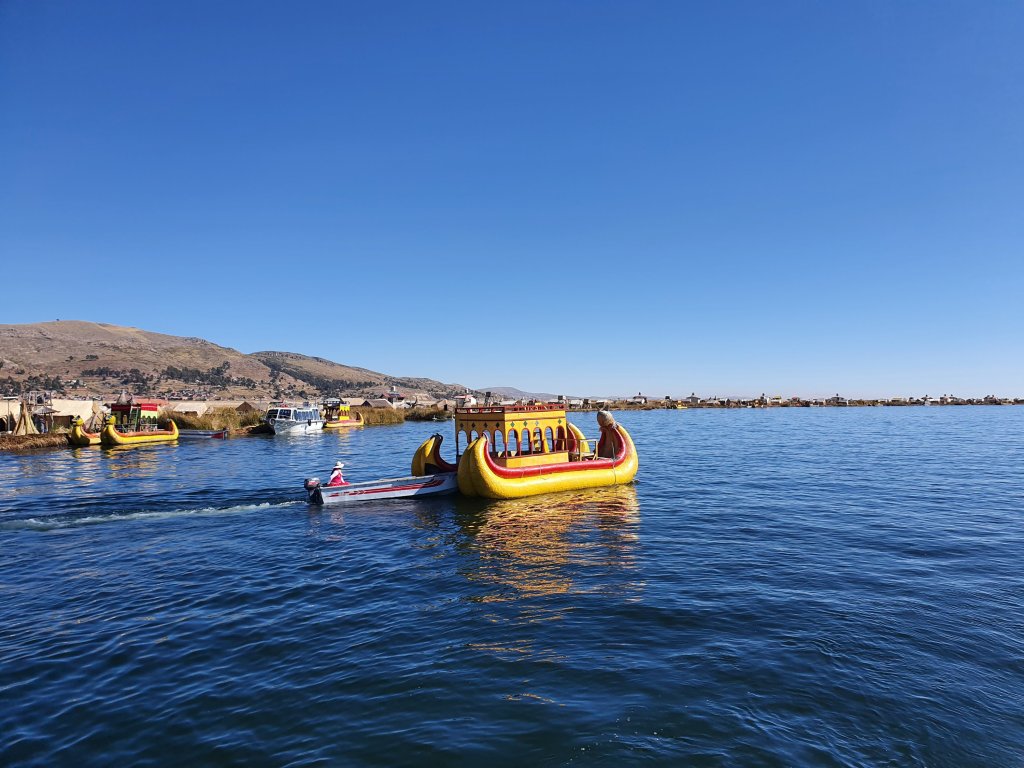
0940: The reed boat brings us to the Uros capital island. This has the only “hotel” on the Uros Islands – a one room bed and breakfast. There are also a couple of shops.
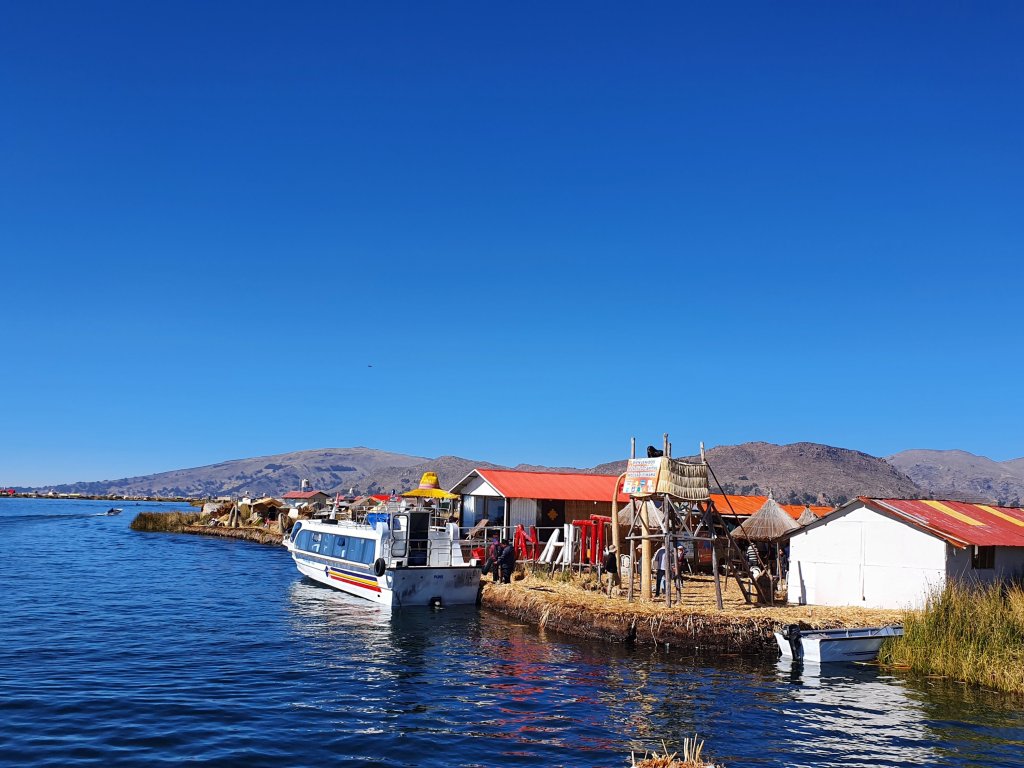
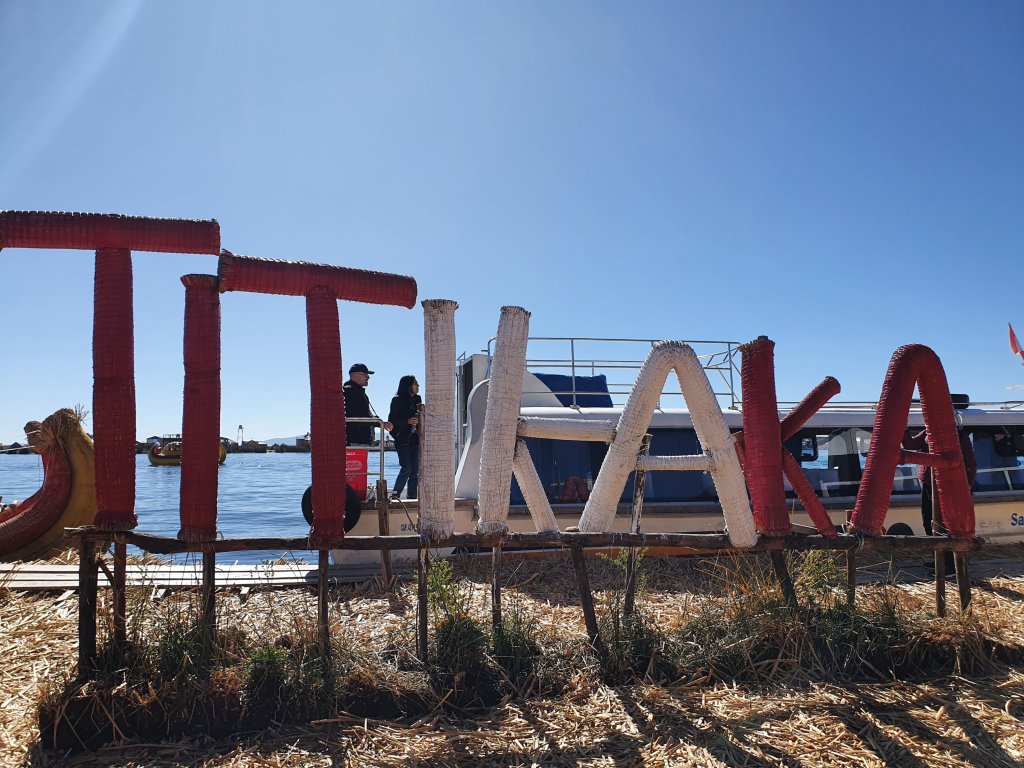
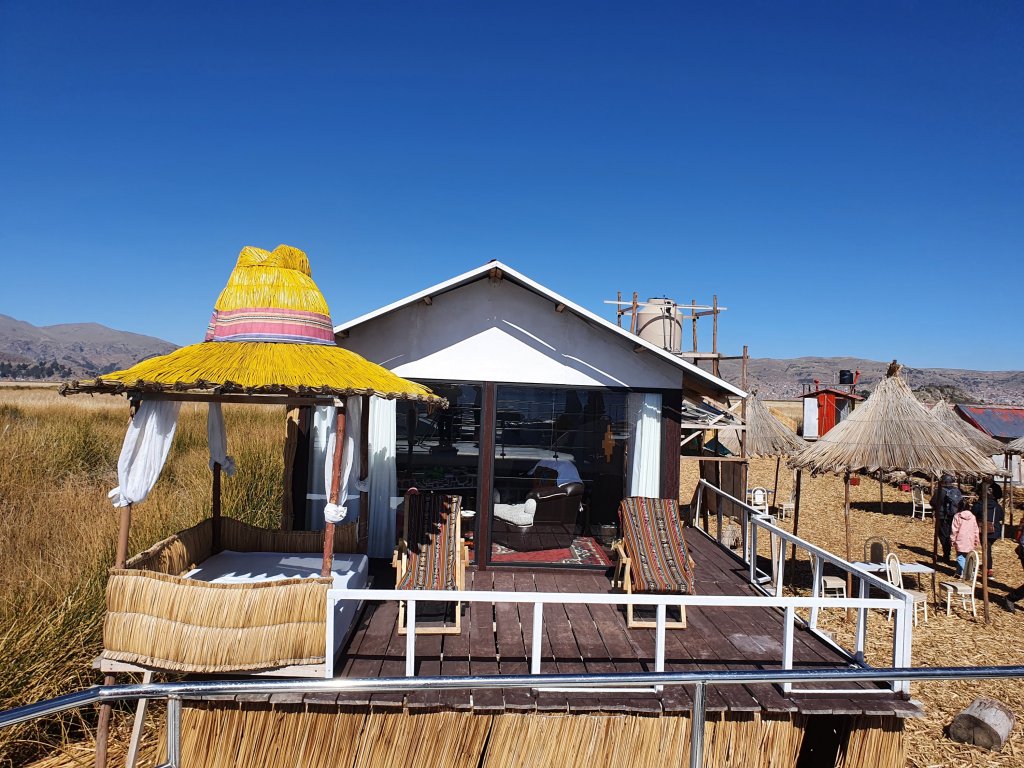
0950: Leave Uros capital and head to the next stop, Taquile Island.
Whereas the Uros islands are located close to Puno on the clam and shallow waters, Taquile island is located in the open waters of Titicaca close to the border with Bolivia. The island and its culture and handicrafts have been declared as World heritage site by UNESCO. Men and women specialising in different types of handicrafts unique to Taquile island.
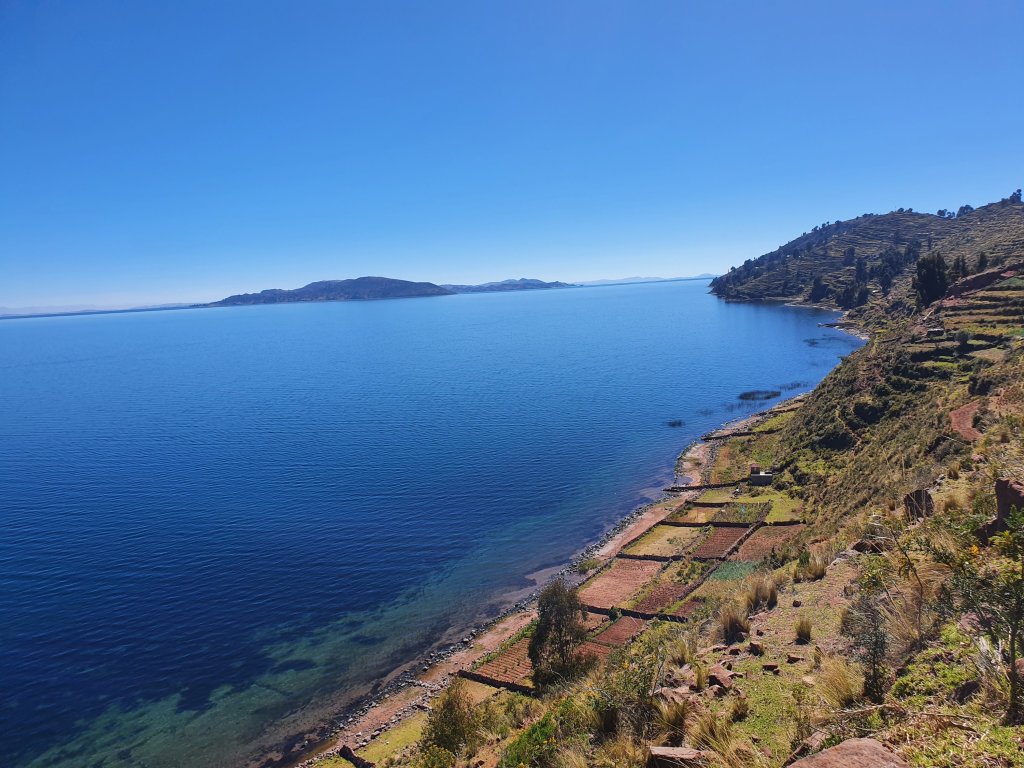
1100: Arrive in Taquile island on the South side, and we walk to the other side of the island. On the way there are beautiful views across the lake and the snow capped peaks of Bolivia.
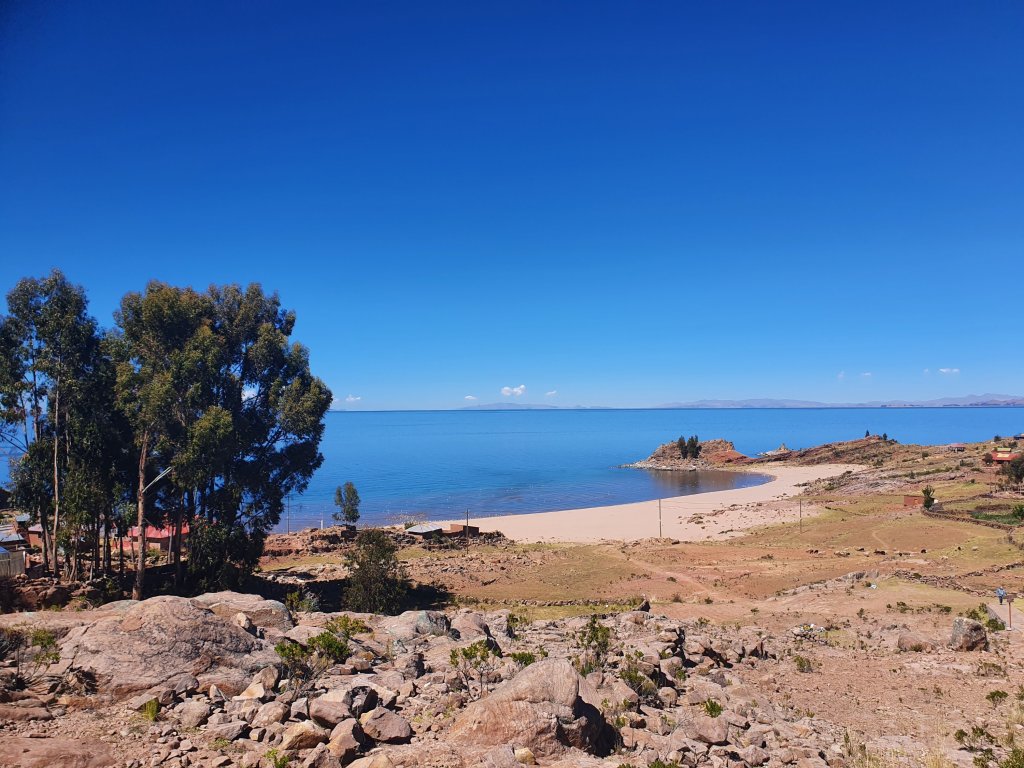
There are also walled gardens growing potatoes, corn, quinoa and beans.
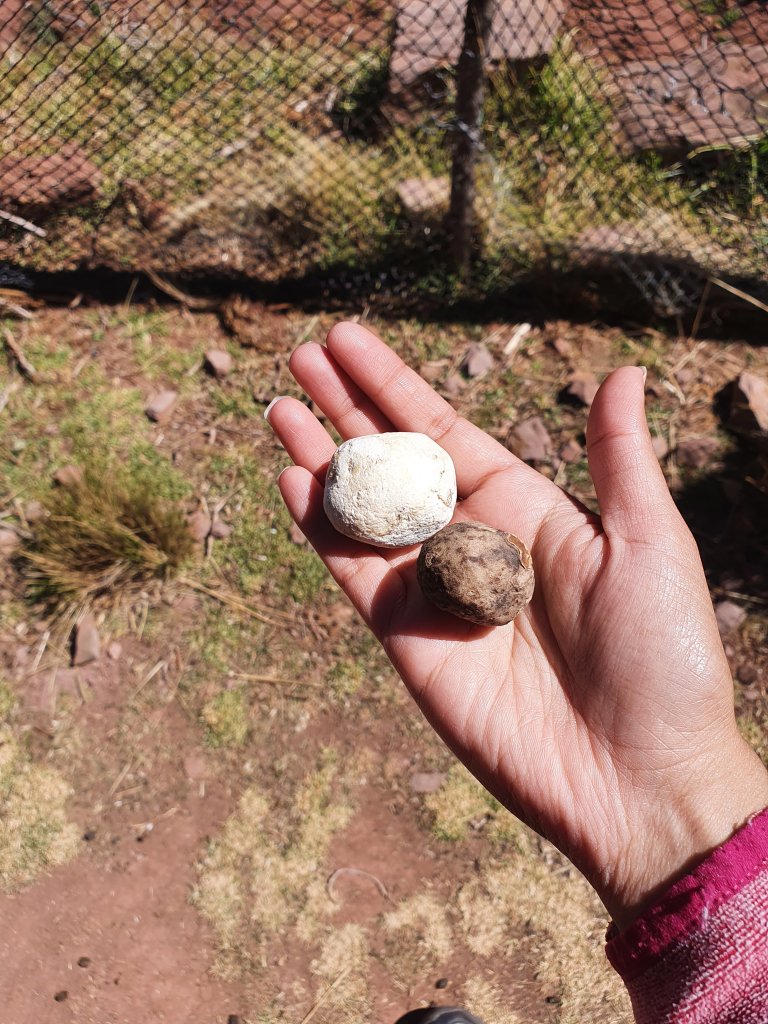
Our guide also showed us dehydrated potatoes. These potatoes are dried in the sun at high altitude and can be stored up to several decades. This is a traditional method of preserving potatoes and it was used for as far back as Inca times to preserve food for the winter and as a reserve for famines. To rehydrate the potatoes you simply put them back in hot water for a couple of hours.
We arrive at the local handicraft market and there is a demonstration of traditional Taquile dancing.
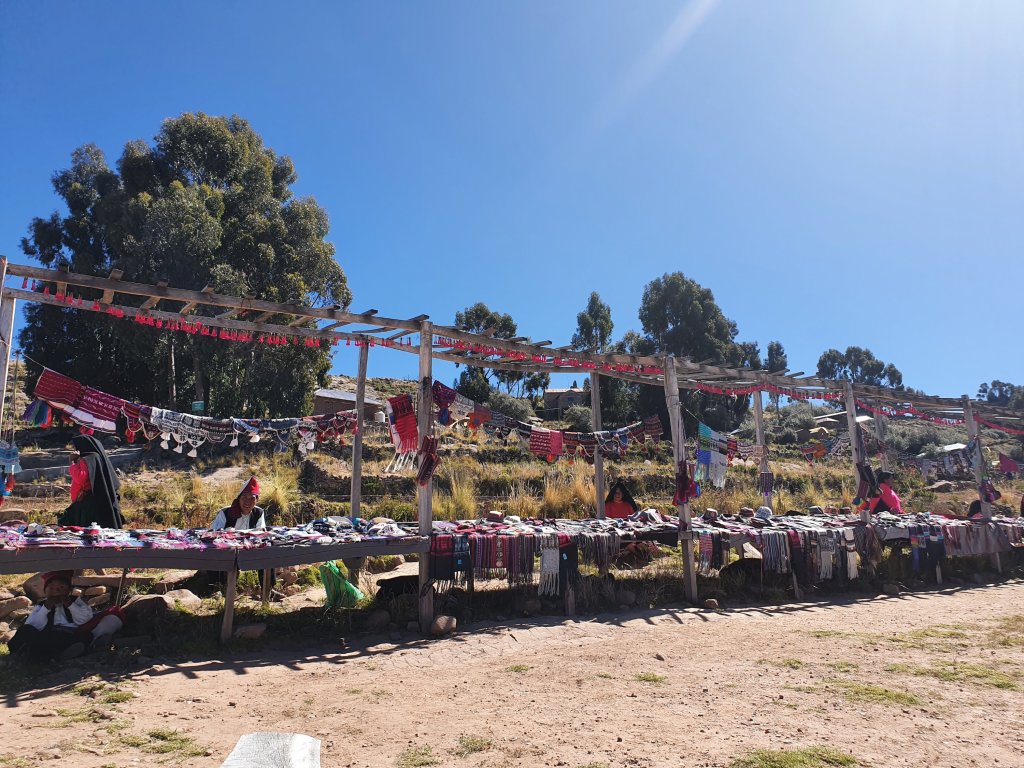
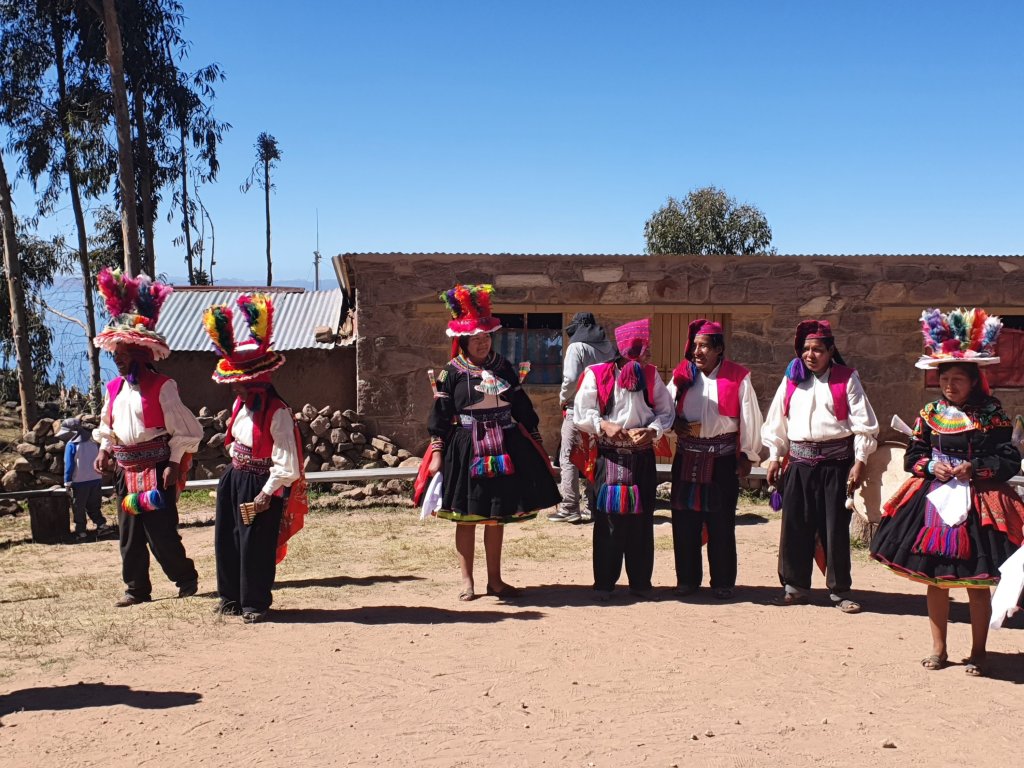
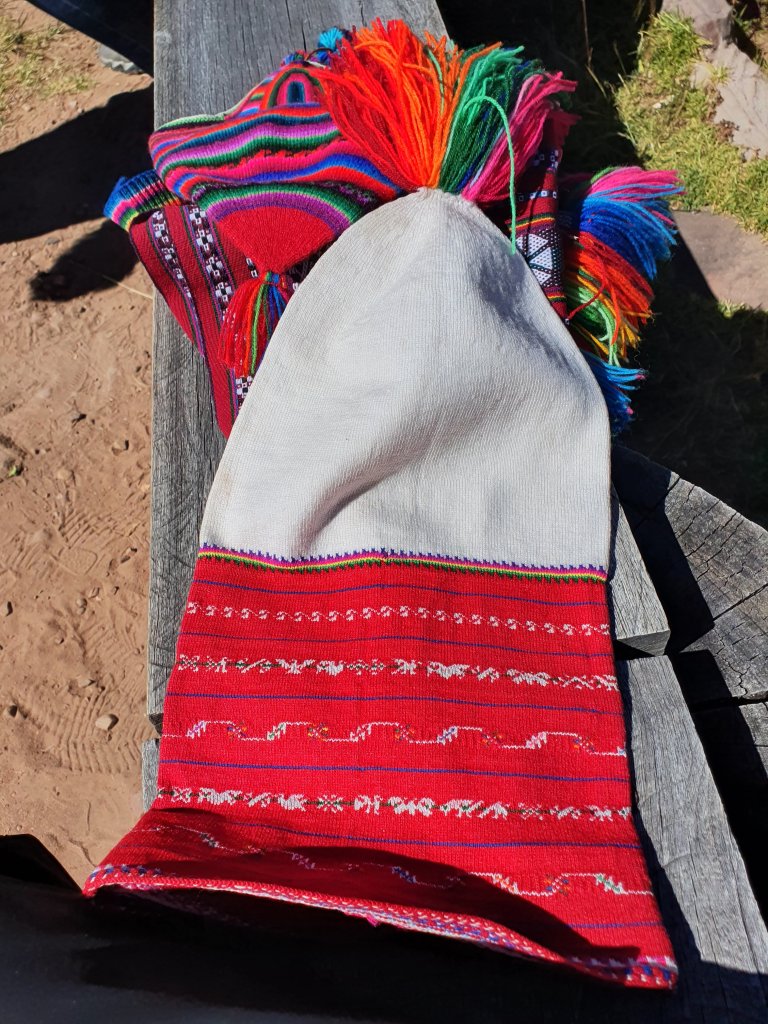
We also get to see the handicrafts made on the island. Most common are the hats, woven by men. On Taquile, boys are taught to weave hats from 5 years of age and it is considered an absolute essential skill for any man. The hat colour indicates if you are married or not (unmarried men wear hats that are half white, and married men wear hats that are all one colour) and if you are looking for a wife or not (those seeking wives have very elaborate pop poms on their hats).
Women indicate their marital status by the skirts they wear. Married women wear black and multi-colour is for unmarried women. Those seeking a husband wear the biggest and most colourful skirts.
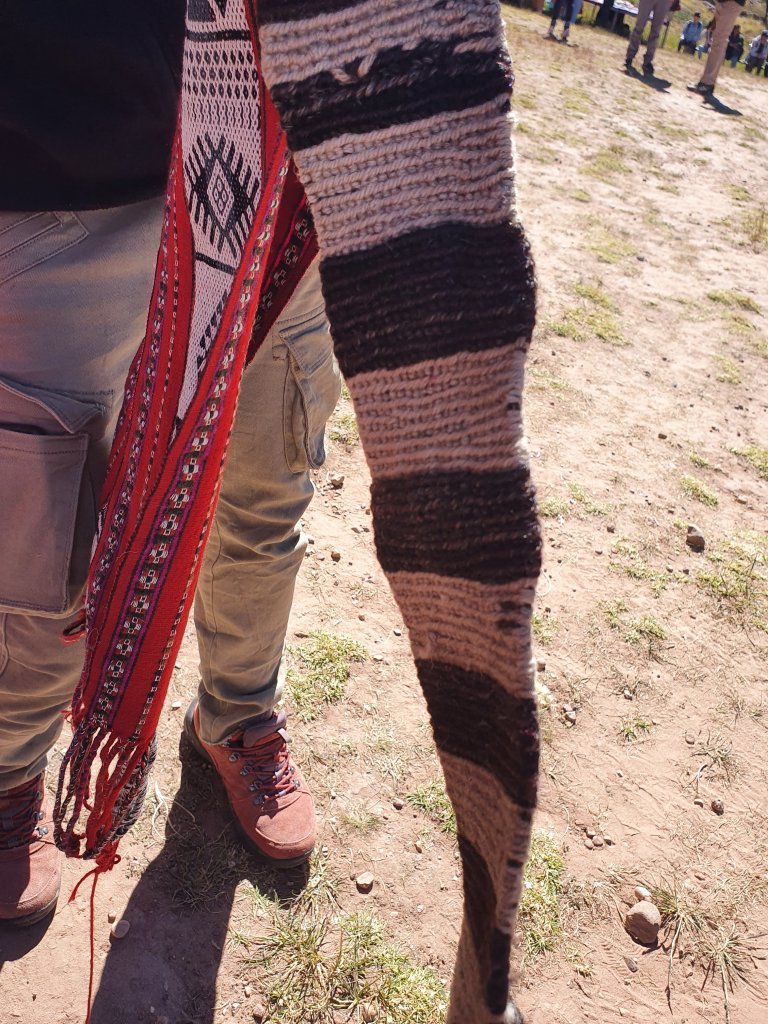
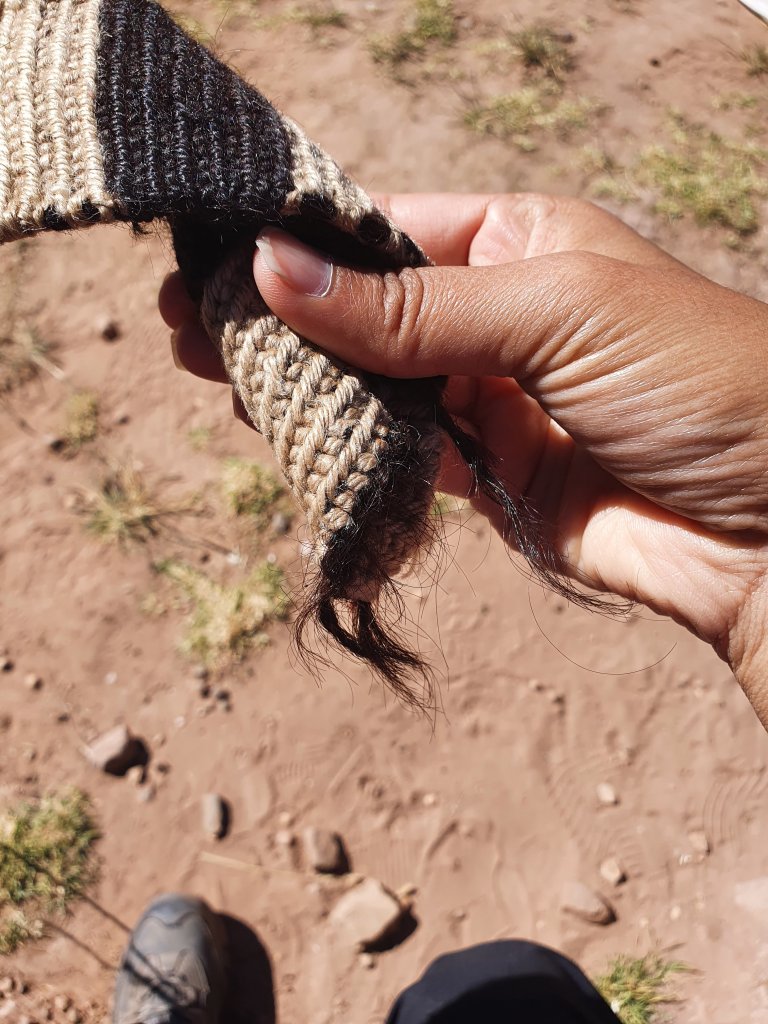
When women get married, they present their husband with a knitted belt. The edges of the belt are finished off with the wife’s own hair. This is one of the handful of occasions Taquile women cut their hair during their lifetime.
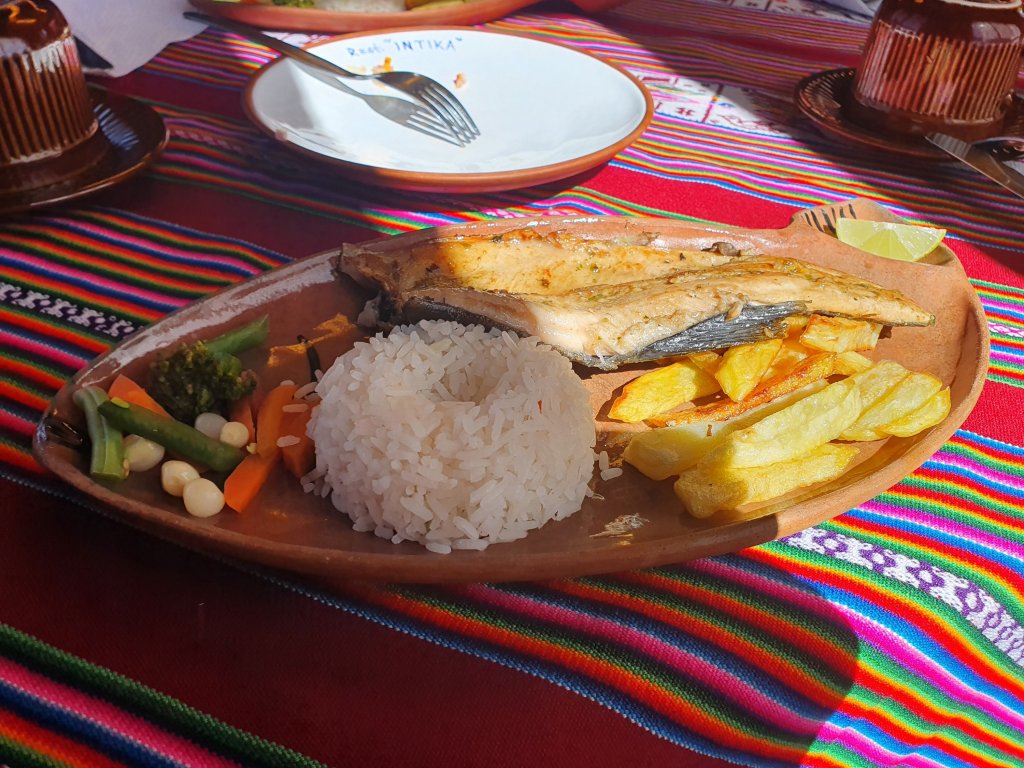
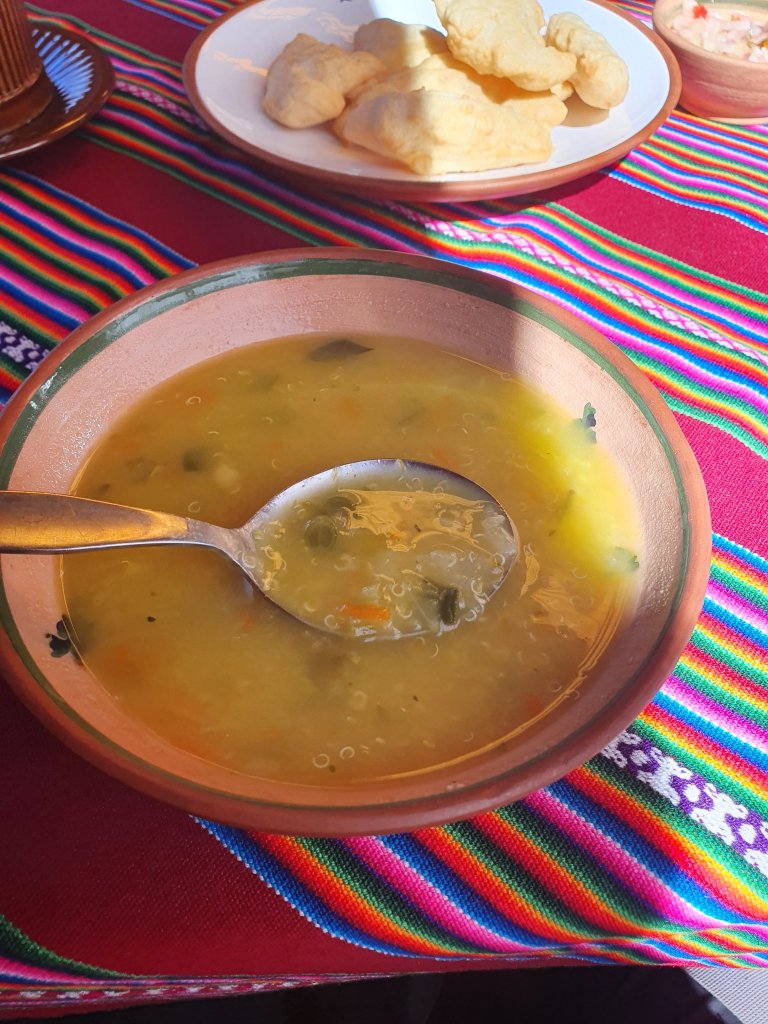
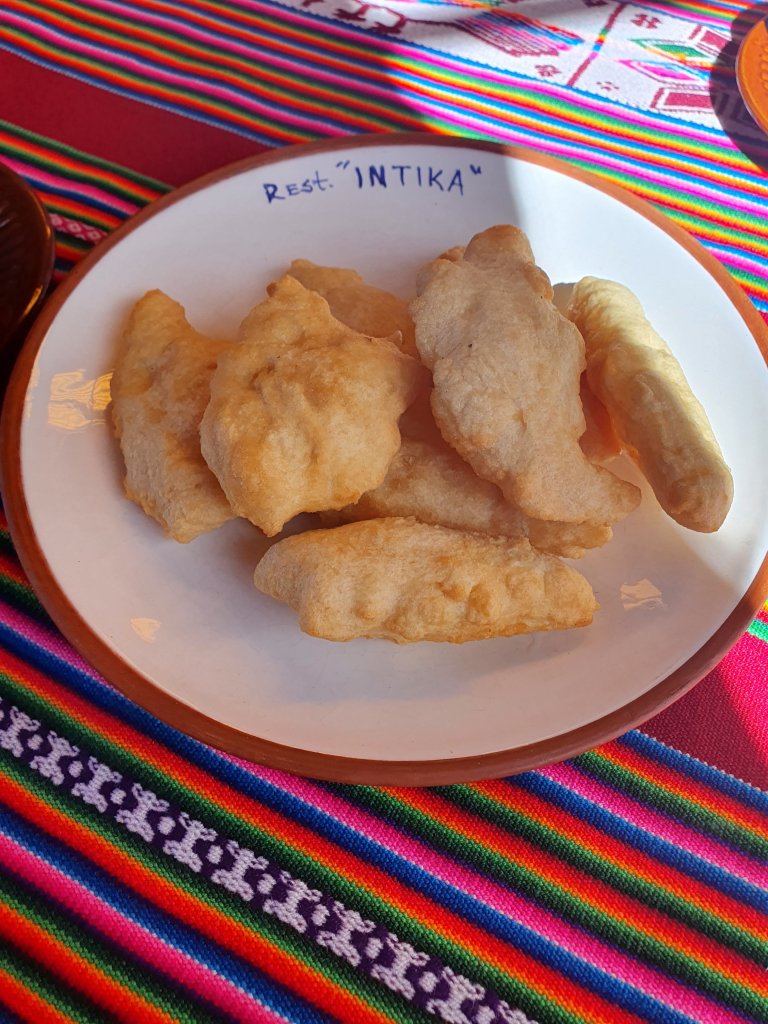
1300: Lunch is served at a nearby restaurant. There is traditional bread, quinoa soup and trout with spicy salsa. Trout is not indigenous to Peru, but introduced from Canada in the 1950s. Similarly, the island also has Eucalyptus plants introduced from Australia.
1340: After lunch, we walk down to the departure port on the North side of the island. There is some time to look around the jetty before the boat departs.
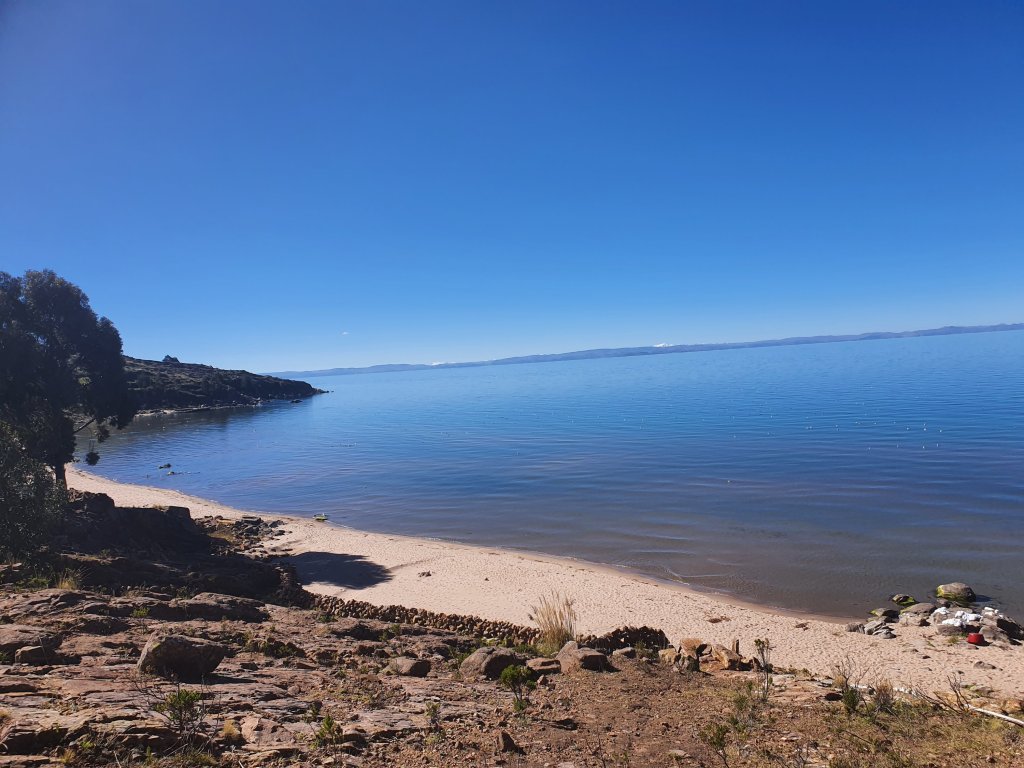
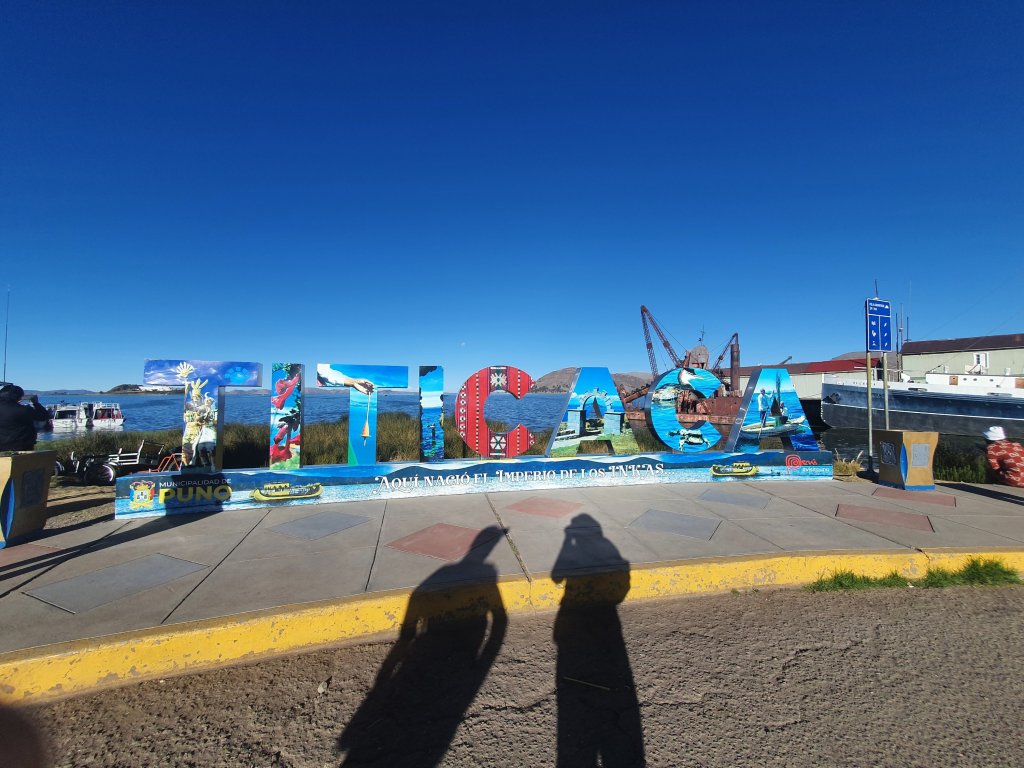
1400: Depart Taquile island. The journey to Puno takes 1.5 hrs. The sun is beating down fast (and at 4000m you are that much closer to the sun, so it burns really easily), so we are very grateful for the previously mentioned curtains.
1530: Arrive back at Puno.
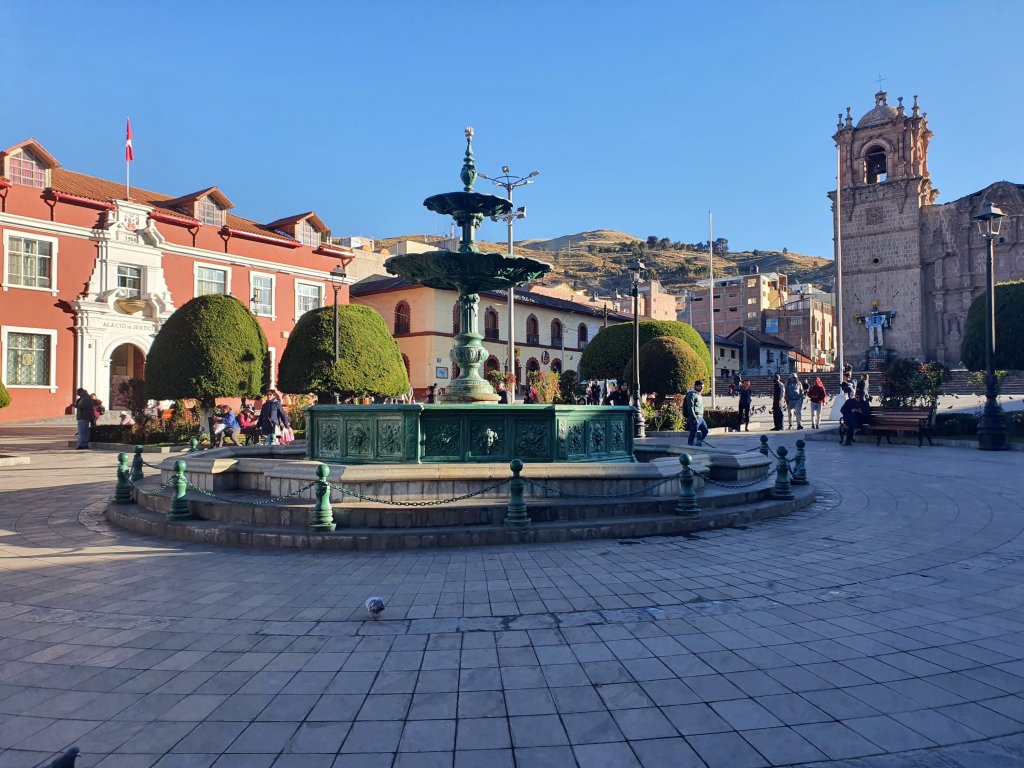
1600: Brief stop at Plaza de Armas, main square in Puno.
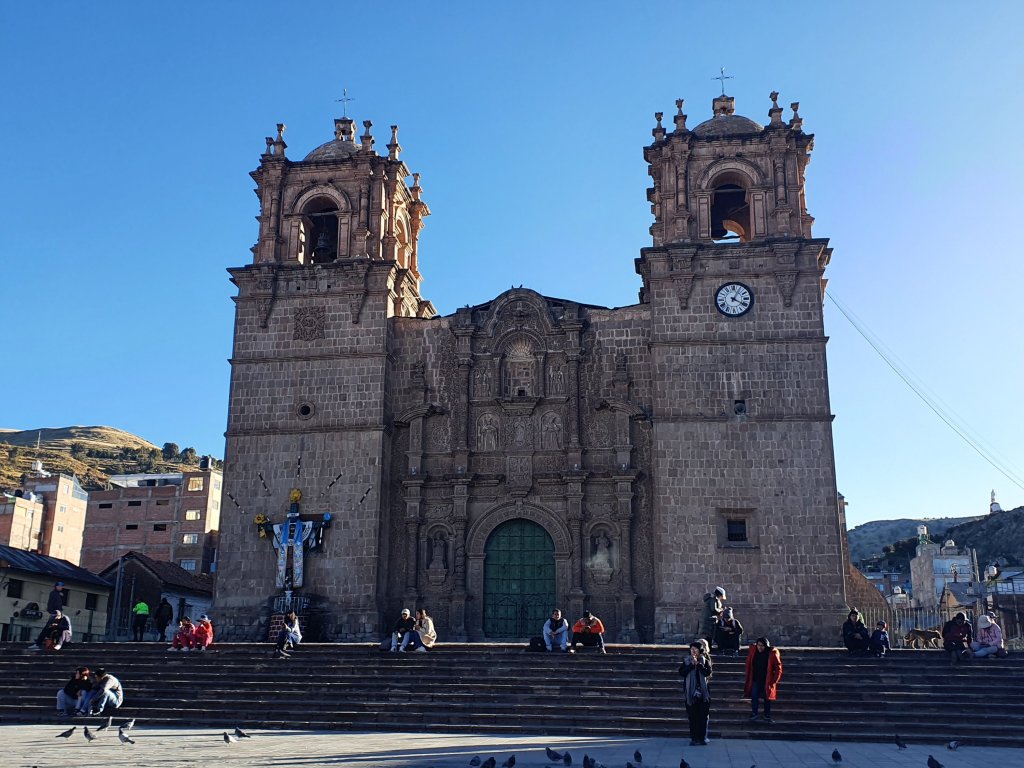
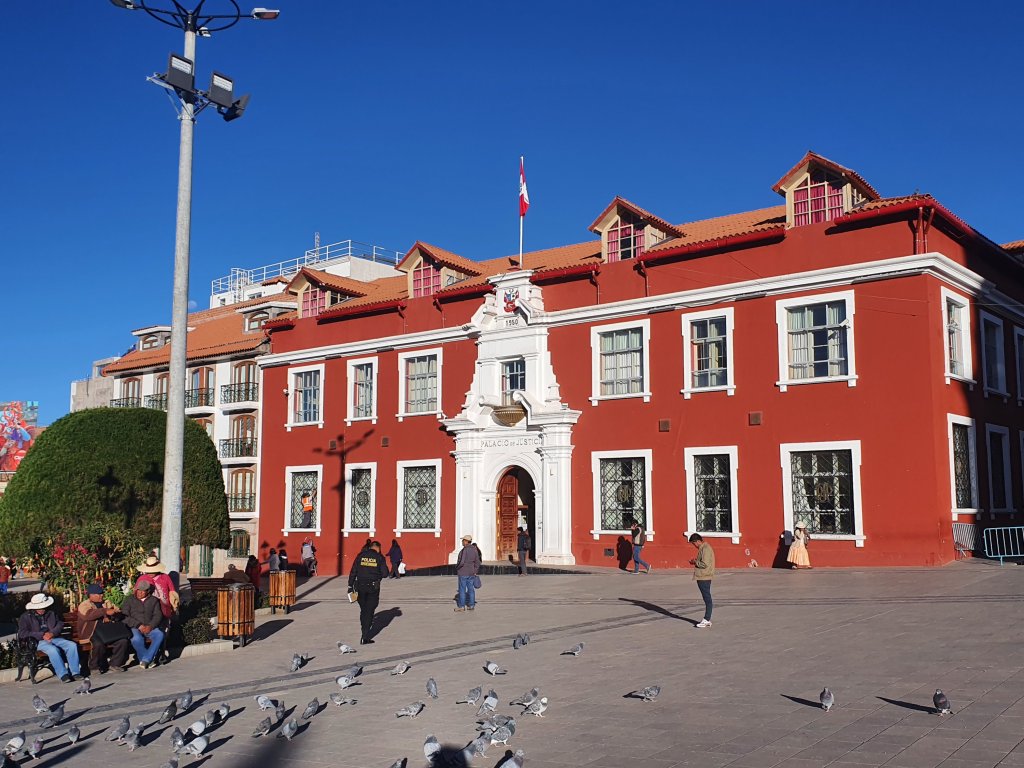
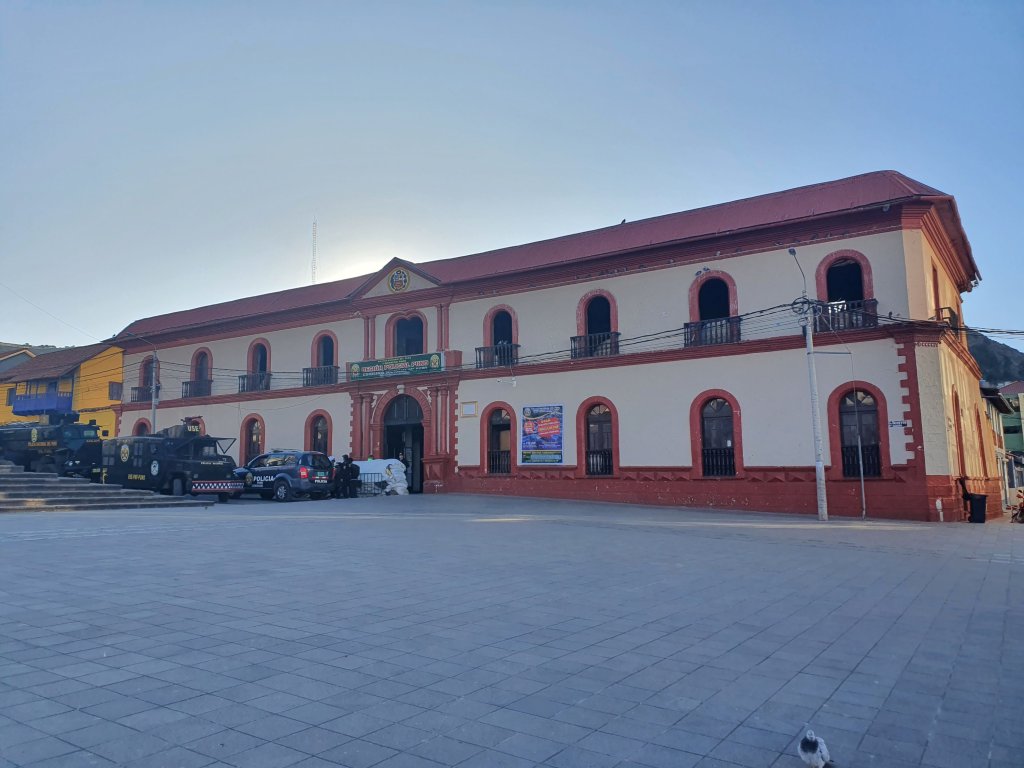
1700: Back at hotel.
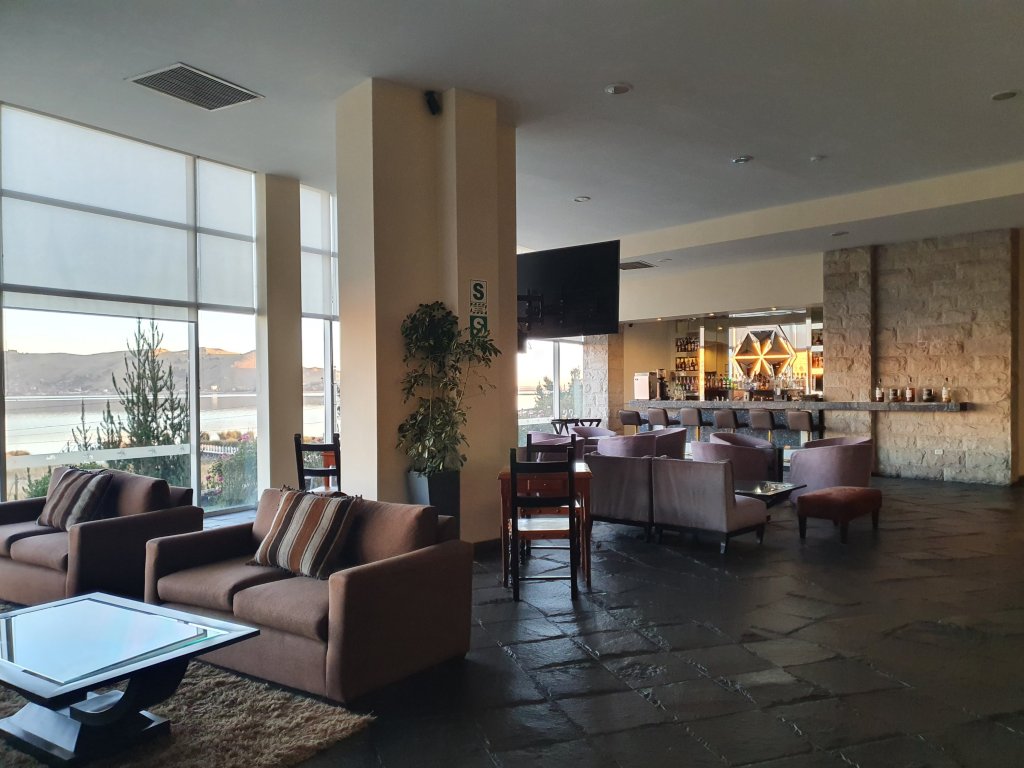
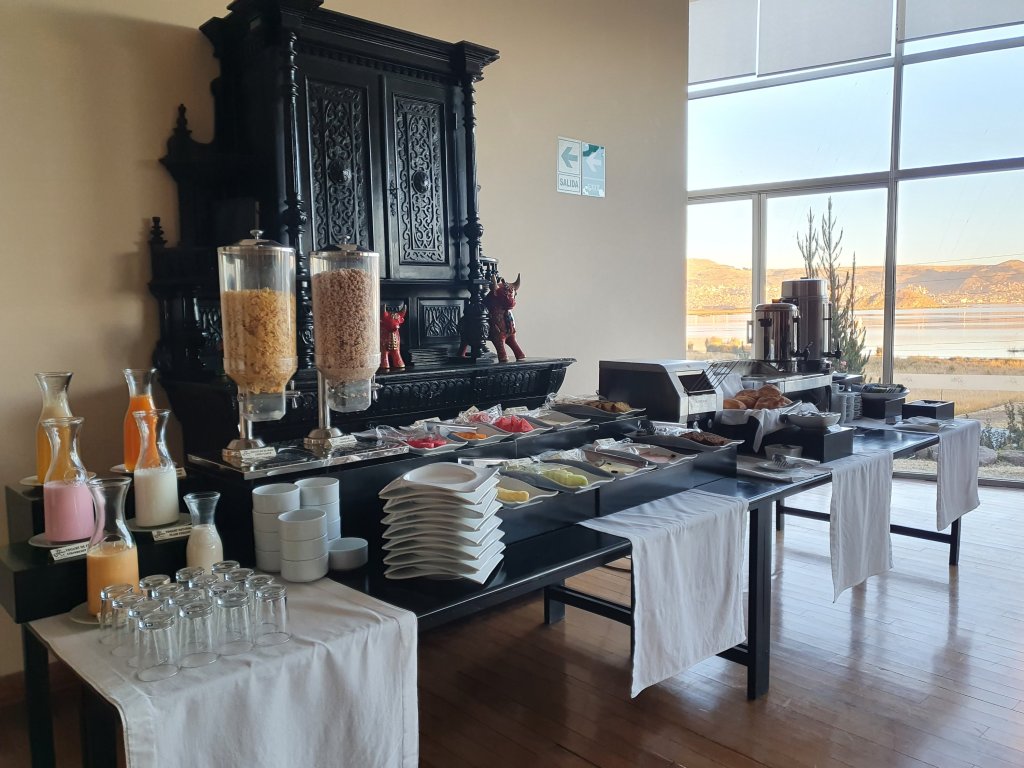
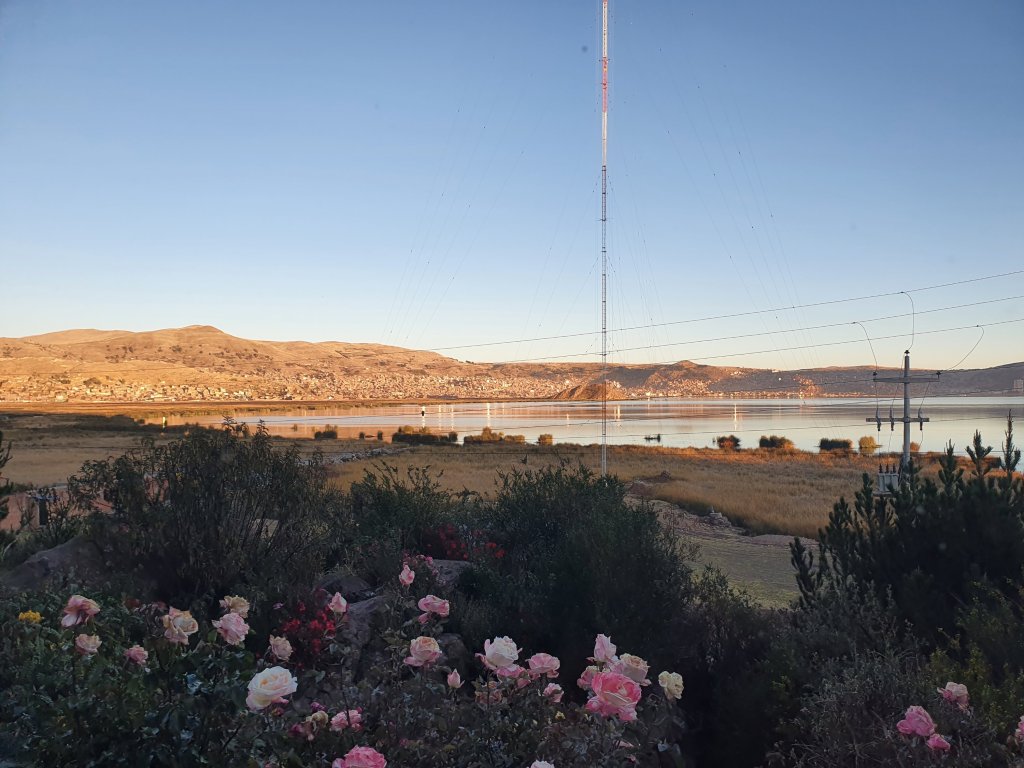
Hotel Review: We stayed at the Jose Antonio Hotel in Puno, on the shores of lake Titicaca. Hotel has excellent facilities - it's the first hotel in Peru we stayed at that had kettles in the rooms. The breakfast spread is good too. Only downside is it is a bit far from the centre of Puno, so if you want to explore the city on your own, you will need to take a taxi.
 Diary of a Tourist
Fascinating read. I loved hearing about the customs of the people. Really interesting.
LikeLiked by 1 person
Thanks for the detailed itinerary. Looks awesome
LikeLiked by 1 person
Thank you!
LikeLike