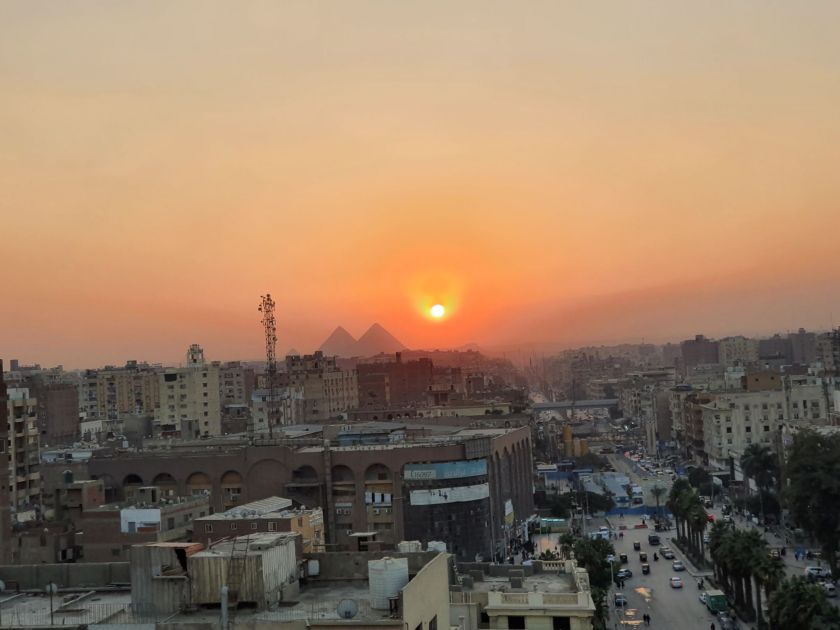
Where and when: Cairo, Egypt, 30 November 2023
0215: It is very late at night (or is it very early morning?) as we land at Cairo airport. One good thing about the ungodly hour of arrival is that we sail through immgration and customs. (Also, a guide from our travel company (Intrepid Travel) met us before immigration and made everything run smoothly).

Despite the hour, most of the kiosks at the airport are open and we are able to buy a local sim card and exchange some cash at the airport.
Tip: I would recommend buying a local Sim and exchanging cash at Cairo airport. You get a much better exchange rate compared to the UK (and possibly other countries) and it is more convenient compared to exchanging it in Cairo.

Afterwards, we hopped into the van and set off for our hotel. The journey to the hotel is through the centre of Cairo, and it is striking how busy the city is this late at night. Many shops and cafes are open and the roads are busy as well. The coffee shops are full of men sitting around and chatting, but there are no women around. As we would find out later in the week, Egypt is a late night society, with shops and restaurants opening after midday, and staying open until 2-3 am.
0345: We arrive at the Bacelo Cairo Pyramids hotel. It is located in Southwest Cairo, about 15 minutes drive from the Pyramids.
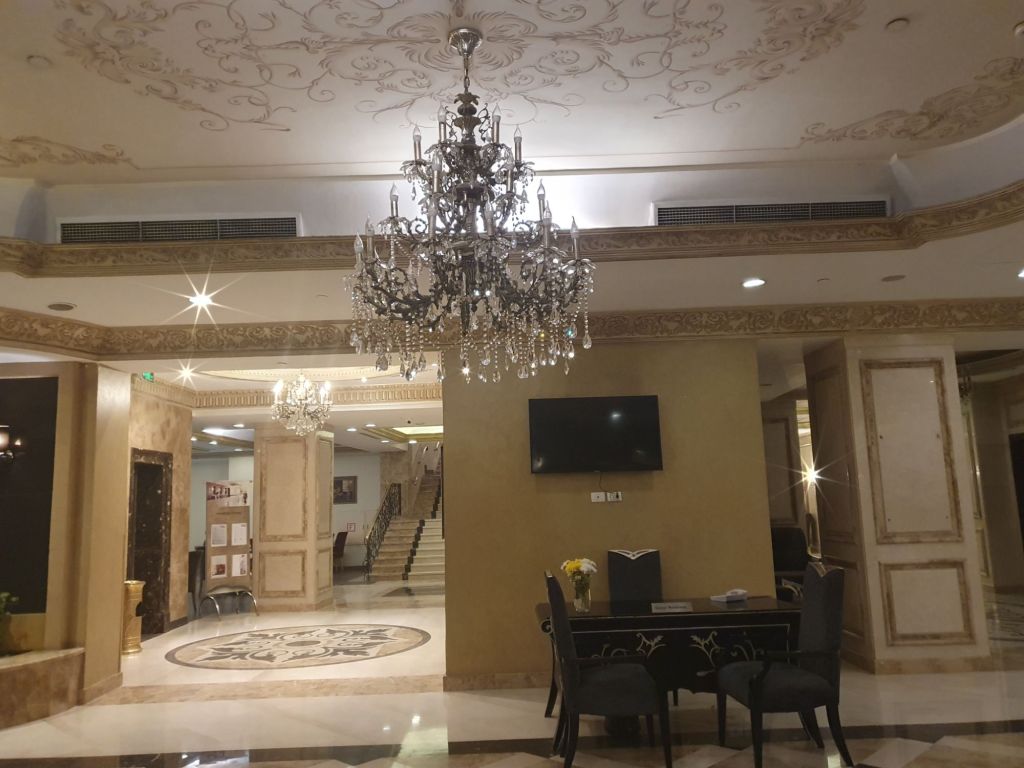
Hotel reception is open 24/7, and even though there are no other customers, it takes the reception staff 20 minutes to check us in.

1100: After some shuteye, we spend the rest of the day relaxing, exploring the hotel and meeting others in our travel group.
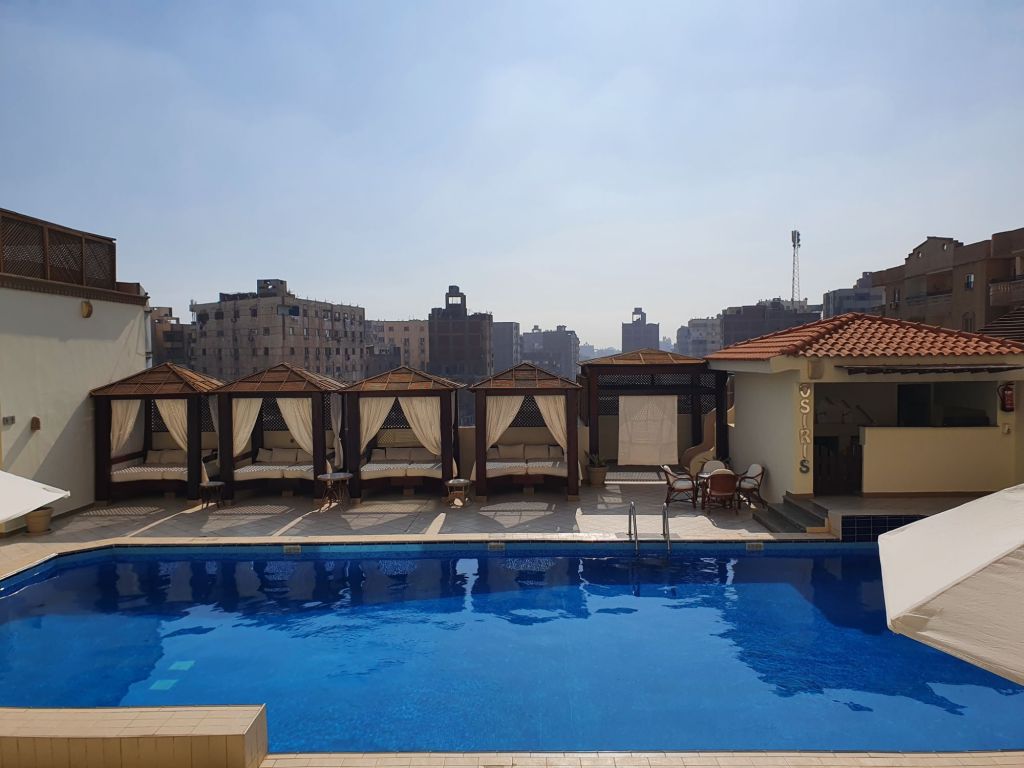
The Barcelo Cairo hotel is fairly quiet and there is a nice pool and a roof-top bar with views of the Pyramids of Giza. The sunset against backdrop of the Pyramids is absolutely spectacular.
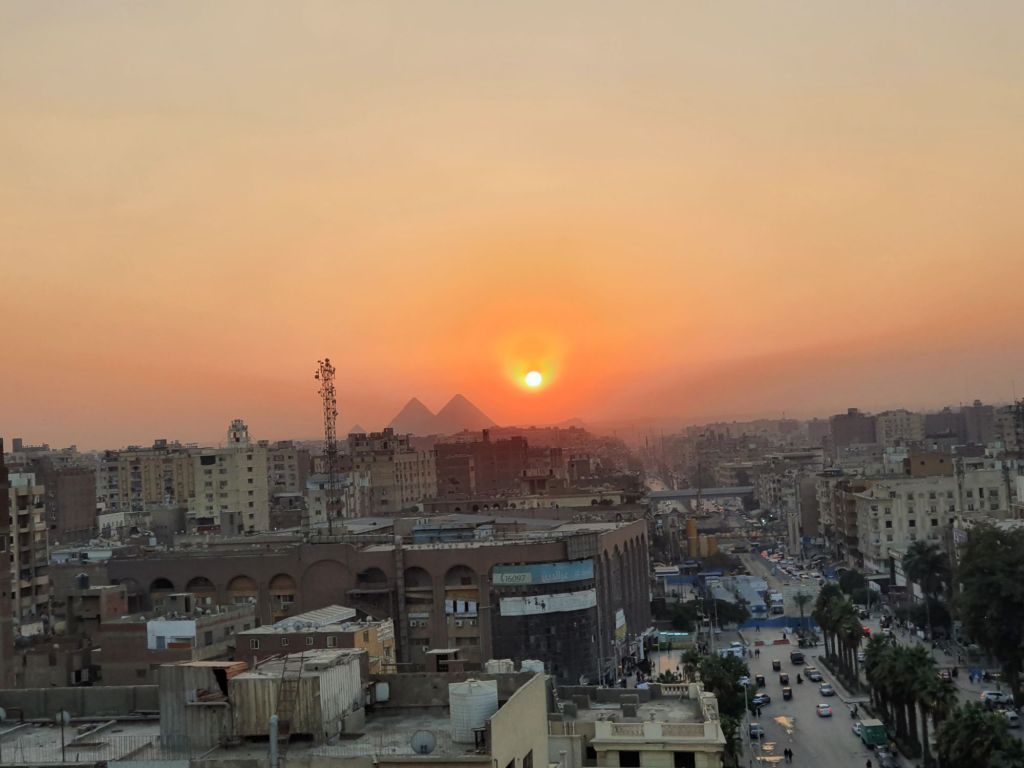
1900: After the Intrepid travel welcome meeting, we headed out to dinner at a local restaurant with our guide and the rest of the group.
Because this is a short post, I am going to use the rest of the post to outline a very brief history of Egypt.
A Brief History of Ancient Egypt
From about 3000 BC to 30 BC, Egypt was ruled by dynasties of Pharaohs. Below are a few of the Pharaohs linked to ancient sites we will see later in the week.

4th Dynasty
King Khufu (also known as King Cheops) c. 2589 BC: Known as the builder of the Great Pyramid of Giza
King Khafre (c. 2570 BC): Son of King Khufu, builder of the 2nd Pyramid of Giza and the Sphinx.
King Menkaure (c. 2530 BC): Son of Khafre and builder of the 3rd Pyramid at Giza.
18th Dynasty
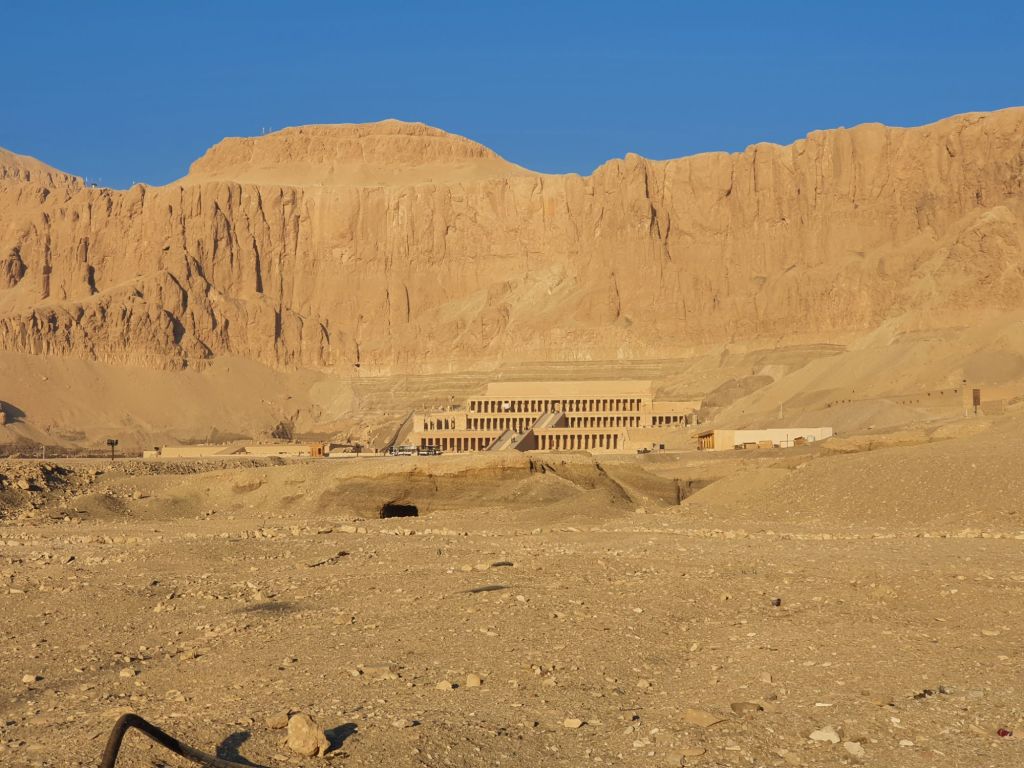
Queen Hatshepsut (c. 1507–1458 BC): Queen Hatshepsut was the Great Royal Wife of Pharaoh Thutmose II, ruling first as co-regent, then as Queen Regnant from c. 1479 BC until c. 1458 BC.
Akhenaten /Amonhotep IV and Queen Nefertiti (c. 1351 BC – c. 1334 BC): As a Pharaoh, Akhenaten is noted for abandoning Egypt’s traditional polytheism and introducing Atenism, or worship centered around a single god Aten. Atenism only lasted during the reign of Akhenaten. His wife, Queen Nefertiti was known for her beauty and was a possible co-ruler with Akhenaten.
Tutankhamun (c. 1332 BC – c. 1323 BC) Son of Akhenaten. Although he only ruled for a short time, Tutankhamun is one of the most well known Pharaohs, thanks to his tomb being found intact with many treasures inside.

19th Dynasty
Ramses II (Ramses the Great) (c. 1303 BC to c. 1213 BC): Ramses II is regarded as one of the most celebrated and most powerful Pharaohs of the New Kingdom, which itself was the most powerful period of ancient Egypt. He is also considered to be one of ancient Egypt’s most successful warrior Pharaohs, conducting many successful military campaigns.

The Ptolemaic Dynasty
The Ptolemaic Dynasty ruled Egypt following the invasion of Alexander the Great. Despite having greek heritage, the Ptolemaic Dynasty adopted the ancient Egyptian religion, gods and culture as their own and continued its traditions. Egypt’s last Pharaoh is perhaps its most famous – Queen Cleopatra, who supposedly killed herself with an Asp bite following the fall of Egypt to the Roman Empire.
Roman Rule and End of Ancient Egypt
Roman rule of Egypt continued until 641 AD, with Roman Emperors being referred to as Pharaohs. During the 5 and 6th century AD, Christianity spread to Egypt, resulting in the downfall of the ancient Egyptian religion and customs. In the subsequent centuries, many of the ancient temples were abandoned and remained buried in the sands of time until they started to be re-discovered in the 19th and 20th centuries.
 Diary of a Tourist
Sadly, I needed that refresher on Egyptian history, so thank you! I’m interested in seeing Egypt, but a late night society? Ugh. I need to find a country that’s an early morning society. 😉 I look forward to following along on the rest of your epic journey. Happy New Year!
LikeLiked by 1 person
Happy New Year! I know what you mean about late nights 😃, but actually it is a good thing as a tourist – most tourist sites in aegypt open at dawn, and if you go early, it is fairly quiet as the local tourists come in late. We had LOTS of early starts on this trip 🙂
LikeLiked by 1 person
Ooh. That’s useful intel. Thank you!
LikeLiked by 1 person