Where and when: Cairo, Egypt, 1 December 2023
0730: It is an early start today, on the first day of our Egypt tour. We are going to see the Pyramids of Giza.

Pyramids are synonymous with Egypt and in this ancient civilisation, they were tombs for the kings. Ancient Egyptians believed that the Sun was the key to life on Earth, so Pyramids were built in the shape of the rays of the sun falling to the Earth, with the apex reaching to the Sun. They were built with sandstone and covered with Alabaster.
Because the sun rises in the East and sets in the West, the Pyramids and other tombs were always built on the West bank of the Nile whilst other temples and palaces were built on the East bank.
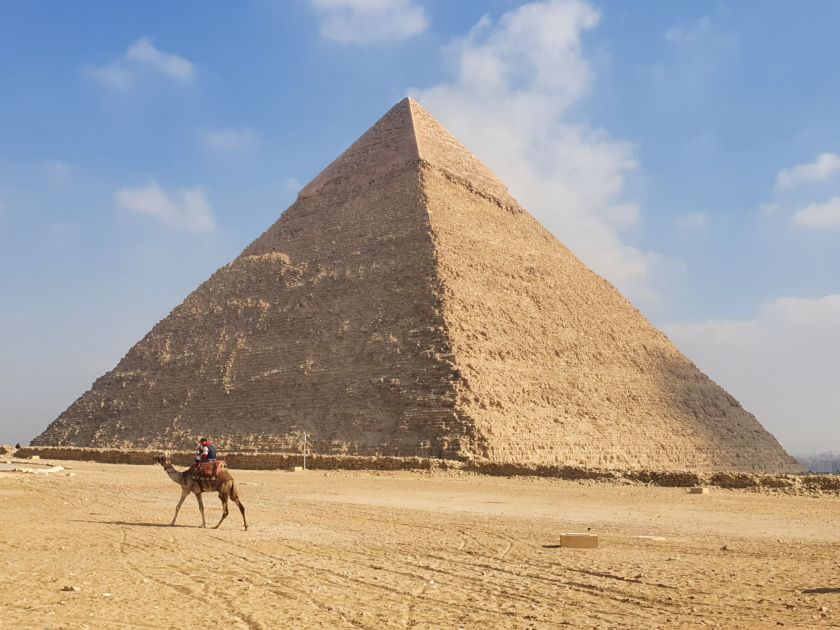
The Pyramids of Giza are so named because they are on the Plateau of Giza. The largest of the Pyramids on the plateau is the Pyramid of King Khufu (also known as King Cheops). Built around 2600 BC, it is 148m tall and is the only remaining Wonder of the Ancient World. It held the record for the tallest building in the World for 3800 years, until it was overtaken by the Lincoln Cathedral in 1311 AD.

The second largest Pyramid in Giza was built for King Khafre, the son of Khufu. This one still has some Alabaster covering at the top.

The smallest pyramid on the plateau was built for King Menkaure, the son of King Khafre.

All three Pyramids are remarkble, vast structures rising up from the plateau. When covered with white Alabaster, and gleaming in the sun, they must have been quite a sight. The foundation rocks are as tall as a person, as as wide as about 5 people.

We got the chance to go inside the biggest of the three Pyramids (this costs 900 EGP). The entrance (several meters above ground level) leads to an access tunnel. It is a little narrow, but it is not difficult to get through (at least not if you are 5 foot 1 tall).


At the end of the tunnel, there is a narrow, ascending passageway, 1m tall by 1m wide. This is the hardest bit of going into the Pyramid, and you have to climb whilst bent double – but the climb is not too far (only took us about 5 minutes) and there are handrails and steps to ease the climb.
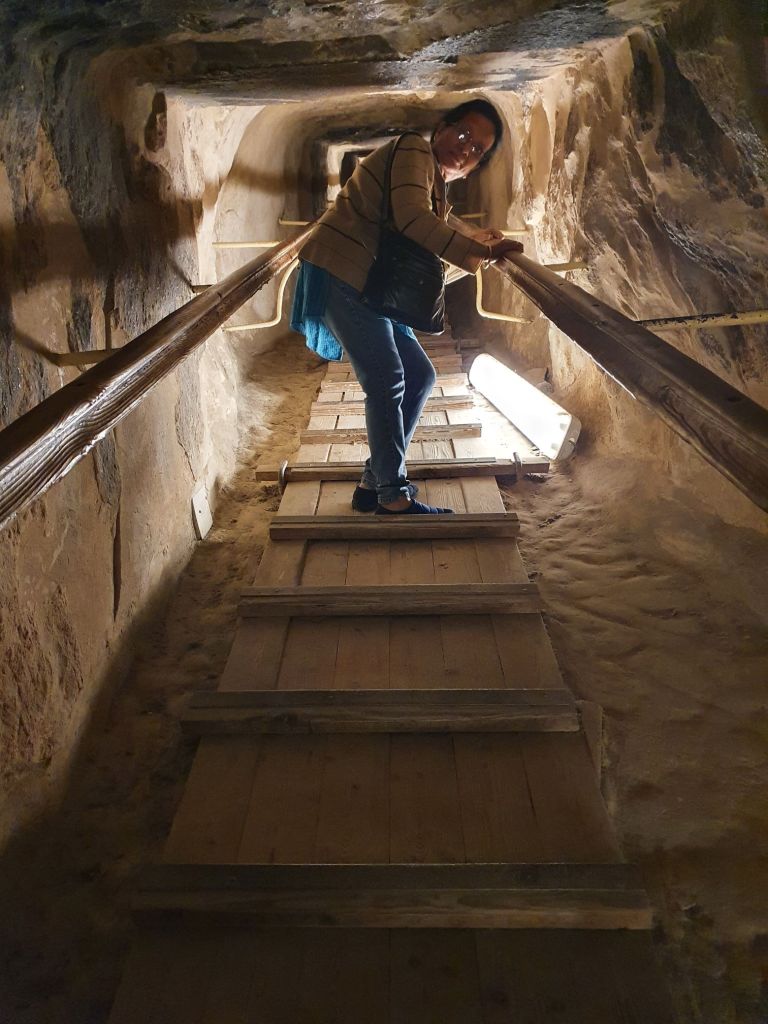
At the end of the passage, you enter the Grand Gallery. This a narrow, but very tall cavern like space. You can ascend further here and at the end of this, is another narrow short tunnel, at the end of which there is the King’s burial chamber. The Pyramid also has the Queen’s chamber and the subterranean passage but these were closed when we visited.

This youtube video gives a good overview of what’s inside the Great Pyramid.
Having gone inside the Pyramid, we found it easier than expected. Although some bending and climbing was needed, this was only for a short time. It is however quite stuffy inside and in the narrow passage, there is only space for one person at a time. There is no official in/out routes marked inside, so you are reliant on the good sense of the other tourists to not block entry or exit routes. I would not recommend going inside if you are claustrophobic or have back or knee problems. I almost backed out at the climb into the ascending passage, and only thanks to my mother’s encouragement I went ahead (and I am so glad I did, because it is a once in a lifetime opportunity).
After spending about an hour at the Great Pyramid, we went to a view point where you can see the all three big Pyramids of the plateau.

We had enough time to go to a second viewpoint and get closer to the other two Pyramids as well.

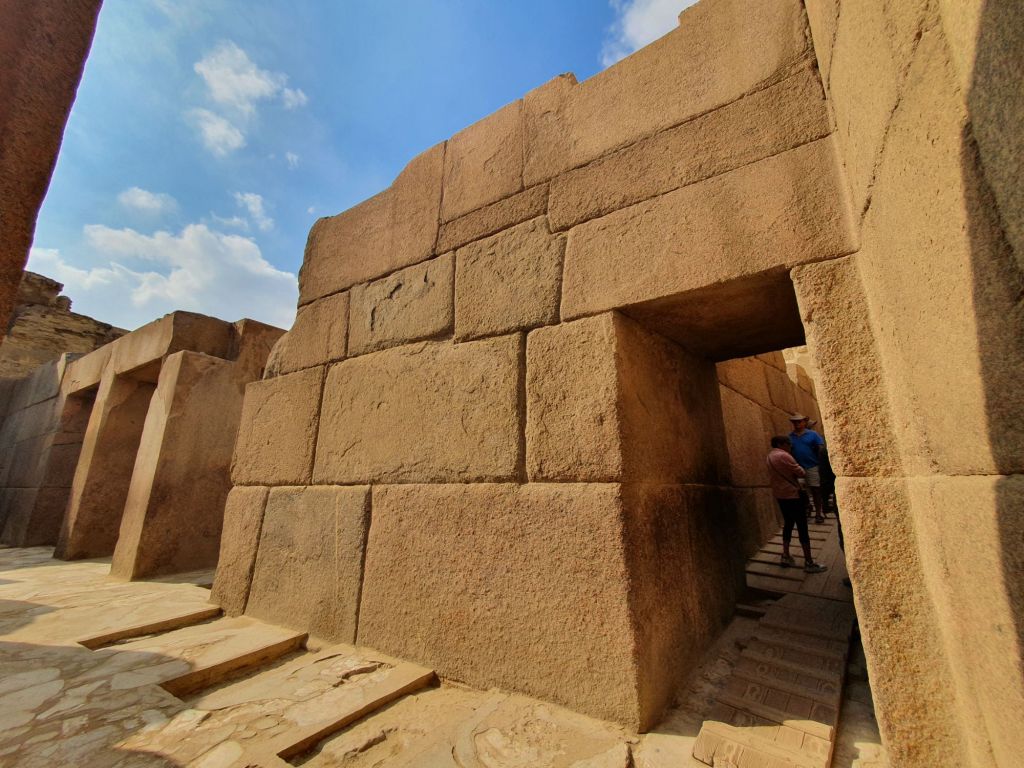
Next, we visited the ruins of the building complex of the second largest Pyramid. It is believed that each Pyramid had an entrance complex with buildings to mummify the body of the king – the mummification process extracted the brain through the nose and extracted all the vital organs from a cut to the side of the body. All organs were mummified seperatey and put in canopy jars, which were placed inside the tomb. The heart and kidneys were returned to the body – this is because the kidneys were believed to filter all the evil and the heart was used in the final judgement (if the heart weighed less than a feather, you were welcomed to the afterlife. If not, the heart was eaten by a beast and you went straight to hell).
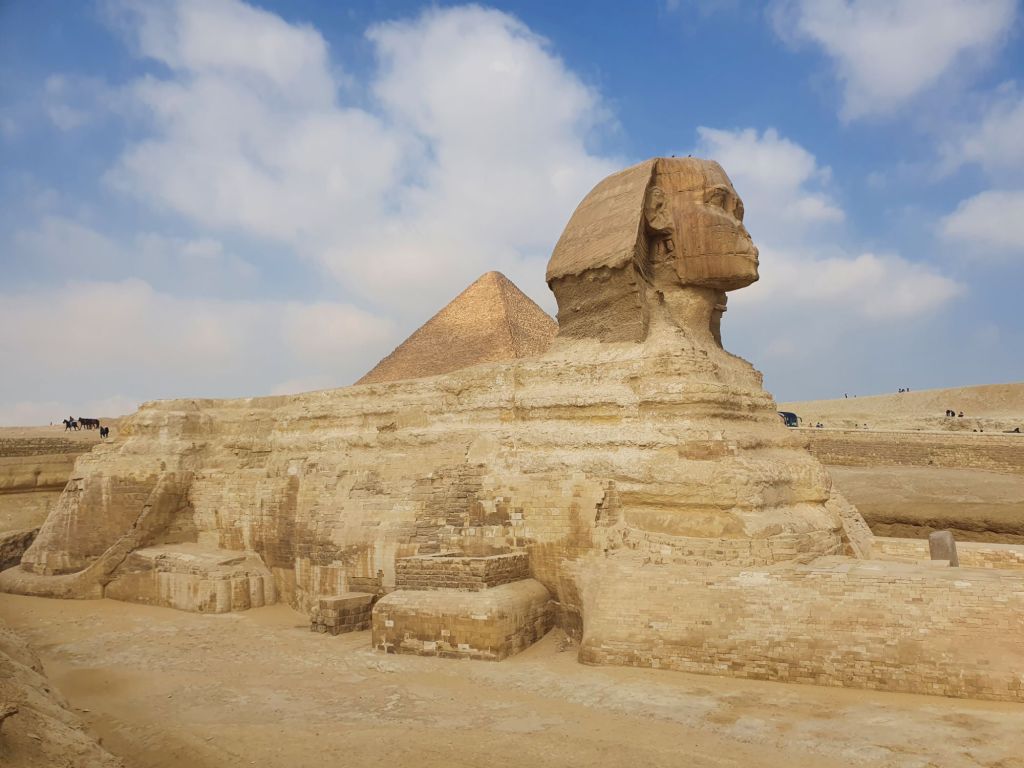
Next to this building complex, there is the famous statue of the Sphinx. This was carved taking advantage of the shape of the existing stone. The body is of a lion and the face is believed to be of that of King Khafre, for whom the second Pyramid was built.
Tips for visiting the Giza Pyramids
- Wear covered shoes: In the hot Egpytian weather, sandals may be tempting, but I would recommend wearing covered shoes. There are many camels and horses (and their droppings) around the Pyramids and you will be glad to not worry about where you step.
- The camels and horses are there for rides. I would not recommend rides as the poor animals are really not treated well.
- Visit the Pyramids as early as you can. After about 8.30 it gets really busy.
- Avoid Fridays and Saturdays if possible. It is the weekend in Egypt and there are many local tourists.
- Be weary of scams – those offering special access to parts of the tourist sites or offering to take your photographs. Be weary as these situations always end up with you having to hand over cash.
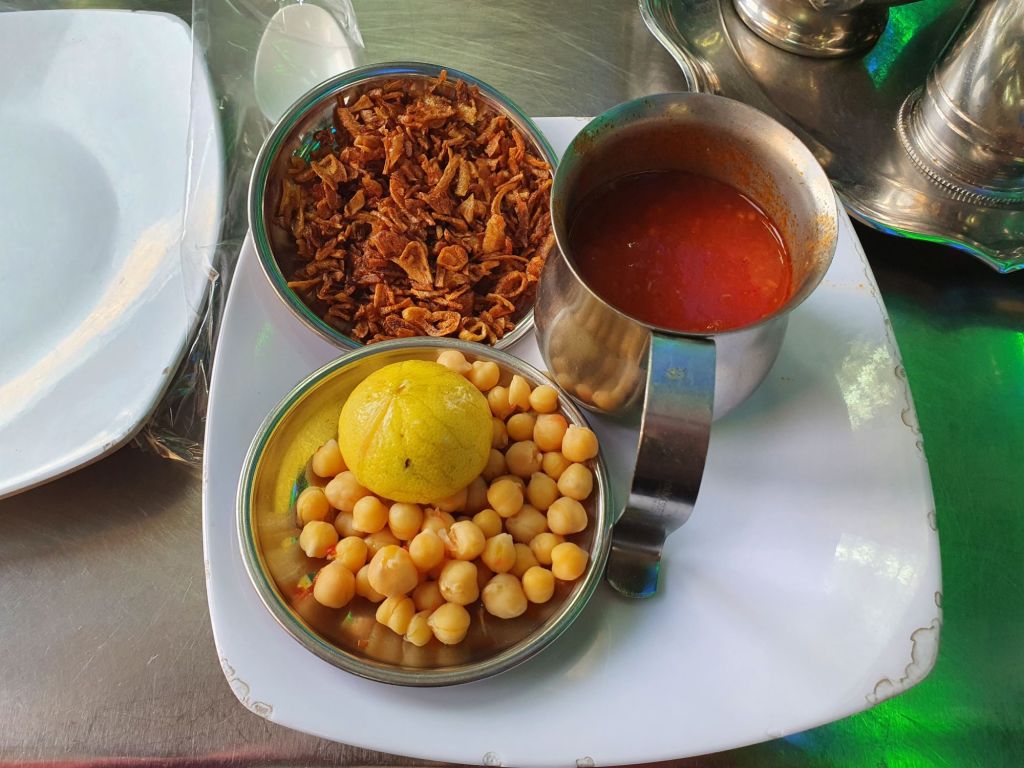
After the Pyramids it was time for lunch. We went to the Abou Tarek restaurant, which only serves one dish, the Egyptian specialty “Koshari”. It is a dish of pasta and lentil base, a tomatoe sauce with garlic, lemon and chilli and topped with fried onions and chickpeas.


After lunch we visited the Egyptian Museum in Tahir square.

The museum is home to many priceless treasures found in the Pyramids and tombs across Egypt. Everything in the museum is original except for the replica of the Rosetta stone. The Rosetta stone was key to tranlasating Egyptian Hieroglyphs to modern day language (The orginal Rosetta stone is in the British museum in London).
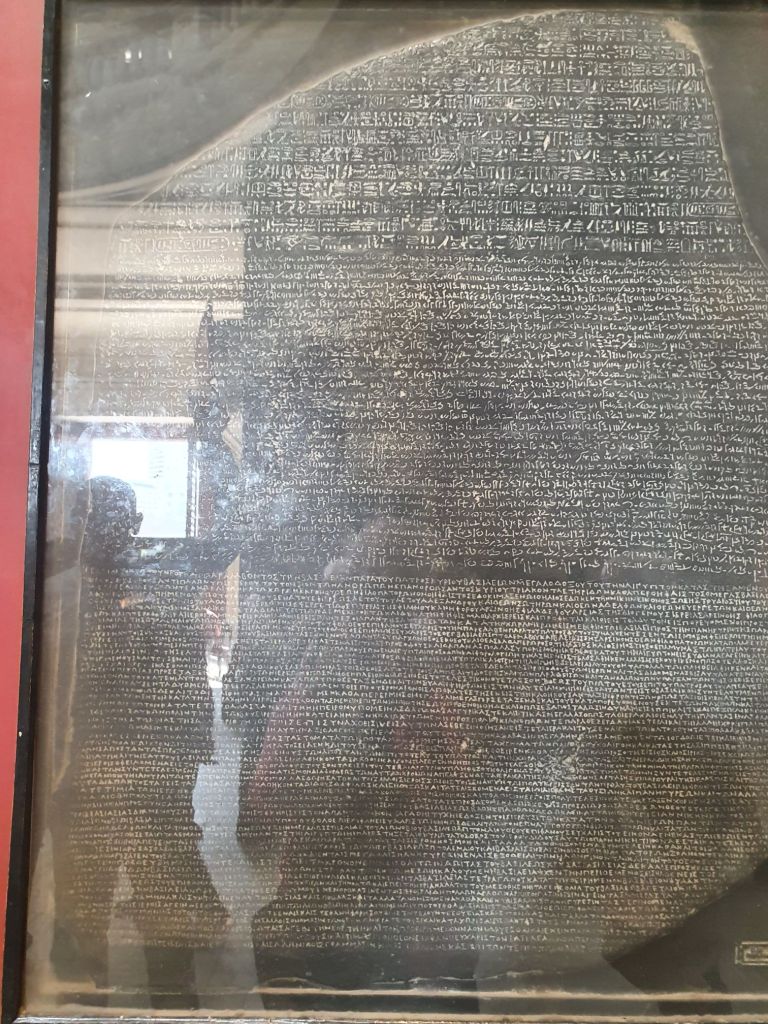
Below are a few highlights from the museum.
Statues
Egyptian monuments, temples, tombs etc are full of statues. The reason is that Egyptians believed that statues can inhibit a soul. Many of the surviving statues are of Pharaohs. The statues are always clean shaven with a goatee beard, no footwear and always youthful. If the goatee is straight it means that the Pharaoh was alive when the statue was built, curved beards were reserved for dead Pharaohs and gods.

Statues of the Pyramid Builders
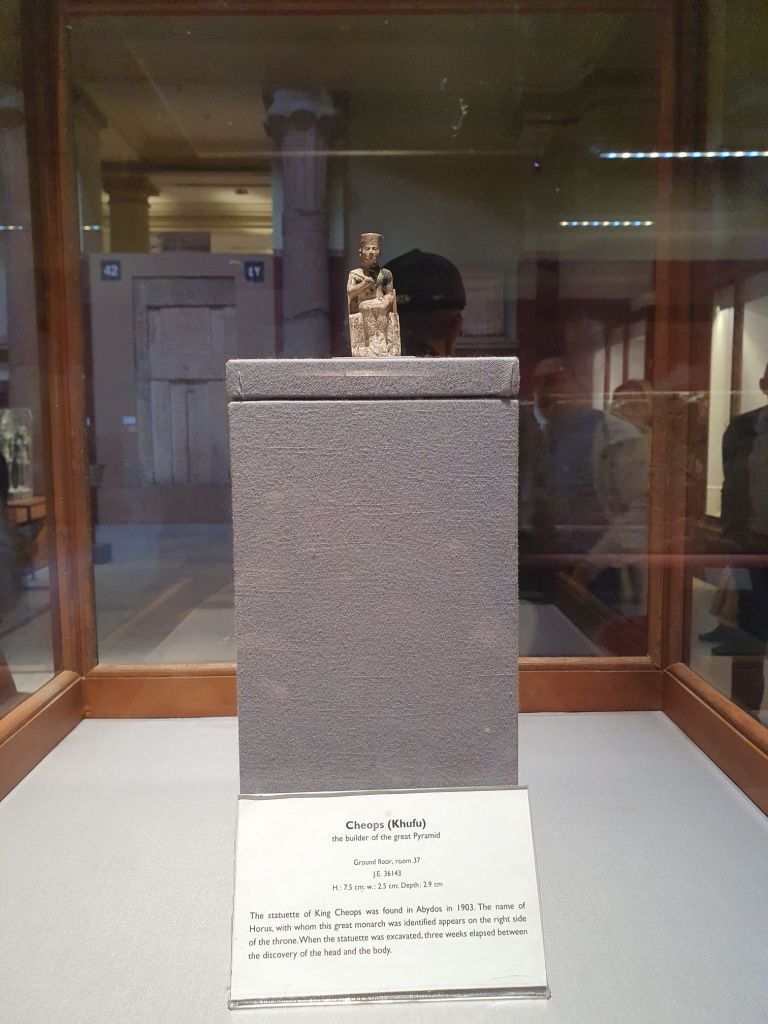
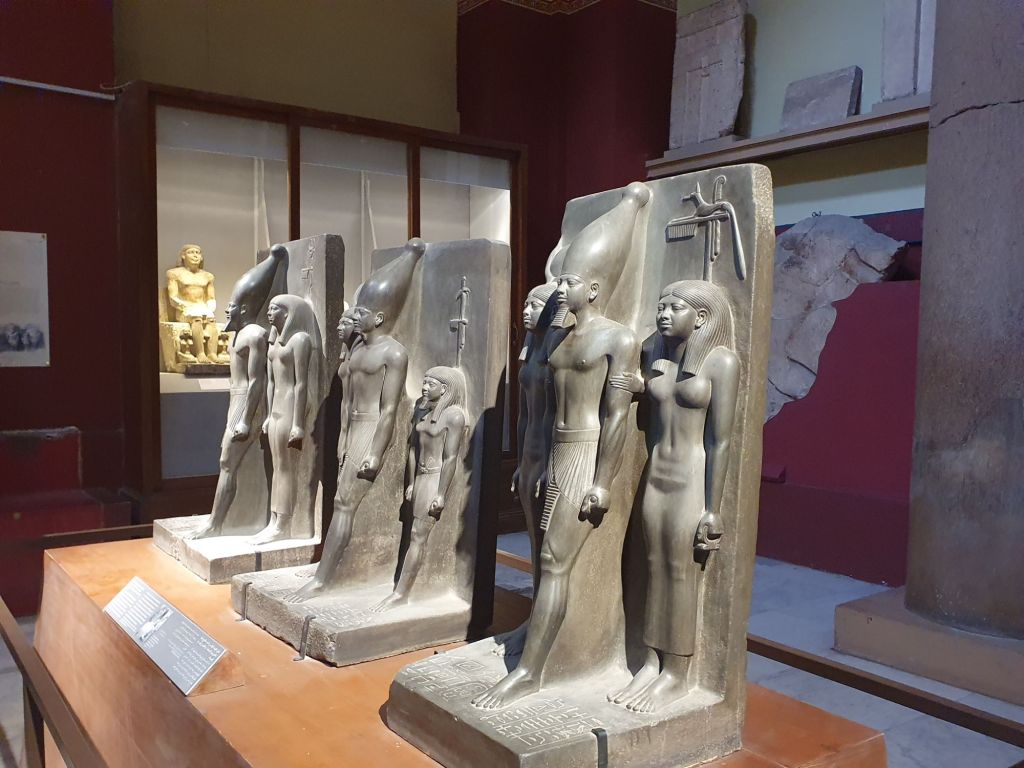
A highlight of the museum is the 2 inch tall statue of King Cheops (who built the Great Pyramid of Giza). This is the only known statue of this Pharaoh. There are also statues of King Khafre and King Menkaure who built the other two Pyramids in Giza, but these are larger and more elaborate.

Difference between a Sarcophagus and a Coffin
A coffin takes the shape of the body whereas the sarcophagus is a square casket. Mummies are placed inside several coffins and then inside several sarcophagi like Russian dolls. The further inside you go the smaller and more expensive the coffins get.
Treasures of Tutankhamun
The main highlight of the museum is no doubt the treasures found inside the tomb of Tutankhamun. No photos of the famous golden mask or the most expensive artefacts are allowed and they are very strict about it.

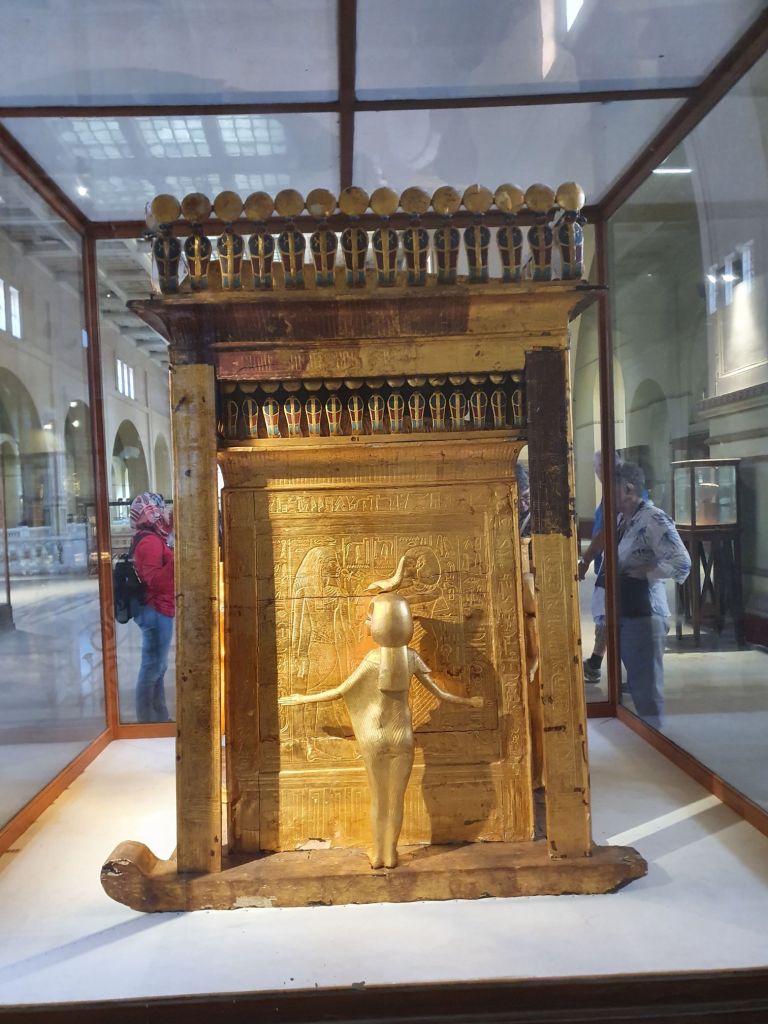


Some of the gold and silver jewellery found in the tombs is very delicate and it is amazing how the colours have endured for many thousands of years.

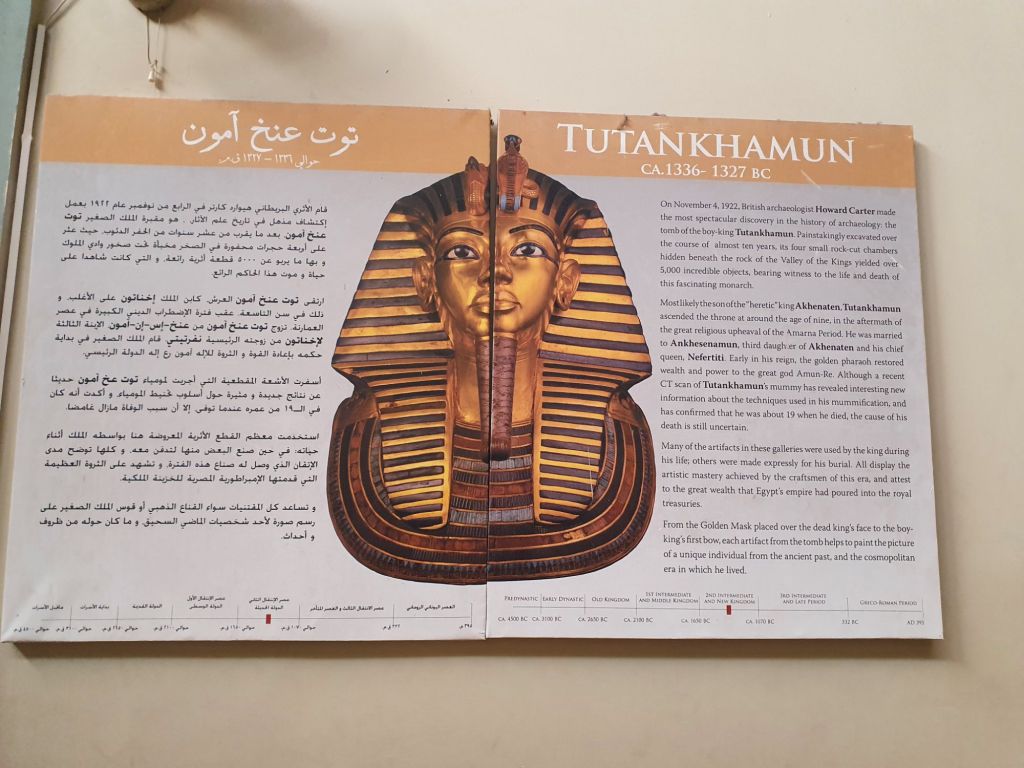
Tip: The exhibits in the Egyptian museum are being moved to the new The National Museum of Egyptian Civilization. Some of the main attractions are still in the Egyptian museum, but I would recommend visiting the new museum if you can as well. We unfortunately, didn’t have time to do this.
1600: We have a bit of free time at the hotel to freshen up before boarding the overnight train.
1900: Arrive at the train station. It is a Friday night so it is quite busy.
2000: Train arrives about 20 minutes late but leaves on time. We are in a sleeper carriage with half a dozen compartments. Each compartment has 2 berths, and a washbasin. The toilets at the end of the carriage. The train is similar to the overnight train we took in China, but older. The service is good and the conductor served the dinner soon after we set off. After dinner he came around again to convert the bottom bunk to a bed. Each bunk has fresh bedding and pillow cases.

Tip: Take warm clothing – the train is quite cold. There is not much space for luggage, so smaller bags are best. Dinner on the train was ok, but you may want to take some snacks too. Also, either take a power bank or charge your phone before boarding the train – the only plug socket in the compartment is above the washbasin and it isn’t really practical to charge your phone here overnight.
It has been a long, but very enjoyable first day in Egypt. Seeing the Pyramids of Giza up close, going inside the Pyramid and then seeing the treasures inside the Pyramids at the museum made me realise how important afterlife to the ancient Egyptians.
As the train left the outskirts of Cairo, and the lights of the city dissappeared, I fell asleep pretty quickly.
 Diary of a Tourist
Interesting facts and great pictures. Our friends are in Egypt right now, so this is especially timely for me.
LikeLiked by 1 person
Thank you. I hope your friends have a great time there!
LikeLiked by 1 person