
Where and when: Tokyo, Japan, 8th October 2024
I spent the morning picking up my parents from Narita airport. Narita airport is about 50 miles from Central Tokyo, but the Narita express to/from Shinagawa means it is a fairly straightforward 1 hour journey.
In the afternoon, we went on a “free” walking tour with Tokyo Localized. The tour is free in the sense that you pay the guide at the end what you think the tour is worth.
The tour started in Akihabara, which is the centre for all things electronics (mostly digital these days), gaming and anime in Tokyo. Although according to my dad, (who was a frequent visitor to Japan in the 80s and 90s), there are fewer traditional eletronics shops and more on gaming and anime now.

The tour guide took us through several historical sights while giving us a brief history of Tokyo.

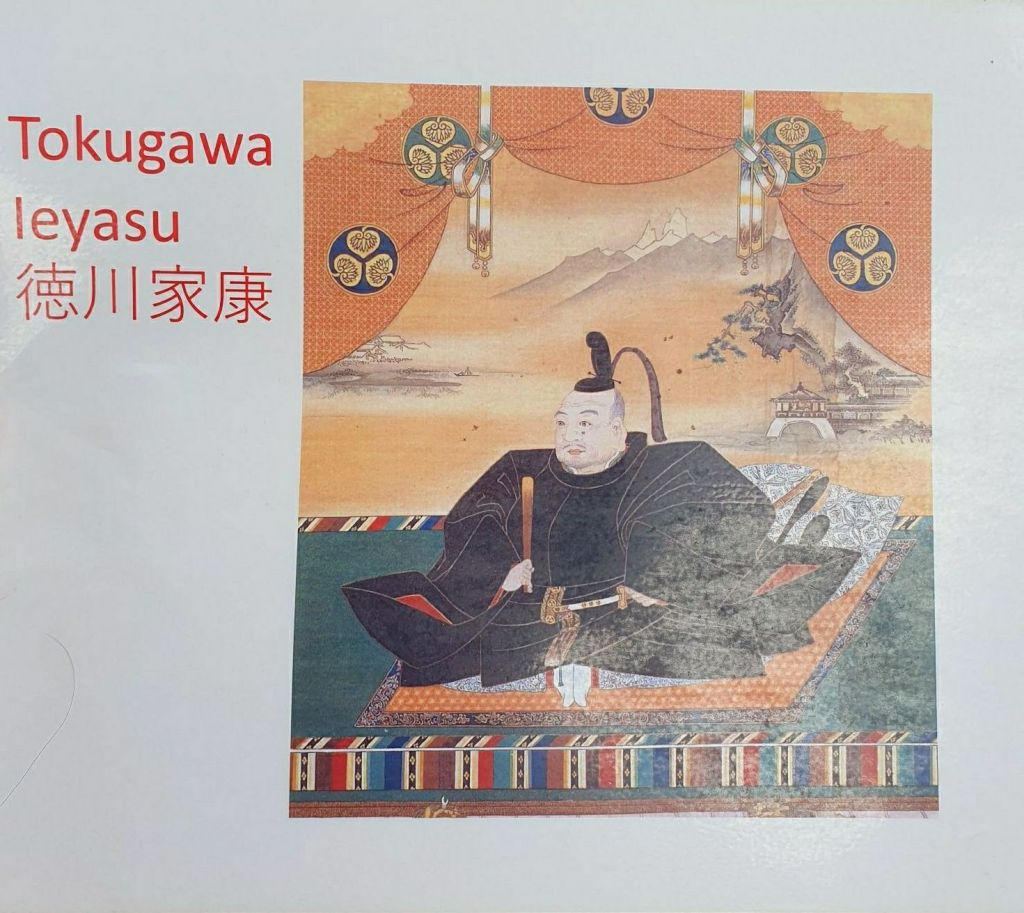
Tokyo was known as “Edo” from 1603 to 1868, when it became one of the largest cities under the Tokugawa shoganate. For most of the history of Japan, Japan’s defacto ruler was the “Shogun”, the head of the Samurai (and therefore the military), who was nominally appointed by the emperor. The first Shogun of the Tokugawa shoganate was Tokugawa Ieyasu. The central character of Lord Toranaga in the book “Shogun” by James Clavell is based on Tokugawa Ieyasu.
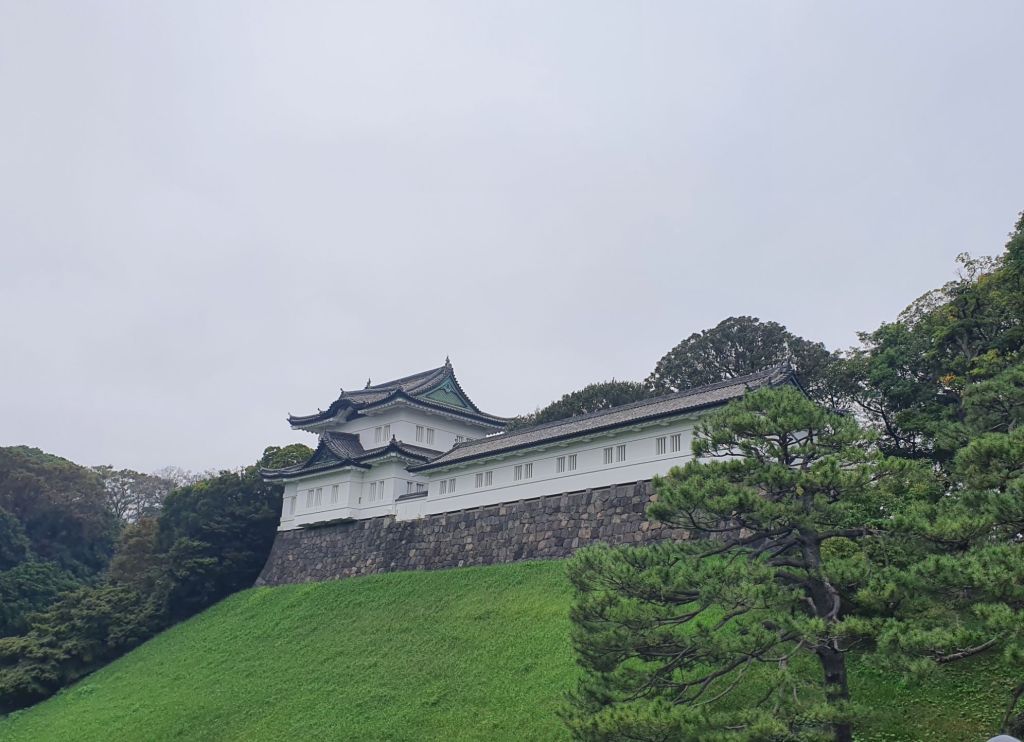
The Japanese Imperial family dates back to 7th century BC. The current emperor is the 126th emperor in an unbroken line. The emperor is believed to be directly decended from sun goddess Ameterasu, and is the head of the Shinto religion. The emperor’s historical seat was Kyoto.
In the 16th century, at the start of the Tokugawa Shoganate, Japan decided to close itself to the outside world, primary to resist the Portugese and Dutch trade and religious influences. Along with this, the Shogun implemented a strict class hierarchy. All feudal lords (“Damiyo”) across Japan had to make a pilgrimage to Tokyo every other year, with gifts for the shogun. The journey took many months of planning and cost a fortune, which left little time for any uprisings. Subsequently, the Tokugawa or Edo period was a time of internal peace within Japan. This continued until the Meji restoration in 1868, when the ruling power was restored to the Meji emperor who opened Japan to the rest of the world. The emperor moved from Kyoto to Edo, and Edo was renamed “To-Kyo” meaning “East Capital”.
Shinto Shrine vs Buddhist Temple
Shinto religion originated in Japan (no one knows why, how or when as there is no written history of the Shinto religion). In Shinto, there are 8 million gods and they could be anywhere; in a tree, a pebble, a grain of rice; and as a result, Japanese people treat all things with the greatest respect. Each Shinto shrine is dedicated to a specific god, who specialises in various things – money, power, children, exams etc.
Buddhism came to Japan in the 6th century AD (via China) and it was adopted as the state religion by the emperor. There are many Buddhist temples across Japan and they co-exist in harmony with Shinto shrines. Most Japanese pratice both religions and often Shinto shrines are located inside Buddhist temples.
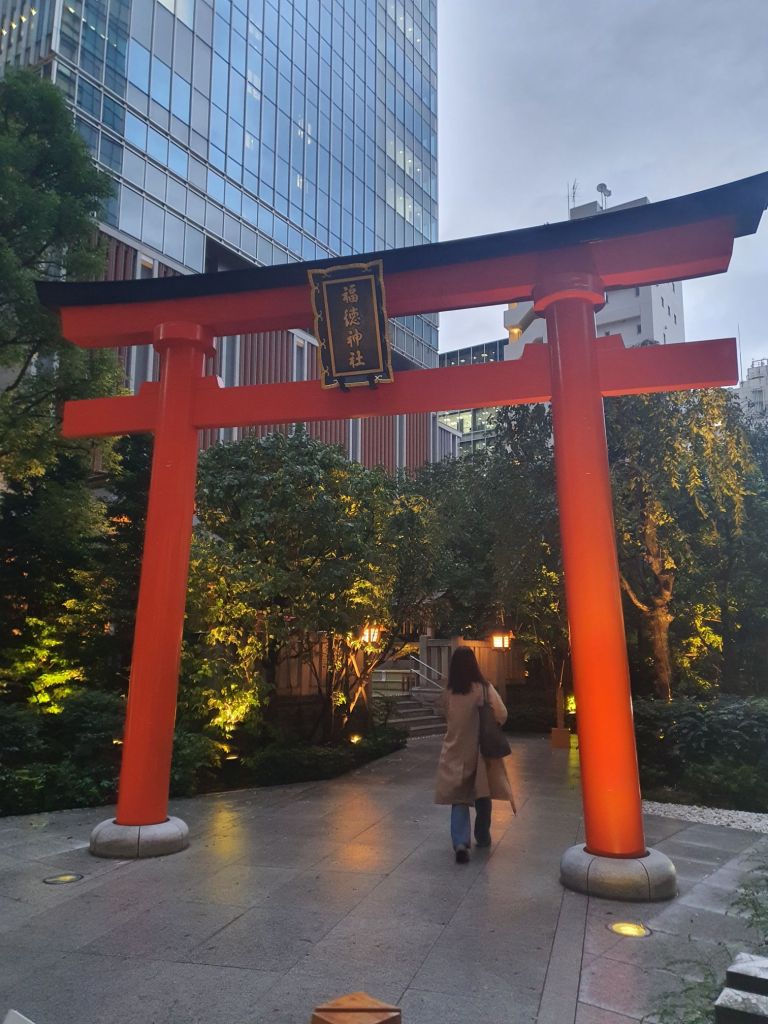
Shinto shrines are recognisable by their distinguished Torii gates ⛩ (often in vermilion colour). Buddhist temples also have gates, but they are usually much more elaborate.

Our guide showed us the correct etiquette on how to enter a Shinto shrine. You bow at the Torii gate when entering and leaving. You also wash your hands at the water basin at the entrance (although this is optional since Covid) to the shrine or temple.

To make an offering, you put coins into the box at the shrine, clap twice (to get the attention of the god) bow twice (with hands in prayer), very clearly (but silently) state your wish, and finally bow once. At a Buddhist temple, there is no clapping. You can make your offering and say a silent prayer.
We finished the tour via Ameyoko shopping street, which started off as a black market post World War II, but is a bustling food market today.


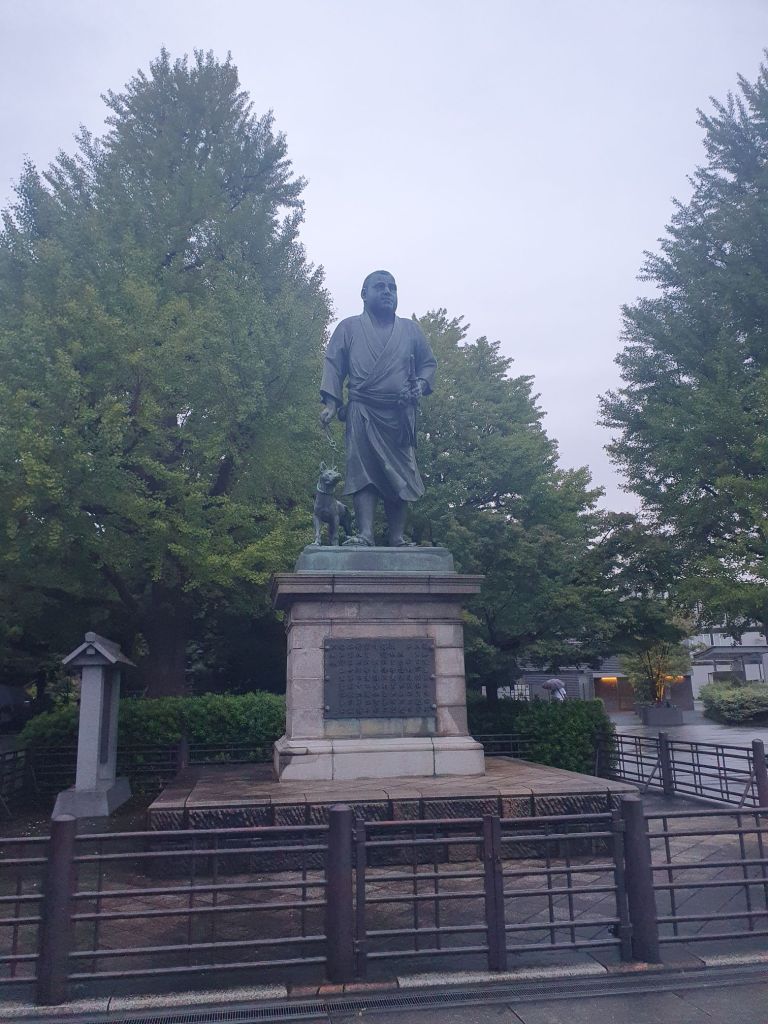
The last stop of the tour was Ueno park. Here there is a statue of Saigō Takamori, one of the last samurai in Japan. He initially supported the Meji restoration in 1868, but later led a rebellion against it, dying when the rebellion was defeated. Ken Watanabe’s character in the film the last Samurai is thought to have been based on him.
The tour ended at Ueno park, which is a large park in Tokyo and has many beautiful gardens, pavilions, shrines and several museums. Unfortunately, the rain got even worse at this point (it had been raining all afternoon), so we had to leave exploring Ueno park for another time.
Tip: If you are new to Japan, I would highly recommend this tour to by Tokyo Localized. They have tours covering other parts of Tokyo as well (and we tried a few others) but I found this one was the best for understanding Japan’s history and cultural aspects the best.
 Diary of a Tourist
Ugh, you’re refueling my desire to go to Japan. I must admit, I think the busy city centers would give me sensory overload, but the temples and shrines look so peaceful. Interesting co-existence. Enjoyed reading this and learning lots of new things here!
LikeLiked by 1 person
I’ve been actively planning this trip for about 8 years (lots of replacing due to covid) so never too early to start 😃 You are right about the cities being busy – but there are so many large parks, temples and gardens around, peace and quiet it never far.
LikeLiked by 1 person