Where and when: Aberdeen, UK, March 2026
0800: We arrived in Aberdeen bright and early on a Saturday in Mid-March. Stepping off the train after a comfortable overnight journey, the city was only just beginning to wake up.
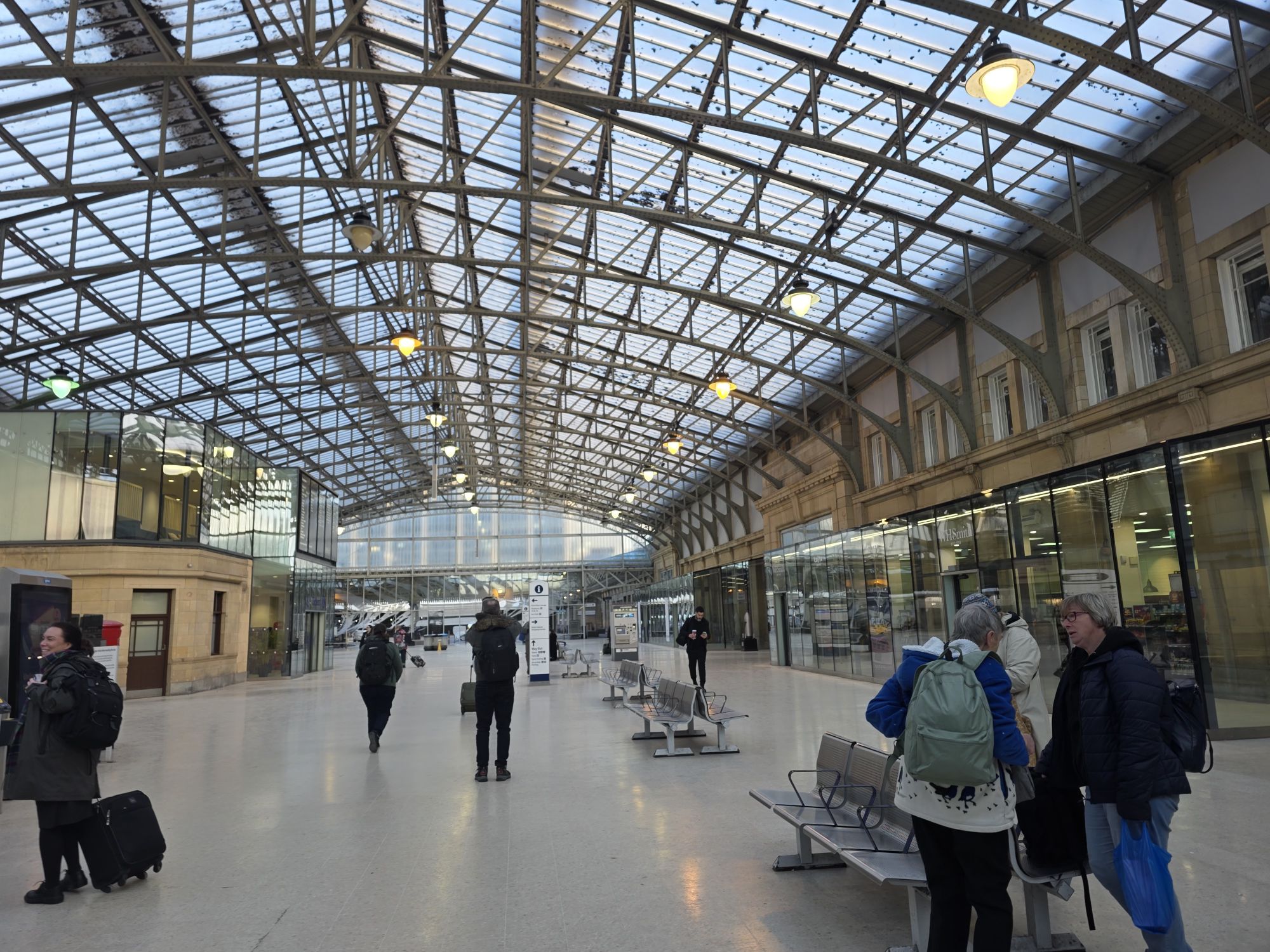
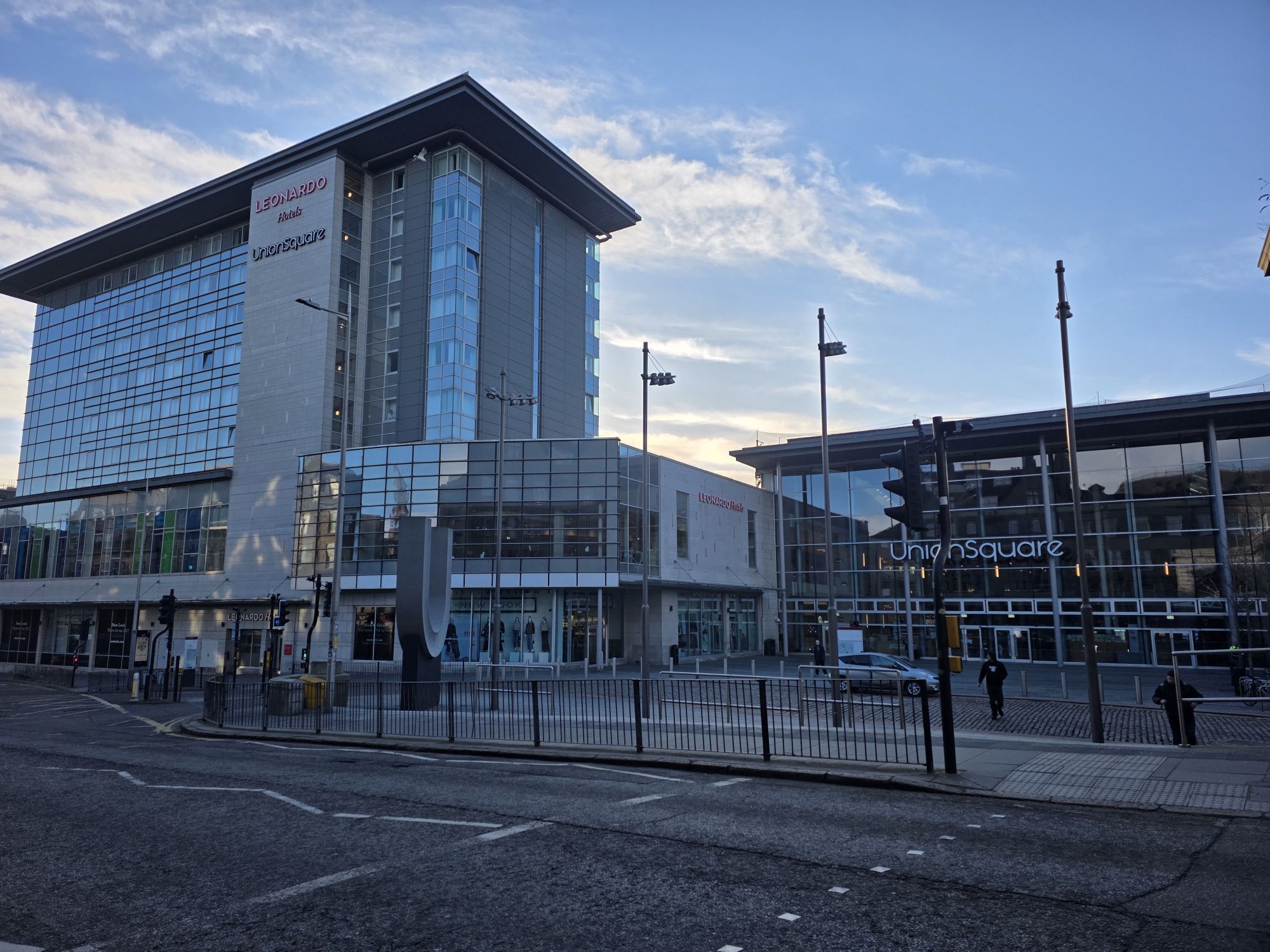
As most cafés and shops in the city centre were still closed, we stored our luggage (using Stasher) at the nearby Station Hotel and decided to head towards the coast.
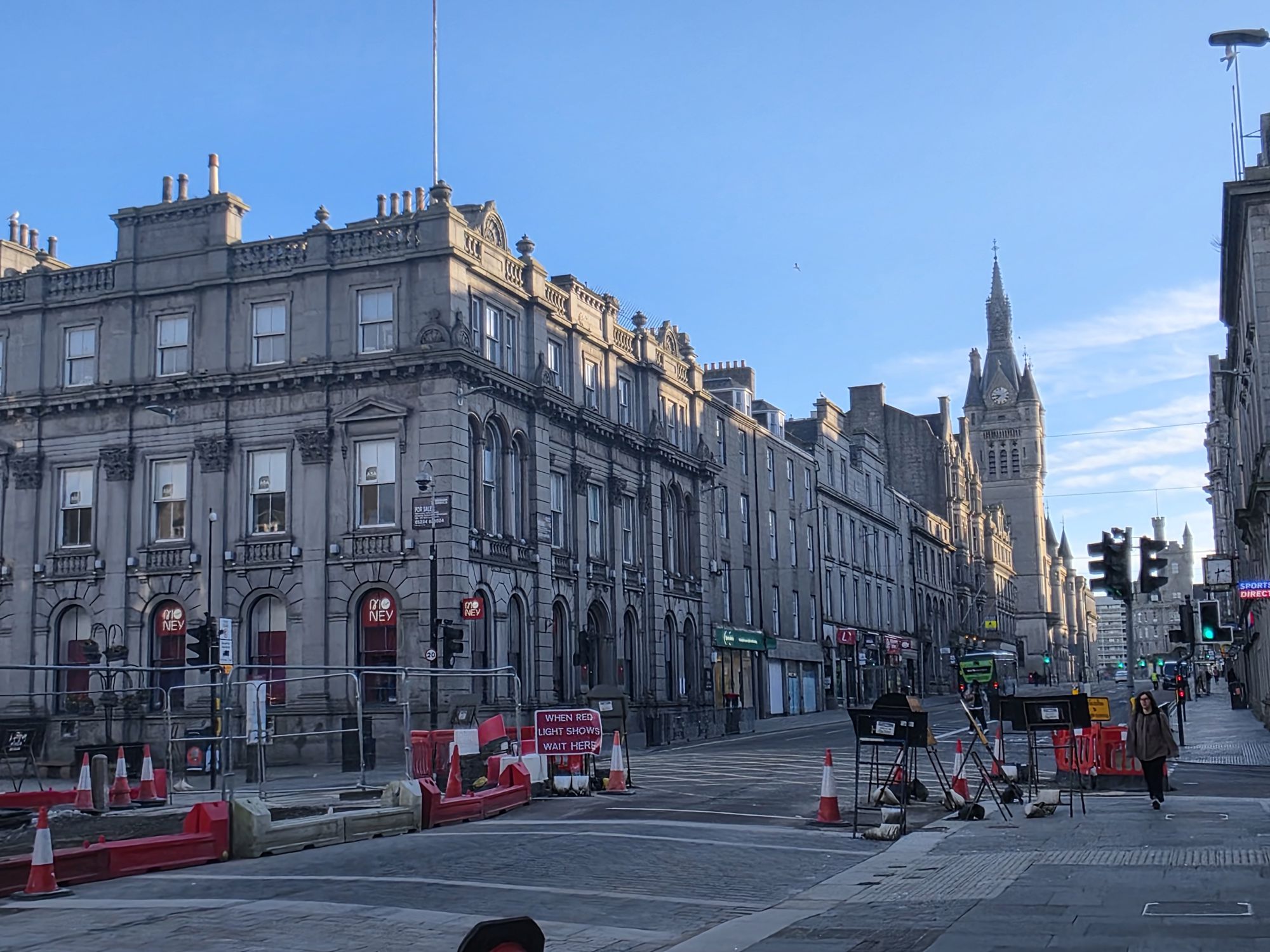
Straightaway, it was easy to see why Aberdeen is called the “Grey City”. Much of the city is built from granite, lending itself to the name.

Discovering Footdee (Fittie)
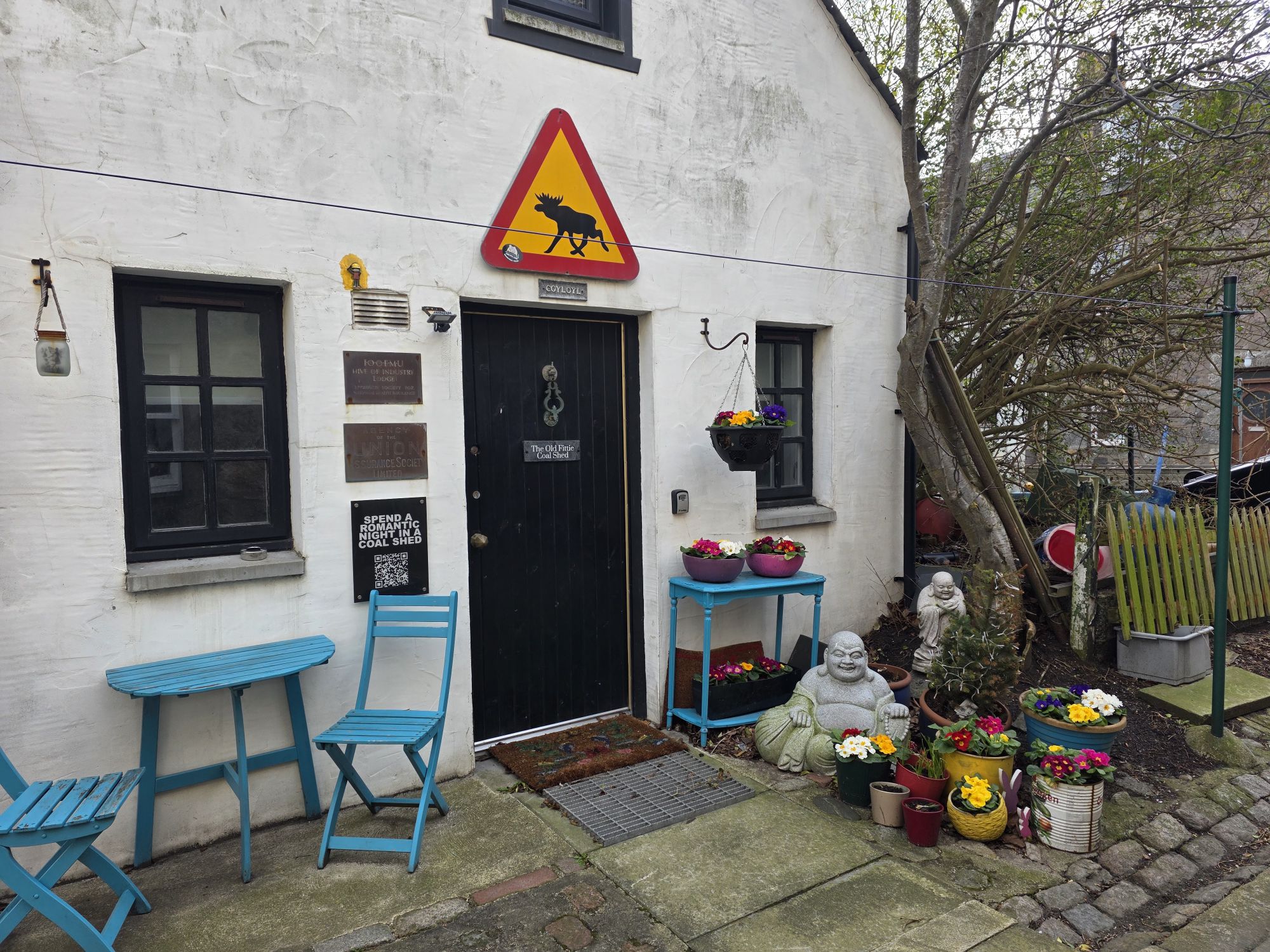
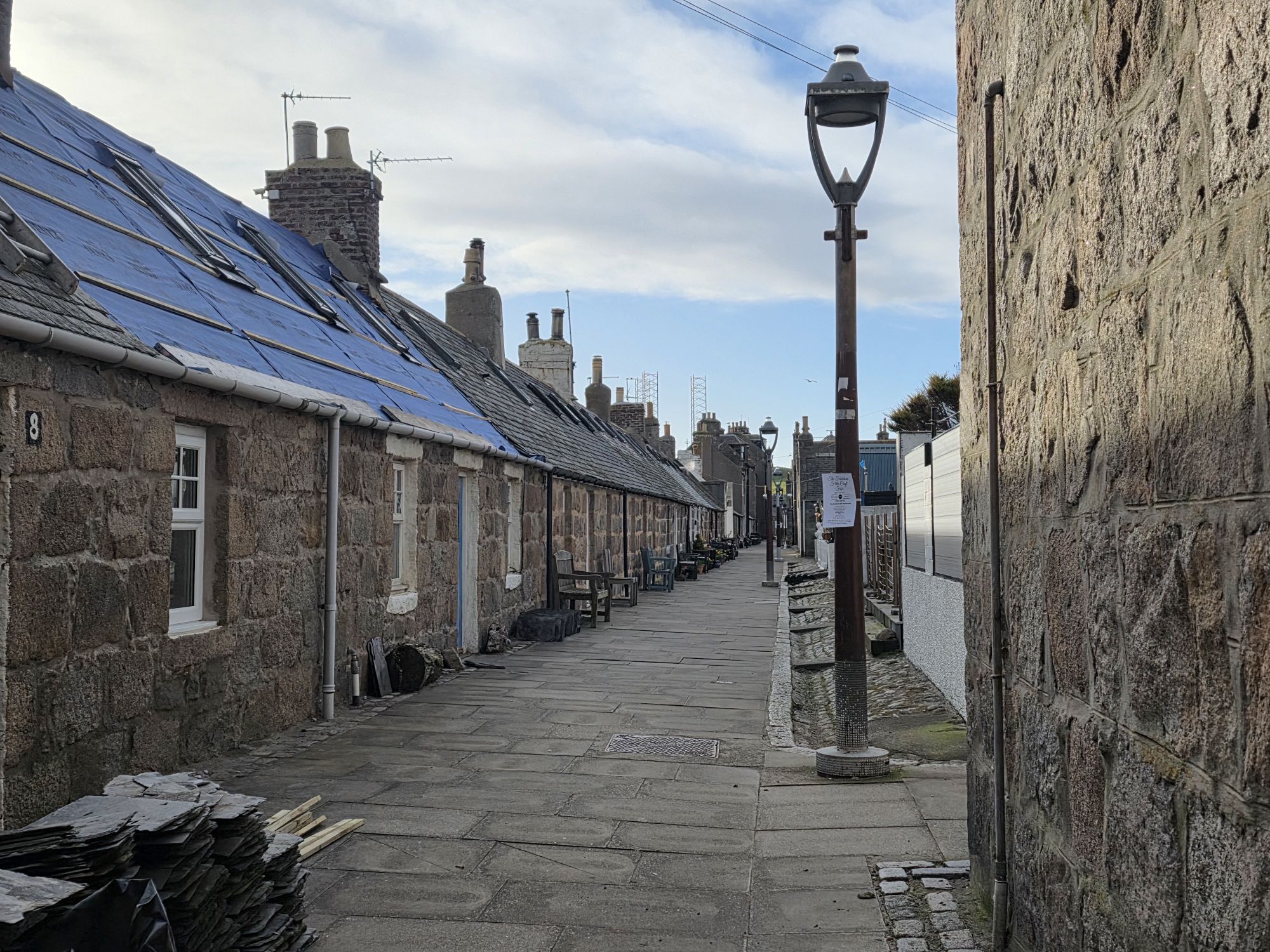
Our first destination was Footdee, or “Fittie” as it’s affectionately known by locals. Sitting at the eastern edge of Aberdeen Harbour, this former fishing village feels like stepping into another world.
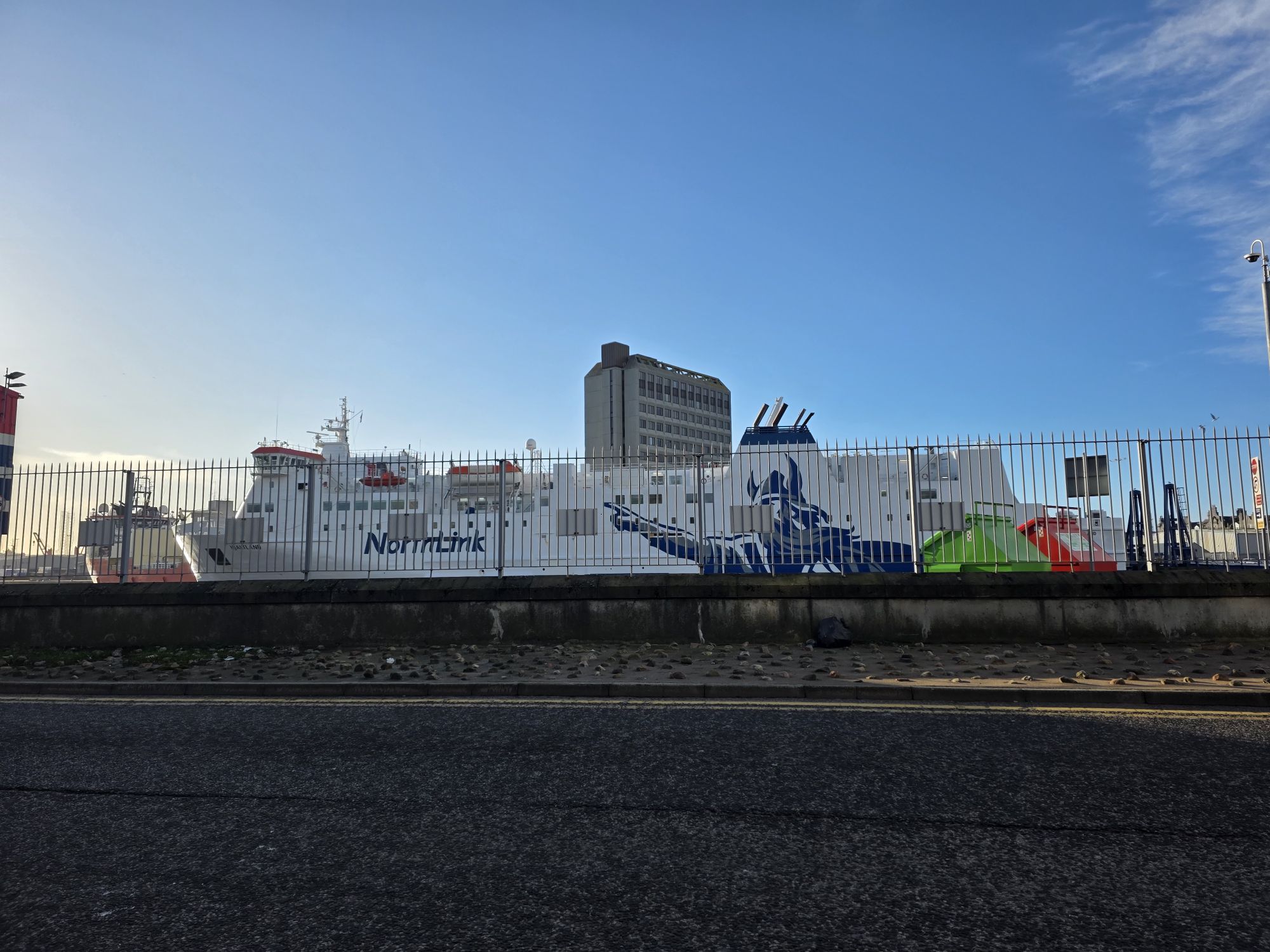
The walk there was enjoyable in itself. We passed Aberdeen Harbour, where fishing boats and offshore vessels sat side by side, before spotting the historic Sugar House, a reminder of the city’s trading past.
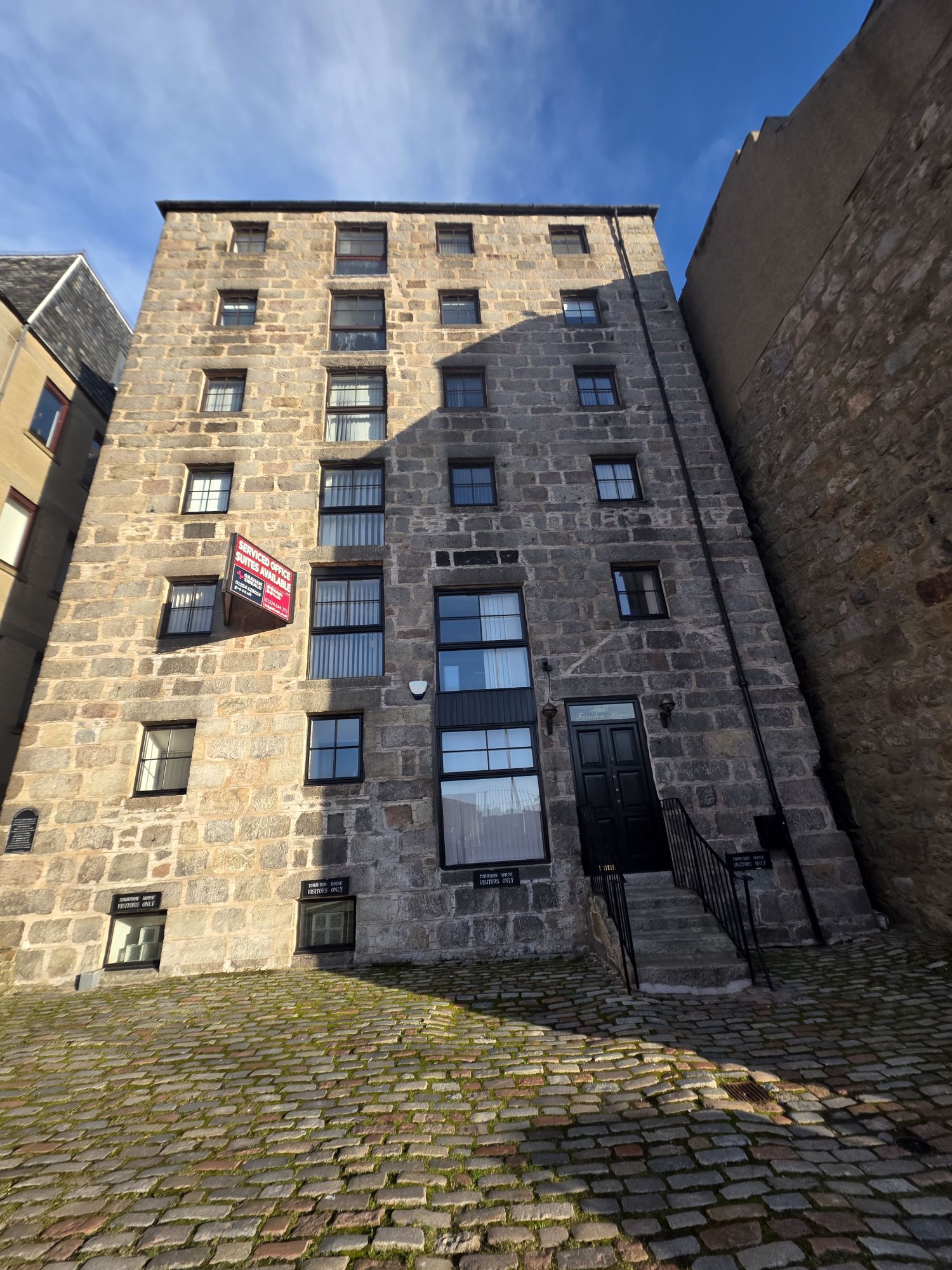
Footdee is unlike anywhere else in Scotland. Designed in the early 1800s by renowned architect John Smith, the village was built to house local fishing families. Today, while many of the cottages are privately owned, the tiny streets, colourful gardens and quirky decorations have made it one of Aberdeen’s most photographed attractions.
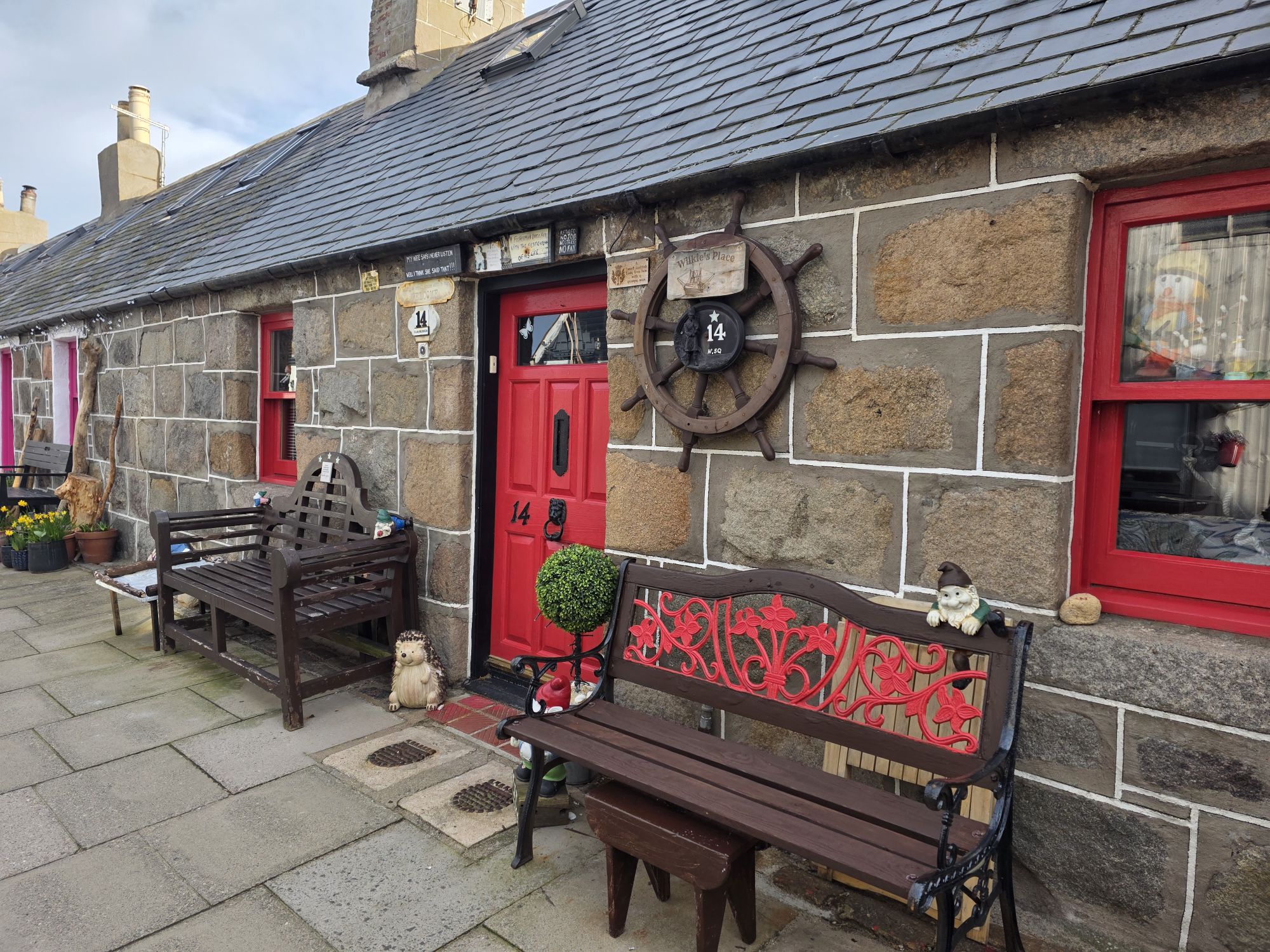
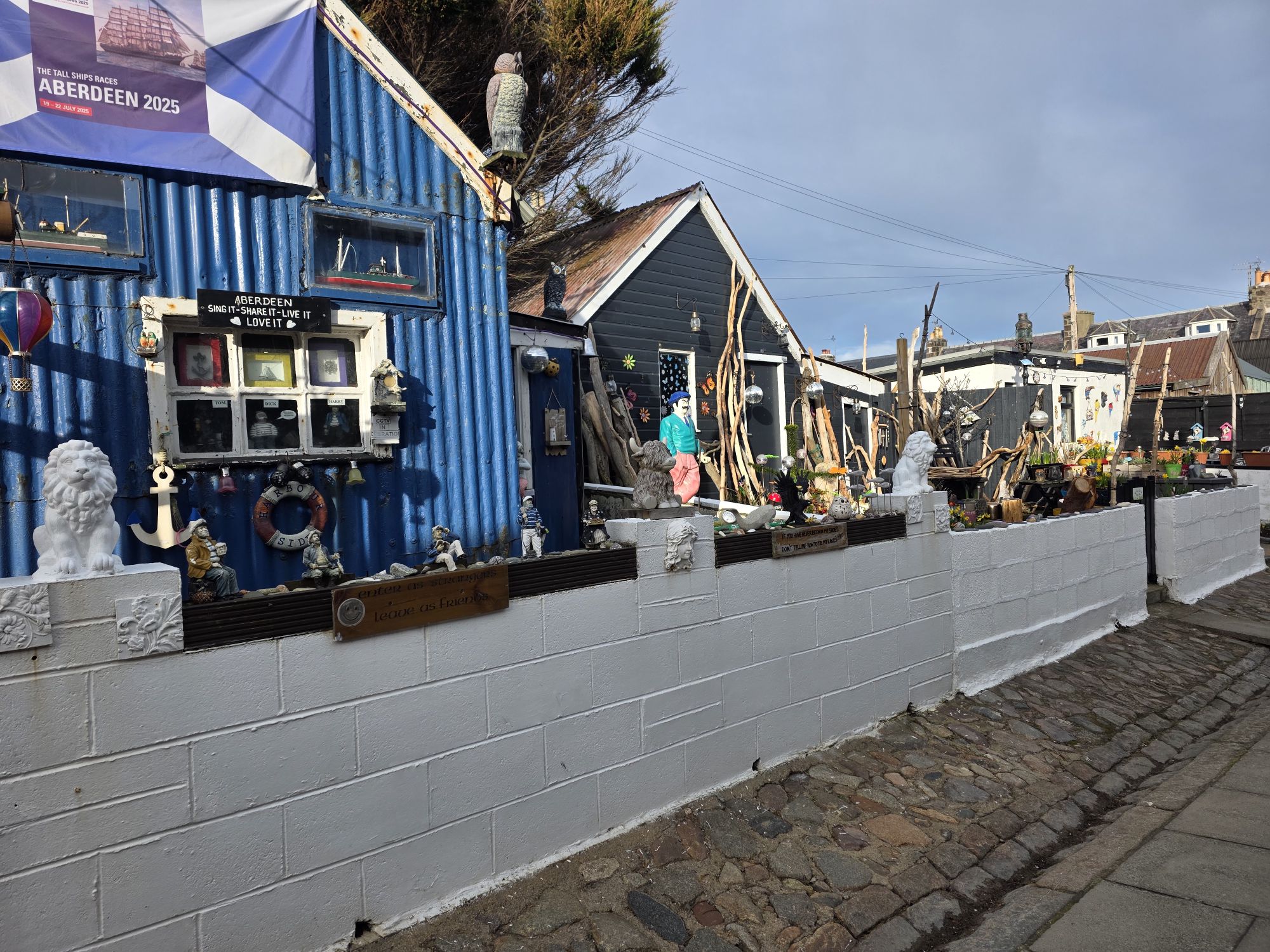
Every corner seemed to reveal another charming cottage, nautical ornament or beautifully tended flower display.
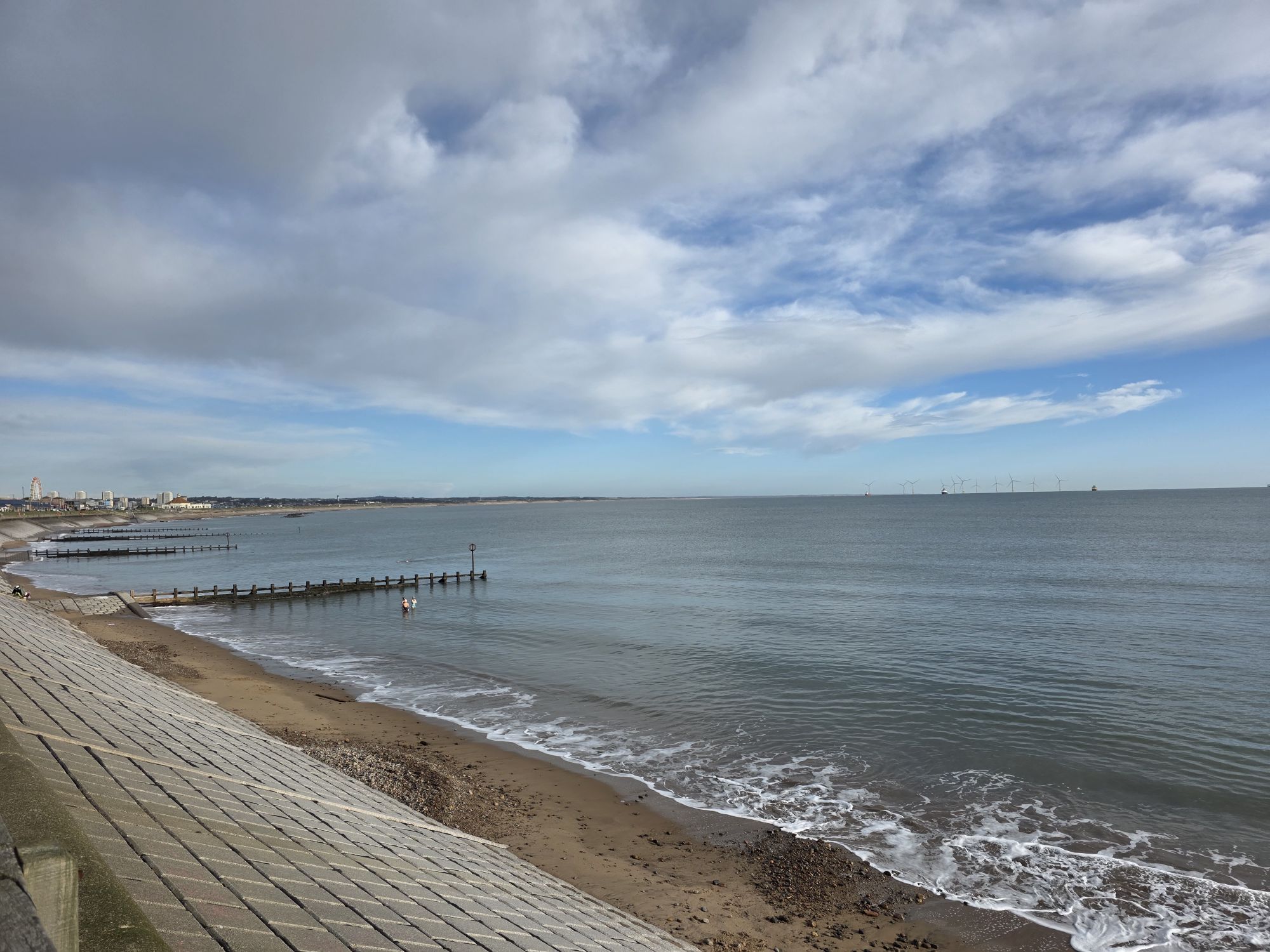
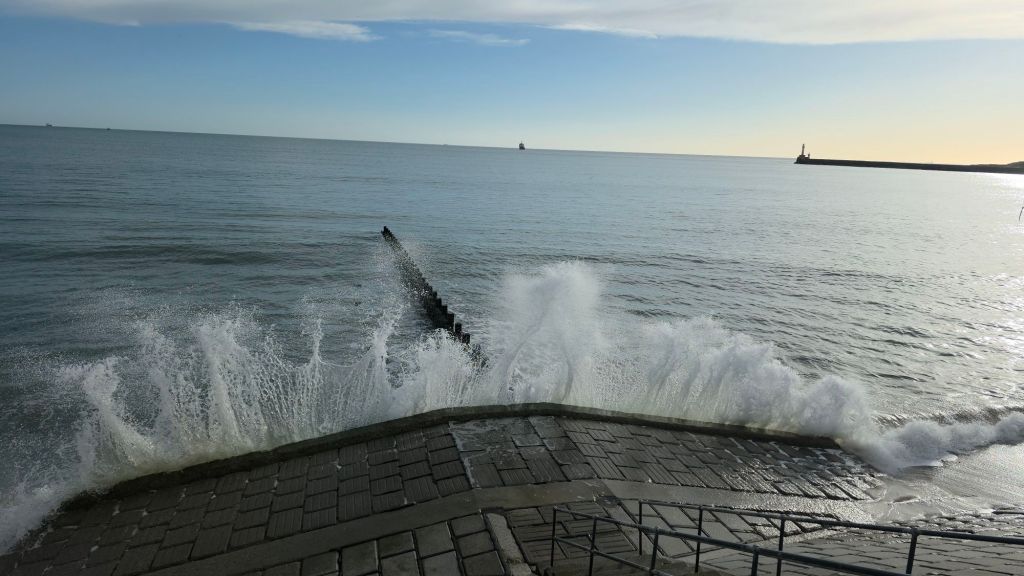
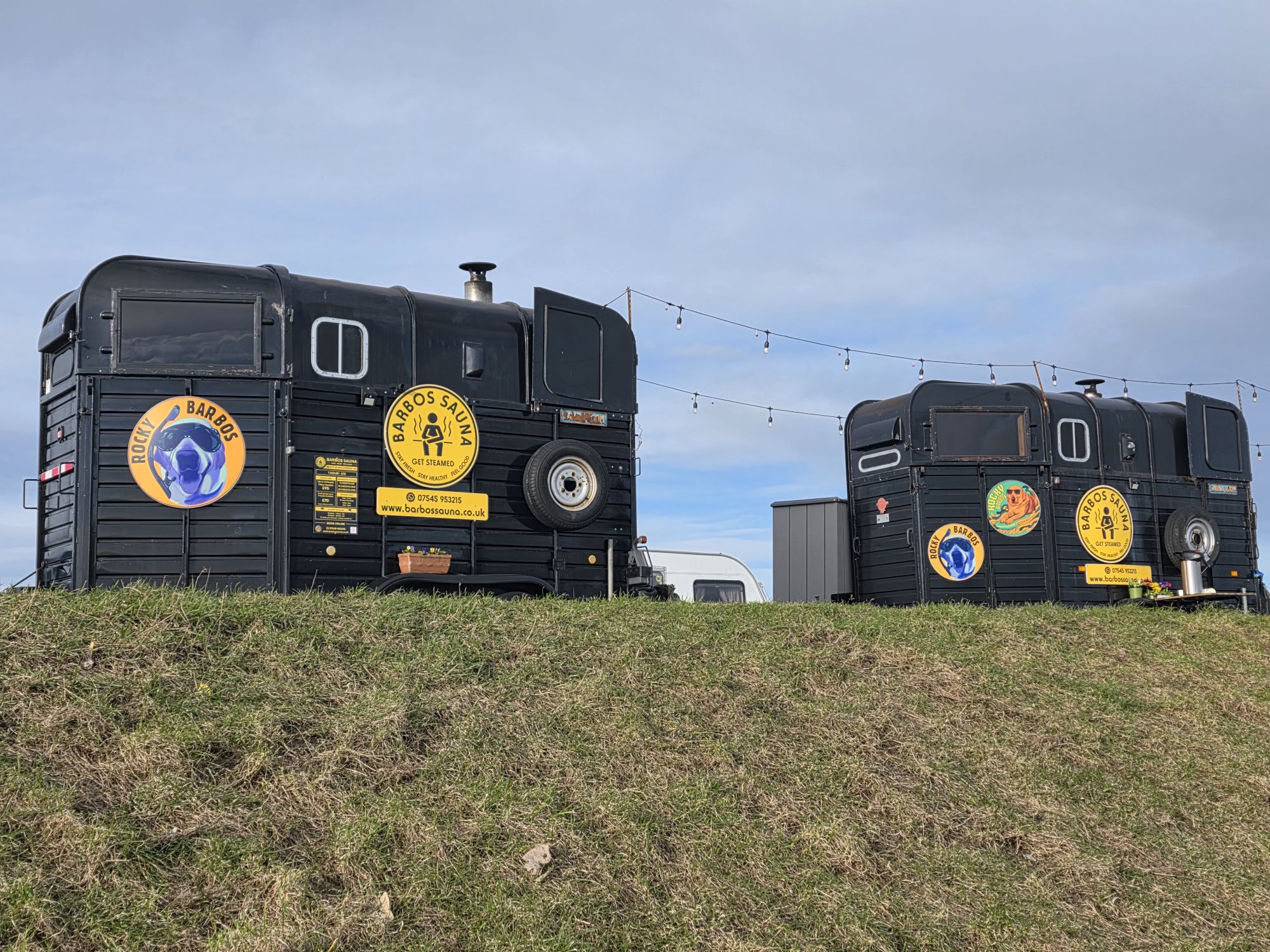
Leaving the village behind, we wandered along Aberdeen Beach. The North Sea certainly lived up to its reputation, with waves crashing dramatically against the shore. Despite the chilly conditions, several hardy swimmers were already enjoying an early morning dip. Watching them from the warmth of a jacket was quite enough for us!
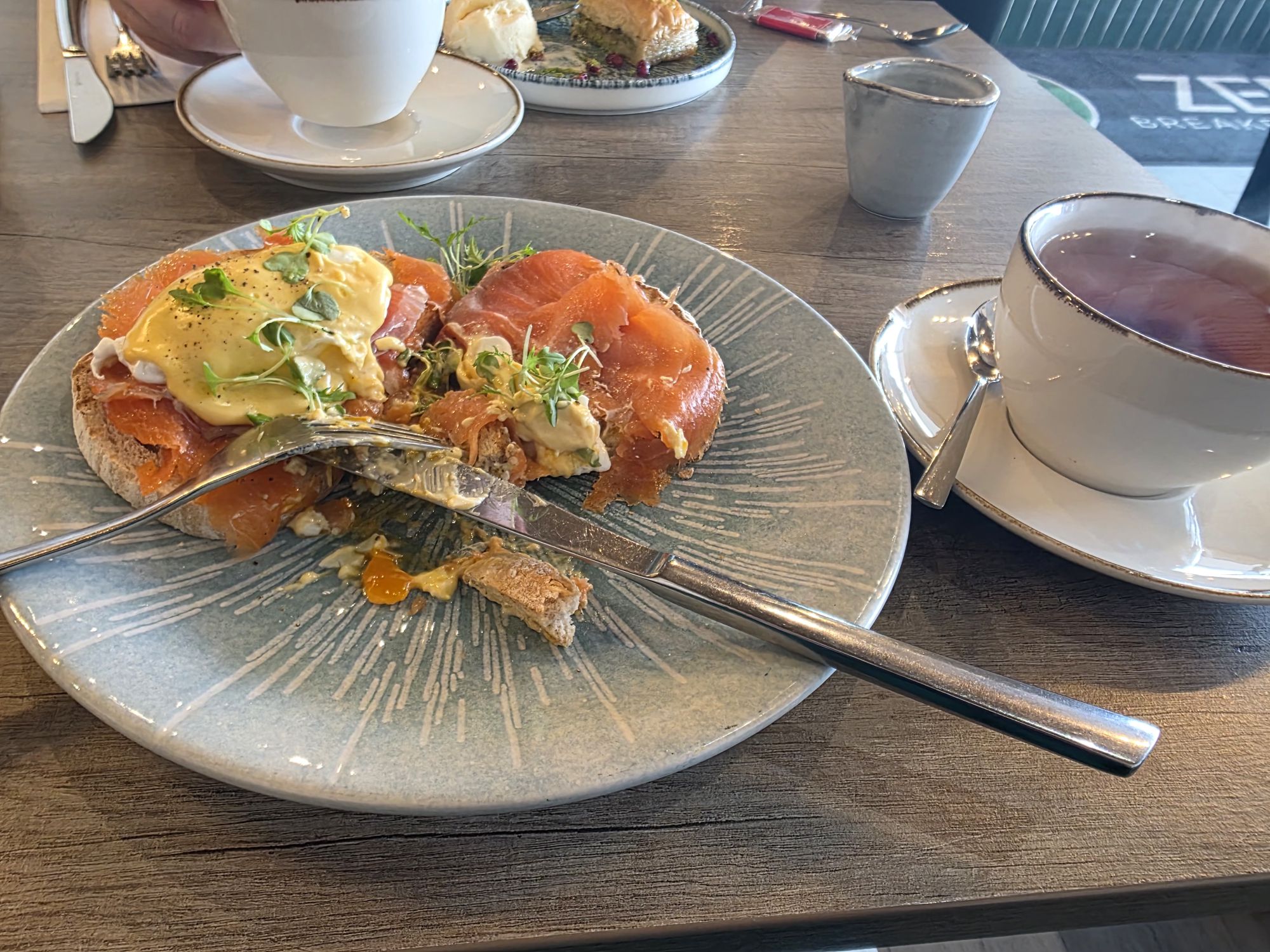
After our seaside stroll, breakfast was well deserved at Café Zera.
This cosy independent café proved to be one of the highlights of the day. The food was delicious, and the service was excellent.
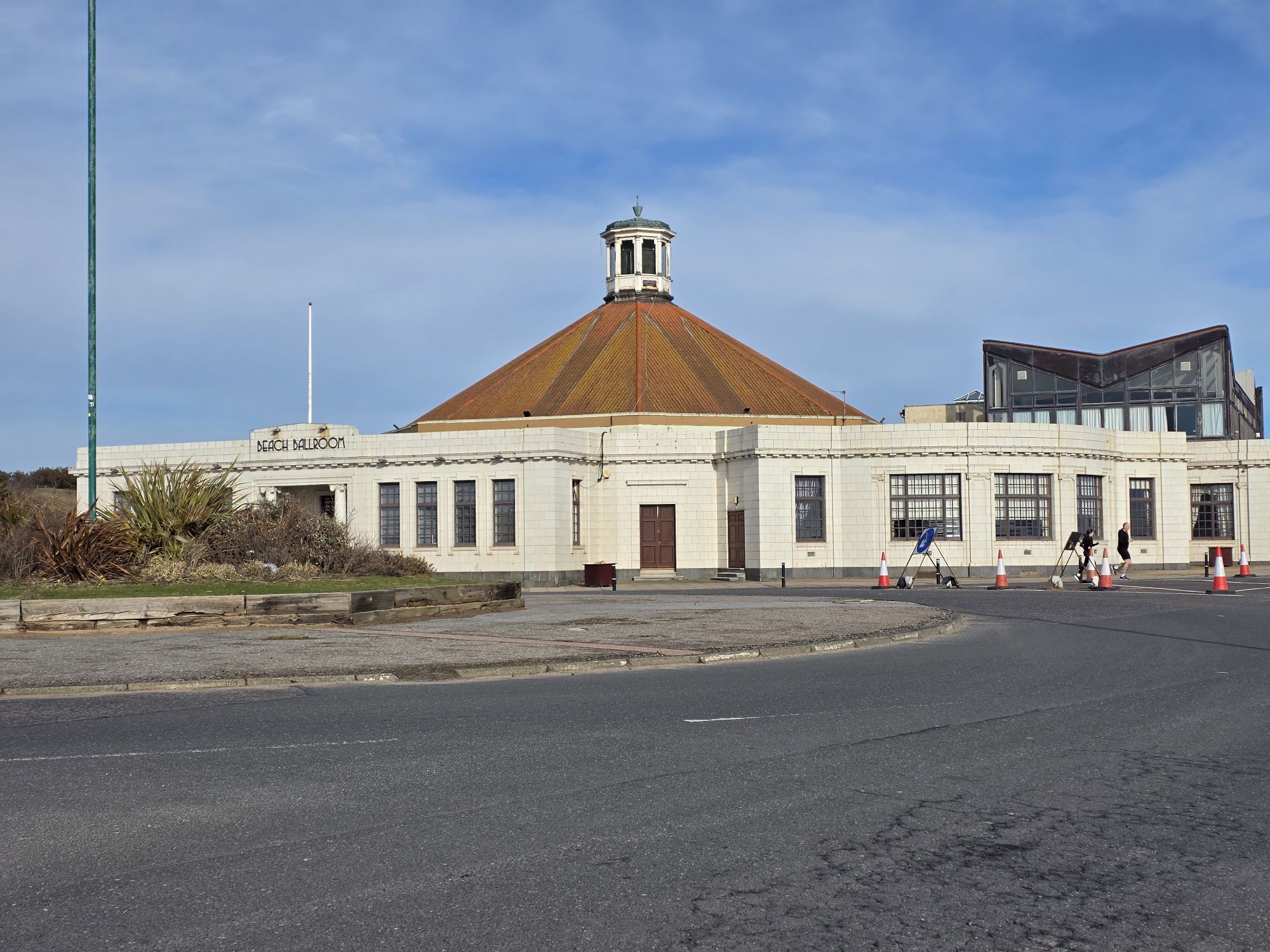
Before leaving the beach area, we also passed the famous Beach Ballroom. Opened in 1929, this iconic venue has hosted generations of dances, concerts and community events, and remains one of Aberdeen’s best-loved landmarks.
Walking to Old Aberdeen
With breakfast finished, we made our way towards Old Aberdeen, stopping for another coffee at Kilau Coffee near the Town House. It was another lovely independent café and the perfect place for a quick caffeine boost before joining our walking tour.
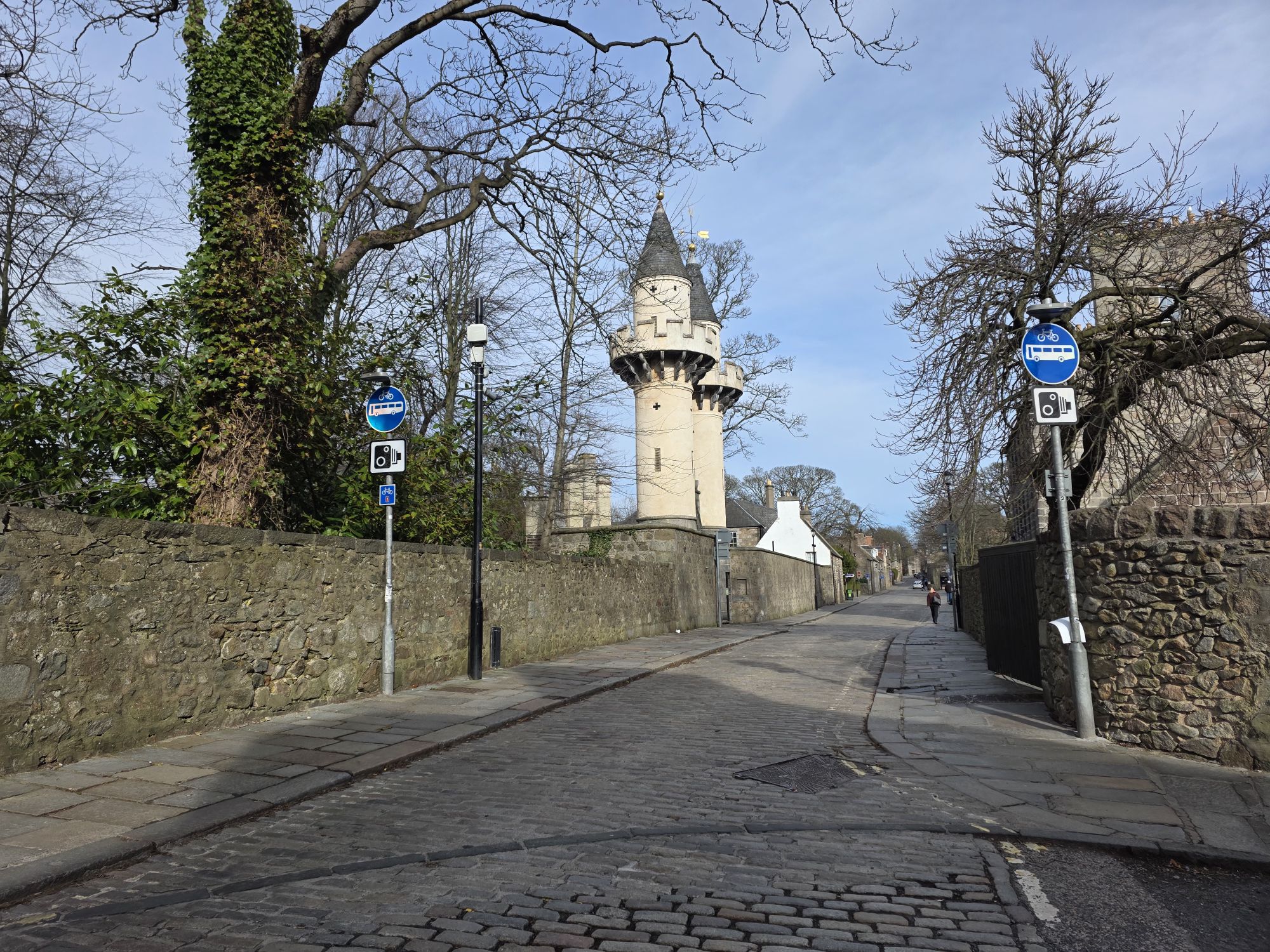
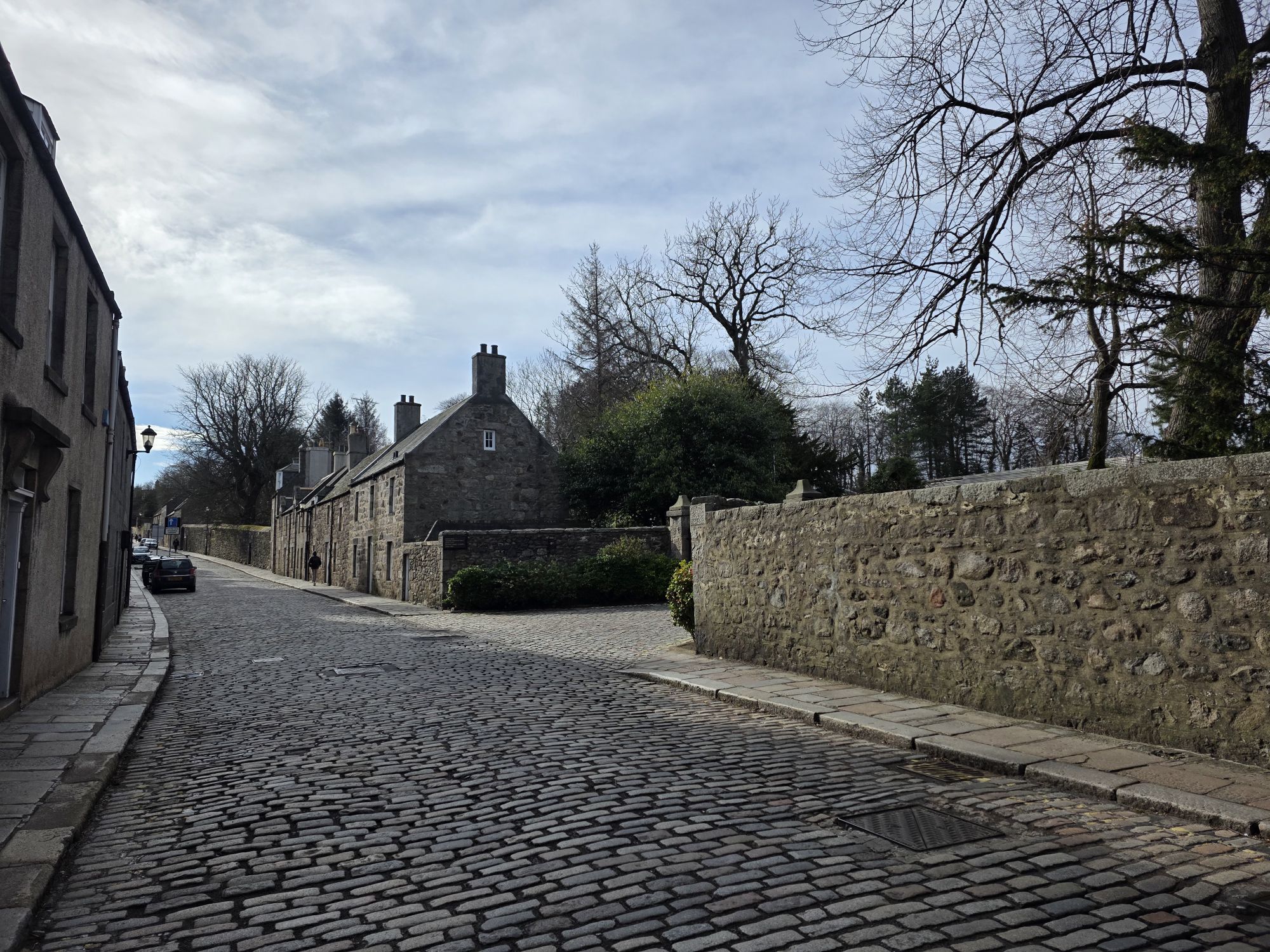
At 11:00 am we met our guide from Scot Free Tours outside the Old Town House for a two-hour exploration of Old Aberdeen.
Exploring the Historic Heart of Aberdeen
The tour began in the oldest part of the city.
One of the first stories that caught our attention was how the town responded during outbreaks of plague. The gates to Old Aberdeen would simply be closed, preventing anyone from entering or leaving—a rather striking reminder that lockdowns are not a modern invention.
We then wandered down the beautiful Chanonry, one of the most picturesque streets in Aberdeen. Here stand the former almshouses, originally built to provide simple accommodation for elderly women connected to the cathedral. Living conditions were basic, with no running water or heating. Fires were only permitted during the winter months or if residents were ill. Today, these historic buildings have been lovingly restored and are privately owned.
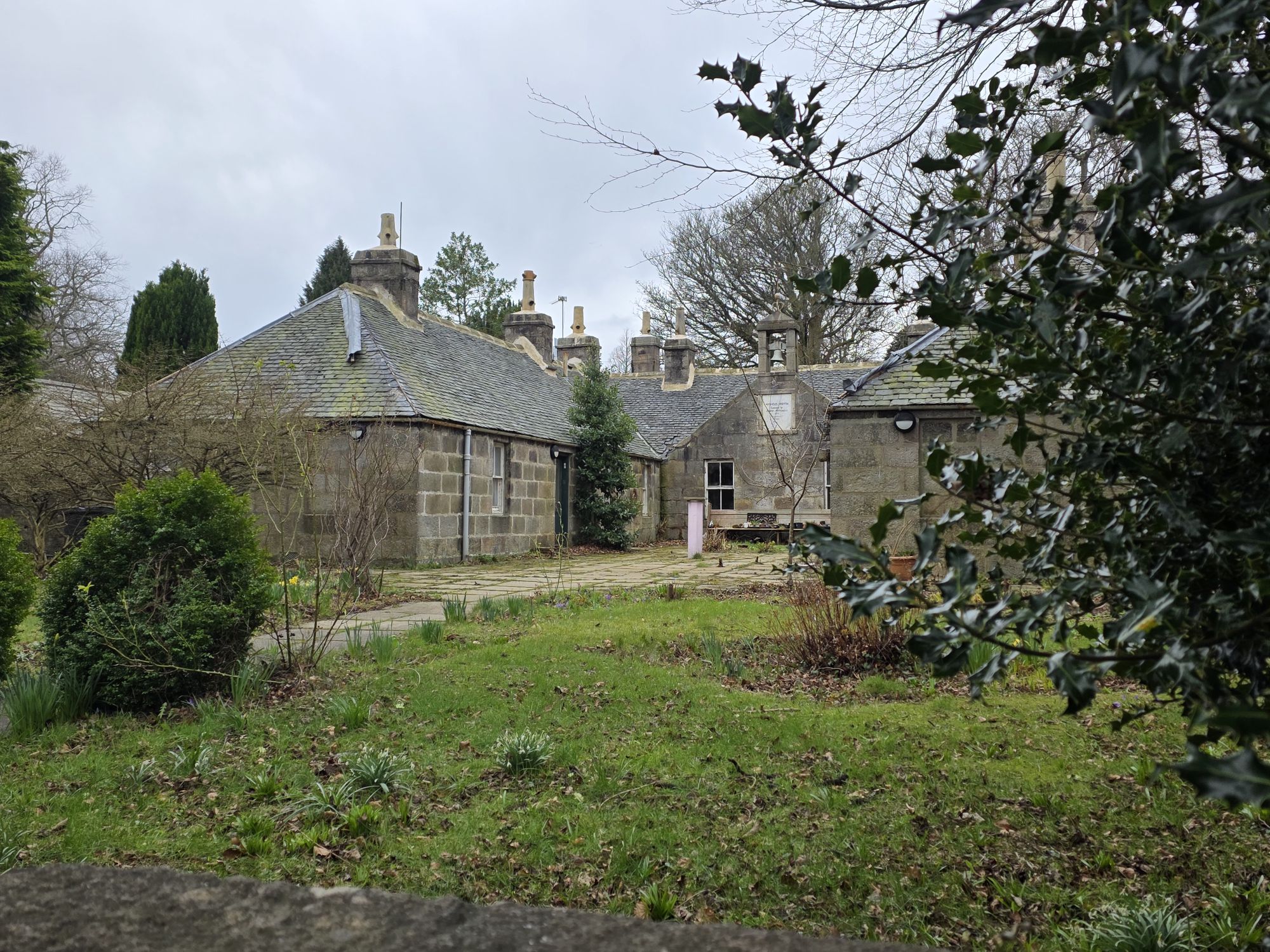
According to Scottish tradition, St Machar was an Irish missionary and one of the 12 companions who traveled with St Columba when he established his famous monastery on Iona in 563 AD.
Columba sent Machar east into Pictish territory to spread Christianity. The story goes that Columba instructed Machar to build a church wherever a river bent in the shape of a bishop’s crozier. Machar found that exact bend on the banks of the River Don, where he established a church around 580 AD. Aberdeen comes from Aberdon which means the mouth of the river don.
Today, that original site is home to St Machar’s Cathedral in Old Aberdeen.
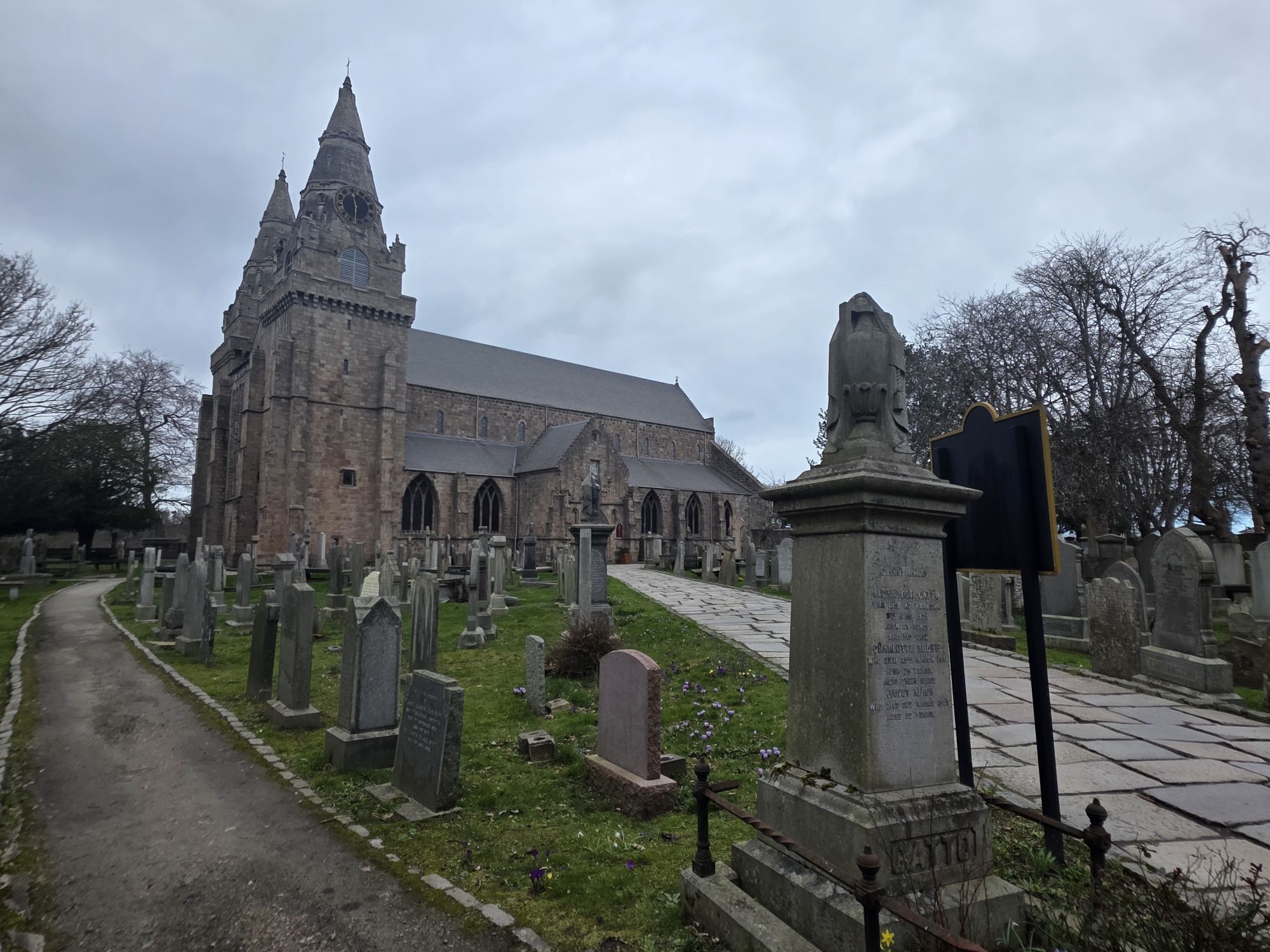
Although often referred to as a cathedral, it has a rather unusual history, having functioned without a resident bishop for much of its existence following the Scottish Reformation. Construction began in the 12th century, with much of the present building dating from the 15th century.
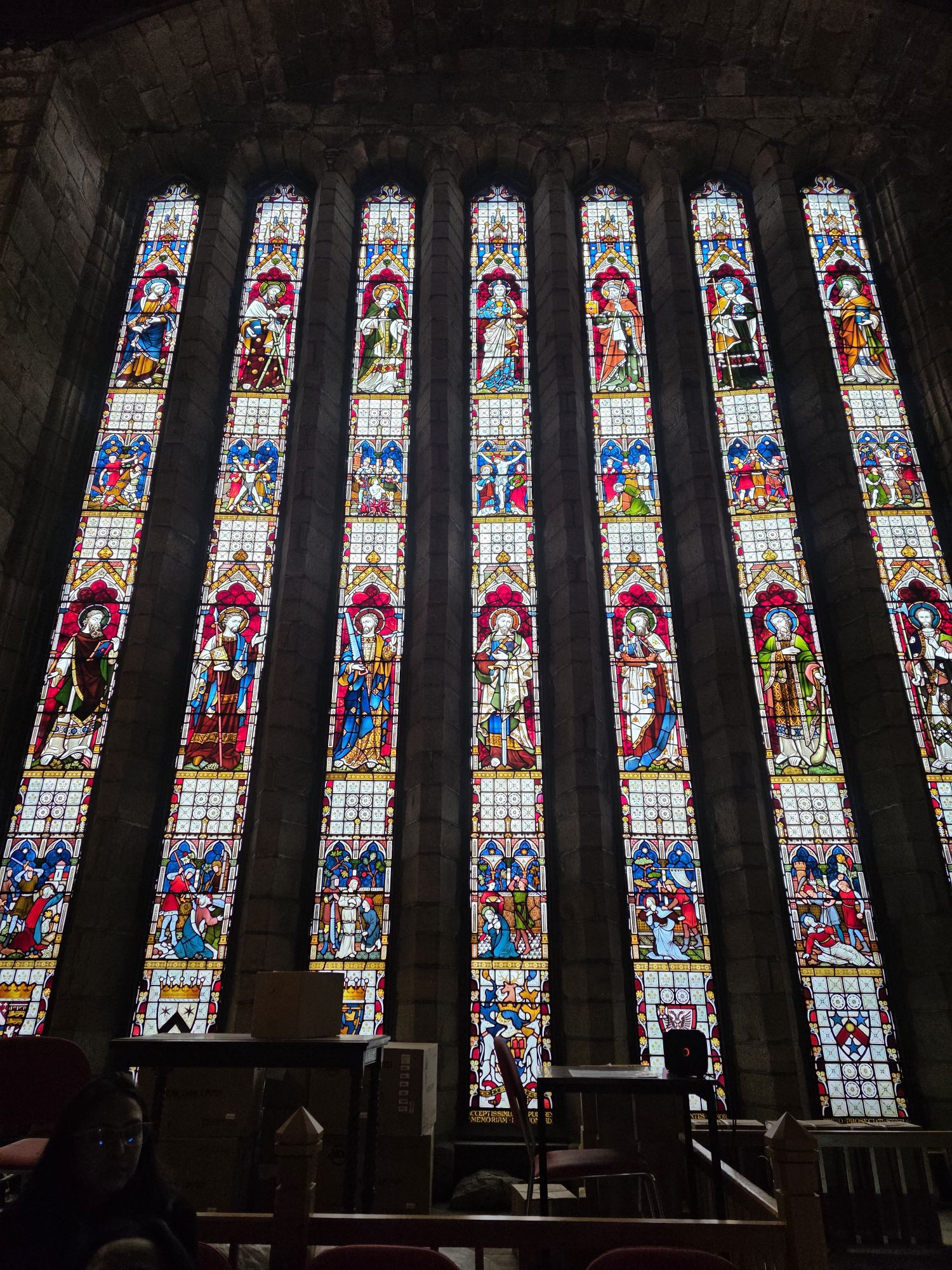
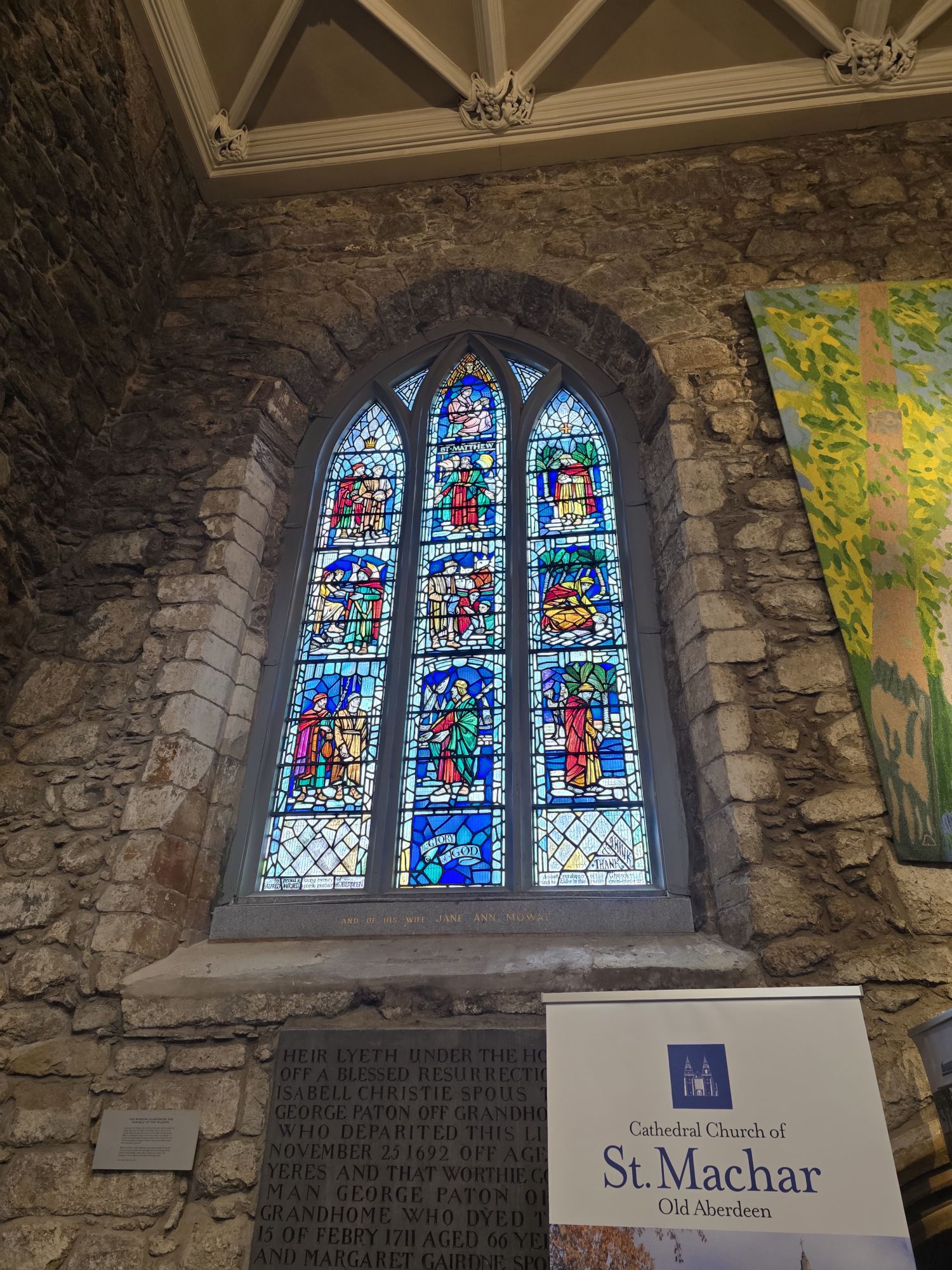
Its impressive granite towers dominate the skyline, while inside, the magnificent heraldic ceiling and beautiful stained-glass windows make it one of Scotland’s most fascinating medieval churches.
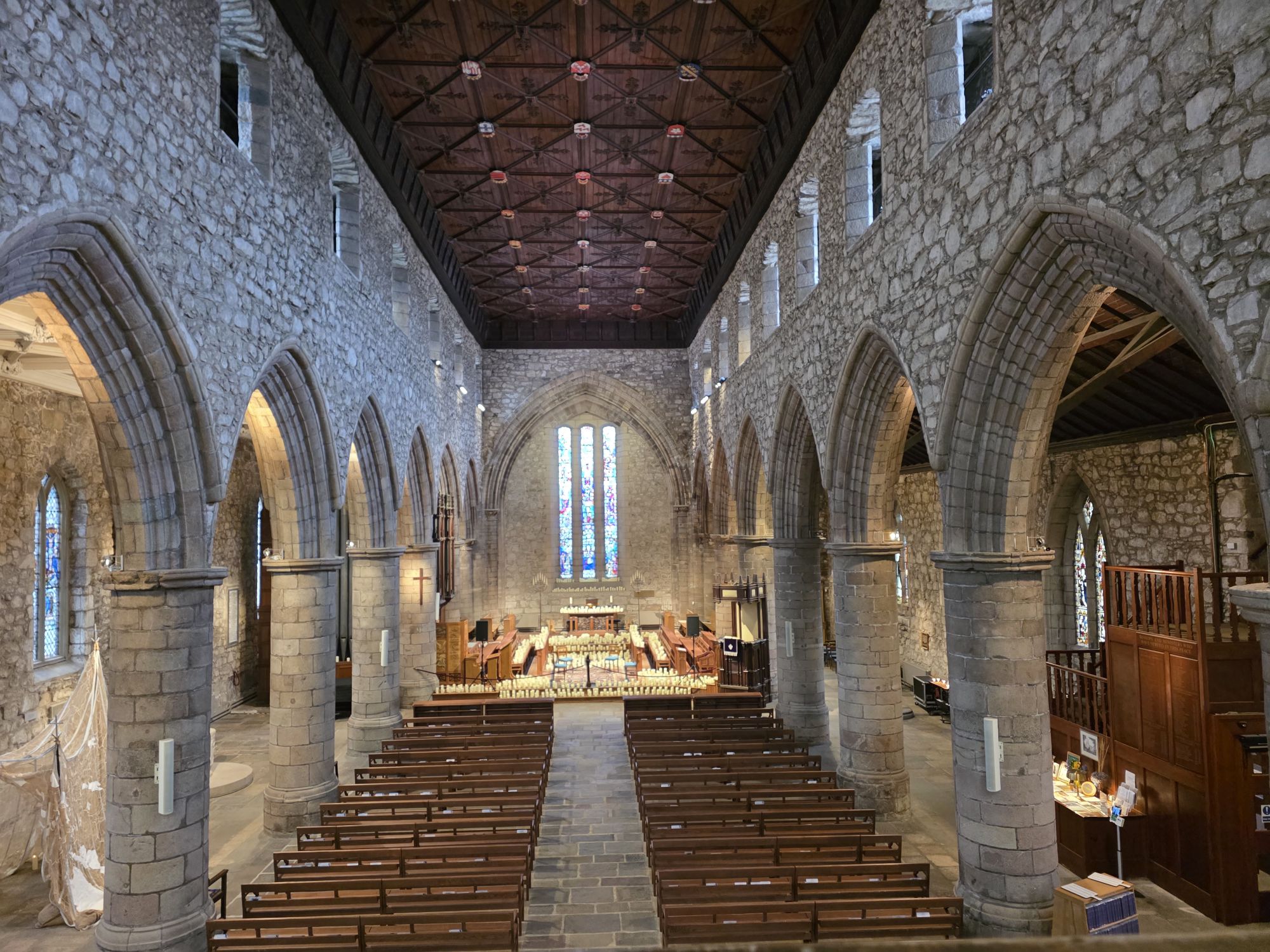
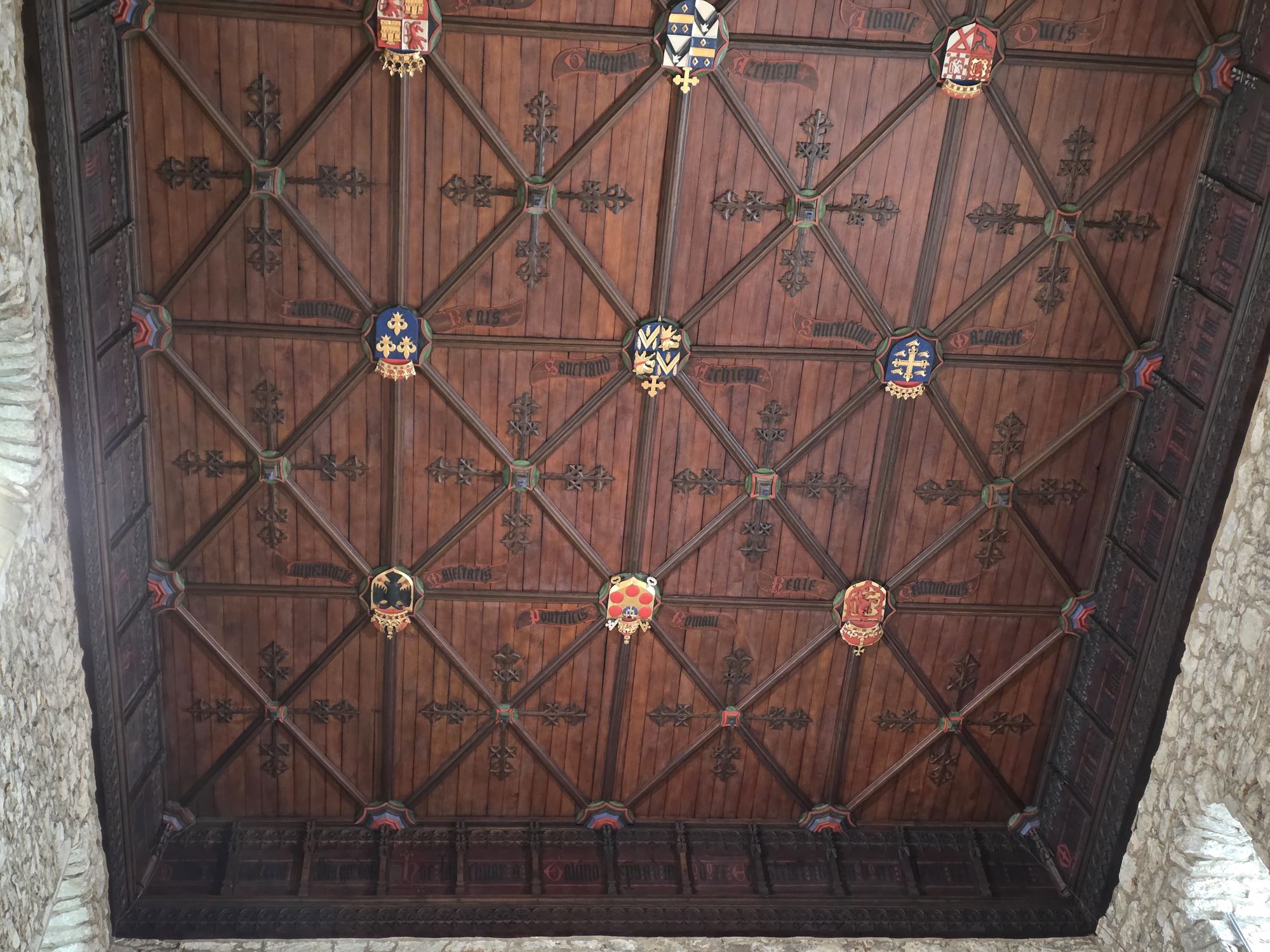
Completed in 1520 under Bishop Gavin Dunbar, the flat oak-panelled ceiling features 48 heraldic shields arranged in three rows of 16. It visually depicts early 16th-century power dynamics across Europe, displaying the arms of Pope Leo X, Holy Roman Emperor Charles V, King James V of Scotland, King Henry VIII of England, and various Scottish nobles and bishops.
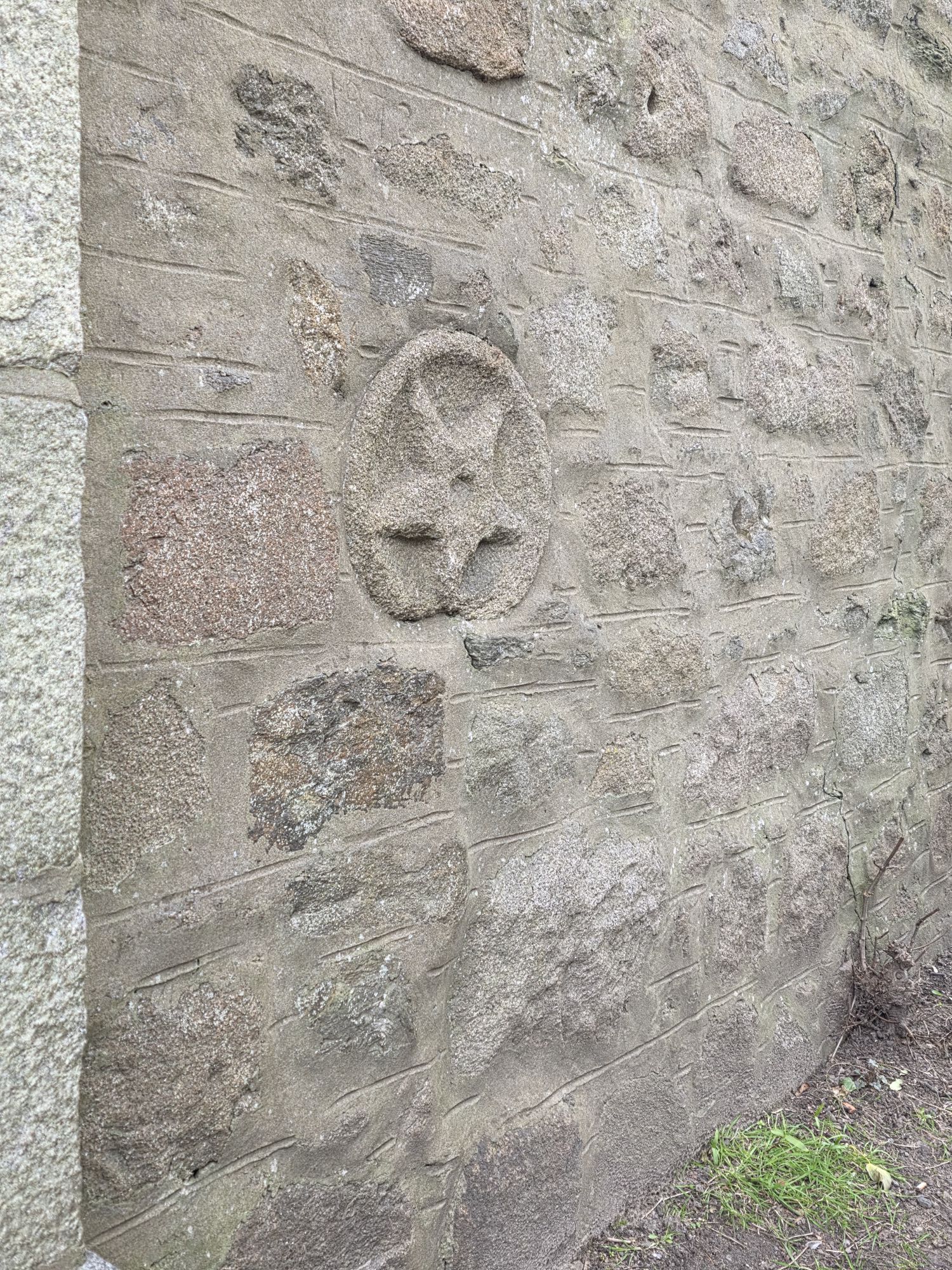
Outside lies the cathedral graveyard, where local tradition suggests that some of the remains of Sir William Wallace may have been buried after his execution, although there is no definitive historical proof. Interestingly, the statue of William Wallace in Aberdeen city centre is said to point towards this very graveyard, making it a place where many visitors pause to pay their respects to one of Scotland’s national heroes.
More Hidden Stories
The tour continued past several other fascinating buildings, including Cruickshank’s House, associated with the remarkable Scottish adventurer Thomas Blake Glover, often nicknamed the “Scottish Samurai” for his role in helping modernise Japan during the 19th century.
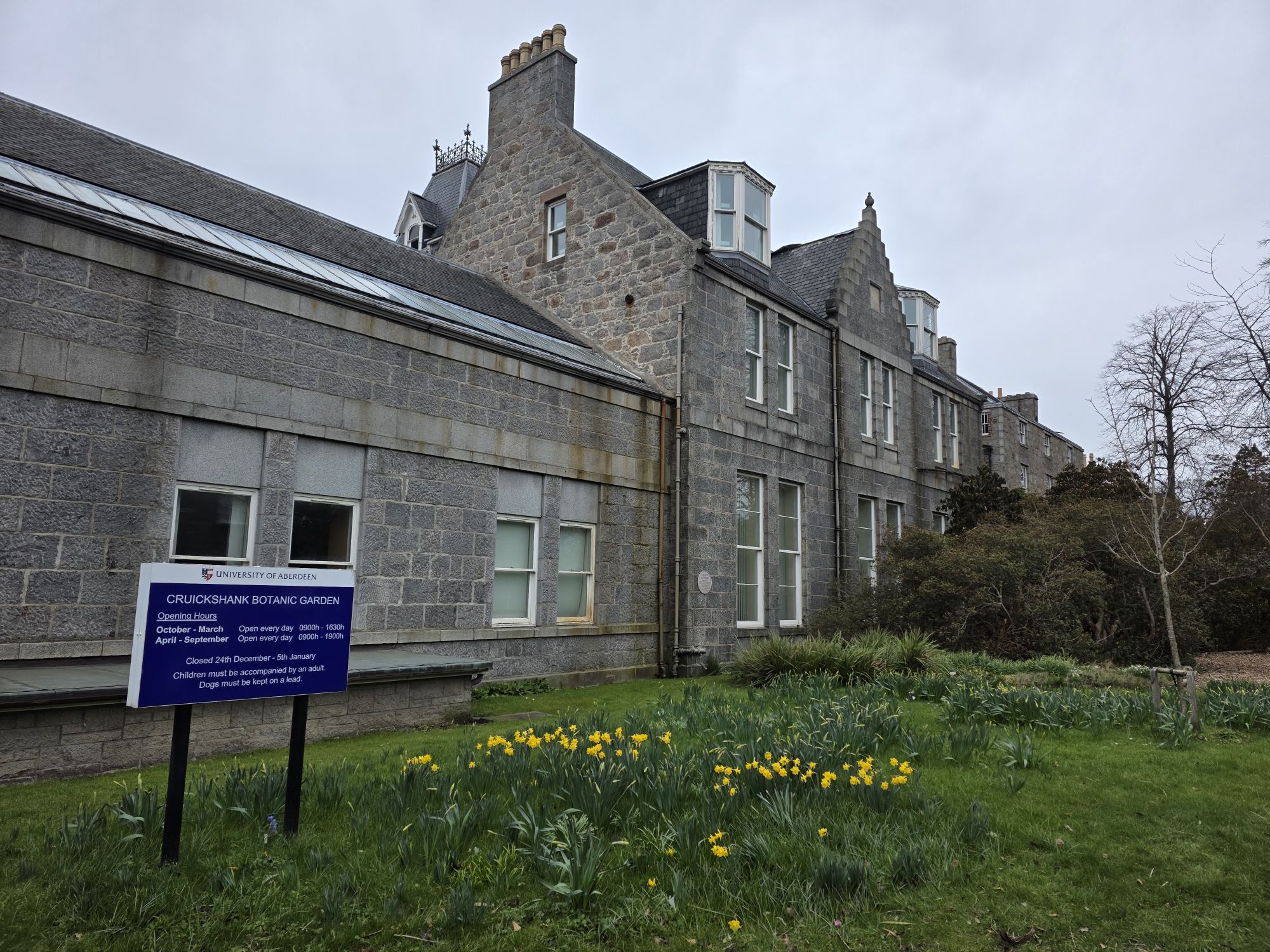
Our guide’s stories really brought the streets to life, connecting centuries of history with the buildings that still stand today.
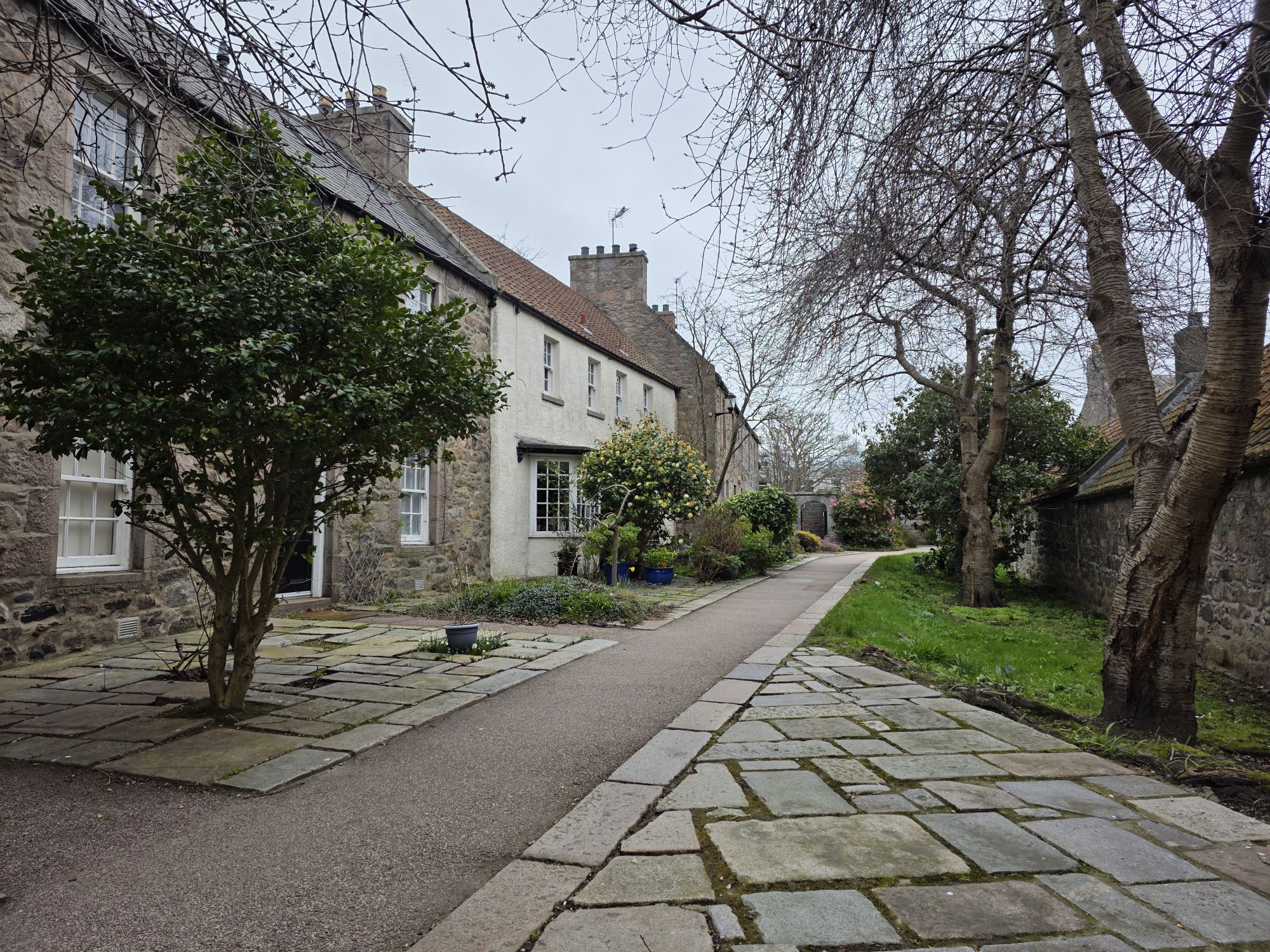
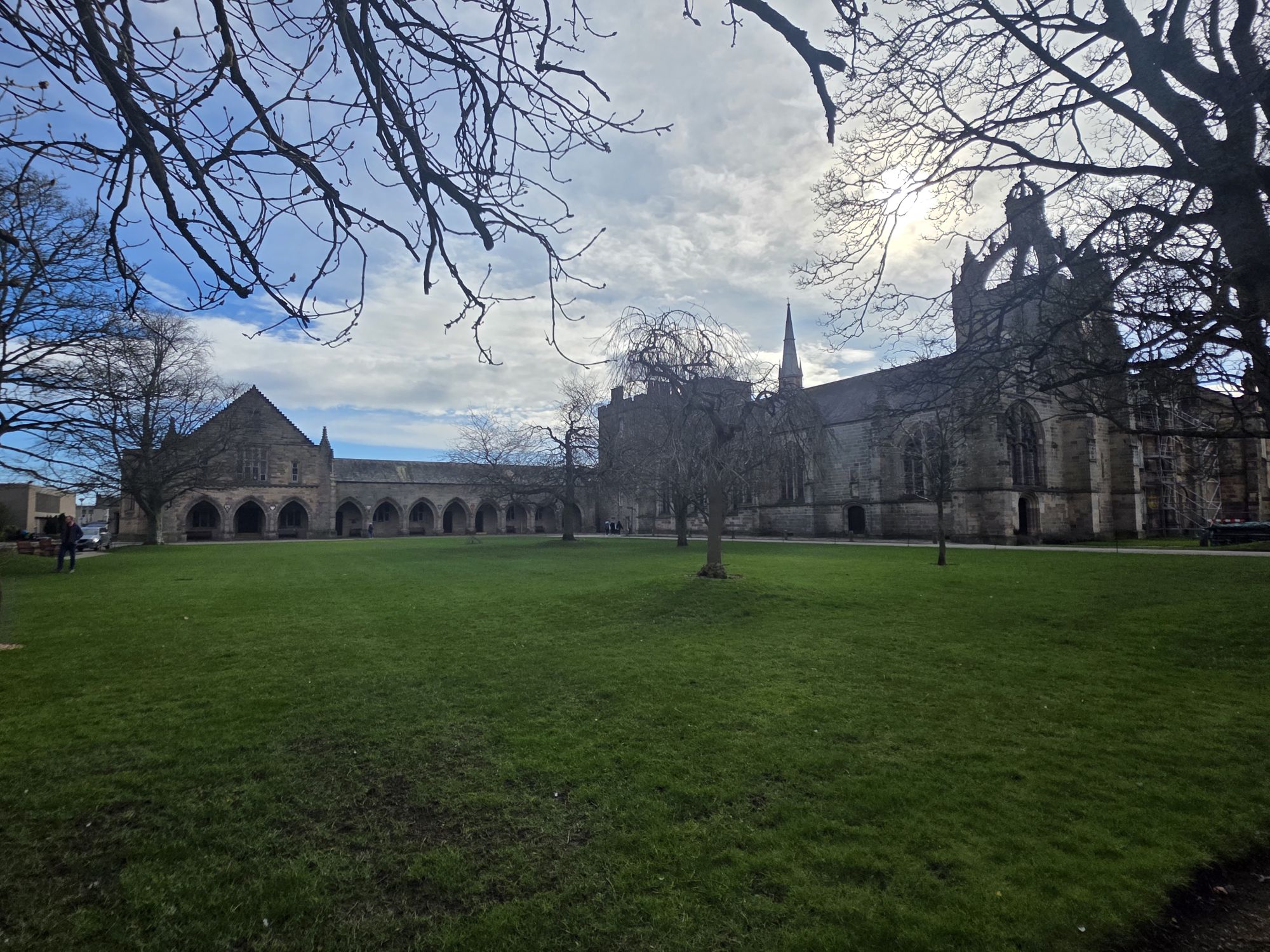
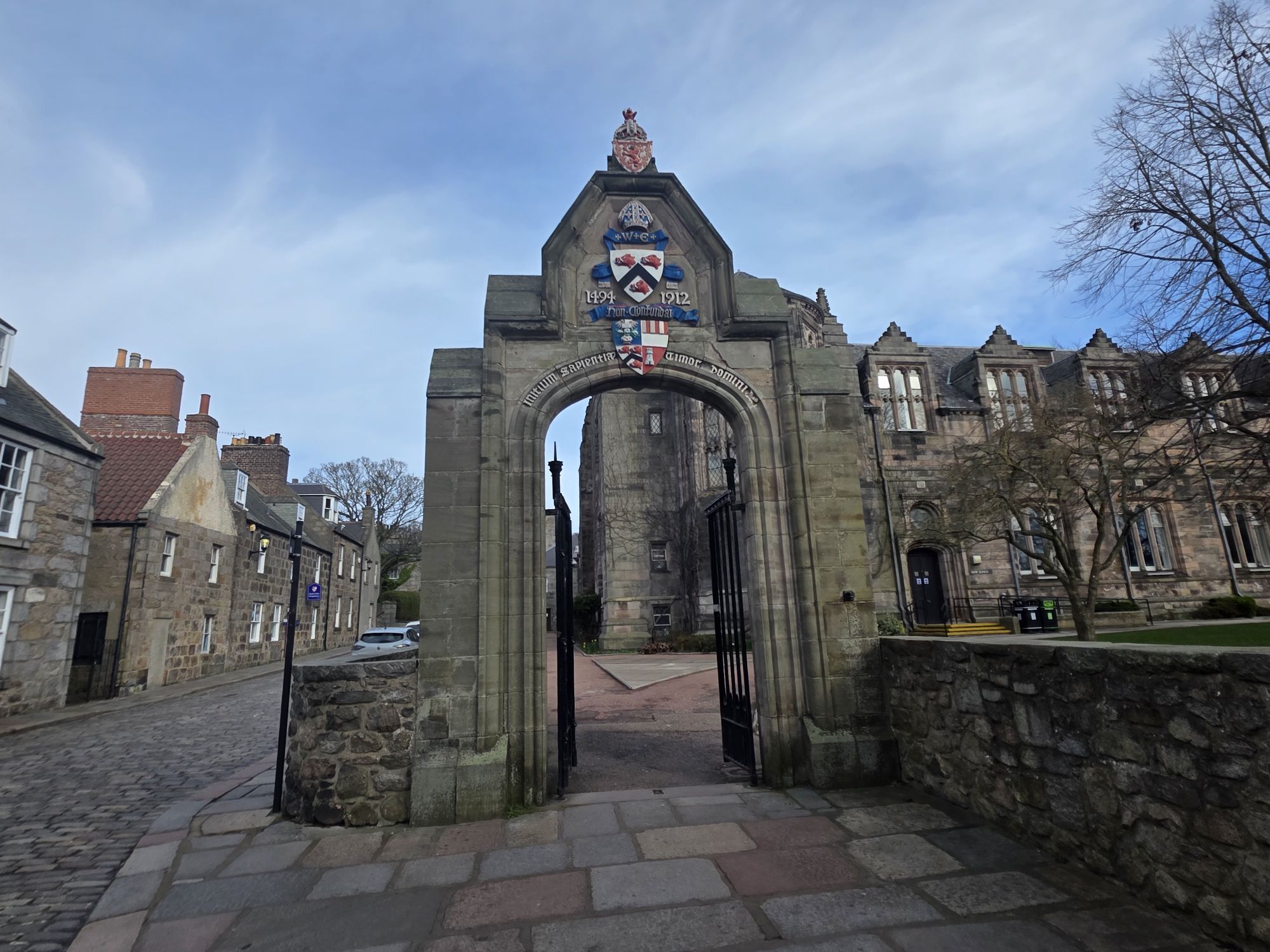
The walk concluded at the University of Aberdeen. Founded in 1495, it is Scotland’s third-oldest university and one of the oldest in the English-speaking world. The magnificent granite buildings give the campus an almost Hogwarts-like atmosphere, making it a fitting end to the tour.
Back to the city centre
After saying goodbye to our guide, we made the pleasant walk back into the modern city centre.
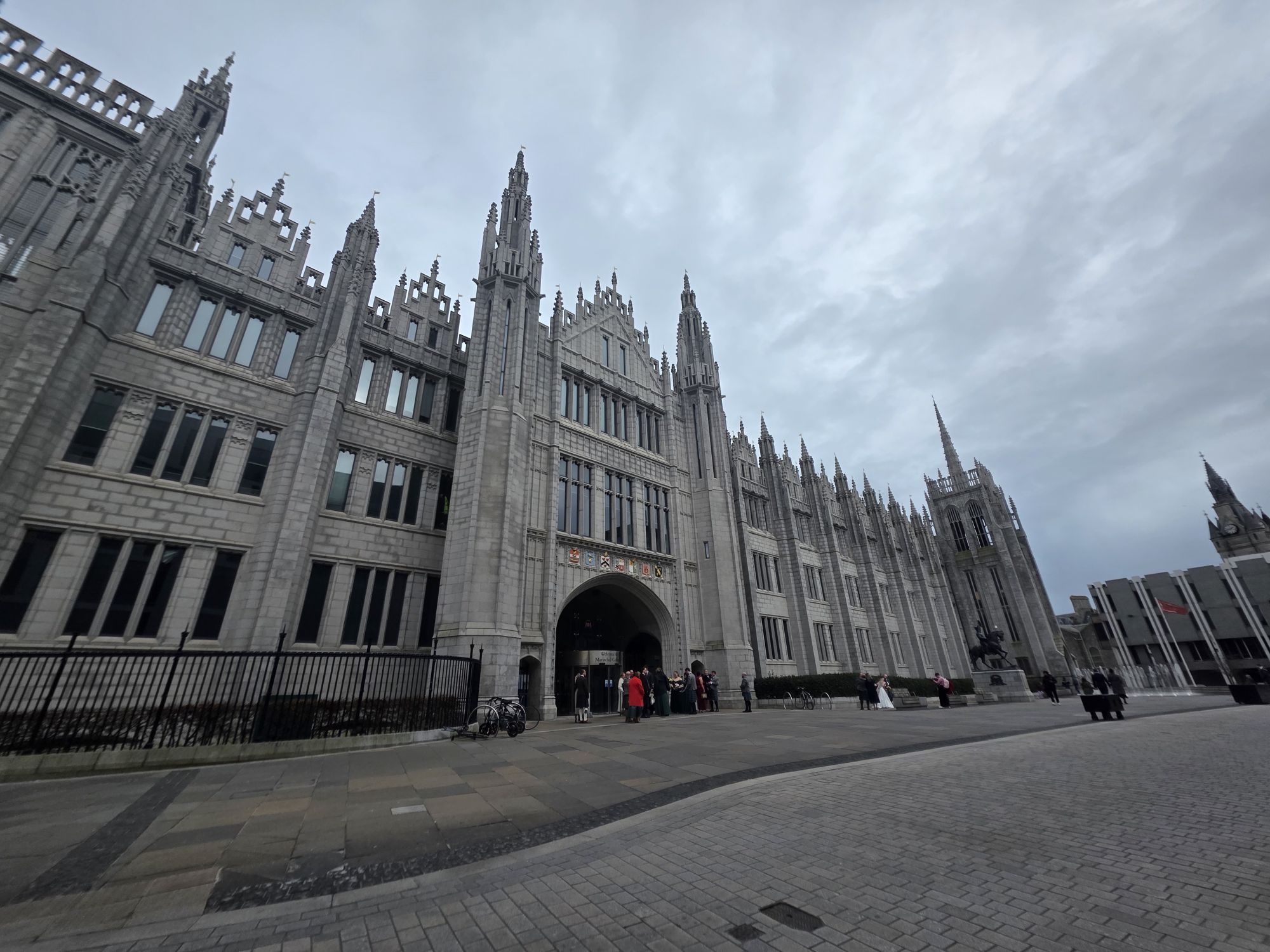
The largest granite building in Aberdeen is Marischal College. It is widely recognized as the second-largest granite building in the world, surpassed only by El Escorial near Madrid in Spain.
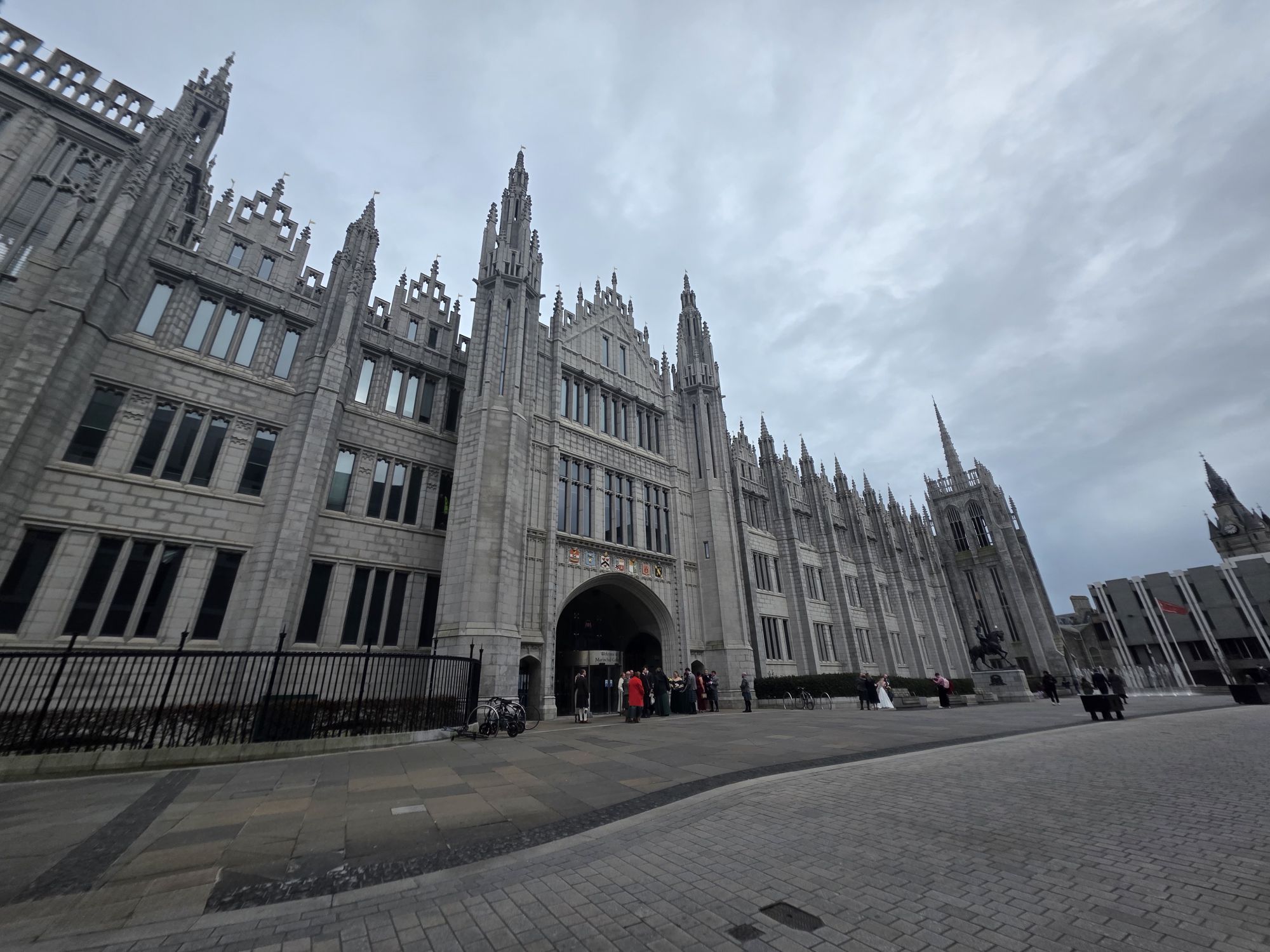
Built in the Victorian period, it was originally a part of the University of Aberdeen. Completed in the 19th century in a striking Gothic style, it has been leased to the Aberdeen City Council.
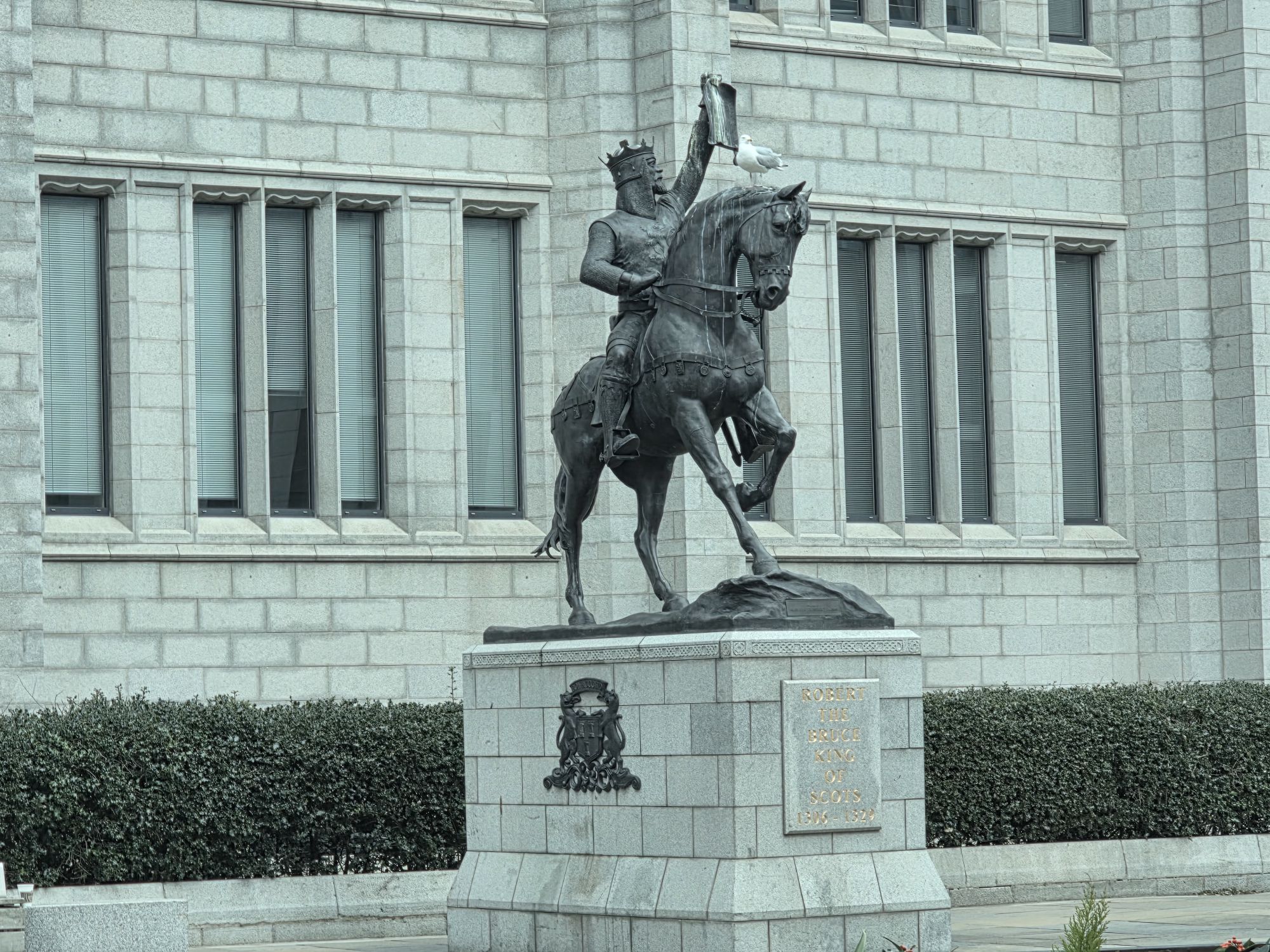
Nearby stands the imposing statue of Robert the Bruce, King of Scots, proudly overlooking Broad Street and serving as another reminder of Scotland’s rich history.
After a leisurely lunch, we collected our bags before heading to our accommodation for the night.
Marycutler House
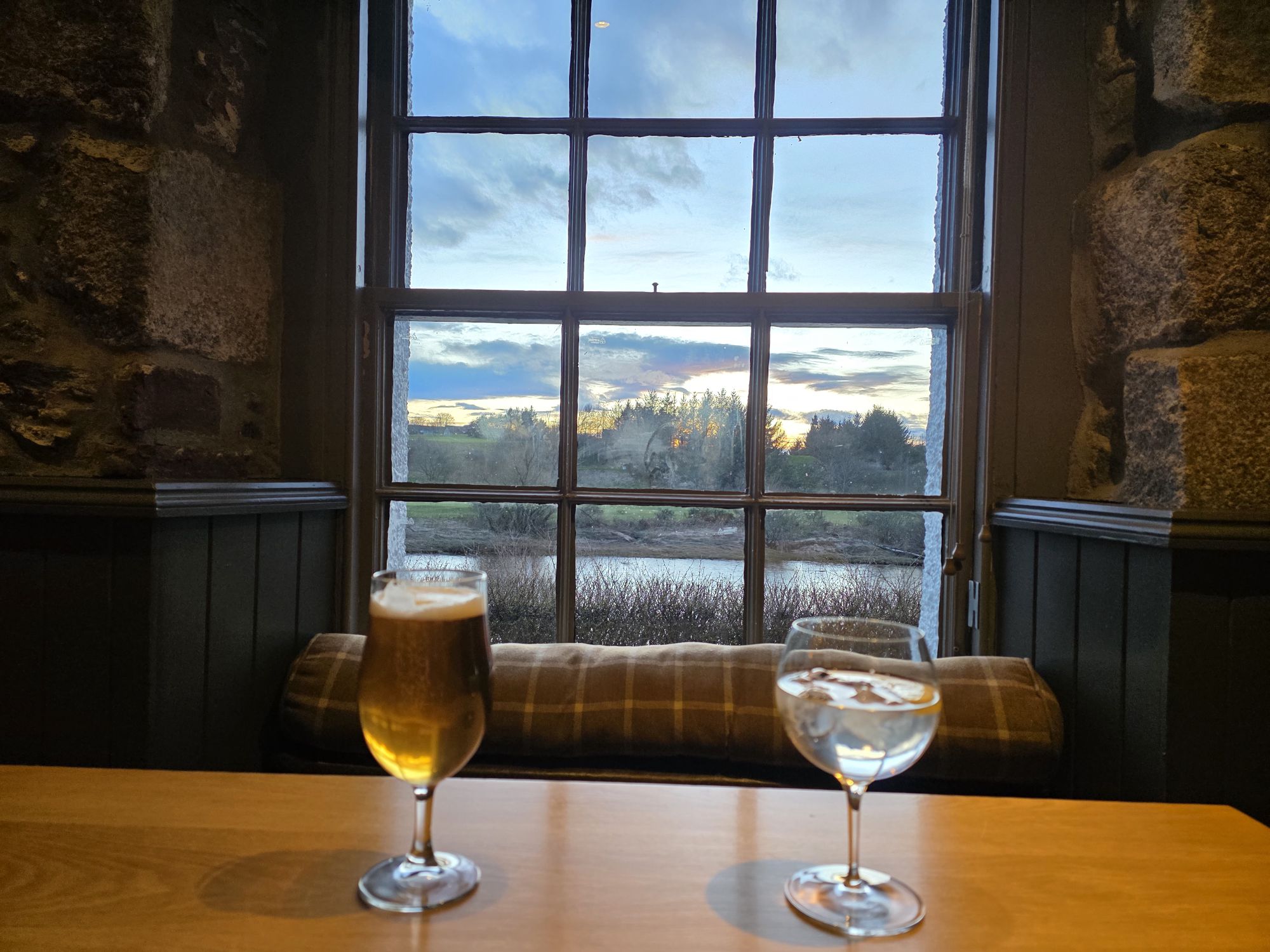
Our home for the evening was the beautiful Maryculter House Hotel, located a short distance from the city centre on the banks of the River Dee.
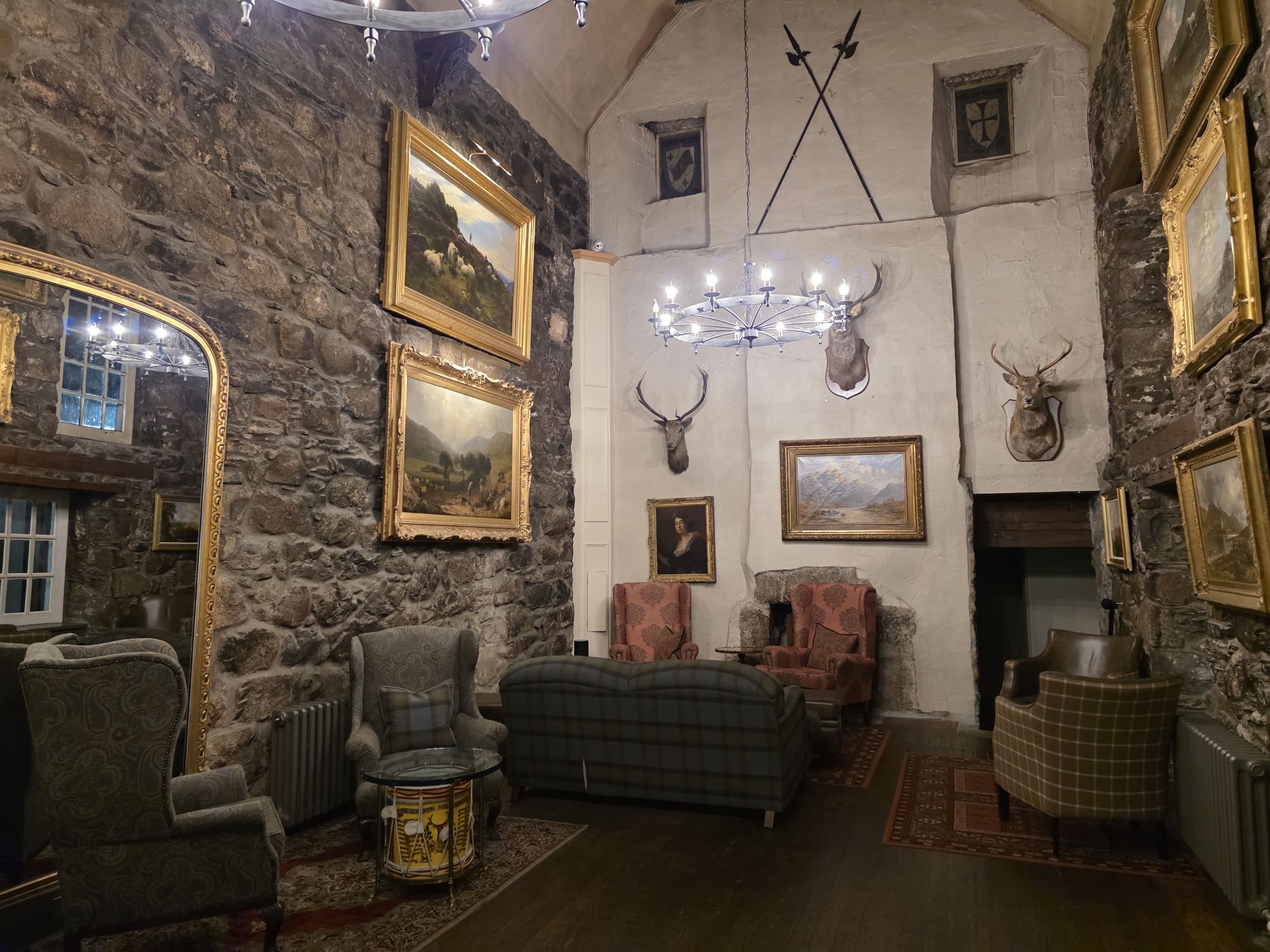
Dating back to the 13th century, the hotel is steeped in history and is believed to have once been associated with the Knights Templar. Inside, medieval features blend seamlessly with modern comforts, creating a warm and welcoming atmosphere full of character.
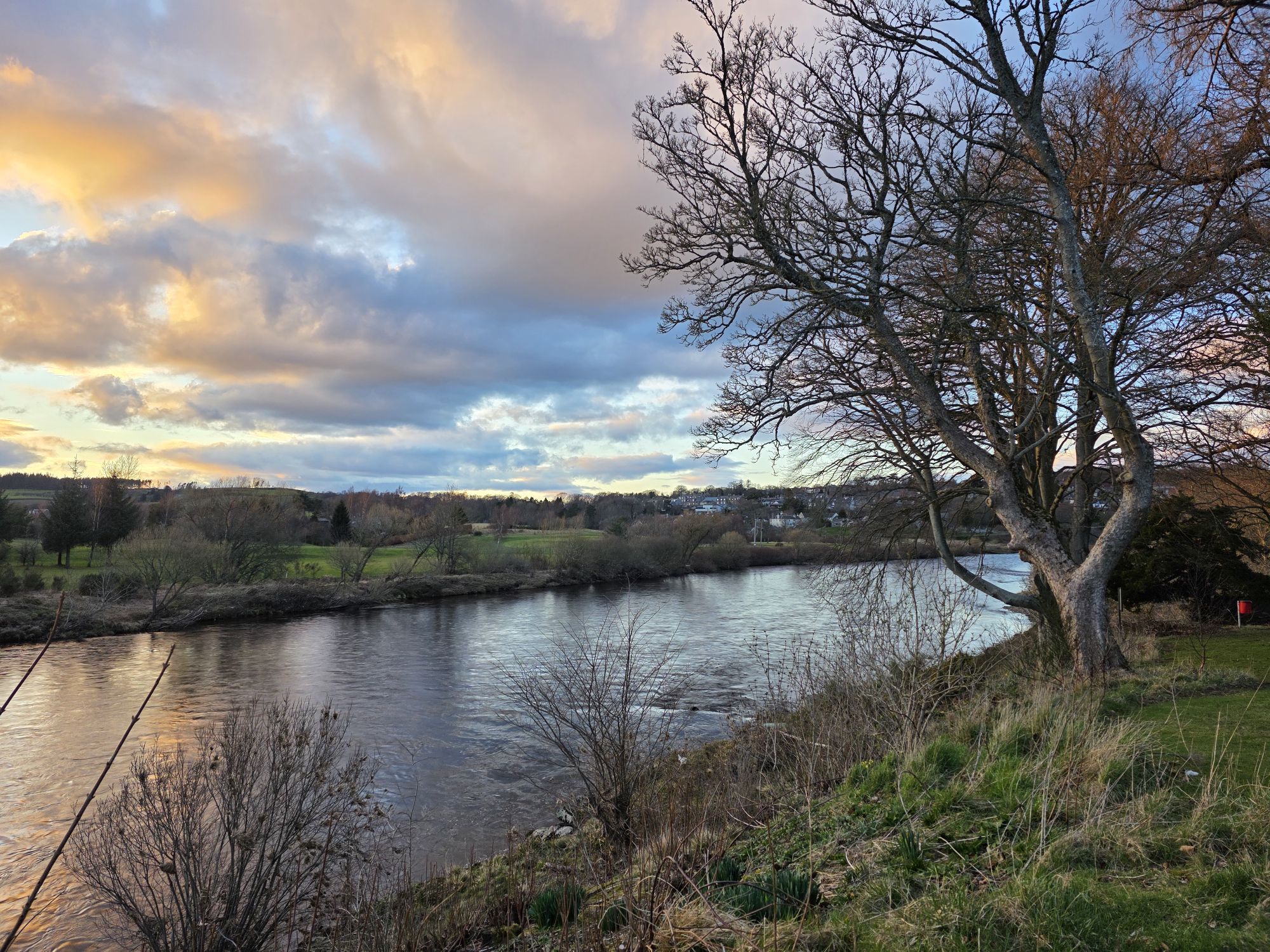
Dinner in the hotel’s restaurant was exceptional, providing the perfect end to a day spent exploring Aberdeen. Between the historic setting, excellent food and peaceful riverside location, staying at Maryculter House became one of the highlights of the entire trip.


Interesting story of how Aberdeen got its name. Looks like a nice city. Just a few weeks ago I was planning some “someday” Scotland trips (beats doing the dishes) and Aberdeen crept up as a launching point for the ferry to the Orkneys and the Shetland Islands, both of which the Husband wants to cycle, so I’m thinking it’s in my (distant) future!
LikeLiked by 1 person
Aberdeen is definitely worth a visit – a trip to Orkney and Shetlands sounds amazing. I’d love to do that someday. I liked Aberdeen a lot – it is nowhere near as touristy as Edinburgh.
LikeLiked by 1 person