Where and when: Jersey, Channel Islands, September 2026
Jersey, along with Guernsey and the smaller islands of Alderney, Sark and Herm, forms part of the Channel Islands, a fascinating little corner of the world with a history and identity all of its own.
The Channel Islands are not actually part of the United Kingdom but are Crown Dependencies. This means that they are self-governing territories under the sovereignty of the British Crown. They have their own parliaments, laws, courts and tax systems, while the UK Government remains responsible for their defence and international relations.
The islands also have a fascinating history. They were originally part of the Duchy of Normandy, which was established in 933. Following William the Conqueror’s invasion of England in 1066, the islands became part of the Anglo-Norman realm, linking their fortunes to the English Crown.
Although England subsequently lost mainland Normandy to the French, the Channel Islands chose to remain loyal to the English Crown, giving them a unique relationship with the UK.
With their unique political status, Norman heritage, French influences and wartime history, Jersey and its neighbouring islands have a particularly fascinating identity. I was keen to discover more about this little-known part of the British Isles, and Jersey seemed like the perfect place to start.
Exploring Jersey: Our first full day
Our first full day in Jersey started bright and early. We decided start by exploring St Helier Town on foot, aided by the St Helier town trail post which gave us a walking route and information.
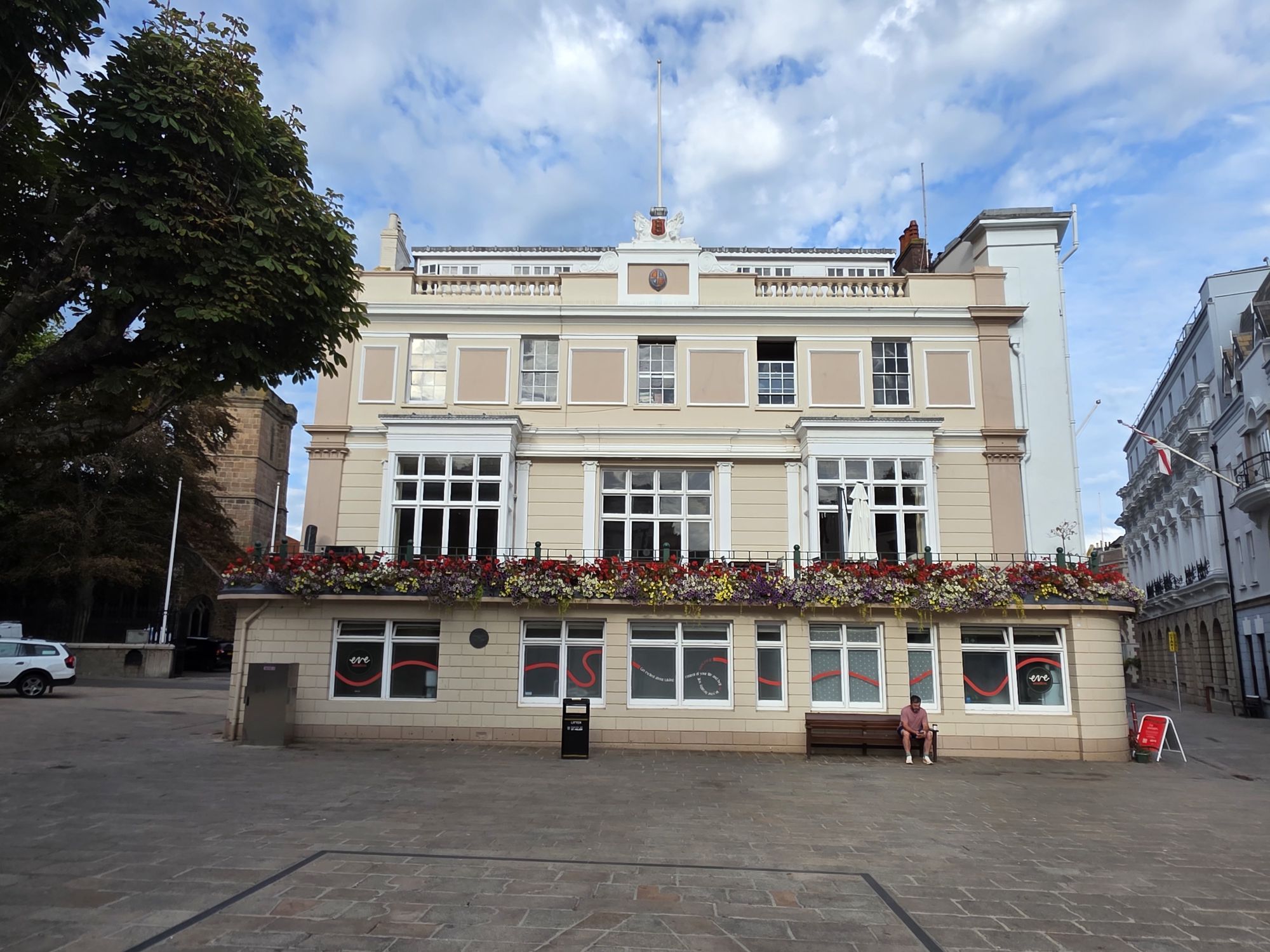
Royal Square
We started on Royal Square. This is the site of the Battle of Jersey, last battle on the British Isles, all the way back in 1781.
Given its strategic location just off the French coast, Jersey was an attractive target for the French, who were keen to capture the island during the American War of Independence. In the early hours of that January morning, a French force led by Baron Philippe de Rullecourt landed on the island and made its way into St Helier, taking the Lieutenant Governor, Major Moses Corbet, hostage and forcing him to sign a document of surrender.
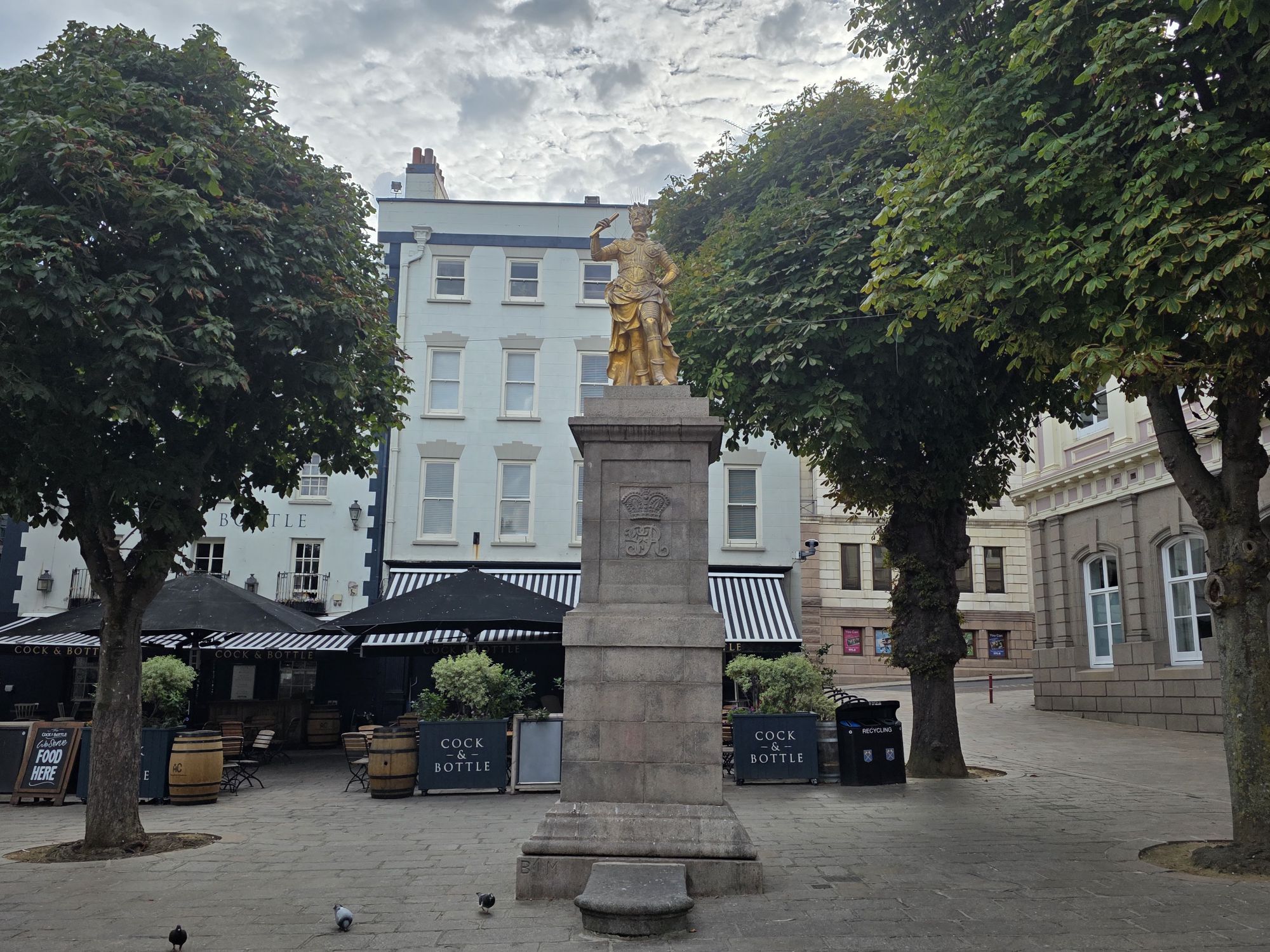
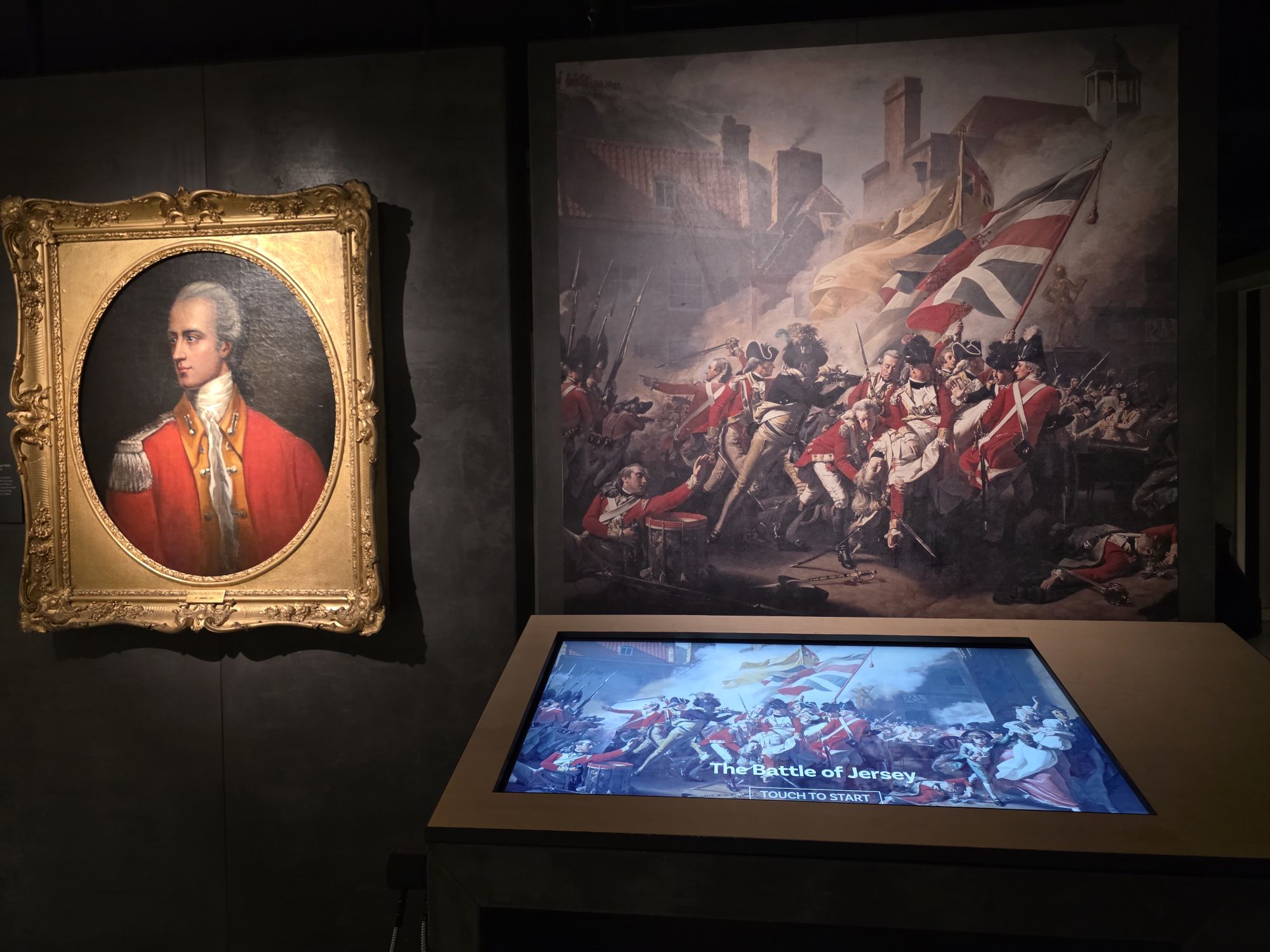
However, Major Francis Peirson, who was in charge of the garrison on the island, rallied the British troops and led a counterattack in what is now Royal Square. After a fierce 1 day battle, the French forces were defeated. Both the French and British commanders lost their lives in the last minutes of the Battle, including the young Major Peirson, who was just 24 years old.
The event is also immortalised in the famous painting The Death of Major Peirson by John Singleton Copley, which captures the intensity of the fighting and the young major’s tragic death.
Today, Royal Square is still very much at the heart of St Helier, and it’s quite remarkable to think that this rather peaceful-looking spot was once the scene of such a dramatic battle.
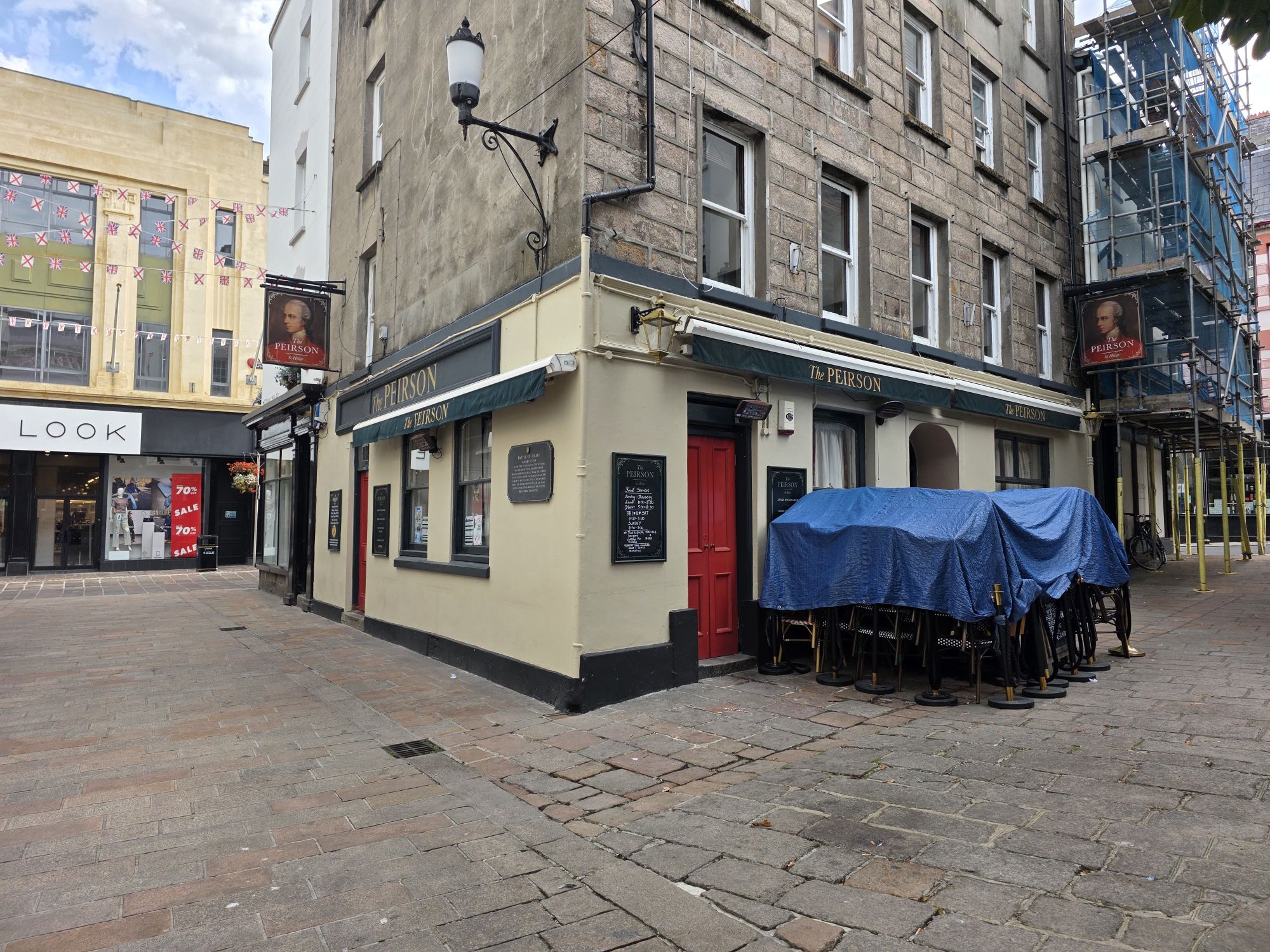
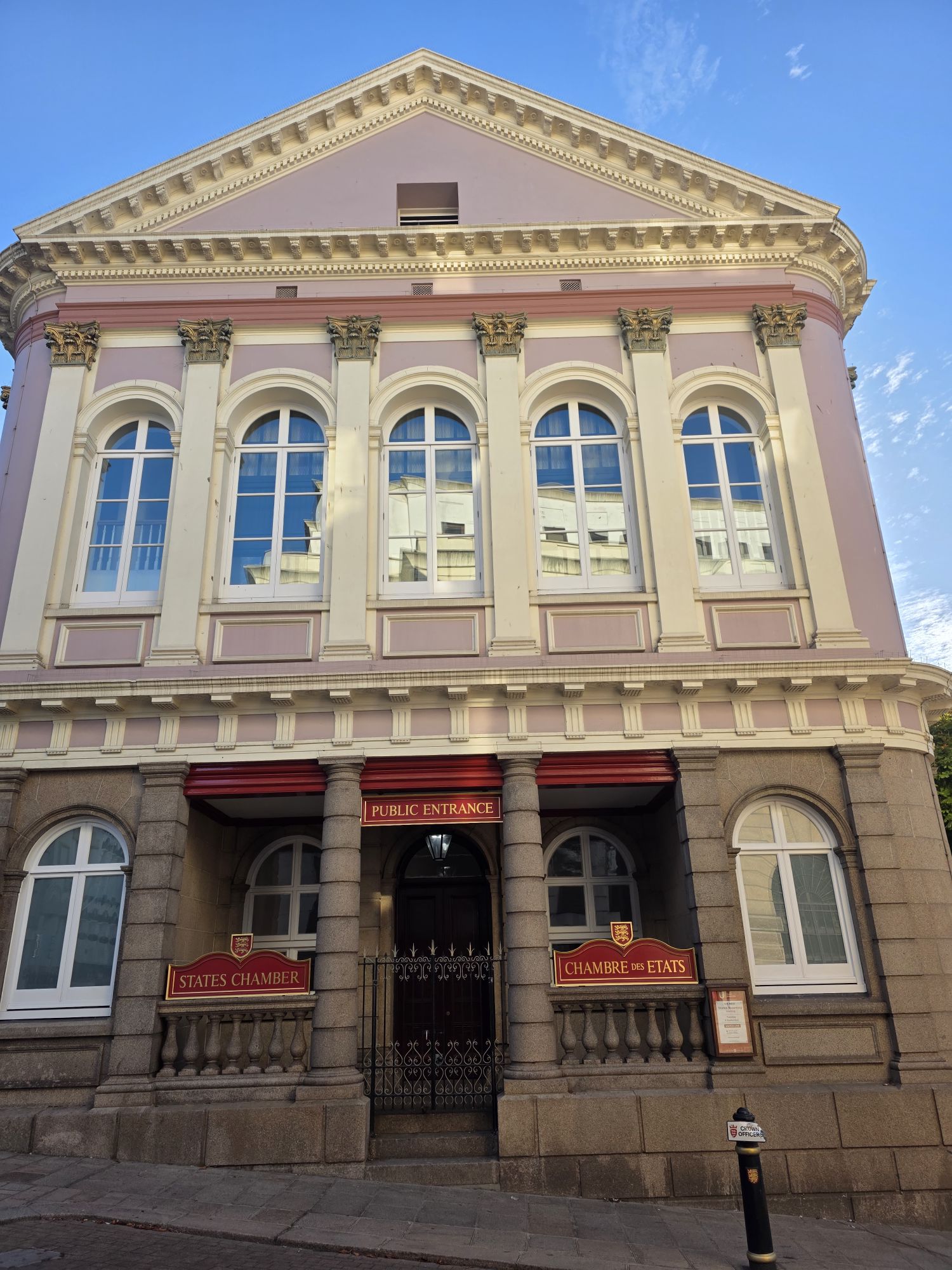
Althought it has been part of the British Crown for nearly 1000 years, Jersey always retained its French heritage. The language of the osland is Jèrriais – a Norman French. But only about 3% of the population speaks it. The official language of government is English, French and Jèrriais.
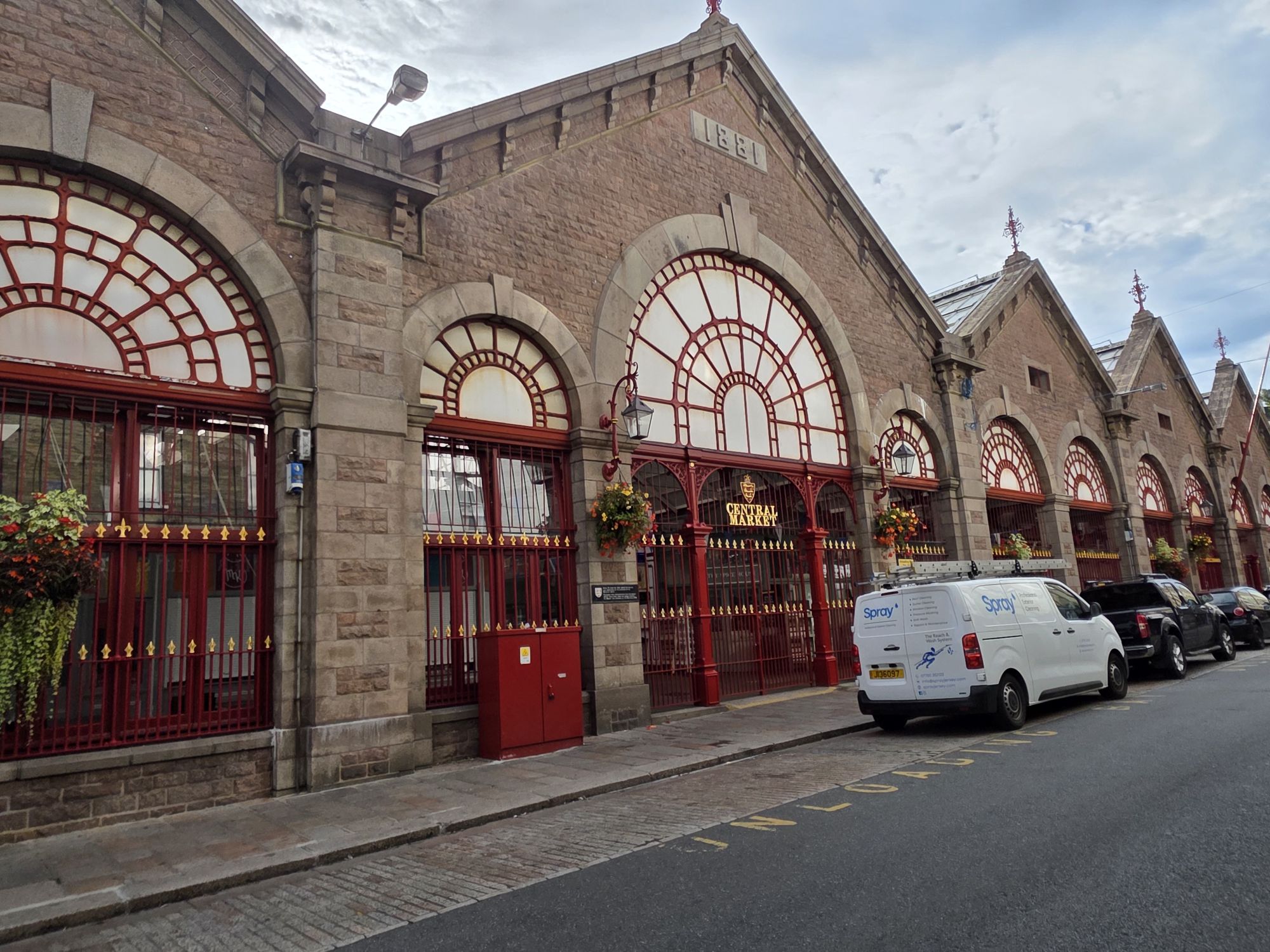
Central Market
Our next stop was the central market.
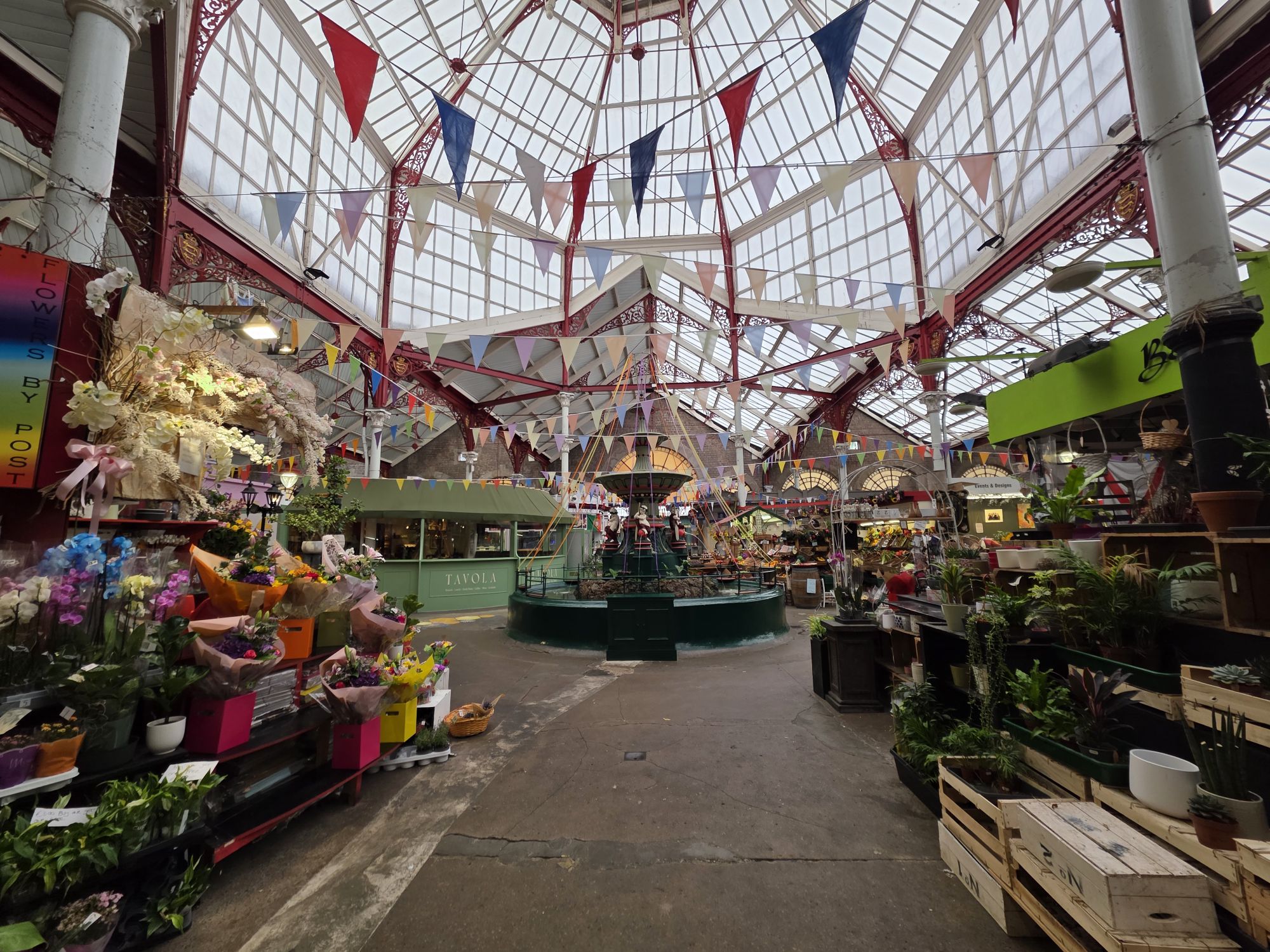
The centre piece of the market is a fountain. According to the info, it is one of 3 identical fountains made by John Dyson – one lost at sea on the way to Australia, the other apparently is in Ironbridge Shropshire.
St Helier Church
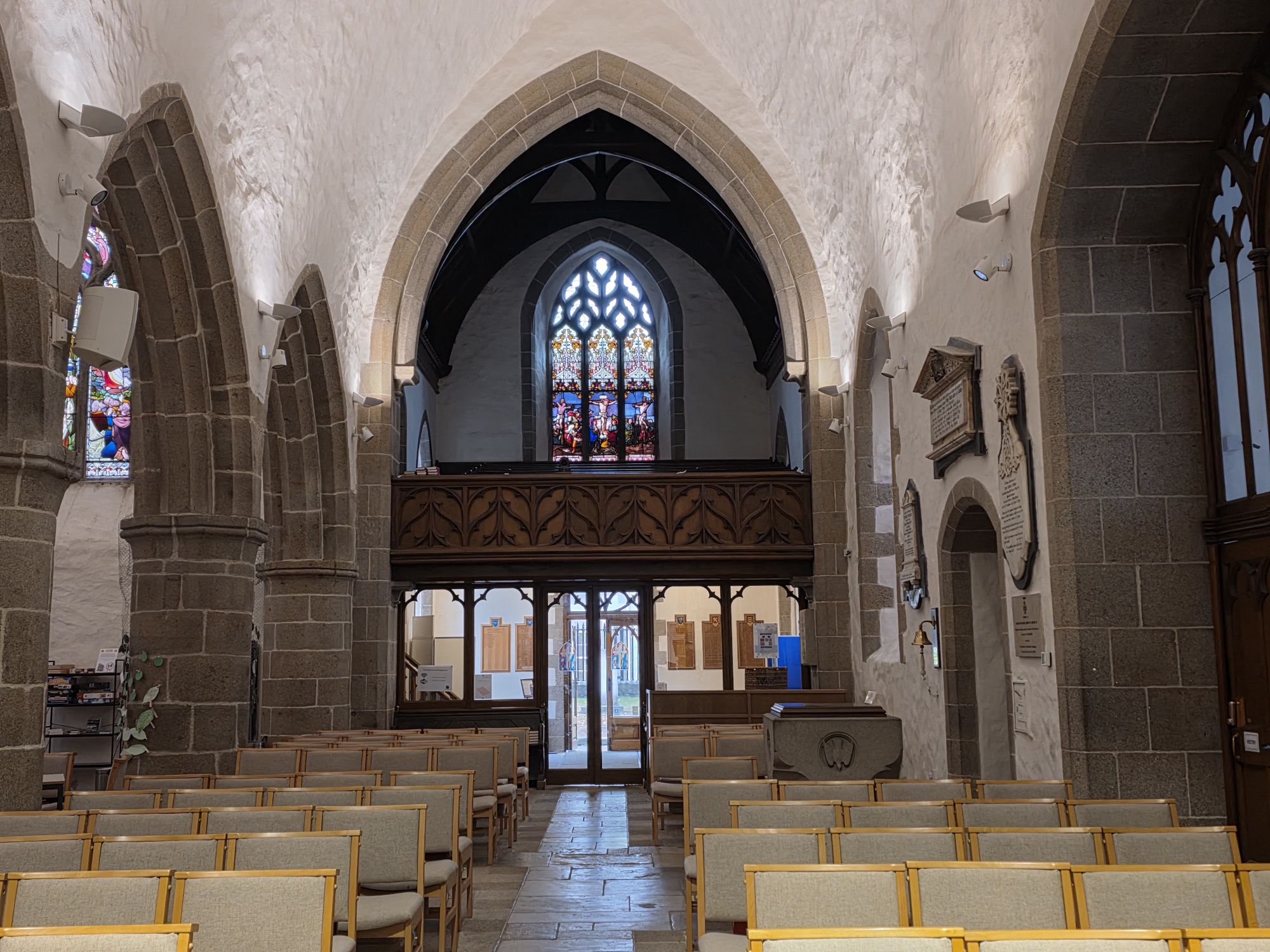
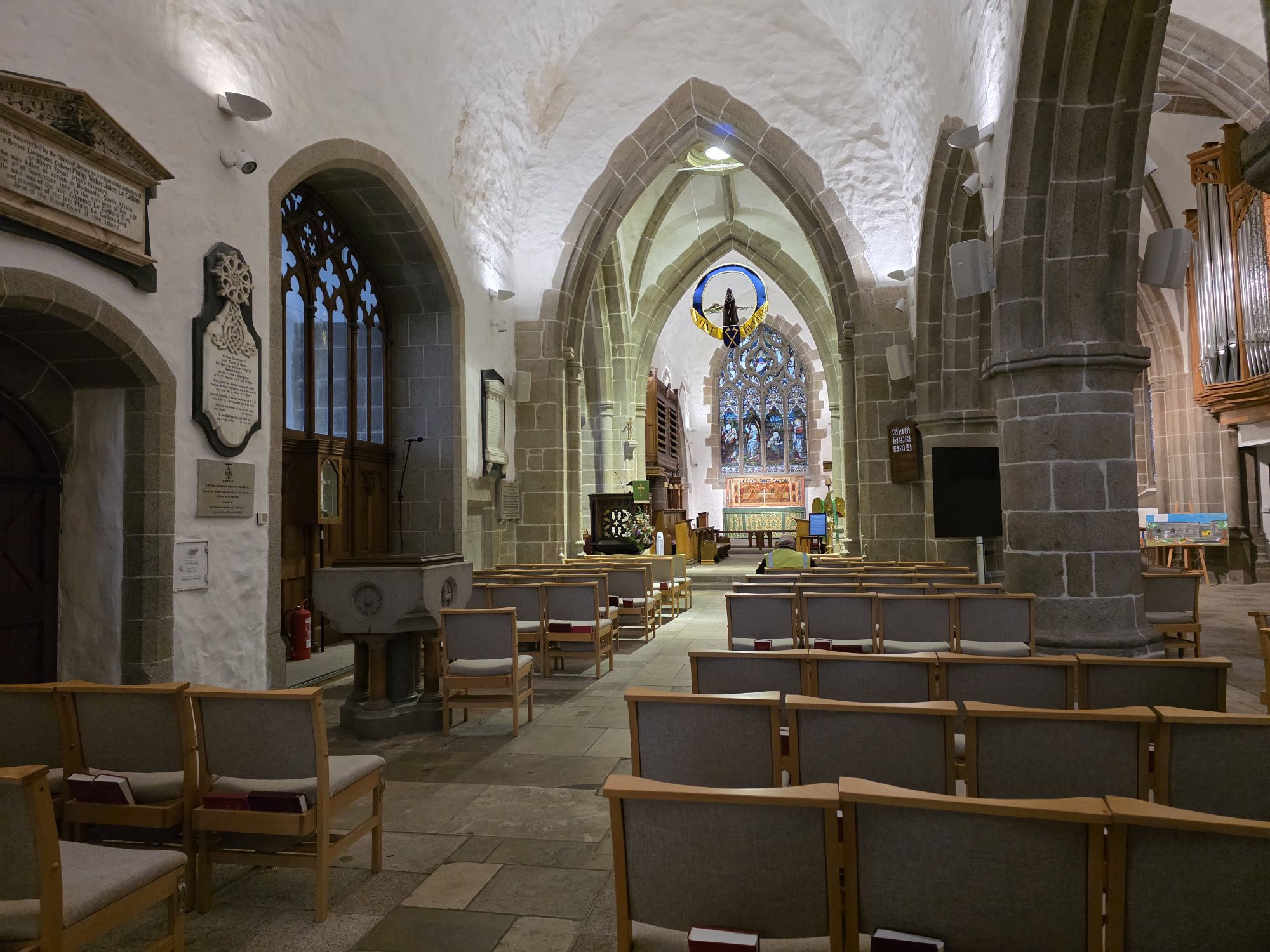
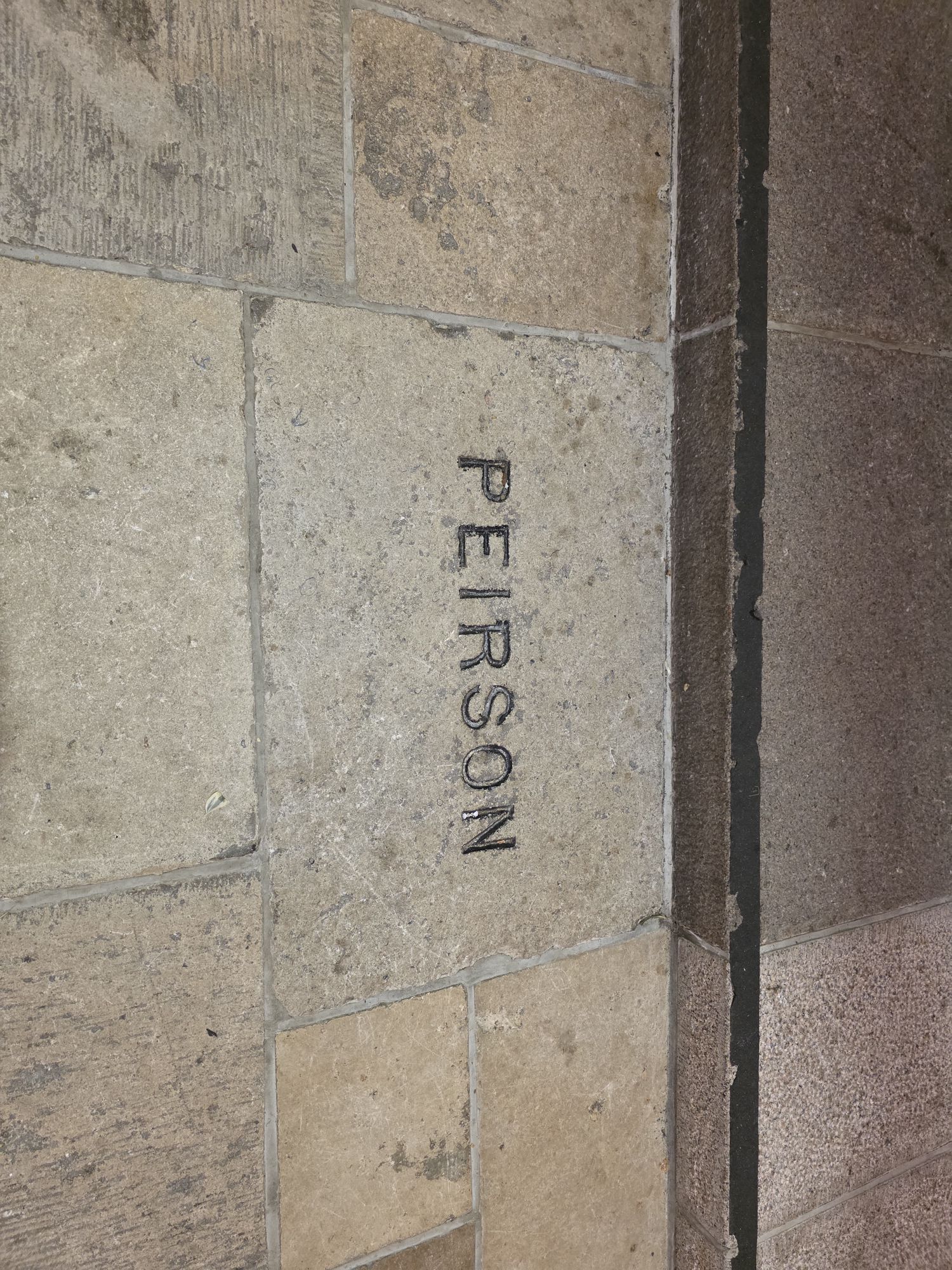
St Helier Church (dedicated to Saint Helier) dates back to the 11th century. It is famous for being the resting place of Major Pierson and his foe Baron Philippe de Rullecourt following the battle of Jersey.
Liberation Square
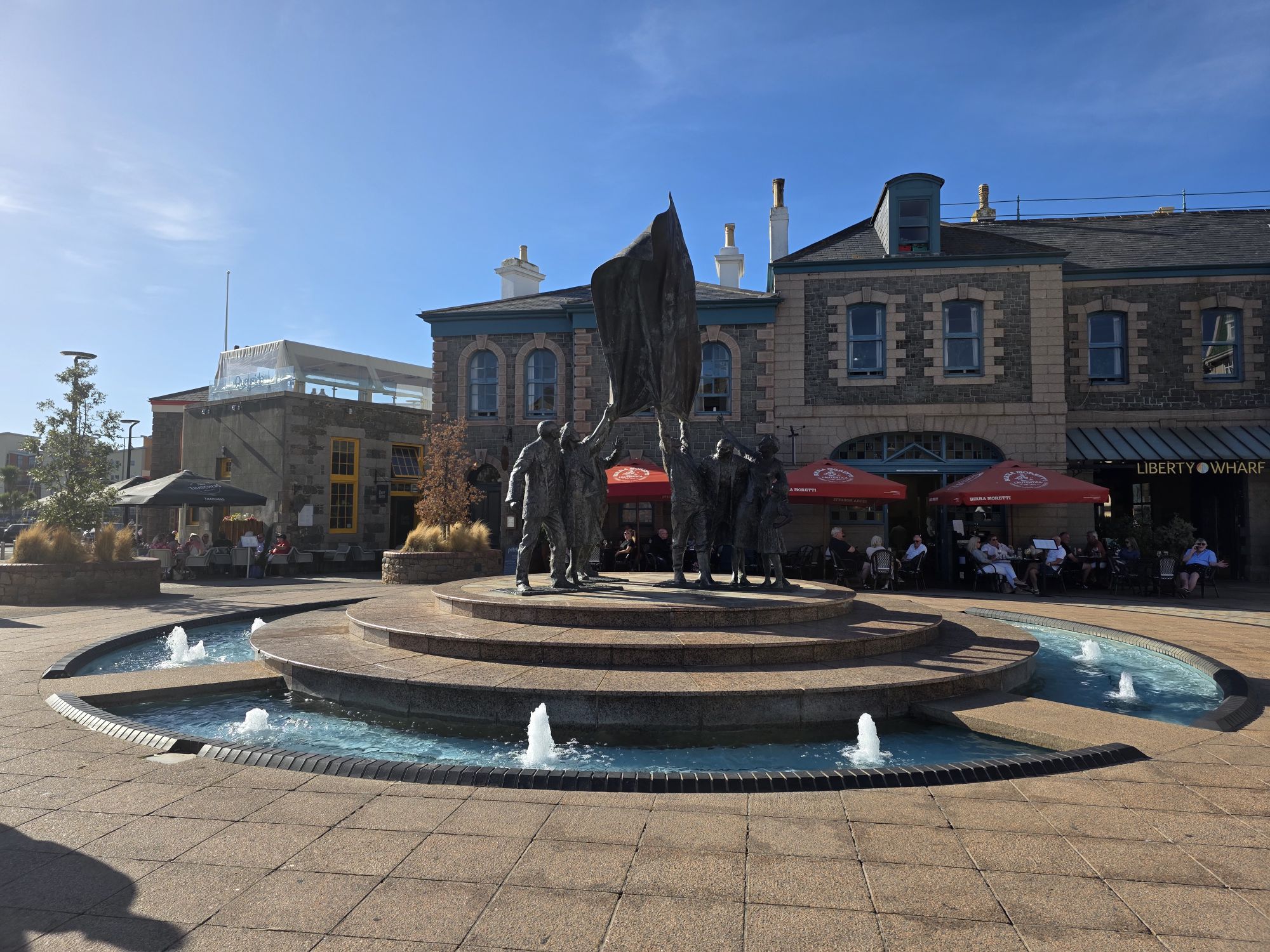
The Channel Islands were the only part of the British Isles to be occupied by German forces. The occupation lasted almost five years, from 1940 until Liberation Day on 9 May 1945. The experience left a lasting mark on the islands, and reminders of this period can still be found throughout Jersey today.
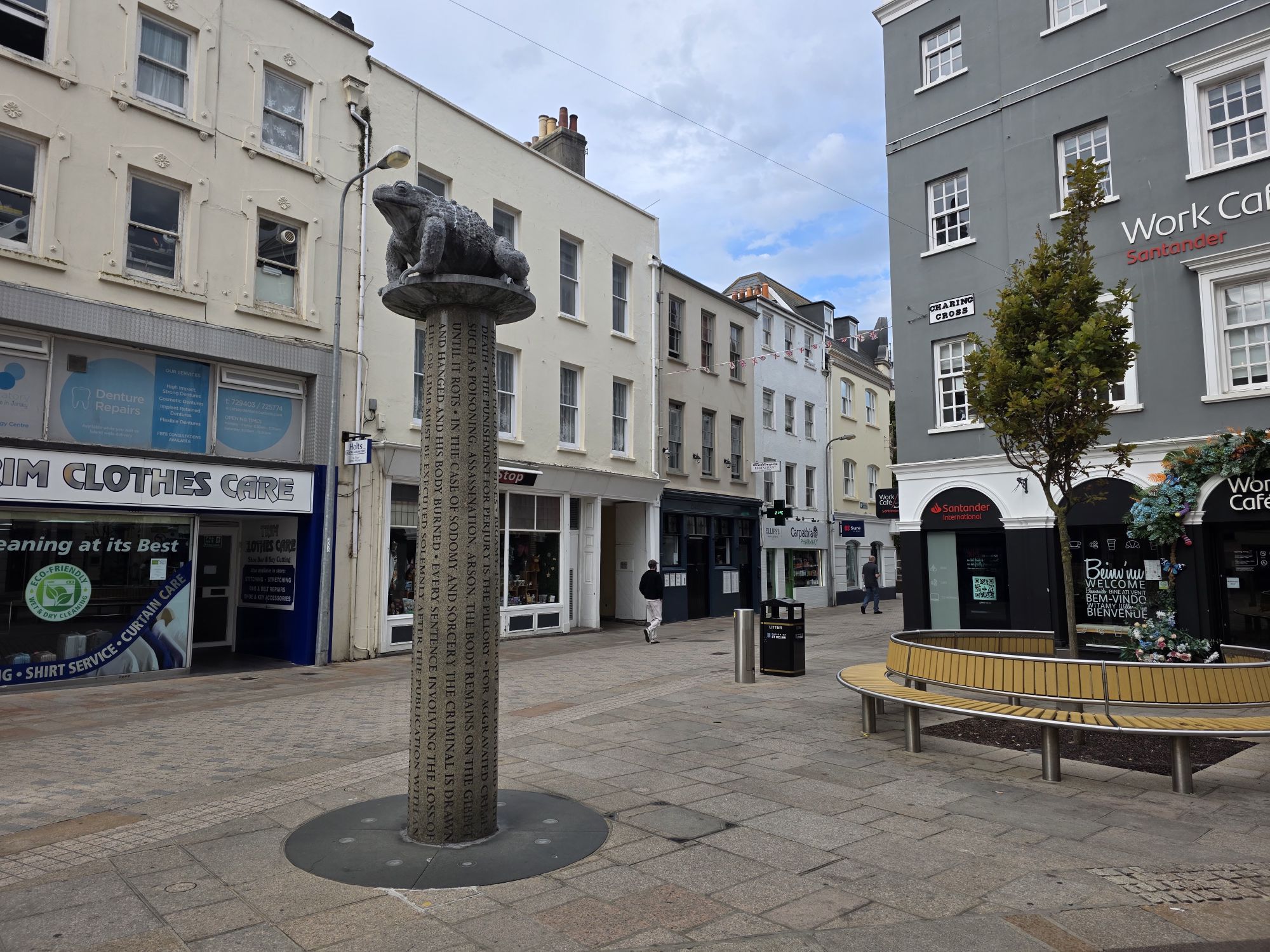
The town has the “Crapuad on a Column”, the work of artist Gordon Young. This is a play on words – English calling residents of Jersey Toads (in retaliation for being called frogs by the English). The people of Jersey take a certain ironic pride in their “crapaud” status, to the extent that the warty toad has been adopted as a symbol for the island’s residents.
Jersey Flower Festival
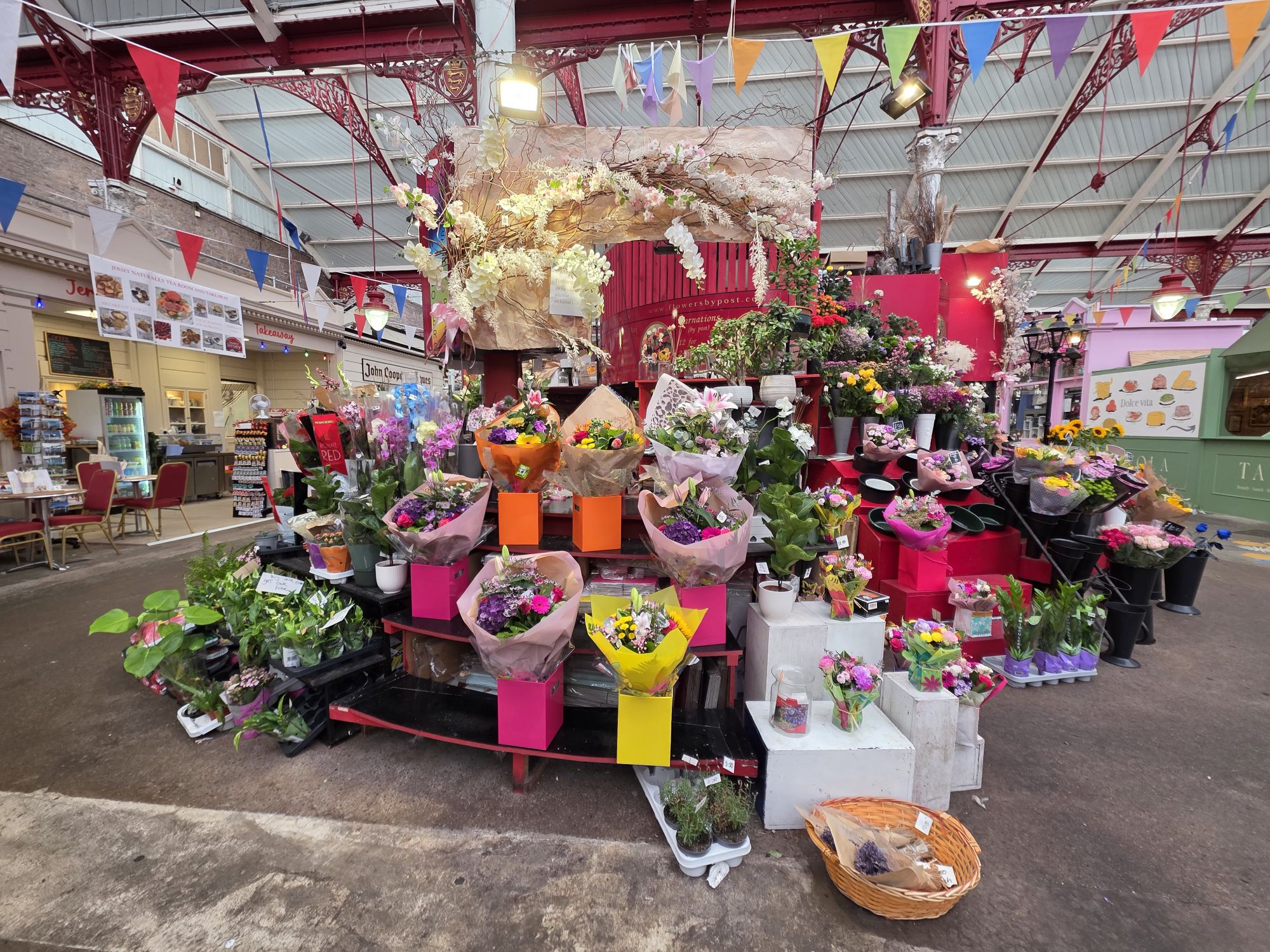
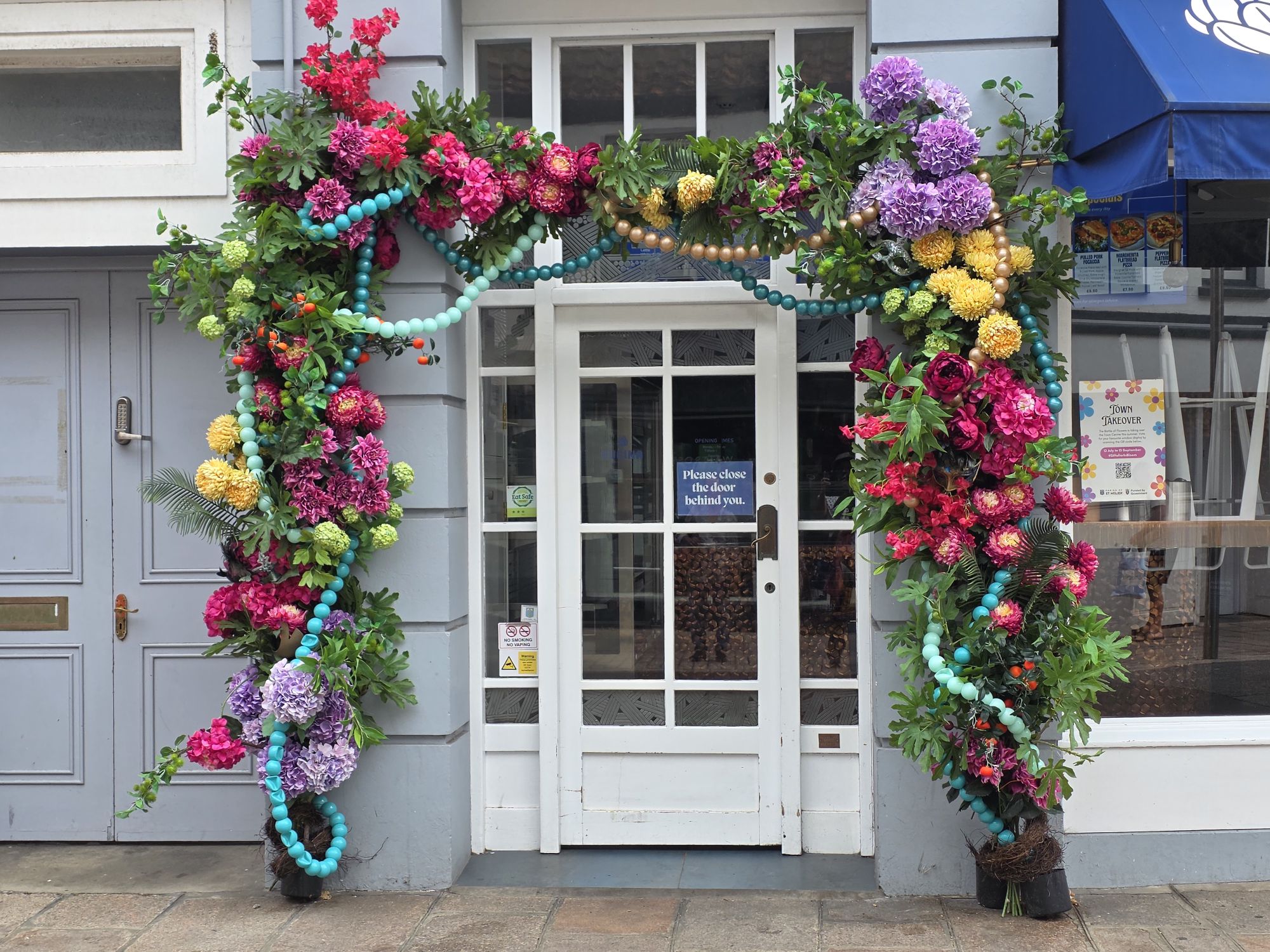
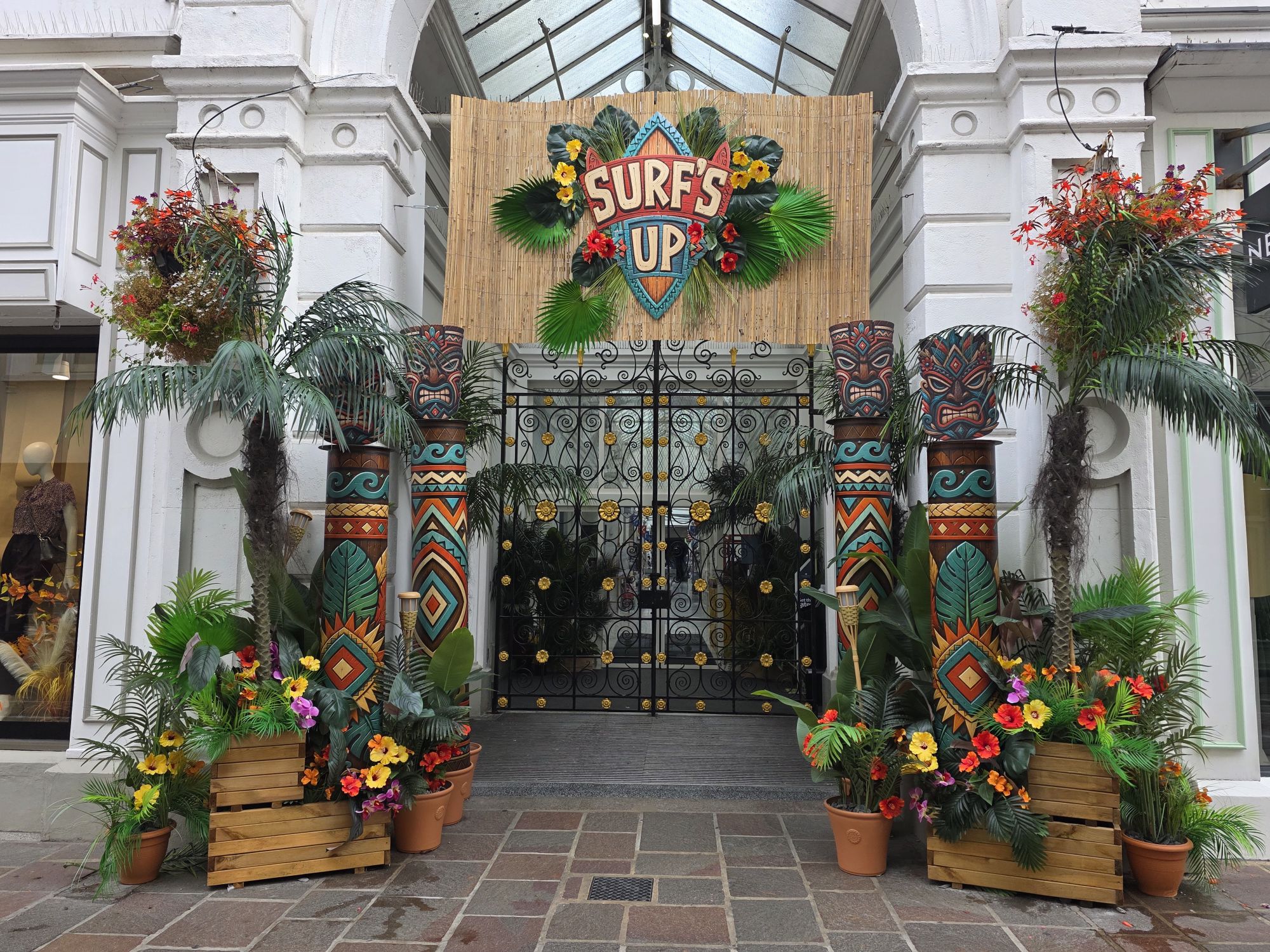
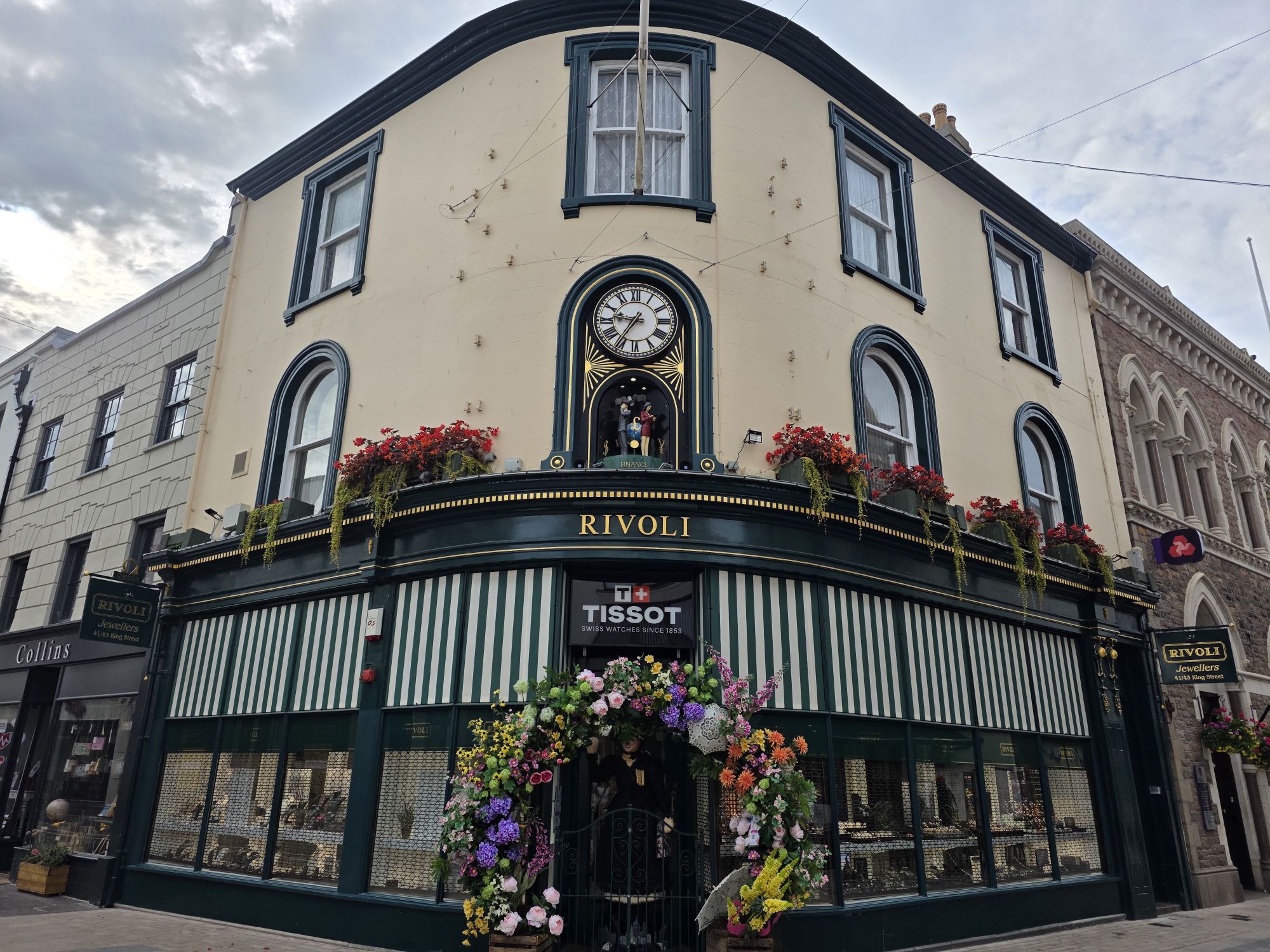
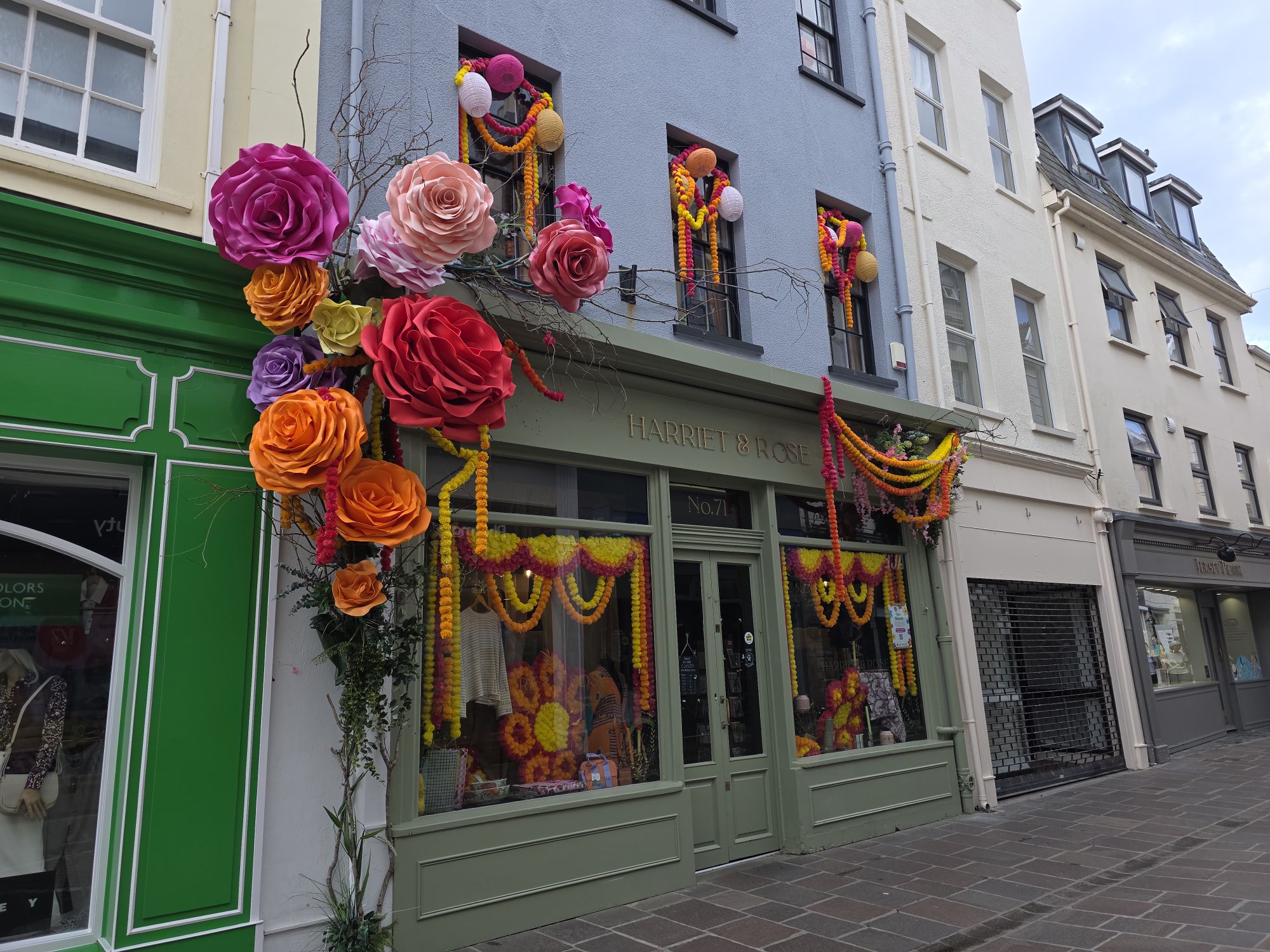
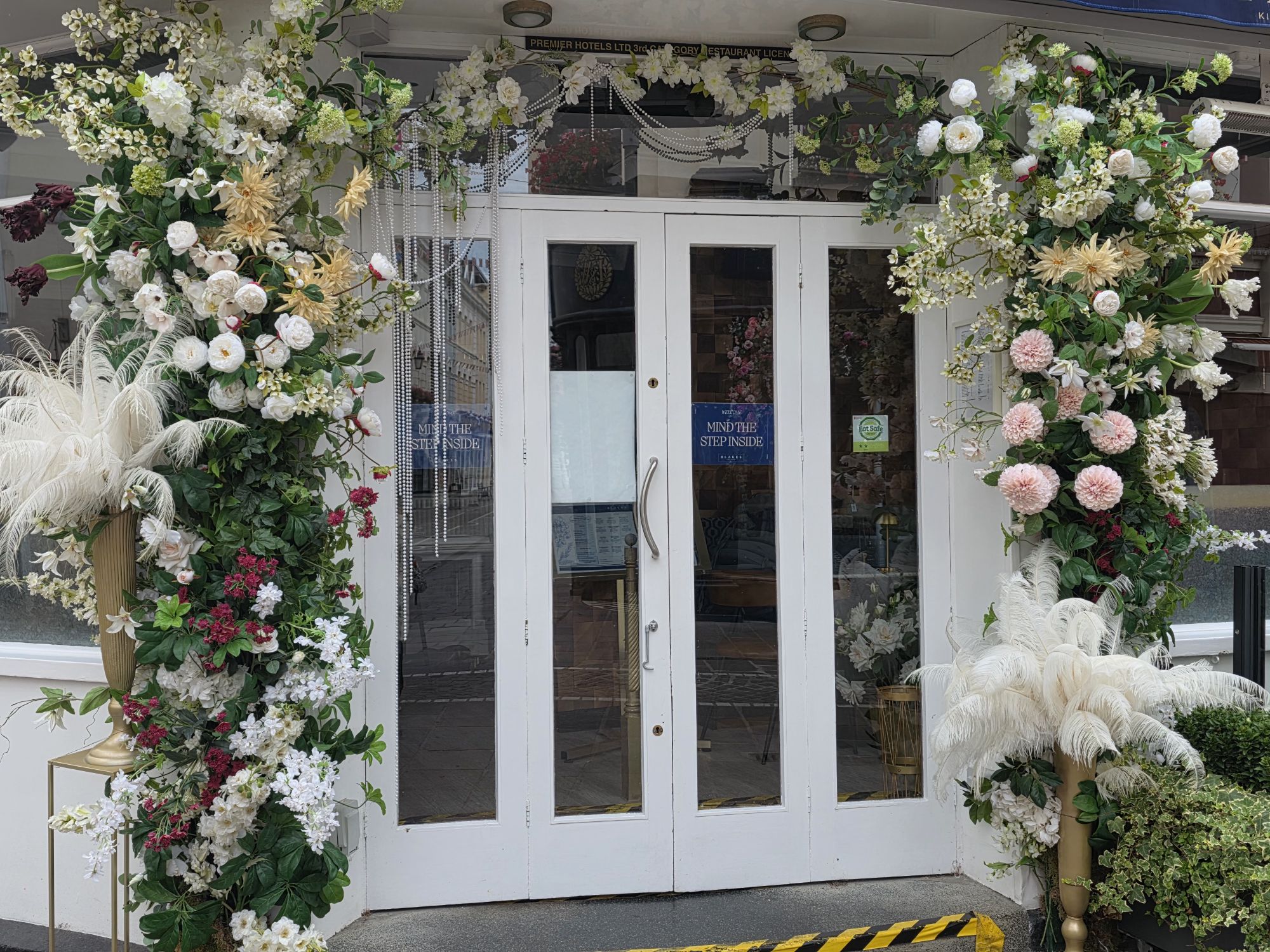
We happened to be there during the Jersey flower festival. Shopfronts and restaurants had been extravagantly decorated with an array of colorful flowers, really nice to look whilst strolling along the streets, and admiring the stunning floral displays that adorned every corner.
Bus Tour
Late morning, we boarded a tour bus to explore the West of the island. We had booked a tour with Jersey Bus Tours. The first tour was to the east of the islands.
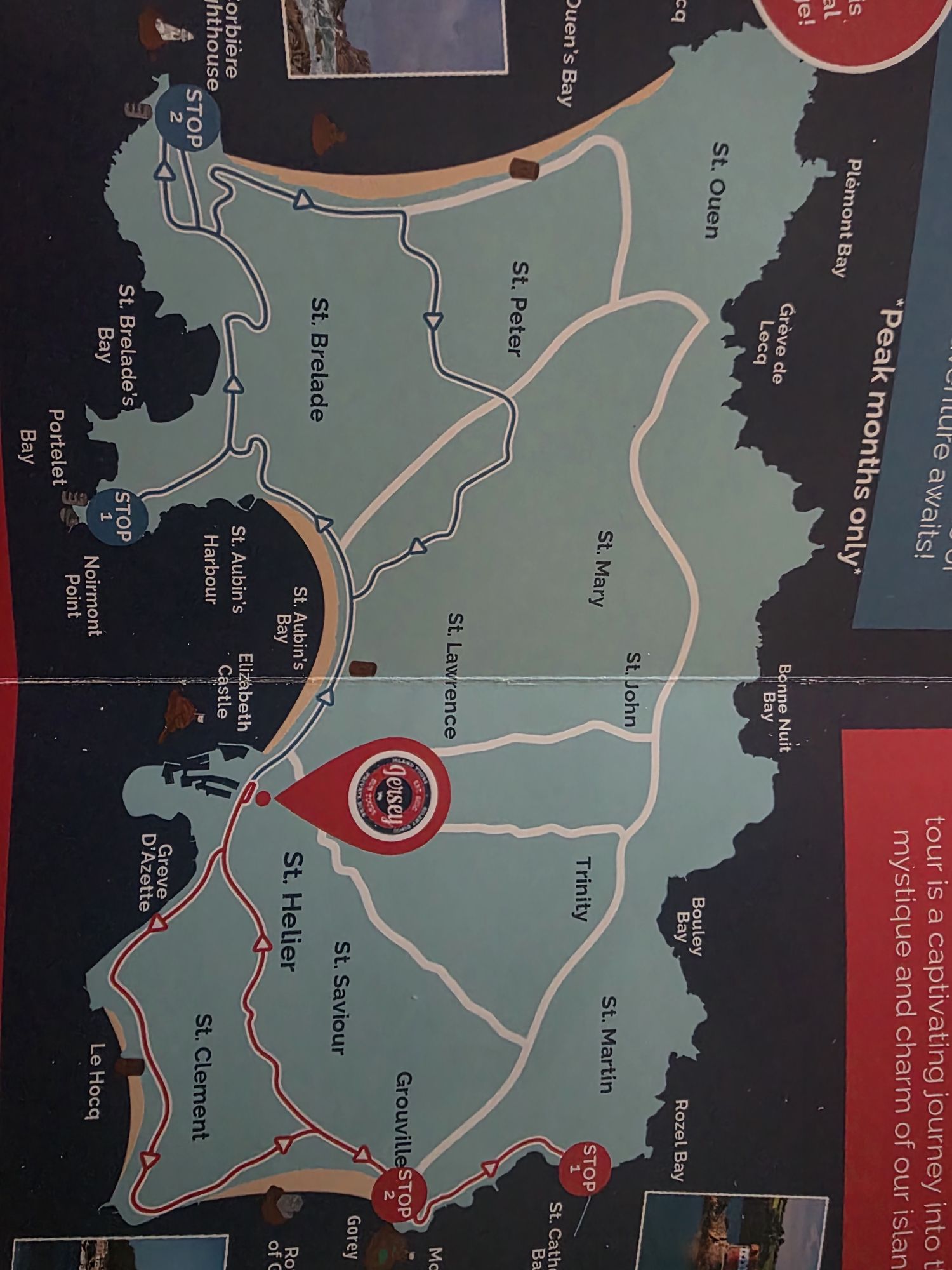
The bus had an audio guide, which told us interesting facts about jersey. Jersey is divided into 12 districts. Each district has a coast line.
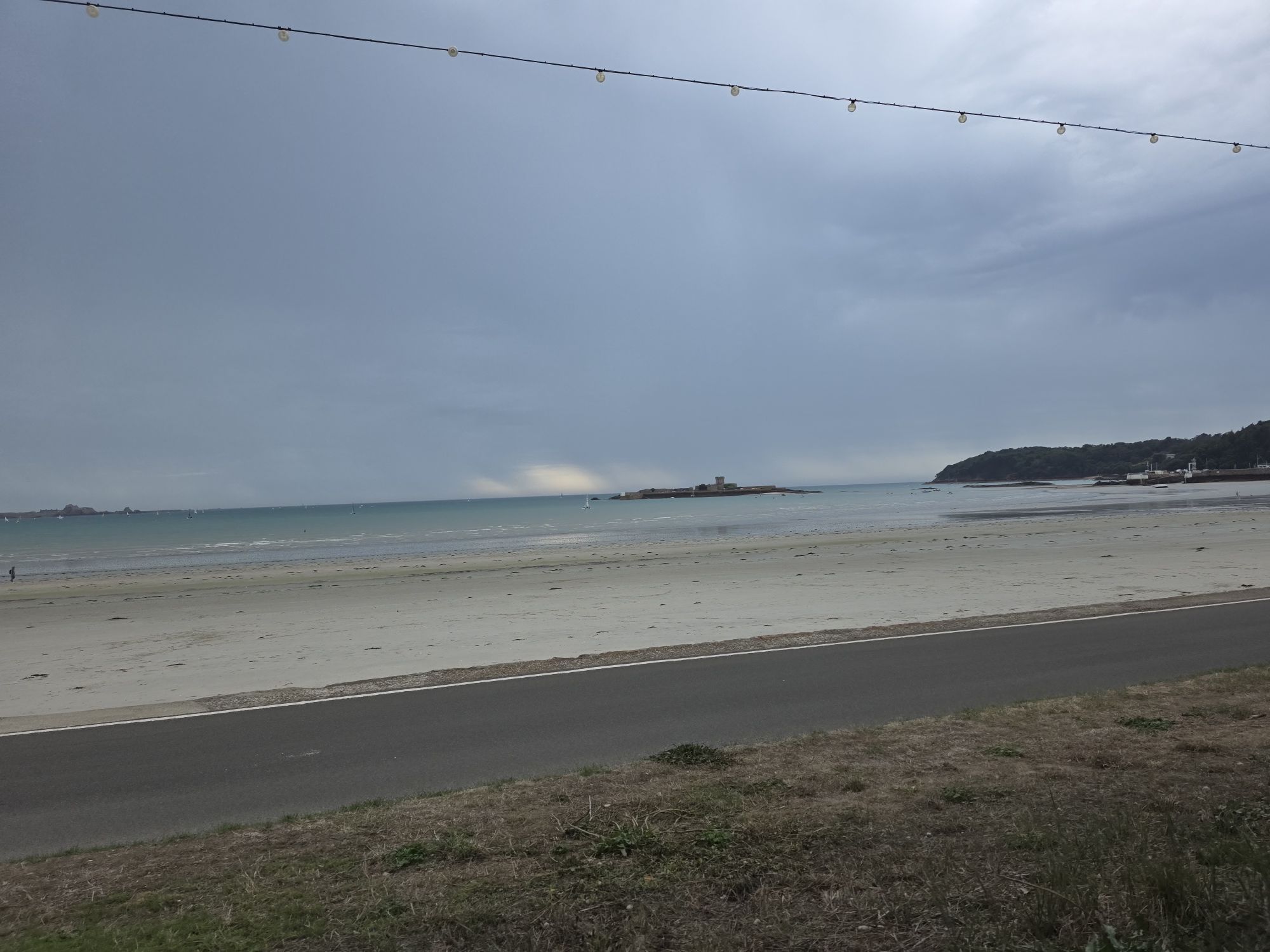
Noirmont Point
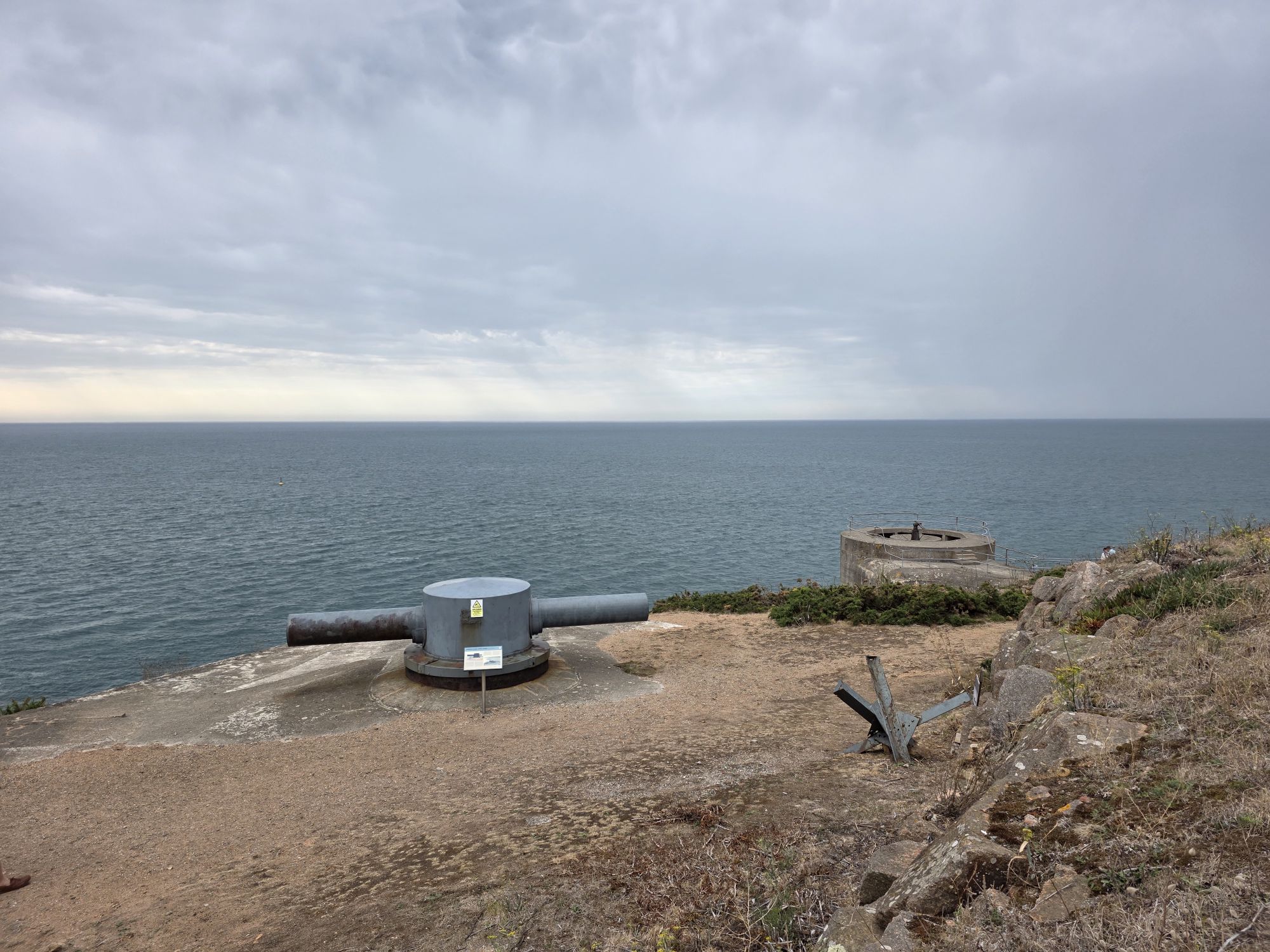
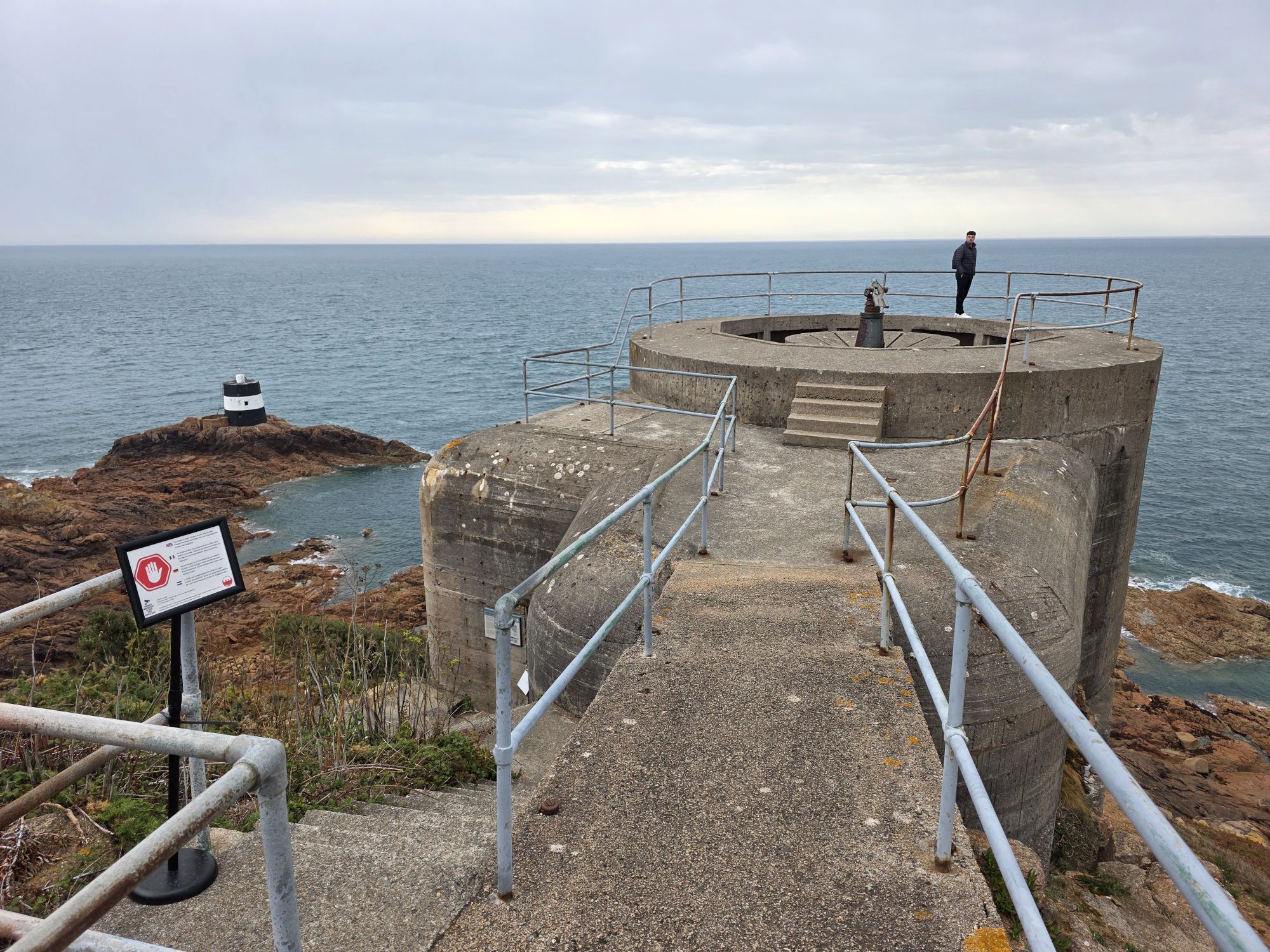
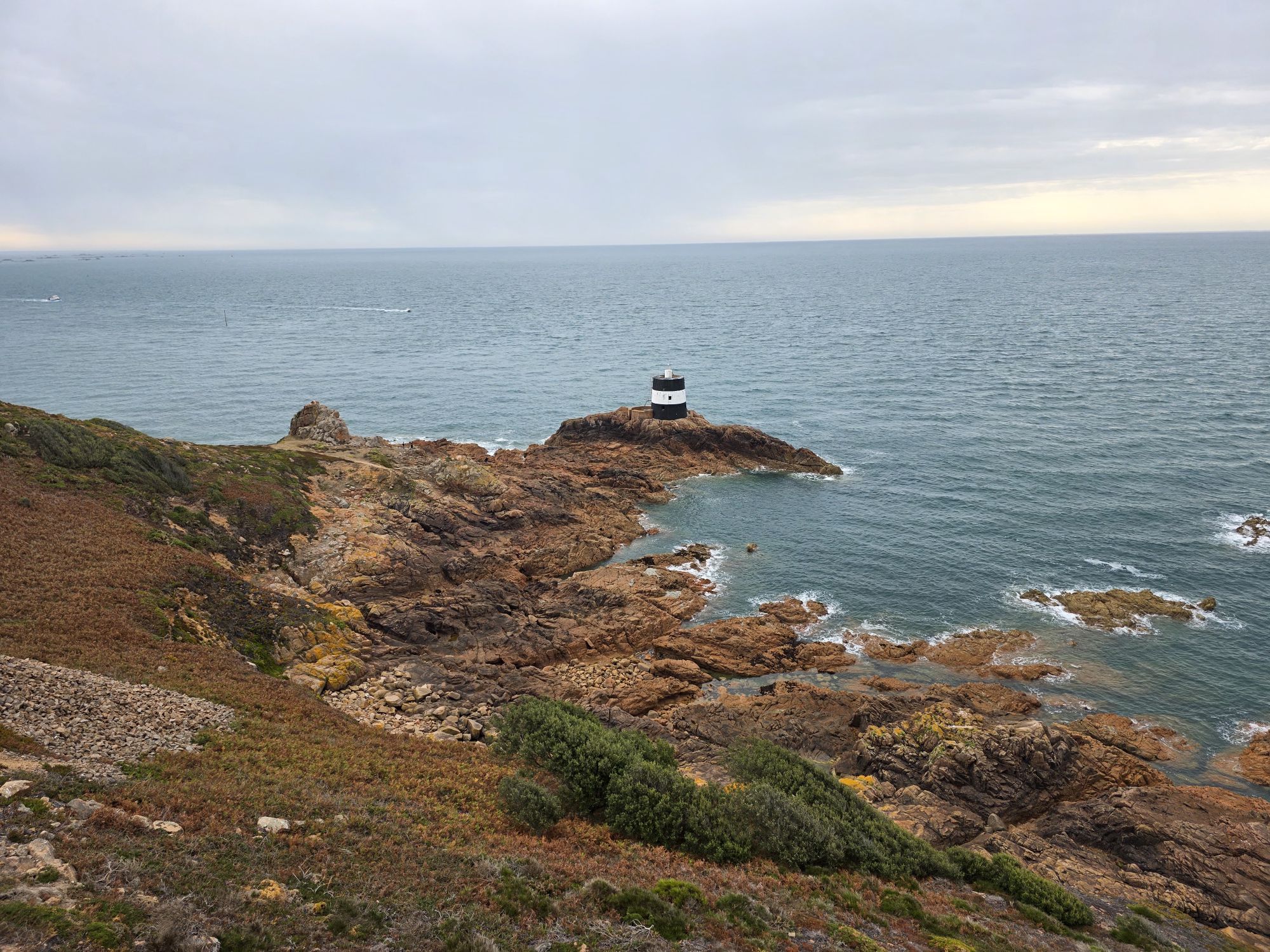
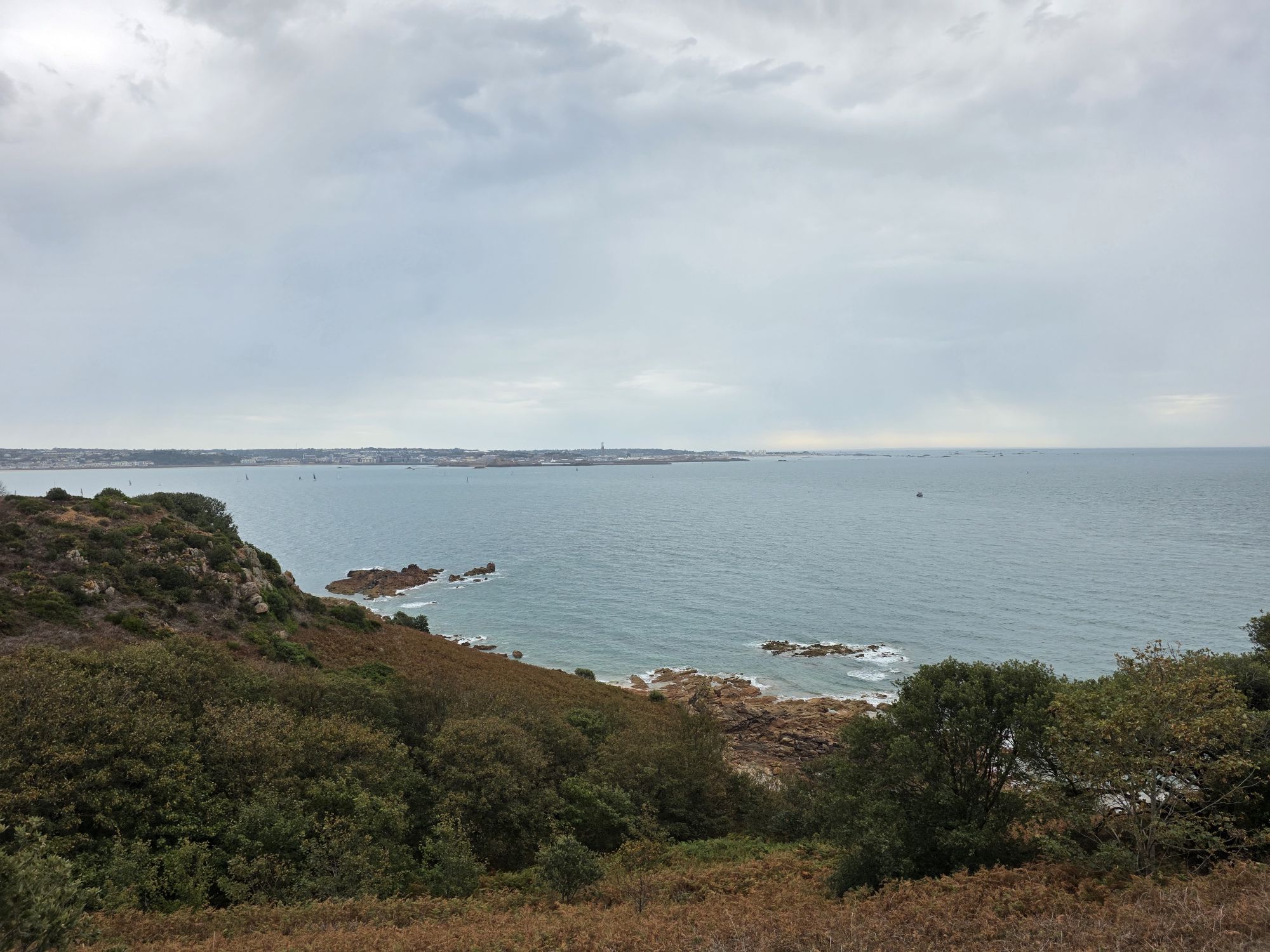
The first stop on the bus was Noirmont Point. Here, amidst the breathtaking coastal views, visitors can explore the remnants of history, including some bunkers and artillery that were strategically installed by the German occupying forces during World War II.
St Brelades bay
We next went past St Brelade’s Bay, renowned for its stunning sandy beach and crystal-clear waters. The nearby village of St Breladehas a number of cafes and restaurants. Unfortunately there was no stop included here, so we had to see it from the bus.
La Corbiere
La Corbière lighthouse is on the South West edge of the island. The lighthouse was built in the late 1800’s. The path to the lighthouse is only accessible at low tide. The light house is on a tidal islet, only accessible by foot at low tide. In 1946, the assistant lighthouse keeper Peter Edwin Larbalestier, drowned while trying to rescue a visitor cut off by the incoming tide
After La Corbiere, we returned to St Helier and boarded the bus to the east of the island.
East Coast Tour
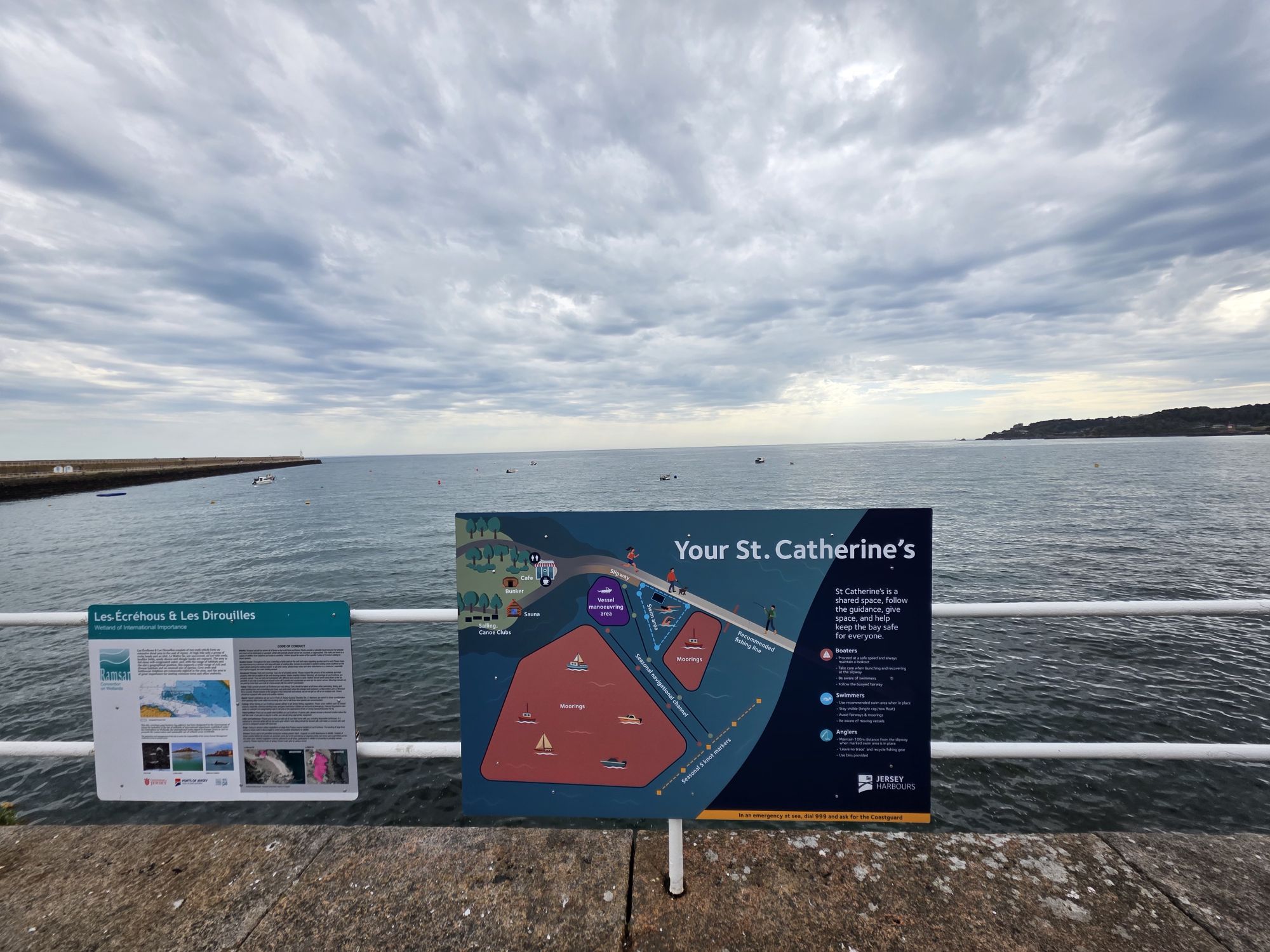
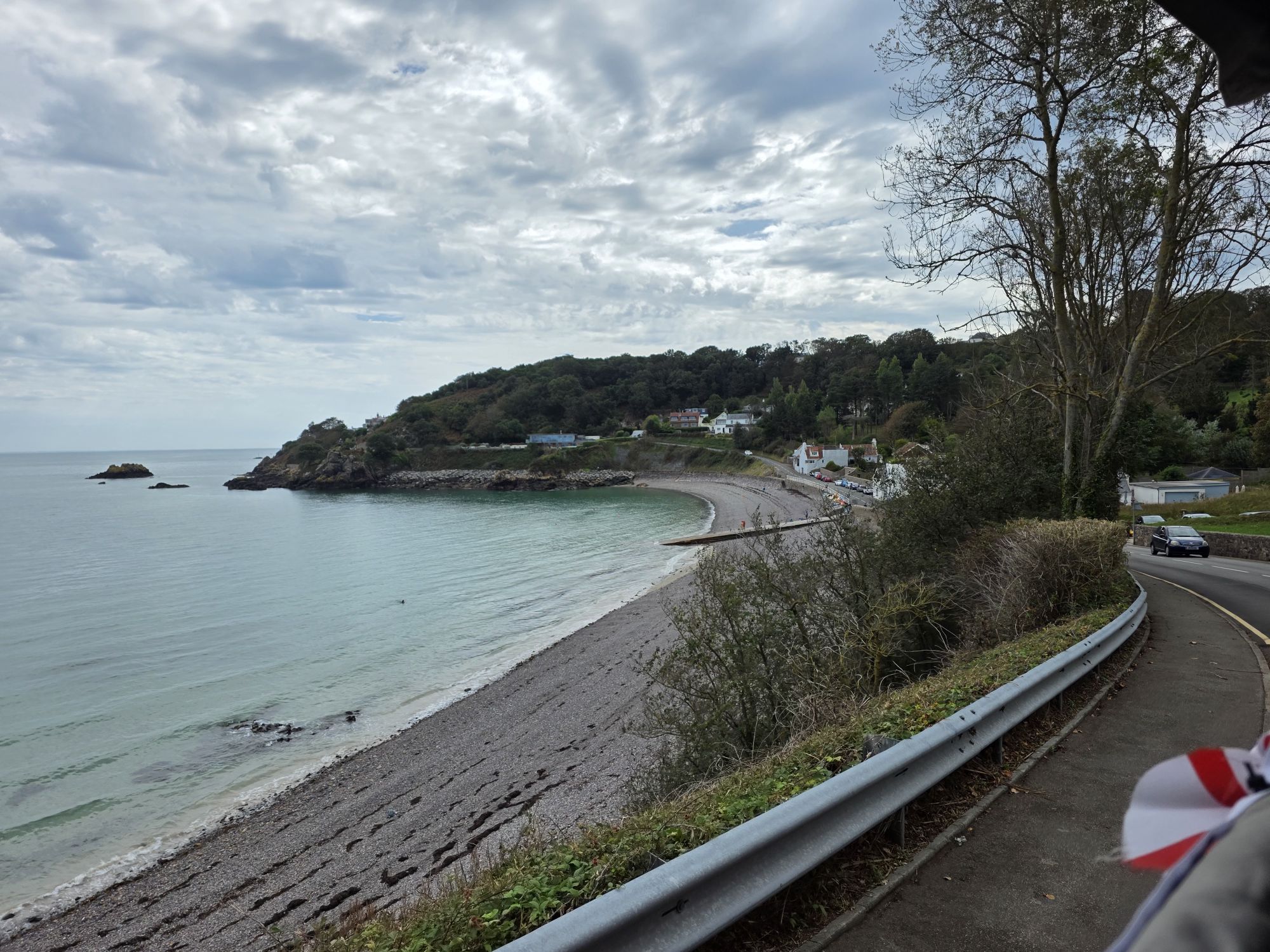
The first stop was St. Catherine’s on the east coast. It is a harbour and fishing village. Following the Battle of Jersey, the British Government in stalled a number of defensive towers around St Catherine’s bay.
Gorey
Our second stop was Gorey, a charming village in Jersey known for its picturesque harbor and village. Towering over the village is Mont Orgueil Castle.
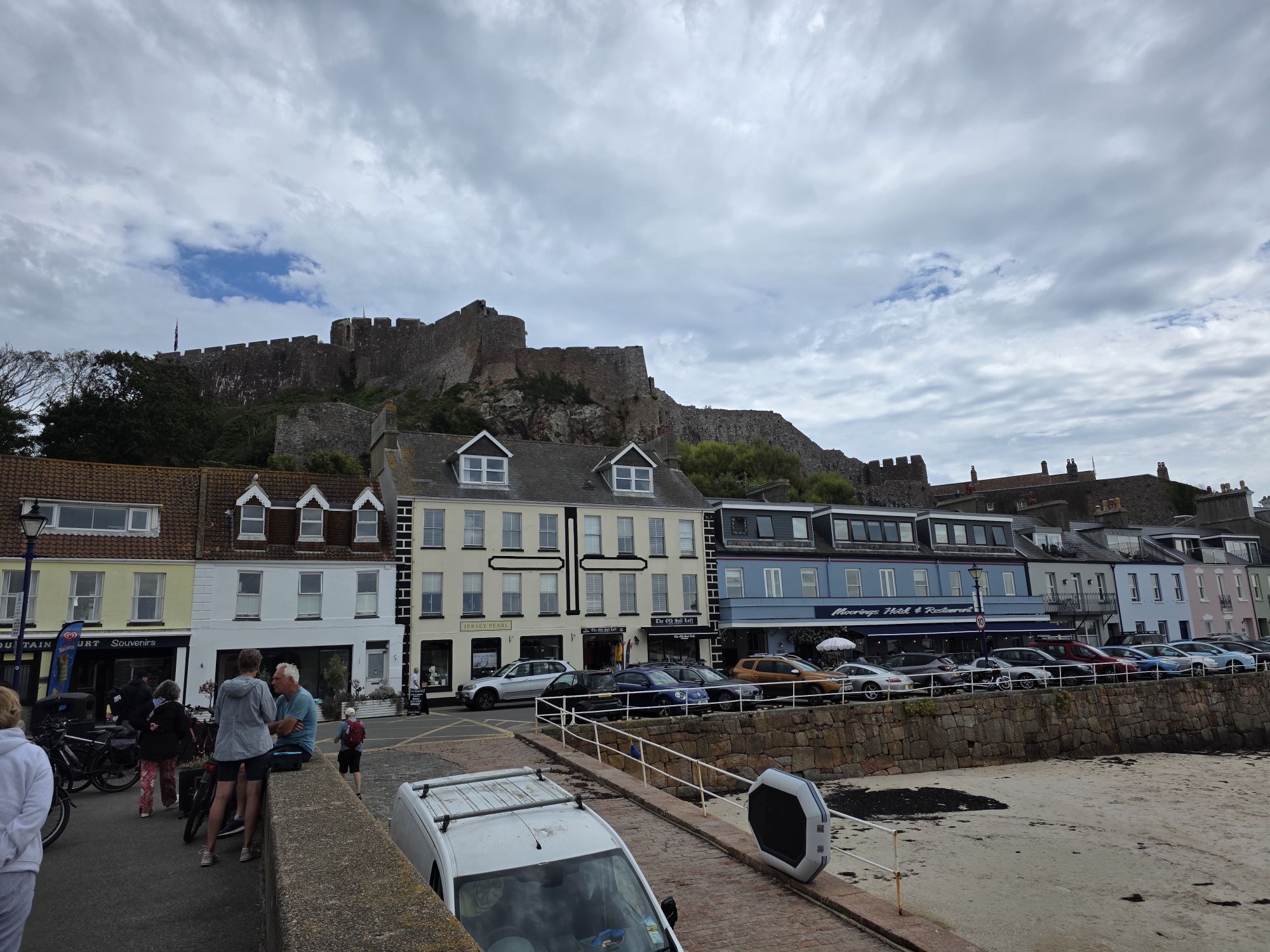
Afterwards, we went back to St Helier. The bus tour was a good way to see Jersey and provided interesting information. However, the number of stops was limited, and it wasn’t a hop-on hop-off tour (Jersey doesn’t have those). I pre-booked it because it seemed like the only option online, but when we arrived, and got to Liberation square, there were a number of other tours available which I couldn’t see online.
Elizabeth Castle
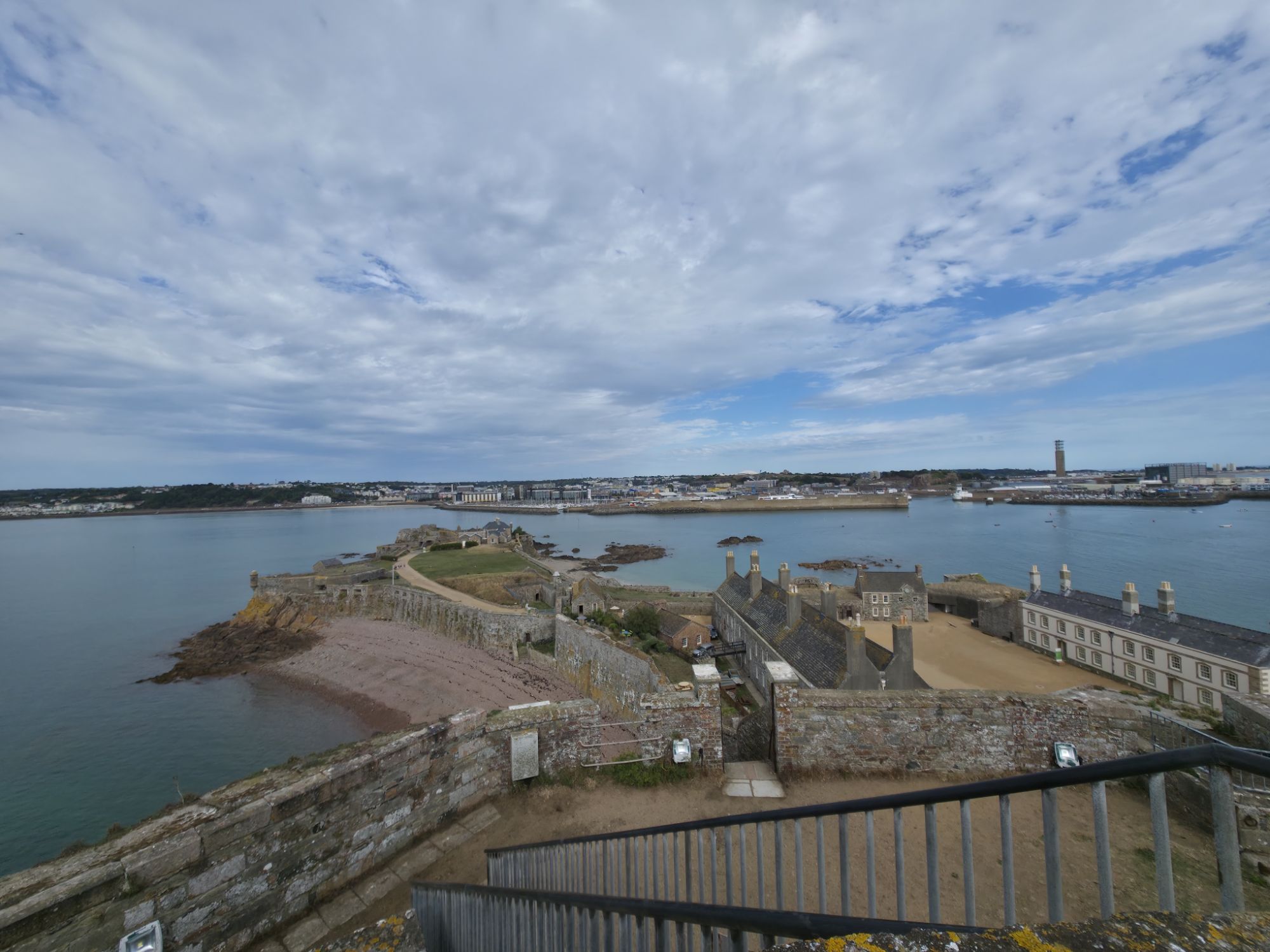
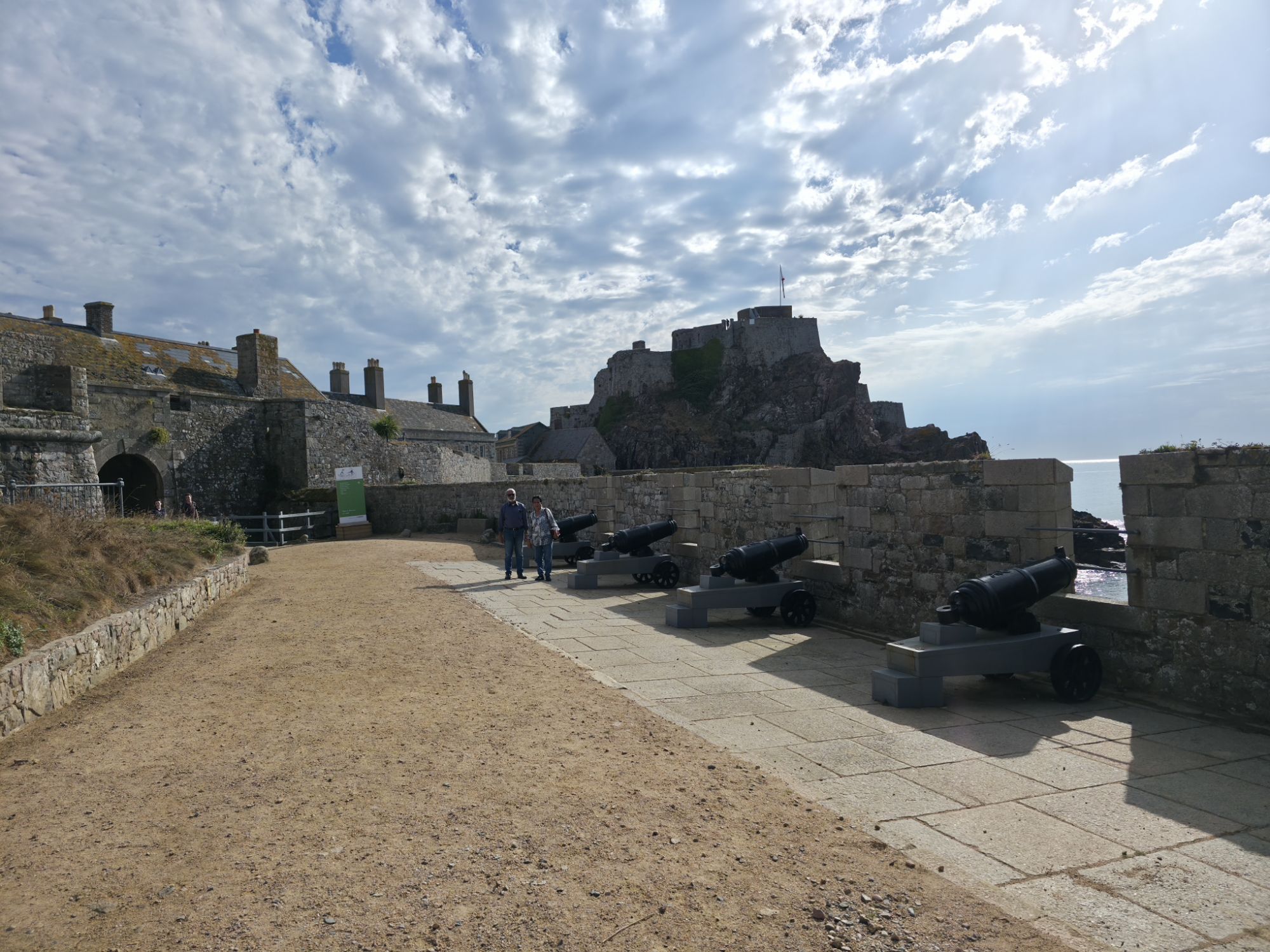
Elizabeth Castle, located on the coast of St. Helier in Jersey, is a striking historical fortress that has stood since the 16th century. Construction started in the late 16th century. Sir Walter Raleigh, Governor of Jersey between 1600 and 1603, named the castle Elizabeth Castle after Elizabeth I of England.
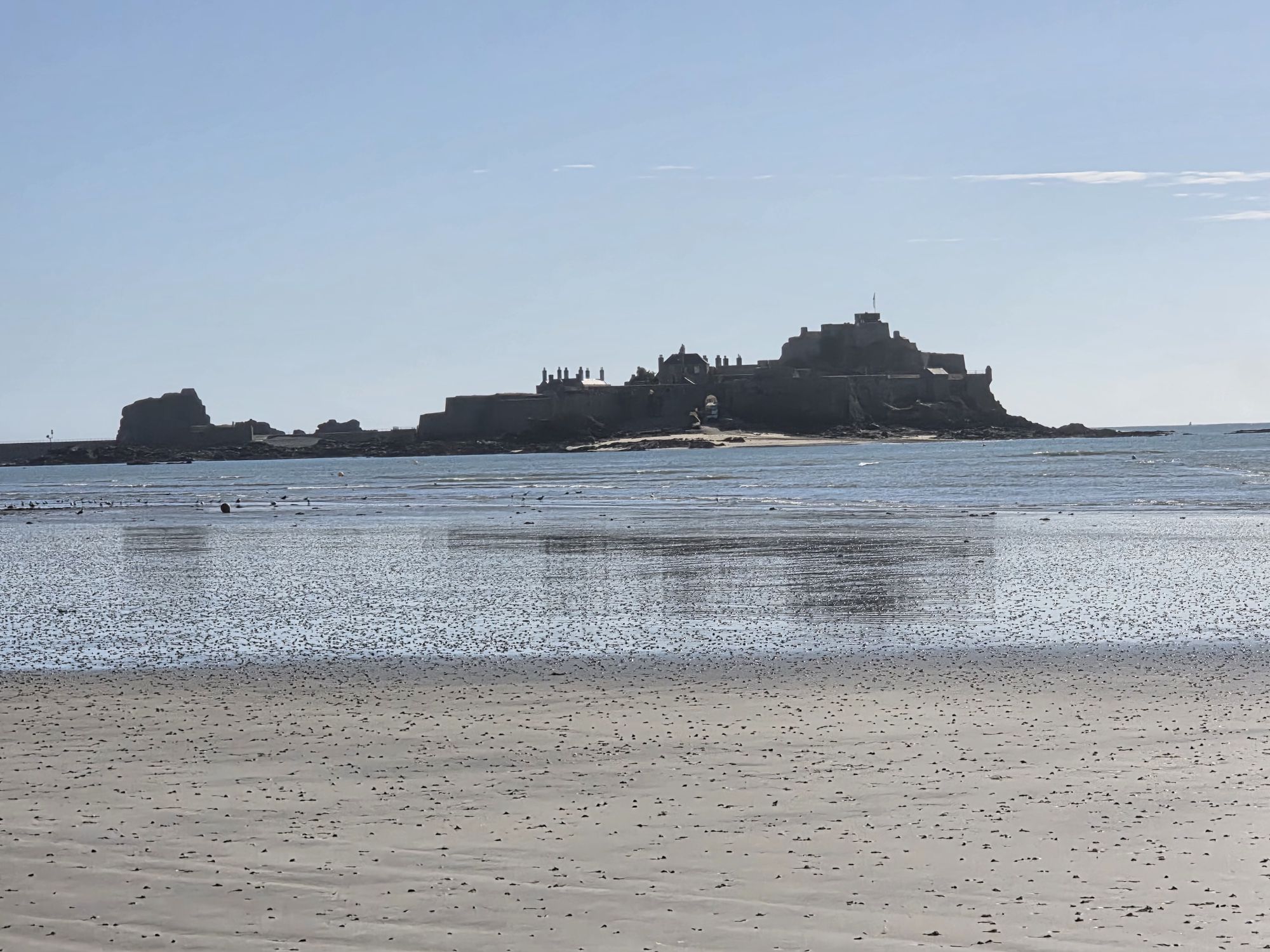
The island is a tidal island and only accessible by foot at low tide. Over the centuries, Elizabeth Castle has served various purposes, from a military stronghold to a refuge during times of conflict. Today, it is a popular tourist attraction, offering panoramic views of St. Helier.
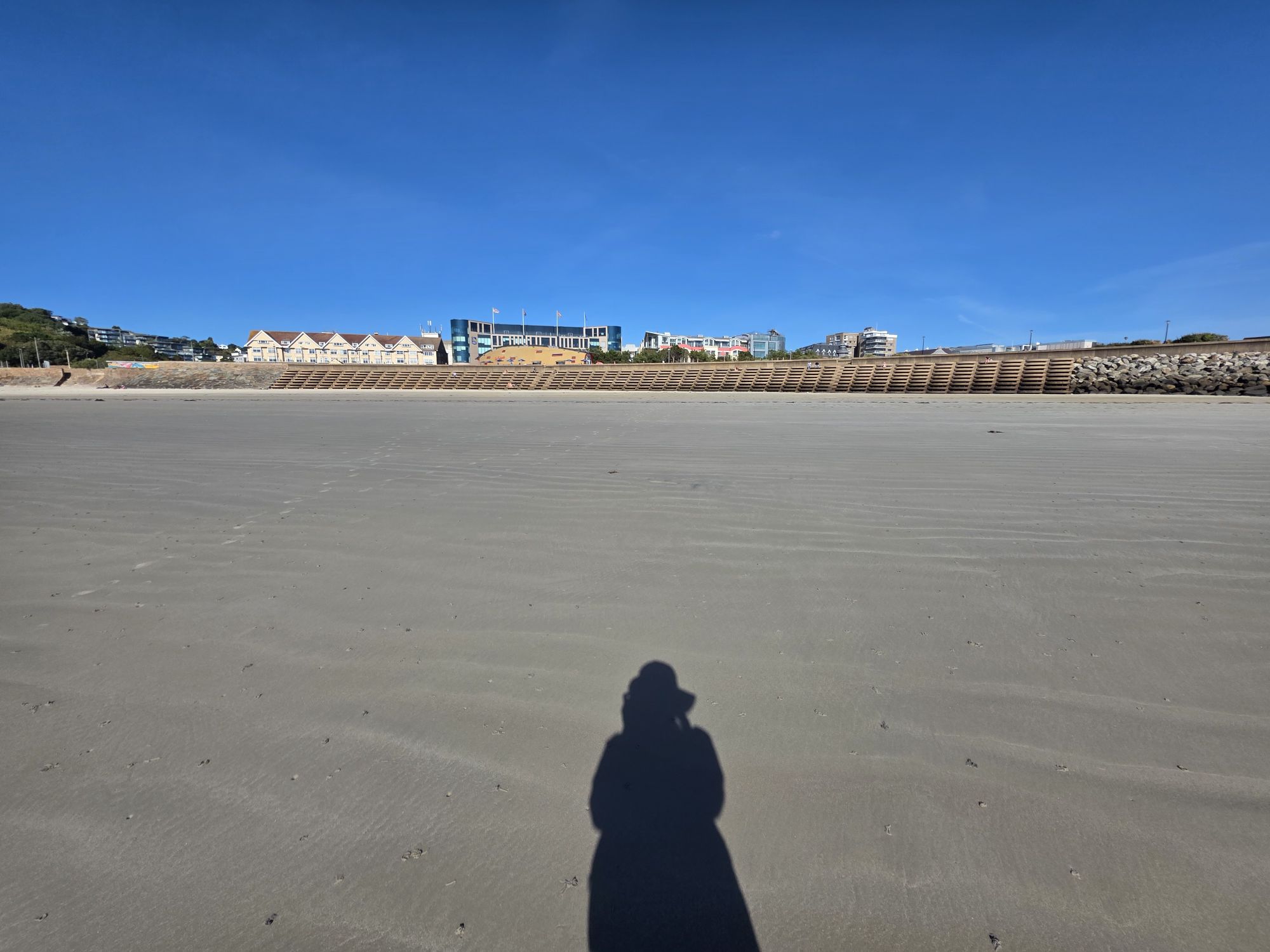
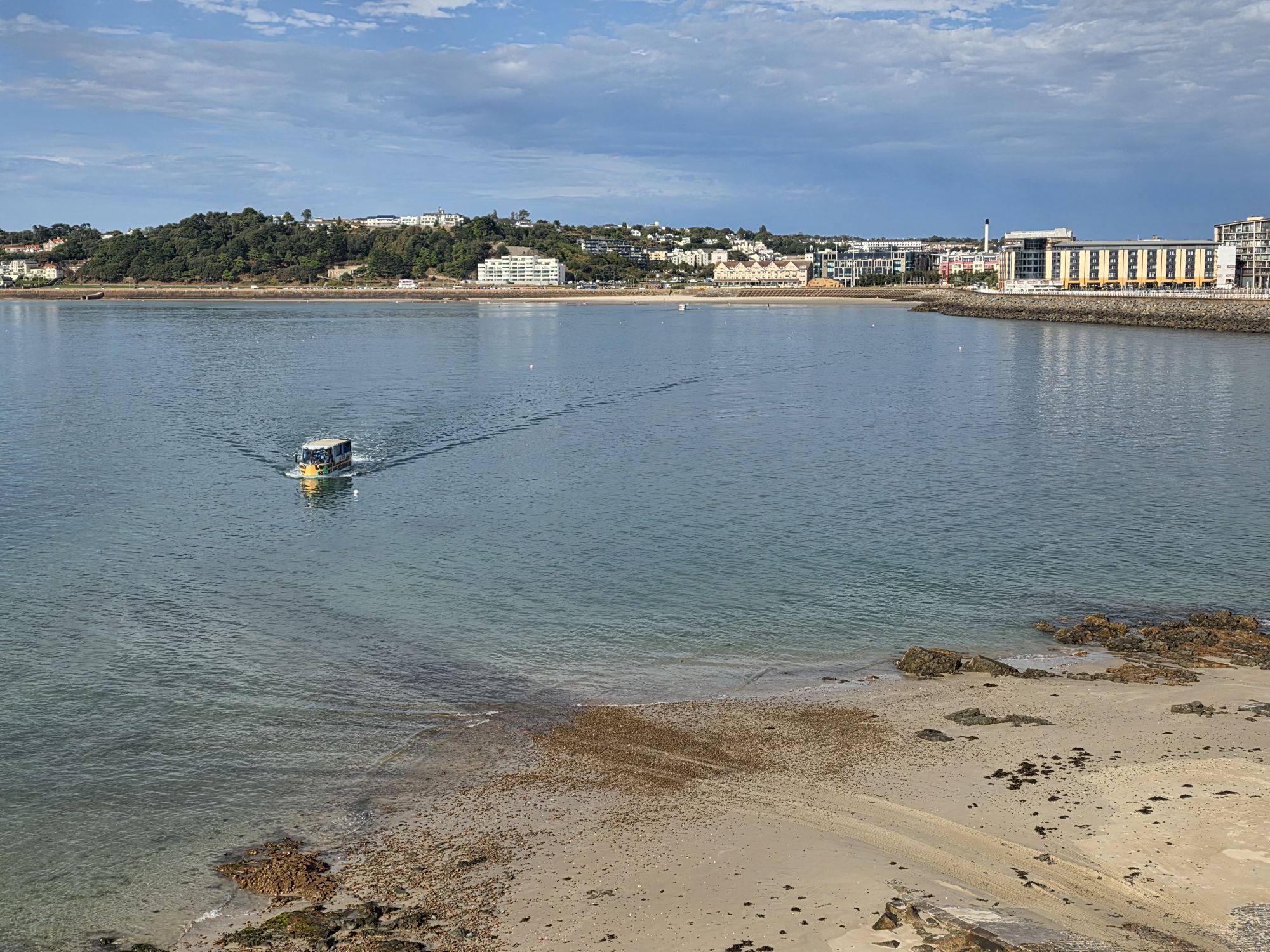
That was the end of our first full day in Jersey. Read my next post to find out more about Day 2.

